
Temple of Hephaestus: free audio guide, hours and tickets
Free audio guide in English · no app, no sign-up
This free audio guide to the Temple of Hephaestus plays straight from your phone — no app, no sign-up — as you walk up the hill of Kolonos Agoraios and round the columns. It tells you why this building still has a roof when everything below it is at ankle height, what the 10 metopes facing the square show and why they count 9 labours, when the stone vault over the cella really went up, who is buried under the floor, and what caught the eye of Pausanias here in the 2nd century AD. Press play at the foot of the hill.
 Audio guide
Before you go in
The few things that change your visit.
- It has no ticket of its own: you pay the Ancient Agora ticket, €20.00
- You walk around it: there is no visit to the interior
- The best sculpture is inside the porch, not on the façade
- Everyone enters by the Thiseio Square gate, 600 metres from Thiseio metro (line 1)
- Last entry is 16:10 from 1 November to 31 March (30 minutes before closing the rest of the year)
- Wheelchair access to the temple exists, after telephoning +30 210 3214824
On this page
- What the audio guide tells you
- You walk around it: there is no visit to the interior
- Why this temple is still standing
- The metopes and the frieze: Herakles, Theseus and the centaurs
- The roof is medieval, and there are graves underneath
- Tickets and opening hours
- Getting there and accessibility
- Where to find it
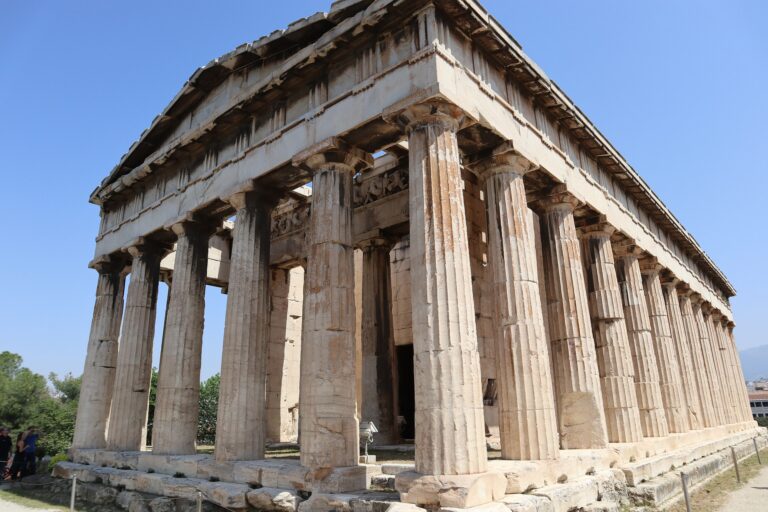
The Temple of Hephaestus stands on the hill at the western edge of the Ancient Agora of Athens, and it is the best preserved Doric temple in mainland Greece. It has no ticket of its own: you go in on the €20.00 Ancient Agora ticket, through the Thiseio Square gate at the foot of its hill. This page is its free audio guide.
What the audio guide tells you
It plays in your phone’s browser, with no app and no sign-up. Press play at the foot of the hill, as you start up towards the columns, and walk the circuit with it. These are the stops:
| The one building still roofed | What you are looking at from below, and why this hill kept its temple when the plain kept nothing. |
| Two reasons it is still here | Athens sits outside the major earthquake belt, and the building was given a use that made it worth keeping. |
| The roof is not Greek | The stone vault over the cella went up in the medieval centuries. |
| 53 graves under the floor | Where they lie, and the jewellery that says whose they were. |
| The man who dug for Theseus | A grave opened in the exact centre of the temple in 1799, and what came up instead. |
| The epitaph attributed to Byron | George Watson and the slab of reused Hymettos marble. |
| 10 metopes, 9 labours | Why the arithmetic does not add up, and why the Minotaur still has a head. |
| What Pausanias noticed | The eyes of the statue, and a sanctuary of Theseus that has never been found. |
You walk around it: there is no visit to the interior
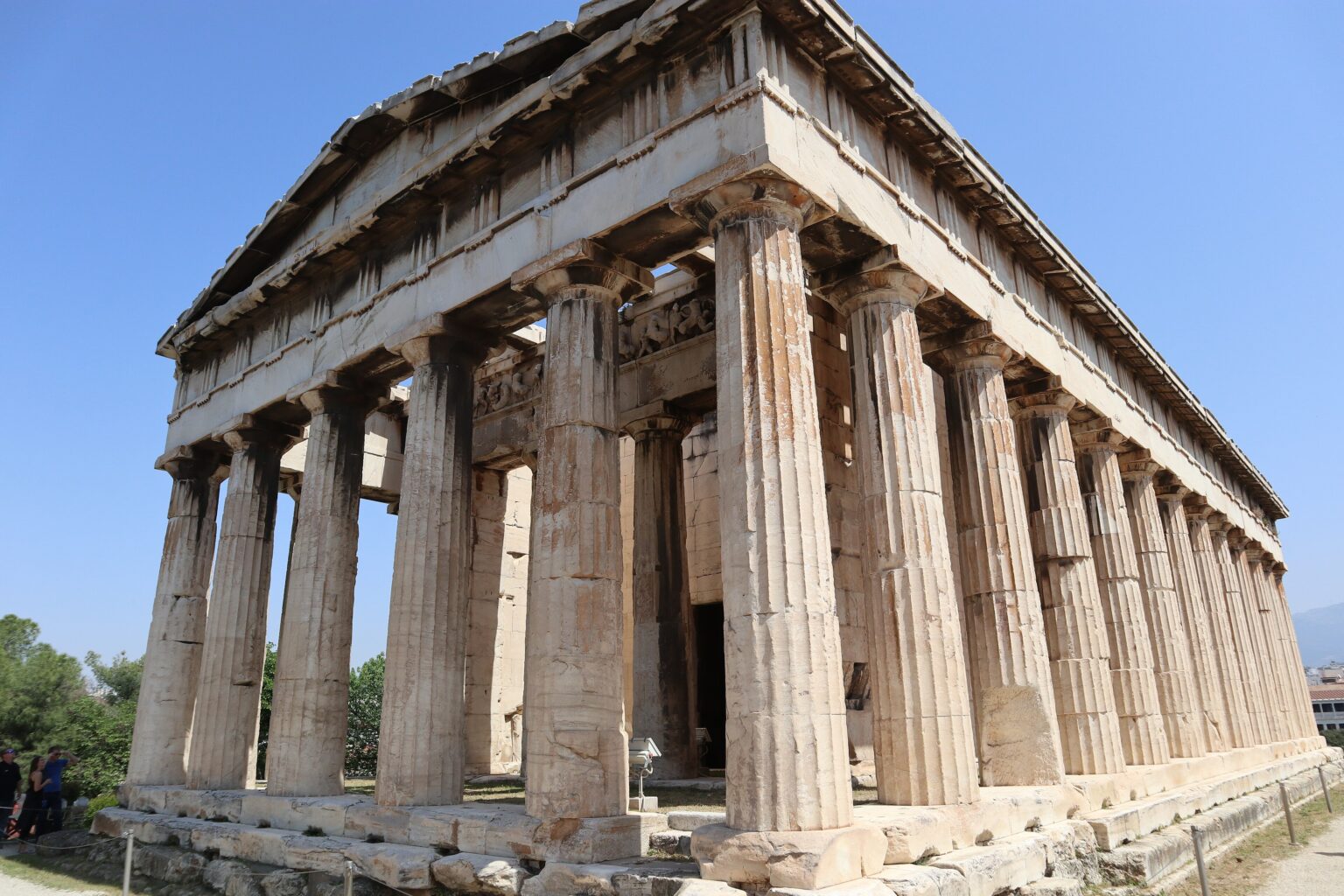
You walk around the Hephaisteion from the outside. The official route comes up from the Thiseio Square gate, goes the whole way round the building outside the ring of columns, and carries on to the south-east. There is no visit to the interior. What you see of the inside is what you can see between the columns, which is a great deal more than it sounds.
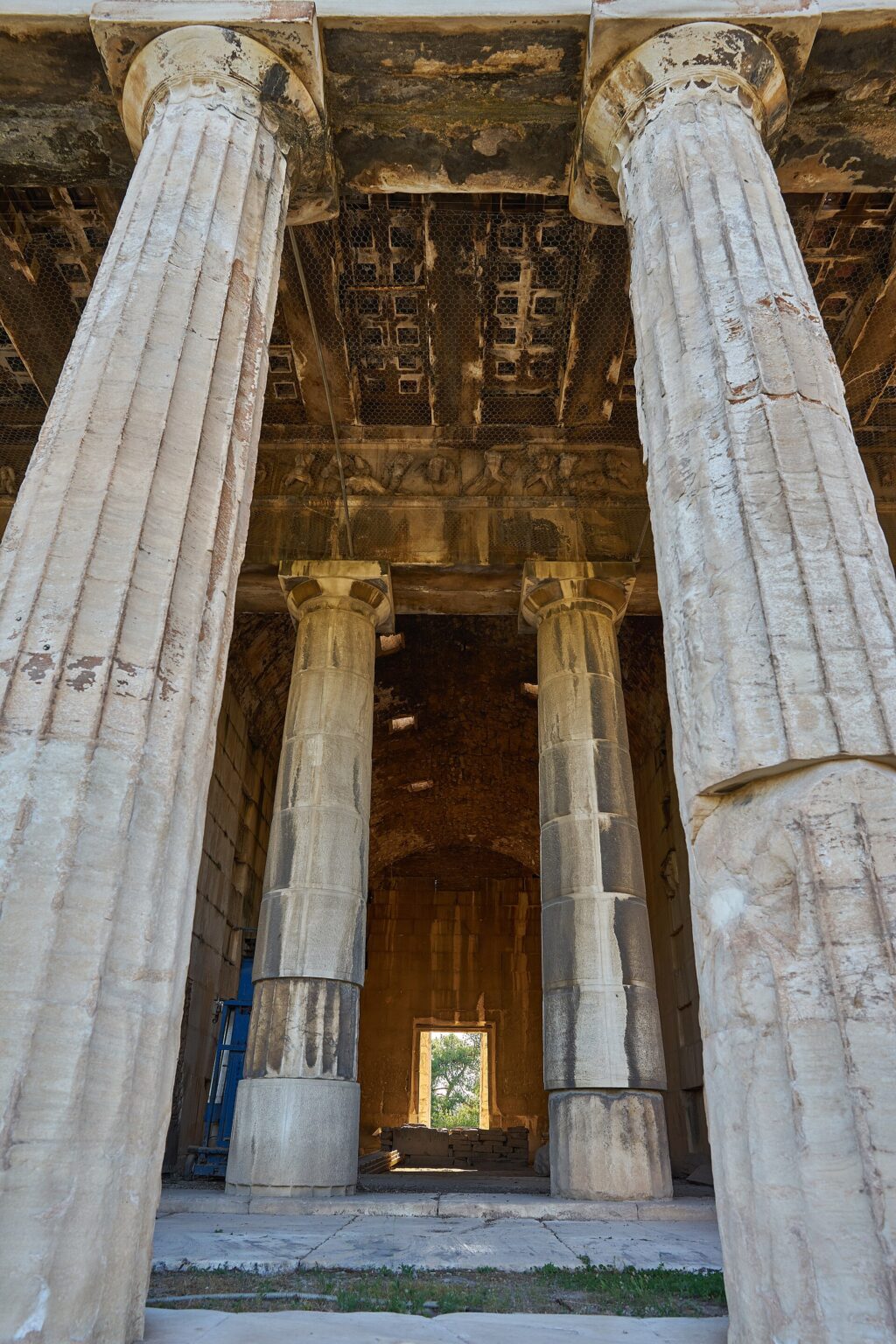
From the step of the porch, with your neck craned, you take in the coffered marble ceiling of the peristyle, the carved band of the frieze above the porch columns, and the cella running away from you to the doorway at the far end. The best sculpture on this temple is in there, inside the porch, and not on the façade. Anyone who photographs the front and walks on misses it.
The trees and shrubs around the temple are not landscaping: they are a reconstruction. In the 3rd century BC a garden was planted around the building in large terracotta flowerpots, in rows along the south, north and west sides. Nothing on the east, the side the temple was meant to be seen from, down in the square. The pots came to light in the excavation of 1936 and 1937, and in the mid 1950s the garden was planted again exactly where they had stood: pomegranates close to the temple and myrtles further out.
Why this temple is still standing
Everything else on this hillside is at ankle height, and this building has its columns, its entablature, both pediments and a roof. Athens does not lie in a major earthquake zone, and the temple was turned into a Christian church in the 7th century. That use is what saved it from the far more serious threat: being quarried for its own stone. A building with a use is a building nobody takes apart.
The Ministry of Culture dates it to between 460 and 420 BC. It is all Pentelic marble, from the steps to the roof, with 6 columns on each short side and 13 down each long one: 34, counting each corner once. It was shared by Hephaistos, patron of metalworkers, and Athena, and the excavation settled that by finding metalworking shops all around the hill.
The traveller Pausanias came here in the 2nd century AD, and what struck him was not the building but the eyes: the statue of Athena beside Hephaistos had glaukos eyes, grey-blue, the Homeric colour of the goddess. The bronze cult statues were the work of Alkamenes, made between 421 and 415 BC, and stood on the pedestal at the far end of the cella. Nothing of them survives.
The metopes and the frieze: Herakles, Theseus and the centaurs
In the richness of its sculpture, only the Parthenon surpasses this temple. Look up at the east end, the side that faces the Agora: 10 metopes carry 9 labours of Herakles, from the Nemean lion to the apples of the Hesperides, and the arithmetic does not work because the death of Geryon and the theft of his cattle take 2 metopes. The flanks carry Theseus, 4 and 4, only as far as the third column, and the best known is the Minotaur, on the south side.
Most of the figures have no heads, and the reason is on the stone: when the temple became a church, the heads of almost all of them were systematically cut away. The ones that survived stood for the powers of evil being crushed, because they were identified with Satan and his punishment. So the monster kept its face and the heroes lost theirs.
The frieze runs over the east and west porches only. Over the east porch, Theseus fights the 50 sons of Pallas with 6 Olympian gods watching; over the west, a centauromachy. Almost nothing of the pediments survives.
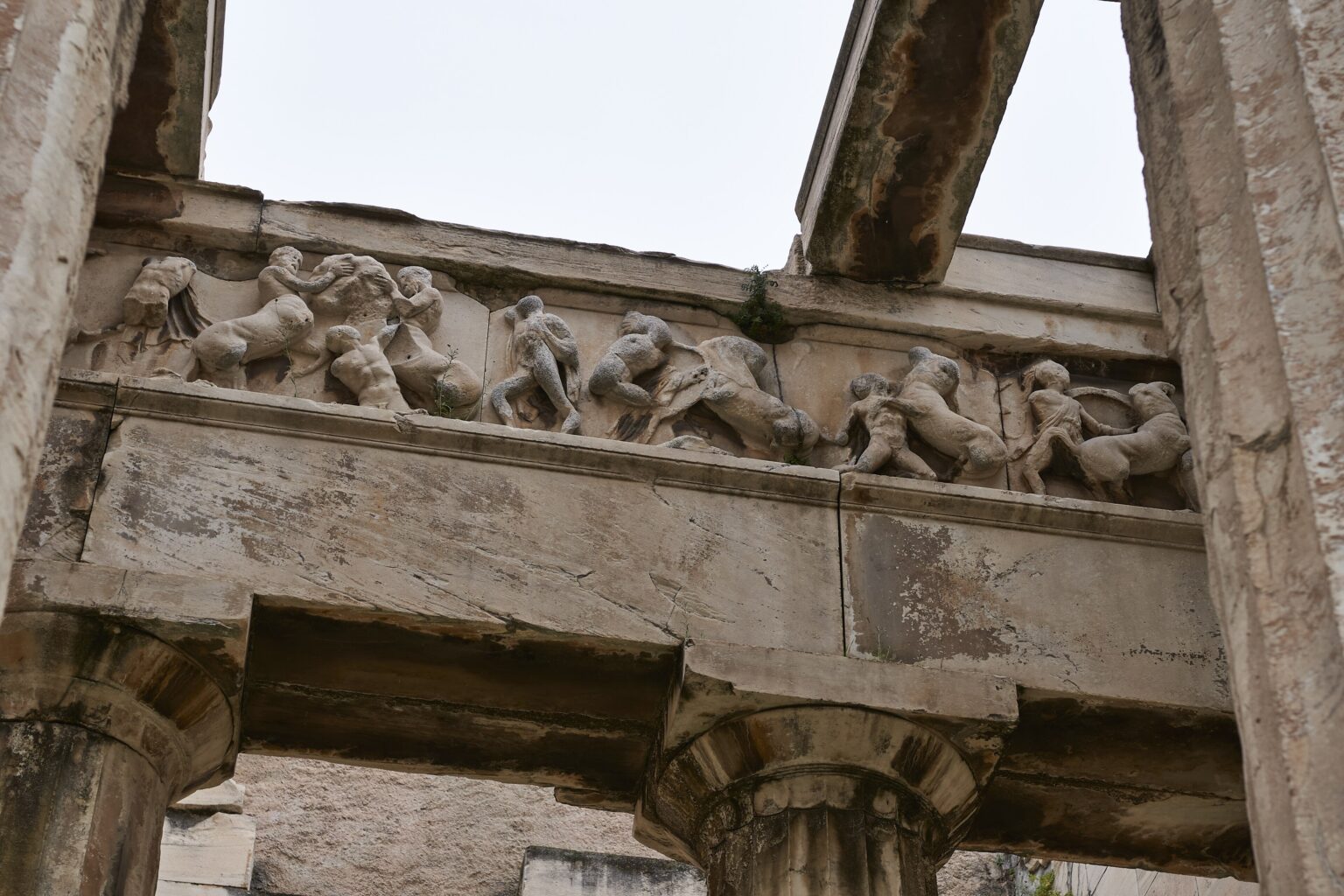
Those metopes of Theseus are why the temple was called the Theseion for centuries, and the name stuck to the neighbourhood and to the metro station below the hill. The real Theseion, built to house the bones that Cimon brought back from Skyros, was a different building somewhere else, and it has never been found.
The roof is medieval, and there are graves underneath
The stone roof over the cella is not ancient. The barrel vault went up in the medieval centuries, replacing the wooden roof of the original design, while the building served as the church of Saint George. It was turned round as well: the main door moved to the west porch and the east porch became the apse.
The temple was a cemetery as well as a church: 53 medieval graves lie under the building, and the coins in them date the busy period to the 13th and 14th centuries. The finds are dominated by women’s ornaments.
In 1799 an Englishman, John Tweddell, died in Athens and was buried here. The French consul Fauvel, convinced the bones of Theseus lay inside, had the grave dug in the exact centre of the temple. Theseus did not appear; the medieval graves did. That accident started a Protestant cemetery inside a Greek temple, and 1 stone from it is still there: the slab of George Watson, who died in 1810, with a Latin epitaph attributed to Byron, worn so smooth by feet that some lines have gone completely.
The last great service was the thanksgiving for the arrival of King Otto, on 1 December 1834. In 1835 the building became the Public Central Museum of the new Greek state.
Tickets and opening hours
The temple has no price and no ticket office of its own. What you buy is the ticket for the Ancient Agora of Athens: €20.00 full and €10.00 reduced, covering the site, the museum in the Stoa of Attalos and the temple. Under-25s from the EU and under-18s from outside it go free, and the over-65 reduction for Greece and the EU applies only from 1 October to 31 May.
The ticket carries a compulsory time slot and is valid for 1 entry only. Entry is free for everyone on 6 March, 18 April, 18 May, the last weekend of September and 28 October, and on the first and third Sunday of each month from November to March; on those days tickets are issued only at the counters, not online.
The enclosure always opens at 08:00; what moves is the closing time, from 19:30 between April and August, stepping back through September and October to 16:30 from November to March. Last entry is 30 minutes before closing from April to October; from 1 November to 31 March it is 16:10.
Getting there and accessibility
Visitors go in and out through the Thiseio Square gate, off Apostolou Pavlou street, which is the gate at the foot of the temple’s own hill: the Hephaisteion is the first thing you reach. The metro is Thiseio on line 1, beside that gate, and from the station exit to the temple is about 600 metres, under 10 minutes including the climb. From Monastiraki, lines 1 and 3, it is roughly 8 minutes of street to the gate.
The temple can be reached in a wheelchair, through the accessible entrance on Thiseio Square, after telephoning ahead on +30 210 3214824 or +30 210 3210180. The works completed on 29 July 2026 added routes with suitable gradients and a stable surface, ramps and a wheelchair lifting platform. The museum in the Stoa of Attalos has a ramp and a lift, but its accessible route starts at Adrianou 24: the 2 routes do not join up.
Up on the rock, the Acropolis is a separate €30.00 ticket and about 25 minutes’ walk around the pedestrian street, passing the Odeon of Herodes Atticus. The Temple of Olympian Zeus is about 25 minutes east, and Lycabettus Hill is free to walk up. The rest of the city is on the free audio guides of Athens page.
Reading this in Spanish? The same guide, written for a Spanish-speaking visitor and narrated in Spanish, is at Templo de Hefesto en vozviajera.com.
Where to find it
FAQs
How do the free audio guides work?
They play right here on audioguidetravel.com, with no app to download and no sign-up. Press play and listen as you walk round: a phone and a pair of headphones are all you need. The audio streams from this page, so you’ll need mobile data or Wi-Fi.
Can I take the tour at my own pace?
Of course! You set the pace: pause whenever you like, jump back or forward 15 seconds, or tap the bar to jump to any point, and listen as many times as you want so you don’t miss a thing.
If I'm in a group, can we use the same audio guide?
Yes. The same free audio guide opens on as many phones as you like, so you can go round together as a group or with your family, each person at their own pace and with their own headphones. The quickest way is to send the link via WhatsApp, Telegram or however you like: the buttons just below let you share it right now.
Visitor information
As of 6 Nov 2026- Opening hours
- 08:00-16:30 from 1 November to 31 March. Last entry 16:10
- Tickets
- €20.00 (Ancient Agora ticket) · reduced €10.00
- Getting there
- Metro Thiseio (line 1), then under 10 minutes on foot including the climb
- Accessibility
- Wheelchair access via the Thiseio Square entrance, after telephoning +30 210 3214824
- Tip
- Go in the first hour after 08:00, before the hill heats up: the only shade is the colonnade
- Official website
- odysseus.culture.gr
Nearby
More free audio guides in Athens
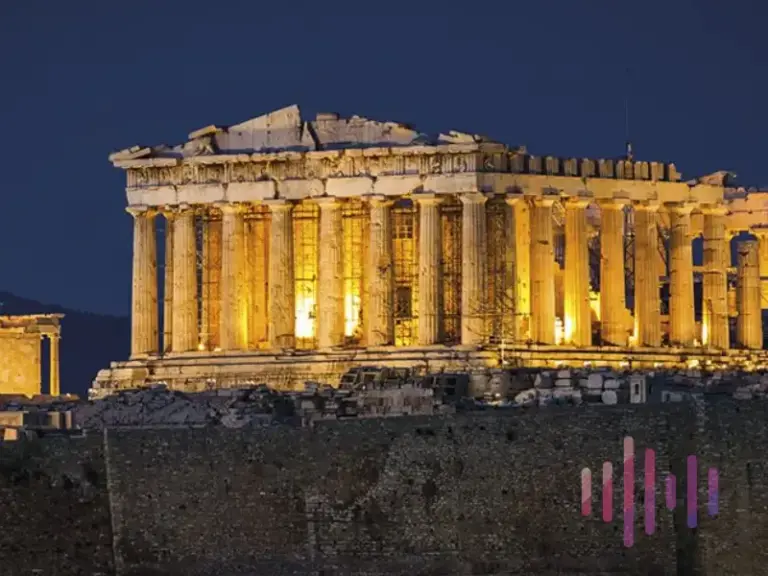 6:43AthensAcropolis of Athens: free audio guide, hours and ticketsFree audio guide to the Acropolis of Athens, in English: 7 minutes up the rock and down its…
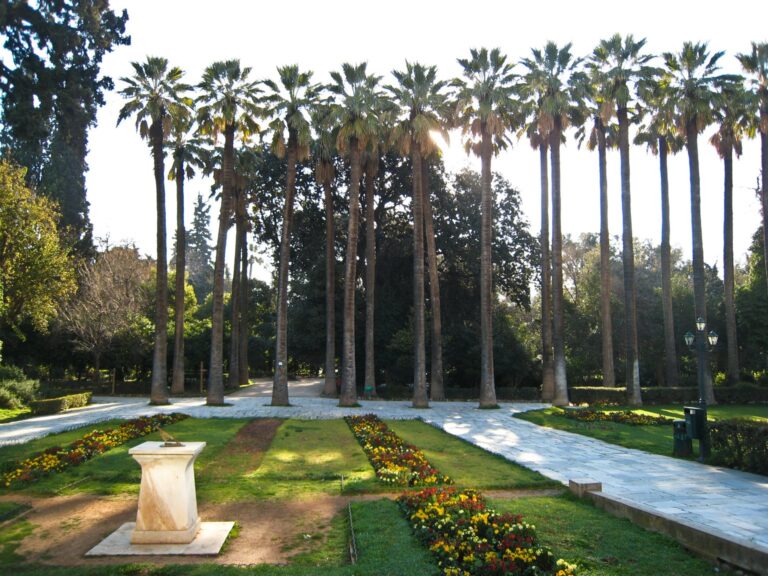 3:36AthensNational Garden of Athens: free audio guide and hoursThe National Garden of Athens is Queen Amalia’s old Royal Garden: 156,000 m² behind the Parliament, with the…
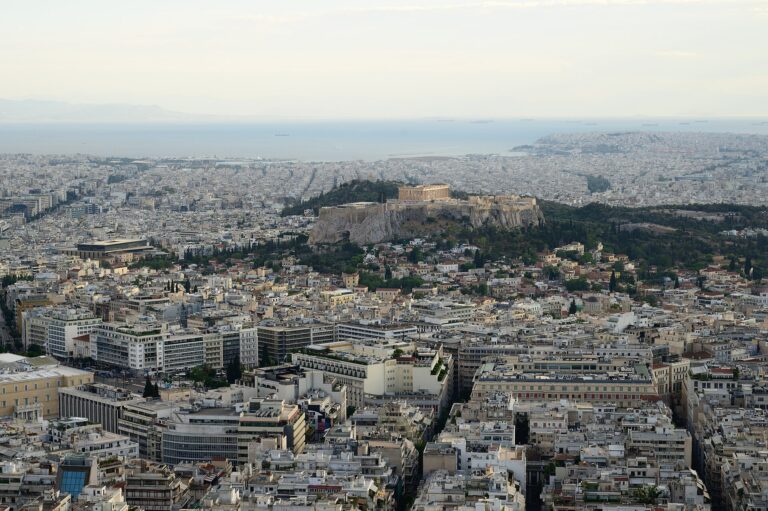 7:00AthensLycabettus Hill: free audio guide, funicular and hoursThis free audio guide to Lycabettus Hill plays straight from your phone — no app, no sign-up —…