
Gibralfaro Castle: free audio guide, hours and tickets
Free audio guide in English · no app, no sign-up
Free audio guide to Gibralfaro Castle in Málaga, in English: just under 7 minutes on the hill of the lighthouse, its walls and towers, the Airón Well and the view from the top. It plays on this page.
 Audio guide
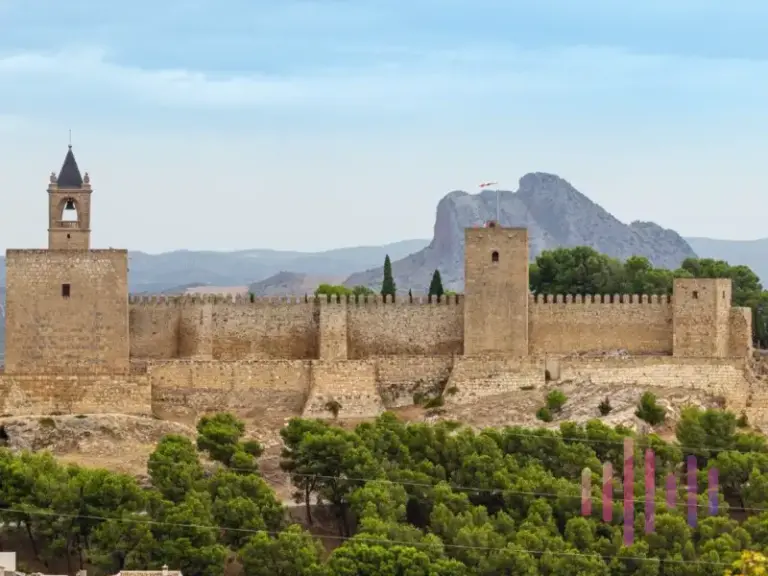
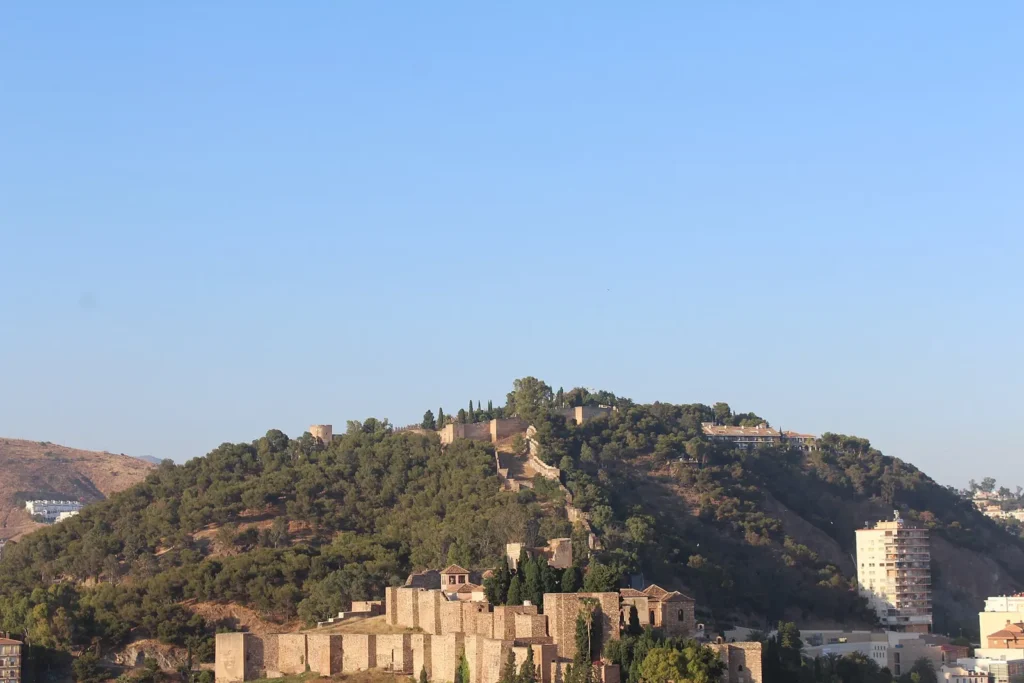
Gibralfaro Castle is the 14th-century fortress on the hill above Málaga, built to house the troops that protected the Alcazaba and joined to it by a walled path, the Coracha. You walk its walls for the view over the port and the bay. Until 31 October it opens every day from 09:00 to 20:00, for €7. This is its free audio guide, in English.
What the audio guide covers
It is free, plays on this page in your phone’s browser with no app and no sign-up, and lasts just under 7 minutes. It opens with the name of the hill, the mountain of the lighthouse, and with the castle as a symbol of Málaga, which appears on the coats of arms and flags of the city and the province. Before the tour it gives you 2 tips: climb to the top for the view, and see both the main courtyard and the parade ground.
Then it walks you round. It starts at the entrance, with the 2 lines of walls, the 8 towers and the siege of 1487 by the Catholic Monarchs. It crosses the main courtyard, where the Interpretation Centre and the 17 m Torre Mayor stand, goes down to the parade ground, where the troops had their barracks and stables, and stops at the Torre Blanca. It also tells you about the Airón Well, cut 40 m into the rock. It ends at the top, with a view that on clear days reaches the Rif mountains in Africa and the Strait of Gibraltar.
Points of interest the audio guide stops at, and what you will see there:
| Point of Interest | Brief Description |
|---|---|
| Walls and towers | 2 lines of walls with 8 towers, most of them solid; a wall walk runs along the top. |
| Main courtyard | The upper part of the castle, with the Interpretation Centre in the old 18th-century powder magazine. |
| Torre Mayor | 17 m high, to the south-east: the castle’s best lookout, with its own water, storerooms and living quarters. |
| Airón Well | 40 m deep, cut into the living rock down to a spring that still flows today. |
| Parade ground | The lower part of the castle, where the troops had their barracks and stables. |
| Torre Blanca | The great tower set out from the wall to the north-west, with a cistern, rooms and storerooms inside. |
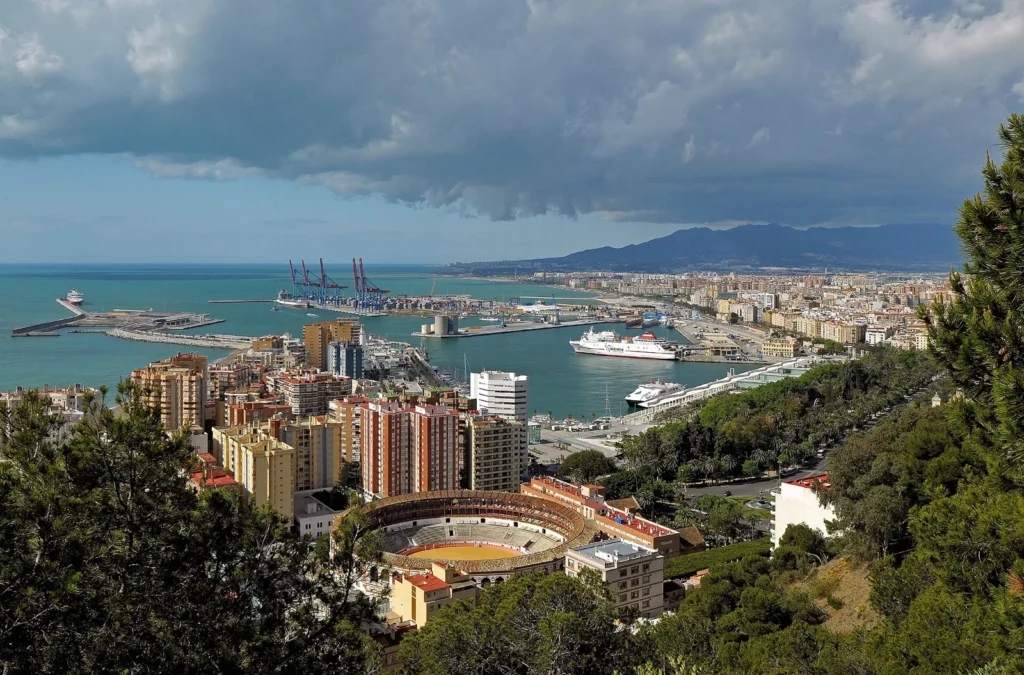
| The view from the top | The port, the bullring and the bay of Málaga; on clear days, the Rif mountains in Africa. |
Opening hours and tickets in October 2026
Until 31 October, Gibralfaro Castle opens every day from 09:00 to 20:00, and the last entry is at 19:00. The last entry is always 1 hour before closing.
A ticket costs €7, or €10 with the Alcazaba included. The reduced ticket is €3, or €5 with the Alcazaba, for European Youth Card holders, EU citizens over 65, retired or unemployed, EU students, people with a disability of 33% or more and large-family card holders. Groups of 10 or more pay €5 each, or €8 with the Alcazaba. Official tour guides at work go in free. You can buy online on the official ticket site, alcazabaygibralfaro.janto.es. (Hours and prices from the Ayuntamiento de Málaga, checked on 17 October 2026.)
A fortress built to guard the Alcazaba
Gibralfaro was built in the 14th century to house troops and protect the Alcazaba below it, and it became the hardest fortress to take in all of al-Andalus. The accepted date is the reign of Yusuf I, between 1344 and 1354; it was unfinished when he died and was completed under his son Muhammad V, adapted to the new artillery. The hill had been used long before, by Phoenicians and Romans: pottery and structures from Phoenician-Punic times have been found here.
The name comes from the Arabic jabal, mountain, and faruh, from the Greek pharos, lighthouse. At the time the hill was kept bare of trees, so that no one could come close unseen, and the only way in was from the Coracha, the walled path that zigzags down to the Alcazaba.
After the Castilian troops took the castle in 1487, its mosque was consecrated as a church dedicated to San Luis, and the fortress served as barracks and prison until 1925, when it was handed over to the City Council. When the French army left Málaga during the Peninsular War, its mines blew up the Torre Nueva, the outer defences, the barracks and the powder store. It was declared a historic monument in 1931, and the walls and towers were restored in 3 phases between 1989 and 1999.
The gateway, the walls and the towers
The original entrance faces the Coracha. It is a bent gateway: you could not walk straight in. It opens in a large tower, behind a double gate across the barbican, with a small courtyard inside for the guard.
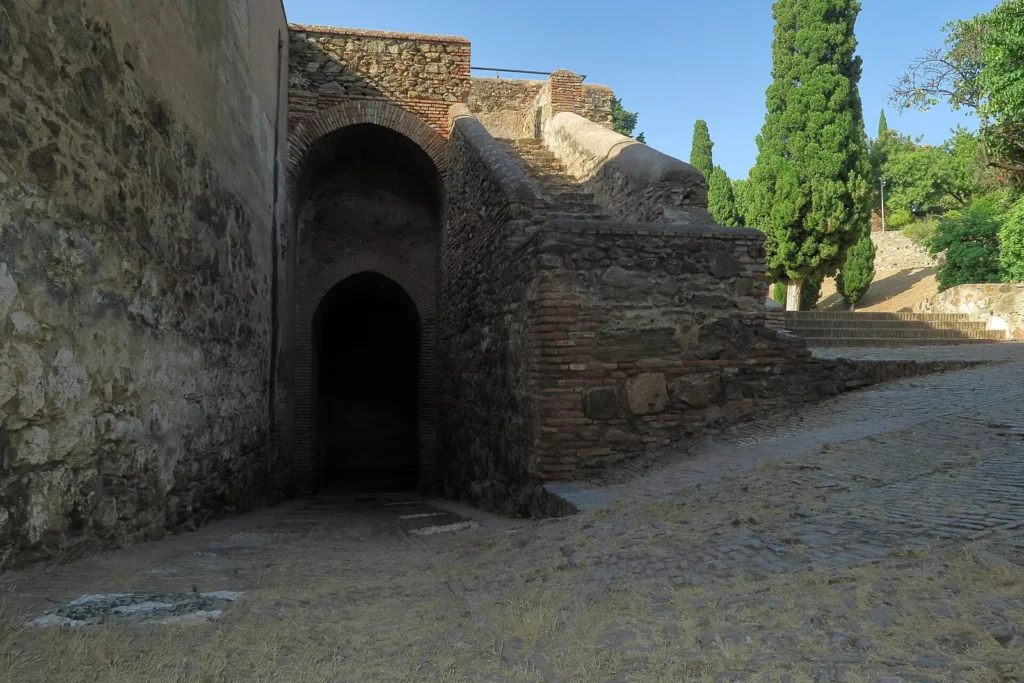
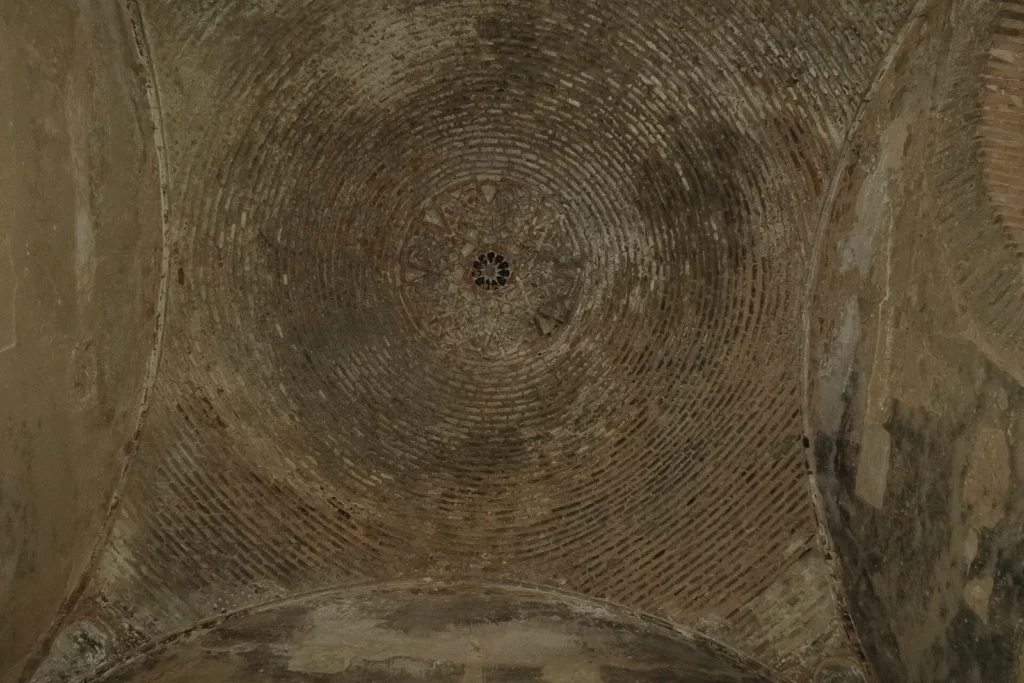
Look up as you go through. The vault is decorated with interlacing in cut brick that forms an 8-pointed pattern, and inside it a 12-pointed one in glazed tiles of white, black and blue. Today visitors come in through openings in the barbican on the east side and in the south wall, next to the Interpretation Centre.
The whole site covers 21,310 m² with the Coracha and the barbican, with 1,310 m of walls. The inner enclosure is closed by 733 m of wall in 30 stretches and 8 towers. The Torre Blanca, to the north-west, stands out from the wall and is joined to it by a short stretch: it is the largest tower of its kind preserved in al-Andalus, and it was used as a prison at times. The Torre Mayor, to the south-east, is 17 m high.
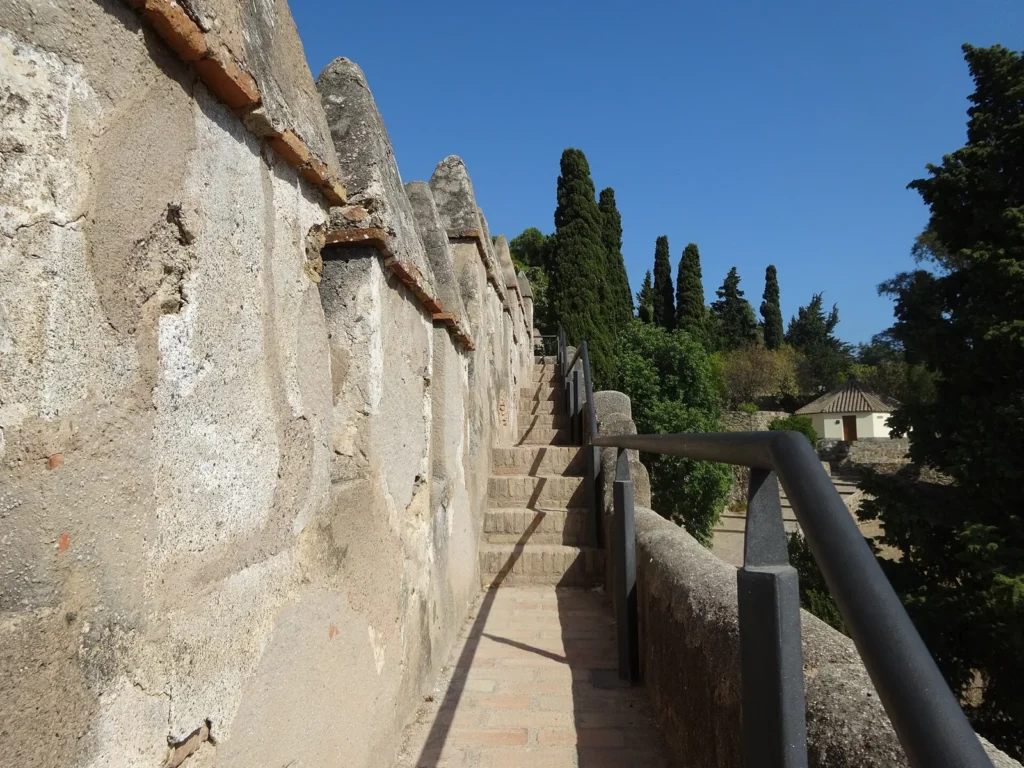
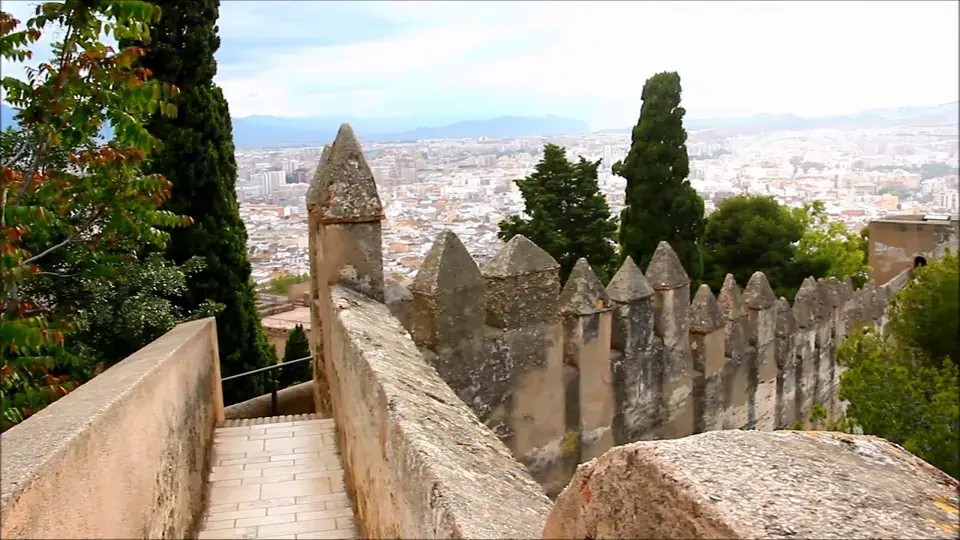
Along the top runs the wall walk, with what is left of its pyramid-shaped merlons. On some stretches you can still see paint that imitates large blocks of stone.
The Airón Well and the Interpretation Centre
Water decided who held out in a siege. The Airón Well is 40 m deep, cut into the living rock down to a spring that still flows. Rainwater ran through channels into underground cisterns with brick vaults; the largest, octagonal, rises in the centre of the fortress. You will also find 2 bread ovens built after the conquest and sentry boxes from different periods.
The Interpretation Centre fills the old 18th-century powder magazine and has been open since 29 July 1998. It tells the life of the castle as a garrison and coastal lookout from 1487 to 1925, starting with a large model of Muslim Málaga laid over the city of today. Glass cases show the uniforms of each century, with furniture and weapons. The 18th century gets the most space: Joseph Carrión de Mula, the port lookout and map-maker, had his post in the highest tower and drew the most important map of the city in 1791. There are navigation instruments, lead soldiers, miniatures of the Regimiento Fijo de Málaga battalion in its 1805 uniform and copies of the playing cards the soldiers used.
Under part of the building lie the remains of the mosque, with a cobbled street around it: after the conquest it became the chapel of San Luis.
Getting there, and the view
The address is Camino de Gibralfaro, 11, 29016 Málaga. Bus 35 is the easy way up. The Alcazaba is at the foot of the hill, and the €10 ticket covers both.
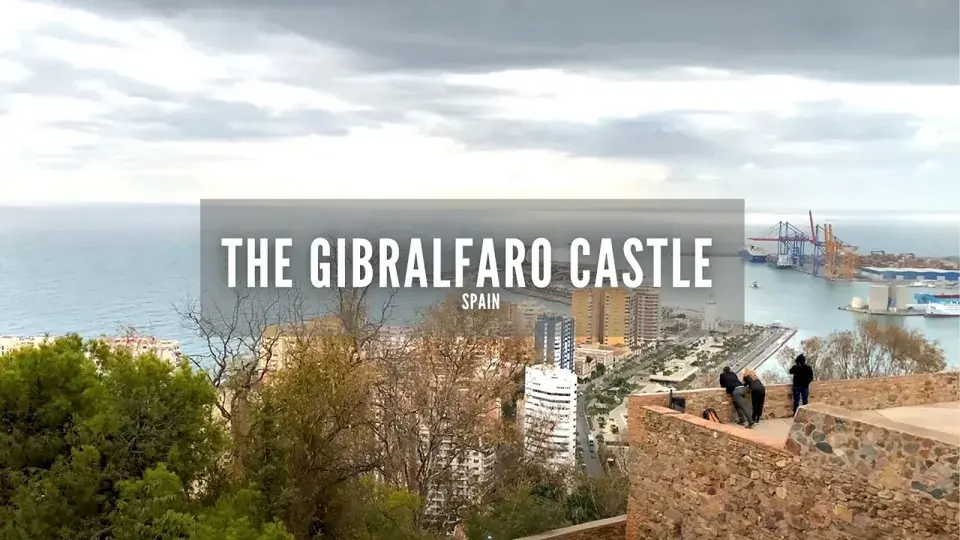
From the walls you look straight down on the bullring and the port, with the bay and the mountains behind. Go late in the afternoon in October and you still have until 20:00 at the top.
More free audio guides in Málaga
At the foot of the hill, the Alcazaba was the palace that Gibralfaro was built to protect, and the Roman Theatre sits right next to its entrance.
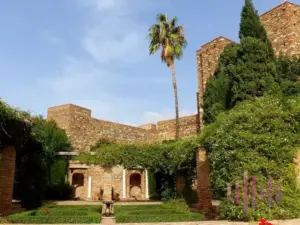 Free audio guideThe Alcazaba of Málaga
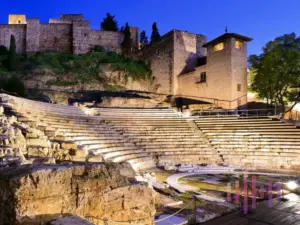 Free audio guideRoman Theatre of Málaga
A few streets away, the Cathedral of the Incarnation has its own audio guide. All of the city’s audio guides are on our Málaga page.
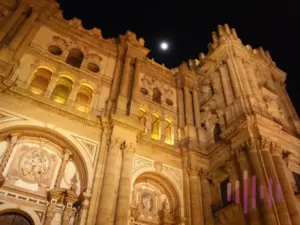
Where to find it
FAQs
How do the free audio guides work?
They play right here on audioguidetravel.com, with no app to download and no sign-up. Press play and listen as you walk round: a phone and a pair of headphones are all you need. The audio streams from this page, so you’ll need mobile data or Wi-Fi.
Can I take the tour at my own pace?
Of course! You set the pace: pause whenever you like, jump back or forward 15 seconds, or tap the bar to jump to any point, and listen as many times as you want so you don’t miss a thing.
If I'm in a group, can we use the same audio guide?
Yes. The same free audio guide opens on as many phones as you like, so you can go round together as a group or with your family, each person at their own pace and with their own headphones. The quickest way is to send the link via WhatsApp, Telegram or however you like: the buttons just below let you share it right now.
Visitor information
As of 17 Oct 2026- Opening hours
- 09:00–20:00 from 1 April to 31 October · 09:00–18:00 from 1 November to 31 March.
- Tickets
- €7 · €10 with the Alcazaba
- Getting there
- City bus 35 from the historic centre, about every 30 minutes.
- Accessibility
- Hilltop fortress: the wall walk has steps and narrow stretches; reduced €3 with a disability of 33%+
- Tip
- Come on a Sunday from 14:00, when entry is free, or buy the €10 ticket that adds the Alcazaba
- Official website
- alcazabaygibralfaro.malaga.eu
Nearby
More free audio guides in Malaga
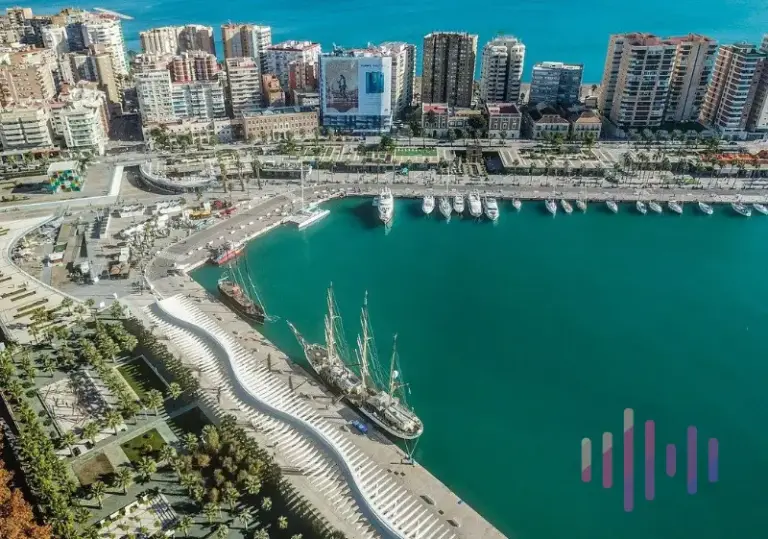 6:25MalagaPort of MálagaThe Port of Málaga, a jewel embedded in the sunny Costa del Sol, invites you to discover its…
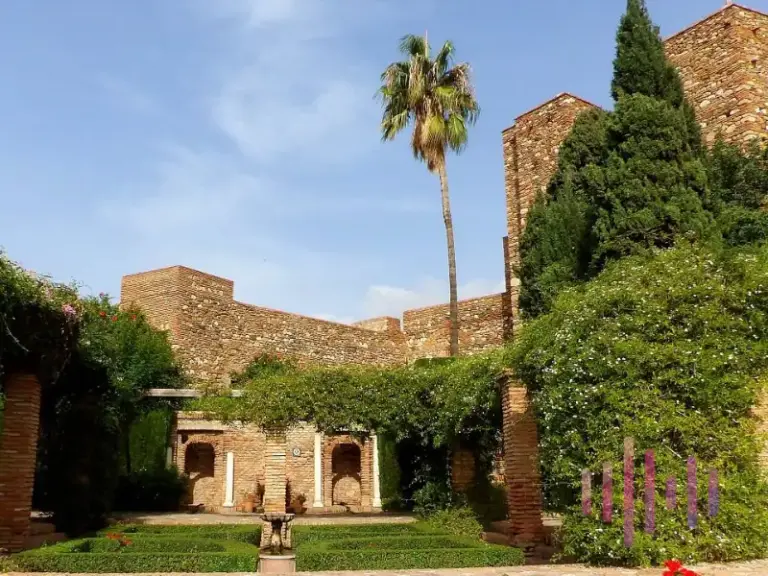 4:53MalagaThe Alcazaba of Málaga: free audio guide, hours and ticketsFree audio guide to the Alcazaba of Málaga, in English: just under 5 minutes of audio up the…
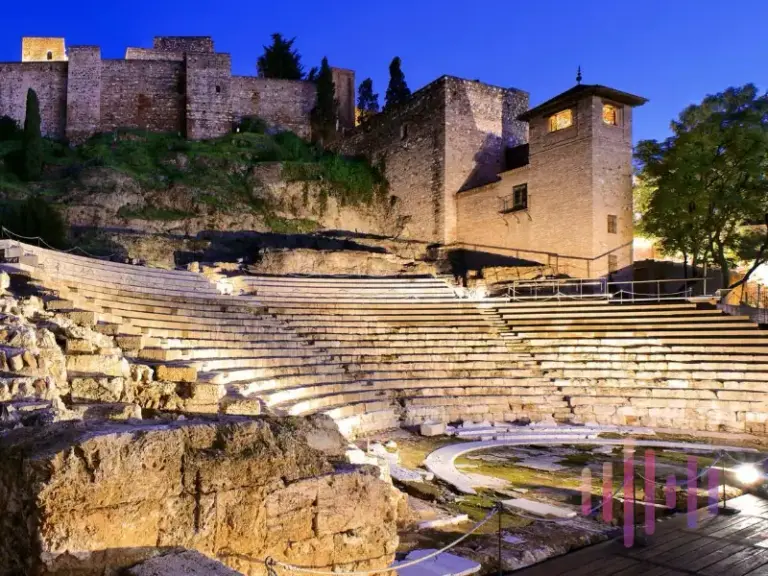 6:47MalagaRoman Theatre of Málaga: free audio guide and opening hoursFree audio guide to the Roman Theatre of Málaga, in English: just under 7 minutes on how it…