
Odeon of Herodes Atticus: free audio guide, closed for works
Free audio guide in English · no app, no sign-up
This free audio guide to the Odeon of Herodes Atticus plays straight from your phone — no app, no sign-up — standing in front of the stage wall on Dionysiou Areopagitou. It tells you why a Roman consul built the finest theatre in Greece for a wife he was then tried for killing, how a roof spanning 38 metres of radius stood on nothing at all, what the fire of 267 AD left, and where the monument stands today, closed for restoration since 1 July 2026. Press play at the gate.
 Audio guide
Before you go in
The few things that change your visit.
- The Odeon has been closed since 1 July 2026, for at least 3 years, with no reopening date published
- The interior is not part of the archaeological visit: you see the stage wall free from Dionysiou Areopagitou
- The South Slope costs €30.00 and the ticket is single use with the Acropolis
- From 1 November to 31 March it opens 08:00 to 17:00, last entry 16:30
- Metro Akropoli (line 2), then about 800 metres on foot to the Odeon
On this page
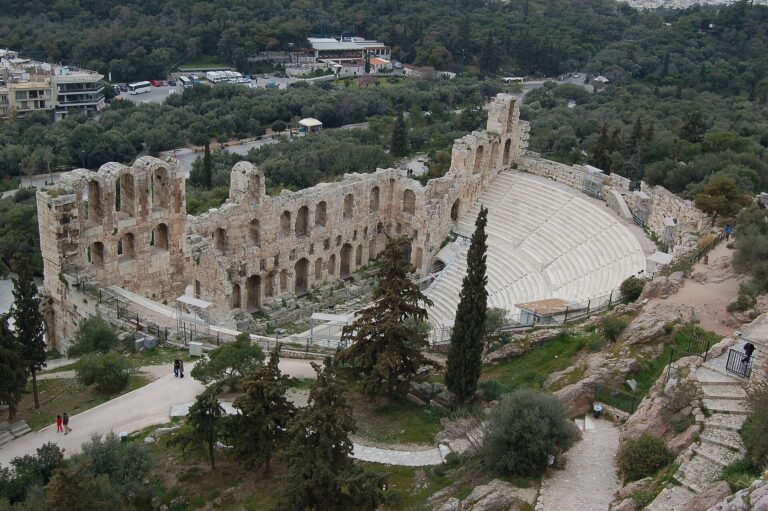
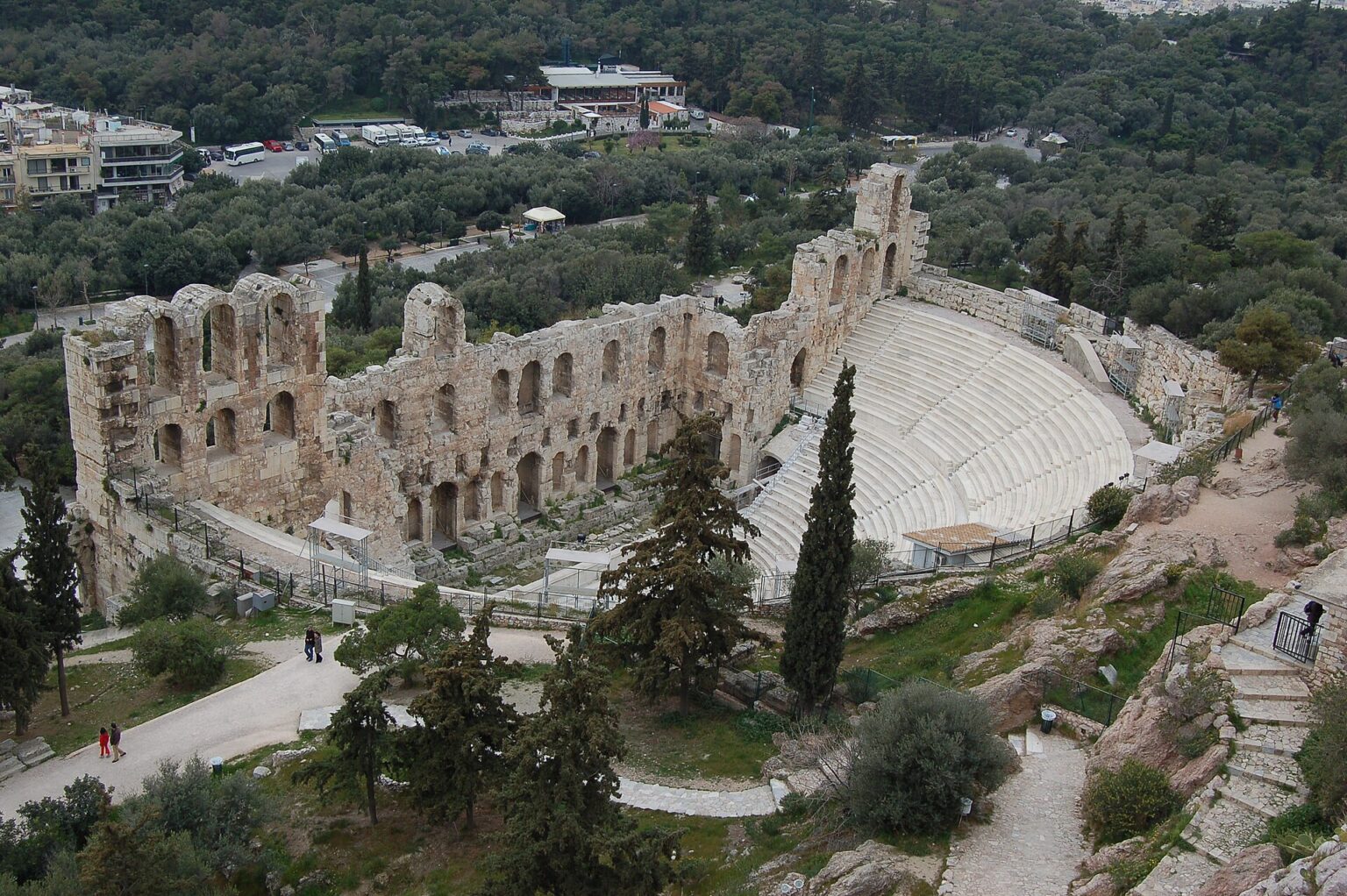
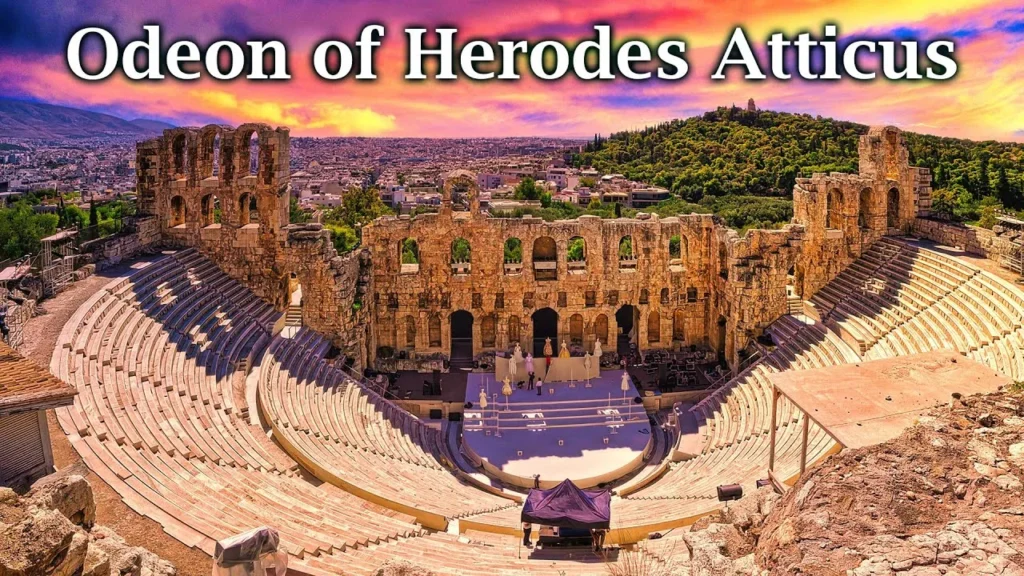
The Odeon of Herodes Atticus is the marble theatre at the western end of the Acropolis’s South Slope, raised by Herodes Atticus in memory of his wife Regilla between 160 and 174 AD. It has been closed since 1 July 2026 for a restoration that will last at least 3 years, with no reopening date published. Its 3-storey stage wall is still there to see from the street, and this is its free audio guide.
What the audio guide tells you
It is free, it plays in your phone’s browser, and there is no app to install and no sign-up. Press play on the pedestrian street of Dionysiou Areopagitou, in front of the facade, and carry it with you into the South Slope site. These are the stops:
| The gate on Dionysiou Areopagitou | Where the entrance is, and why it does not open with an archaeological ticket. |
| The stage wall | The 28 metres still standing, its 3 storeys and the niches that held statues. |
| The cavea of 76 metres | The 32 rows of marble seats hewn out of the rock, in 2 tiers. |
| The roof that rested on nothing | A span of 38 metres of radius with no internal supports, and its cedar. |
| Regilla | The woman the building is dedicated to, and the murder trial that followed her death. |
| The fire of 267 | The Herulian raid, and why this building alone was never rebuilt. |
| The Stoa of Eumenes | The long portico running east along the slope, and the link the restoration wants to give back. |
| The last summer | What happened here in June 2026, and what the Ministry of Culture is about to do to the stone. |

Closed since 1 July 2026, for at least 3 years
The single fact that governs a visit: the Odeon of Herodes Atticus is shut. The Greek Ministry of Culture has taken it out of service for a full restoration, and the Minister of Culture, Lina Mendoni, put the length of it in writing on 23 February 2026: the works “will last at least 3 years from the time they begin, during which the monument will remain closed”. No reopening date has been published, checked on 22 September 2026.
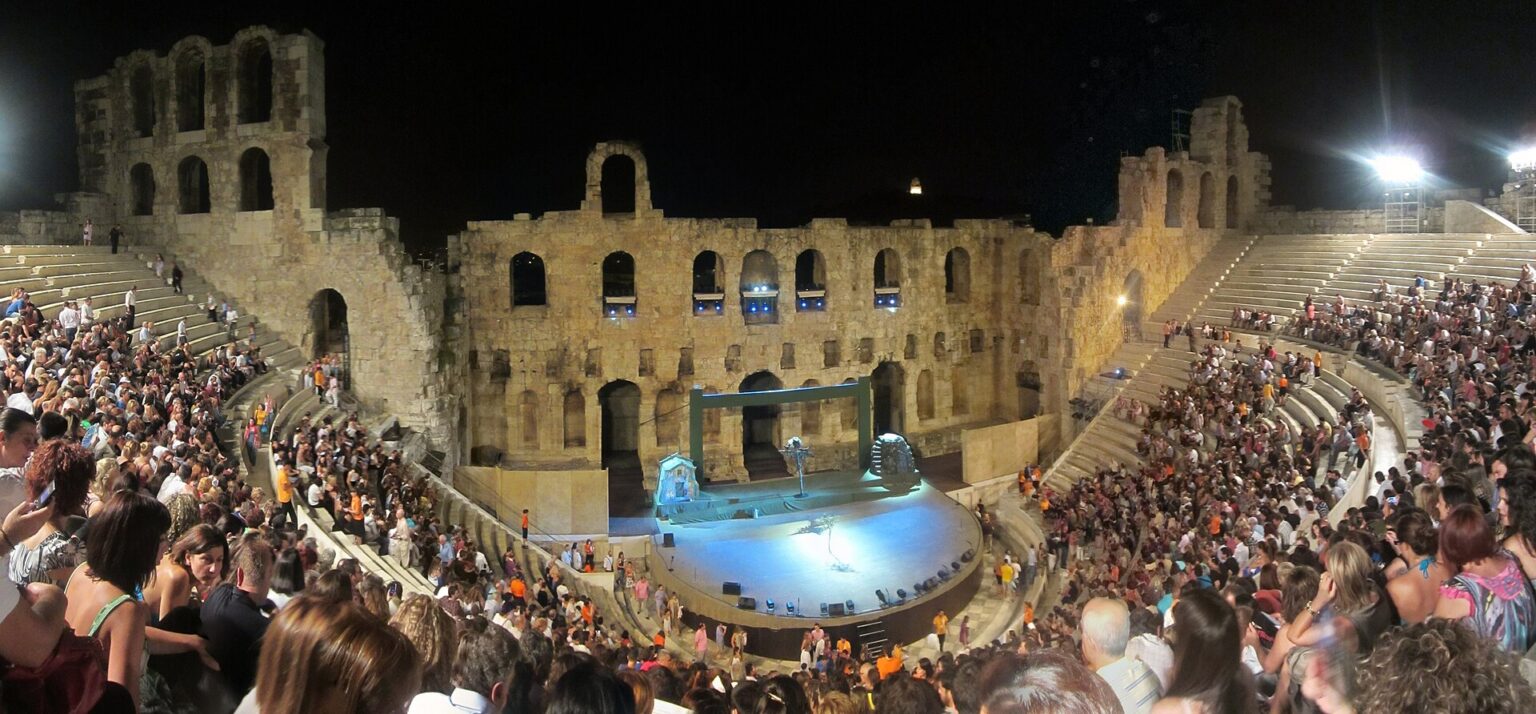
The last night was Tuesday 30 June 2026: John Legend, Evening of Songs & Stories, billed as the closing ceremony of a June the Athens Epidaurus Festival called its Farewell Celebrations, with 18 performances, all at 21:00. The Festival’s 2027 programme already runs without the Odeon, at the Ancient Theatre of Epidaurus, the Little Theatre of Ancient Epidaurus and Peiraios 260.

The building shows structural problems — cracking in the upper arcade of the facade, biocorrosion, roots working into the joints — which is why 3 years is a floor rather than a ceiling. And 2 items on the work list change what there will be to see afterwards: the stage building and its mosaic floors, which today remain unseen, are to be uncovered and displayed, and the proscenium is to be made safe and visitable.
You do not go inside on an archaeological ticket
This was true long before the closure and will still be true after it: the interior of the Odeon is not part of the archaeological visit. The marked route through the South Slope runs “as far as the West Passageway (parodos) of the Theatre of Dionysus”, and the Odeon sits at the far western end, past where the route stops.
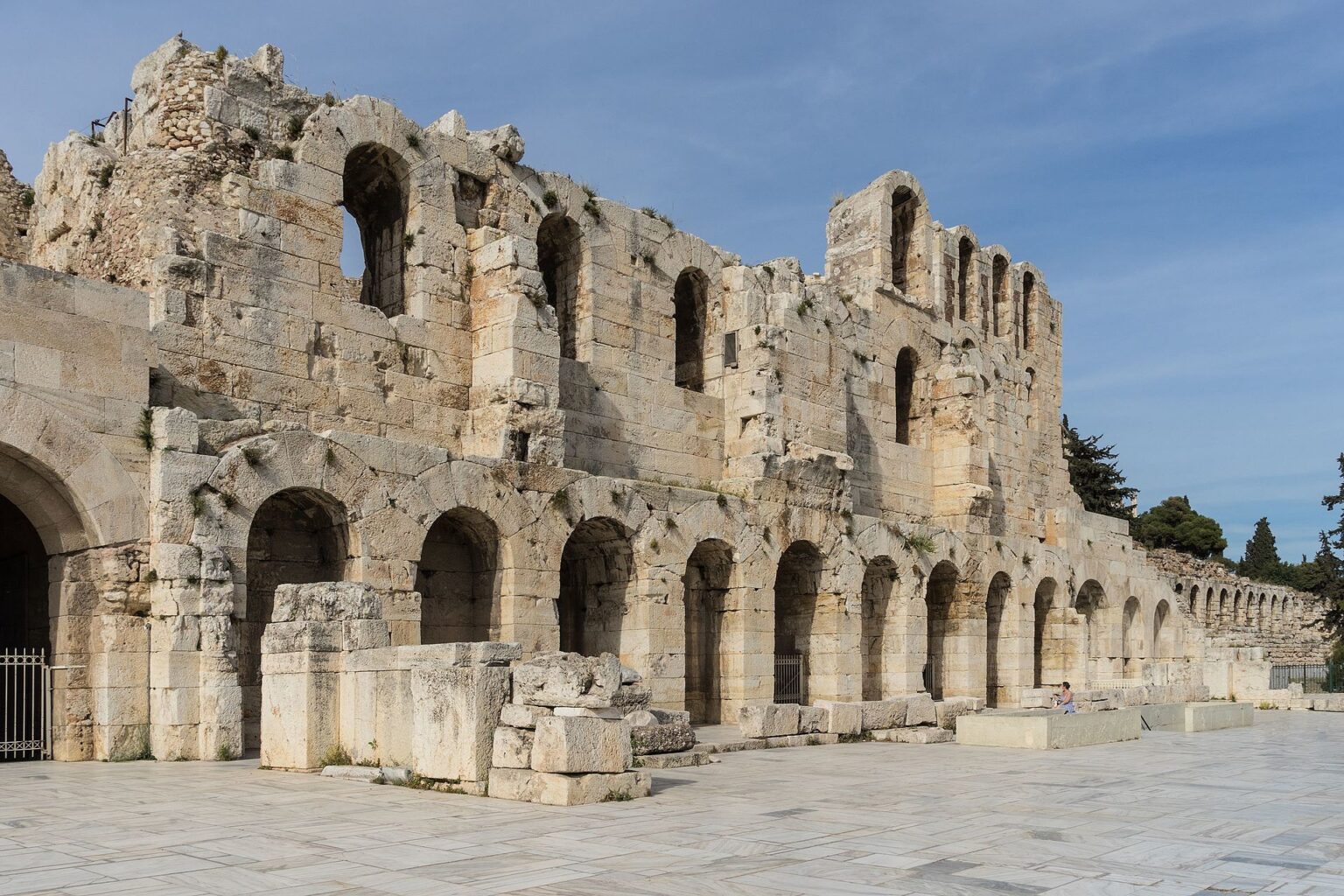
What opened the gate was a performance ticket from the Athens Epidaurus Festival, bought for a specific night, and since 30 June 2026 there have been no nights to buy. So you look at it from outside, and that costs €0.00. The entrance and the facade both face the Dionysiou Areopagitou pedestrian street, and from there you get the stage wall head-on, all 3 storeys of it, still standing 28 metres high.

Tickets: €30.00 for the Acropolis and its Slopes
The Odeon has no ticket of its own, and there is no such thing as a South Slope ticket either. What exists is a single ticket called “Acropolis and its Slopes”: €30.00 full and €15.00 reduced, checked on 7 November 2026 at the state ticket office. It covers the Acropolis itself, the South Slope and the North Slope, and carries a compulsory time slot, changeable up to 2 hours before your visit and up to 2 times, with no refunds.
The trap costs people an afternoon: the ticket is single-use across both. Come down off the rock, walk out of the gate and try to come back in at the South Slope, and it is spent. Do the rock and the slope in one continuous visit; from the top, follow the signage after the Beulé Gate to the South Exit, which delivers you straight into the South Slope without leaving the site.
From 1 November to 31 March the South Slope opens at 08:00 and closes at 17:00, and the last entry is at 16:30. The last entry is always 30 minutes before closing. Everyone walks in free on the last weekend of September, on 28 October, and on the first and third Sunday of each month from November to March, among other dates.
Getting there, and where to stand
The metro is Akropoli, on line 2, and bus line 230 also stops here. From the exit everything is flat: about 320 metres, roughly 5 minutes, to the South Slope gate at the junction of Thrasyllou street with Dionysiou Areopagitou, and about 800 metres, roughly 10 minutes, to the Odeon along the same pedestrian street.
For the facade, stand on the pedestrian street itself: it is the address the Ministry gives the monument, and the face the building has kept. From inside the South Slope enclosure you reach its western end, against the Stoa of Eumenes, though the marked route stops short of the monument.
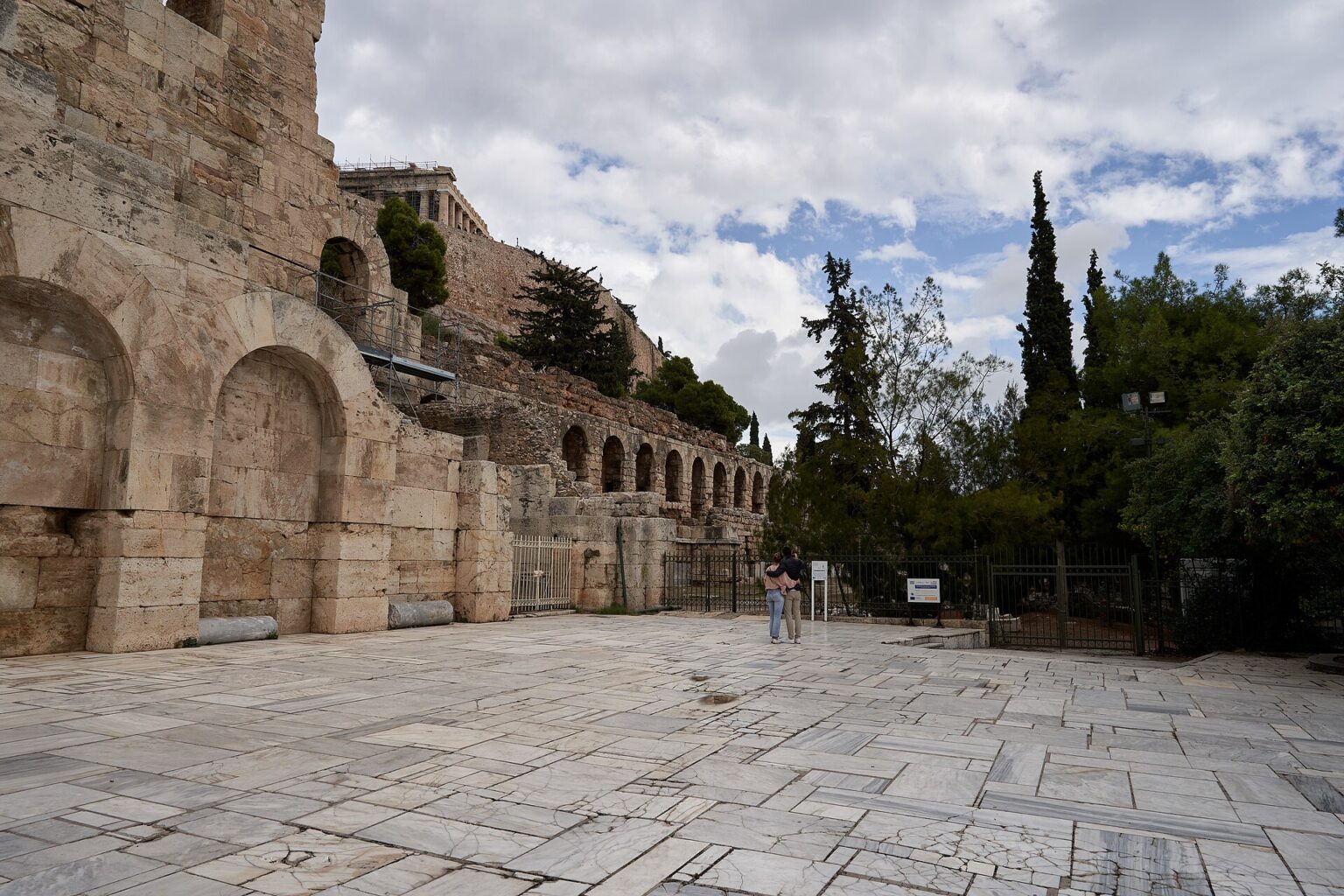

The enclosure is wheelchair-accessible from the main gate as far as the west parodos of the Theatre of Dionysos, with a companion recommended, and the accessible toilets are outside, at the Information Centre at Dionysiou Areopagitou 18-20, 50 metres east of the entrance. Visitors with a disability enter free on presentation of ID or passport and a disability certificate, and from 67% so does 1 companion.
Herodes, Regilla and the cedar roof
The man who paid for it was Tiberius Claudius Atticus Herodes, from a leading Athenian family, and he built it in memory of his wife Regilla, who died in 160 AD. By 174 AD it was standing: that year Pausanias visited Athens and called it unrivalled in size and magnificence. Philostratus records the roof of cedar, “though this wood is considered costly even for making statues”, and it spanned a radius of 38 metres with no internal fixings. Under it sat about 5,000 people, above all for musical contests.
Philostratus also tells the story the marble does not. Regilla died in the 8th month of her pregnancy after being struck by a freedman of the household, and her brother Braduas brought a charge of murder against Herodes. Herodes was acquitted, and part of his defence was the building itself: he would never have dedicated so fine a theatre to her memory had he been guilty. An Athenian inscription of the time gives her a gentler epithet: “the light of the house”.
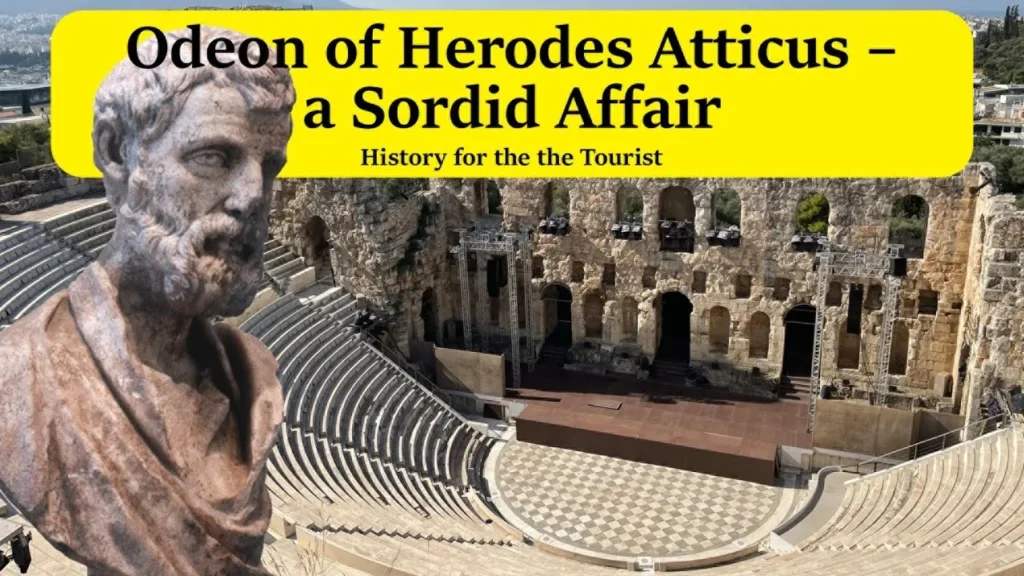
The Odeon burned in 267 AD, in the Herulian raid, and it was never rebuilt. By 1857 the cavea lay under 12 metres of earth, with crops growing on top, and the Archaeological Society spent 1848 to 1858 clearing it. During the German occupation a young Maria Callas sang here in Beethoven’s Fidelio, and the marble you see is the 1952-1953 restoration, which the planner Konstantinos Doxiadis publicly opposed. From the middle of the 1950s the Odeon was the home of the Athens Festival, with 4,680 seats, until 30 June 2026.
Nearby, with their own free audio guides
The obvious pairing is the Acropolis, because it is literally the same €30.00 ticket and the same visit. Below it lies the Ancient Agora of Athens, which holds the odeon of Agrippa — the second of the 3 Athenian odeons, and the one this building came after. And for a working open-air theatre rather than a closed one, Lycabettus Hill has a 3,000-seat amphitheatre in an old quarry, free to walk up to. All of them, and the rest of the city, are on the free audio guides of Athens page.
 Free audio guideAcropolis of Athens
 Free audio guideAncient Agora of Athens
 Free audio guideLycabettus Hill
Reading this in Spanish? The same guide, written for a Spanish-speaking visitor and narrated in Spanish, is at Odeón de Herodes Ático en vozviajera.com.
Where to find it
FAQs
How do the free audio guides work?
They play right here on audioguidetravel.com, with no app to download and no sign-up. Press play and listen as you walk round: a phone and a pair of headphones are all you need. The audio streams from this page, so you’ll need mobile data or Wi-Fi.
Can I take the tour at my own pace?
Of course! You set the pace: pause whenever you like, jump back or forward 15 seconds, or tap the bar to jump to any point, and listen as many times as you want so you don’t miss a thing.
If I'm in a group, can we use the same audio guide?
Yes. The same free audio guide opens on as many phones as you like, so you can go round together as a group or with your family, each person at their own pace and with their own headphones. The quickest way is to send the link via WhatsApp, Telegram or however you like: the buttons just below let you share it right now.
Visitor information
As of 7 Nov 2026- Opening hours
- Odeon closed for restoration. South Slope: 08:00-17:00 from 1 November to 31 March (last entry 16:30)
- Tickets
- €30.00 (“Acropolis and its Slopes” ticket) · Reduced €15.00
- Getting there
- Metro Akropoli (line 2), then about 800 metres (10 minutes) on foot along Dionysiou Areopagitou
- Accessibility
- South Slope wheelchair-accessible as far as the Theatre of Dionysos; accessible toilets outside, 50 m east
- Tip
- The ticket is single use: do the Acropolis and the South Slope in one go, without leaving
- Official website
- odysseus.culture.gr
Nearby
More free audio guides in Athens
 8:00AthensParthenon: free audio guide, hours and ticketsFree audio guide to the Parthenon, in English: about 8 minutes on the temple of Athena, who built…
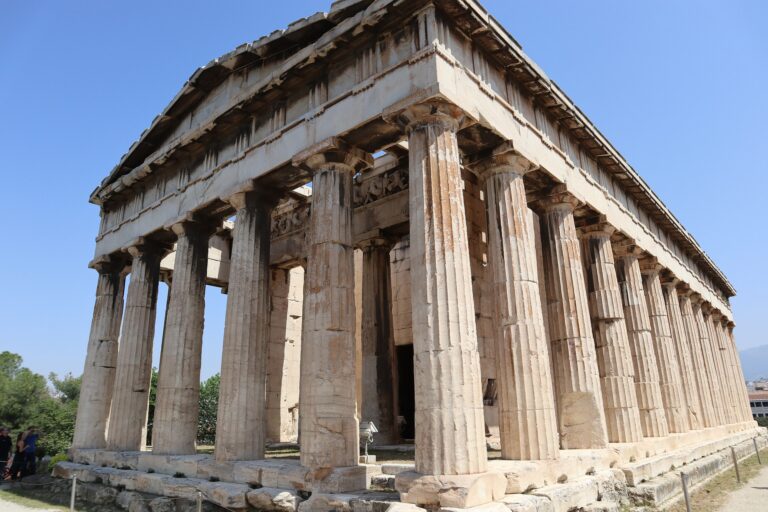 6:51AthensTemple of Hephaestus: free audio guide, hours and ticketsThis free audio guide to the Temple of Hephaestus plays straight from your phone — no app, no…
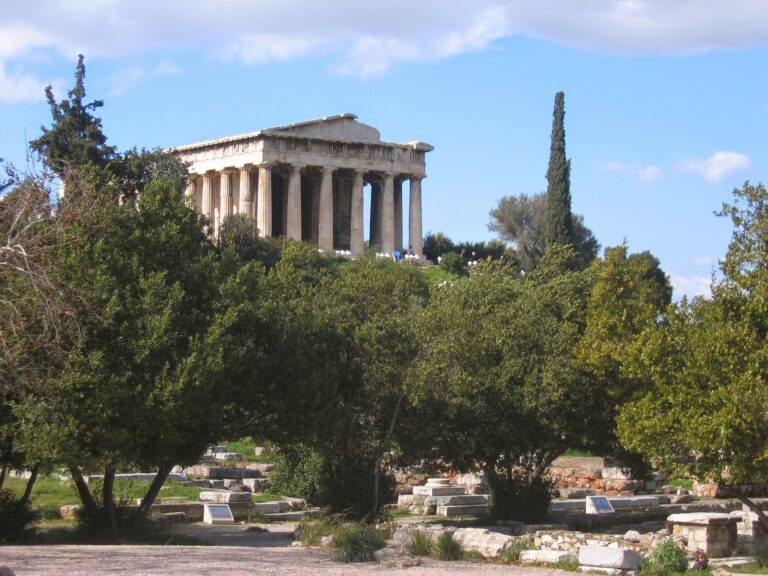 9:36AthensAncient Agora of Athens: free audio guide, hours and ticketsThis free audio guide to the Ancient Agora of Athens plays straight from your phone — no app,…