
Archivo de Indias, Seville: free audio guide and opening hours
Free audio guide in English · no app, no sign-up
Free audio guide to the Archivo de Indias in Seville, in English: just over 4 minutes on why Charles III founded it in 1785, the merchants’ exchange by Juan de Herrera, the courtyard, the marble staircase and what the archive keeps. It plays on this page.
 Audio guide
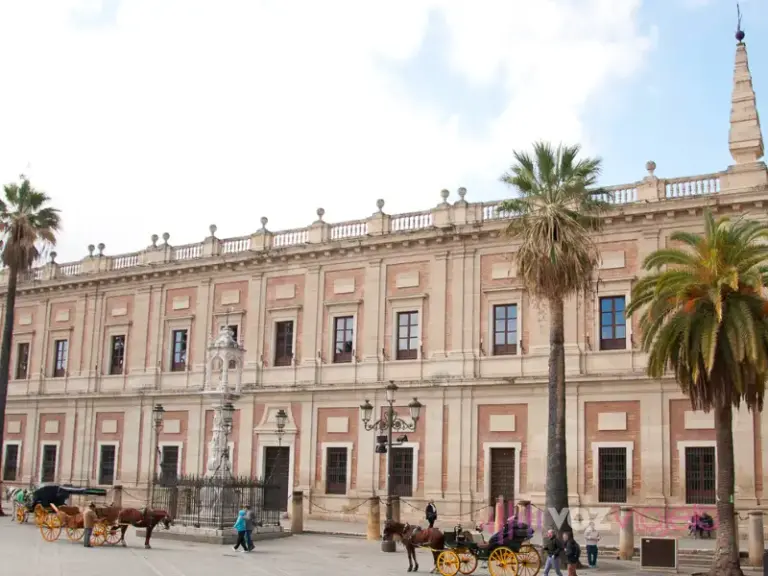
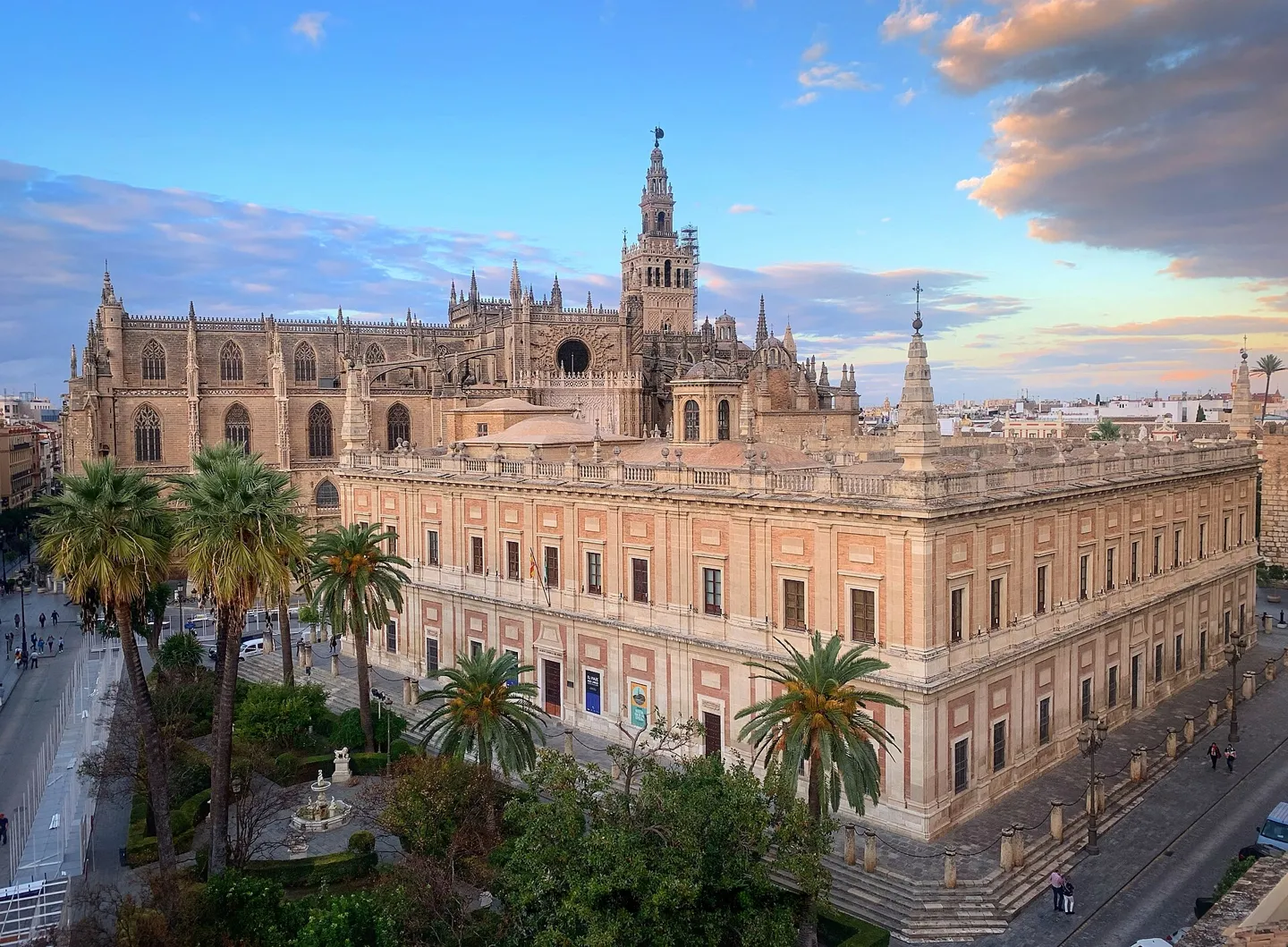
The Archivo de Indias (General Archive of the Indies) is the archive where Spain keeps the papers of its empire in the Americas and the Philippines, in a 16th-century merchants’ exchange between Seville Cathedral and the Real Alcázar. Visiting the building is free: a stone courtyard, a marble staircase and long vaulted galleries. Our free audio guide, just over 4 minutes long, plays on this page.
What the audio guide covers
The audio runs for 4 minutes 13 seconds and is best heard in the courtyard, before you go up the stairs. It covers 6 things:
| Stop | What you hear |
|---|---|
| Why the archive exists | Founded in 1785 by Charles III; some 43,000 bundles of documents and over 80 million pages; a UNESCO World Heritage Site since 1987, together with the Cathedral and the Alcázar. |
| The merchants’ exchange | Seville as the only port for trade with the Americas, and the building put up on plans by Juan de Herrera to give the merchants a place of their own. |
| The building | A free-standing square block around a courtyard, with a facade of red brick and stone, and a central courtyard with arches on pillars and half-columns. |
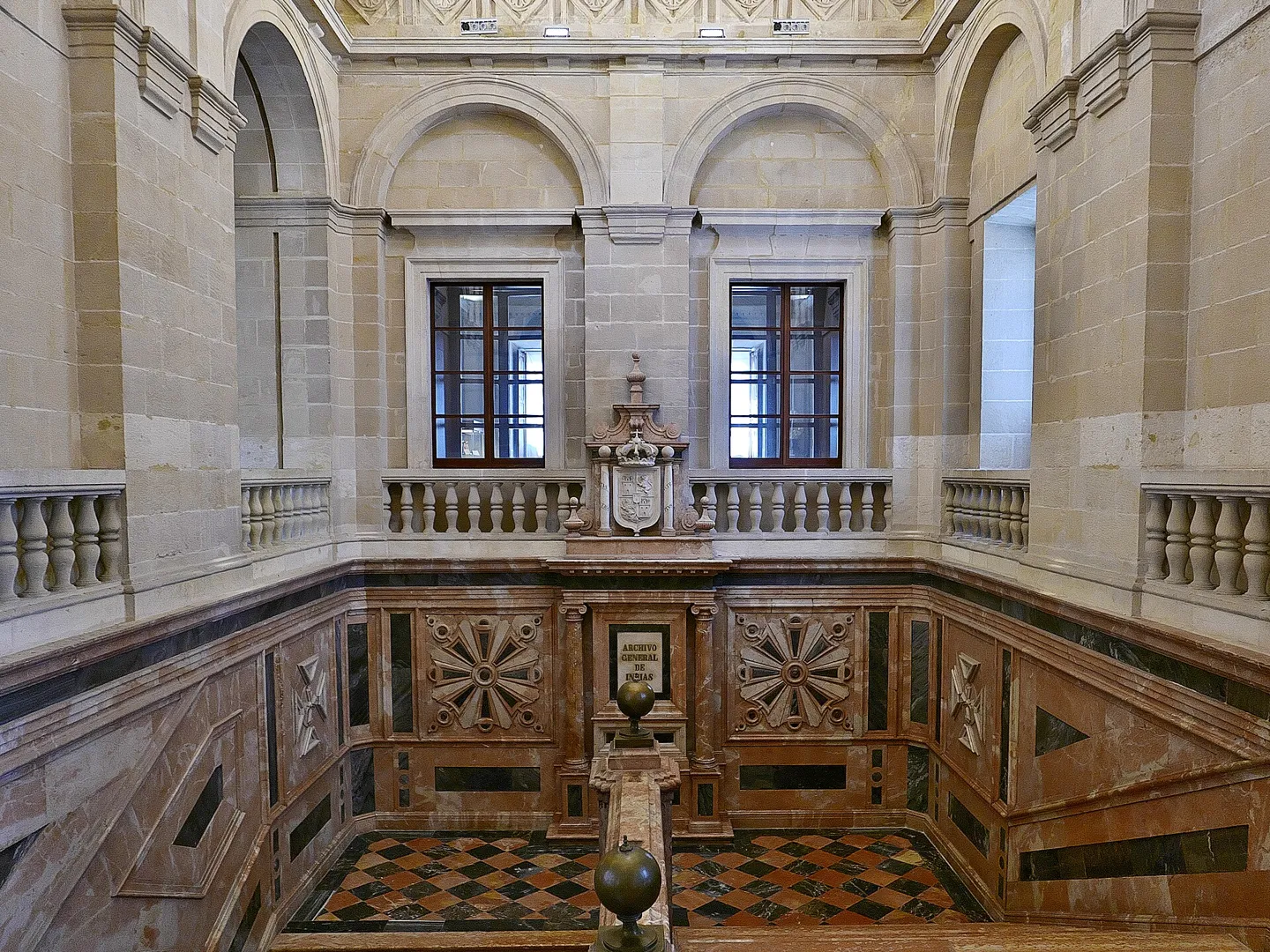
| The main staircase | The 18th-century staircase by Lucas Cintora, with marble panelling. |
| Restoration | The conservation work carried out between 1999 and 2005. |
| The collections | From the Council of the Indies to the Royal Company of Havana, and autographs of Christopher Columbus, Hernán Cortés and Francisco Pizarro. |
From merchants’ exchange to archive
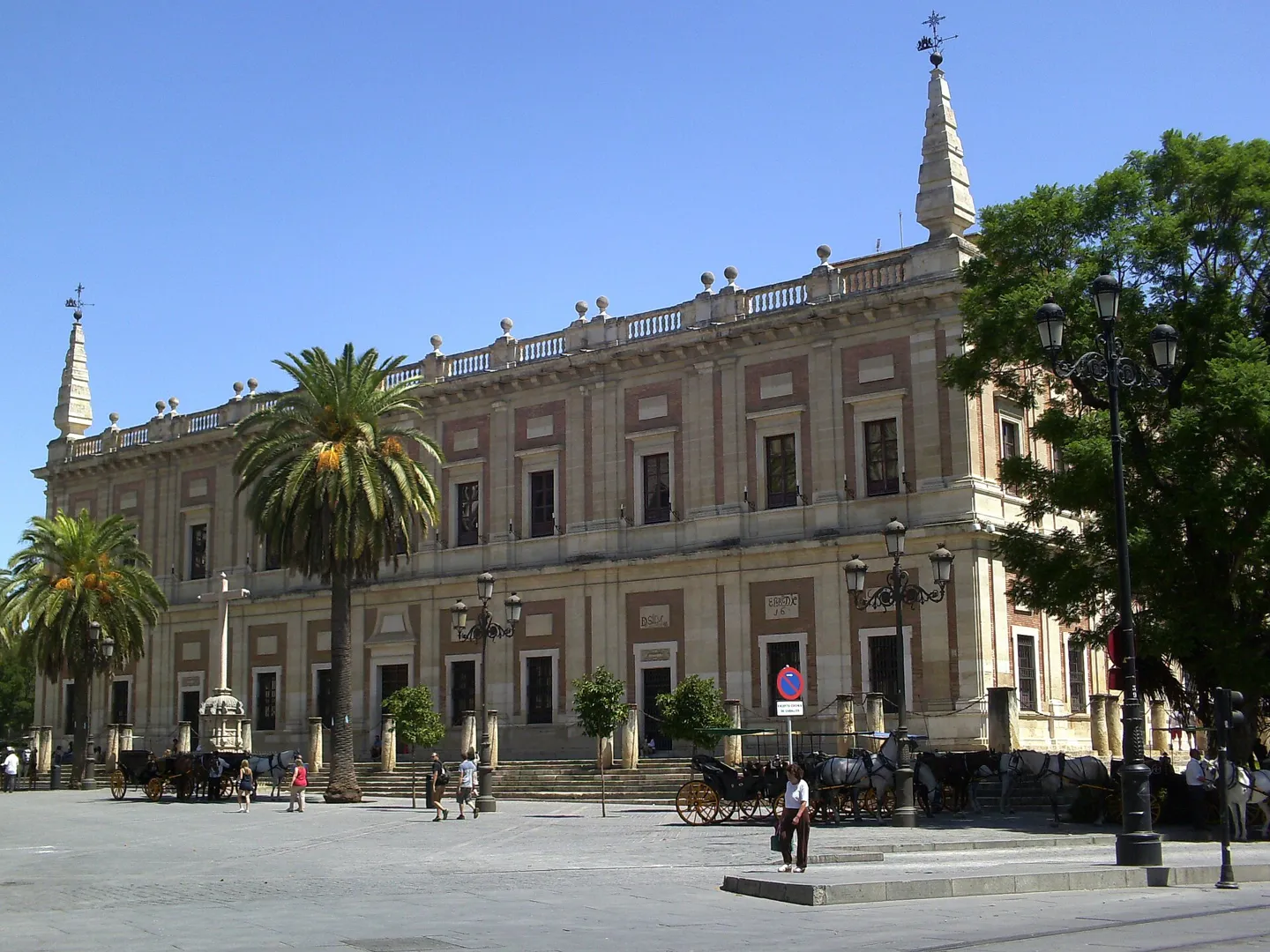
In the 16th century the trade with the Americas was run from Seville, home of the Casa de la Contratación since 1503, and its merchants did business on the steps and in the spaces of the Cathedral. The friction with the cathedral chapter gave the final push for a building of their own: a Casa Lonja, or exchange, designed by the royal architect Juan de Herrera, the man behind El Escorial. Work began in 1583 and went on until 1646, under Juan de Minjares, Alonso de Vandelvira and Miguel de Zumárraga. Zumárraga swapped the planned pitched roof of the upper floor for stone vaults, lighter and less likely to burn.
In 1717 the trade with the Americas moved to Cádiz, and the exchange was left largely unused, with private homes inside it. In 1781 the exchange was chosen as the seat of a new archive, and in 1785 Charles III founded it to gather in one place the papers of the Indies that lay scattered between Simancas, Madrid, Cádiz and Seville. The idea was pushed by José de Gálvez, the minister for the Indies, and carried out by the royal cosmographer Juan Bautista Muñoz. The first documents arrived from Simancas in October 1785, on 24 carts.
Inside: the courtyard, the staircase and the galleries
The Casa Lonja is a square of 56 metres a side, built in stone, with 2 vaulted floors around a central courtyard. Outside, it is ringed by columns joined with chains. Stand in the courtyard first: its 2 storeys of arches are the clearest view of the building’s Spanish Renaissance design.
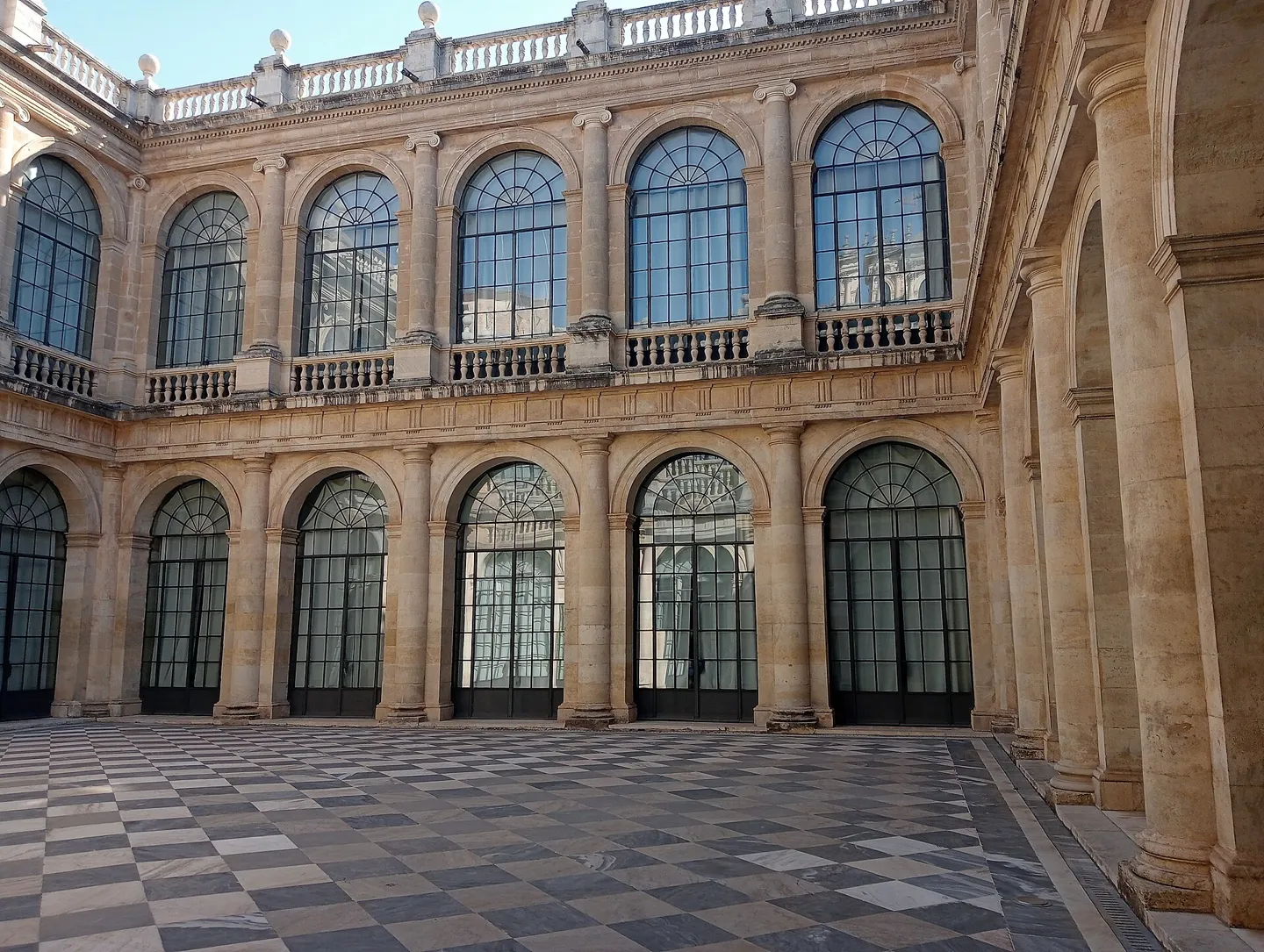
To turn an exchange into an archive, Muñoz worked with Lucas Cintora, architect of the Reales Alcázares. They opened the galleries up again and remodelled the staircase that joins the 2 floors, facing it with marble. The adaptation was finished in 1788.
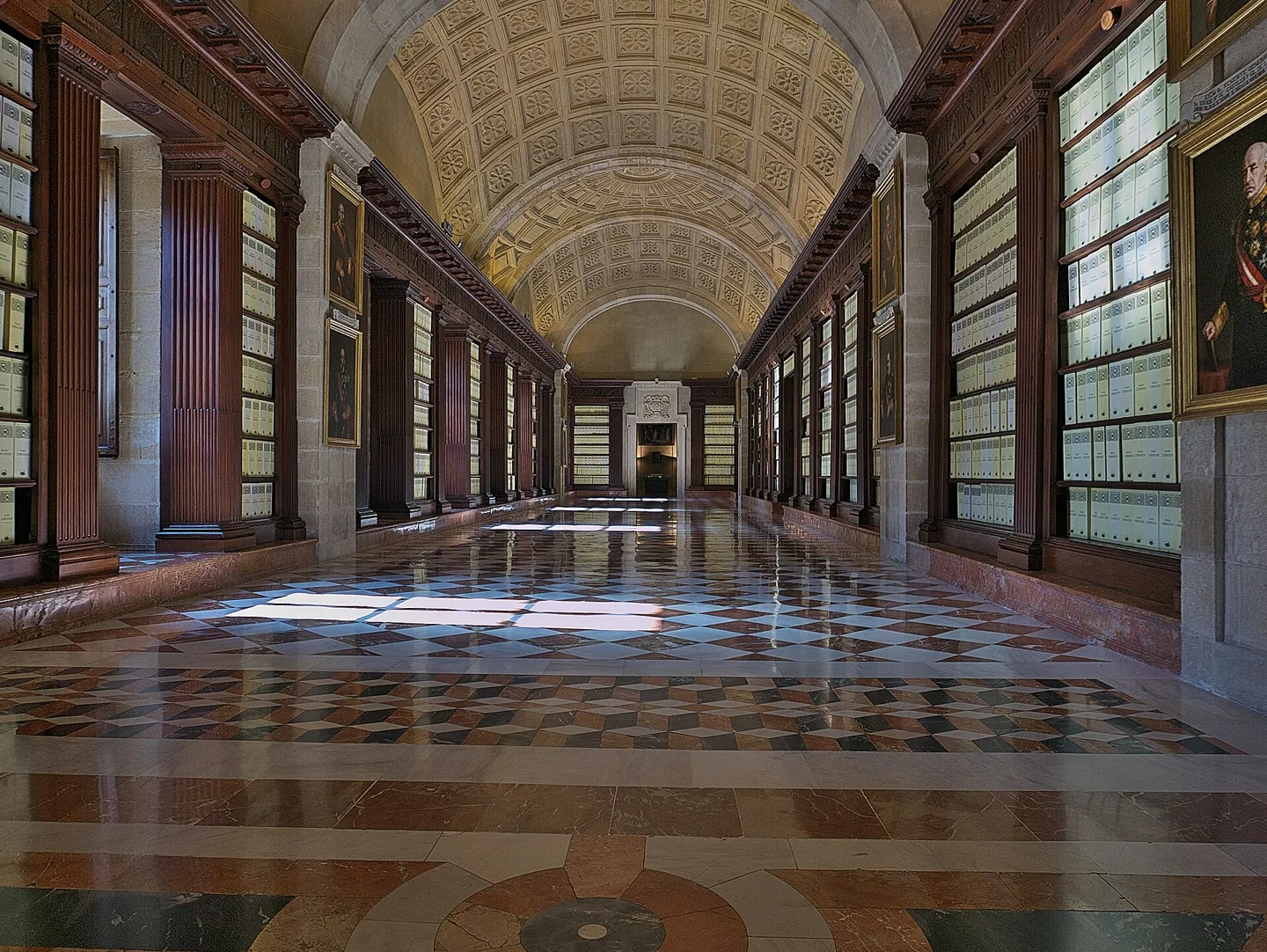
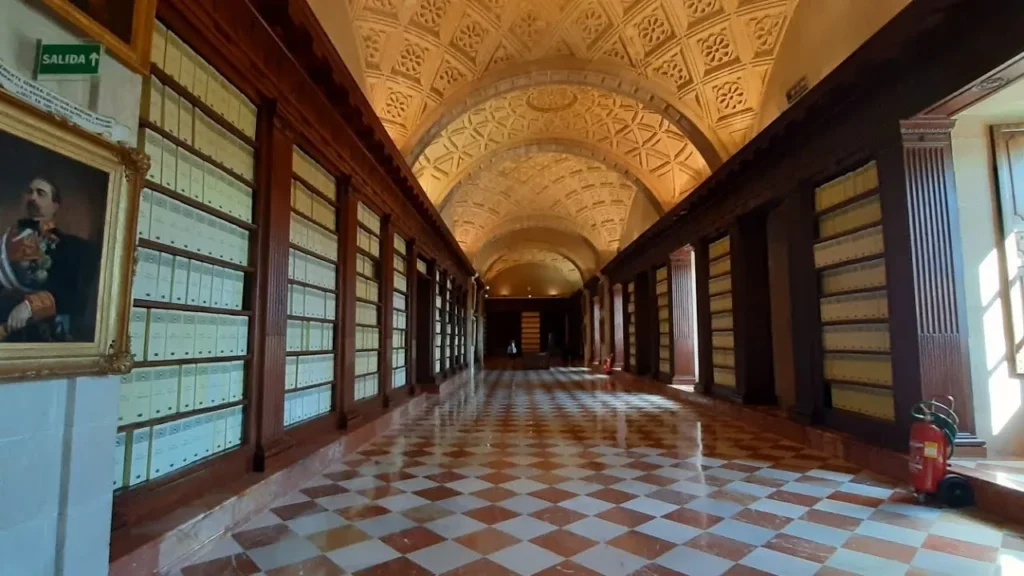
Upstairs, the galleries run round the courtyard under their vaults, lined with the tall wooden shelving made for the archive by Blas Mölner and finished in 1788. The outer galleries of the upper floor were fitted out for temporary exhibitions, with a route for visitors that goes round the whole building. The archive also keeps pieces of the Montpensier Collection on permanent display.
What the archive keeps
The figures are the archive’s own: more than 43,000 bundles, 8 kilometres of shelving and some 80 million pages of original documents. They cover the Americas from Tierra del Fuego to the south of the United States, and the Philippines. They come from the Council of the Indies, the Casa de la Contratación, the merchants’ guilds of Seville and Cádiz, the Royal Company of Havana and the Captaincy General of Cuba, among others.
6 of its sets are on UNESCO’s Memory of the World register. 4 of them are the Treaty of Tordesillas of 1494, the Capitulations of Santa Fe signed with Columbus in 1492, the papers of Magellan and Elcano’s first voyage round the world (1519-1522) and those of the Royal Philanthropic Vaccine Expedition against smallpox (1800-1820). The other 2 are the papers of the Keicho embassy from Japan (1613-1620) and 15 vocabularies of indigenous languages from the late 18th century.
Opening hours, free entry and access
The archive is open Tuesday to Saturday from 9:30 to 17:00 and on Sundays and holidays from 10:00 to 14:00. It is closed on Mondays.
The main door has steps. For wheelchair access, use the door on the side facing the Alcázar, on the Plaza del Triunfo: ring the bell or phone 954 21 12 34. Inside there is a lift to every floor, wheelchairs on loan from the staff and adapted toilets. The lift buttons are in relief, and guide and assistance dogs are allowed. There is no hearing loop.
Getting there and what is next door
The archive is at Avenida de la Constitución 3, a pedestrian street in the old town. The Archivo de Indias tram stop is about 100 metres away, and Puerta de Jerez Metro station, on Line 1, about 350 metres. Buses 05 and A2 stop on Calle Palos de la Frontera and the 37 on Avenida de Roma, about 450 metres away; the nearest accessible car park is on Avenida de Roma, about 350 metres away.
It stands between Seville Cathedral, with the Giralda, and the Real Alcázar, which opens onto the same Plaza del Triunfo. Each has its own free audio guide, and you can find all our audio guides to the city on the Seville page.
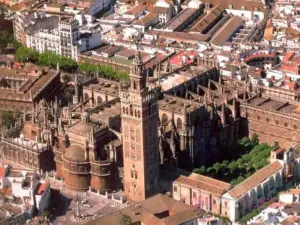 Free audio guideSeville Cathedral
 Free audio guideThe Giralda
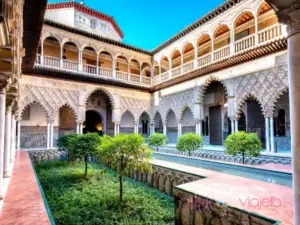 Free audio guideReal Alcázar of Seville (general)
The archive was set up here on the orders of Charles III, the same king who gave Madrid its Puerta de Alcalá: the granite triumphal arch designed by Francesco Sabatini and finished in 1778. It is free to see at any time, and it has its own free audio guide too:
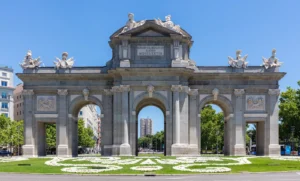
Where to find it
FAQs
How do the free audio guides work?
They play right here on audioguidetravel.com, with no app to download and no sign-up. Press play and listen as you walk round: a phone and a pair of headphones are all you need. The audio streams from this page, so you’ll need mobile data or Wi-Fi.
Can I take the tour at my own pace?
Of course! You set the pace: pause whenever you like, jump back or forward 15 seconds, or tap the bar to jump to any point, and listen as many times as you want so you don’t miss a thing.
If I'm in a group, can we use the same audio guide?
Yes. The same free audio guide opens on as many phones as you like, so you can go round together as a group or with your family, each person at their own pace and with their own headphones. The quickest way is to send the link via WhatsApp, Telegram or however you like: the buttons just below let you share it right now.
Visitor information
As of 24 Oct 2026- Opening hours
- Tue-Sat 9:30-17:00 · Sun and holidays 10:00-14:00 · closed Mondays
- Tickets
- Free, no booking needed; groups of up to 25 people
- Time needed
- About 45 min for the courtyard, the staircase and the upper galleries (our estimate)
- Getting there
- Old town; tram stop Archivo de Indias (100 m); Metro: Puerta de Jerez, Line 1 (350 m).
- Accessibility
- Wheelchair entrance on Plaza del Triunfo (ring or call 954 21 12 34); lift to every floor
- Tip
- Go in on the way between the Cathedral and the Alcázar: it is on the same square, and free
- Official website
- www.cultura.gob.es
Nearby
More free audio guides in Seville
 3:53SevilleIsla MagicaIsla Magica, the theme park located in Seville, invites you to embark on an epic adventure that will…
 3:40SevilleMuseum of Fine ArtsWelcome to the Museum of Fine Arts of Seville, a temple dedicated to art and history, located in…
 4:01SevilleSeville Cathedral (Exteriors)Explore Seville Cathedral, a jewel of Gothic art and an emblem of the city’s rich history. From its…