El Escorial Monastery: free audio guide, tickets and opening times
Free audio guide in English · no app, no sign-up
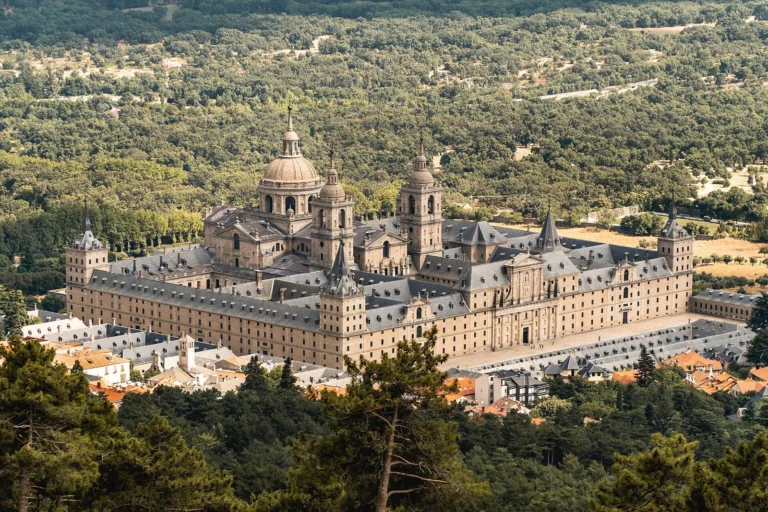
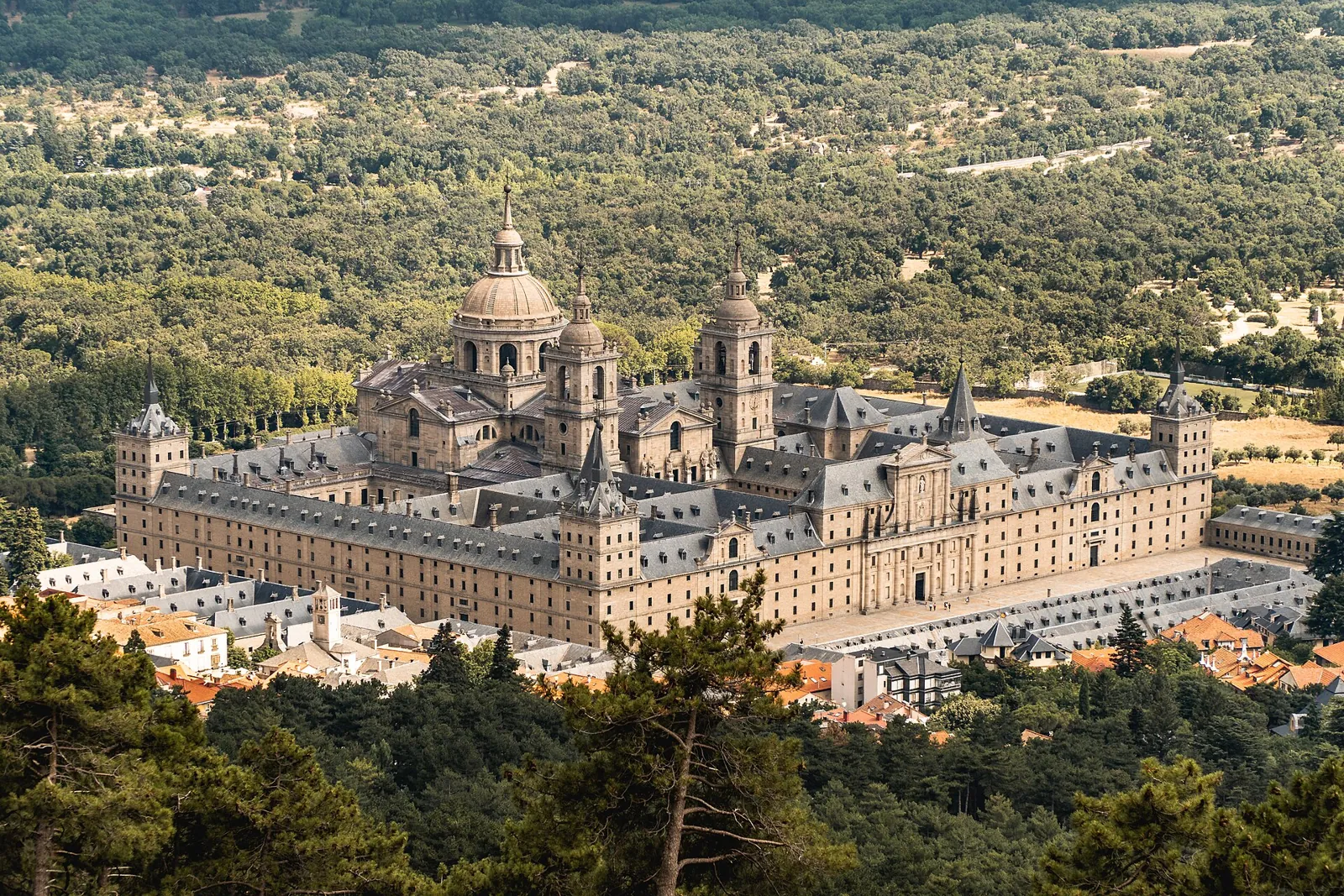
The Royal Monastery of San Lorenzo de El Escorial is Philip II’s statement in granite: a monastery, a basilica, a royal palace, a library and the burial vault of Spain’s kings, all in one building at 1,028 m up in the Guadarrama mountains, north-west of Madrid. Its last stone was laid in 1584, and it has been a World Heritage Site since 1984. A standard ticket costs €14 (October 2026). This free audio guide takes about 3 minutes.
 Audio guide
Before you go in
The few things that change your visit.
- Standard ticket €14; reduced €7
- October to March: Tue-Sun 10am-6pm, last entry 4:45pm
- Free on Wednesdays and Sundays from 3pm (October to March) for EU and Ibero-American citizens and EU residents
- Monday 12 October 2026: open and free for everyone
- The Royal Pantheon: Charles V to Alfonso XIII
- Bus 661 or 664 from Moncloa, or Cercanías C-8a
The Royal Monastery of San Lorenzo de El Escorial is Philip II’s statement in granite: a monastery, a basilica, a royal palace, a library and the burial vault of Spain’s kings, all in one building at 1,028 m up in the Guadarrama mountains, north-west of Madrid. Its last stone was laid in 1584, and it has been a World Heritage Site since 1984. A standard ticket costs €14 (October 2026). This free audio guide takes about 3 minutes.
What the El Escorial audio guide covers
Play it outside the west front, where individual visitors go in, before you walk into the Courtyard of the Kings. It gives you the big picture first, so the rooms inside make sense as one story rather than a string of halls. These are its stops:
| Outside the west front | Why Philip II wanted a monastery, a palace and a royal tomb under one roof, on the slopes of Mount Abantos. |
| A battle and a saint | The victory at St Quentin on 10 August 1557, and the saint the building is named after. |
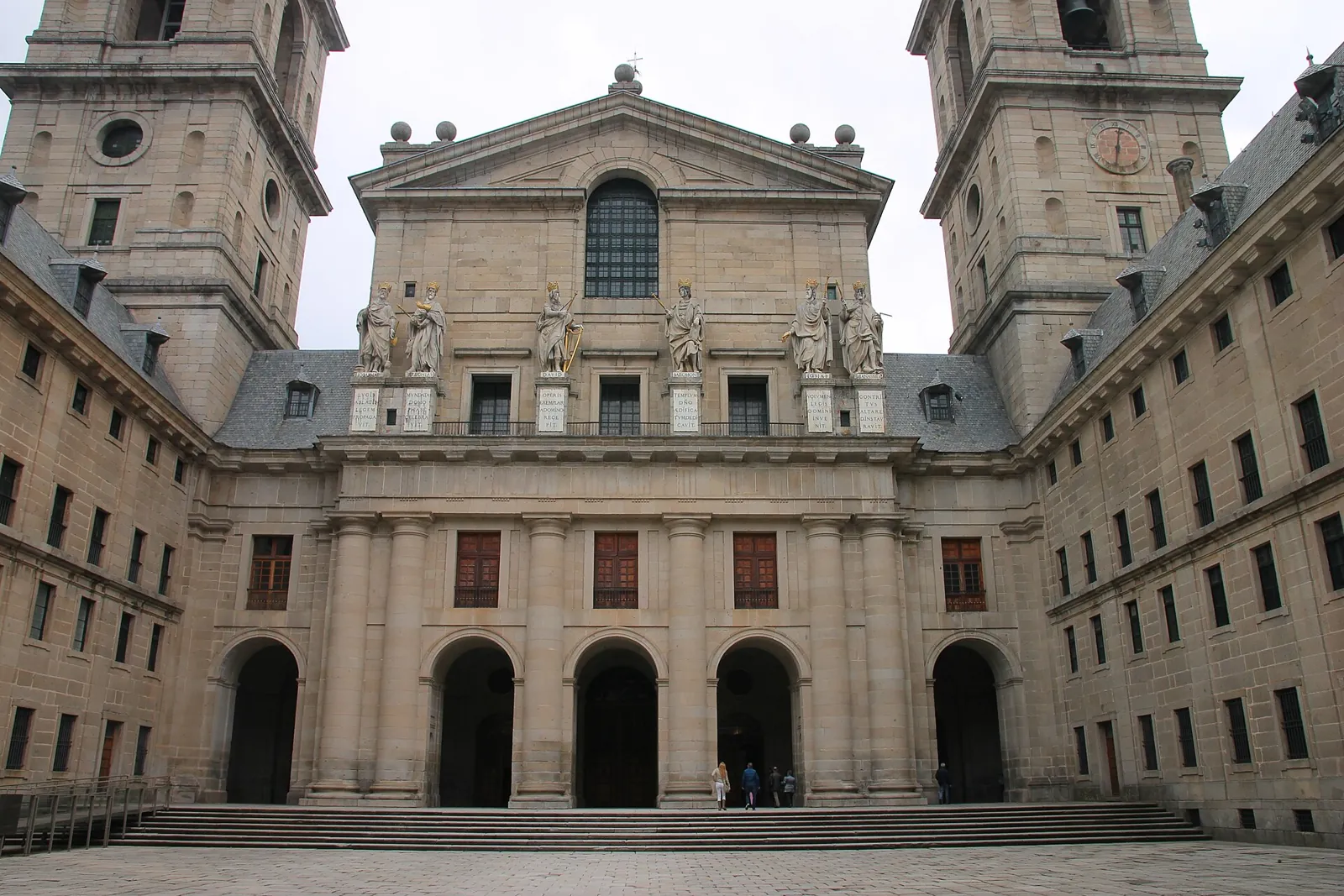
| The Courtyard of the Kings | The 6 kings of Judah on the basilica front, and why Solomon is among them. |
| The basilica | A Greek-cross church inside a 50 m square, and the gilded bronze royal families by the altar. |
| The Royal Pantheon | Kings on one side, queens on the other, from Charles V to Alfonso XIII. |
| The Library | A 55 m hall under a vault painted by Pellegrino Tibaldi. |
| Last stop | The plain rooms of a king who ran half the world from his desk. |
El Escorial opening times and tickets for 2026
From October to March the monastery opens Tuesday to Sunday, 10am to 6pm. The time that matters is earlier: ticket desks and entry close an hour and a quarter before, at 4:45pm. It is closed on Mondays all year, apart from a few special openings. This is what Patrimonio Nacional, the body that runs Spain’s royal sites, published as of 1 October 2026:
| Tuesday to Sunday | 10am to 6pm; last entry 4:45pm. |
| Mondays | Closed. |
| Special Monday openings | 12 October, 2 November and 7 December. |
| Closed | 24, 25 and 31 December. |
Ticket prices for a self-guided visit, as checked on 1 October 2026:
| Standard | €14 |
| Reduced | €7 |
| Official audio guide | €5 extra |
| Guided visit | €8 extra |
| Free | Among others, with proof: under 5s, teachers, and visitors with a disability of 33% or more (plus 1 companion if needed). |
You need a ticket before you go in: buy it on Patrimonio Nacional’s official ticket website or at the Visitor Reception Centre desks on Avenida de Don Juan de Borbón y Battenberg, opposite the north front. Individual visitors then enter on the west side, through the Courtyard of the Kings.
What to see inside: the basilica and the Royal Pantheon
Philip II founded El Escorial as a monastery for Hieronymite monks, and its church was to be the tomb of his father, Emperor Charles V, his mother, Isabella of Portugal, and himself and his heirs. He dedicated it to St Lawrence to give thanks for the victory at St Quentin, won on 10 August 1557, the saint’s feast day. The site was settled at the end of 1562, the last stone went in in 1584, and the basilica was consecrated in 1595.
You reach the basilica across the Courtyard of the Kings, watched over by 6 kings of Judah linked to the building of the Temple of Jerusalem. The man who built that temple was Solomon, and that is the point: Renaissance Spain saw Solomon as Philip II’s alter ego. The basilica itself is built of granite blocks, on a Greek-cross plan set in a square 50 m a side. Either side of the high altar, look for Pompeo Leoni’s gilded bronze memorials of Charles V and Philip II with their families.
Below the altar lies the Royal Pantheon, a round chamber in 8 sections. Juan de Herrera built it in bare granite; Philip III had it lined with marble and bronze, and it was finished under Philip IV. Its urns hold Spain’s kings in date order, from Charles V to Alfonso XIII: kings to the right of the Pantheon’s altar, queens to the left, and only the queens who were mothers of kings. Philip V and Ferdinand VI are missing: they chose to be buried at La Granja and at the Salesas Reales in Madrid. Beneath the Sacristy and the Chapter Rooms, the Pantheon of the Infantes, clad in marble with sculpture carved in Carrara, was completed in 1888 and has 9 chambers.
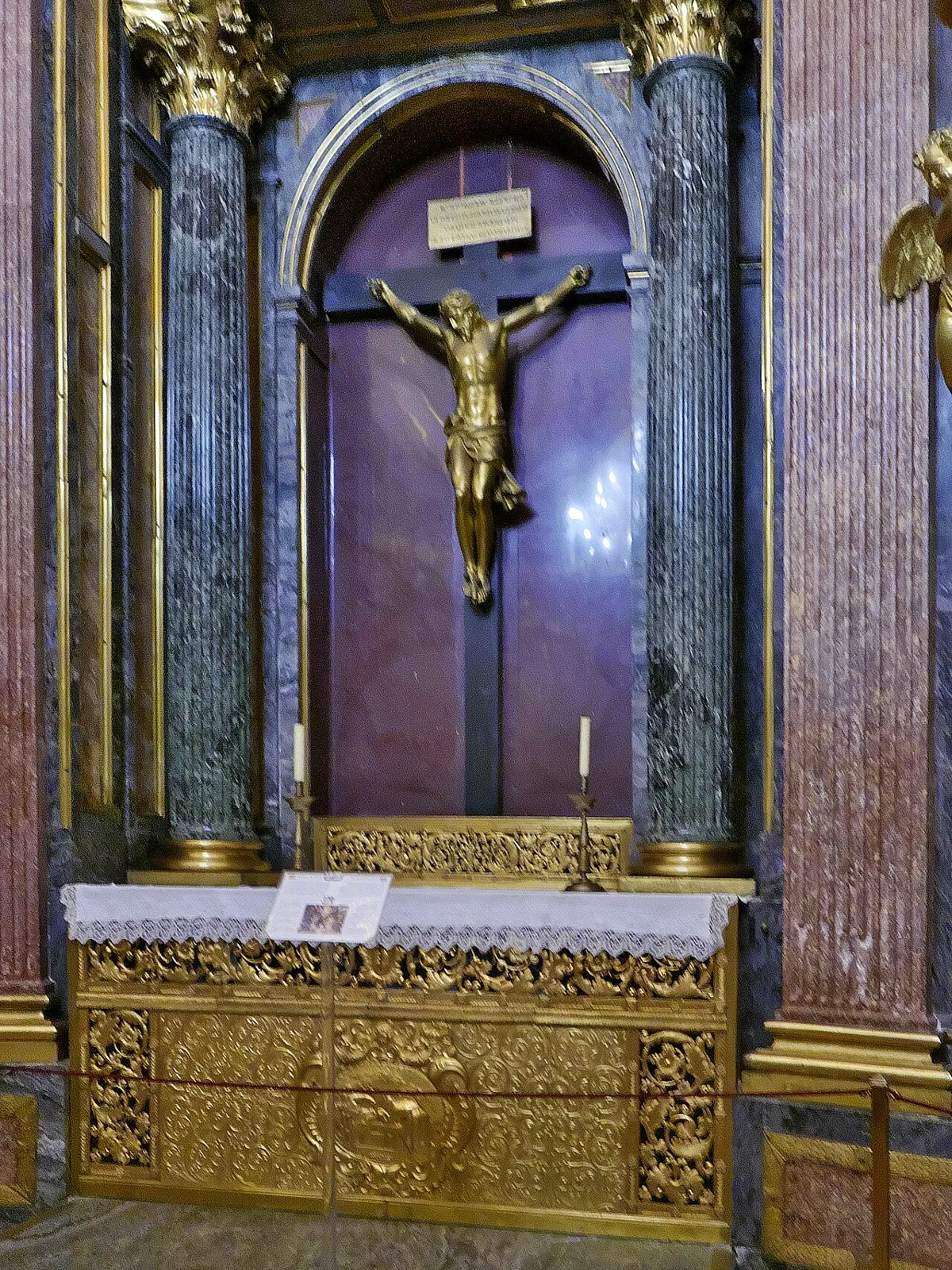
For a look inside before you go, this official Patrimonio Nacional video runs just over 2 minutes: the Library, the Hall of Battles, the Chapter Rooms and the picture gallery. The narration is in Spanish, with on-screen titles in English.
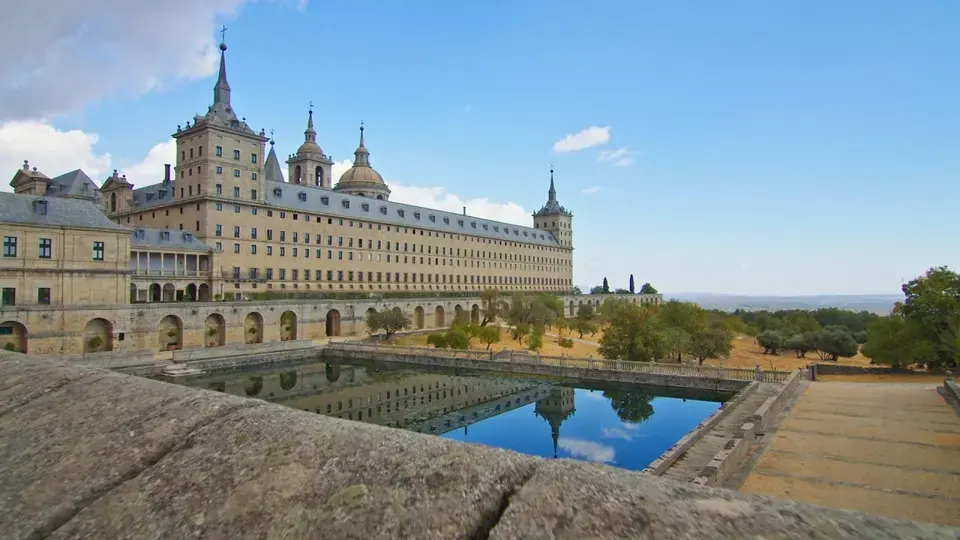
The Library, Philip II’s palace and the Hall of Battles
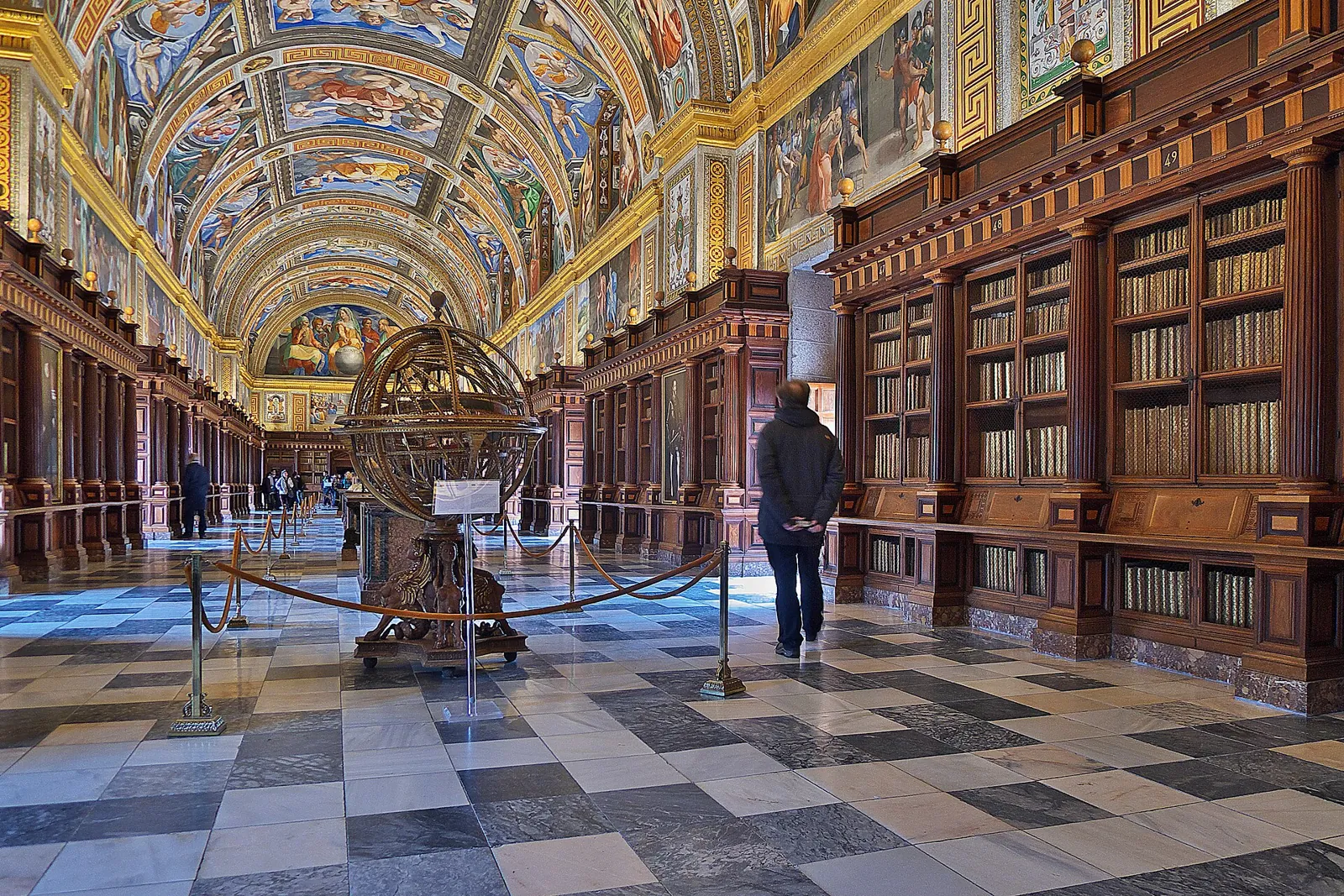
The Library is the room that stops people in their tracks. It is 55 m long and 10 m wide, with 7 windows onto the Courtyard of the Kings and 5 onto the Lonja, the esplanade outside, and its vault was frescoed between 1586 and 1592 by Pellegrino Tibaldi: the 7 liberal arts, Theology and Philosophy. Philip II meant it to hold the sum of all knowledge, and although a fire in 1671 cost it dearly, it still keeps Latin, Greek, Hebrew and Arabic manuscripts.
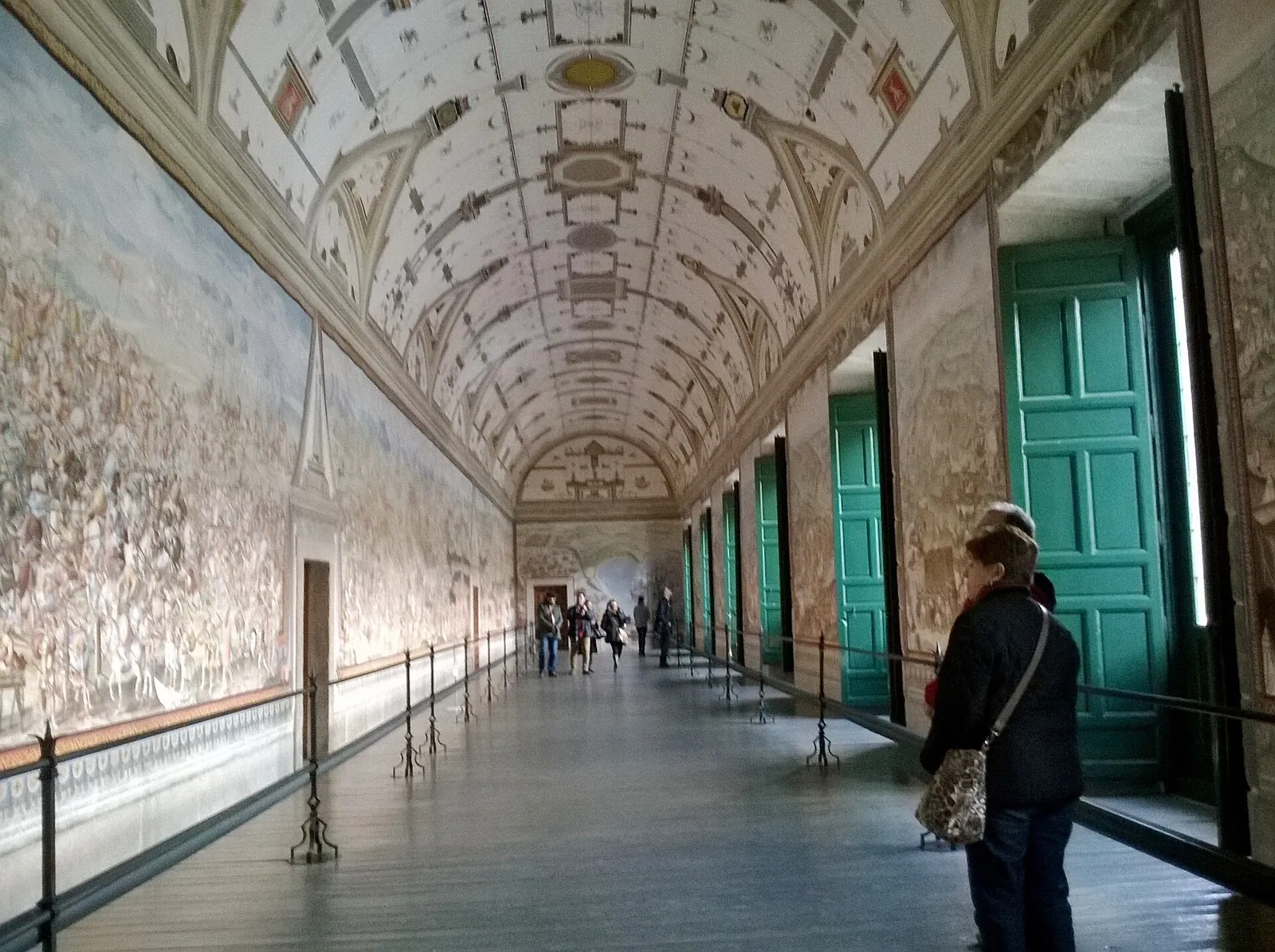
The Habsburg palace is set around the Courtyard of the Masks, with the king’s and queen’s rooms mirroring each other; the queen’s ended up being used by Philip II’s daughter, the Infanta Isabella Clara Eugenia. From his room, the king could follow Mass in the basilica from his private oratory. Close by is the Hall of Battles, once the King’s Gallery, which ambassadors had to walk through before seeing him: its walls are frescoed with the Battle of La Higueruela of 1431 and the St Quentin campaign.
Don’t miss the main staircase off the cloister, its vault painted by Luca Giordano in 1692. And in the Chapter Rooms, among the 17th-century paintings, hangs Velázquez’s Joseph’s Bloody Coat Brought to Jacob.
How to get to El Escorial from Madrid
By bus, lines 661 and 664 run from the Moncloa transport interchange to San Lorenzo de El Escorial. By train, Cercanías commuter line C-8a (Atocha to Santa María de la Alameda) stops at El Escorial, in the town below the monastery. By car, take the A-6 motorway to exit 29, then the M-505. The address is Avenida de Juan de Borbón y Battenberg, s/n, San Lorenzo de El Escorial.
Access for visitors with reduced mobility is very limited, although the monastery has manual wheelchairs. The 2 small royal lodges on the estate, the Casita del Príncipe and the Casita del Infante, are not accessible.
More to see around El Escorial
Right next to the monastery, the Herrería Forest covers 497 hectares of oak and ash that Philip II bought along with the monastery land; it is open to the public, and Philip II’s Seat is inside it. For another of Spain’s great religious buildings, with its own free audio guide, head north-west to Galicia:
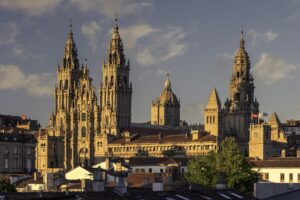 Free audio guideSantiago de Compostela Cathedral
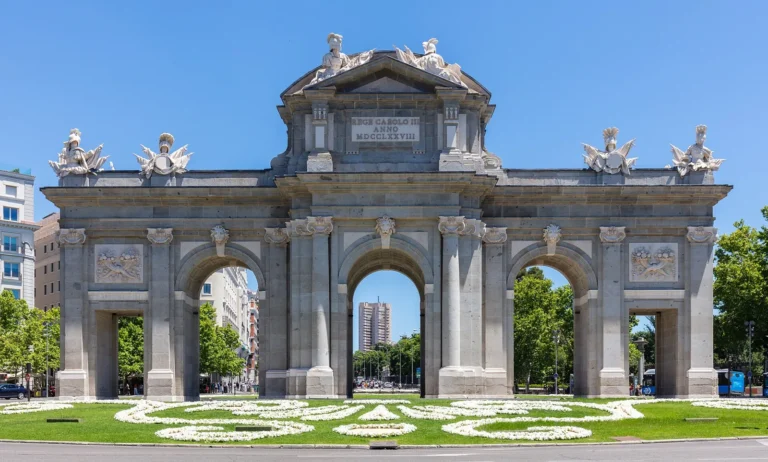
In Madrid itself, about 43 km south-east of the monastery, the Puerta de Alcalá stands next to Retiro Park: Charles III’s granite triumphal arch, free to see at any time, with Retiro and Banco de España metro stations (line 2) close by.
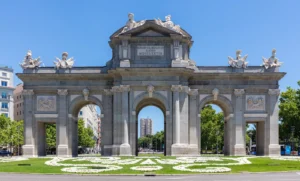 Free audio guidePuerta de Alcalá, Madrid
Find all our audio guides for the country under Spain.
Where to find it
FAQs
How do the free audio guides work?
Our audio guides work through the website audioguidetravel.com; you don’t need to download any app. Just follow the instructions on the website to guide you through El Escorial Monastery: free audio guide, tickets and opening times while listening to our experts’ explanations.
Can I take the tour at my own pace?
Of course! Our free audio guides are designed so that you set the pace. You can pause, rewind, or listen as many times as you want without missing a detail. By visiting El Escorial Monastery: free audio guide, tickets and opening times your way, you’ll enjoy it even more.
If I'm in a group, can we use the same audio guide?
Yes, our website allows sharing the same free audio guide among multiple devices. This way, you can visit El Escorial Monastery: free audio guide, tickets and opening times as a group or family, listening to the explanations simultaneously. The quickest way to do this is to share the link via WhatsApp, email, or any method you like. I’ve included some buttons below for you to do that now.
Visitor information
As of 1 Oct 2026- Opening hours
- Oct-Mar: Tue-Sun 10am-6pm, last entry 4:45pm. Closed Mondays (open 12 Oct, 2 Nov, 7 Dec).
- Tickets
- Standard €14; reduced €7. Free Wed and Sun from 3pm (Oct-Mar) for EU, Ibero-American and EU-resident visitors.
- Time needed
- About a 3-minute audio guide outside the west front: basilica, Royal Pantheon and Library.
- Getting there
- Bus 661 or 664 from Moncloa interchange in Madrid; Cercanías train C-8a to El Escorial.
- Accessibility
- Very limited access for reduced mobility; manual wheelchairs available.
- Tip
- Mon 12 Oct 2026, National Day: open and free for all. Painting and Architecture museums free until 31 Dec.
- Official website
- www.patrimonionacional.es