Salamanca Cathedral (New and Old): free audio guide, hours and tickets
Free audio guide in English · no app, no sign-up
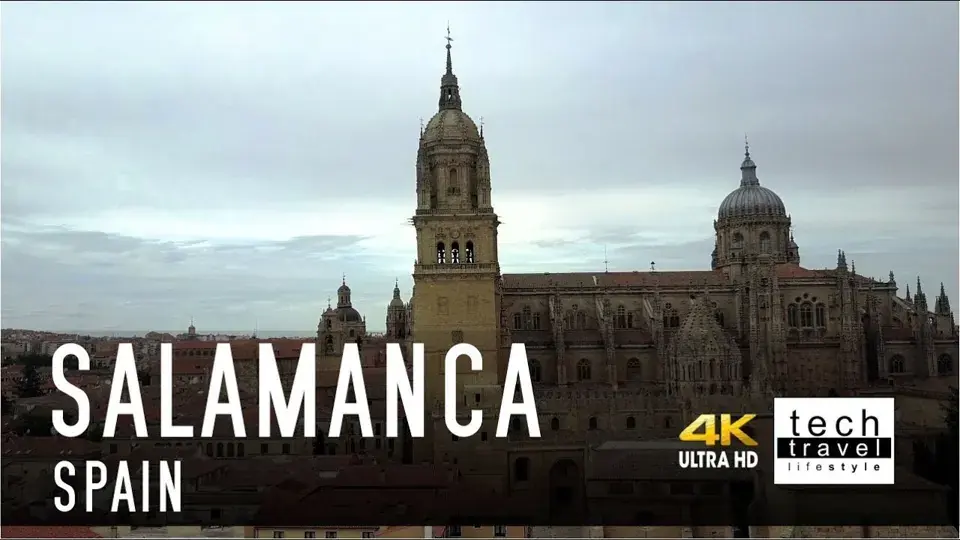
Salamanca Cathedral is 2 cathedrals joined together: the Romanesque Old Cathedral, from the 12th century, and the Gothic New Cathedral, built 1513-1733. One ticket covers both. This free audio guide lasts about 6 minutes and takes you from the Puerta de Ramos and its astronaut to the Old Cathedral’s altarpiece, the Torre del Gallo and the cloister.
 Audio guide
Before you go in
The few things that change your visit.
- 1 ticket at €10 covers both cathedrals, the cloister and the museum, with the official audio guide included
- You go in by the Puerta de Ramos, home of the astronaut carved during the 1990s restoration
- The Old Cathedral's altarpiece has 53 panels by the Delli brothers, with the Last Judgement above
- The towers are separate: Ieronimus, €6, nearly 200 steps
On this page
- What the audio guide covers
- Salamanca Cathedral opening hours and tickets
- The New Cathedral: the facade, the astronaut and the dome
- The Old Cathedral: the altarpiece and the Torre del Gallo
- The cloister and its chapels: Anaya, Santa Bárbara and Talavera
- Ieronimus: climbing the towers of Salamanca Cathedral
- Getting to Salamanca Cathedral, and accessibility
- Where to find it
Salamanca Cathedral is really 2 cathedrals joined together: the Romanesque Old Cathedral, begun in the 12th century, and the Gothic New Cathedral, built against its north side between 1513 and 1733. You visit both on one ticket, along one route. This free audio guide lasts about 6 minutes and takes you from the Puerta de Ramos to the cloister.
What the audio guide covers
Start listening in Plaza de Anaya, in front of the Puerta de Ramos, which is where you go in. It follows the visitor route: the New Cathedral first, then down into the Old Cathedral, and out through the cloister. There are 7 parts:
| The Puerta de Ramos | Why Salamanca has 2 cathedrals, and where to find the astronaut, the lynx and the dragon eating an ice cream. |
| The New Cathedral nave | 220 years of building, and a structure that stayed Gothic to the end. |
| The dome and the choir | The dome that had to be rebuilt after the Lisbon earthquake of 1755, and the Baroque choir stalls of the Churriguera family. |
| Down into the Old Cathedral | The Chapel of San Lorenzo, the stairs, and a jump from Gothic back to Romanesque in a few steps. |
| The main altarpiece | Its 53 painted panels, the Last Judgement above them, and the Virgen de la Vega, Salamanca’s patron saint. |
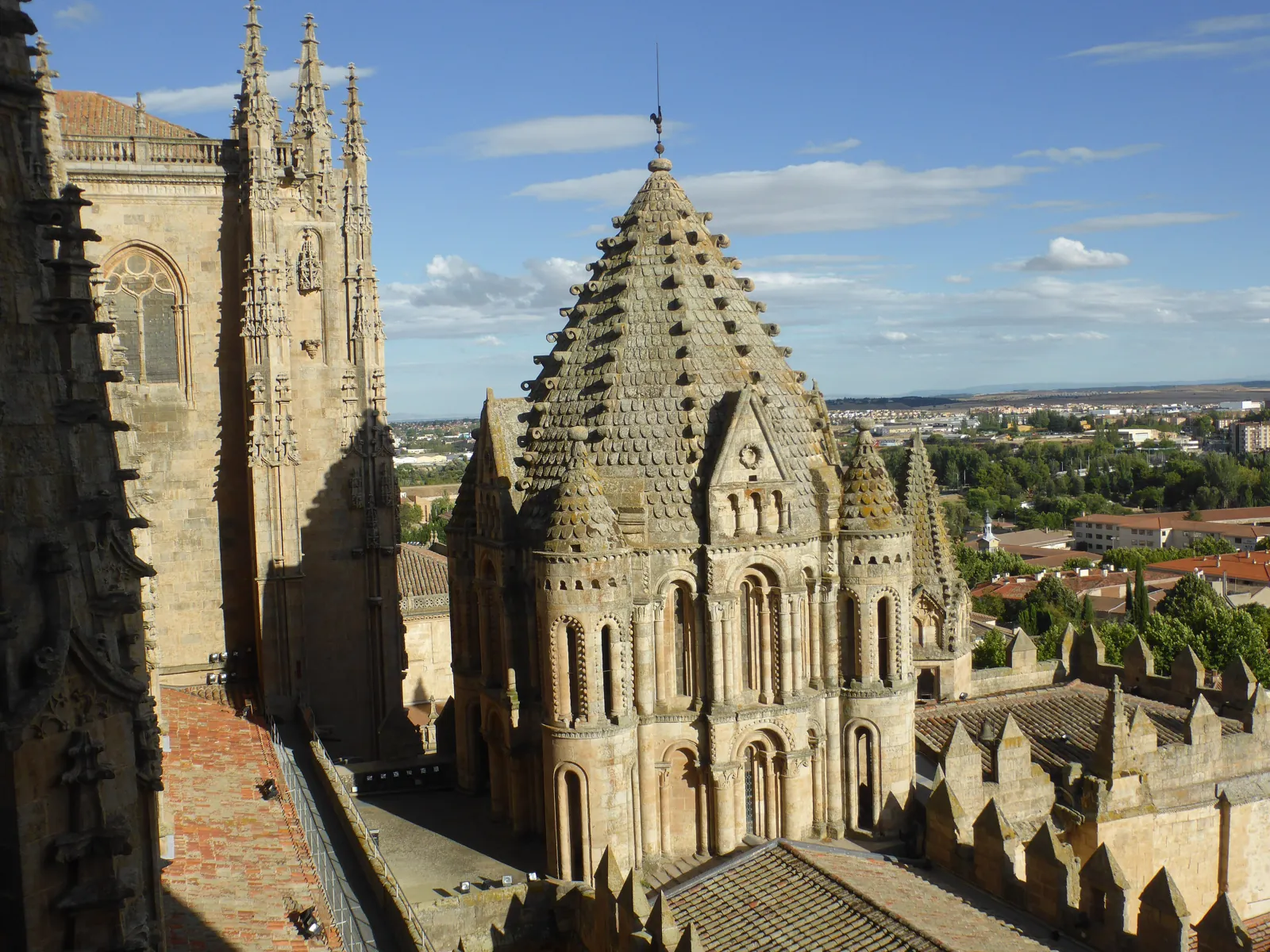
| The Torre del Gallo | The scale-covered dome seen from below, with its 16 columns and 32 windows. |
| The cloister | The chapel where university students sat their final exams, and the tomb of Archbishop Diego de Anaya. |
Salamanca Cathedral opening hours and tickets
1 ticket covers both cathedrals, the cloister, the chapter houses with the cathedral museum, and the exhibitions in the Bishop’s Palace. The ticket office is at the Puerta de Ramos, on Plaza de Anaya. Opening hours:
- Every day, Monday to Sunday: 10am to 6pm; last entry 5:15pm (the hours in force in November 2026).
- Standard ticket: €10. Over-65s, students and parents of large families: €9. Ages 7 to 16: €7. Unemployed: €6.
- Free: children under 7 and residents of the Diocese of Salamanca.
- Phone: +34 923 21 74 76.
The cathedral’s own audio guide is included in the ticket, and there’s a children’s version too, in Spanish, English, French and Portuguese. Allow 1 hour 30 minutes for the full route.
The New Cathedral: the facade, the astronaut and the dome
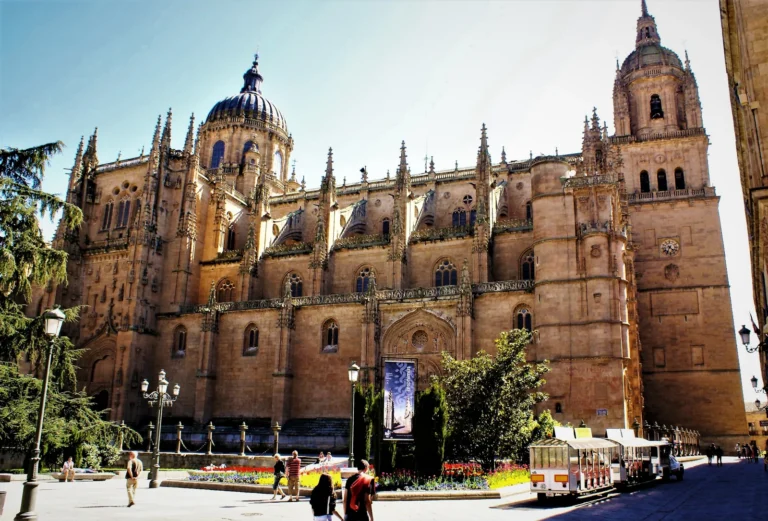
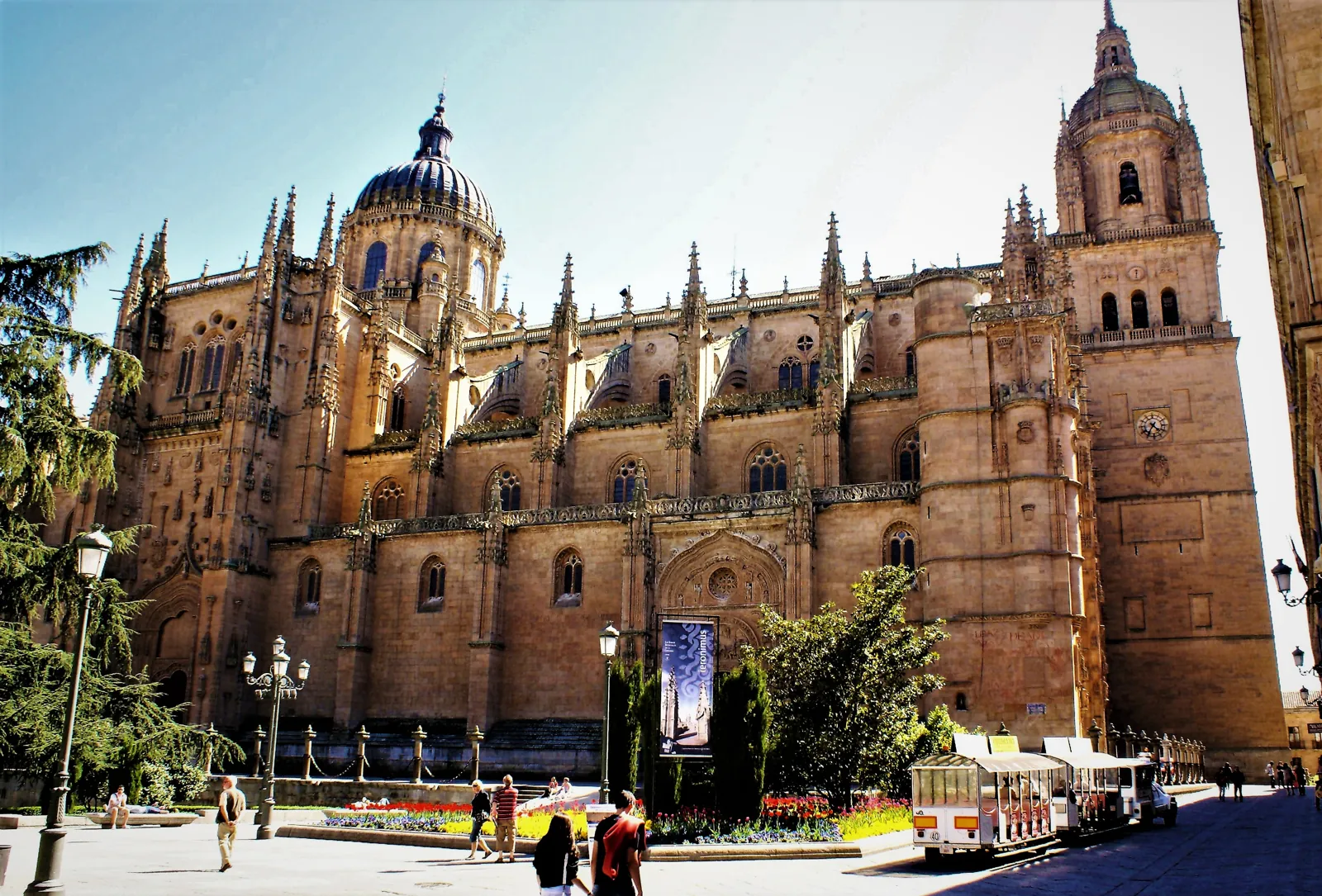
By the late 15th century Salamanca was growing fast around its University, and the old Romanesque cathedral was described as “small, dark and low”. Knocking it down was considered, but in the end it was kept and the new one went up right beside it. Building started in 1513, under Bishop Francisco de Bobadilla, with Juan Gil de Hontañón in charge at first. Later Rodrigo Gil de Hontañón raised and roofed the central nave between 1538 and 1560. In 1560 the finished half opened for worship behind a temporary brick wall, and work dragged on for more than another 170 years: the cathedral was consecrated in 1733, 220 years after it began.
What’s remarkable is that, through all those changes in fashion, the structure stayed Gothic. The newer styles only crept in through the decoration, so you’ll spot Renaissance, Baroque and Neoclassical details. Inside it measures 105 m long and 50 m wide, with 3 naves, side chapels between the buttresses and 38 piers.
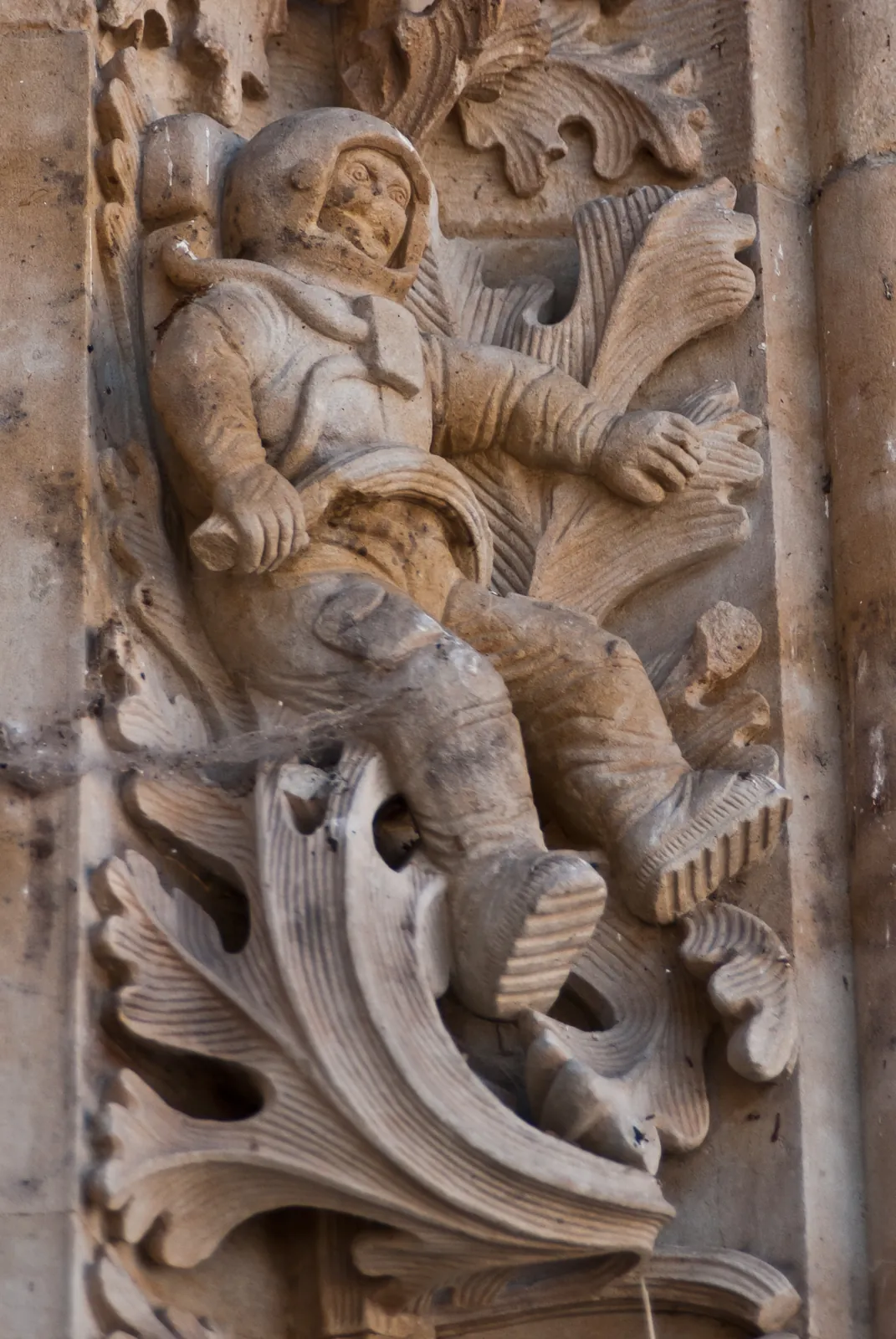
The Puerta de Ramos. This is the north door, on Plaza de Anaya, and its carving shows Christ’s entry into Jerusalem. When it was restored in the early 1990s, new figures were added to date the work in stone: an astronaut, a lynx, a bull and a dragon eating an ice cream. To find the astronaut, look for a helmet and boots among the carved leaves framing the doorway.
The main facade, facing west, is laid out like a huge stone altarpiece, with the Nativity and the Adoration of the Magi above the doors.
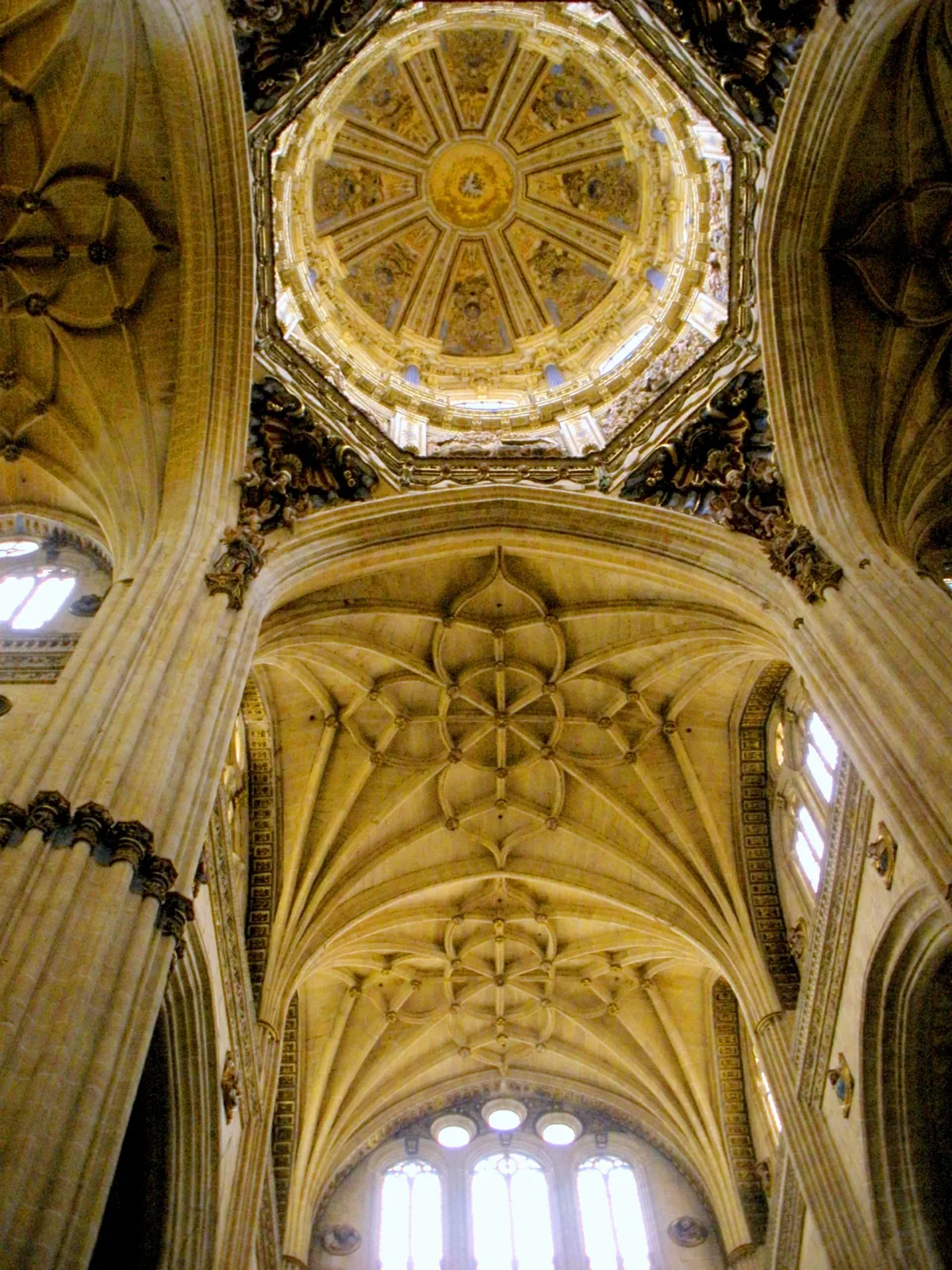
The dome. Stand at the crossing and look up. The original dome was by Joaquín de Churriguera, but the Lisbon earthquake of 1755 damaged it so badly that it was replaced by the present Neoclassical one, by Juan de Sagarbinaga. The Baroque drum underneath survived, with big reliefs of the life of the Virgin.
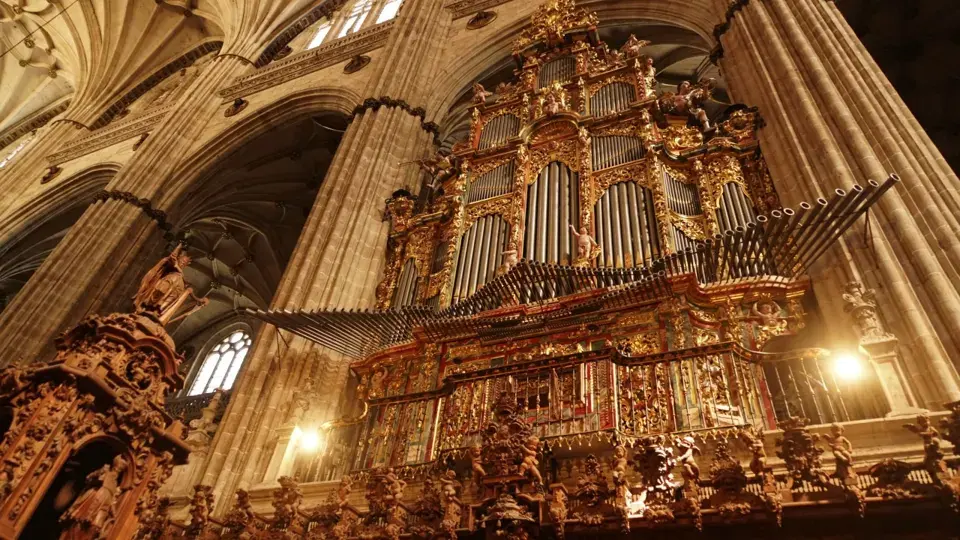
The choir, in the middle of the nave, is the work of the Churriguera family, built between 1710 and 1733: 41 stalls below and 57 above, carved with apostles and saints. Look for the sculptures by Juan de Juni on the back of the choir, and for the Golden Chapel (Capilla Dorada), from 1515, with more than 110 figures on its walls and an altar faced with Talavera tiles. The Chapel of the Cristo de las Batallas holds the Romanesque crucifix that, by tradition, rode into battle with El Cid.
The Old Cathedral: the altarpiece and the Torre del Gallo
From the Chapel of San Lorenzo, on the south side of the nave, a flight of stairs takes you down into the Old Cathedral. When the new one was built, part of the old north nave disappeared under its walls, and the 2 buildings were left connected on the inside.
The Old Cathedral was begun in the 12th century and rose slowly into the 13th. The plan is Romanesque, with 3 naves and 3 rounded apses, but it already looks ahead to Gothic, with pointed arches and early rib vaults. With its battlements it looked like a castle, and it was nicknamed fortis salmantina, “the strong one of Salamanca”.
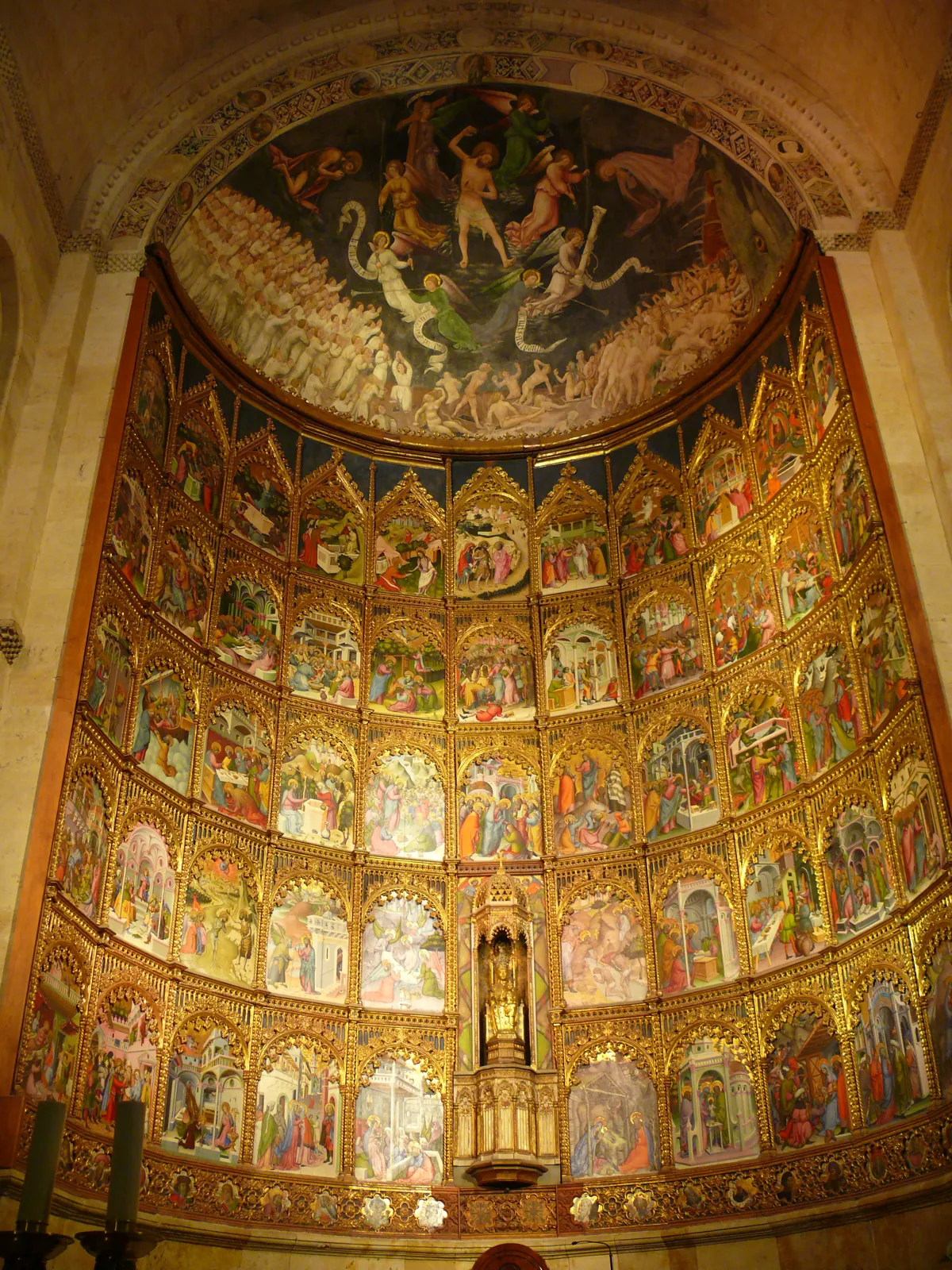
The main altarpiece. This is the showstopper. It was painted by the Delli brothers, from Florence, in the 15th century, and it still stands where it was made to stand. There are 53 panels in 5 rows and 11 columns, read from bottom to top and left to right. Above them, in the half-dome, is the Last Judgement, commissioned in 1445 from Nicolás Florentino. At the centre sits the Virgen de la Vega, Salamanca’s patron saint: a Romanesque figure from the late 12th century, carved in wood and covered in gilded bronze, set with enamels and gems.
The Torre del Gallo. This is the Old Cathedral’s dome, one of a family of domes found along the Duero valley. Inside, it’s a half-sphere on a drum of 16 columns and 32 windows. Outside, it’s a cone of stone scales topped by a weathervane in the shape of a cockerel, the gallo that gives it its name. In other words, it’s 2 domes, one inside the other. For the outside view, walk round to the Patio Chico, behind the cathedrals, where you can see the 3 Romanesque apses and the tower together.
Before you move on, look into the Chapel of San Martín, under the bell tower, with wall paintings dated 1262, and find the 16th-century Salinas organ.
The cloister and its chapels: Anaya, Santa Bárbara and Talavera
The cloister was begun in the 12th century, but the 1755 earthquake left it in such a state that it was rebuilt in 1785. Around it open the chapels that tell the story of the city:
- Santa Bárbara, from the 14th century. University students sat their degree exams here, in a chair at the foot of the founding bishop’s tomb, surrounded by their professors. Pass, and you left in triumph through the cathedral; fail, and you went out through the “cart door”. The university rector was also elected here.
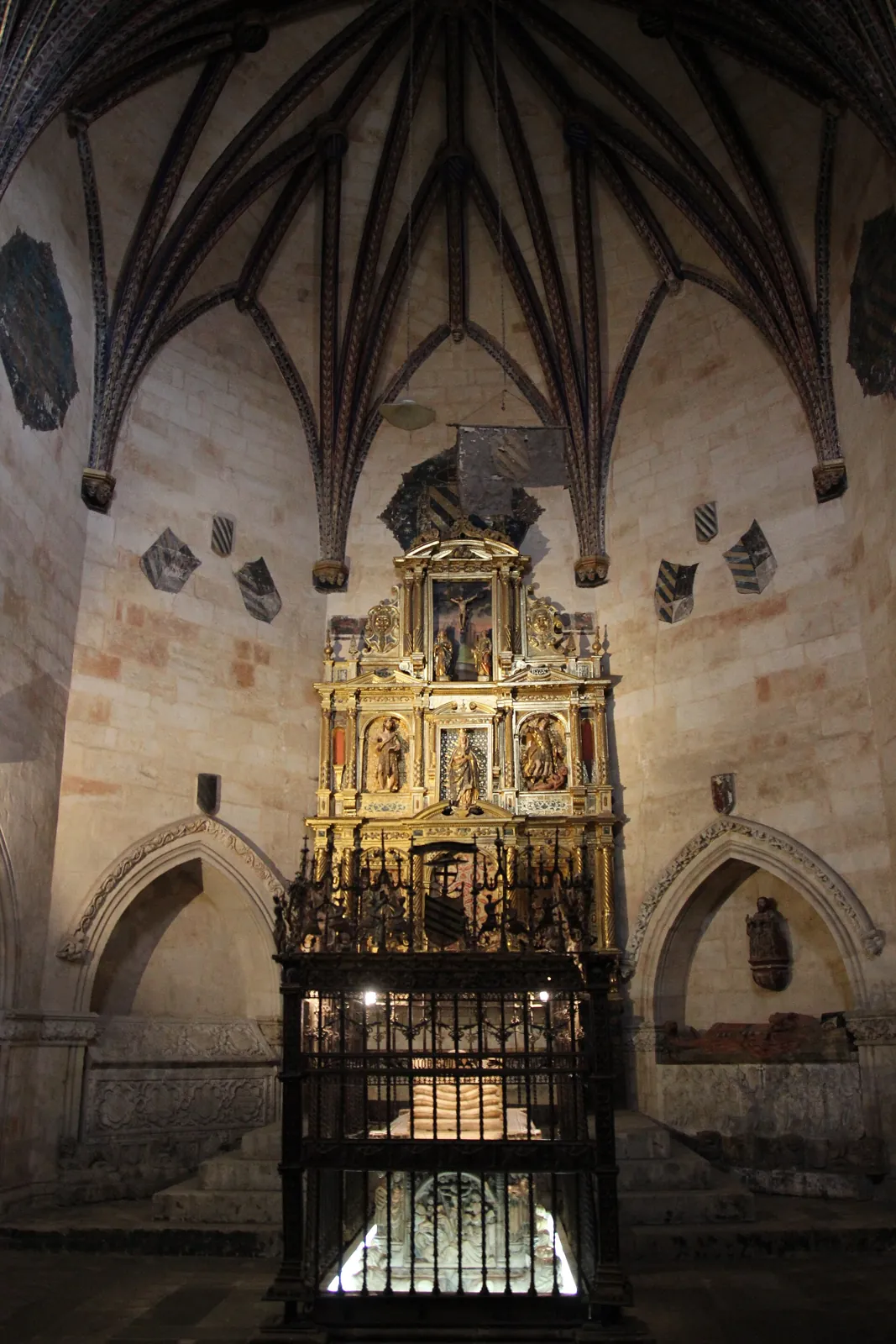
- Anaya, founded in 1422 by Archbishop Diego de Anaya as his family’s burial chapel. In the middle stands his alabaster tomb, resting on lions and enclosed by a Gothic grille. There’s also a Gothic organ on a Mudéjar gallery, one of the oldest in Europe.
- Talavera, the oldest of them, with a vault that draws an 8-pointed star. In the early 16th century it was endowed for the Mozarabic rite, and a glass case holds the banner of the Comuneros.
Next to Santa Bárbara are the chapter houses of 1526, home to the cathedral museum. Don’t miss the triptych by Juan de Flandes and the panels by Fernando Gallego, the painter of the “Sky of Salamanca”.
Ieronimus: climbing the towers of Salamanca Cathedral
The towers are not included in the cathedral ticket. You climb them with a separate one, Ieronimus, whose entrance is in the Torre Mocha, on Plaza de Juan XXIII. The route takes you through the tower rooms, along the triforium of the New Cathedral and onto a walkway over the roofs that brings you almost close enough to touch the Torre del Gallo.
- Hours: daily 10am to 8pm from March to December (last entry 7pm); January and February, 10am to 6pm.
- Price: €6; night visit, €10.
- Heads up: there are nearly 200 steps.
- Phone: +34 923 26 67 01.
Getting to Salamanca Cathedral, and accessibility
The entrance is on Plaza de Anaya, in the heart of the old town, and everything is a short walk away:
- From the Plaza Mayor: about 9 minutes, down the Rúa Mayor.
- From the Casa de las Conchas: about 5 minutes, along the Rúa Mayor.
- From the Roman Bridge: about 10 minutes, uphill.
- Start outside. Find the astronaut on the Puerta de Ramos before you go in: it’s on the outside of the doorway, and you can’t see it from inside.
- Combine the 2 tickets. Cathedral in the morning and towers in the afternoon, or the other way round: €16 for both.
- Finish in the Patio Chico. It’s one of the finest views of the Torre del Gallo, and it costs nothing.
Salamanca’s old city has been a UNESCO World Heritage Site since 1988, and both cathedrals are part of it. From here, it’s an easy walk to the rest of the city’s sights, and you can keep exploring Spain with our El Escorial Monastery audio guide.
 Free audio guidePlaza Mayor, Salamanca
 Free audio guideEl Escorial Monastery
Where to find it
FAQs
How do the free audio guides work?
They play right here on audioguidetravel.com, with no app to download and no sign-up. Press play and listen as you walk round: a phone and a pair of headphones are all you need. The audio streams from this page, so you’ll need mobile data or Wi-Fi.
Can I take the tour at my own pace?
Of course! You set the pace: pause whenever you like, jump back or forward 15 seconds, or tap the bar to jump to any point, and listen as many times as you want so you don’t miss a thing.
If I'm in a group, can we use the same audio guide?
Yes. The same free audio guide opens on as many phones as you like, so you can go round together as a group or with your family, each person at their own pace and with their own headphones. The quickest way is to send the link via WhatsApp, Telegram or however you like: the buttons just below let you share it right now.
Visitor information
As of 9 Nov 2026- Opening hours
- Daily 10am-6pm (last entry 5:15pm).
- Tickets
- €10 (reduced €9; ages 7-16 €7); under-7s free. Covers both cathedrals and an audio guide.
- Time needed
- Audio guide about 6 min; the full route through both cathedrals takes 1 hour 30 minutes.
- Getting there
- Enter by the Puerta de Ramos on Plaza de Anaya, about 9 min on foot from the Plaza Mayor via Rúa Mayor.
- Accessibility
- Wheelchair users: ask at the New Cathedral ticket office and staff will open the accessible doors.
- Tip
- Go in by 4:30pm: the route takes 1 hour 30 minutes and it closes at 6pm every day.
- Official website
- catedralsalamanca.org