
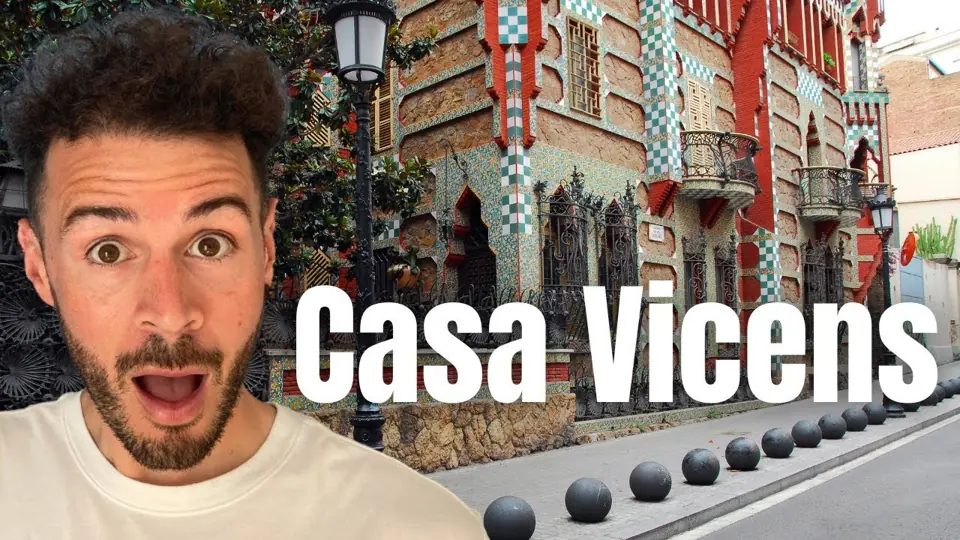
Casa Vicens: free audio guide, hours and tickets
Free audio guide in English · no app, no sign-up
Free audio guide to Casa Vicens, the first house Gaudí designed, built from 1883 to 1885 in Gràcia: about 8 minutes on its tiles, its rooms, the garden and the rooftop, playing on this page.
 Audio guide
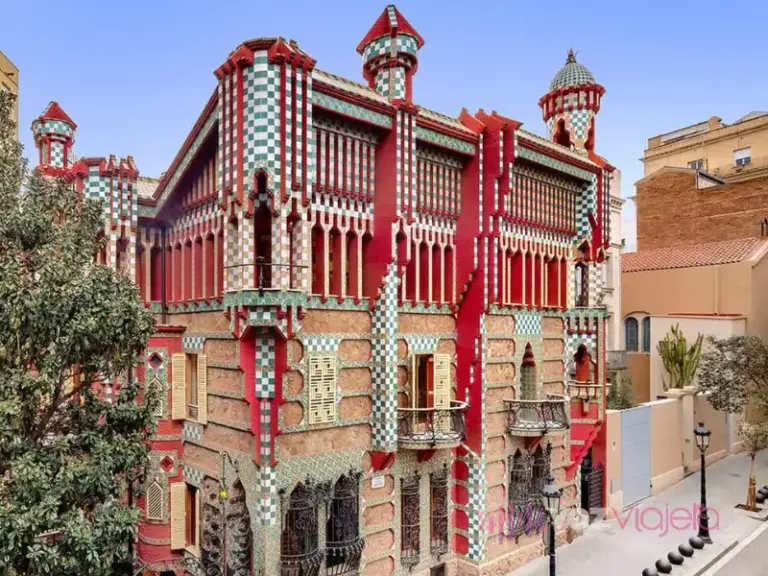
Casa Vicens is the first house Antoni Gaudí designed, built from 1883 to 1885 as a summer home for the stockbroker Manuel Vicens in Gràcia. Behind its walls of brick, stone and green-and-white tiles are rooms covered in painted plants and a smoking room with a ceiling of plaster palm trees. This free audio guide in English plays on this page, even before you buy; the self-guided ticket also includes the official one, by QR code.
What the audio guide covers
It is free and plays on this page in your phone’s browser, with no app and no sign-up, and it lasts about 8 minutes, so you can also listen on the pavement of Carrer de les Carolines before you go in. The first half tells the story: Gràcia as an independent town with its own town hall, the large garden that was later divided and sold, a house built against the wall of a neighbouring convent and the extension of 1925 by Joan Baptista Serra, the disciple Gaudí recommended when he turned the job down. It places the house in Gaudí’s orientalist years, inspired by the Near and Far East and by Mudejar and Nasrid art, and recalls that UNESCO listed it in 2005. The second half is a walk: the tiled façade, the entrance hall that feels like a covered garden, the dining room, the living room, the garden, the rooftop chimneys and the old service floor at the top.
Points of interest the audio guide stops at, and what you will see there:
| Point of Interest | Brief Description |
|---|---|
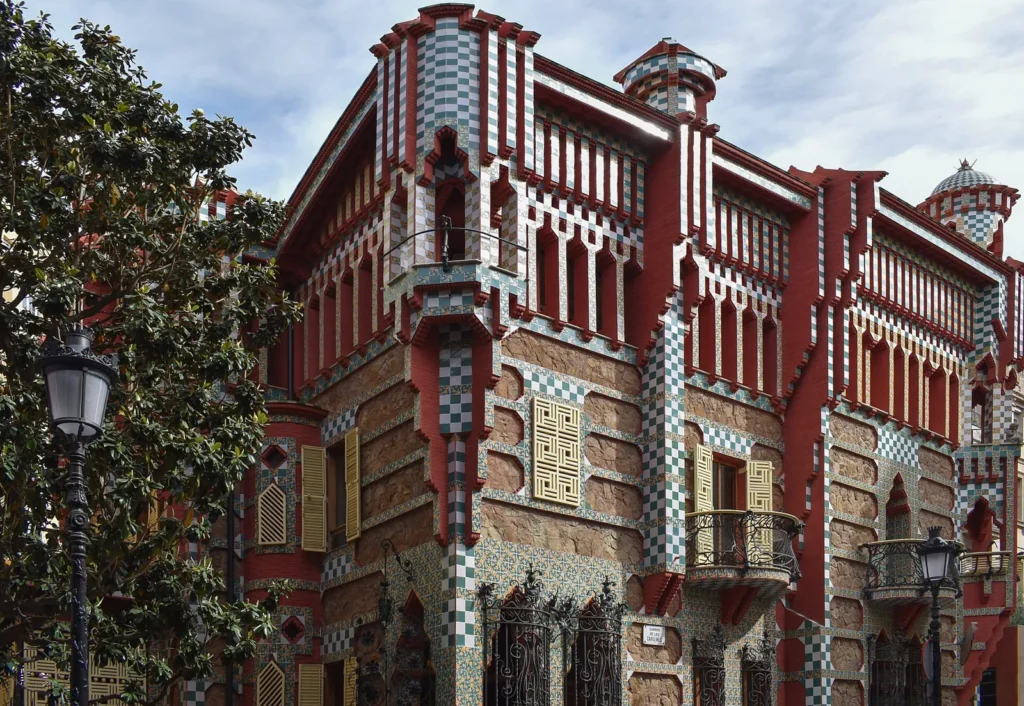
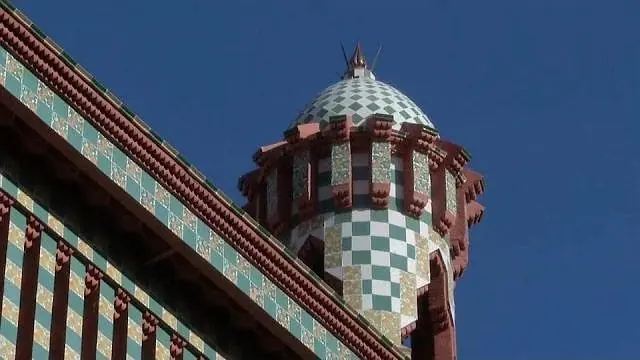
| Façade | Brick, stone and green-and-white tiles with yellow flowers, in a design drawn from Eastern, Islamic and Mudejar architecture. |
| Entrance hall | Made to feel like an indoor garden, with sgraffiti on the walls and a mosaic floor. |
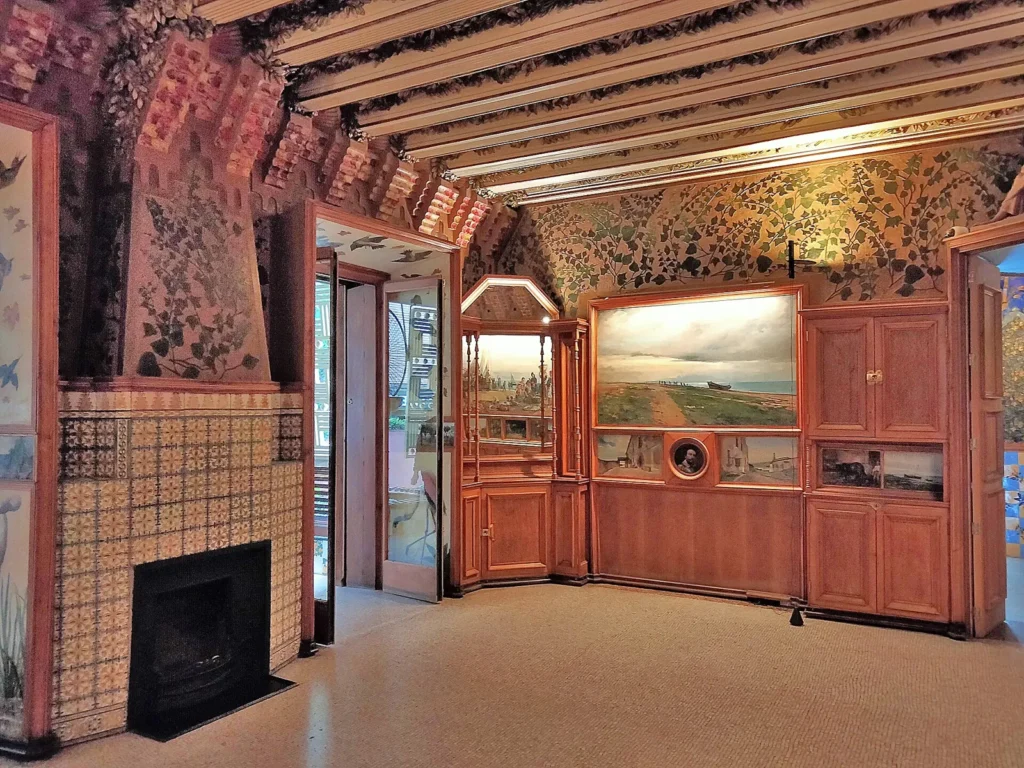
| Dining room | Plant motifs on the walls and ceiling, around the furniture Gaudí designed for the paintings of Francesc Torrescassana. |
| Living room | On the first floor, under a false dome painted with sky, climbing plants and flying birds. |
| Garden | About 300 m² today, with flowerbeds, an oak of nearly 8 metres and a 12-metre magnolia. |
| Rooftop terrace | A walkway past 3 tiled chimneys and a tower shaped like a minaret. |
| Upstairs | The attic for the service staff, now the permanent exhibition. |
Hours and tickets in 2026
From March to October Casa Vicens opens every day from 09:00 to 20:00, and from November to February from 09:00 to 18:00. Standard tickets have an entry time and you can only go in at that time, neither earlier nor later; once you leave, you cannot go back in. The last entry is 1 hour and 15 minutes before closing, visitors are asked to leave 15 minutes before the doors close, and the ticket office opens at 09:30.
Tickets are cheaper online. On 10 October 2026 the self-guided visit costs €23.50 online, or €21.50 reduced for students aged 12 to 29, visitors over 65, members of large or single-parent families and disabled visitors, with proof. Children up to 11 and the companions of disabled visitors go free. The self-guided ticket includes the official audio guide, in 16 languages on your own phone, and the temporary exhibition. An open-hour ticket, to come whenever you like until 1 hour before closing, costs €31; the guided visit starts at €27.50, and the Sweet Gaudí visit, with a mango or pistachio ice cream in the café, from €28.50. (Hours and prices from casavicens.org and its official booking page, checked on 10 October 2026.)
Inside: 3 floors of painted nature
The main floor held the rooms the Vicens family used by day, around the dining room. The entrance hall is made to feel like an indoor garden, with sgraffiti on the walls and an opus tessellatum mosaic on the floor. In the dining room the plant motifs climb the walls and ceiling and surround the wooden furniture Gaudí designed to show Manuel Vicens’s collection of paintings by Francesc Torrescassana. Next to it, a covered porch with swinging shutters and a fountain kept the room cool.
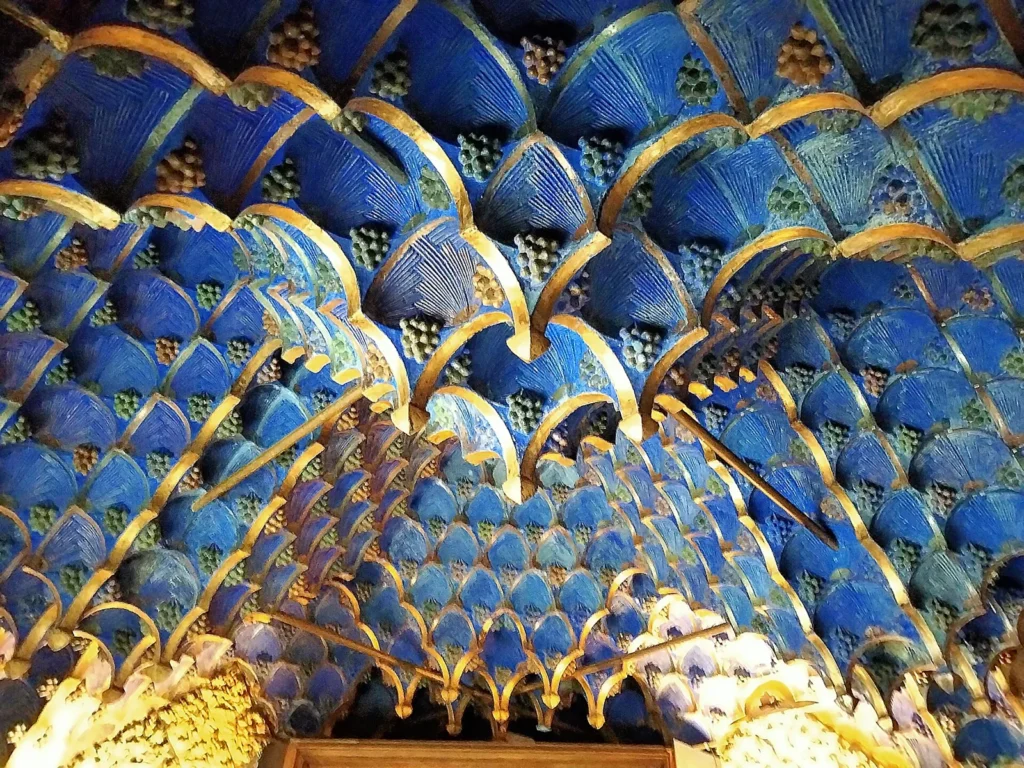
The smoking room, a place for relaxation and leisure, has a ceiling of coloured plaster muqarnas shaped like palm trees with clusters of dates, walls lined with papier-mâché tiles by Hermenegildo Miralles and a dado of tiles with yellow and red roses painted in oil.
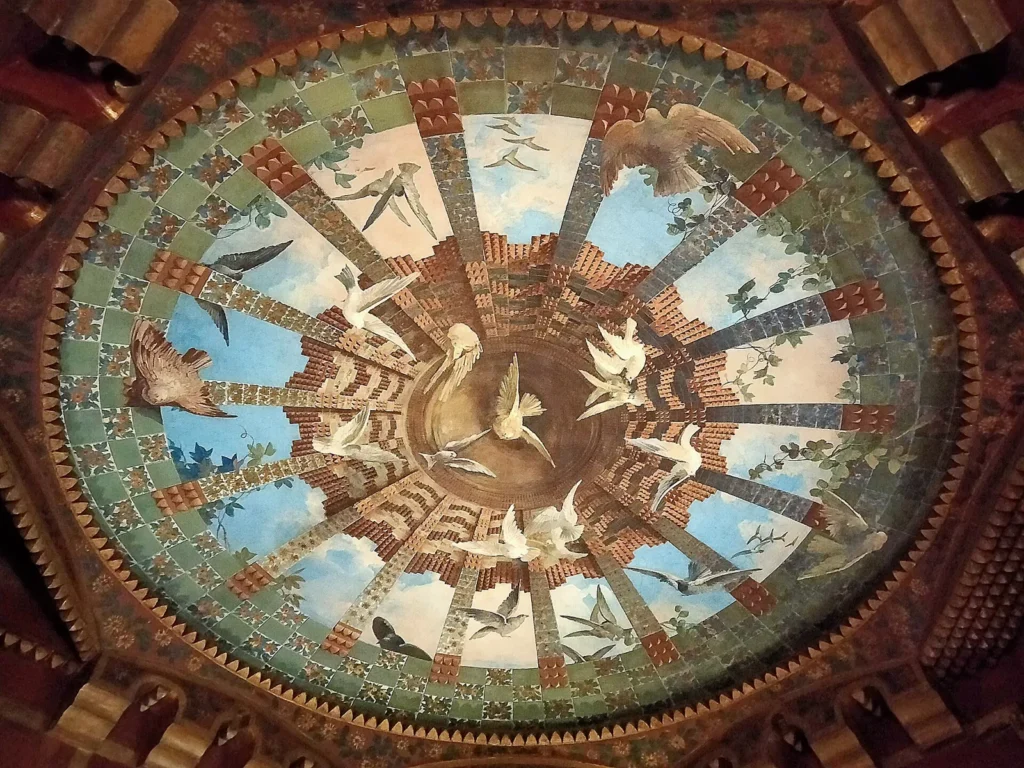
Upstairs, the first floor holds the family’s private rooms: 3 bedrooms, a bathroom and a sitting room joined by small hexagonal halls instead of corridors. The pink room has brambles in its sgraffiti and ivy on the ceramic ceiling panels, the blue room is filled with passionflowers, and the living room above the smoking room is crowned by a false dome painted as an open sky with climbing plants and flying birds. When the house was built, running water in the bathroom was a true luxury.
The second floor, the attic Gaudí designed for the service staff as an open, ventilated space, now holds the permanent exhibition: the plans Gaudí presented for the house, models of how it changed, some of the original furniture and a reproduction of the Reus Manuscript, in which he wrote that “a home is the family’s tiny nation”. In the basement, once the coal cellar, are the shop and a multimedia presentation on the restoration of 2015 to 2017.
The rooftop and the garden
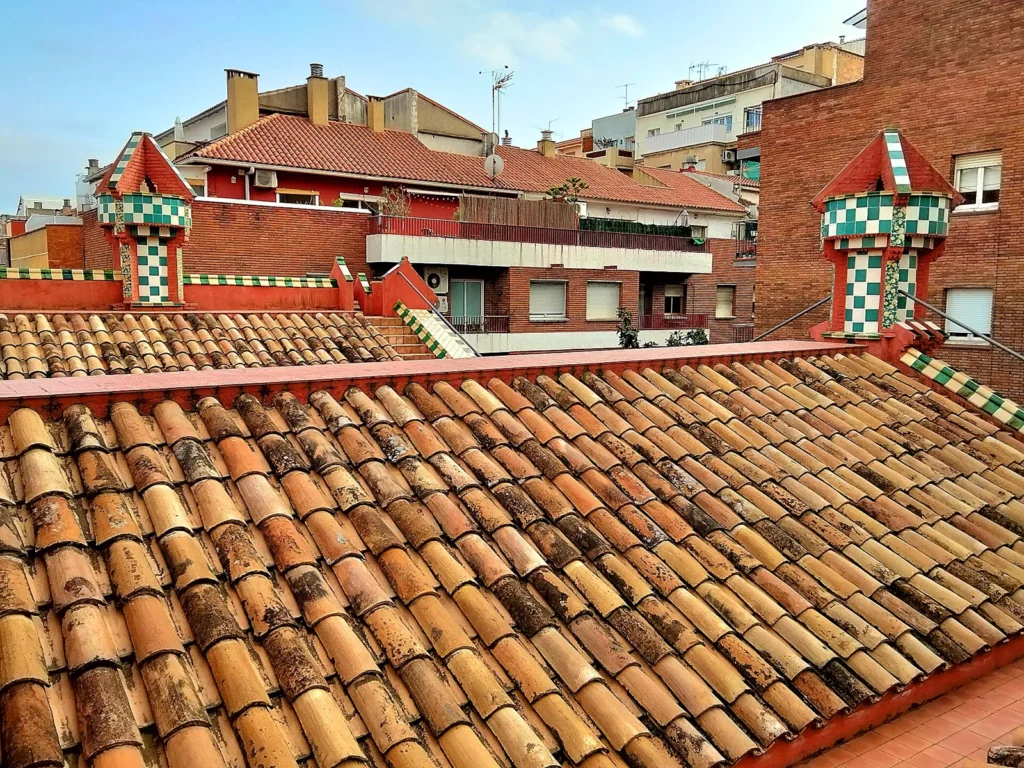
The rooftop was one of Gaudí’s first roofs designed to be walked on, an idea he developed in later works. On the part he built, a walkway leads past 3 chimneys and a tower that tops the roof like a minaret, all clad in green-and-white tiles, in forms drawn from the architecture of India, Morocco and Egypt. The rest belongs to the extension of 1925, where Joan Baptista Serra de Martínez added a second tower almost identical to Gaudí’s, some 40 years later.
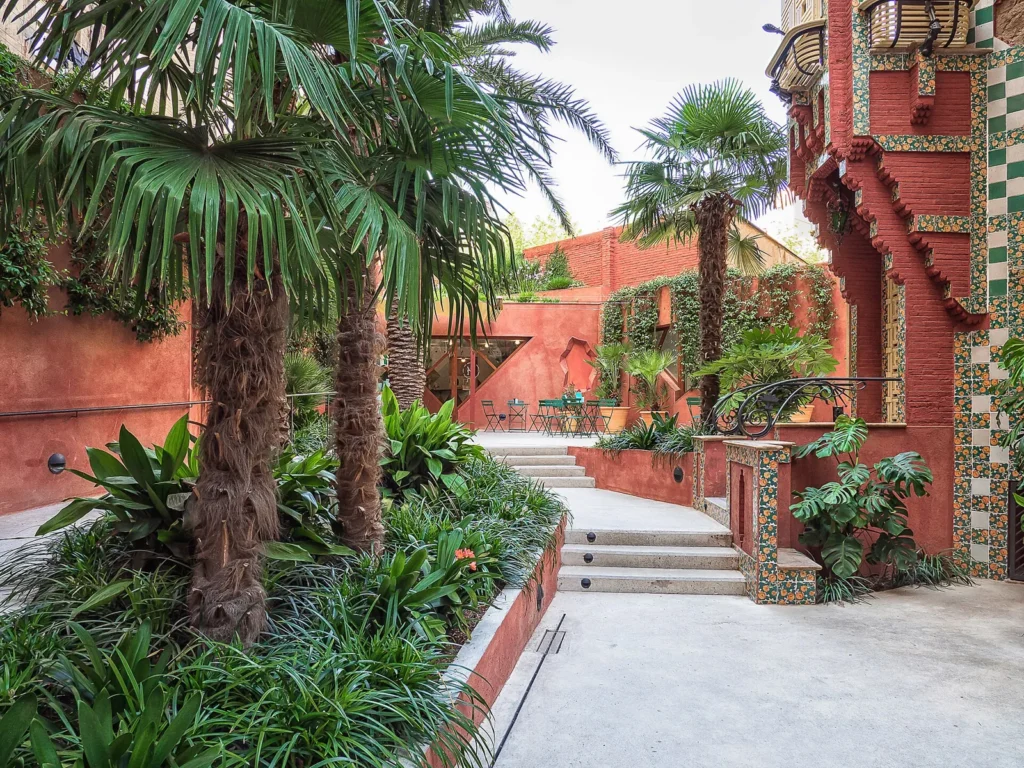
The garden, which the whole house was designed around, is now a small oasis of about 300 m² in the middle of Gràcia, with flowerbeds, potted plants, a planted roof, an oak of nearly 8 metres and a magnolia of 12 metres that were kept from the old garden. When the house was finished the garden was larger, with a waterfall under a great parabolic arch and 2 fountains.
From summer house to museum, 1878 to 2017
Manuel Vicens i Montaner, a stock and currency broker, commissioned the house in 1878 on land he had inherited from his mother. Gaudí finished the plans in 1880, and the house was built between 1883 and 1885. Gràcia was still an independent town; it joined Barcelona in 1897. Gaudí took his motifs from the plot itself: the yellow flowers that covered it ended up on the tiles, and a palmetto he found there gave its leaves to the cast-iron gate.
In 1899 the widow of Manuel Vicens sold the house to the paediatrician Antonio Jover. In 1925 Jover decided to enlarge it; Gaudí, by then devoted to the Sagrada Familia, declined and recommended Joan Baptista Serra de Martínez, who added a new wing in Gaudí’s style, left the building free on all 4 sides and divided it into 3 flats, one per floor. The house was declared a Historic-Artistic Monument in 1969 and joined the World Heritage List on 15 July 2005, within the Works of Antoni Gaudí. The Andorran bank MoraBanc bought it in 2014, restored it from 2015 to 2017 and opened it as a museum on 16 November 2017.
Getting there, accessibility and Gaudí nearby
Casa Vicens is at Carrer de les Carolines, 20-26, in Gràcia. The nearest metro stations are Fontana and Lesseps, both on line L3; by train, FGC Plaça Molina – Sant Gervasi or Gràcia; and buses 22, 24, 27, 87, 114, H6, V17 and D40 also serve it. The blue line of the Barcelona Bus Turístic stops at Park Güell, its listed stop for the house. There are ramps and lifts, with a route adapted for visitors with reduced mobility. Suitcases are not allowed, and bags larger than 30 × 30 cm, umbrellas, tripods and selfie sticks go in the lockers.
Casa Vicens is where Gaudí’s houses begin, and the rest are a short ride away: Park Güell, whose Bus Turístic stop is also the one listed for the house; La Pedrera and Casa Batlló on Passeig de Gràcia; and the Sagrada Familia, which he took over in 1883, the same year building began here. All our audio guides for the city are on the Barcelona page.
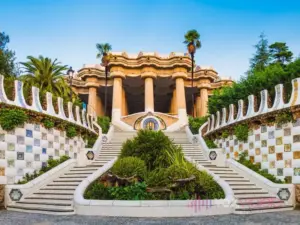 Free audio guidePark Güell audio guide: free, hours and tickets
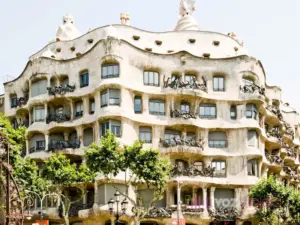 Free audio guideLa Pedrera (Casa Milà)
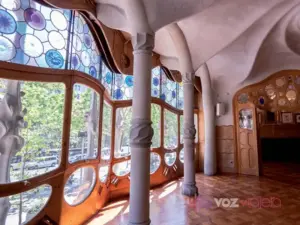 Free audio guideBatlló House
Where to find it
FAQs
How do the free audio guides work?
They play right here on audioguidetravel.com, with no app to download and no sign-up. Press play and listen as you walk round: a phone and a pair of headphones are all you need. The audio streams from this page, so you’ll need mobile data or Wi-Fi.
Can I take the tour at my own pace?
Of course! You set the pace: pause whenever you like, jump back or forward 15 seconds, or tap the bar to jump to any point, and listen as many times as you want so you don’t miss a thing.
If I'm in a group, can we use the same audio guide?
Yes. The same free audio guide opens on as many phones as you like, so you can go round together as a group or with your family, each person at their own pace and with their own headphones. The quickest way is to send the link via WhatsApp, Telegram or however you like: the buttons just below let you share it right now.
Visitor information
As of 1 Nov 2026- Opening hours
- Every day 09:00–18:00 from November to February; 09:00–20:00 from March to October.
- Tickets
- From €23.50 online (self-guided visit)
- Time needed
- 60–75 min
- Getting there
- Metro L3, Fontana or Lesseps station.
- Accessibility
- Ramps and lifts, with a route adapted for reduced mobility; a disabled visitor's companion enters free
- Tip
- Arrive at the time on your ticket: timed tickets allow no entry earlier or later
- Official website
- casavicens.org
Nearby
More free audio guides in Barcelona
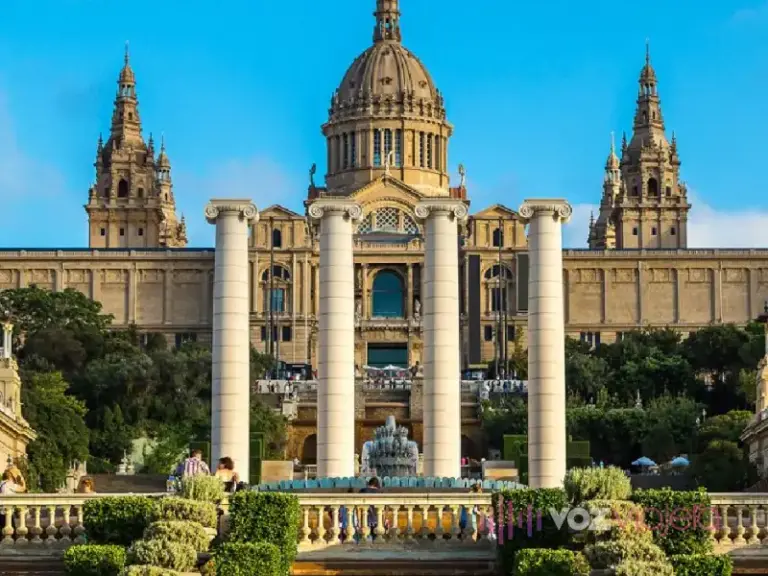 7:57BarcelonaMontjuïc: free audio guide, castle, cable car and fountainFree audio guide to Montjuïc in Barcelona, in English: just under 8 minutes on the hill’s history, the…
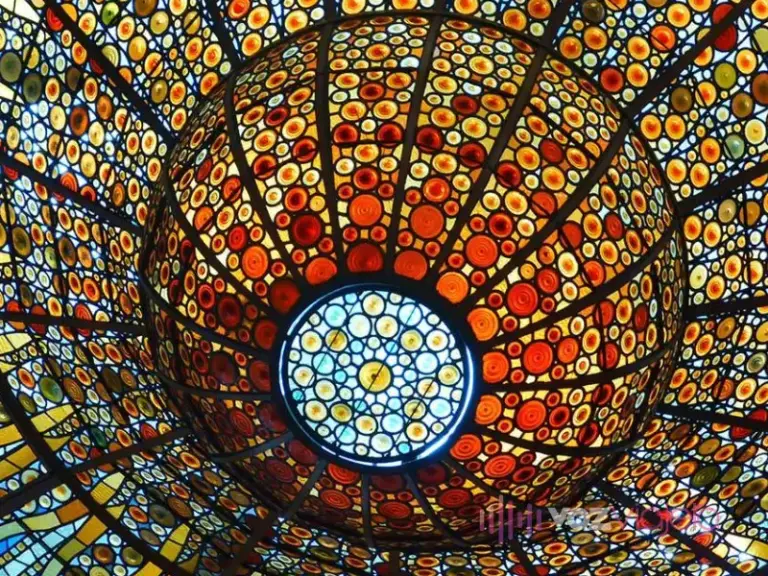 5:43BarcelonaPalau de la Música Catalana: free audio guide and ticketsFree audio guide to the Palau de la Música Catalana in Barcelona, in English: just under 6 minutes…
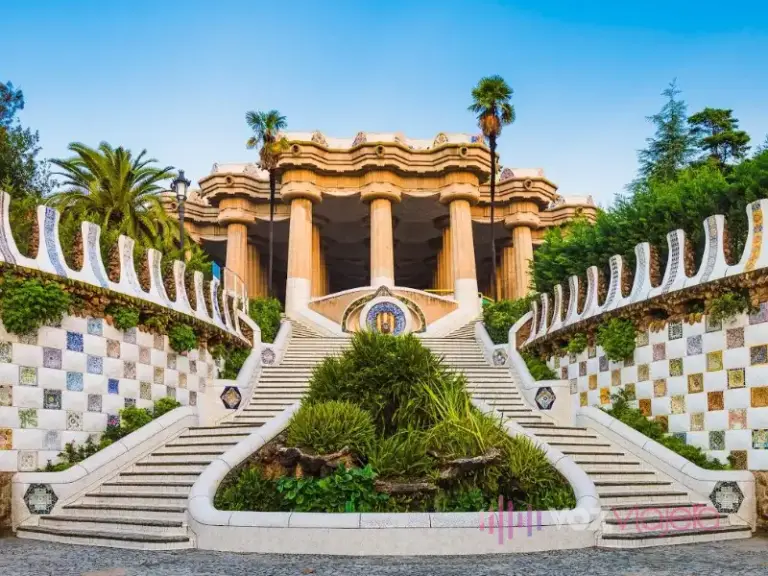 6:11BarcelonaPark Güell audio guide: free, hours and ticketsPark Güell is the estate Antoni Gaudí designed for Eusebi Güell on the hillside above Barcelona, begun in…