
Montjuïc: free audio guide, castle, cable car and fountain
Free audio guide in English · no app, no sign-up
Free audio guide to Montjuïc in Barcelona, in English: just under 8 minutes on the hill’s history, the Magic Fountain, the gardens, the castle, the Olympic Ring and the museums. It plays on this page.
 Audio guide
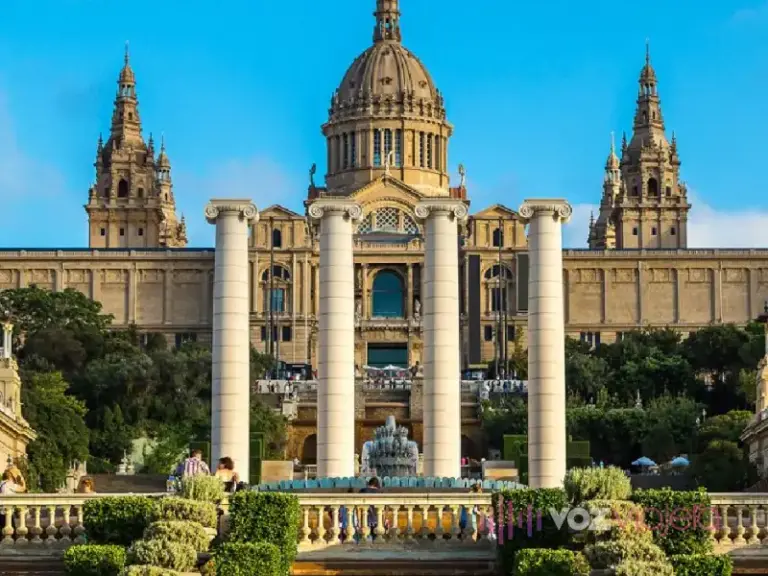
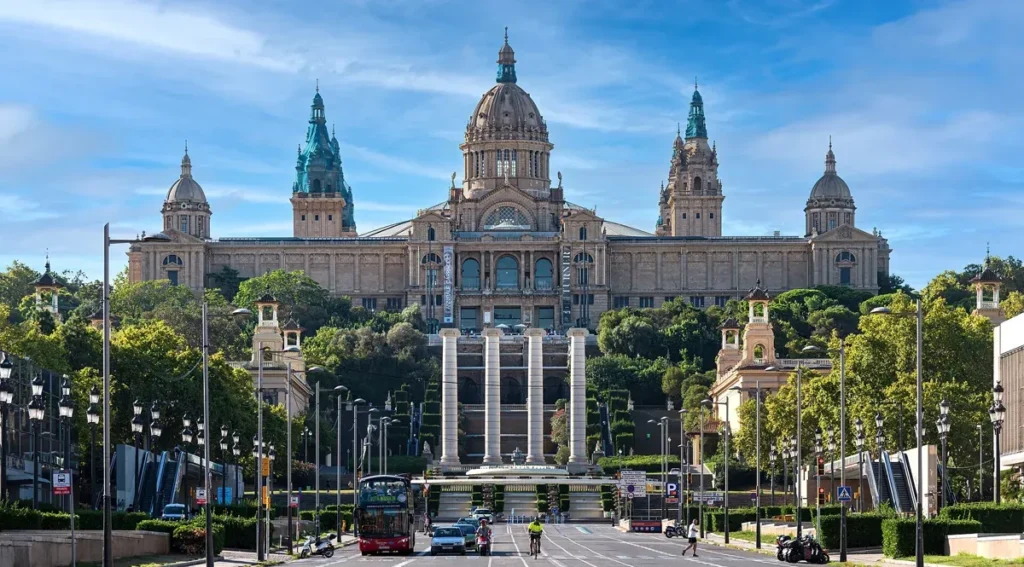
Montjuïc is the hill that rises over the port of Barcelona: a large green park with the Magic Fountain at its foot, the Palau Nacional with the National Art Museum of Catalonia on its slope, the 1992 Olympic Ring, gardens, and a castle on top with a 360° view. The castle costs €12 and the cable car €19 return. This is its free audio guide, in English.
What the audio guide covers
It is free, plays on this page in your phone’s browser with no app and no sign-up, and lasts just under 8 minutes. It starts with the name, which it explains as “Mount of the Jews”, and the medieval Jewish burial ground on the hill, then tells how its height over the port made Montjuïc key to the defence of the city: fighting in the Reapers’ War of the 17th century, and the fortress in the 18th. Then come the 2 big events that changed the hill, the 1929 International Exposition, which left the Magic Fountain, pavilions and gardens, and the 1992 Olympic Games.
It does not hide the darker side: the castle was a prison and a place of executions. Then the walk begins at the foot of the hill, by the Magic Fountain: you climb through the gardens to the castle and its view of Barcelona and the Mediterranean, go on to the Olympic stadium, the Palau Sant Jordi and the Picornell pools, and visit the museums, from the National Art Museum of Catalonia to the Poble Espanyol, the Spanish Village. It closes with tips: get around by bike, time your visit for the evening fountain show, join a guided tour of the castle, and bring a picnic.
Points of interest the audio guide stops at:
| Point of Interest | Description |
|---|---|
| Magic Fountain | The fountain built for the 1929 International Exposition, known for its shows of water, light and music. |
| Montjuïc Castle | The fortress on top of the hill, a witness to the wars and the darkest years of Barcelona, with a panoramic view of the city. |
| Olympic facilities | The venues built or renovated for the 1992 Olympic Games, with the Estadi Olímpic Lluís Companys at their heart. |
| Montjuïc gardens | The gardens you cross on the way up, each with its own character. |
| Museums and cultural centres | The spaces that show the art, culture and history of Barcelona and Catalonia, from the National Art Museum of Catalonia to the Poble Espanyol. |
Montjuïc Castle: hours, tickets and the view
The castle opens every day from 10:00 to 20:00 until 31 October, and the ticket office closes at 19:30. It is closed on 25 December and 1 January. The ticket costs €12, or €8 reduced, and covers the permanent and the temporary exhibitions. The castle sells its online tickets only on its own website.
The prize is up on the parade ground terrace: a 360° viewpoint over the city, the port, the Mediterranean, the coastline and the Baix Llobregat, and on the city side all the way to the other hill of Barcelona, Tibidabo.
The guided tours the audio guide recommends run on weekends and bank holidays, at 13:00 in English, 15:30 in Spanish and 16:30 in Catalan. A ticket with the tour costs €16, or €12 reduced. All areas of the castle are accessible except the terrace, which you reach by stairs, and the uneven paving can be hard going for visitors with reduced mobility. Bikes stay in the bicycle parking in the Santa Amàlia bastion.
From lookout tower to prison: the castle’s story
Long before the castle, the top of the hill had a beacon, recorded as far back as 1073, where a lookout warned the city of enemy ships with sails by day and fires by night. In 1640, at the start of the Revolt of Catalonia, the people of Barcelona built a small fort around it in just 30 days, and on 26 January 1641 the troops of Philip IV were driven back in the Battle of Montjuïc.
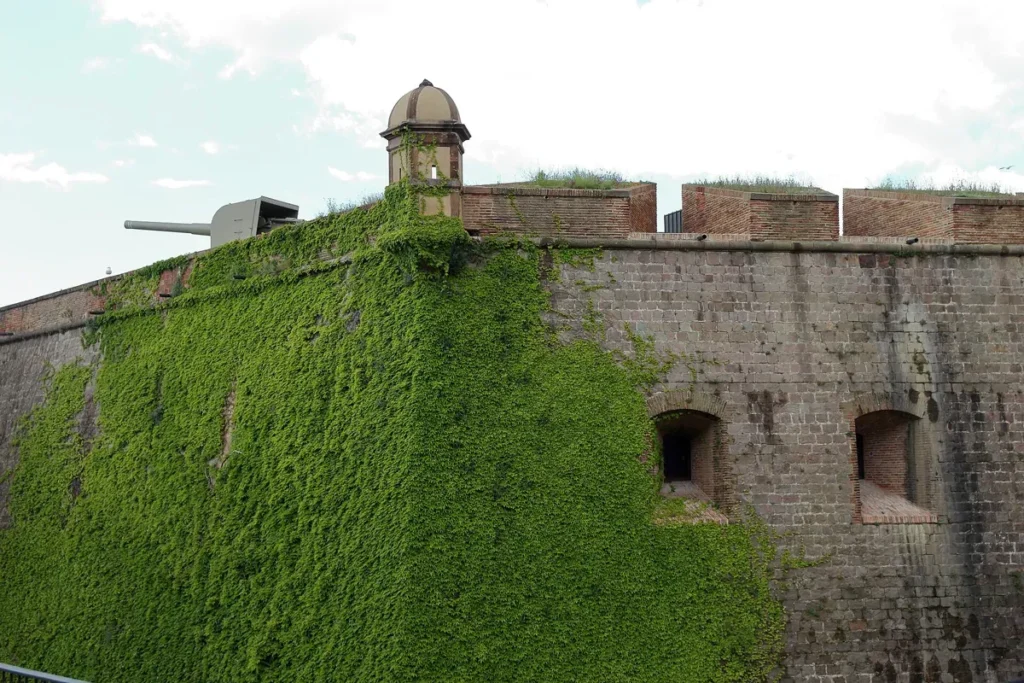
The fortress you visit today came a century later. Its plans were finished in 1751, work began in 1753 and it was completed in 1799, with 4 bastions on an irregular trapezoid that follows the shape of the hill. The medieval Jewish cemetery the audio guide talks about lies on the northeast side of the hill; excavations found 171 tombs in 1949 and 557 more in 2001.
The castle was used as a prison more than once. During the Civil War, from 1936 to 1939, nearly 1,500 people were imprisoned here and about 250 were executed. After the war it was a military prison under Franco, and on 15 October 1940 the president of the Catalan government, Lluís Companys, was shot by firing squad in the Santa Eulàlia moat. A military museum opened in 1963. A ministerial order of 2007 opened the way for the castle to return to the city for good, and on 15 June 2008 Barcelona celebrated its recovery.
Getting up: funicular, cable car, bus or on foot
The classic way up starts underground. Take metro L2 or L3 to Paral·lel and change to the Montjuïc funicular, which climbs to the Parc de Montjuïc stop. Right next to it, on Avinguda Miramar, is the lower station of the cable car.
The Telefèric de Montjuïc covers a 750 m aerial route up to the castle, with a middle stop at Plaça de la Sardana. A return ticket costs €19, or €17.10 online, and €13 for children aged 4 to 12; under-4s ride free. You must use it on the same day, and you can get off at the other 2 stations and get back on. A one-way ticket, €12, is sold only at the ticket office. The cable car ticket does not include the castle.
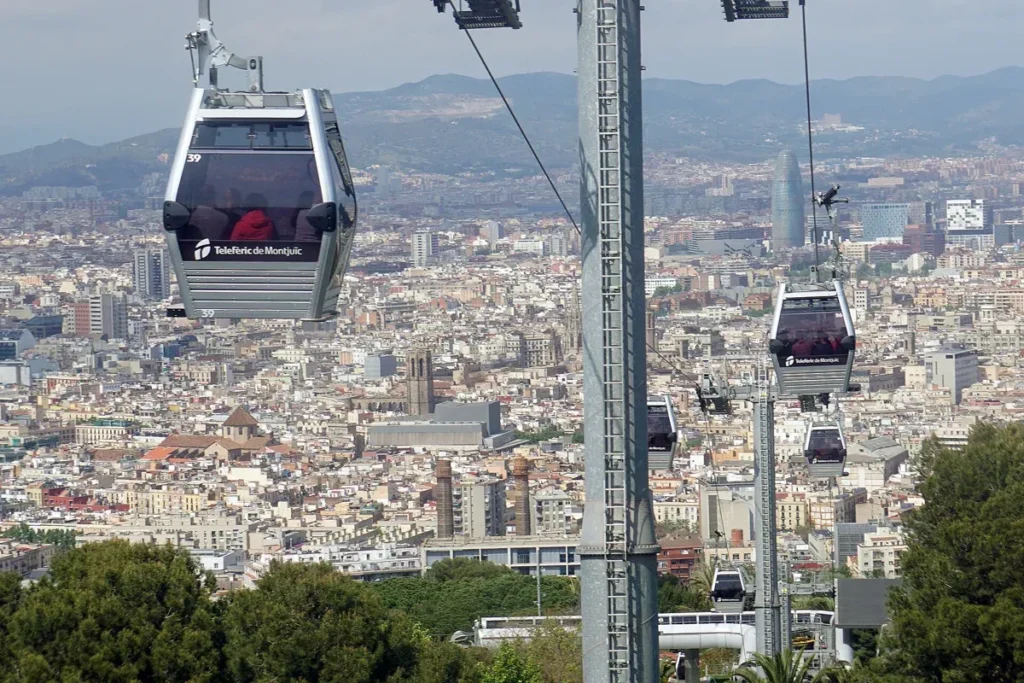
In October the cable car runs from 10:00 to 19:00, every day, with the last boarding 15 minutes before closing, or 20 minutes if you want the full route. Bus 150 is the other way up: it leaves from Avinguda de la Reina Maria Cristina, by Plaça d’Espanya, circles the hill and reaches the castle in about 20 minutes. On foot, from the top of the funicular, it is 20 to 25 minutes uphill all the way, through the gardens.
The Magic Fountain: show times
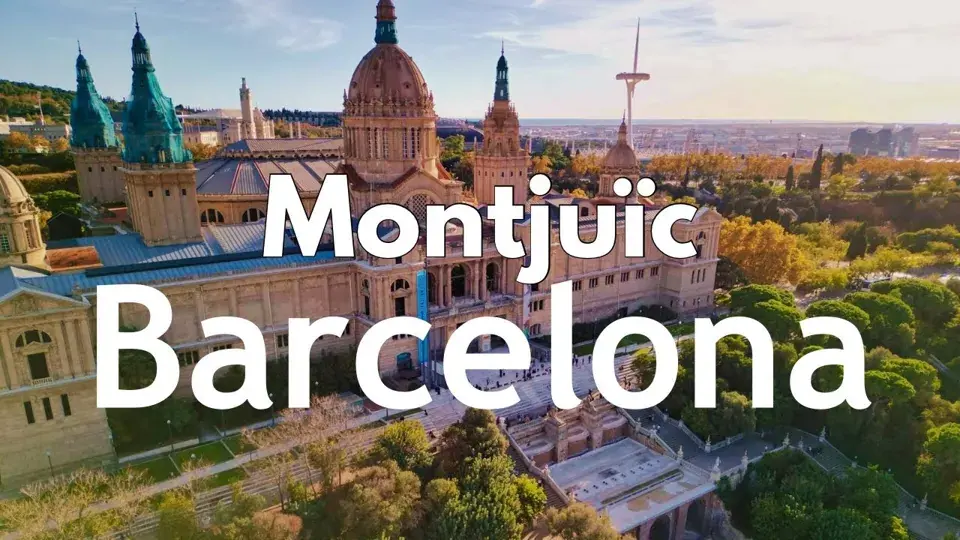
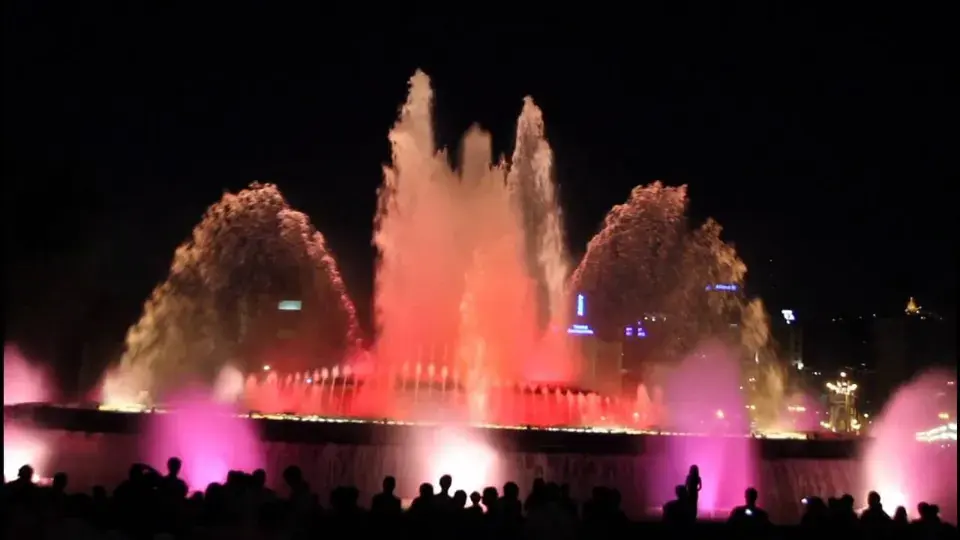
The audio guide’s walk begins by the Magic Fountain, at the foot of the Palau Nacional, and asks you to come back for the evening show. Carles Buïgas built it for the 1929 International Exposition, and more than 3,000 workers finished it in under a year. Around 2,600 litres of water a second run through its 3 concentric pools, and since 2010 the fountain has used groundwater.
 Free audio guideMagic Fountain of Montjuic
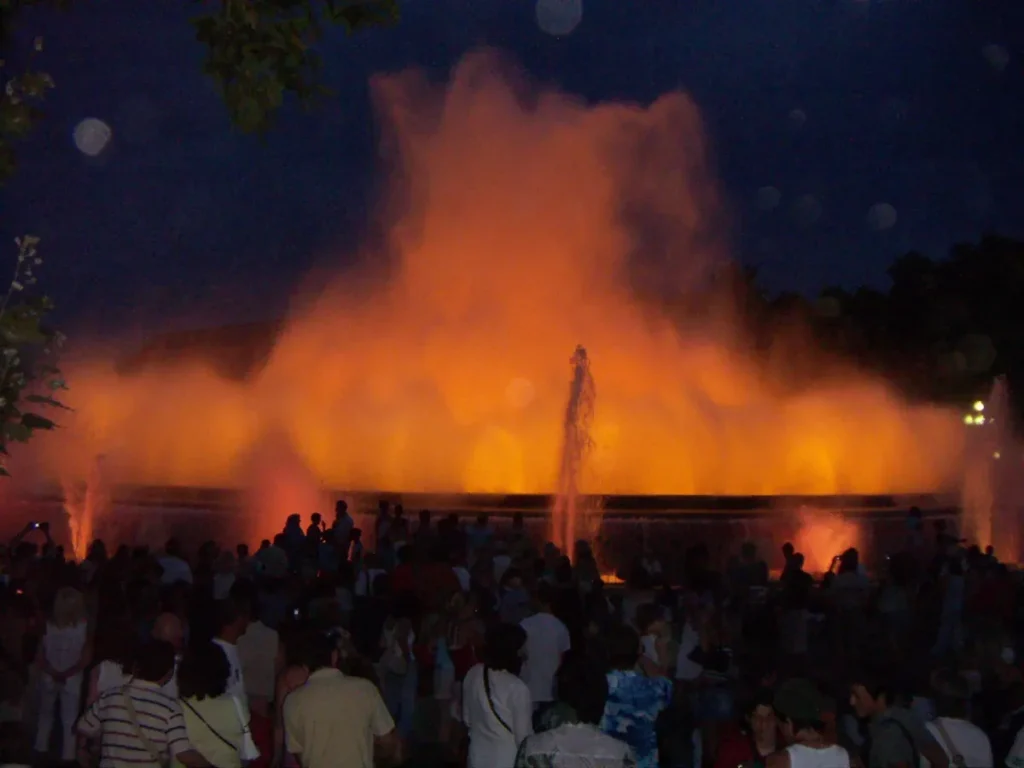
In October the shows run on Thursday, Friday and Saturday from 21:00 to 22:00, with the music and colour shows starting at 21:00 and 21:30. The fountain is at Plaça de Carles Buïgas 1; the nearest metro is Espanya, on lines L1 and L3.
Palau Nacional, museums and the Olympic Ring
Above the fountain stands the Palau Nacional, home of the National Art Museum of Catalonia. From October to April it opens Tuesday to Saturday from 10:00 to 18:00, and on Sundays and public holidays from 10:00 to 15:00; it is closed on Mondays that are not public holidays. The general ticket, €12, covers the collection, the temporary exhibitions and the rooftop viewpoint, and is valid on 2 days within a month. A €2 basic ticket gets you into the building and up to the viewpoint. Entry is free on Saturdays from 15:00 and on the first Sunday of the month, booking online in advance. A joint ticket with the Poble Espanyol costs €20.
Further up the hill is the Estadi Olímpic Lluís Companys, the stadium of the 1929 Exposition renovated for the 1992 Olympic Games, with the Palau Sant Jordi and the Picornell pools around it.
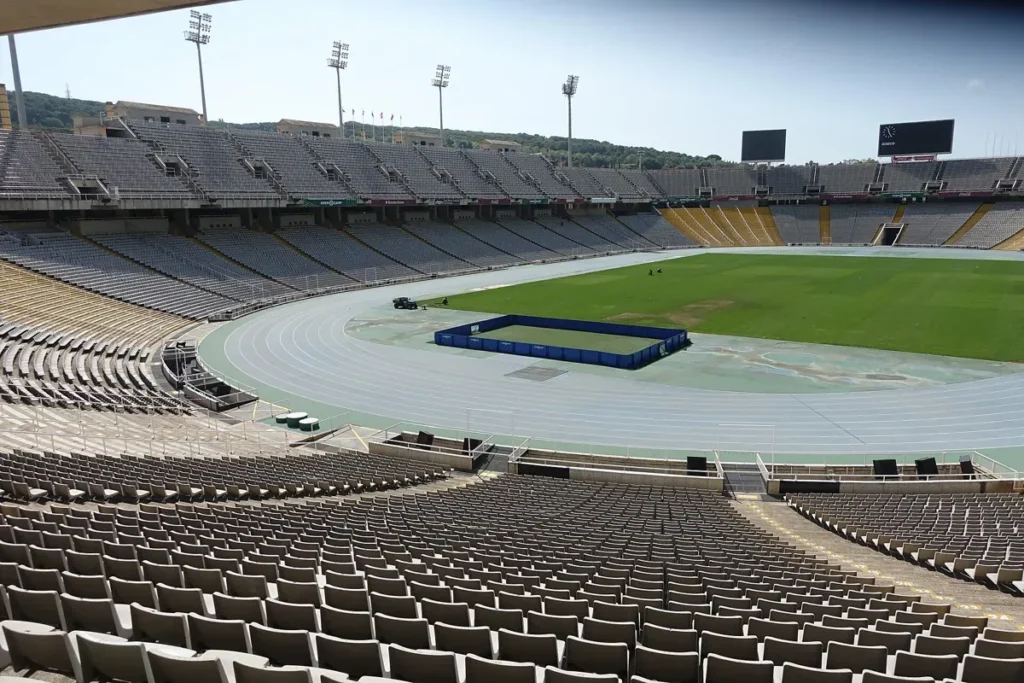
FC Barcelona has played at a rebuilt Camp Nou since 22 November 2025, when the club went back and beat Athletic Club 4-0 in front of 45,157 people, the first home game there since 28 May 2023. For the 2½ years in between, the Olympic stadium on this hill was Barça’s ground. Getting from one to the other is simple: metro line 3 from Espanya to Les Corts, 4 stops. (Sources: FC Barcelona, first game back in figures; checked 15 September 2026.)

All of the city’s audio guides are on our Barcelona page.
Where to find it
FAQs
How do the free audio guides work?
They play right here on audioguidetravel.com, with no app to download and no sign-up. Press play and listen as you walk round: a phone and a pair of headphones are all you need. The audio streams from this page, so you’ll need mobile data or Wi-Fi.
Can I take the tour at my own pace?
Of course! You set the pace: pause whenever you like, jump back or forward 15 seconds, or tap the bar to jump to any point, and listen as many times as you want so you don’t miss a thing.
If I'm in a group, can we use the same audio guide?
Yes. The same free audio guide opens on as many phones as you like, so you can go round together as a group or with your family, each person at their own pace and with their own headphones. The quickest way is to send the link via WhatsApp, Telegram or however you like: the buttons just below let you share it right now.
Visitor information
As of 22 Oct 2026- Opening hours
- Castle 10:00-20:00 Mar-Oct, 10:00-18:00 Nov-Feb · Cable car 10:00-19:00 in Oct, 10:00-18:00 Nov-Feb
- Tickets
- Castle €12, reduced €8 · Cable car €19 return
- Time needed
- Audio guide 8 min · on foot from the funicular to the castle 20-25 min
- Getting there
- Metro L2 or L3 to Paral·lel, then the Montjuïc funicular up to Parc de Montjuïc, where the cable car to the castle starts.
- Accessibility
- Castle accessible except the terrace (stairs); uneven paving in places
- Tip
- On Sundays from 15:00 the castle is free: ride up by cable car and walk down through the gardens
- Official website
- ajuntament.barcelona.cat
Nearby
More free audio guides in Barcelona
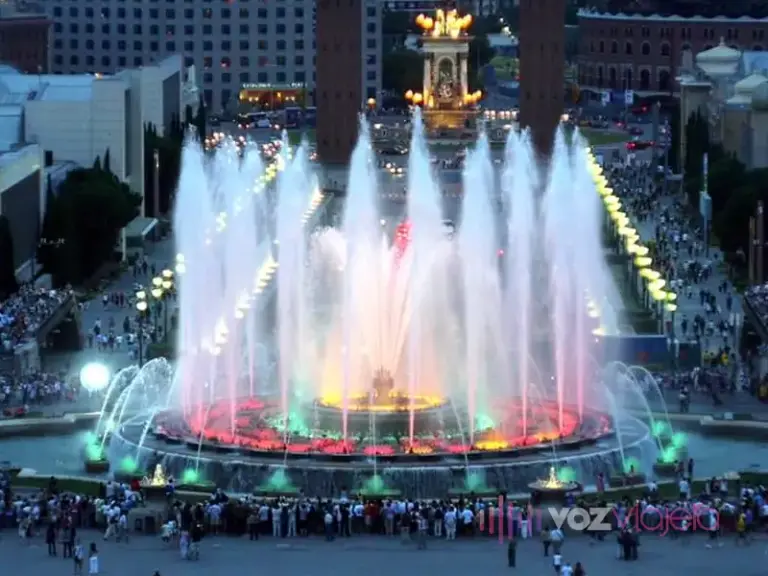 2:23BarcelonaMagic Fountain of MontjuicThe Magic Fountain of Montjuic is an emblem of Barcelona with its night show of light, water, music…
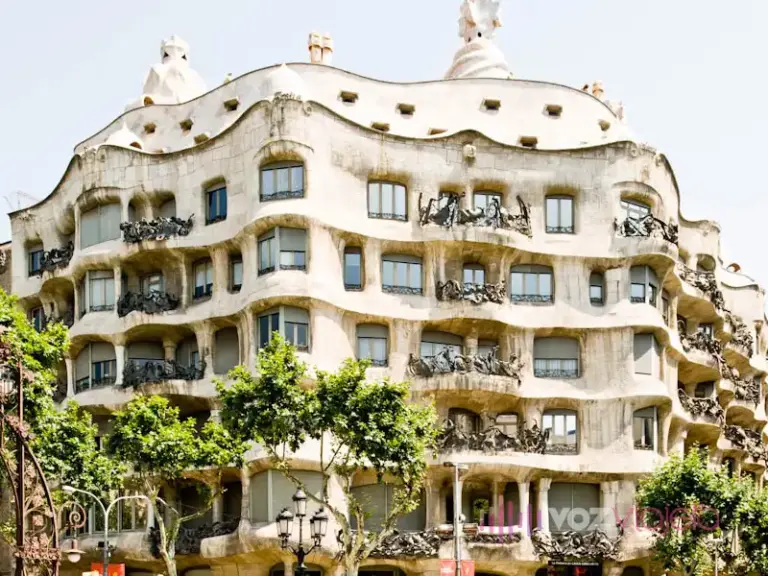 6:27BarcelonaLa Pedrera (Casa Milà): free audio guide, hours and ticketsFree audio guide to La Pedrera (Casa Milà), in English: 6 minutes from the curtain-wall façade and the…
 6:43BarcelonaBarcelona Cathedral: free audio guide, hours and ticketsFree audio guide to Barcelona Cathedral, in English: 7 minutes from the facade and the crypt of Saint…