
La Concha Beach, San Sebastián: free audio guide and tides
Free audio guide in English · no app, no sign-up
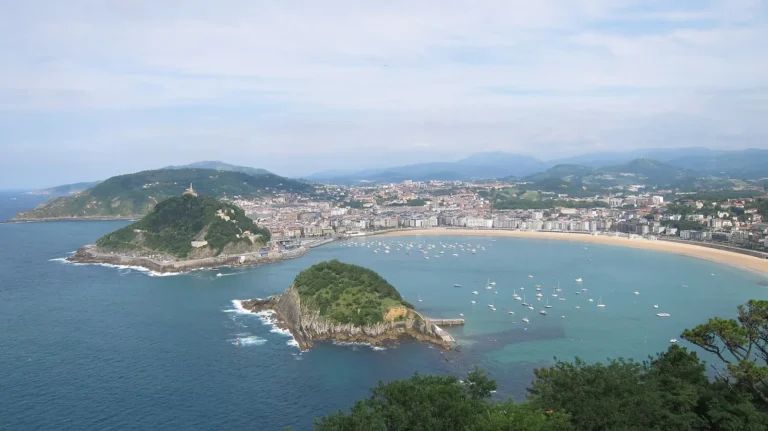
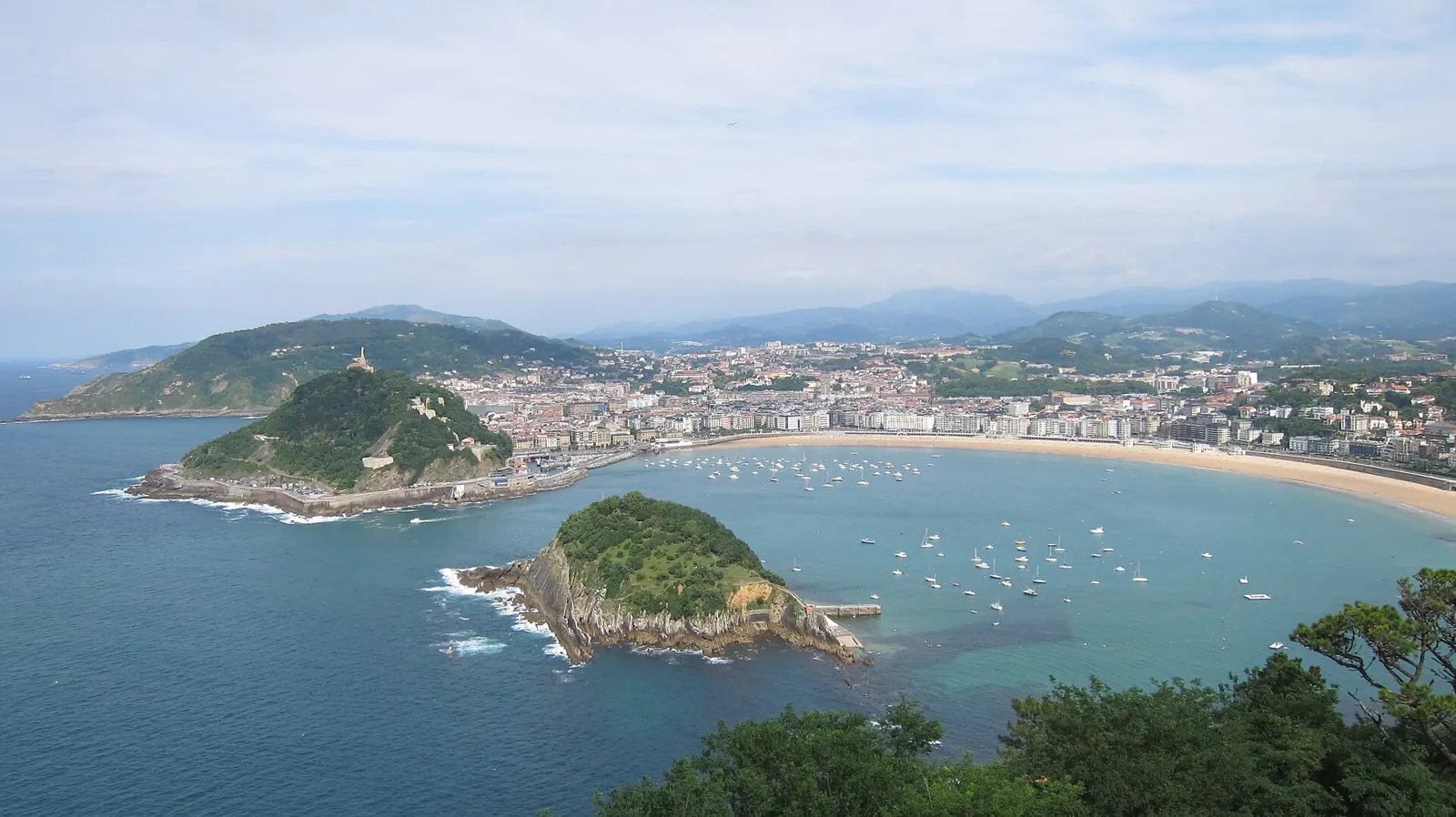
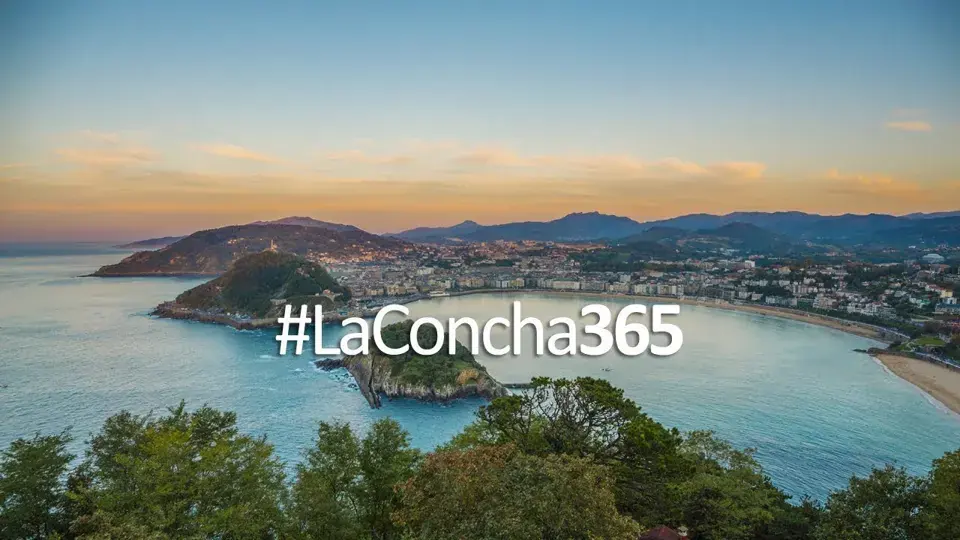
La Concha Beach (Playa de La Concha) is the city beach of San Sebastián, or Donostia, in the Basque Country: a 1,350 m curve of fine sand between the City Hall and the Pico del Loro, with Santa Clara Island in the bay and Mount Urgull and Mount Igeldo on either side. It is public and free, open day and night, and its water is calm and shallow. This free audio guide lasts about 3½ minutes.
 Audio guide
Before you go in
The few things that change your visit.
- Public beach: free and open at any time
- Lifeguards in 2026: 1 June to 30 September
- No smoking on the sand since 2026: fines of €100 to €750
- At low tide you can walk to Ondarreta
- Railing designed by Juan Rafael Alday in 1916
- La Perla spa circuit: €38 for 2 hours
- Dbus 250 m away; Amara Euskotren 650 m
On this page
- What the La Concha Beach audio guide covers
- La Concha Beach opening times, lifeguards and rules in 2026
- La Concha Beach tides: when the beach grows and shrinks
- The railing, the lamps and La Perla: walking the promenade
- Santa Clara Island and the Pico del Loro
- How to get to La Concha Beach, and accessibility
- Where to find it
La Concha Beach (Playa de La Concha) is the city beach of San Sebastián, or Donostia, in the Basque Country: a 1,350 m curve of fine sand between the City Hall and the Pico del Loro, with Santa Clara Island in the bay and Mount Urgull and Mount Igeldo on either side. It is public and free, open day and night, and its water is calm and shallow. This free audio guide lasts about 3½ minutes.
What the La Concha Beach audio guide covers
Press play leaning on the white railing, facing the sea, and stroll slowly towards La Perla as you listen. These are its stops:
| Facing the bay | Why it is called La Concha, “the shell”, and which hills enclose it. |
| The queen’s sea baths | How Queen Isabella II made the beach fashionable in 1845. |
| The railing | The pattern Juan Rafael Alday designed in 1916. |
| La Perla | The 1912 bathhouse that still runs on seawater. |
| Santa Clara Island | The lighthouse, the beach that faces south and Cristina Iglesias’s sculpture. |
| The tides | Why the beach changes size during the day. |
| Pico del Loro | The name that hides a chapel, and Miramar Palace above it. |
| Last stop | The trainera rowing regattas, and the walk to the Comb of the Wind. |
La Concha Beach opening times, lifeguards and rules in 2026
La Concha is a public, open beach: there are no opening hours and no ticket, and you can walk it for free at any time. What has a season is the services. In 2026 the beach season ran from 1 June to 30 September, with lifeguards and changing rooms; sunshades and deckchairs for hire from 15 June, and the assisted bathing service from 15 June to 15 September. Toilets and showers are open all year round.
| Opening times | Always open. Lifeguards in 2026: 1 June to 30 September. |
| Price | Free. A shower costs €1.60. |
| Where | Paseo de La Concha, in the centre of San Sebastián. |
| Time needed | The 3½-minute audio guide, plus the walk to the Pico del Loro. |
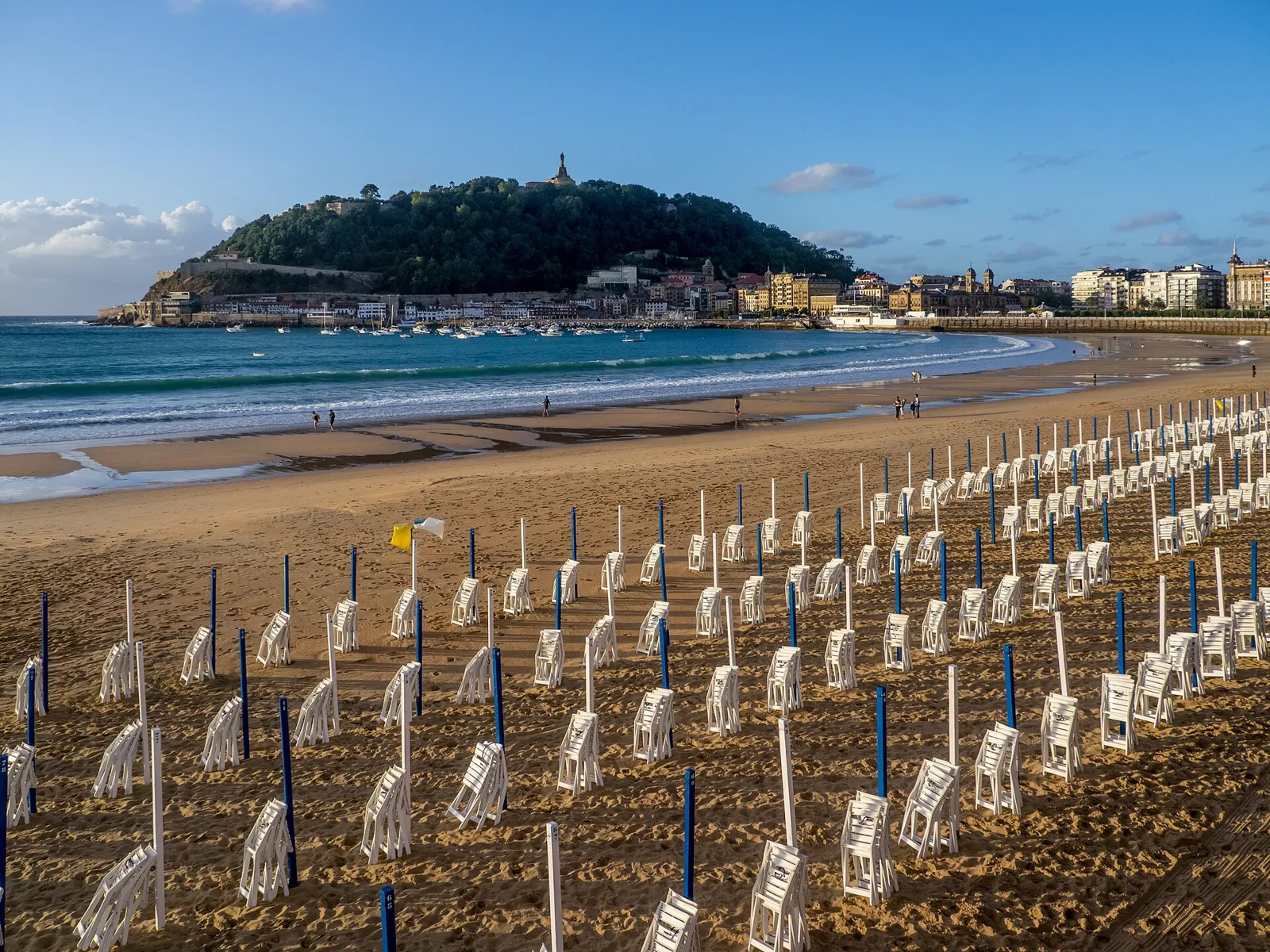
Since the 2026 season, the city’s beach bylaw also bans smoking on the sand and playing music without headphones, with fines of €100 to €750. In summer the beach fills with its classic blue-and-white sunshades, 290 of them, and a floating platform with slides and diving boards is moored in the water.
La Concha Beach tides: when the beach grows and shrinks
La Concha is shallow, and the tide rules it. At low tide the sand widens and you can keep walking along the shore to Ondarreta beach, round the Pico del Loro, the rocky hill that separates the 2 beaches. At high tide the water covers much of the sand and reaches the rocks; then you cross from one beach to the other through MiramArt, a pedestrian tunnel that runs under the Pico del Loro.
The railing, the lamps and La Perla: walking the promenade
The beach became fashionable in 1845, when Queen Isabella II came to bathe in the sea on her doctors’ advice. The court and the aristocracy followed, and San Sebastián turned into an elegant summer resort, the “Pearl of the Cantabrian Sea”. The bay takes its name from its shape: seen from above, it is a shell.
The promenade dates from the resort’s heyday. It starts at the City Hall, which occupies the city’s old casino, built in 1887, and runs along the ornate white railing designed in 1916 by the municipal architect Juan Rafael Alday. It is one of the symbols of the city, and so are the lamp posts beside it. The promenade also has the clock area, the main way down to the sand.
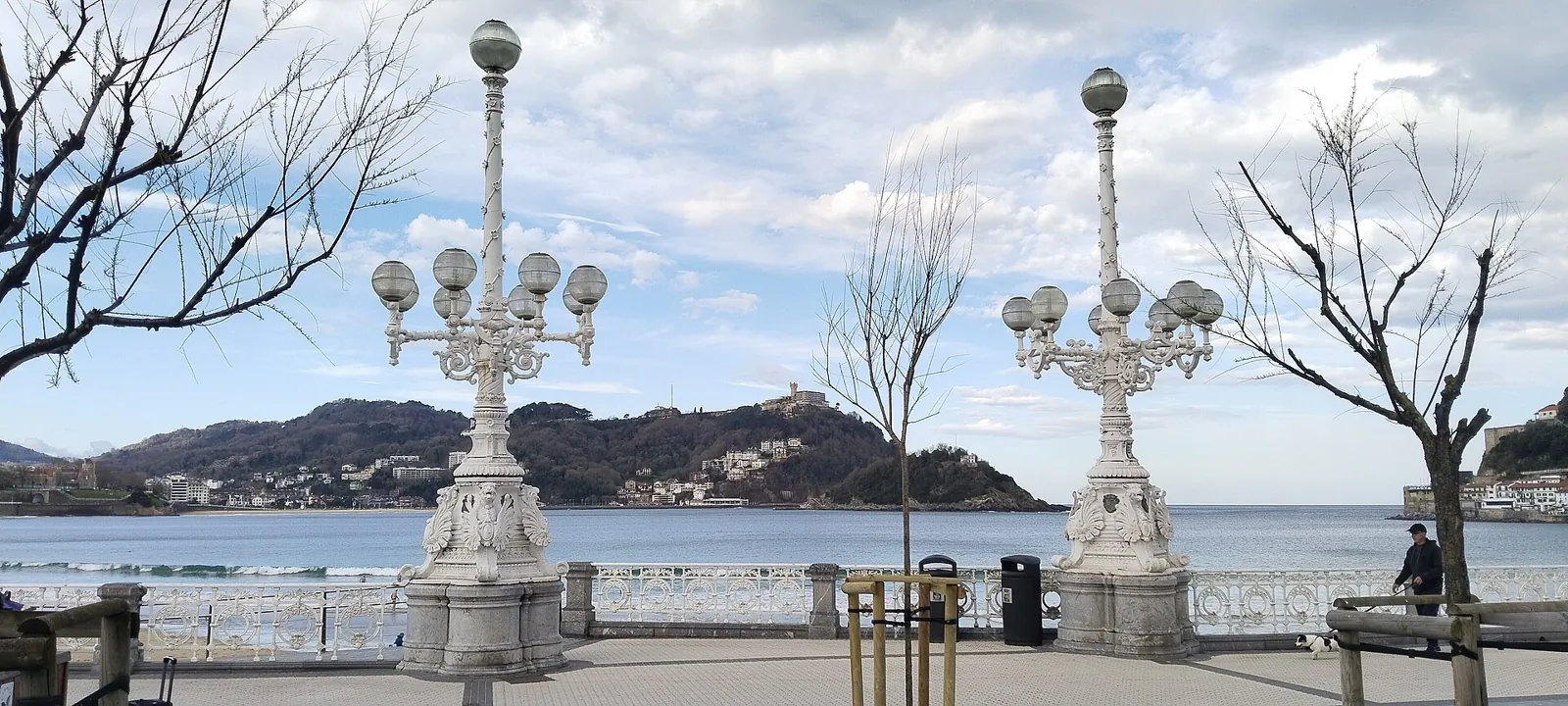
A few steps further on, right on the sand, stands La Perla, the 1912 bathhouse built for the European nobility who spent their summers here. Today it is a thalassotherapy centre with a 5,500 m² circuit of seawater pools, a panoramic jacuzzi and saunas, and direct access to the beach.
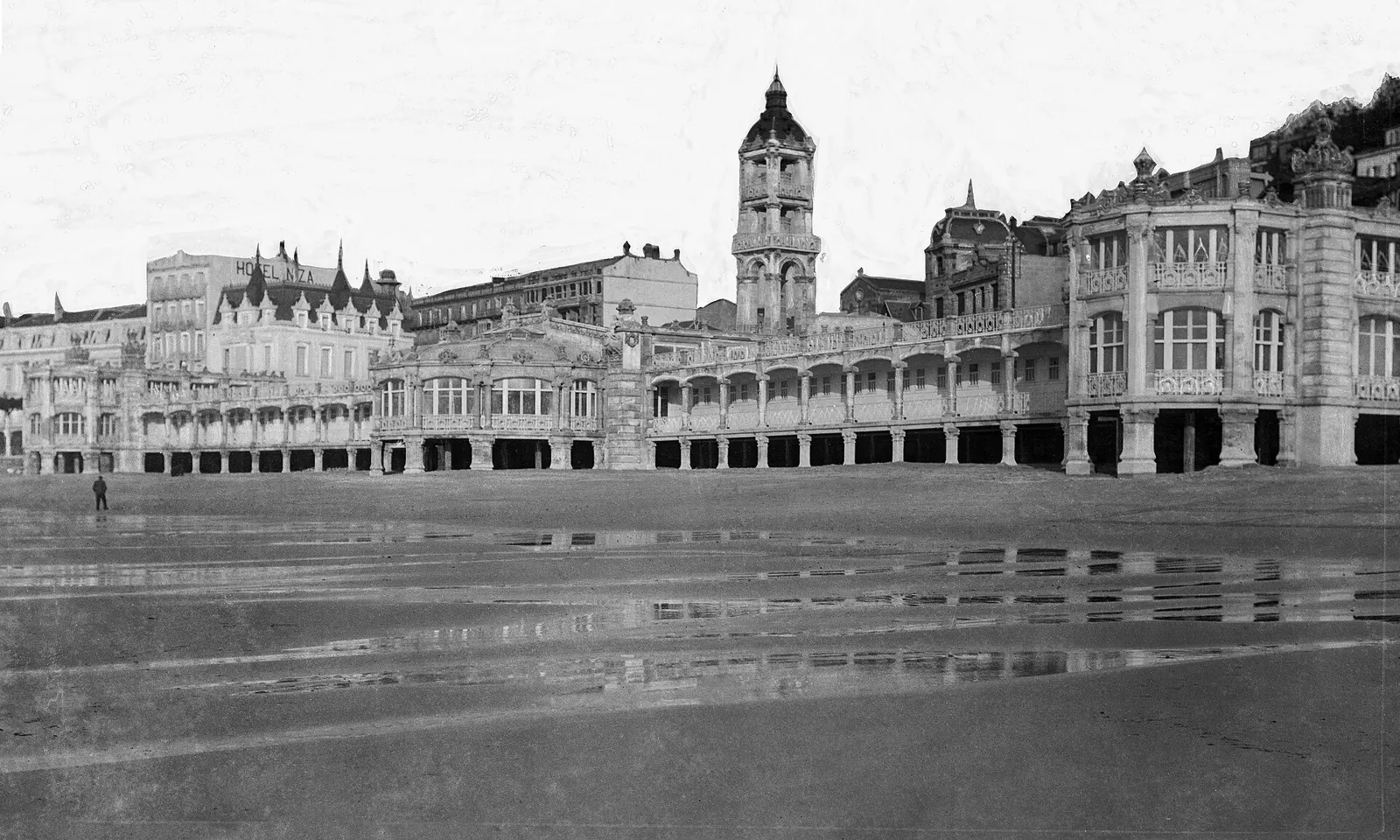
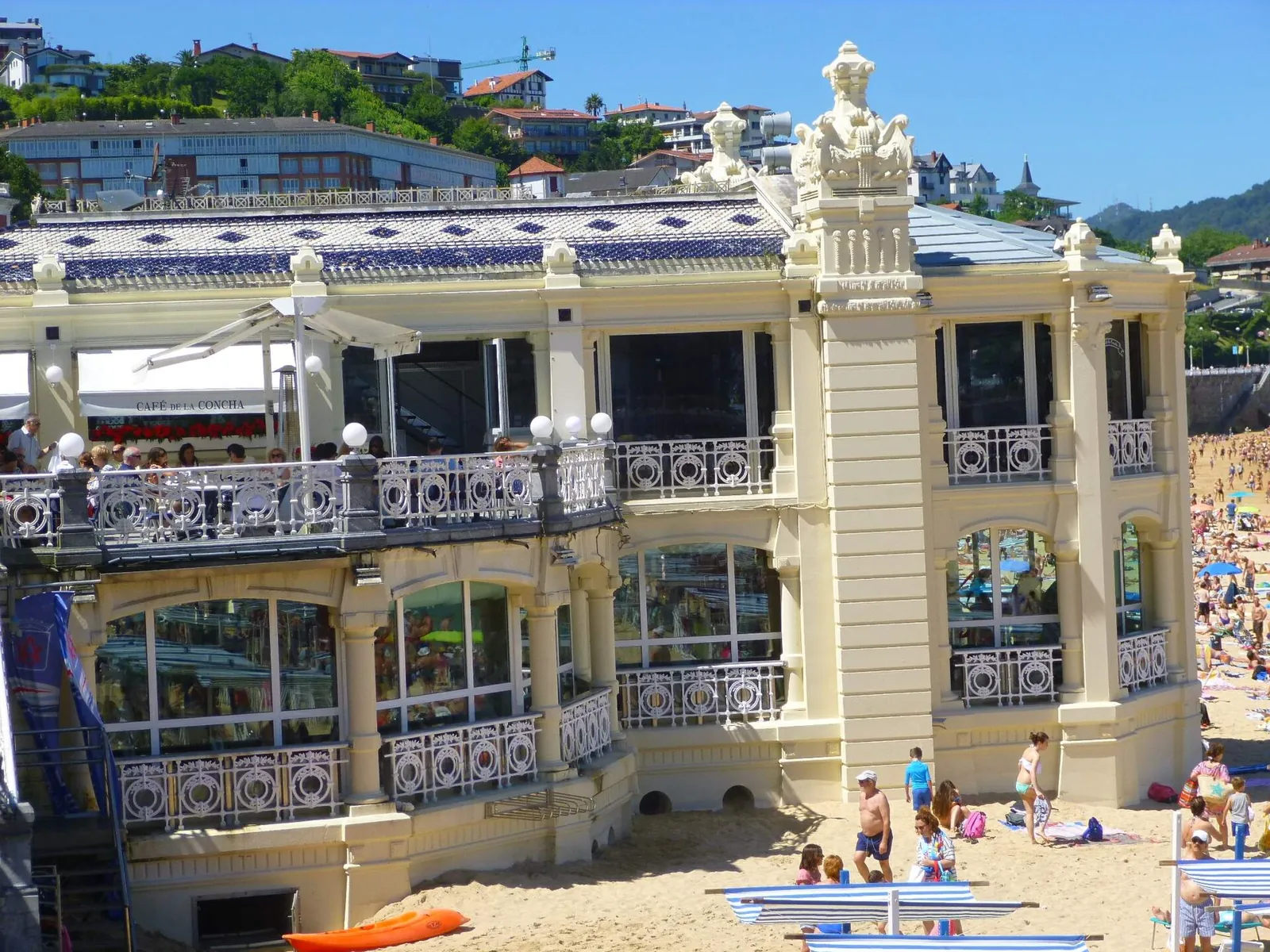
Here is the bathhouse in its own 2-minute video:
And here is the bay by day and by night, in sunshine and in rain, in a 33-second video from San Sebastián Tourism:
Santa Clara Island and the Pico del Loro
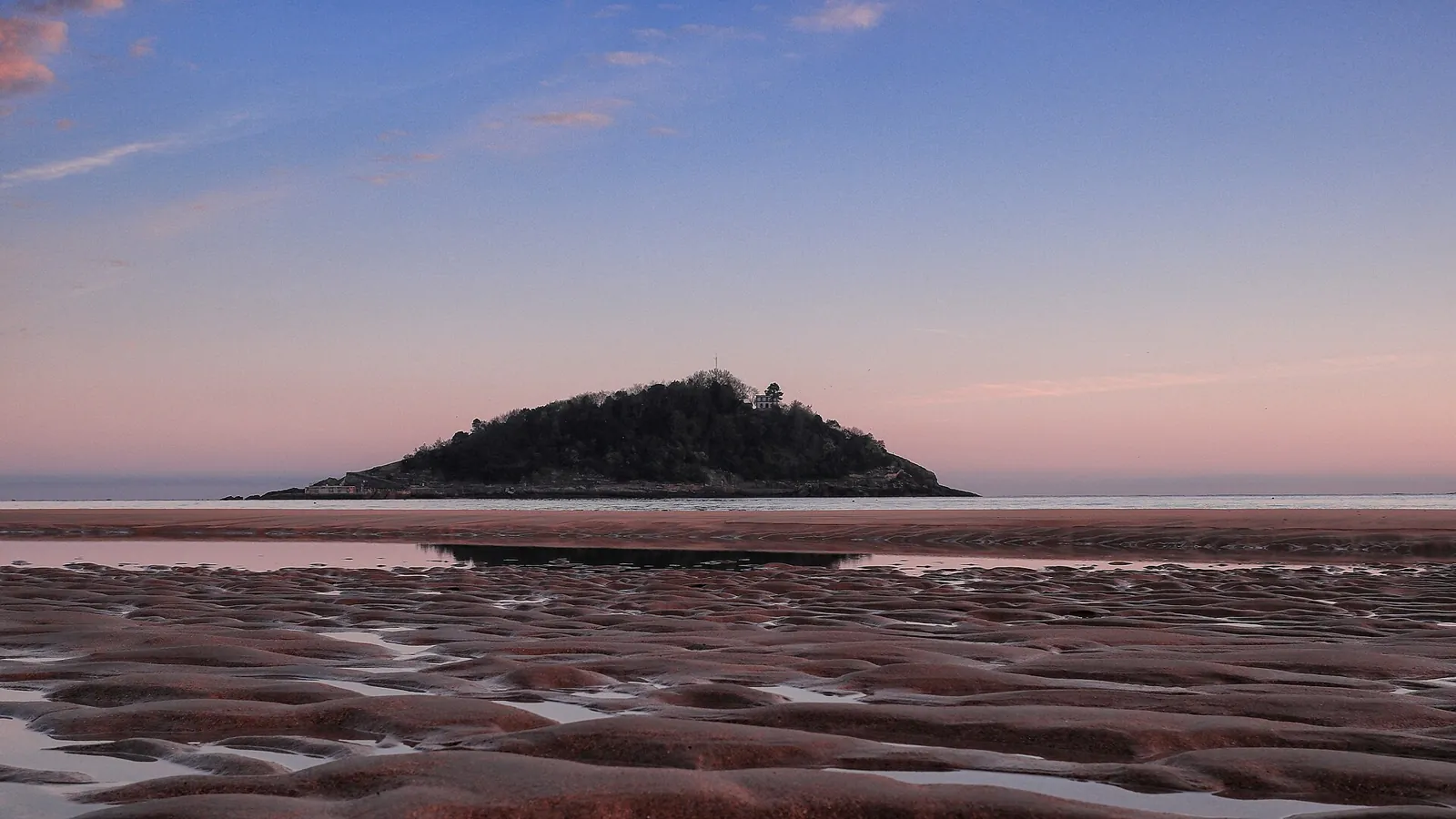
In the middle of the bay, just a few metres off the coast, lies Santa Clara Island. It has footpaths, picnic tables, a lighthouse and a tiny beach, no more than 30 m long, which appears and disappears with the tide and is the only beach in the Basque Country that faces south. In 2021 Hondalea, a sculpture by Cristina Iglesias carved into the hollowed-out interior of the lighthouse house, opened there. The island is also home to a subspecies of lizard found only there and on Mount Urgull.
Motorboats leave from the harbour, on Paseo del Muelle, next to the church of San Pedro, and stop at the island; a ticket costs €8. In October and November 2026 there are daily departures at 12:00, 13:00, 14:00, 15:30 and 16:30, weather and sea permitting, and the last one does not let you off on the island. The island’s bar and toilets were open in 2026 from 15 June to 30 September, like its lifeguard post: it was the first year lifeguards stayed until the end of September.
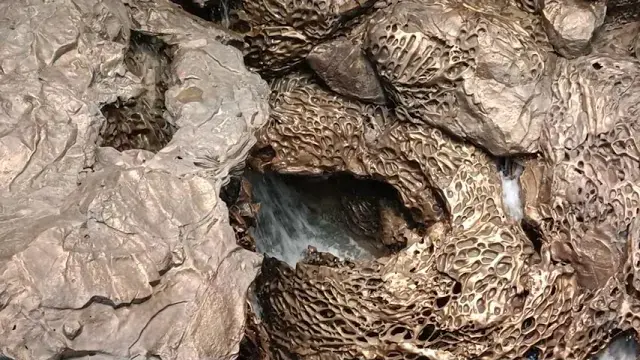
This is Hondalea, in a 2-minute report by the local channel Teledonosti – Canal Txingudi:
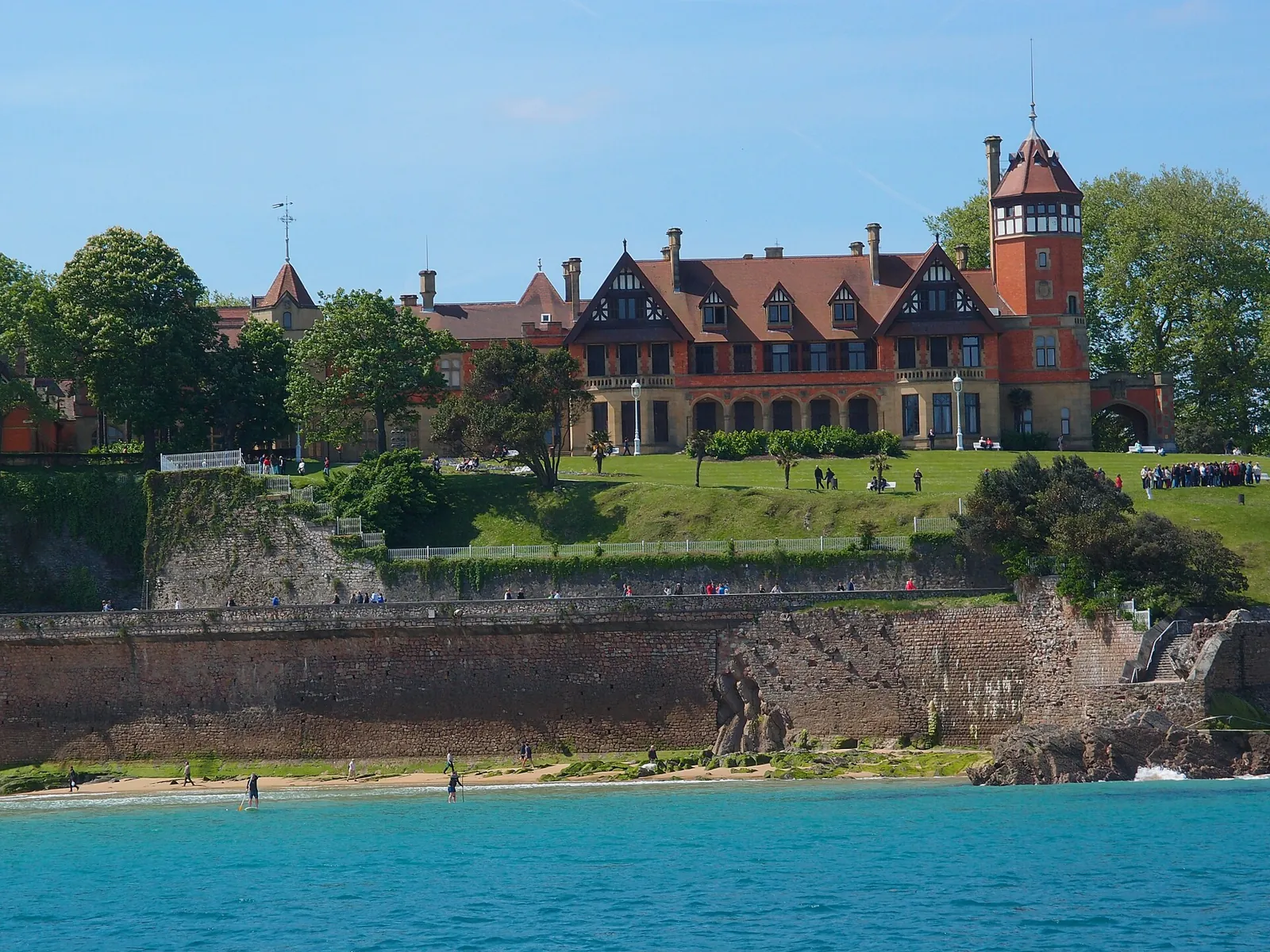
At the other end of the beach, the rocky hill that separates it from Ondarreta is the Pico del Loro, “Parrot’s Peak”. Its original name is Pico de Loretopea, after a chapel to Our Lady of Loreto that stood there until 1876, when it was moved to the Antiguo district to make room for the palace. On top stands Miramar Palace, built in 1893 at the request of Queen Maria Christina, who spent her summers in the city. The English architect Selden Wornum designed it as an English country house, and the city has owned it since 1973. Its gardens slope down to the sea and are one of the best viewpoints over the bay.
Closing the bay at the far end rises Mount Igeldo (Igueldo), served by a funicular that opened on 25 August 1912, the oldest in the Basque Country. At the tip of the mountain, past Ondarreta beach, the sea crashes against the Comb of the Wind (Peine del Viento), the 3 steel sculptures that Eduardo Chillida gave to the city in 1977. And the bay has hosted trainera rowing regattas since 1879: today the Bandera de La Concha is rowed on the first 2 Sundays of September, with crowds on the hills, the harbour wall, the beaches and even the island.
How to get to La Concha Beach, and accessibility
By city bus (Dbus), lines 8, 9, 13, 14, 29, 33, 36, 37, 40 and 42 stop near the beach; the closest stops are Libertad 15, Libertad 19 and Libertad 21, 250 m from the sand along a step-free route. The Amara Euskotren station is 650 m away and San Sebastián bus station 800 m. If you come by car, the city centre is a Low Emission Zone; the nearest underground car park is Parking Kontxa, 50 m away.
The beach has access ramps, 3 accessible toilets and an accessible shower. In season a walkway for people with reduced mobility is laid from the main entrance by the clocks, although it does not reach the water’s edge, and in 2026, from 15 June to 15 September, there was an assisted bathing service, from 11:00 to 19:30, next to the clocks. The boat to the island takes wheelchairs, but the island itself is not accessible.
All our audio guides for the city are under San Sebastián. For another great monument of Spain’s Atlantic north, head west to Galicia:
 Free audio guideSantiago de Compostela Cathedral
And for another seafront walk with its own free audio guide, try the Port of Málaga. Find all our audio guides for the country under Spain.
Where to find it
FAQs
How do the free audio guides work?
Our audio guides work through the website audioguidetravel.com; you don’t need to download any app. Just follow the instructions on the website to guide you through La Concha Beach, San Sebastián: free audio guide and tides while listening to our experts’ explanations.
Can I take the tour at my own pace?
Of course! Our free audio guides are designed so that you set the pace. You can pause, rewind, or listen as many times as you want without missing a detail. By visiting La Concha Beach, San Sebastián: free audio guide and tides your way, you’ll enjoy it even more.
If I'm in a group, can we use the same audio guide?
Yes, our website allows sharing the same free audio guide among multiple devices. This way, you can visit La Concha Beach, San Sebastián: free audio guide and tides as a group or family, listening to the explanations simultaneously. The quickest way to do this is to share the link via WhatsApp, email, or any method you like. I’ve included some buttons below for you to do that now.
Visitor information
As of 4 Oct 2026- Opening hours
- Always open. Lifeguards from 1 June to 30 September (2026 season).
- Tickets
- Free. A shower costs €1.60; the La Perla spa circuit, €38 for 2 hours.
- Time needed
- A 3½-minute audio guide at the railing, plus the walk to the Pico del Loro.
- Getting there
- Dbus stops Libertad 15, 19 and 21, 250 m away. Amara Euskotren, 650 m. Parking Kontxa, 50 m.
- Accessibility
- Ramps, 3 accessible toilets and an accessible shower. Summer walkway, not to the water.
- Tip
- Check the tide table: at low tide you can walk along the sand to Ondarreta beach.
- Official website
- sansebastianturismoa.eus
Nearby
More free audio guides in Spain
 6:44MalagaGibralfaro CastleDiscover the Gibralfaro Castle, a historic gem in the heart of Málaga! This emblematic castle, a witness to…
 6:27BarcelonaLa Pedrera (Casa Milà): free audio guide, hours and ticketsFree audio guide to La Pedrera (Casa Milà), in English: 6 minutes from the curtain-wall façade and the…
 3:55SevilleReal Maestranza de Caballería BullringWelcome to the Real Maestranza de Caballería Bullring in Seville, a place where passion and tradition are intertwined in…