Monte Igueldo, San Sebastián: free audio guide, funicular and hours
Free audio guide in English · no app, no sign-up
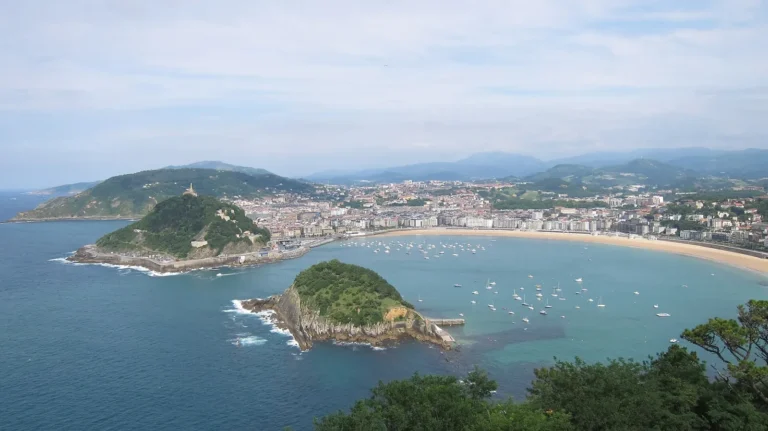
Monte Igueldo (Igeldo in Basque, sometimes called Mount Igueldo) is the 181 m hill that closes the western end of La Concha bay in San Sebastián. A wooden funicular from 1912 climbs to the top, where you find viewpoints over the bay, an old stone tower and an amusement park from the same era. This free audio guide lasts about 4 minutes and is made to be heard on the funicular and on the terrace at the top.
 Audio guide
Before you go in
The few things that change your visit.
- Funicular every 15 minutes from 11:00
- Return ticket €5.50, including entry to the top
- Opened on 25 August 1912, the oldest funicular in the Basque Country
- 312 m of track, a 151 m climb and gradients up to 57.9%
- The Montaña Suiza ride from the 1920s, driven by a person on board
- Funicular and park protected as a historic ensemble since 2014
On this page
- What the Monte Igueldo audio guide covers
- Monte Igueldo funicular: opening hours and tickets
- The 1912 funicular: how it climbs the hill
- The amusement park and the Montaña Suiza
- The tower and the view from the top
- History of Monte Igueldo: from casino to protected monument
- How to get to Monte Igueldo and what is nearby
- Where to find it
Monte Igueldo (Igeldo in Basque, sometimes called Mount Igueldo) is the 181 m hill that closes the western end of La Concha bay in San Sebastián. A wooden funicular from 1912 climbs to the top, where you find viewpoints over the bay, an old stone tower and an amusement park from the same era. This free audio guide lasts about 4 minutes and is made to be heard on the funicular and on the terrace at the top.
What the Monte Igueldo audio guide covers
Press play at the bottom station on Plaza del Funicular and finish it leaning on the railing at the summit. It has 5 parts:
| The 1912 station | The building at the bottom, the opening day of 25 August 1912 and the people who built the line. |
| The ride up | Why the cars are built in steps, and how they pass each other halfway without any points. |
| The view | What lies in front of you: Santa Clara Island, Mount Urgull and La Concha beach. |
| The tower | The old light tower on the summit, rebuilt as a lookout. |
| The park | The Montaña Suiza ride from the 1920s, the Mystery River and the protection of the whole site in 2014. |
Monte Igueldo funicular: opening hours and tickets
A car leaves every 15 minutes, on the hour and at quarter past, half past and quarter to, from the top and bottom stations at the same time; on busy days they add extra trips. Hours change with the season and the day of the week:
| 13 to 31 October 2026 | 11:00 to 19:00 on weekdays and 11:00 to 20:00 at weekends. |
| November and December 2026 | 11:00 to 18:00 on weekdays; until 19:00 or 20:00 at weekends. |
| July and August 2026 | 10:30 to 21:00, every day. |
| Closed | 25 December and 1 January. |
A return ticket costs €5.50 (children up to 7, €2.50) and a single €4 (children, €1.50). With the San Sebastián Card or a disability card, the return fare drops to €4.50. The funicular ticket includes entry to the hilltop grounds and their viewpoints. If you go up on foot or by car along the road, entry to the grounds is €3 per person and parking is free while you visit. The rides are paid separately, one by one: most cost €1 to €5, and the Canopy €18. The toilets cost €0.50.
There is no booking or advance sale: you pay on the spot, in cash or by card. The ride up takes 3 or 4 minutes. Allow 1 hour for the view and the tower, and 2 or 3 hours if you are bringing children to the park. Prices and hours checked on 9 October 2026.
The 1912 funicular: how it climbs the hill
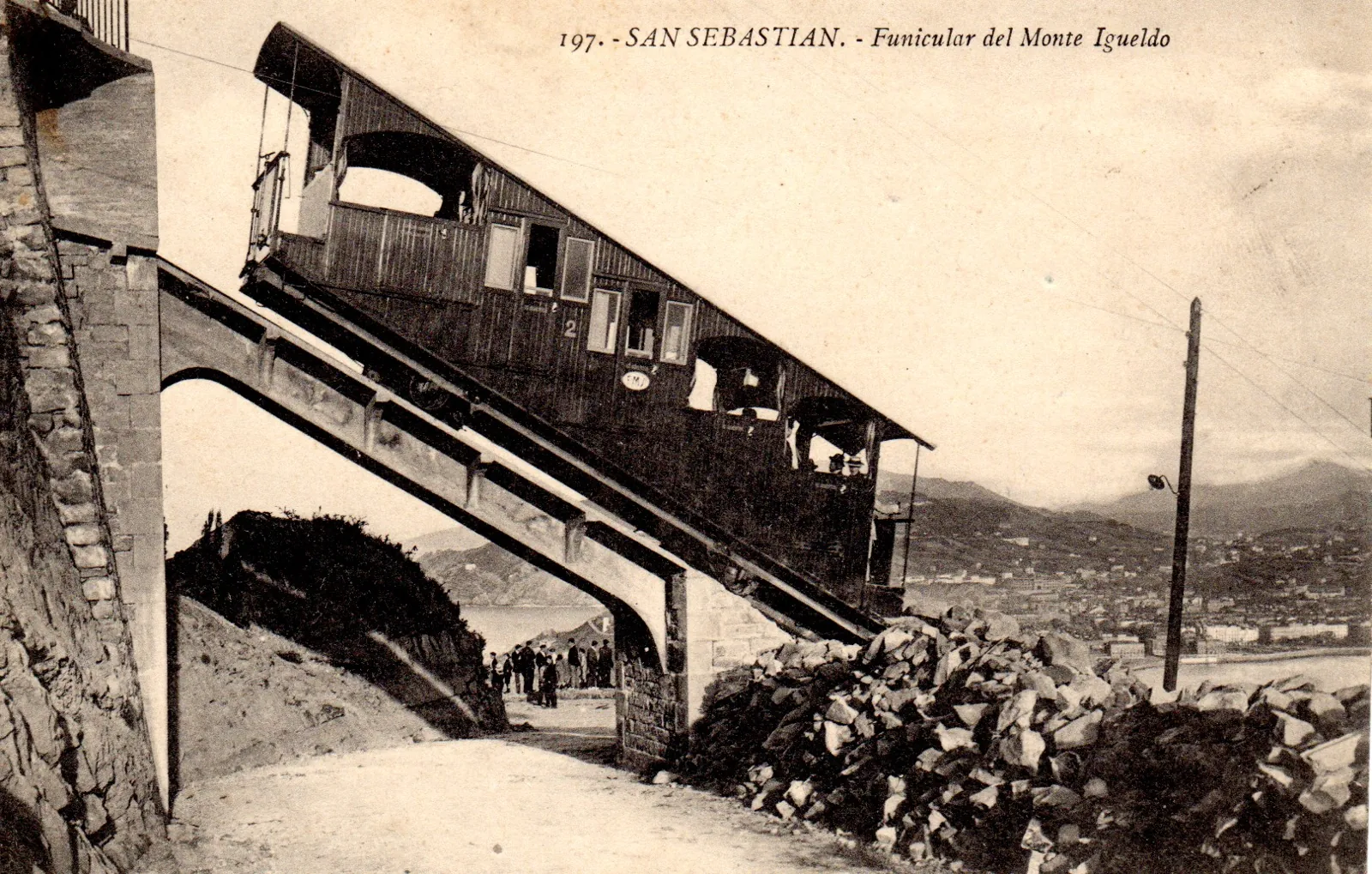
The Igueldo funicular opened on 25 August 1912, in the presence of Queen Maria Christina, at the same time as the amusement park at the top. It is the oldest and best-preserved funicular in the Basque Country, and the third oldest in Spain, after Barcelona’s Tibidabo line of 1901 and Vallvidrera line of 1906. The engineer Emilio Huici designed it, Severiano Goñi ran the works, and the Swiss firm Von Roll, from Bern, supplied the machinery.
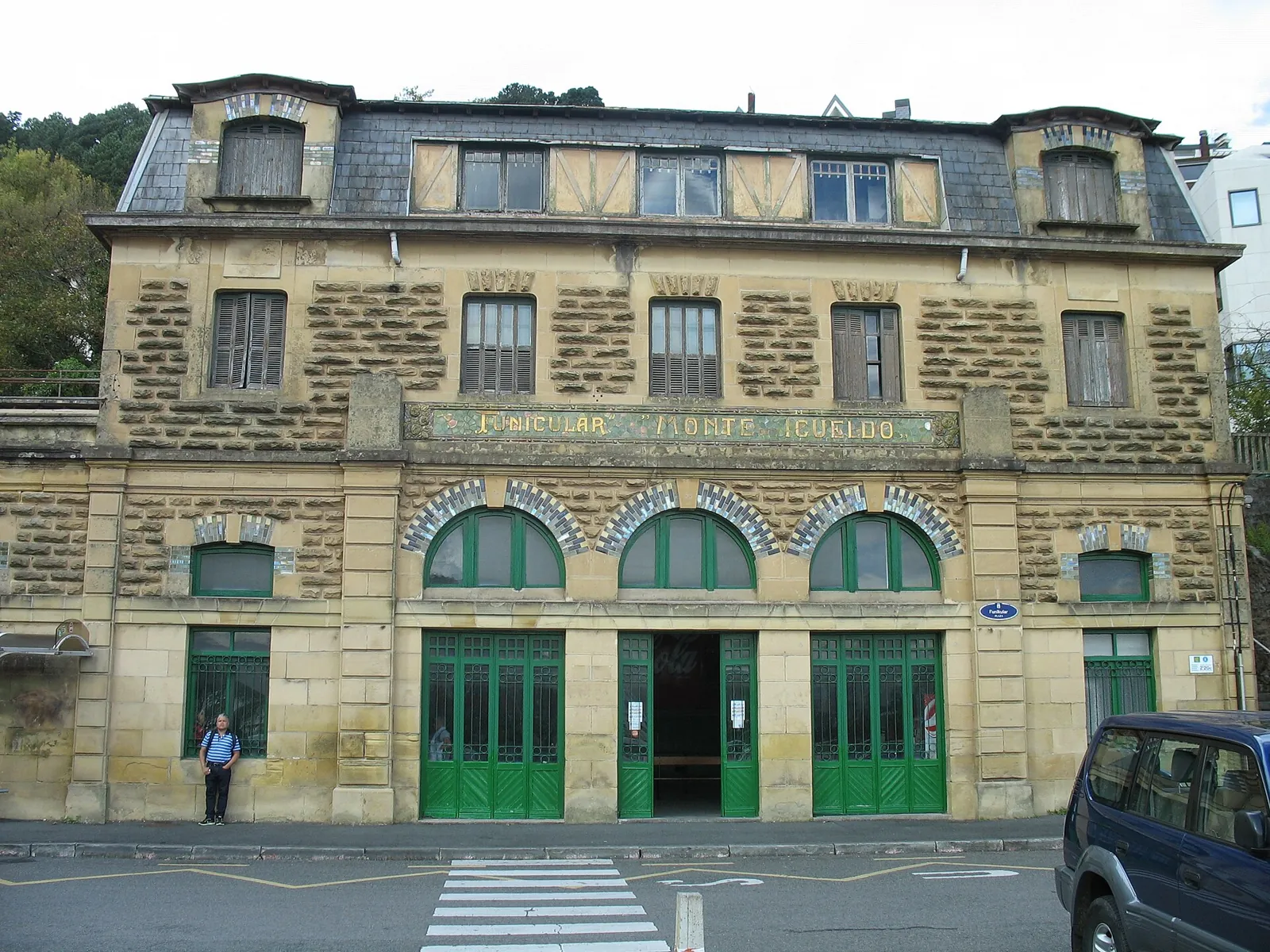
Before you board, take a look at the lower station: an Art Nouveau building from 1912 by the architect Luis Elizalde, with 2 stone wings, a slate roof and an entrance under 3 arches. The top station is plainer and has been altered.
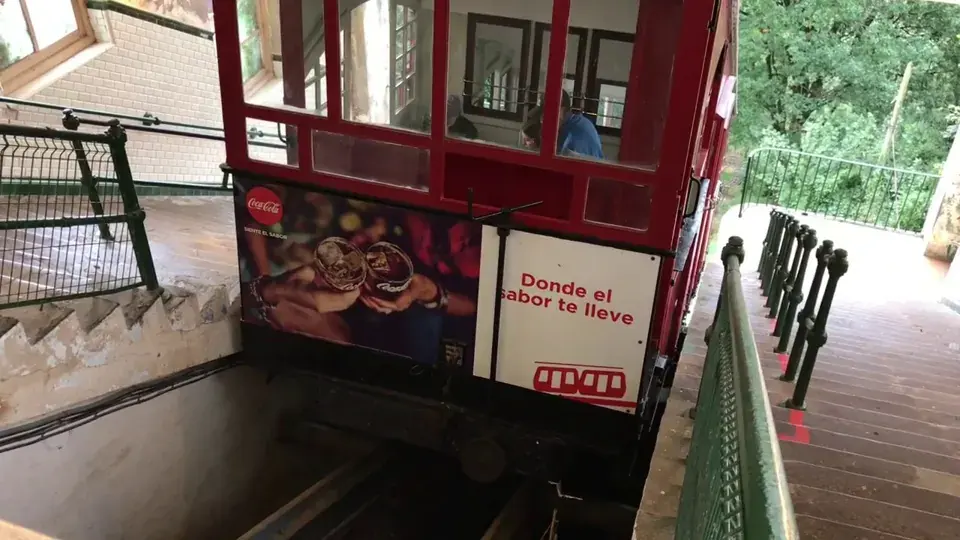
The track runs in a straight line for 312 m and climbs 151 m, from 11 m above sea level at the bottom to 162 m at the top, with a gradient that reaches 57.9%. The 2 cars are tied to the same cable, so one goes up while the other comes down, at 1.5 metres per second.
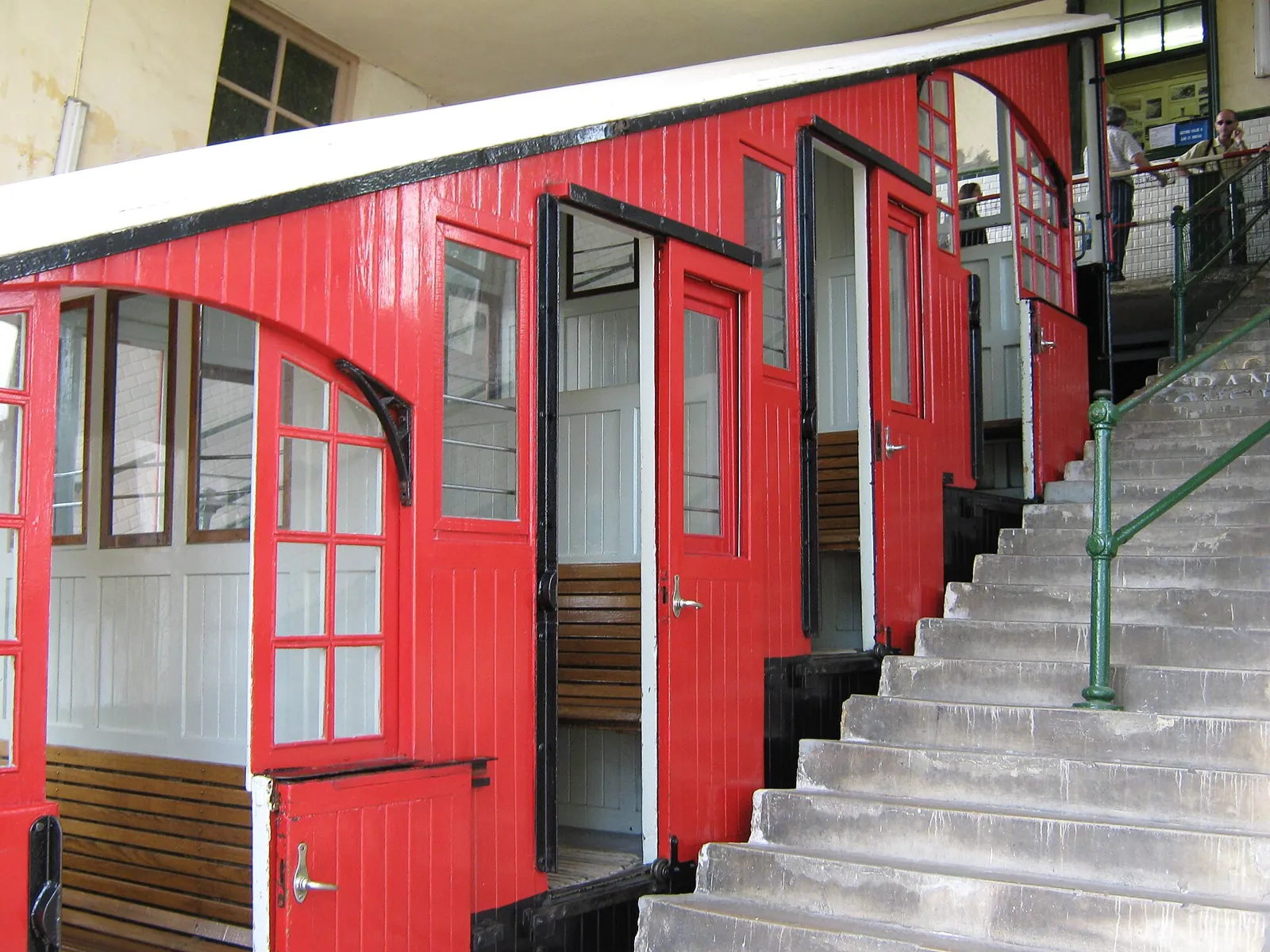
The cars still look much as they did originally: red outside, white inside, with the original wooden seats. They are about 10 m long and split into 5 compartments, each one 60 cm higher than the one below, so the seats stay level on the slope. They were built in San Sebastián on chassis shipped from Bern.
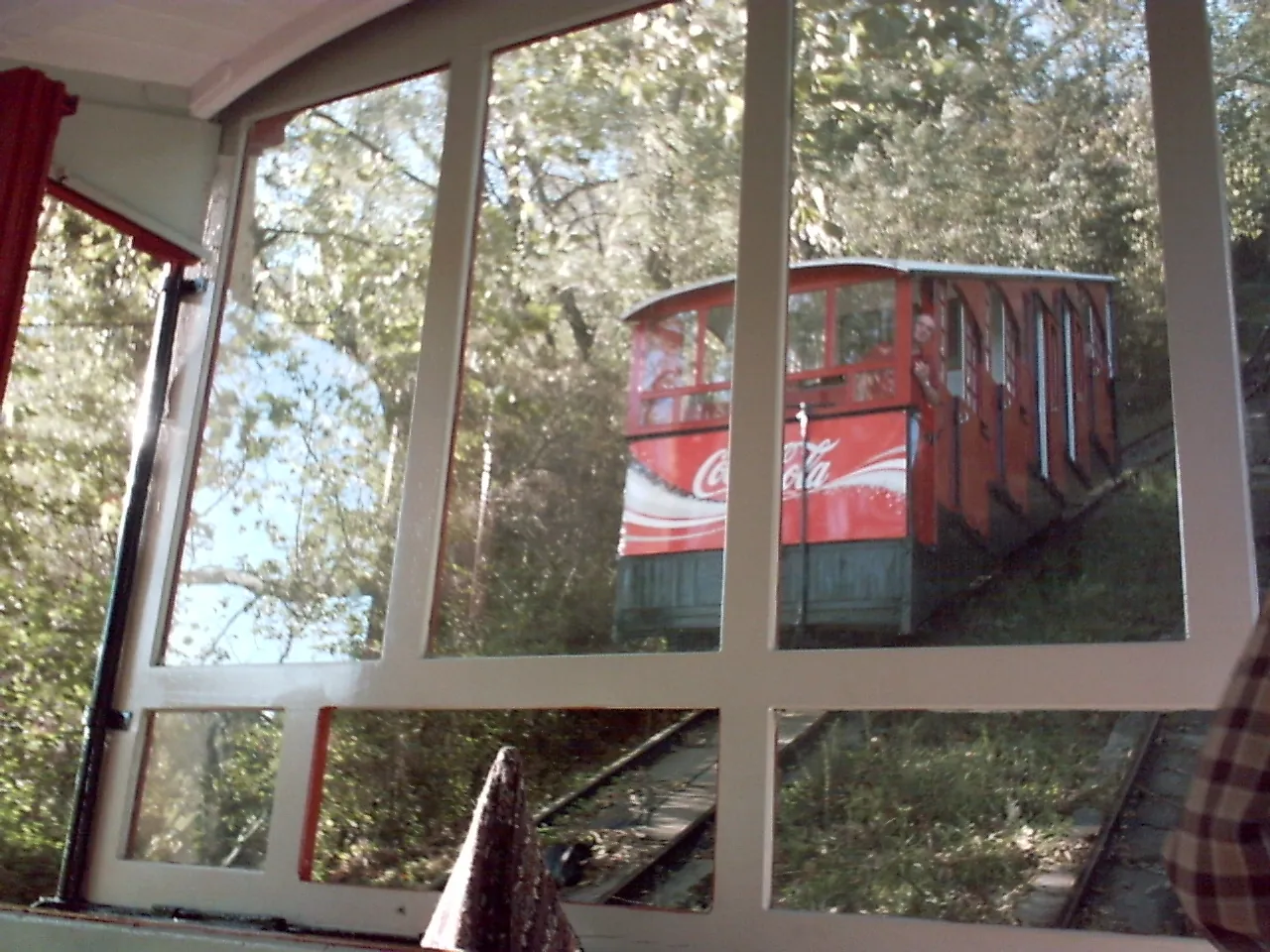
This is the ride:
The amusement park and the Montaña Suiza
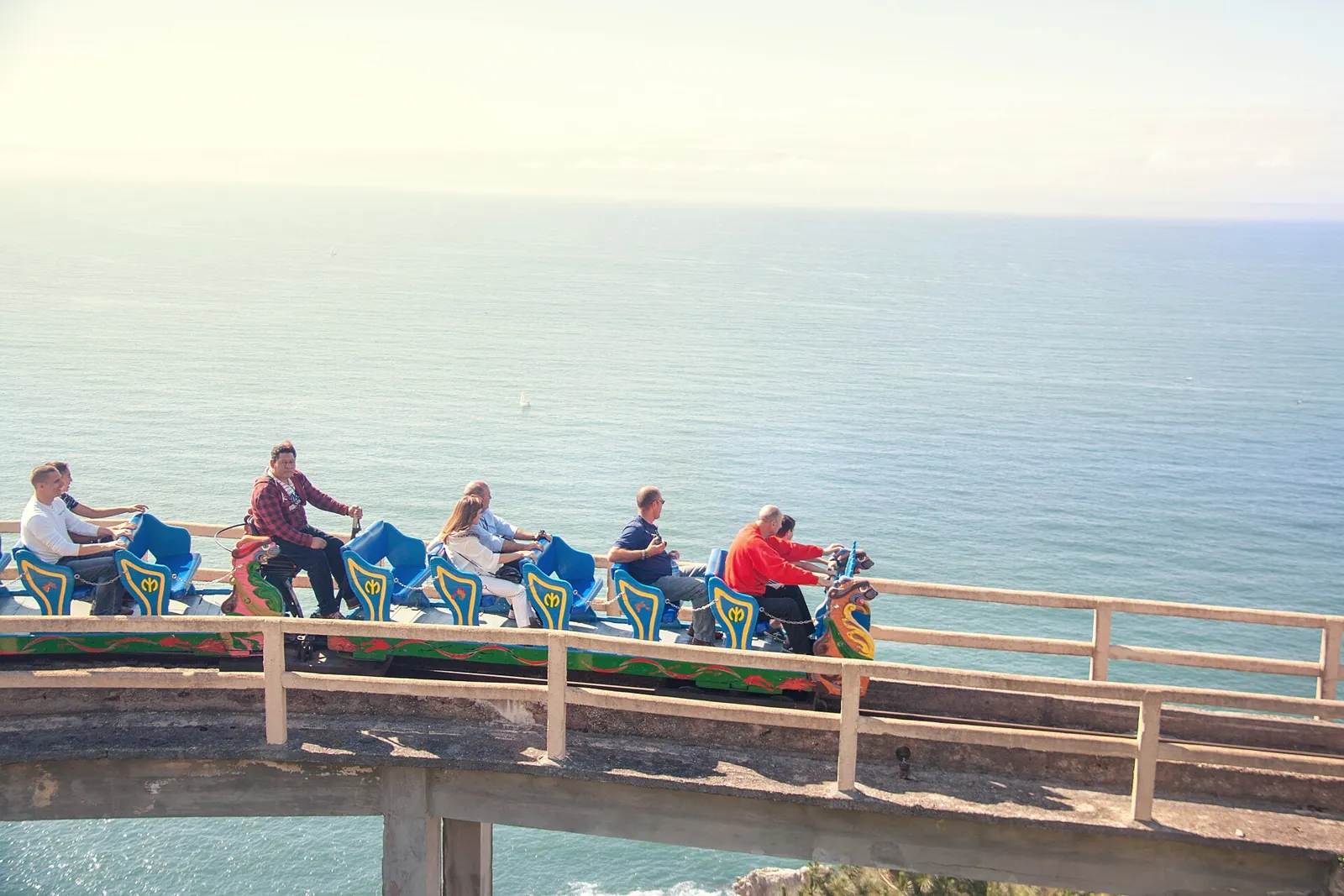
The Monte Igueldo amusement park opened in 1912 together with the funicular. Today it has about 20 rides that work like a fairground: there is no pass for all of them: you pay at each ride. Among the historic rides, the one that stands out is the Montaña Suiza (“Swiss Mountain”), from the 1920s: a roller coaster of articulated wooden cars that runs on a reinforced concrete structure, through tunnels and over viaducts on the edge of the cliff. It is driven by a person who rides on board, in one of the cars.
Other veterans are the Río Misterioso (Mystery River), with wooden boats that float along a concrete channel driven by a powered waterwheel, and the boating lake, whose boats once had petrol engines and are now electric. Around the grounds you will also spot old advertisements, railings and period furniture. Outside the summer, the rides open mainly at weekends and on public holidays: from 13 October and in November 2026, from 11:00 to 14:00 and from 15:30 to 19:30 or 18:00. On weekdays in October and November, the funicular and the grounds stay open but the rides are closed, and they also close in heavy rain.
The Montaña Suiza from the front seat:
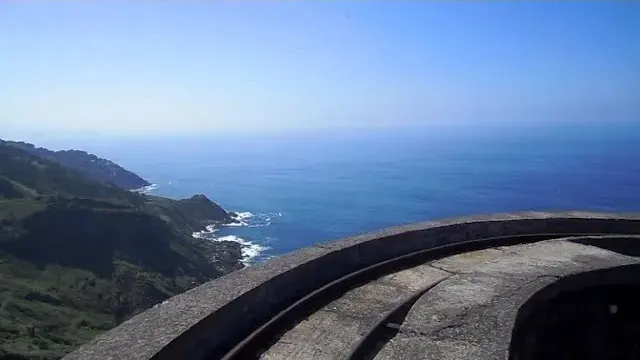
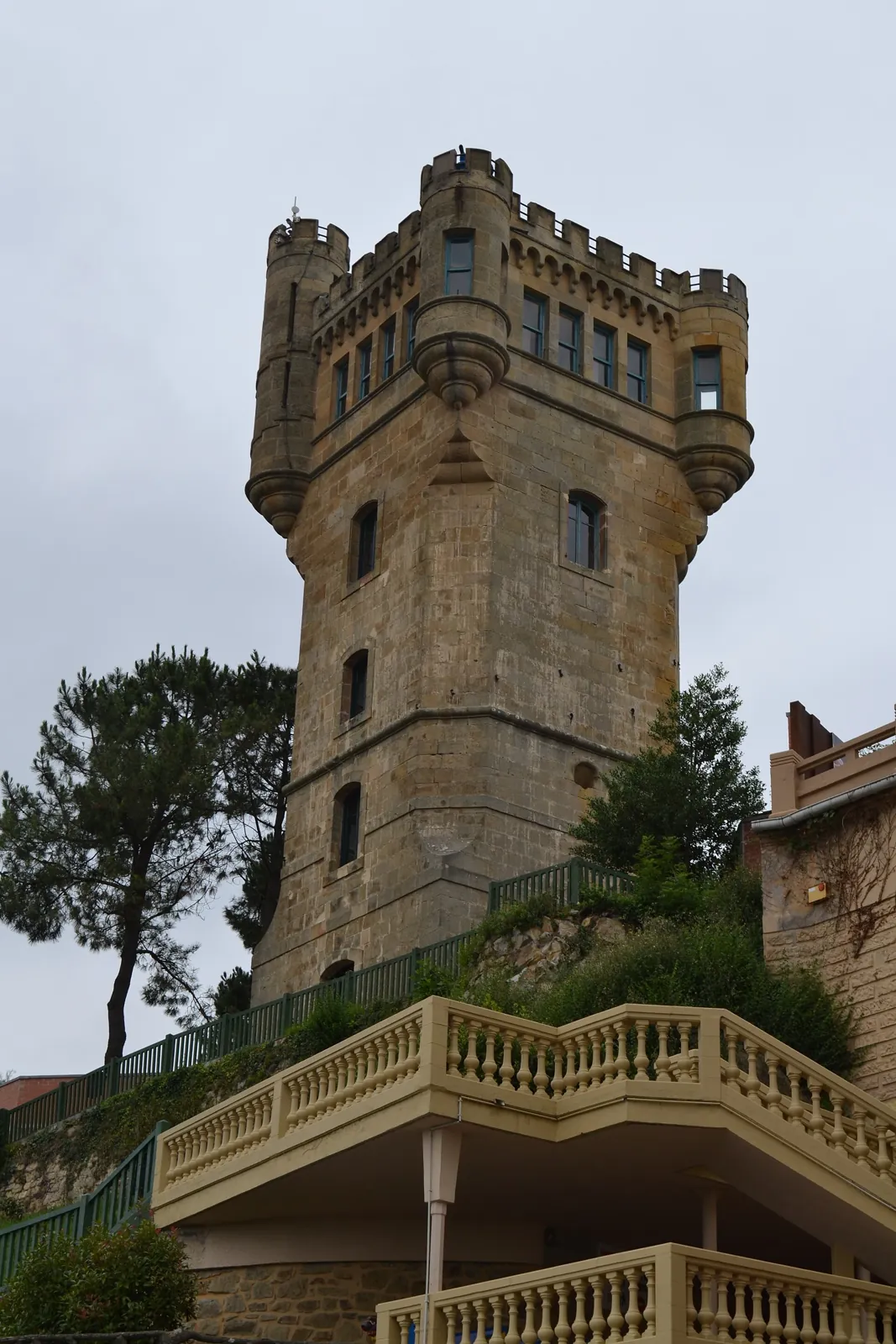
The tower and the view from the top
At the highest point stands the tower (Torreón), built of stone and topped with battlements. A light tower to guide ships is recorded on the summit as early as the 16th century. The tower you see today is the old 18th-century lighthouse, known as “la Farola”, rebuilt by Luis Elizalde, who added a floor with large windows as a lookout and a panoramic terrace on top. Going up the tower is paid separately: €3 for adults and €1.50 for children.
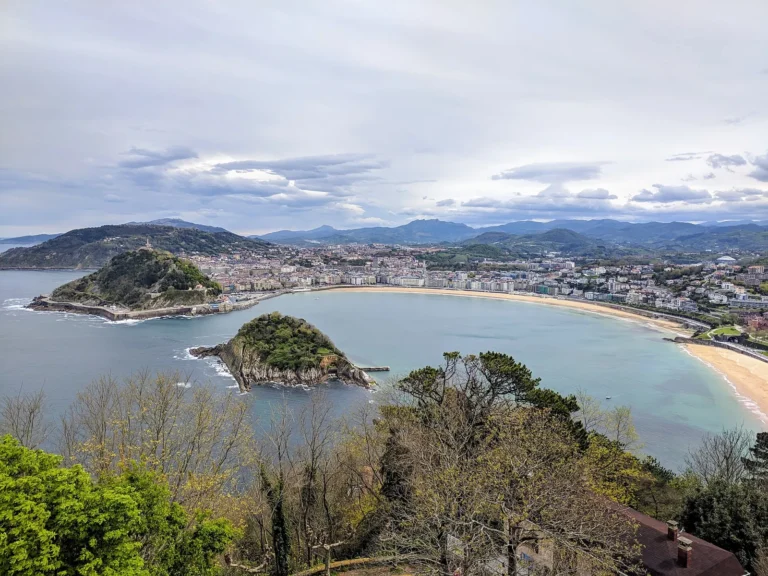
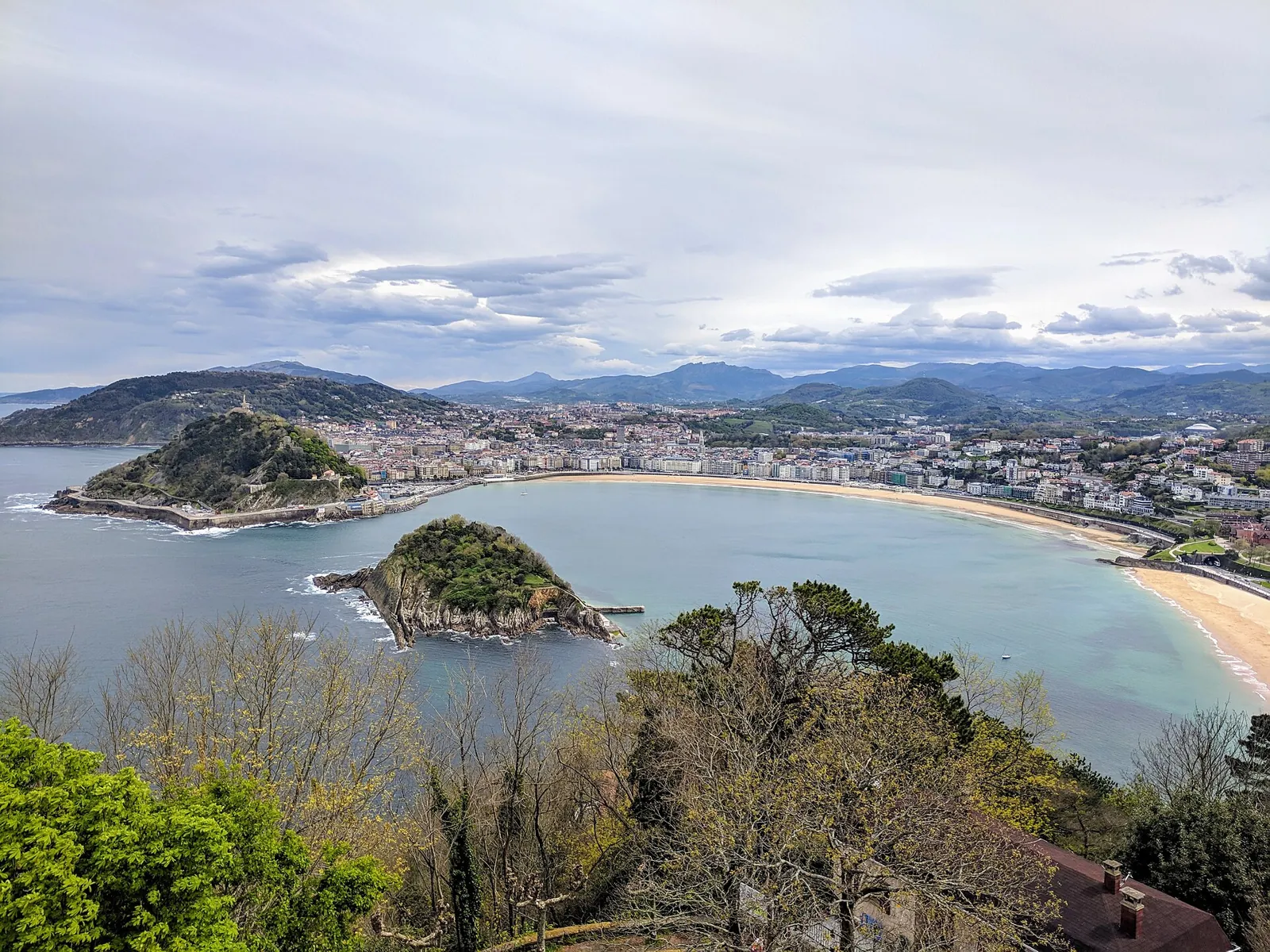
From the terraces you look straight down the bay: Santa Clara Island in the middle, Mount Urgull behind it, La Concha beach to the right and, further back, the city and the hills of Gipuzkoa. Turn around and you face the open sea and the coast. The light for photographing the bay is best in the afternoon, with the sun behind you.
History of Monte Igueldo: from casino to protected monument
The park started in 1912 with a casino and the tower as its draws: people rode the funicular up to dance and to look at the bay. The casino was later pulled down, and the hotel that stands on the summit today was built in its place. After gambling was banned in 1925, the park had to find other draws: in the 1920s came the Montaña Suiza and a roller-skating rink, where the hotel pool is now, and over the years the house of fun, a carousel, electric cars, the Mystery River, the boating lake and the maze were added.
In 2014 the Basque Government declared the funicular and the park a Conjunto Monumental, a protected historic ensemble. The protection covers the stations, the track, the cars, the machinery and the oldest rides, with their period advertisements. The protection requires them to be kept as they are, and because of its historic character the funicular has not been fitted with lifts or ramps.
How to get to Monte Igueldo and what is nearby
The lower funicular station is at Plaza del Funicular 4, at the far end of Ondarreta beach. From the City Hall in the centre it is a walk of just over half an hour along the bay. By road you drive up Paseo de Igeldo to number 183, which is now the only road access to the summit; there is a car park at the top. You can also take city bus line 16 (Dbus), but its stop is 1 km from the entrance.
Back at the bottom, a few minutes’ walk from Plaza del Funicular at the end of the promenade, is the Comb of the Wind, Eduardo Chillida’s steel sculptures on the rocks. Then the promenade takes you back towards the centre along La Concha Beach, which has its own audio guide:
 Free audio guideLa Concha Beach, San Sebastián
If you like funiculars with an amusement park at the top, the Tibidabo line in Barcelona dates from 1901 and also climbs to a park. And for another hill with a funicular and a view over a city, try Lycabettus Hill in Athens:
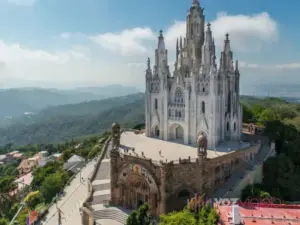 Free audio guideTibidabo
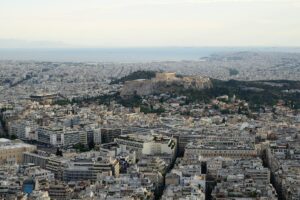 Free audio guideLycabettus Hill
All the audio guides for the city are in San Sebastián.
Where to find it
FAQs
How do the free audio guides work?
They play right here on audioguidetravel.com, with no app to download and no sign-up. Press play and listen as you walk round: a phone and a pair of headphones are all you need. The audio streams from this page, so you’ll need mobile data or Wi-Fi.
Can I take the tour at my own pace?
Of course! You set the pace: pause whenever you like, jump back or forward 15 seconds, or tap the bar to jump to any point, and listen as many times as you want so you don’t miss a thing.
If I'm in a group, can we use the same audio guide?
Yes. The same free audio guide opens on as many phones as you like, so you can go round together as a group or with your family, each person at their own pace and with their own headphones. The quickest way is to send the link via WhatsApp, Telegram or however you like: the buttons just below let you share it right now.
Visitor information
As of 9 Oct 2026- Opening hours
- Funicular every 15 min from 11:00; closes 18:00-20:00 depending on the day (13 Oct-31 Dec 2026).
- Tickets
- Funicular return €5.50 (children up to 7, €2.50); on foot or by car, €3.
- Time needed
- A 4-minute audio guide; 1 hour at the top; 2 or 3 hours with the amusement park.
- Getting there
- Funicular from Plaza del Funicular 4, by Ondarreta beach; by car, Paseo de Igeldo 183.
- Accessibility
- The funicular has steps and is not adapted; the top is accessible by car via the car park.
- Tip
- Start at the bottom: no tickets to ride down are sold at the top, and road entry doesn't include it.
- Official website
- www.monteigueldo.es