
Santiago de Compostela Cathedral: free audio guide, opening times and tickets
Free audio guide in English · no app, no sign-up
Santiago de Compostela Cathedral holds the tomb of Saint James and is where every Camino ends. Work began around 1075 and it was consecrated in 1211. Entry is free, every day from 7am to 9pm, through the Platerías door; the Portico of Glory, the museum and the rooftops need a ticket.
 Audio guide
Before you go in
The few things that change your visit.
- Free entry, 7am to 9pm, through the Platerías door
- From 16 October 2026, 3 Pilgrim's Masses move to San Agustín
- The Compostela is free: 100km on foot or 200km by bike
- Portico of Glory: €15, or free from 4pm to 5:30pm with a pass
- The Botafumeiro is out of use for restoration as of 30 September 2026
- The Holy Door opens on 31 December 2026 for the 2027 Holy Year
On this page
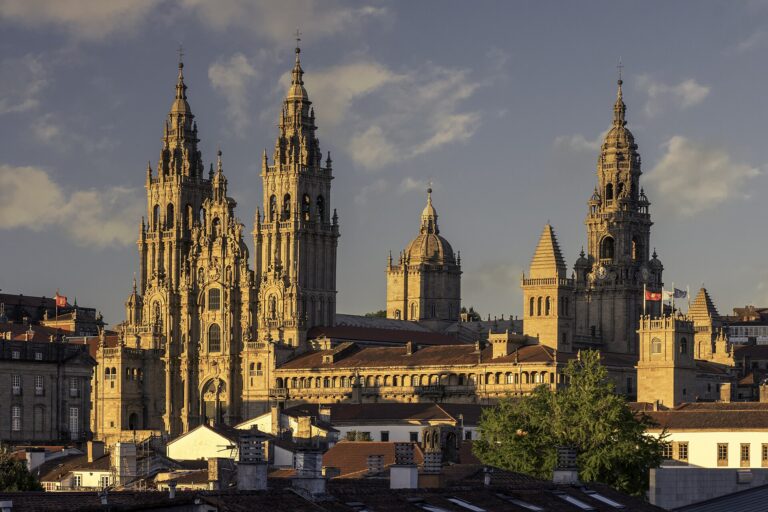
Santiago de Compostela Cathedral is the church that holds the tomb of Saint James and the end point of every Camino de Santiago. Work began around 1075 and it was consecrated in 1211. Entry to the cathedral itself is free, every day from 7am to 9pm, through the Platerías door. This free audio guide is made to be heard in Praza do Obradoiro, where the walk ends.
What the Santiago Cathedral audio guide tells you
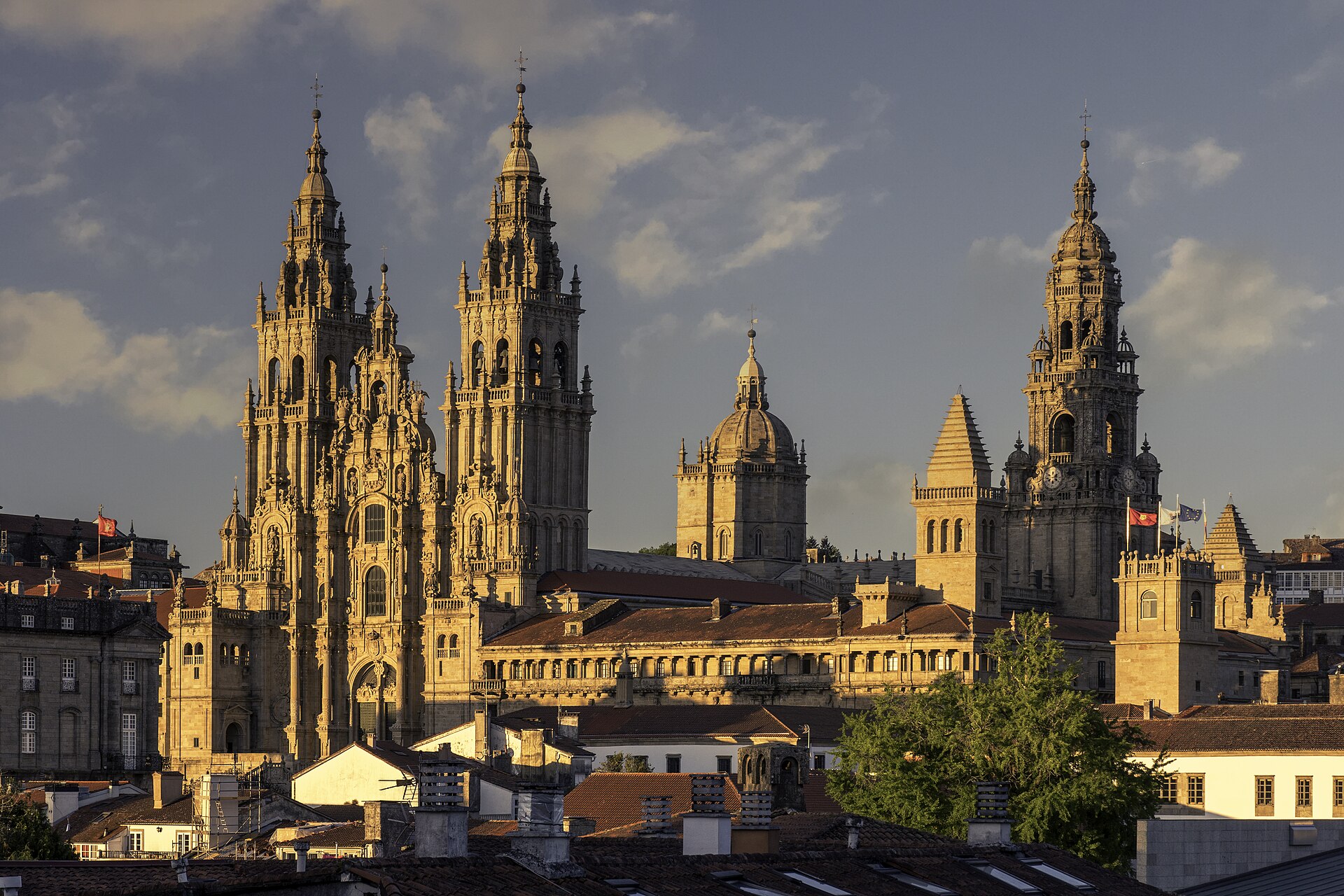
The audio guide runs to about 3 and a half minutes and is meant to be played standing in Praza do Obradoiro, facing the great west front, before you go in. If you’ve just walked in off the Camino, drop your pack, sit on the stones and press play. It won’t replace the Portico of Glory tour or the museum: it tells you why there’s a cathedral here at all and what to look for inside, so the important things don’t slip past you. These are its stops:
| Facing the Obradoiro | The baroque front Fernando de Casas began in 1738, and what it hides. |
| A tomb on a hillside | The discovery of around 820, Bishop Theodemir and the 2 churches built here before this one. |
| The Portico of Glory | Master Mateo, the lintels of 1188, the 24 elders tuning up and the “Santo dos Croques”. |
| Saint James | The hug behind the high altar and the crypt with its silver casket. |
| The Botafumeiro | 53kg, 8 men on the rope and a swing of up to 68km/h. |
| Signing off | The Chi-Rho on the Platerías front, with its letters the wrong way round. |
Arriving on the Camino: the Pilgrim’s Mass, the hug and the Compostela
If you arrive on foot, there are 3 things to do: go into the cathedral to hug the statue of Saint James and visit the tomb, go to a Pilgrim’s Mass, and collect the Compostela. The first is free and needs no ticket. You go in through the Platerías door on the south side, and backpacks are not allowed inside, so leave yours at your hotel or hostel first.
The Pilgrim’s Mass is at 7:30am, 9:30am, 12 noon and 7:30pm. One date matters if you arrive this autumn: from Friday 16 October 2026, until further notice, the area around the high altar is being refitted, so the 9:30am, 12 noon and 7:30pm masses move to the church of San Agustín, about 280m east of the cathedral as the crow flies. The 7:30am mass stays in the cathedral, in the Communion Chapel, and sightseeing visits carry on as normal from 7am to 9pm. There’s a Mass in English at 10:30am in the Pilgrim’s Office chapel every day except Wednesday, and the cathedral has a simultaneous-translation app for the mass.
The Compostela, the Latin certificate of your pilgrimage, is free. You collect it in person at the Pilgrim’s Office, Rúa das Carretas 33, about 250m from the cathedral, open every day from 9am to 7pm except 25 December and 1 January. You register by scanning a QR code and get a numbered ticket; on very busy days they can’t promise it the same day. To qualify you need 100km in a row on foot or on horseback, or 200km by bike, towards Santiago on a recognised route, with the stamps in your credential. If you’re only doing the minimum, get a stamp at the start and end of every stage, with the date.
Opening times and entry
| Cathedral | Every day, 7am to 9pm; on summer Saturdays it closes at 8:30pm for the pilgrims’ vigil. Free. No tourist visits during services. |
| Museum | Monday to Sunday, 10am to 8pm. Ticket office in Praza do Obradoiro, under the front steps; last tickets 30 minutes before closing. |
| Museum closed | 1 and 6 January, 25 July and 25 December; on 24 and 31 December, last entry at 2pm. |
| Pilgrim’s Office | Every day, 9am to 7pm (closed 25 December and 1 January), Rúa das Carretas 33. |
Tickets: the Portico of Glory, the museum and the rooftops
The cathedral is free; what you pay for are 3 visits that start from Praza do Obradoiro and are sold on the cathedral’s own ticket website. The Portico and the rooftops have a fixed time on the ticket, and you need to be there 15 minutes early.
| Museum | €9; reduced €7 (accredited pilgrims, students, over-65s and others). Free for under-12s with an adult. Includes the Gelmírez Palace and the Portico crypt. |
| Portico of Glory | €15; reduced €12, which also covers under-12s. With an audio guide in English, 25 minutes at most, museum included. |
| Portico for free | Free passes every day from 4pm to 5:30pm, up to 2 per person. |
| Guided Portico and museum | €20, at 12:15pm and 5:30pm. About 90 minutes. |
| Rooftops and Carraca Tower | Guided, about 60 minutes. In English, a single price of €15. |
A Portico or rooftop ticket also gets you into the museum, the Gelmírez Palace and the MuSar on the same day or any of the 7 days after. Photos and filming are not allowed in the Portico or the museum.
What to see in Santiago Cathedral
The Portico of Glory
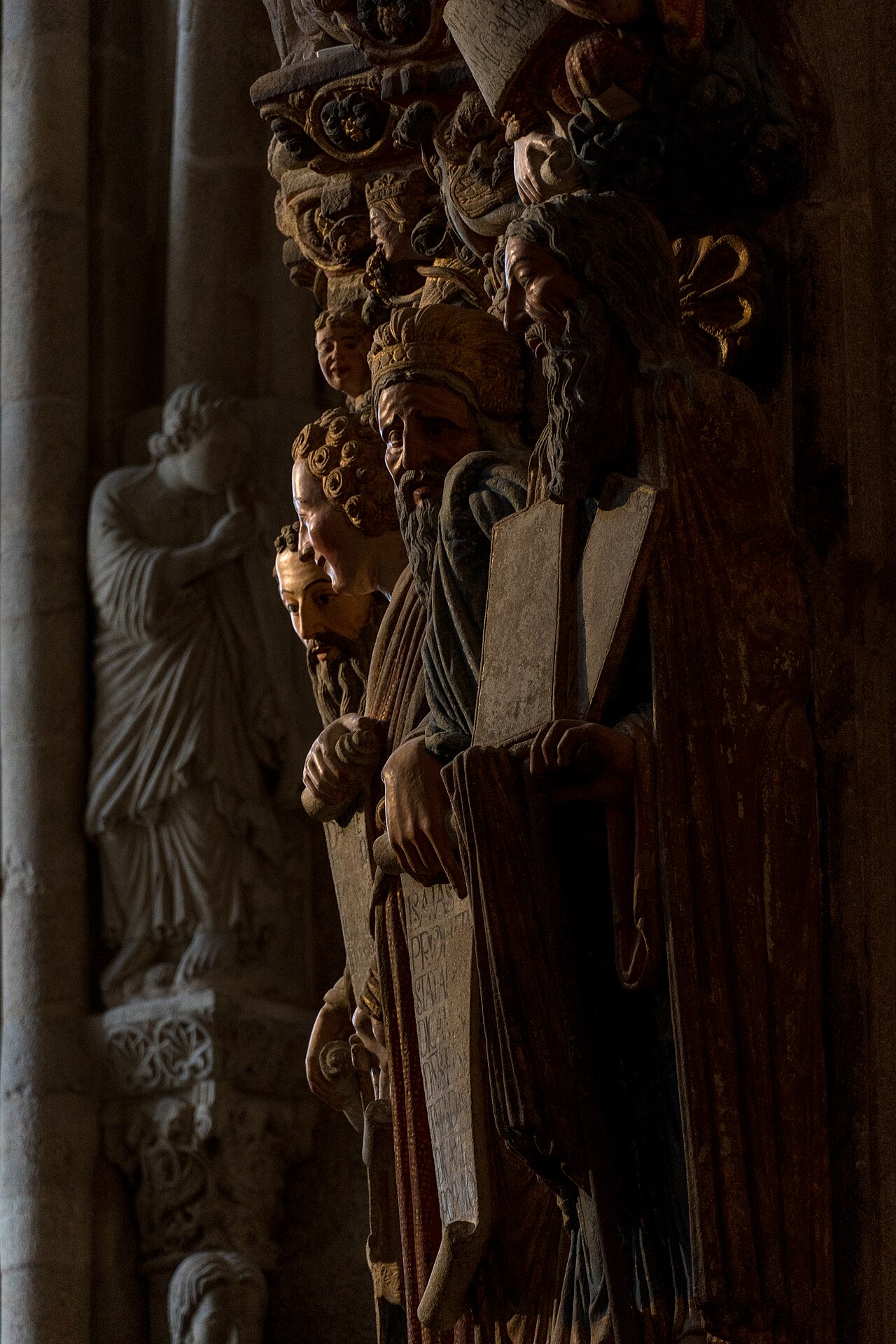
Behind the Obradoiro front is the cathedral’s old Romanesque entrance, the Portico of Glory. It’s the work of Master Mateo, who was in charge of the building from at least 1168, and the inscription on the lintels says they were set in place on 1 April 1188. Christ in majesty sits in the middle, surrounded by the evangelists, and around the arch 24 elders of the Apocalypse are tuning their instruments for the music of heaven. Saint James sits on the central column, with prophets on the left and apostles on the right. Every face is different, and some of the figures seem to be chatting to each other.
At the foot of the Portico, on the inside, is a kneeling figure that tradition says is Mateo himself, a portrait of humility; locals call him the “Santo dos Croques”. Between 2008 and 2018 the Portico was restored and its colour came back: traces of up to 3 full layers of paint, from Mateo’s workshop to the baroque. To protect it, visits are in small groups with a set time.
The high altar, the hug and the crypt
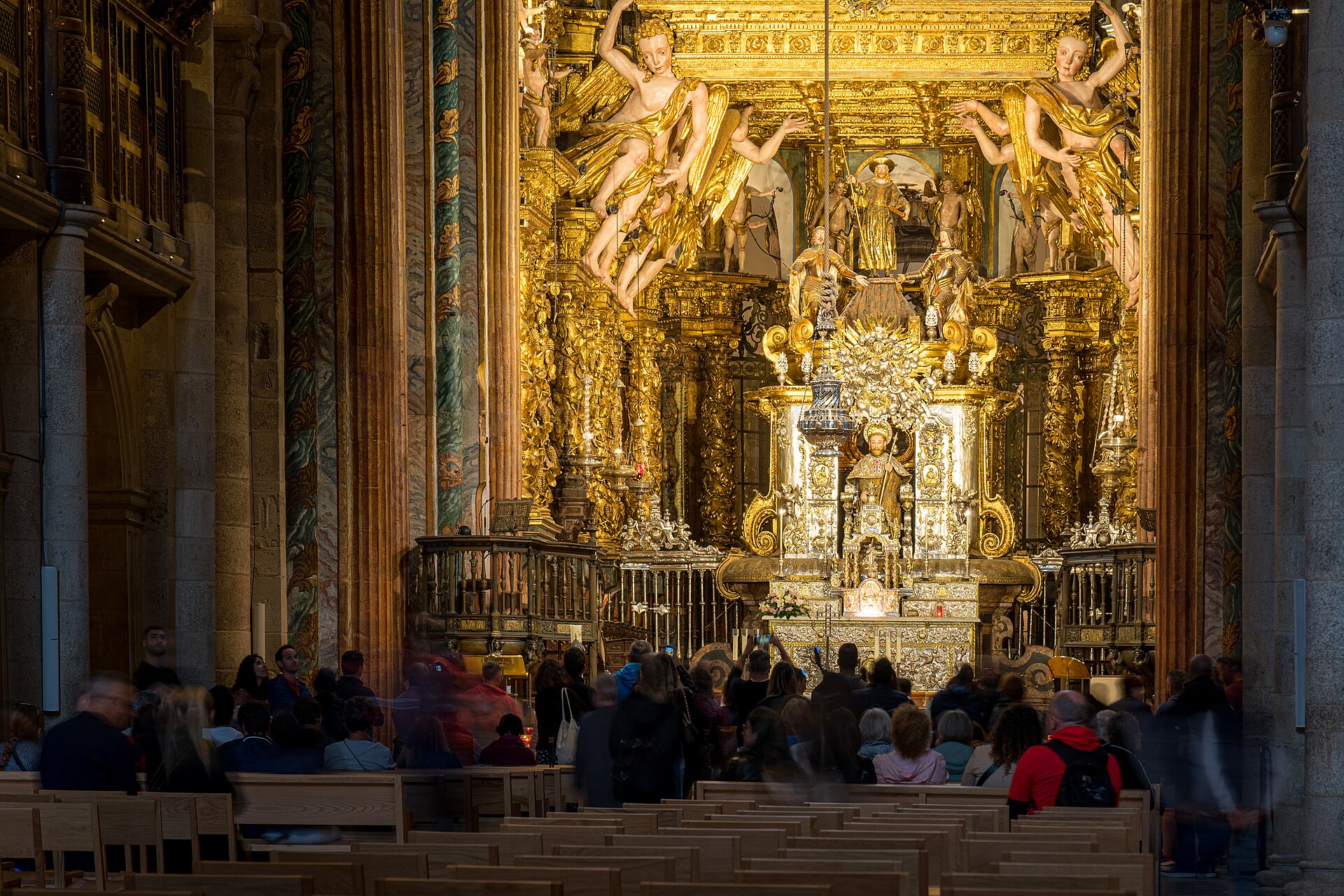
The central nave is 22m high and leads straight to the gilded high altar, under a baroque canopy held up by angels. In the middle sits Saint James, a statue from Mateo’s workshop wearing a silver cape. Small steps from the ambulatory take you up behind the statue to give it a hug, the pilgrims’ way of saying the Camino is done. The cape you touch is a 2004 copy; the original, in silver from 1704, is in the museum.
Below the altar is the crypt, with the silver casket that holds the relics of Saint James and stretches of wall from the original Roman mausoleum. This is the spot the whole cathedral, and the city, grew from.
The Botafumeiro
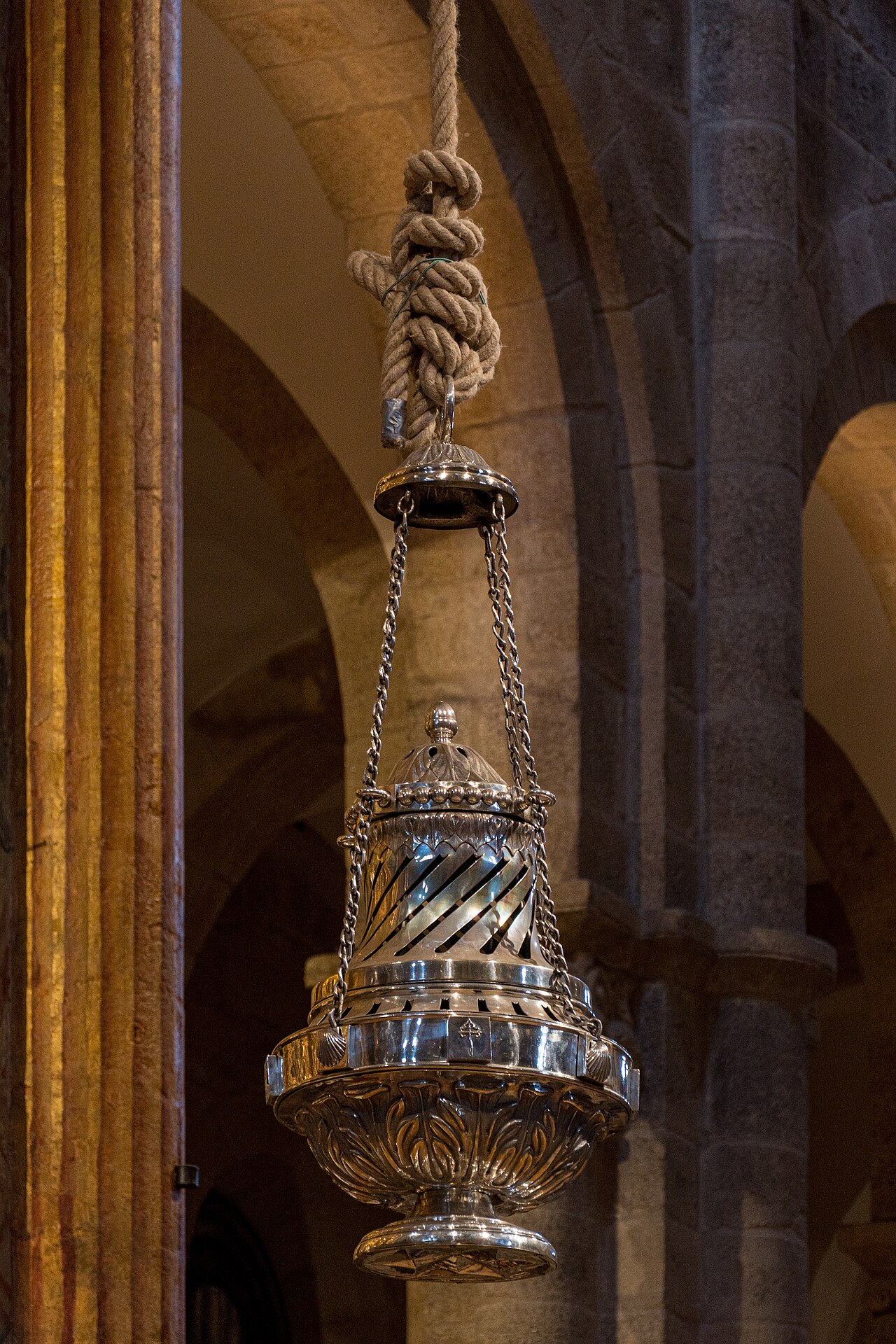
The Botafumeiro, Galician for “smoke-spreader”, is a censer weighing 53kg and standing 1.5m tall. It hangs 20m up from a pulley system under the dome of the crossing, and 8 men, the tiraboleiros, pull on the rope until it swings out towards the side aisles at up to 68km/h. The one in use is brass, from 1851; there’s also a silver copy from 1971. It swings on the big feast days (6 January, Easter Sunday, 25 July, 15 August, 1 November, Christmas Day and others) and when a pilgrim group books it.
As of 30 September 2026, the cathedral says the Botafumeiro is temporarily out of use for restoration work, with no return date. If seeing it swing is the reason for your trip, check the notice on the cathedral’s website before you book.
The rooftops and the 4 fronts
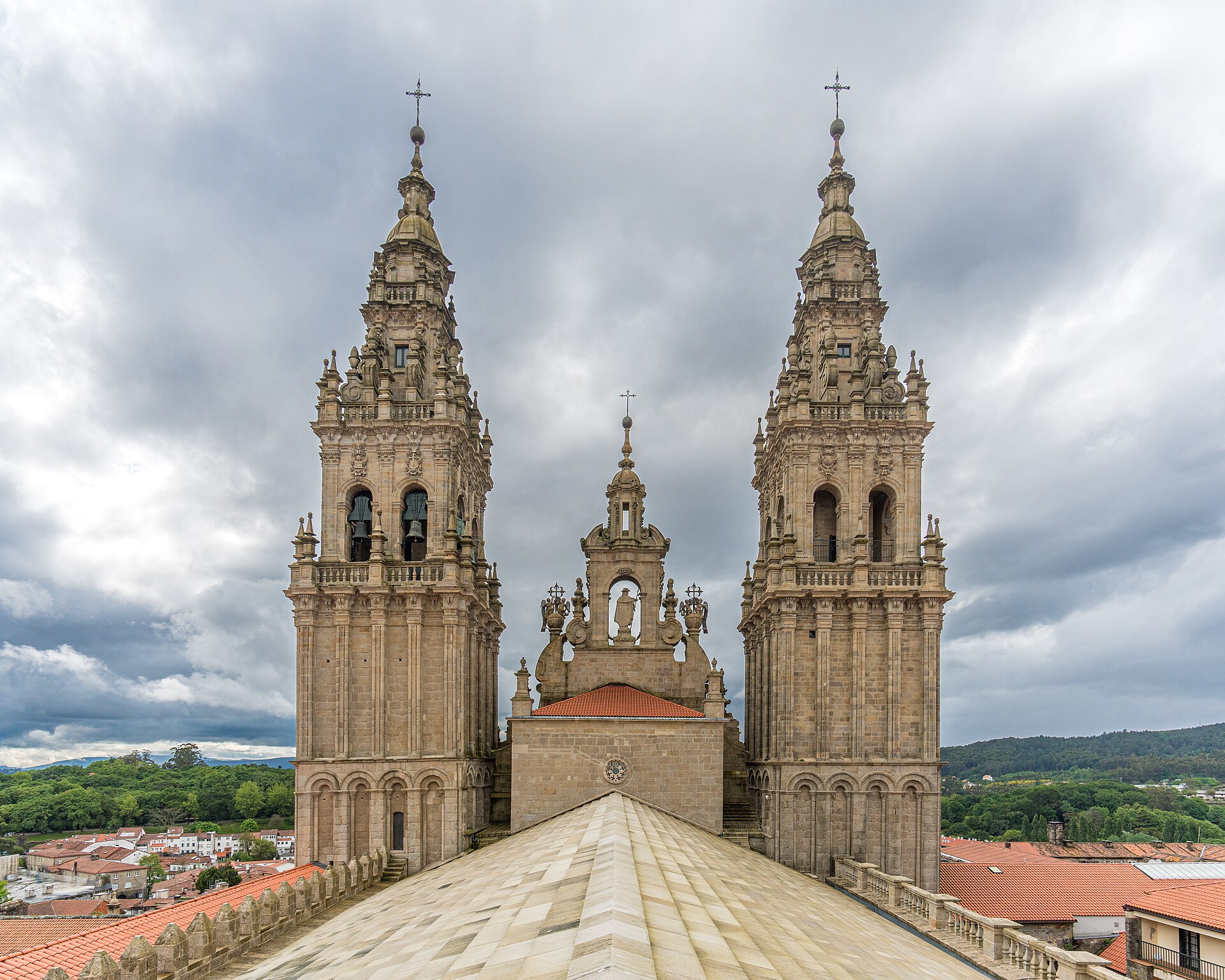
The rooftop tour takes you up onto the stepped granite roofs, between the towers of the Obradoiro, with the old town below you. It is not wheelchair accessible, and bags, backpacks, umbrellas and walking sticks aren’t allowed. Back on the ground, walk all the way round: the Obradoiro front, begun in 1738; Platerías, the only Romanesque front left; the Azabachería, finished in 1769; and on Praza da Quintana, the Holy Door, which only opens in Holy Years.
The history of Santiago Cathedral in 10 dates
Around 820-830, in the time of Bishop Theodemir of Iria Flavia, a tomb was found on Mount Libredón and identified as that of the Apostle. King Alfonso II had a church built over it; it soon got too small, and Alfonso III ordered a bigger one, consecrated in 899.
The Romanesque cathedral was begun around 1075, starting from the Saviour’s Chapel, under Alfonso VI and Bishop Diego Peláez. Diego Gelmírez, bishop from 1101, pushed it on, and Master Mateo closed it off to the west. It was consecrated on 21 April 1211; the granite consecration crosses you see along the aisles recall that day.
Then came the baroque: Mateo’s stone choir was pulled down in 1604, and from 1738 Fernando de Casas built the Obradoiro front that boxed in the Portico. The relics, hidden since the 16th century, were found again on the night of 29 January 1879, and Pope Leo XIII recognised them in 1884. One date to note if you’re planning ahead: the Holy Door opens on 31 December 2026 at 5pm, starting the 2027 Holy Year, which comes round whenever 25 July falls on a Sunday.
Where to find it
FAQs
How do the free audio guides work?
Our audio guides work through the website audioguidetravel.com; you don’t need to download any app. Just follow the instructions on the website to guide you through Santiago de Compostela Cathedral: free audio guide, opening times and tickets while listening to our experts’ explanations.
Can I take the tour at my own pace?
Of course! Our free audio guides are designed so that you set the pace. You can pause, rewind, or listen as many times as you want without missing a detail. By visiting Santiago de Compostela Cathedral: free audio guide, opening times and tickets your way, you’ll enjoy it even more.
If I'm in a group, can we use the same audio guide?
Yes, our website allows sharing the same free audio guide among multiple devices. This way, you can visit Santiago de Compostela Cathedral: free audio guide, opening times and tickets as a group or family, listening to the explanations simultaneously. The quickest way to do this is to share the link via WhatsApp, email, or any method you like. I’ve included some buttons below for you to do that now.
Visitor information
As of 30 Sep 2026- Opening hours
- Every day, 7am to 9pm; summer Saturdays until 8:30pm. Museum, 10am to 8pm.
- Tickets
- Cathedral free. Museum €9 (reduced €7). Portico of Glory €15 (reduced €12); rooftops in English €15.
- Time needed
- About a 3.5-minute audio guide in Praza do Obradoiro: the Portico, the hug and the Botafumeiro.
- Getting there
- In Praza do Obradoiro. Enter through the Platerías door; ticket office under the front steps.
- Accessibility
- The rooftop tour is not wheelchair accessible. Accessibility questions: +34 981 55 29 85.
- Tip
- From 16 Oct 2026, the 9:30am, noon and 7:30pm Pilgrim's Masses move to the church of San Agustín.
- Official website
- catedraldesantiago.es
Nearby
More free audio guides in Spain
 4:12SevilleSeville Cathedral (Interior)The Seville Cathedral is the largest Gothic cathedral in the world and an important architectural landmark. Immerse yourself…
 3:55SevilleReal Maestranza de Caballería BullringWelcome to the Real Maestranza de Caballería Bullring in Seville, a place where passion and tradition are intertwined in…
 5:06MalagaThe AlcazabaImmerse yourself in the history and beauty of the Alcazaba of Málaga, a palatial fortress that encapsulates centuries…