
Circus Maximus: free audio guide, hours and tickets
Free audio guide in English · no app, no sign-up
Free audio guide to the Circus Maximus in Rome, in English: just over 6 minutes on the valley of the chariot races, the stands, the Palatine side and the spina. It plays on this page.
 Audio guide
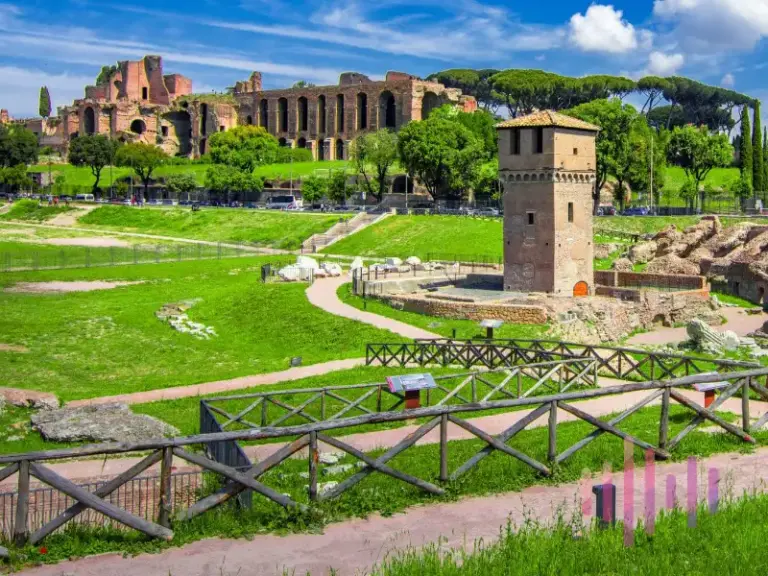
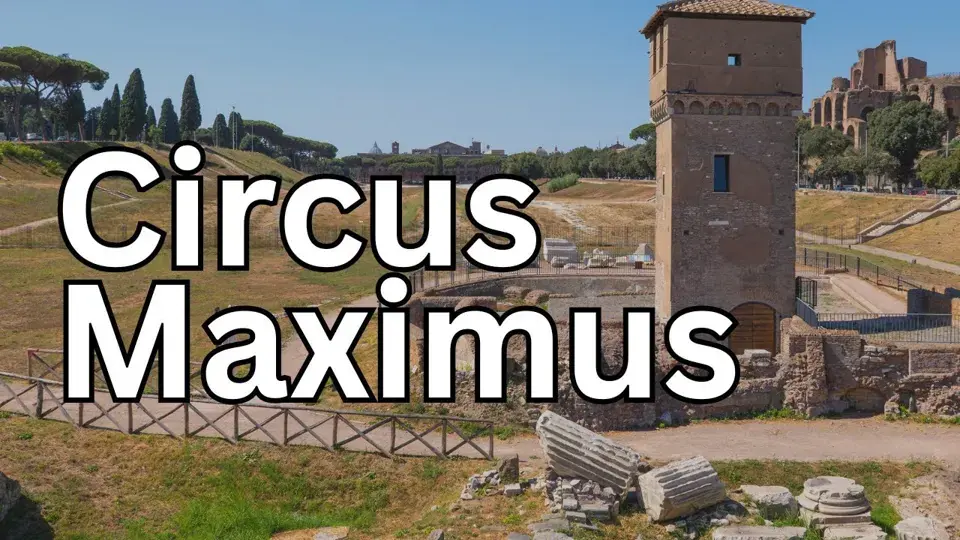
The Circus Maximus is the valley between the Palatine and Aventine hills where ancient Rome raced its chariots: 600 m long and 140 m wide, the largest building for public entertainment of antiquity. Today the valley is a public park, free and always open, and the excavated curved end, with the Torre della Moletta, is an archaeological area you visit for €7. This is its free audio guide, in English.
What the audio guide covers
It is free, plays on this page in your phone’s browser with no app and no sign-up, and lasts just over 6 minutes. It starts with the valley between the Aventine and the Palatine and with the size of the stadium and its crowds. Then it explains the ludi: public games tied to Rome’s religious festivals, paid for by leading Romans or by the state itself.
After that it walks you through the circus in its heyday. You start at the main entrance, between the long rows of stands, and move to the centre of the track, where the races were run. It takes you along the Palatine side, where Rome’s elite had the best seats, to the markers the charioteers used to judge their turns, and ends at the spina, the central barrier with its statues and obelisks. It closes with 2 tips, carry water in summer and go on to the Aventine and the Palatine, and a curiosity about Rome’s obelisks.
Points of interest the audio guide stops at, and what stood there:
| Point of Interest | Brief Description |
|---|---|
| Main entrance | Where the walk starts, with the long rows of stands to your right and left. |
| The stands | The long rows of seats on both sides of the track, where the crowds watched the races. |
| Centre of the circus | The heart of the action, where the chariot races were run. |
| Palatine side | The side where the audio places the seats of Rome’s elite, below the Palatine Hill. |
| Turning posts (metae) | The great markers at each end of the spina, around which the chariots turned. |
| Spina (central barrier) | The long platform in the middle of the track, with statues, small temples, basins and 2 Egyptian obelisks. |
Opening hours and tickets
The valley of the Circus Maximus is a public park: you can walk it at any hour, for free. The paid part is the archaeological area at the curved end, with the galleries, the shops and the Torre della Moletta. From the last Sunday of October, 25 October this year, to the last Saturday of March it opens Tuesday to Sunday from 09:30 to 16:00, with the last entry at 15:00; the rest of the year, from 09:30 to 19:00. It is closed on Mondays, on 25 December and on 1 May.
A ticket costs €7, or €4 reduced, for visitors who do not live in Rome. Residents of Rome and its metropolitan area go in free with a document that proves it, and so do holders of the MIC card. Entry is in limited numbers, so buy online or by phone on +39 060608 (every day, 09:00 to 19:00). The ticket does not include the Circo Maximo Experience. (Hours from the Sovrintendenza Capitolina checked on 25 October 2026, and prices on 18 October 2026.)
From the Tarquin kings to Trajan
Legend ties the valley to the very beginning of Rome: the Rape of the Sabine Women took place here. The first races in the Valle Murcia go back to the Tarquin kings, but the first real circus in masonry was built under Julius Caesar.
Chariot racing was, with the gladiator games, what the Romans loved most. The charioteers became idols, and the teams each had a colour, green, blue, red and white, so the crowd on the stands split by colour too, singing chants made up for the day. The wide floor of the valley also held triumphs, processions and public executions.
Fire hit the circus more than once, and Trajan rebuilt it almost entirely: most of what you see today belongs to his phase. Later emperors kept adding to it, and the most spectacular addition came in 357 AD: a gigantic obelisk brought to Rome, now at the Lateran. Races went on until the first decades of the 6th century.
Then the valley turned into farmland. From the 19th century it held gasworks, warehouses, workshops and homes, until work on the archaeological walk began in the early 1900s. Excavations in the 1930s uncovered much of the curved end and the remains of the Arch of Titus, and the valley hosted large exhibitions between 1937 and 1940. After the war it went back to being a green space.
The spina, the obelisks and the track
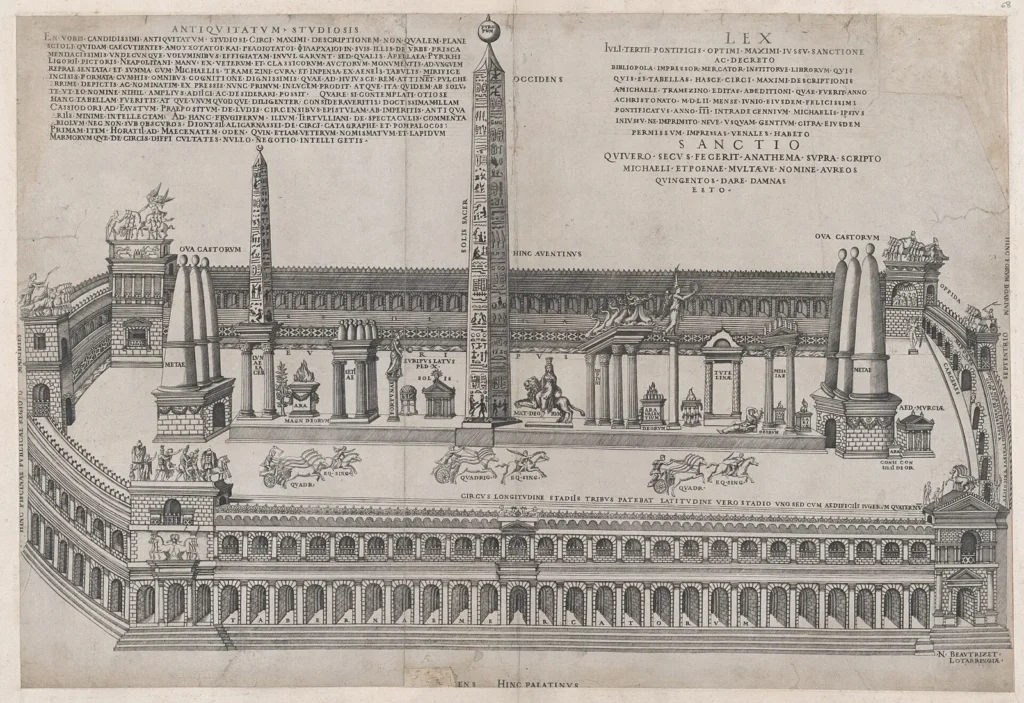
Down the middle of the track ran the spina, a long platform decorated with statues, small temples and basins. At each end stood the metae, the great markers around which the chariots turned. It also carried 2 Egyptian obelisks, and you can still see both in Rome: since the 16th century, one stands in Piazza San Giovanni in Laterano and the other in Piazza del Popolo.
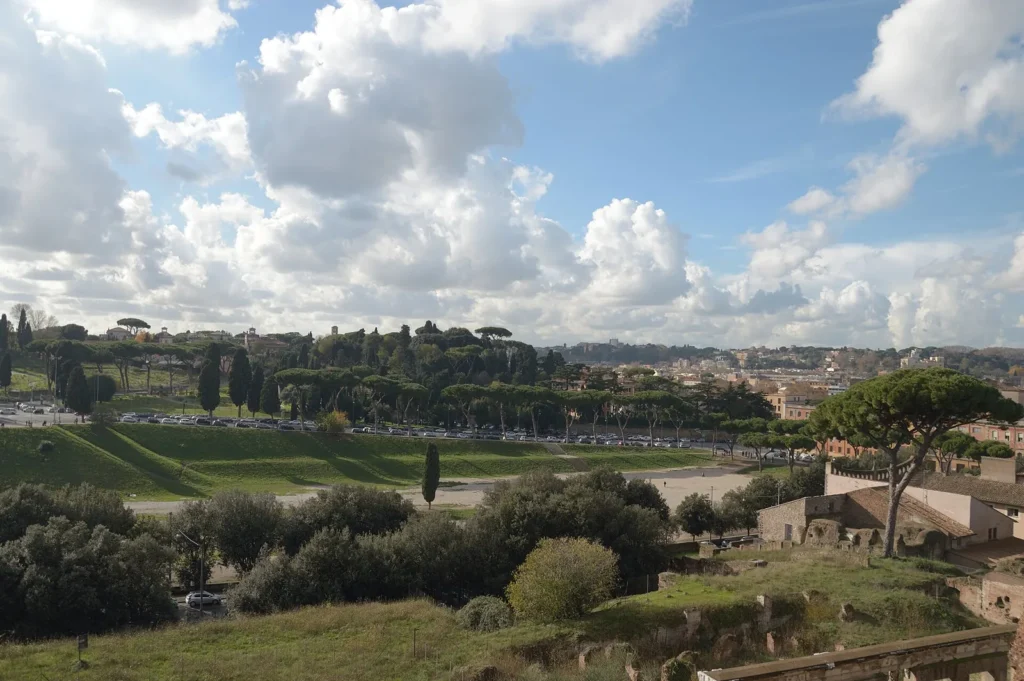
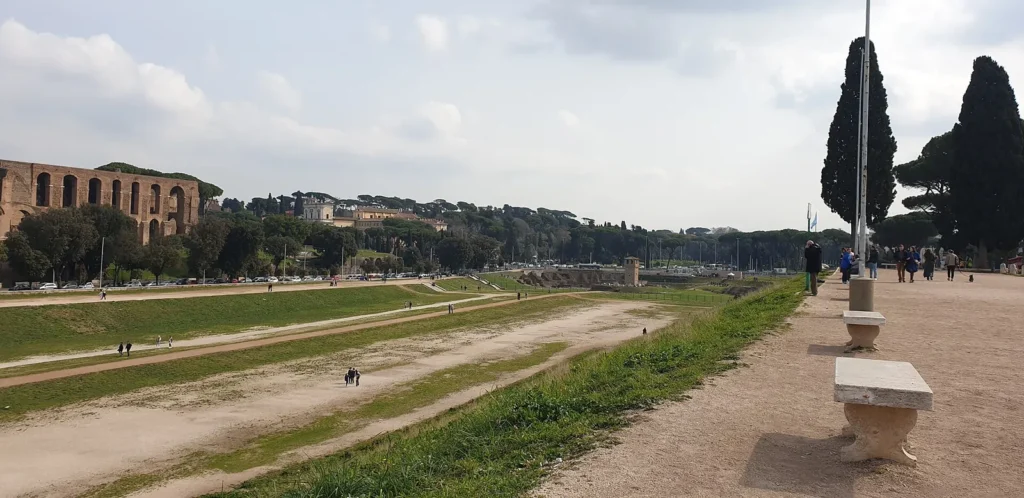
Stand at the curved end and look along the valley: the circus filled all of it, with the Palatine on one side and the Aventine on the other.
The archaeological area and the Torre della Moletta
The excavations finished in 2016, and the curved end now has its own paths and lighting. You go into the galleries that once led up to the stands, the senators on the ground floor and the common people on the floor above. You can walk about 100 m of each gallery, past the remains of ancient latrines.
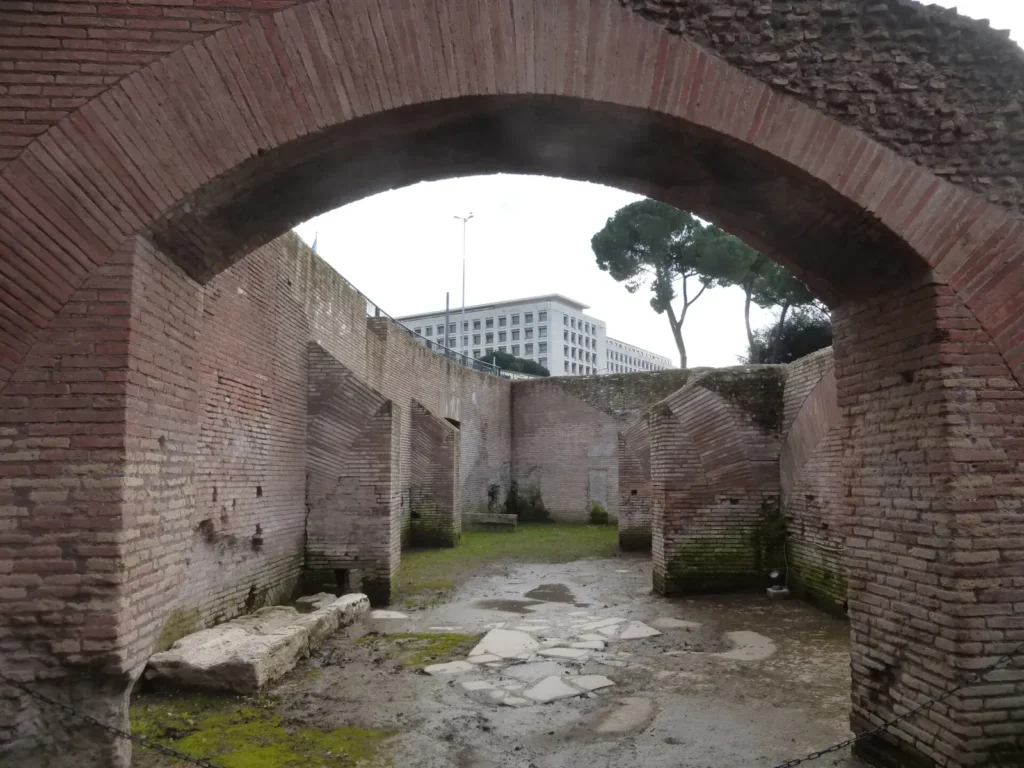
Outside runs the paved Roman street found during the excavations, with a large drinking trough made of travertine slabs. Along it are rooms that served the crowds at the games as shops, the tabernae: inns, food shops, storerooms, brothels and laundries, and money-changers’ offices for the betting on the races.
In the middle of the curve you see the bases of the Arch of Titus, one of the largest triumphal arches in Rome, dedicated to him for his victory in Judaea. Its columns were at least 10 m high, and parts of its great inscription, once picked out in bronze letters, were found in the dig. It is a different arch from the Arch of Titus on the Roman Forum, which has its own audio guide.
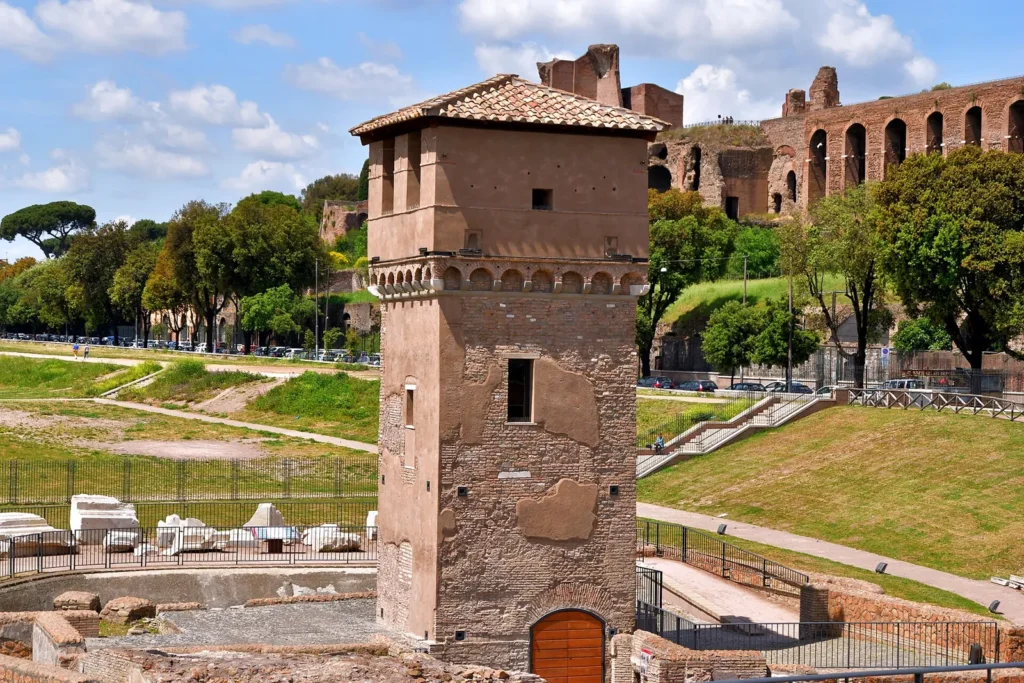
The Torre della Moletta was built in the 12th century and belonged to the Frangipane family from at least 1145. It takes its name from a mill worked by the water of the Fosso di San Giovanni. A staircase inside climbs to the top floor, a viewpoint over the whole archaeological area from which you take in the real size of the circus.
Circo Maximo Experience: the circus in augmented reality
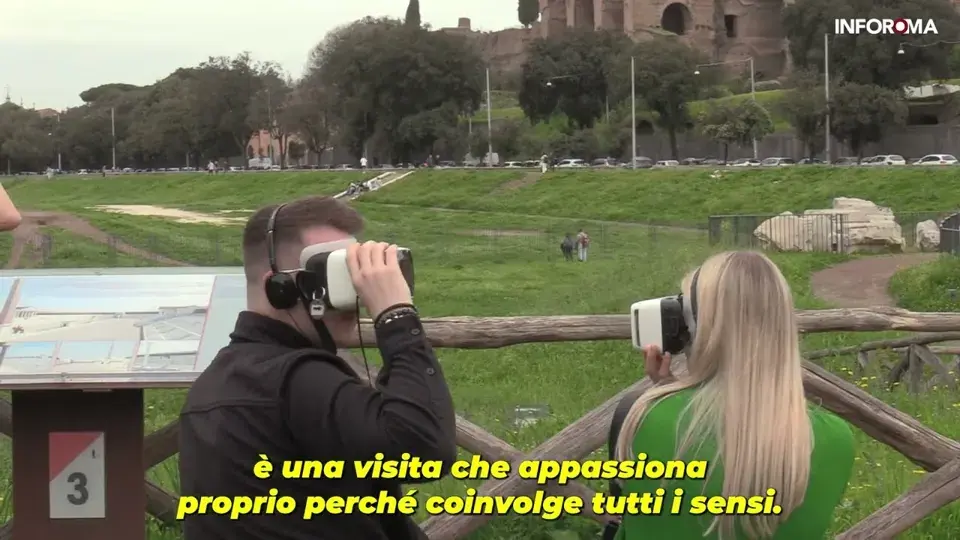
The Circo Maximo Experience is a tour of the archaeological area with a see-through headset and stereo headphones. In about 40 minutes and 8 stops it shows the circus in all its phases, from the valley before the circus to a day at the races, with a chariot race of shouting crowds and overturned chariots. It is available in 8 languages, English included, with the voices of Claudio Santamaria and Iaia Forte.
It costs €12, or €10 reduced for under-26s, teachers and Roma Pass or MIC card holders, and €22 for a family of 2 adults with their children under 18. Children under 6 and disabled visitors with a companion go in free. It is closed on Mondays, it does not run in the rain, and children under 14 need a waiver signed by a parent. The headset version also works for deaf visitors, with simplified subtitles in Italian or English.
Getting there, and more audio guides nearby
Metro line B stops right at Circo Massimo station. The archaeological area’s ticket office is on Viale Aventino. In summer, do as the audio guide says and bring a bottle of water with you.
The Palatine rises above the circus, and over it lies the Roman Forum. A short walk away, the Colosseum has its own audio guide.
 Free audio guideRoman Forum
 Free audio guideColosseum
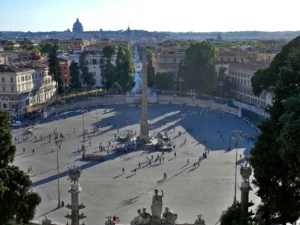
To see one of the obelisks of the spina, go to Piazza del Popolo. All of the city’s audio guides are on our Rome page.
Where to find it
FAQs
How do the free audio guides work?
They play right here on audioguidetravel.com, with no app to download and no sign-up. Press play and listen as you walk round: a phone and a pair of headphones are all you need. The audio streams from this page, so you’ll need mobile data or Wi-Fi.
Can I take the tour at my own pace?
Of course! You set the pace: pause whenever you like, jump back or forward 15 seconds, or tap the bar to jump to any point, and listen as many times as you want so you don’t miss a thing.
If I'm in a group, can we use the same audio guide?
Yes. The same free audio guide opens on as many phones as you like, so you can go round together as a group or with your family, each person at their own pace and with their own headphones. The quickest way is to send the link via WhatsApp, Telegram or however you like: the buttons just below let you share it right now.
Visitor information
As of 25 Oct 2026- Opening hours
- Park: always open · Archaeological area: Tue-Sun 09:30-16:00 until the last Saturday of March.
- Tickets
- Park free · Archaeological area €7, reduced €4
- Time needed
- Audio guide 6 min · Circo Maximo Experience about 40 min
- Getting there
- Metro line B, Circo Massimo station.
- Accessibility
- Archaeological area partly accessible, with a ramp down from the park; stairs inside the tower
- Tip
- Walk the free park at any hour, and book the €7 archaeological area online: entry is in limited numbers
- Official website
- www.sovraintendenzaroma.it
Nearby
More free audio guides in Rome
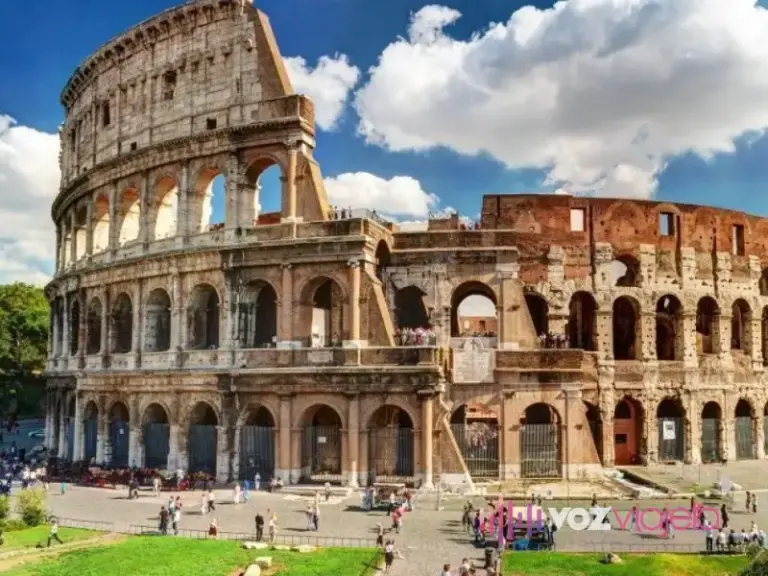 9:51RomeColosseum: free audio guide, hours and ticketsWelcome to the iconic Colosseum! An architectural marvel that has stood the test of time. Imagine the gladiator…
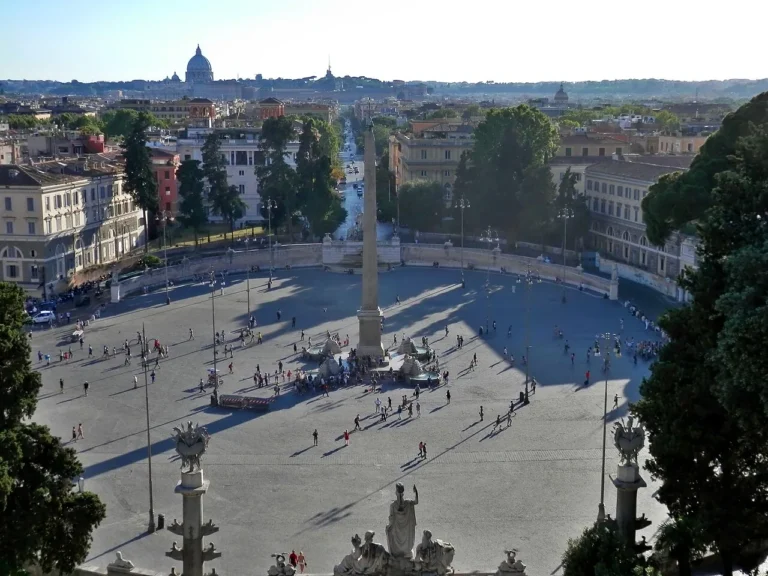 5:05RomePeople’s SquareWith its twin churches and central obelisk, the Piazza del Popolo is a perfect open space to relax…
 8:13RomeTrevi FountainMake a wish at the Trevi Fountain. This Baroque masterpiece is a dreamlike place, especially at night. Toss…