
Castel Sant’Angelo: free audio guide, hours and tickets
Free audio guide in English · no app, no sign-up
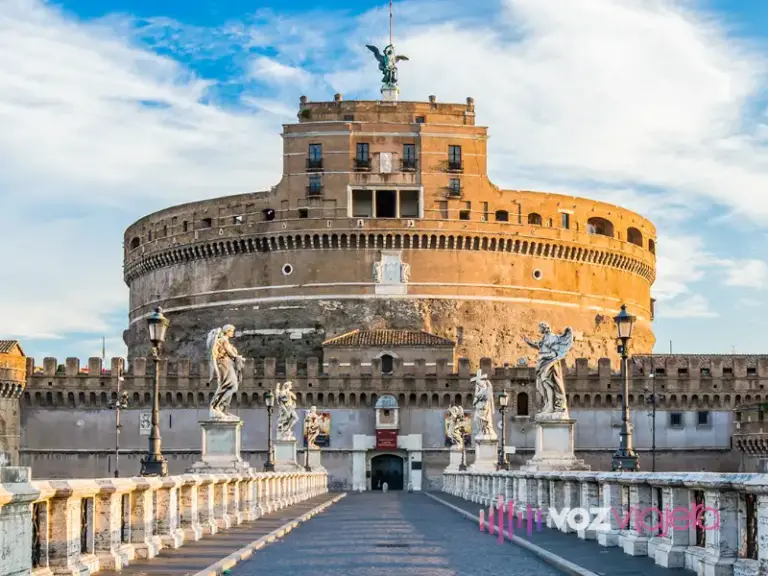
Free audio guide to Castel Sant’Angelo, in English: 6 minutes from Hadrian’s tomb and its helical ramp to the Courtyard of the Angel, the papal apartments and the Sala Paolina, the old prisons, the terrace under the bronze angel and the Passetto di Borgo, playing on this page.
 Audio guide
Before you go in
The few things that change your visit.
- Full ticket €18.00, reduced €2.00; under-18s go in free
- Closed on Mondays, except the first Monday of each month: 14:00 to 20:00 for €5.00
- Tickets carry your name: bring the ID you booked with
- On free-entry Sundays there is no online booking: everyone queues at the desk
- There is no cloakroom, and animals are not allowed inside
Originally a mausoleum, the Castel Sant’Angelo in the heart of Rome is now a museum with views of the Tiber and the city. Emperors, soldiers and popes have all walked its halls, and every passageway has a story. This is its free audio guide.
What the audio guide tells you
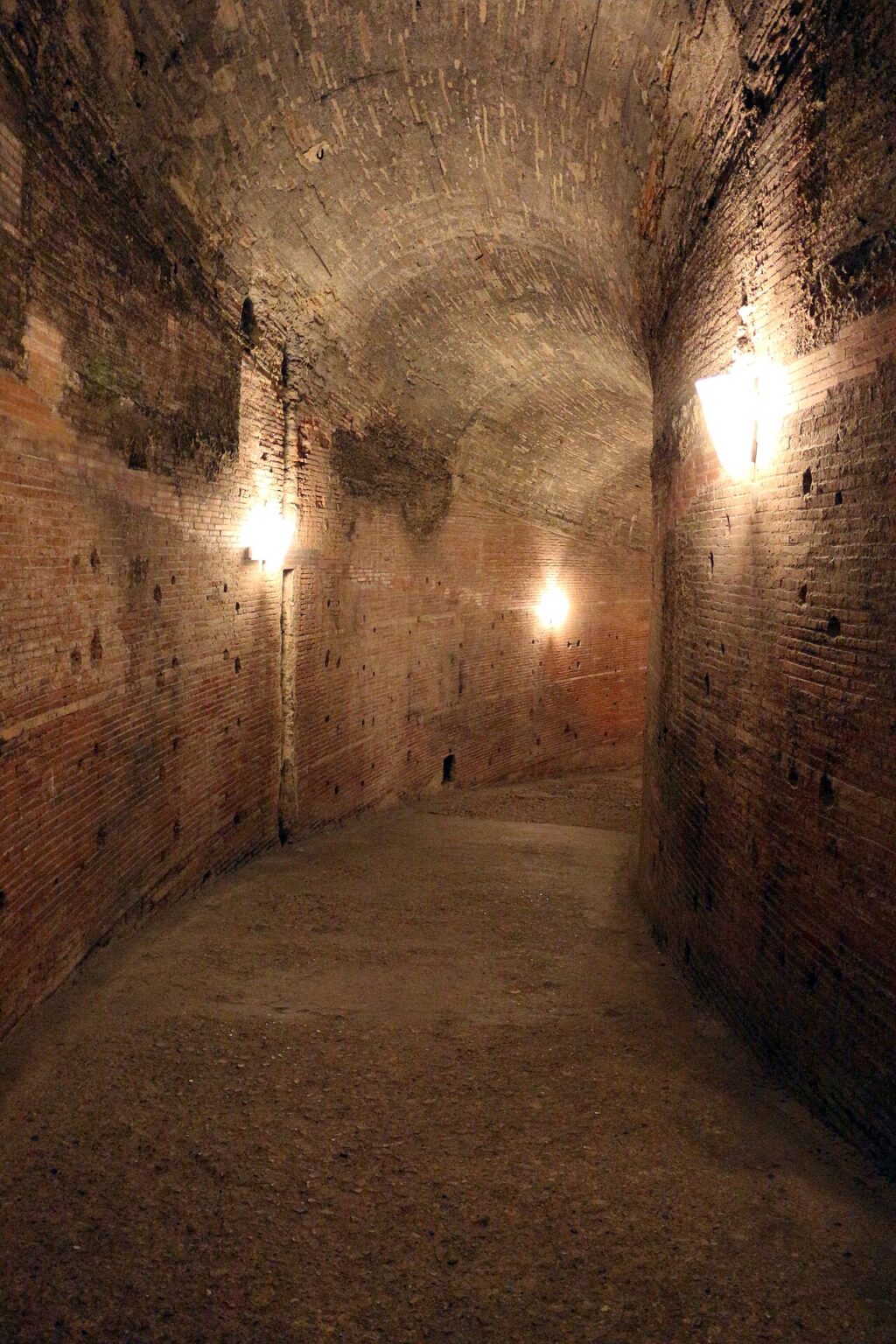
The guide starts inside Hadrian’s mausoleum, finished in 139 AD, and climbs the helical ramp to the Courtyard of the Angel, where Raffaello da Montelupo’s marble angel of 1536 stands. From there it takes you up to the papal apartments of Paul III and the Sala Paolina, through the castle’s centuries as a prison, out onto the terrace under the bronze angel, and along the Passetto di Borgo, the raised passage the popes used to reach the castle from the Vatican.
Some points of interest described in the Castel Sant’Angelo Audio Guide:
| Point of Interest | Brief Description |
|---|---|
| Hadrian’s Mausoleum | Built as a tomb for Hadrian and his family and finished in 139 AD, a year after his death. Members of the imperial family were buried here down to Caracalla, in 217. |
| Helical Ramp and Hall of the Urns | The way up through the old tomb, from the Dromos to the Courtyard of the Angel. |
| Courtyard of the Angel | Raffaello da Montelupo’s marble angel (1536), which crowned the castle until the bronze one took its place in 1753. |
| Papal Apartments and Sala Paolina | The rooms of Paul III Farnese, frescoed in the 1540s above all by Perin del Vaga and his workshop, with the Farnese lily and unicorn. |
| The Prisons | Benvenuto Cellini’s escape on a rope of bedsheets, Giordano Bruno, Beatrice Cenci, Cagliostro and the inscriptions prisoners scratched into the walls. |
| Panoramic Terrace | Under Verschaffelt’s bronze angel: the setting of the last act of Tosca and of the Girandola fireworks, which Pope Sixtus IV wanted for the feast of 29 June 1481. |
| Passetto di Borgo | The raised passage joined to the castle in 1277, which Clement VII used to take refuge here in 1527. Today it is walked on guided visits. |
From Hadrian’s tomb to papal fortress
The audio lasts about 6 minutes and plays straight from this page, in English, with no app and no sign-up. Behind its 7 stops runs one story: a single building that has been a tomb, a fortress, a papal residence, a prison and a museum. The emperor Hadrian had it built in the 2nd century AD as a mausoleum for himself and his family, which is why it was also known as the Mole Adriana. It went up on the right bank of the Tiber between 134 and 139 AD, and Hadrian also built the bridge that still leads straight to its door.
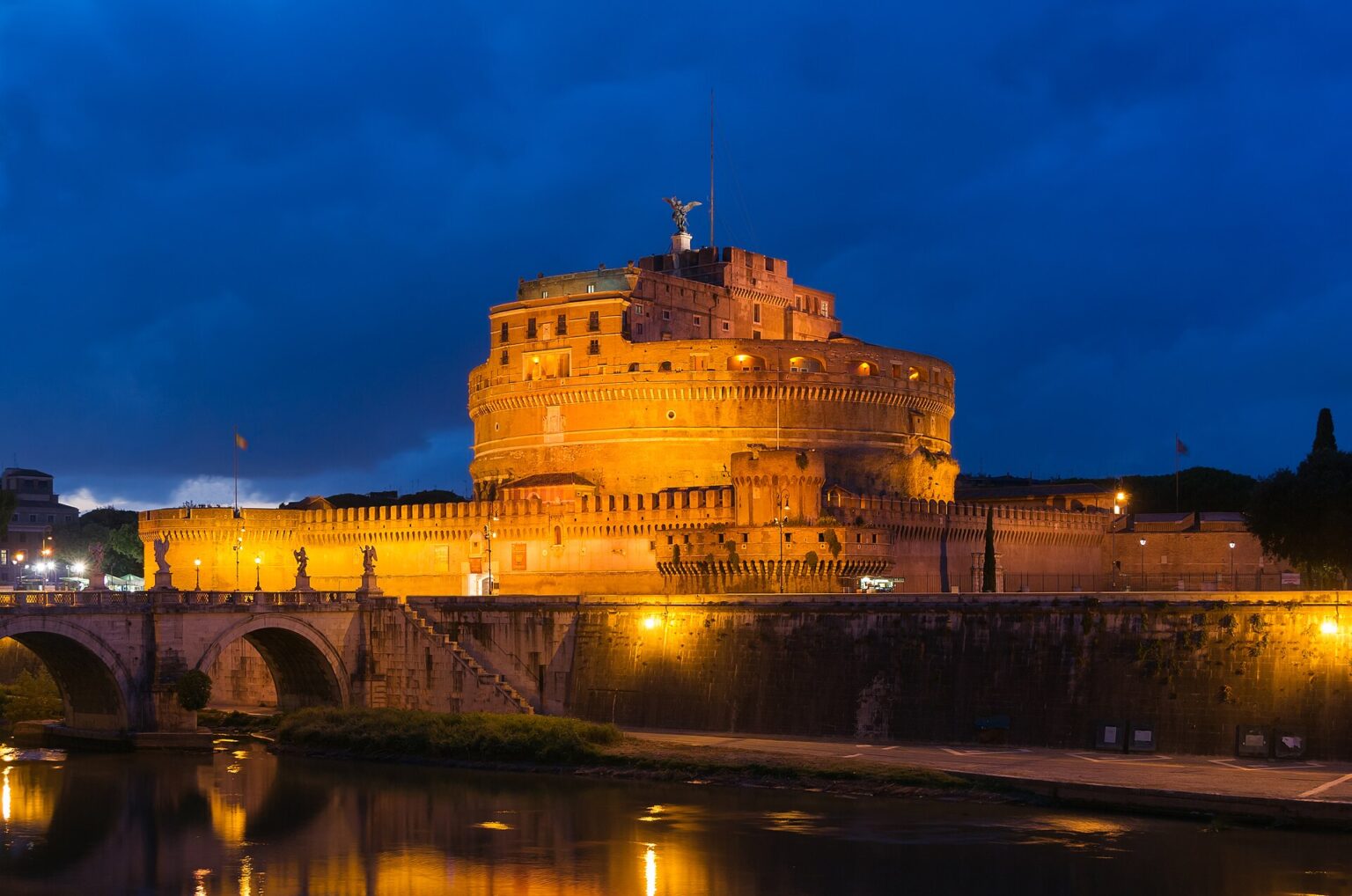
Hadrian’s ashes were laid here with those of his wife Sabina, and the emperors who followed him were buried here too, the last recorded one being Caracalla in 217. The urns were probably kept in what is now called the Treasury Room, deep inside the building. Later the mausoleum was taken into the city walls and turned into a stronghold for the defence of Rome.
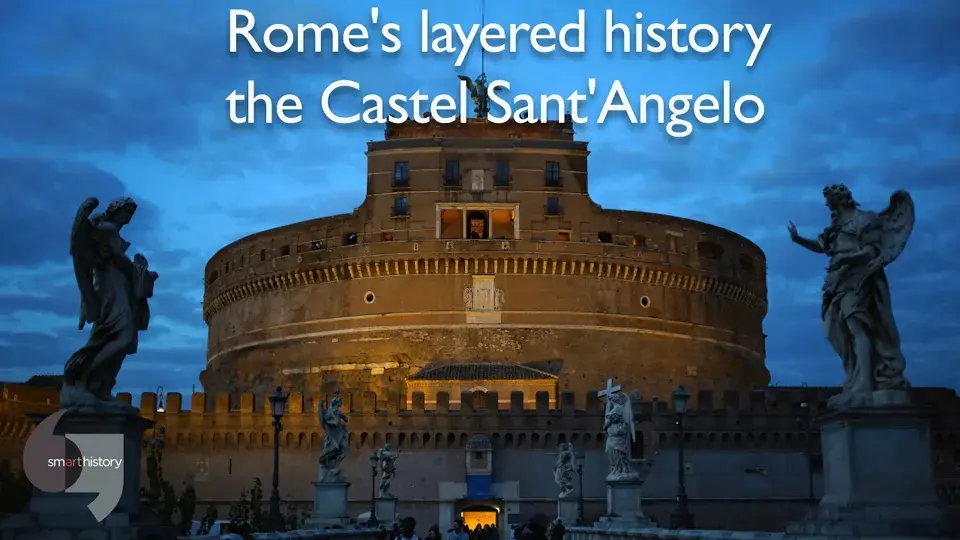
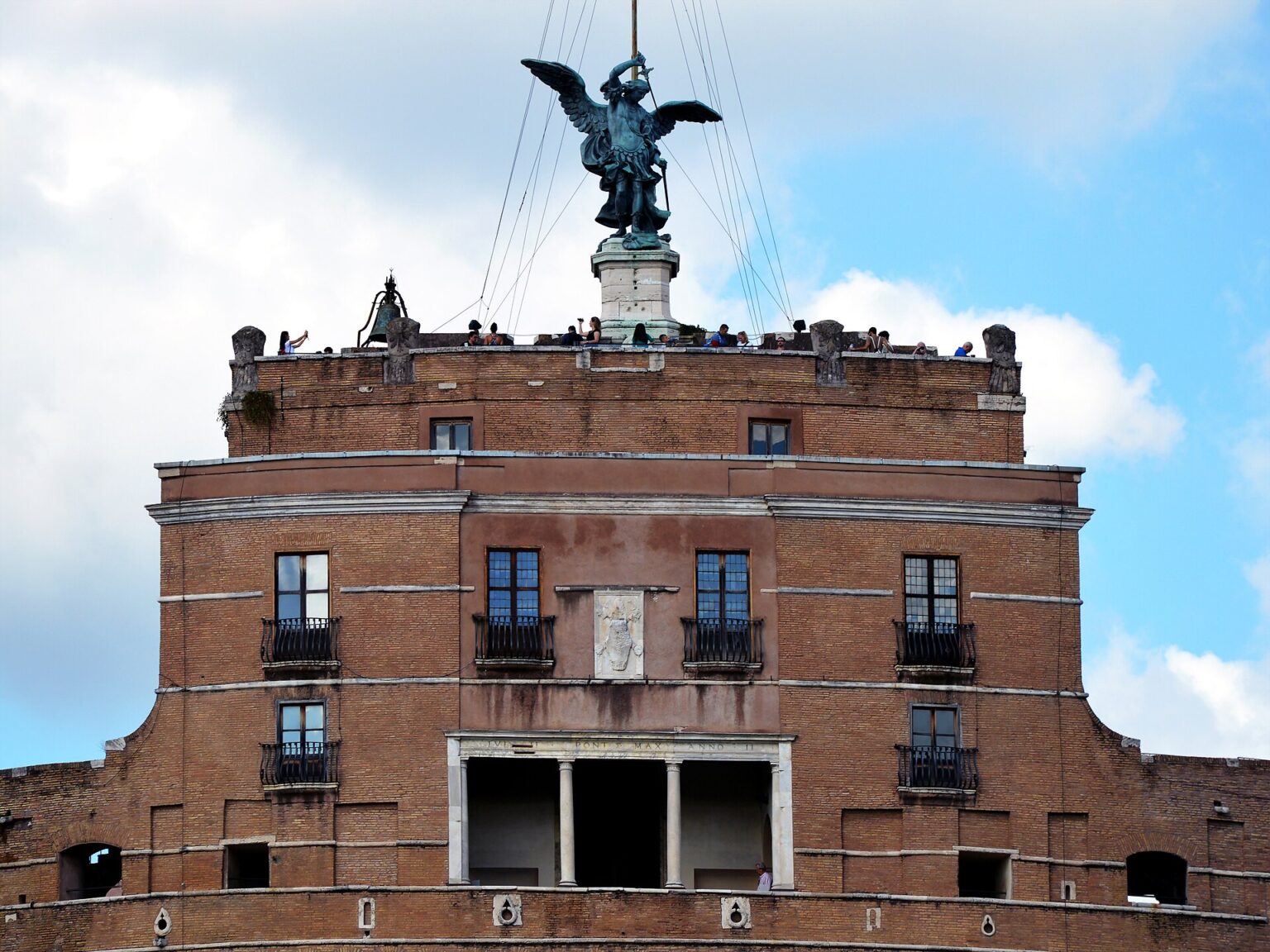
The name comes from a legend: in 590, during a plague, Pope Gregory the Great saw the Archangel Michael above the building sheathing his sword, a sign that the epidemic was over. That is the angel you see on the top today. The first statue, in marble, was carved by Raffaello da Montelupo in 1536 and now stands in an inner courtyard. The bronze one on the summit, by the Flemish sculptor Peter Anton von Verschaffelt, has been there since 1753.
In 1367 the keys of the castle were handed to Pope Urban V to press him to come back to Rome from Avignon, and from then on its story is tied to the Church. The popes added bastions and a pentagonal ring of walls, and turned the upper floors into an ever richer residence, which reached its peak under Paul III Farnese (1534-1549). From the 17th century it became almost only a political prison: Giordano Bruno was held here for 6 years, and so were the sculptor Benvenuto Cellini and Cagliostro. Puccini set the last act of Tosca on these ramparts. The Italian State took it over in 1870 as a military prison and barracks, and it has been a National Museum since 1925.
Opening hours and the first Monday of the month
Castel Sant’Angelo opens Tuesday to Sunday, 09:00 to 19:30, with the last entry at 18:30. It is closed on Mondays, on 1 January and on 25 December, except for special openings decided by the Ministry of Culture.
The exception, since 3 August and for the whole of 2026, is the first Monday of each month, when it opens from 14:00 to 20:00 (last entry 19:00) with a €5 ticket sold only on site, without booking and without groups. On evenings with events, from 19:30, the route can change or be restricted and groups are not let in.
Ground-floor works to make the castle more accessible can divert the usual route: at times the visit starts directly in the Dromos, opposite the entrance, and carries on up the ramp to the Courtyard of the Angel. Plan on the museum’s route, not on a fixed order of rooms.
Tickets and booking in 2026
The full ticket costs €18, the price in force since 1 July 2026, and the reduced one €2, for the reductions set by Italian law. Under-18s go in free, as do the other free-entry groups set by law. Your ticket also gives free entry to the Casa Museo Boncompagni Ludovisi and the Casa Museo Hendrik Christian Andersen on the day of your visit and the 2 days after.
Booking is recommended every day, and especially at weekends and on public holidays. Tickets carry your name: at the entrance you show the ticket and an original ID, and if the details do not match you are turned away with no refund. You can change the name once, until midnight the day before your visit. On free-entry Sundays and other free days nothing can be booked online: everyone, groups included, queues at the ticket desk for a free ticket, and the route may be adjusted to the crowds. There is no cloakroom, and animals are not allowed inside.
The staff also run free guided visits called “Castello racconta Castello”: about 1 and a half hours, in Italian, for up to 10 people, booked in advance and on top of the entry ticket. Bookings and information: call centre +39 06 399 671 00 (Monday to Friday 09:00-18:00, Saturday 09:00-14:00). (Source: Ministry of Culture, Castel Sant’Angelo, page updated 28 August 2026 and checked 28 September 2026.)
The Passetto di Borgo
The Passetto is the raised passage of about 800 metres that links the castle with the Vatican, built into an old city wall. It gave the popes a protected escape route, and it was used for that at least twice: by Alexander VI in 1494, when Charles VIII entered Rome, and by Clement VII during the Sack of Rome in 1527.
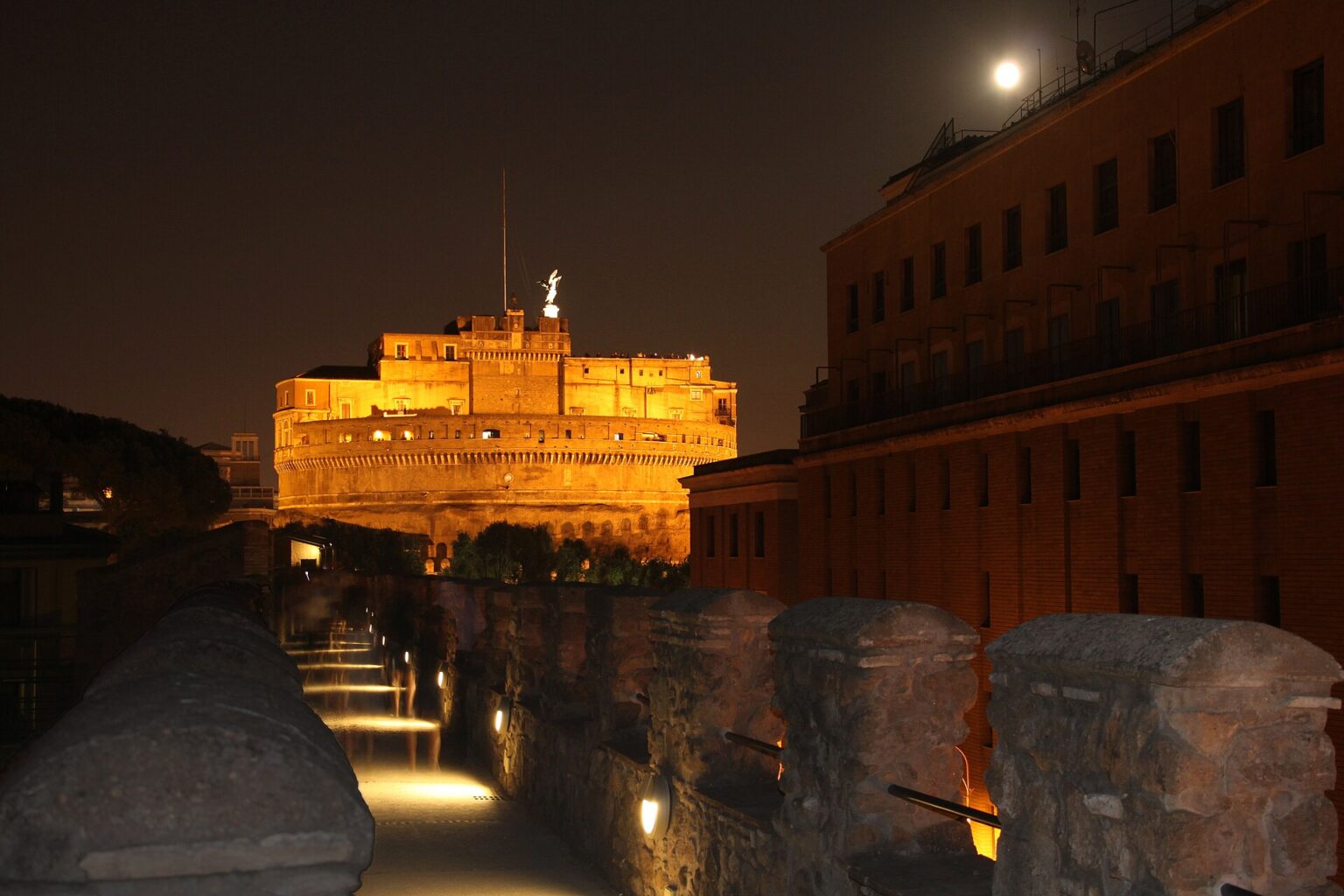
You can walk it on guided visits led by archaeologists and art historians, bought through the Musei Italiani website or app. The daytime visit runs on Fridays, Saturdays and Sundays from 09:00 to 13:00 and includes entry to the castle. The evening visit runs on Saturdays from 19:00 to 23:00 and adds a walk on the bastions, through the Hall of the Urns, the helical ramp and the Dromos, with the museum closed. The Passetto is closed to visits on the first Sunday of the month.
Getting there and accessibility
The castle stands at Lungotevere Castello 50, on the right bank of the Tiber. Take metro line A to Lepanto, then walk about 15 minutes. From the historic centre you arrive on foot across the Ponte Sant’Angelo, the bridge Hadrian finished in 134 AD, lined with the 10 angels holding the instruments of the Passion that Bernini planned from 1669.
Access for visitors with disabilities is limited to part of the outdoor areas. For anyone who cannot or prefers not to use stairs, the museum runs facilitated guided visits on the second and fourth Sunday of the month, at 10:45 and 12:15: they cover the Passetto without entering the castle, starting and ending at the Torre del Mascherino, in Piazza della Città Leonina.
What else to see nearby
The Passetto points the way to the Vatican: after the castle, carry on to St. Peter’s Basilica and the Sistine Chapel, both with their own free audio guide. Across the Ponte Sant’Angelo you are in the historic centre, with Piazza Navona, the Pantheon, the Trevi Fountain and the Spanish Steps.
 Free audio guideSt. Peter’s Basilica
The Sistine Chapel is the last room of the Vatican Museums, and the way in is not from St Peter’s Square but on Viale Vaticano, on the north side of the walls: Ottaviano, one stop from Lepanto on metro line A, is about 580 m from the door. Their 7 km one-way route has its own free audio guide too.
Castel Sant’Angelo is still standing because it never stopped being used, as a castle, a papal refuge and a prison, while so much of ancient Rome was quarried away. The same thing saved the Temple of Hephaestus in Athens: turned into a Christian church in the 7th century, it still has its columns, its entablature, both pediments and a roof, the best preserved Doric temple in mainland Greece. It has its own free audio guide:
 Free audio guideTemple of Hephaestus
For ancient Rome, the Colosseum, the Roman Forum and the Arch of Titus tell the story that Hadrian’s tomb continues. You will find every guide in the city on the free audio guides of Rome page.
Where to find it
FAQs
How do the free audio guides work?
They play right here on audioguidetravel.com, with no app to download and no sign-up. Press play and listen as you walk round: a phone and a pair of headphones are all you need. The audio streams from this page, so you’ll need mobile data or Wi-Fi.
Can I take the tour at my own pace?
Of course! You set the pace: pause whenever you like, jump back or forward 15 seconds, or tap the bar to jump to any point, and listen as many times as you want so you don’t miss a thing.
If I'm in a group, can we use the same audio guide?
Yes. The same free audio guide opens on as many phones as you like, so you can go round together as a group or with your family, each person at their own pace and with their own headphones. The quickest way is to send the link via WhatsApp, Telegram or however you like: the buttons just below let you share it right now.
Visitor information
As of 16 Oct 2026- Opening hours
- Tuesday to Sunday, 09:00–19:30, last entry 18:30. Closed on Mondays
- Tickets
- €18.00 full · €2.00 reduced · free for under-18s
- Getting there
- Metro line A to Lepanto, then about 15 minutes on foot.
- Accessibility
- Access for visitors with disabilities is limited to part of the outdoor areas. Step-free guided visits of the Passetto (without the castle) on the 2nd and 4th Sunday of the month, 10:45 and 12:15, from the Torre del Mascherino.
- Tip
- Book ahead, especially at weekends and on public holidays, and bring the ID you booked with
- Official website
- cultura.gov.it
Nearby
More free audio guides in Rome
 9:51RomeColosseum: free audio guide, hours and ticketsWelcome to the iconic Colosseum! An architectural marvel that has stood the test of time. Imagine the gladiator…
 6:30RomeRoman Forum: free audio guide, hours and ticketsFree audio guide to the Roman Forum, in English: 7 minutes along the Via Sacra, from the Curia…
 8:13RomeTrevi FountainMake a wish at the Trevi Fountain. This Baroque masterpiece is a dreamlike place, especially at night. Toss…