
Discover Italy, Rome
Vatican Museums of Italy, Rome Audio Guide
This free audio guide to the Vatican Museums plays straight from your phone — no app, no sign-up — and it follows the route you actually walk, the one that ends in the Sistine Chapel. It tells you which statue started the whole collection in 1506, what to look at on Michelangelo’s ceiling before you go in (inside, nobody is allowed to talk), and where the real Bramante staircase is. Press play before the security check.
You will enjoy the visit, especially if you are interested in Architecture, Art, History, Michelangelo, Museums, Religion, Sculpture.
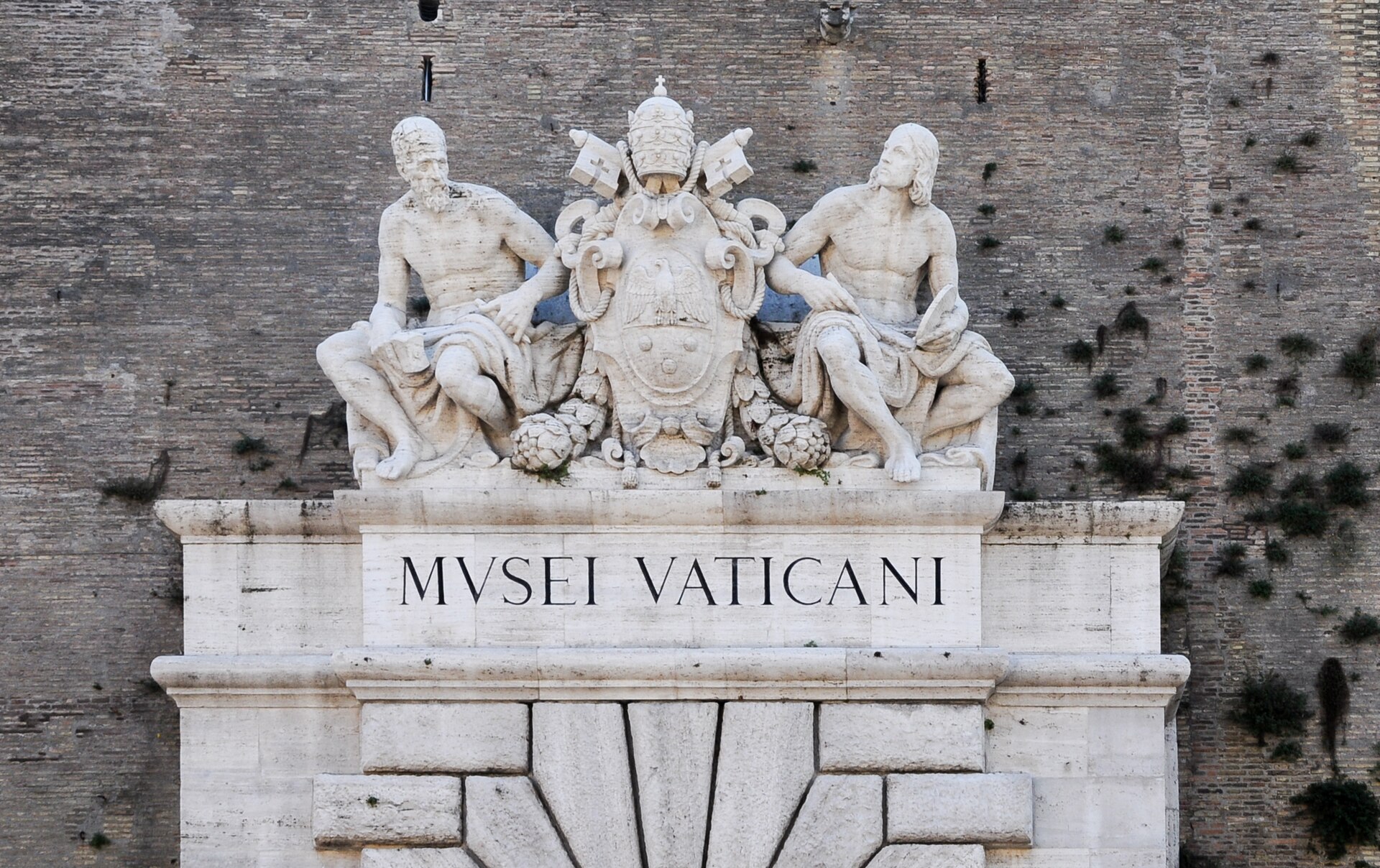
The Vatican Museums are the popes’ collections, open to the public: 7 kilometres of galleries through ancient sculpture, painted galleries and the Raphael Rooms, always ending in the Sistine Chapel. They began in 1506 with a single statue dug out of a vineyard.
This page is the free audio guide, plus the practical information checked against the official Vatican Museums site on 14 September 2026 — including the ticket prices in force since 1 January 2026.

What the audio guide tells you
It is free, it plays in your phone’s browser, and there is no app to install and no sign-up. Press play before the security check: the route is long, the signal inside is patchy, and the guide follows the order you actually walk, which is one-way — once you move forward you cannot go back.
- The entrance ramp — which door is the real one, what happens to your bag, and why the morning queue is not the afternoon queue.
- The Octagonal Court — where Julius II put his collection, and where the statue that started everything still stands.
- The Pio-Clementino Museum — the Belvedere Torso, the Apoxyomenos and the round hall: the heart of the ancient sculpture.
- The Gallery of the Candelabra and the Tapestries — the long stretch almost everyone walks through at speed, and the two or three things worth stopping for.
- The Gallery of Maps — 120 metres of painted Italy commissioned by Gregory XIII, under the gilded vault that gets all the photographs.
- The Raphael Rooms — the four halls Raphael painted while Michelangelo worked a few metres away, on the same job, for the same pope.
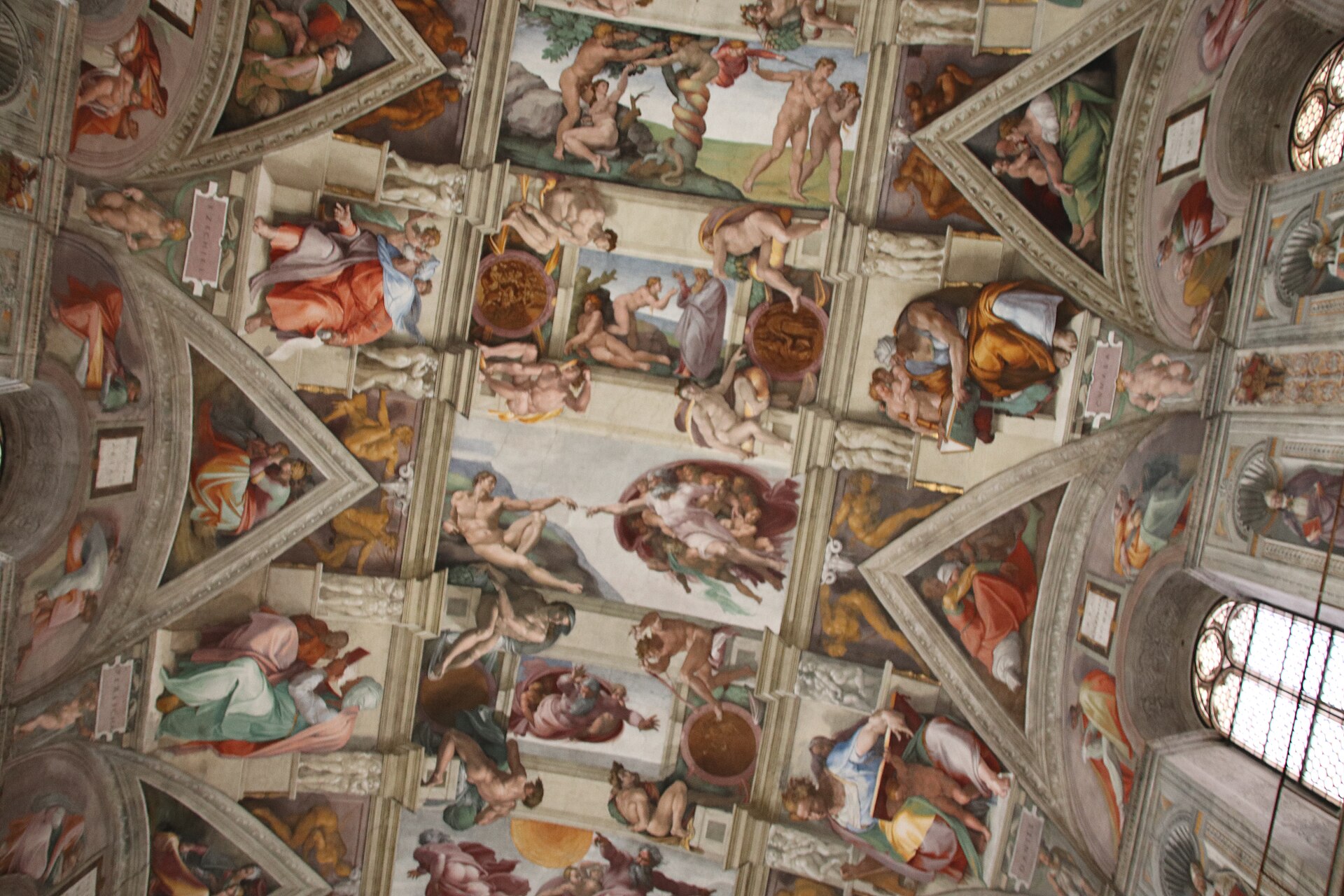
- The Sistine Chapel — what to look at first and in what order, because inside you cannot talk and cannot photograph.
- The staircase on the way out — the double helix everyone photographs, and where the other one is.
One statue in a vineyard, and 500 years of rooms
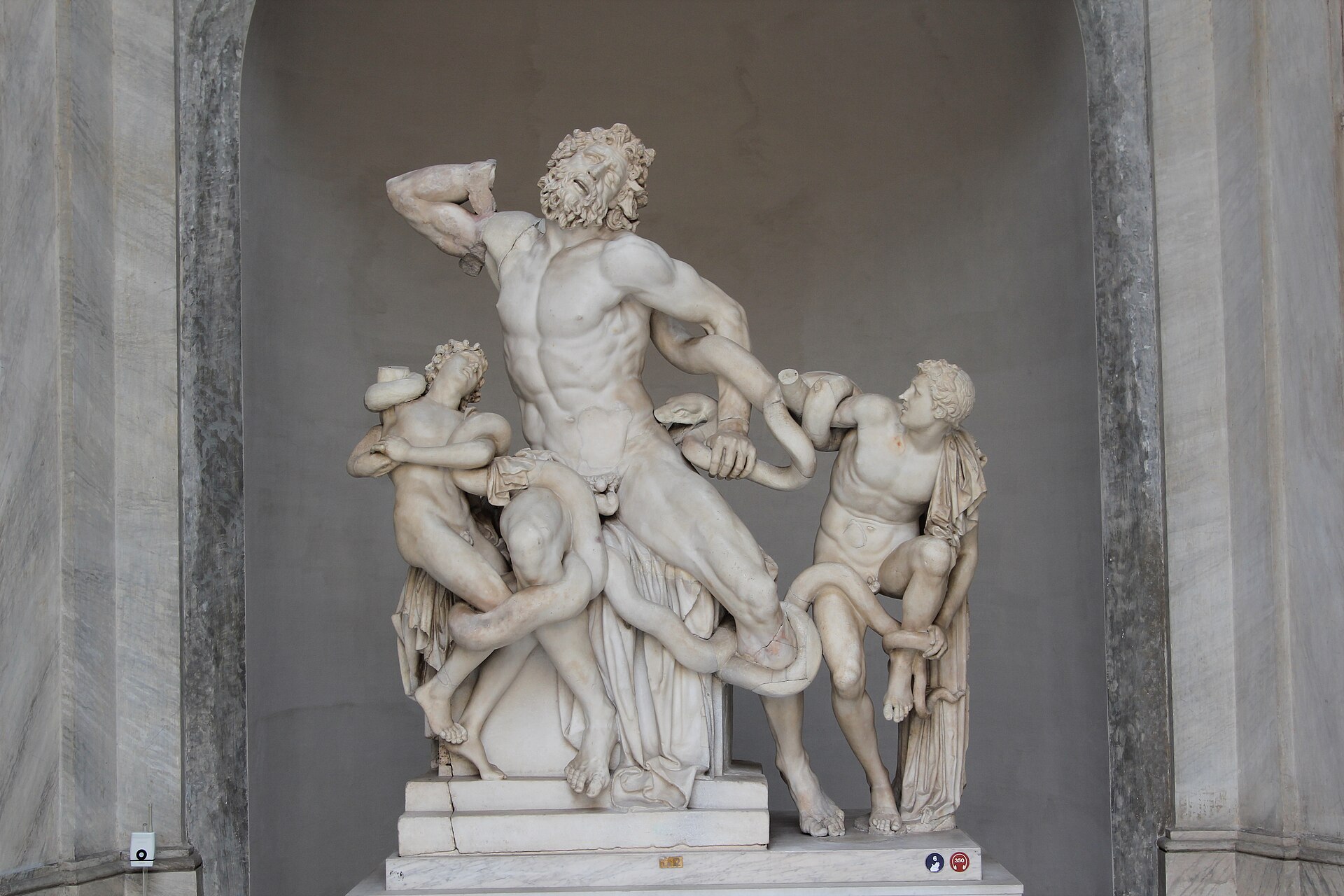
In 1506, digging in a vineyard on the Esquiline Hill, someone hit marble: a man and his two sons twisting in the coils of sea serpents. It was the Laocoon, a work educated Romans knew only by reputation, from a description by Pliny the Elder, and which is credited today to the Rhodians Agesander, Athenodoros and Polydorus. Pope Julius II — in the museum’s own words, he “bought it immediately” — set it up in the Octagonal Court beside the Apollo Belvedere. That gesture — a pope displaying pagan sculpture — is the date the museum itself gives as its birth.
And it was missing an arm. The father’s right arm never turned up, and for 4 centuries replacements were carved for it — one by a pupil of Michelangelo — while scholars argued whether it had been stretched out or bent back over the head. Early in the twentieth century the Prague antiquarian Ludwig Pollak bought a marble arm in a stonemason’s yard on the Oppian Hill, a few hundred metres from where the group had come out of the ground, and recognised it instantly. He gave it to the Vatican in 1906 and never saw it fitted: he died in Auschwitz in 1943. The arm went on in the 1950s. It is the one you see today.

Julius II was also the pope who commissioned the Sistine ceiling. Michelangelo signed the contract on 8 May 1508, the first half was uncovered in August 1510 and the whole thing was finished on 31 October 1512. Two details from the museum’s own pages explain what you are looking at. The first: the vault was repainted at all because a long crack opened in it in May 1504 and it had to be chained. The second: the 1508 contract only provided for 12 apostles in the pendentives and ornament everywhere else, and the programme changed at the artist’s own request — he thought the commission “a poor thing”. What is up there is not what was ordered. It is what the painter imposed.
After that every pope added his own. Gregory XIII had the Gallery of Maps built: Ottaviano Nonni “Mascherino” raised it between 1578 and 1580 and it was painted entire in under 2 years, to a programme by the Dominican cosmographer Egnazio Danti. Clement XIV and Pius VI built the eighteenth-century museum that still carries their names, the Pio-Clementino; in 1797 Napoleon took the best of it to Paris, and it came back after the Congress of Vienna thanks to Canova. Today the Vatican Museums are the second most visited art museum on earth after the Louvre: 6,825,436 visitors in 2024, according to the City of Rome’s statistical yearbook — almost a fifth of every cultural visit made in the city.
What to see
- The Laocoon and the Belvedere Torso, in the Octagonal Court and the Pio-Clementino: the ancient sculpture that taught the Renaissance how to carve. The Torso was called “Hercules” for centuries; the museum now identifies it as Ajax the Great, contemplating suicide.
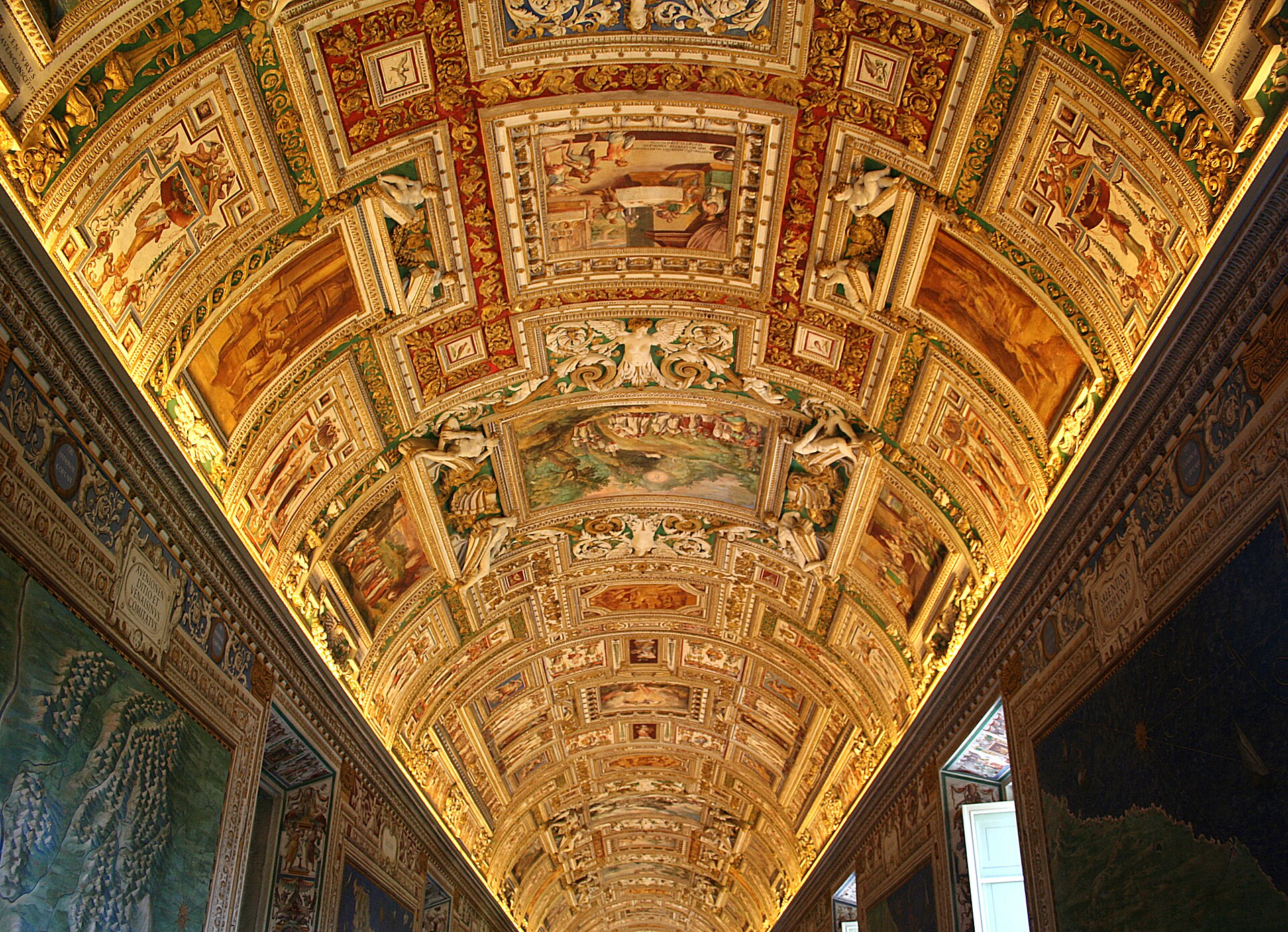
- The Gallery of Maps: 120 metres of corridor with 40 maps on the walls — 32 regions plus 8 views of ports and battles — under a gilded vault of 51 panels.
- The Raphael Rooms, with the School of Athens, painted in the same palace and the same years as the Sistine ceiling.
- The Sistine Chapel, the last room on the route: no talking and no photography inside, and the wardens say so out loud.
- The Pinacoteca, with Raphael’s Transfiguration and Leonardo’s St Jerome, which hardly anyone visits because it sits off the main corridor.
- The Pigna courtyard, the place to sit down for 5 minutes before the last stretch.
.JPG)
The staircase: you probably know it is Momo’s. Here is where the real Bramante is
The most photographed picture in the Vatican is a double helix turning down under a skylight behind a bronze rail. It was designed by Giuseppe Momo and completed in 1932 — two parallel helical ramps, one for going up and one for coming down, so that nobody meets anybody on the way, with the bronze balustrade modelled by the sculptor Antonio Maraini and cast by the Marinelli foundry in Florence. It was built as the entrance. Today it is the end of the visit, and every visitor leaves by it.
The real Bramante staircase is not on the route you walk, and there are two things worth knowing about it.
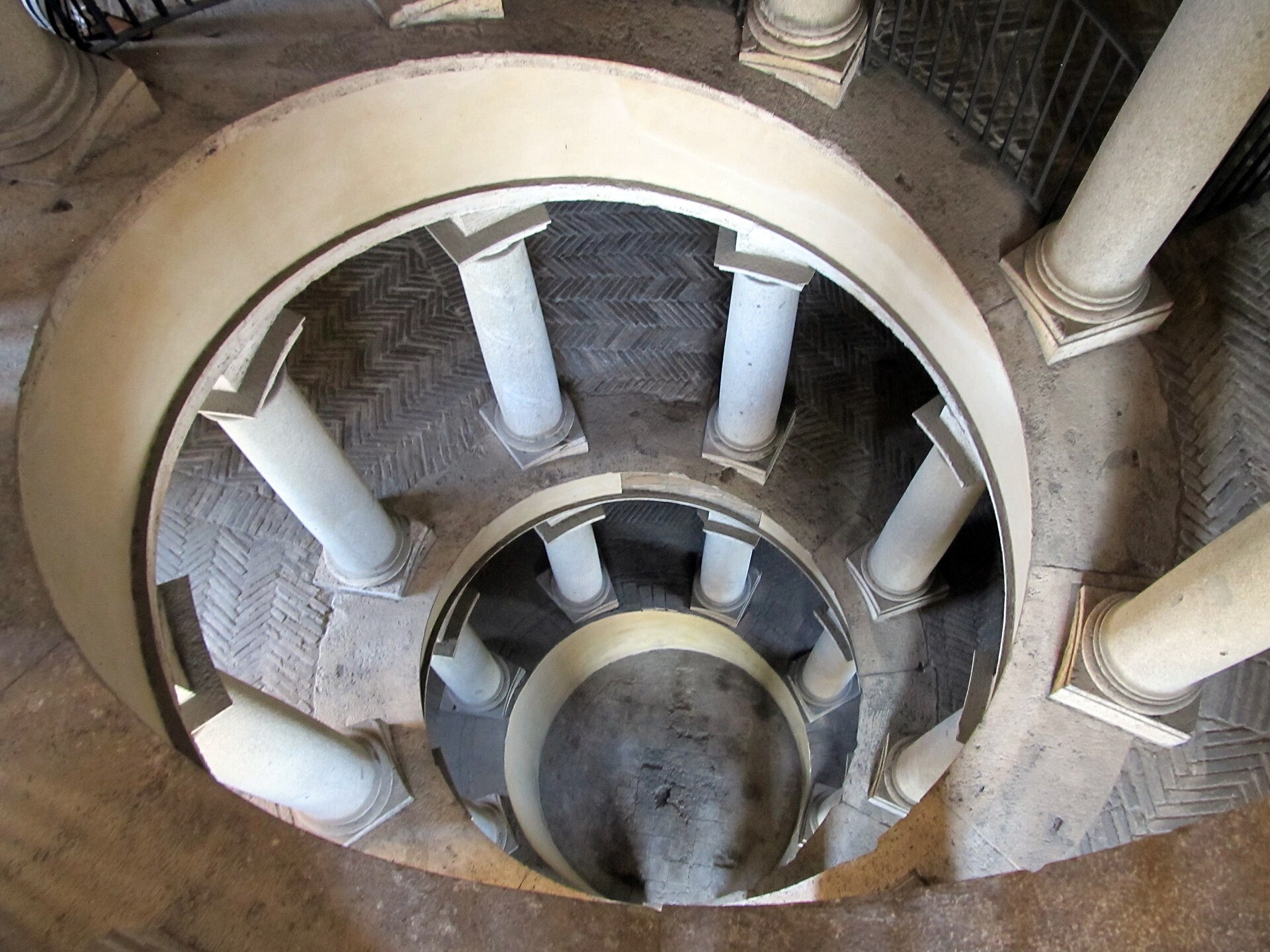
First, it is not a flight of steps. Donato Bramante laid it out for Julius II in the Belvedere as a helical ramp on columns, with no steps at all — the point was that it could be ridden up on horseback — and the orders of the columns change as it rises.
As for the date, the Vatican Museums’ own page for the Gregorian Etruscan Museum says the staircase was “begun in 1512”.
Second, and this is the useful part: you can see it, free, with your ordinary ticket. The museum’s own page for the Gregorian Etruscan Museum — which is on the normal route — says it plainly: “From the interior of the museum it is possible to see Bramante’s monumental double-helix staircase.” The one you walk down is Momo’s; the one you came to see is a short detour off a gallery you were going to walk through anyway, and it costs nothing.
.jpg)
Tickets, hours and getting there
| Opening hours | Monday to Saturday, 08:00–20:00. Final entry 18:00. Closed on Sundays except the last of each month, 09:00–14:00 (final entry 12:30), free |
| Leaving the halls | Visitors must leave the halls 30 minutes before closing. So 20:00 is really 19:30 inside |
| Full ticket | €20.00 at the ticket desk · €25.00 booked on the official website (€20.00 + a €5.00 booking fee) |
| Reduced (7–18 and students) | €10.00 — raised from €8.00 on 1 January 2026 (+€5.00 if booked online) |
| Schools | €5.00 — raised from €4.00 on 1 January 2026 (+€2.00 if booked online) |
| Free | Children under 7 · everyone on the last Sunday of the month |
| 2026 closures | 1 and 6 January, 11 February, 19 March, 6 April, 1 May, 29 June, 14 and 15 August, 1 November, 8, 25 and 26 December |
| Address | Viale Vaticano, 00165 Rome — north side of the walls, not St Peter’s Square |
| Getting there | Metro line A to Ottaviano (about 580 m) or Cipro (about 640 m) · bus 49 stops opposite the door · tram 19 and buses 32, 81, 982 to Piazza del Risorgimento (about 500 m) · buses 492 and 990 on Via Leone IV |
| Cloakroom | Free, and compulsory for rucksacks, luggage, large umbrellas, tripods and anything staff judge unsuitable by size |
| Official ticket office | tickets.museivaticani.va — the museum warns on its own site that look-alike domains resell for much more |
| Checked | 14 September 2026, against museivaticani.va |
The reduced ticket is €10. It went from €8.00 to €10.00 on 1 January 2026, as the museum announced, the same day the schools rate went from €4.00 to €5.00: the version of the museum’s own page archived on 12 December 2025 listed the reduced ticket at €8.00 with the line “From 1 January 2026 € 10.00”, and the version archived on 24 January 2026 lists €10.00 flat, and schools at €5.00.
The price is €20. The €5 is a fee, and it is optional. €20 is the admission, and the €5 buys you a reserved time slot so you can skip the queue. You can decline it and pay €20 at the desk.
Free Sunday has fine print, and it is walk-in only. The last Sunday of the month is free from 09:00 to 14:00, final entry 12:30 — and there is no booking, not even on the official portal: you queue. The exception: the free Sunday lapses if it falls on Easter, 29 June, 25 or 26 December, or 31 December. In 2026 no collision occurs, so this year the rule sleeps — but if you are planning a 2027 trip around a free Sunday, check the calendar first.
How long to allow. The museum’s own paid audio guide, hired at the turnstiles in the Courtyard of the Cuirasses, costs €8.00 and offers 12 languages, more than 400 commentaries and over 3 hours of audio. Allow 2 to 3 hours walking the main route to the Sistine without stopping much, 4 or more if you take in the Pinacoteca and the Etruscan rooms. The route is one-way and it ends in the chapel, so plan the order, not the exit.
One more from 1 January 2024: the ticket is nominative and they check it. The name on the ticket and the name on your ID have to match.
.jpg)
Nearby, with their own free audio guides
Reading this in Spanish? The same guide, written for a Spanish-speaking visitor and narrated in Spanish, is at Museos Vaticanos en vozviajera.com.
The Sistine Chapel is the last room of this route and has a guide of its own on this site — listen to it before you go in, because inside you cannot. St Peter’s Basilica is a 10-minute walk around the walls and is free to enter, with its own separate queue; Castel Sant’Angelo is 15 minutes down Via della Conciliazione and is the obvious second stop of the day.
Frequently asked questions
How much is a ticket to the Vatican Museums?
€20.00 at the desk, or €25.00 booked on the official site — that is €20.00 plus a €5.00 booking fee, and the fee is optional. Reduced is €10.00 and schools €5.00. Checked on 14 September 2026 against museivaticani.va.
Is the reduced ticket still €8?
No. It went from €8.00 to €10.00 on 1 January 2026, the same day the schools rate went from €4.00 to €5.00.
When are the Vatican Museums free?
The last Sunday of every month, 09:00–14:00, final entry 12:30, walk-in only — there is no way to book it. The free Sunday lapses if it falls on Easter, 29 June, 25 or 26 December or 31 December, which does not happen in 2026.
Is the spiral staircase the Bramante Staircase?
No. The double helix you walk down is Giuseppe Momo’s, finished in 1932. Bramante’s is a ramp with no steps, from the early 1500s, and it is not on the route — but you can see it for free from Room XIV of the Gregorian Etruscan Museum, which is.
Where is the entrance?
On Viale Vaticano, on the north side of the walls. Not St Peter’s Square, which is nearly a kilometre around the outside — and “Vatican City” in a maps app will often send you to the wrong side.
Do I need to book?
No, but it costs you the queue. Booking on the official site adds €5.00 and gives you a time slot. On the free Sunday nobody books: everybody queues.
Keep discovering Italy, Rome with free audioguides.
Discover Vatican Museums with our tourist audio guide
Do you really want to get to know Vatican Museums during your trip? Our free tourist audio guides on audioguidetravel.com are the best way to explore this incredible place. Learn about its history, anecdotes, hidden details, and much more as you leisurely stroll through its streets and corners.
Our expert guides will accompany you to show you the highlights, telling you curiosities and secrets that only a local would know. You’ll feel like you have a friend by your side revealing all the secrets.
Enjoy visiting Vatican Museums at your own pace, without rushing, to truly appreciate its beauty and charm. With our free audioguides, you won’t miss any important details.
Don’t miss out on the opportunity to discover Vatican Museums in-depth! Our free tourist audio tours on audioguidetravel.com are the best way to appreciate the magic of this place. Use them now and have an unforgettable experience.
FAQ
How do the free audio guides work?
Our audio guides work through the website audioguidetravel.com; you don’t need to download any app. Just follow the instructions on the website to guide you through Vatican Museums while listening to our experts’ explanations.
Can I take the tour at my own pace?
Of course! Our free audio guides are designed so that you set the pace. You can pause, rewind, or listen as many times as you want without missing a detail. By visiting Vatican Museums your way, you’ll enjoy it even more.
If I'm in a group, can we use the same audio guide?
Yes, our website allows sharing the same free audio guide among multiple devices. This way, you can visit Vatican Museums as a group or family, listening to the explanations simultaneously. The quickest way to do this is to share the link via WhatsApp, email, or any method you like. I’ve included some buttons below for you to do that now.
Travel Blog
Rome, a city whose name alone evokes images of cobblestone streets winding between ancient monuments, squares that tell stories of past eras, and hidden corners waiting to be discovered. In…
Are you ready to explore the majestic Colosseum in Rome, that architectural wonder that has defied time? To further enrich your experience and ensure you don’t miss a single detail…
Rome, the Eternal City, is known not only for its rich history and impressive monuments but also for its delicious Italian food. But is it possible to enjoy authentic Roman…
If you’ve ever dreamed of walking the streets of Pompeii, you probably imagine a tranquil, almost mystical setting where the Roman past comes to life without interruption. But did you…