
Alhambra: free audio guide, hours and tickets
Free audio guide in English · no app, no sign-up
The free Alhambra audio guide lasts about 5 minutes and covers the whole site in the order you walk it: the Alcazaba, the Nasrid Palaces with the Court of the Myrtles and the Court of the Lions, the Partal and the Generalife, and the story from 1238 to Washington Irving. Press play at the entrance.
 Audio guide
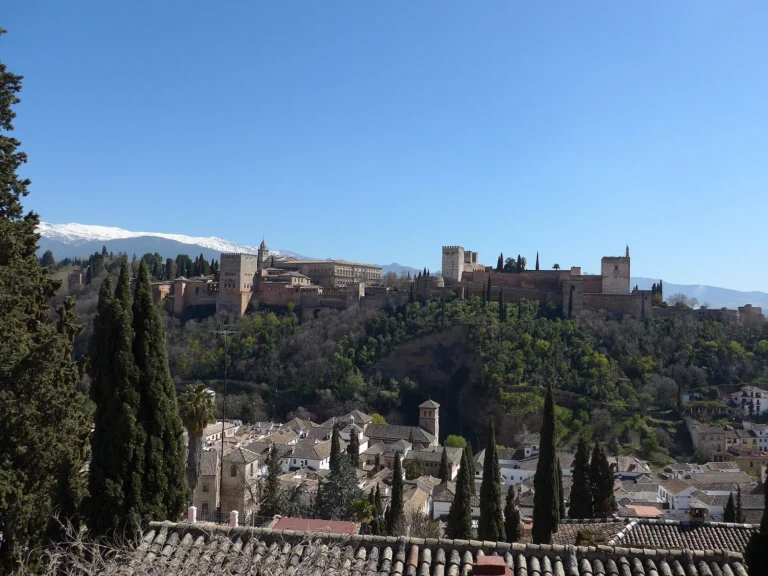
The Alhambra is the walled palace city that the Nasrid sultans began building in 1238 on the Sabika hill in Granada: palaces and a fortress inside the walls and, just outside them, the Generalife estate. The General ticket costs €22.08 on the official website, and from 15 October to 31 March it opens every day from 08:30 to 18:00. This free audio guide lasts about 5 minutes and plays right on this page.
What the audio guide covers
It plays in your phone’s browser, with no app and no sign-up. It is the overview of the whole site, in 7 parts, in the order you will walk it:
| The red one | Where the name comes from, the Sabika hill between the Darro and the Genil, and the palace city that Muhammad I began in 1238. |
| Alcazaba | The fortress, the Torre de la Vela with its bell, the round Torre del Cubo and the Jardín de los Adarves. |
| Nasrid Palaces | Your time slot, the order of the visit (Mexuar, Comares, Lions, Lindaraja) and how the tiles, plasterwork and inscriptions are laid out. |
| Court of the Myrtles and Court of the Lions | Yusuf I’s pool and the Comares Tower; Muhammad V’s fountain on 12 marble lions. |
| Hall of the Abencerrajes | The star-shaped muqarnas dome, and why groups are not allowed to stop and explain in the smallest rooms. |
| Partal and Generalife | The gardens and pools, the Patio de la Acequia, the Patio de la Sultana and the Water Stairway. |
| From 1492 to UNESCO | Charles V’s unfinished palace, the 1812 explosion, Washington Irving, the national monument of 1870 and World Heritage in 1984; and a sunset tip from the Mirador de San Nicolás. |
For the rooms of the palaces one by one, the detail is in the separate audio guides to the Nasrid Palaces, Charles V’s Palace and the Generalife.
Opening hours and tickets
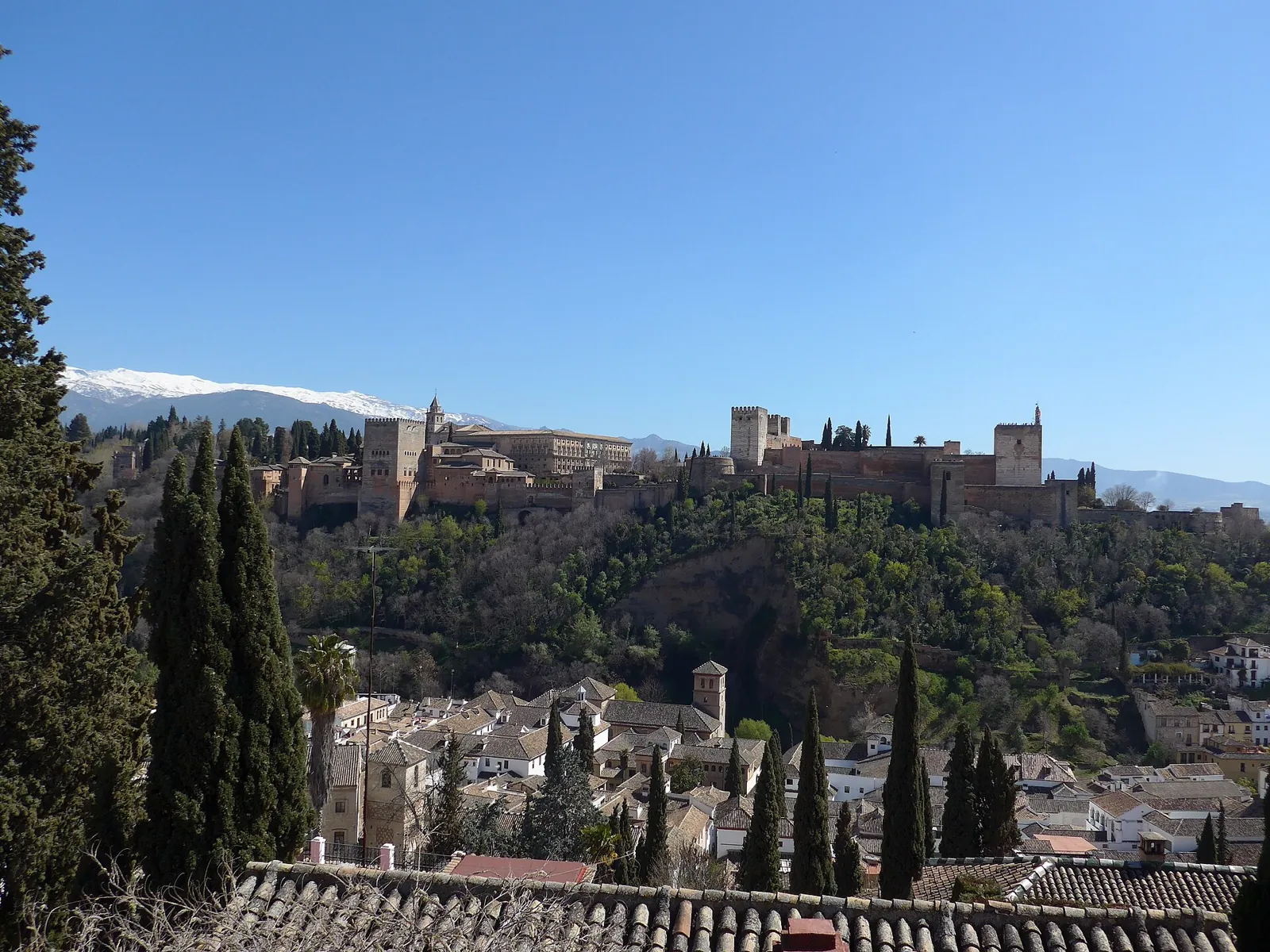
From 15 October to 31 March the Alhambra opens every day from 08:30 to 18:00, with ticket offices from 08:00; from 1 April to 14 October it stays open until 20:00. It closes only on 25 December and 1 January.
The Alhambra General ticket costs €22.08 on the official ticket website: the public price is €21, and advance sales add a handling fee. It includes the Nasrid Palaces (Mexuar, Comares Palace, Palace of the Lions and the Lindaraja corridor), the Partal, the Alcazaba with the Torre de la Vela and the Jardín de los Adarves, and the Generalife, gardens and palace. Charles V’s Palace and the Museum of the Alhambra inside it are free. Without the Nasrid Palaces, the Gardens, Generalife and Alcazaba ticket costs €12.62. Children under 12 go in free, but each needs their own ticket, bought together with the adults’.
Tickets are personal: at the entrance you must show your original ID card or passport. Online sales close at 23:59 on the day before the visit. Reduced tickets (EU citizens over 65, Youth Card holders, people with a disability of 33 % or more) need an official, valid certificate on the day.
At night, the Nasrid Palaces can be visited for €12.62: from 15 October to 31 March, on Fridays and Saturdays from 20:00 to 21:30 (ticket office 19:00-20:45).
From the Sabika hill to Washington Irving
The Alhambra stands on the Sabika hill, 790 m high, the last spur of the Sierra Nevada between the Darro and Genil rivers, facing the Albaicín. In the 11th century Samuel ibn Nagrella, chief minister of the Zirid kingdom of Granada, rebuilt the abandoned buildings on the hill and set his palace there.
In 1238, Muhammad I, founder of the Nasrid dynasty, began the Alhambra we know today. The oldest part is probably the Alcazaba, to which great towers such as the Torre de la Vela were added. The palace city reached its height in the second half of the 14th century, under Yusuf I (1333-1354), who built the Comares Palace and the Gate of Justice, and Muhammad V in his second reign (1362-1391), who built the Palace of the Lions.
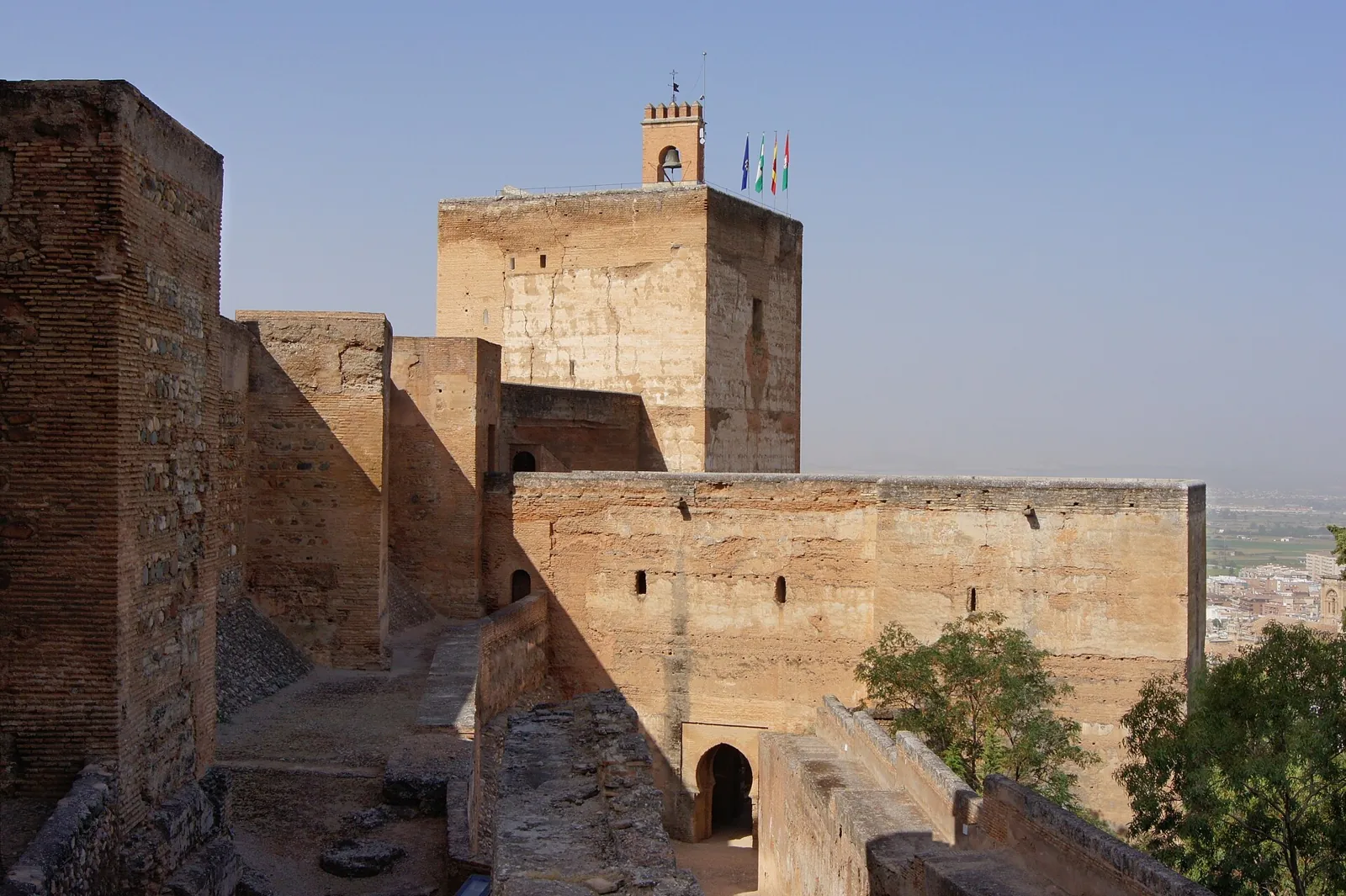
After the conquest of 1492 it became a Christian royal house, and in 1526 Charles V decided to build the palace that bears his name, which was never finished. It was later the seat of the Captain General of the Kingdom of Granada and a military fortress, then went through a long period of neglect; in 1812 the French army blew up part of the complex as it withdrew. The Romantics, with Washington Irving among them, put it back in the spotlight, and in 1870 it was declared a national monument.
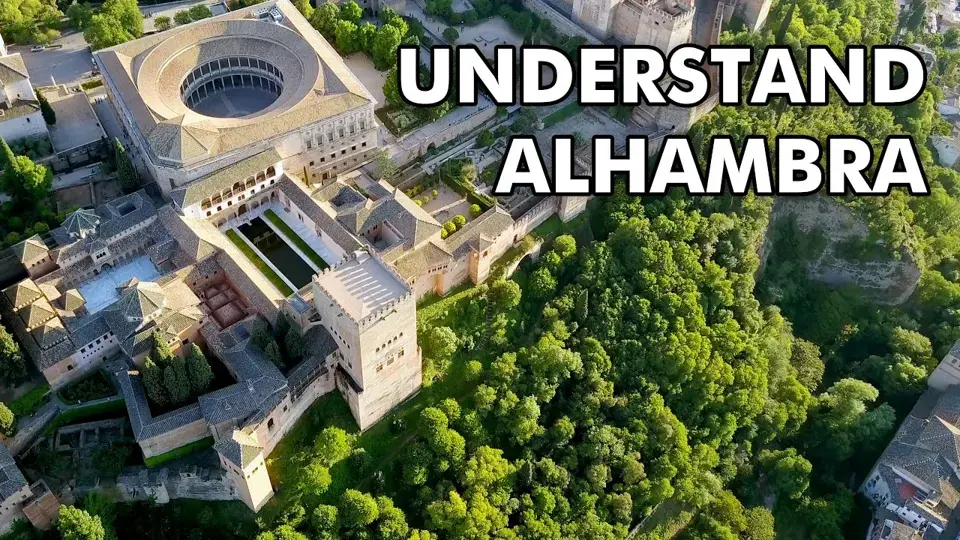
The whole story, from the hill to the palaces, in 19 minutes:
What to see: palaces, Alcazaba and Generalife
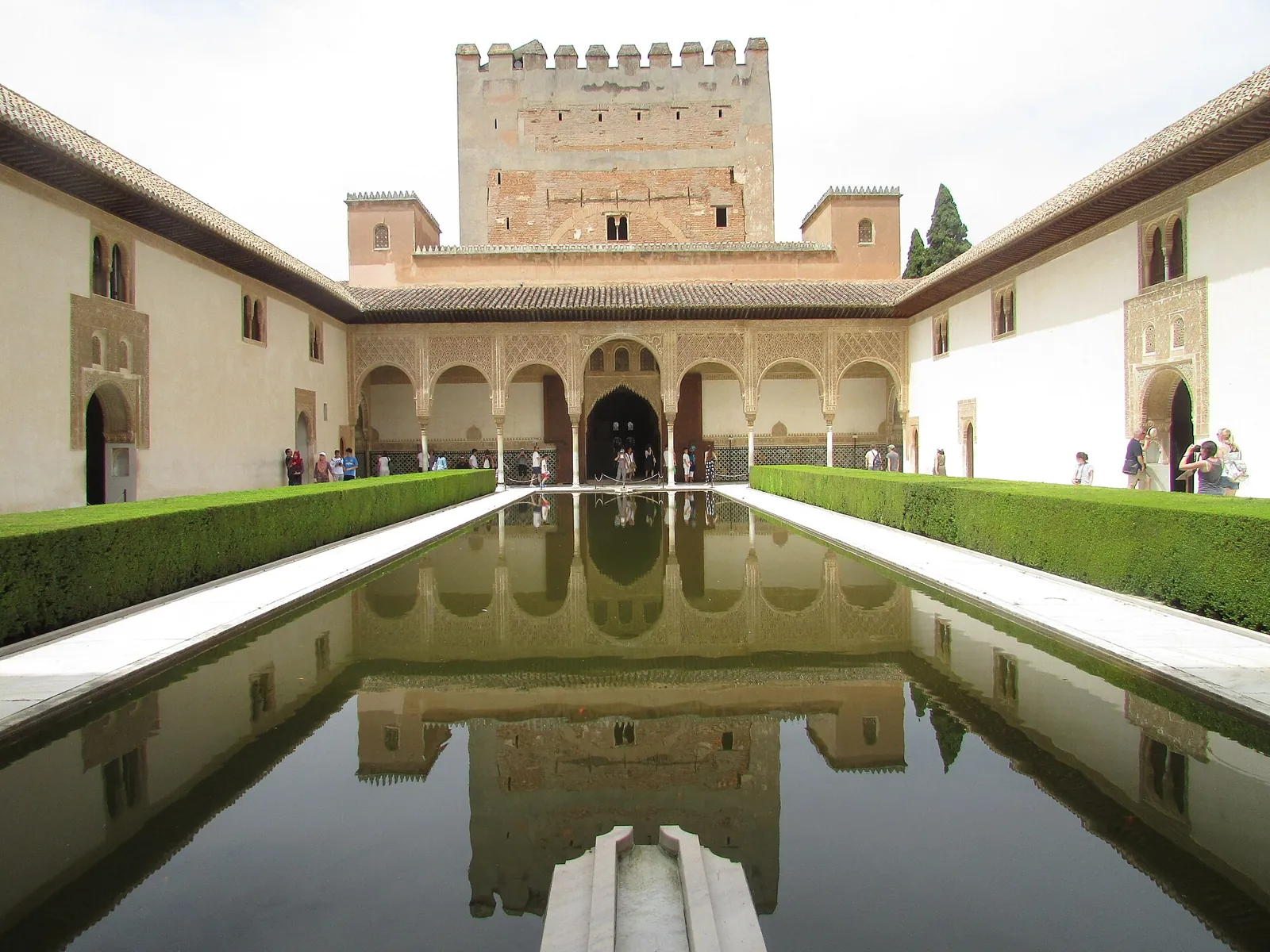
The centre of the visit is the Nasrid Palaces. You go in through the Mexuar and on to the Comares Palace, where the pool of the Court of the Myrtles reflects the Comares Tower.
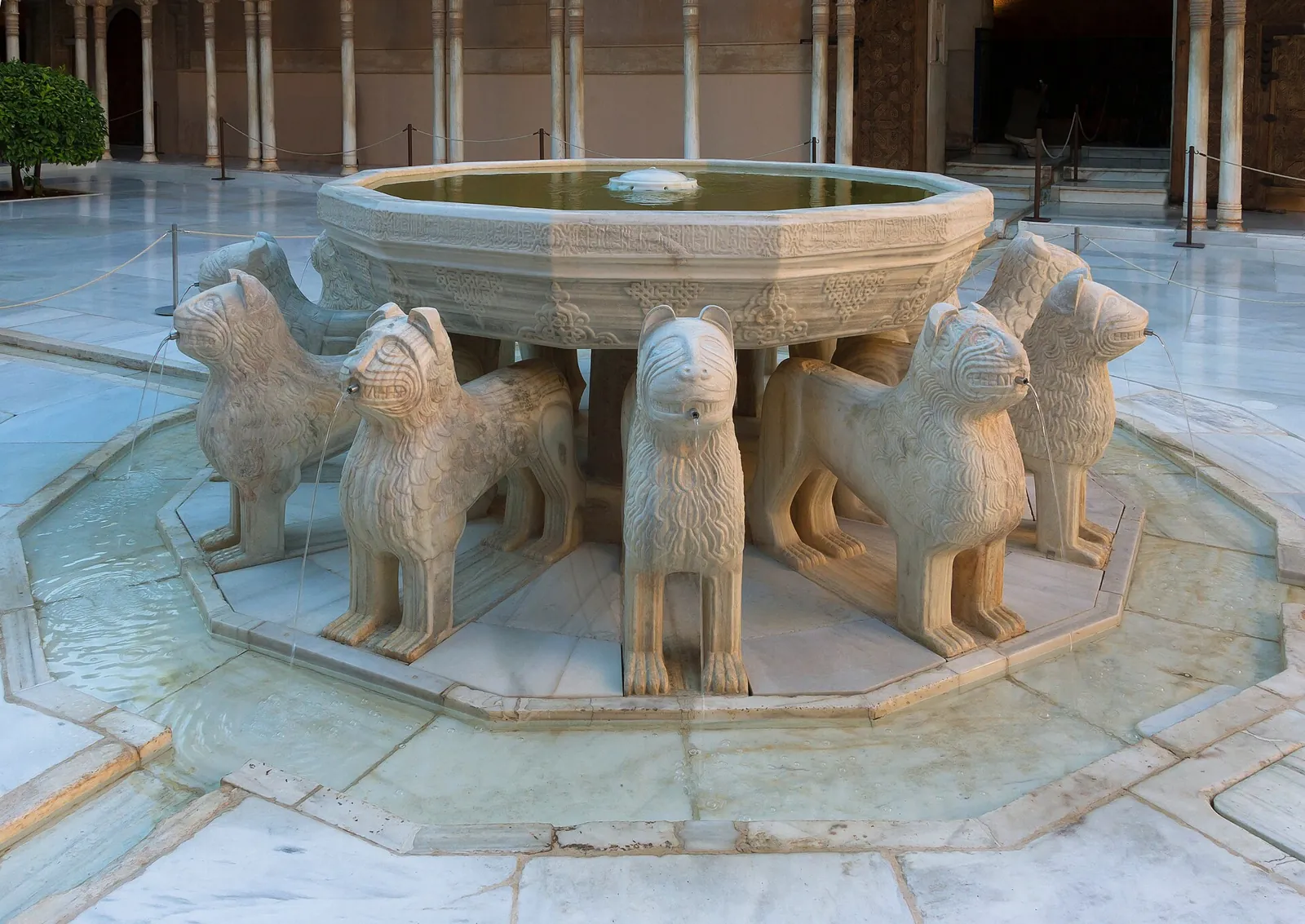
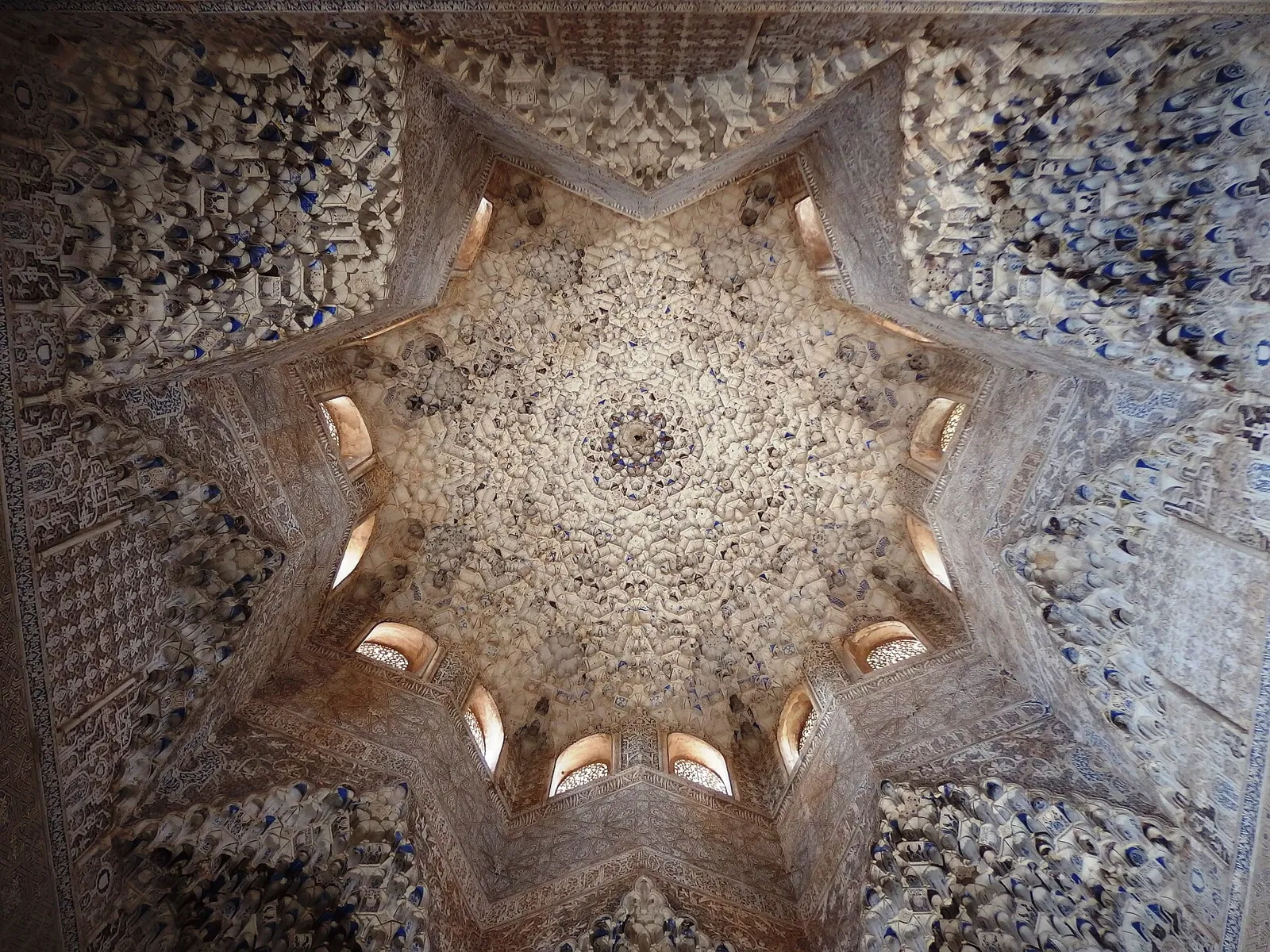
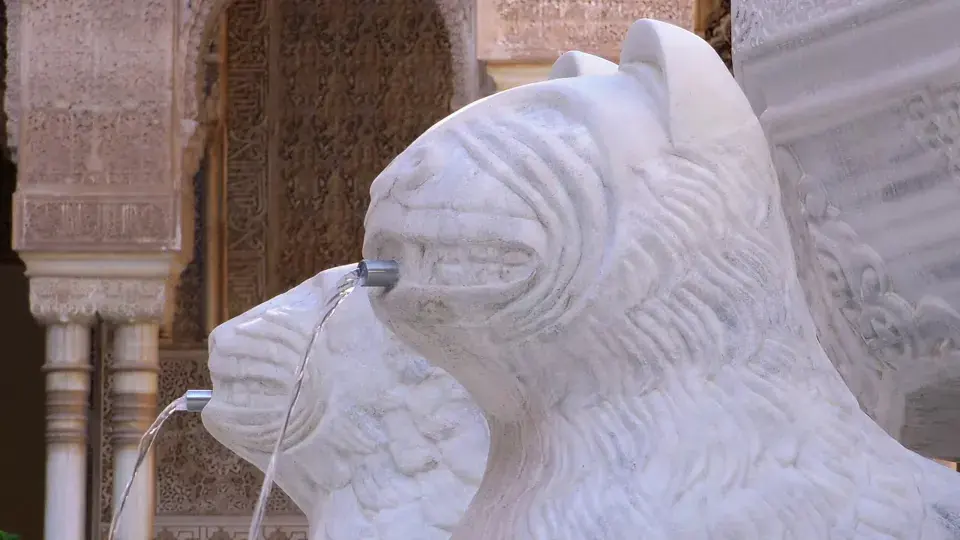
Next comes the Palace of the Lions, the great work of Muhammad V. In the middle of its courtyard is the fountain that gives it its name: a marble basin held up by 12 lions. The halls open around it, and the Hall of the Abencerrajes has a star-shaped muqarnas dome that is worth looking up at for a good while.
When you leave the palaces you reach the gardens of the Partal. The Alcazaba is the fortress: walls, the Torre de la Vela with its bell and the Jardín de los Adarves. Since 23 September it has been open again with a route adapted to safety and conservation needs, which may change.
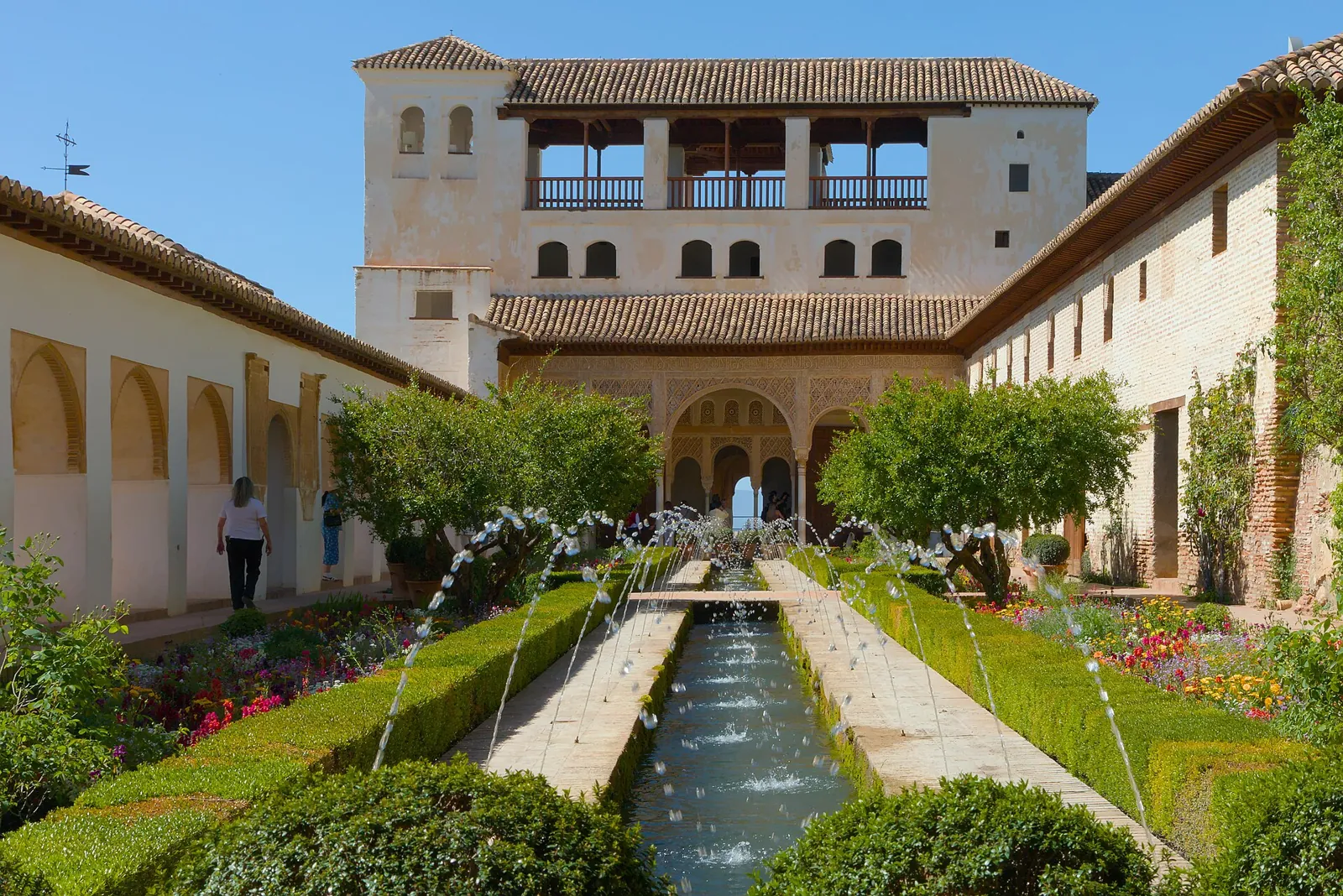
The Generalife, outside the walls, was the sultans’ country estate: gardens and palace, with the Patio de la Acequia, the Patio de la Sultana and the Water Stairway.
Next to the Nasrid Palaces stands Charles V’s Palace, with the Museum of the Alhambra inside it, free to enter. Two more stops in Andalusia with a free audio guide:
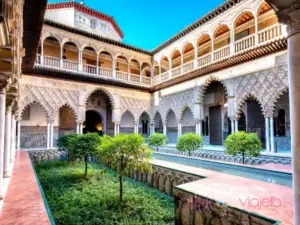 Free audio guideReal Alcázar of Seville (general)
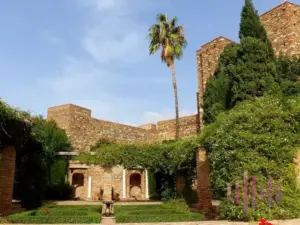 Free audio guideThe Alcazaba of Málaga
How to plan your visit
The general visit takes about 3 hours, and your Nasrid Palaces time sets the order: fit the Alcazaba, the Partal and the Generalife before or after it, with time to spare. You can go out for lunch and come back, as long as you do not repeat an area.
Backpacks and bags larger than 40 × 40 cm are not allowed in. There is a free left-luggage service with the day’s ticket at the entrance pavilion and next to the Puerta del Vino. Pushchairs cannot go into the Nasrid Palaces, the Alcazaba, the Partal, the Generalife or the Museum of the Alhambra, only along the paths between them: at the Puerta del Vino you can leave yours and borrow a baby carrier for children up to 12 kg. No tripods anywhere on the site, and no flash or selfie sticks in the Nasrid Palaces or other indoor spaces. Wear comfortable, closed shoes: there are cobblestones, uneven steps and dirt paths.
A 4-minute look at the Alhambra with Rick Steves, to get your bearings before you go:

Getting there and accessibility
The ticket offices are in the entrance pavilion, at the end of the car park (Calle Real de la Alhambra, s/n). On foot, walk up the Cuesta de Gomérez from Plaza Nueva. By city bus, line C30 links the Alhambra with the centre (Plaza Isabel la Católica) and line C32 with the Albaicín. By car you can only arrive via the Ronda Sur ring road, since private vehicles cannot drive up from the city centre.
The route has narrow rooms, steps and slopes, but there is a wheelchair route with ramps, and wheelchairs are lent at the entrance pavilion, subject to availability. Guide dogs and accredited assistance dogs are allowed.
To see the whole Alhambra from outside, cross to the Albaicín and climb to the Mirador de San Nicolás, best at sunset. A 90-second film of the whole site by Granada’s provincial tourist board, which publishes in Spanish:
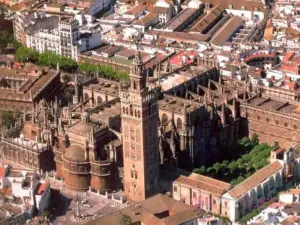
More of southern Spain with a free audio guide: Seville Cathedral, the Real Alcázar of Seville and the Alcazaba of Málaga.
Where to find it
FAQs
How do the free audio guides work?
They play right here on audioguidetravel.com, with no app to download and no sign-up. Press play and listen as you walk round: a phone and a pair of headphones are all you need. The audio streams from this page, so you’ll need mobile data or Wi-Fi.
Can I take the tour at my own pace?
Of course! You set the pace: pause whenever you like, jump back or forward 15 seconds, or tap the bar to jump to any point, and listen as many times as you want so you don’t miss a thing.
If I'm in a group, can we use the same audio guide?
Yes. The same free audio guide opens on as many phones as you like, so you can go round together as a group or with your family, each person at their own pace and with their own headphones. The quickest way is to send the link via WhatsApp, Telegram or however you like: the buttons just below let you share it right now.
Visitor information
As of 27 Oct 2026- Opening hours
- Daily 08:30-18:00 from 15 Oct to 31 Mar · 08:30-20:00 from 1 Apr to 14 Oct
- Tickets
- General €22.08 on the official website · under 12s free, with their own ticket
- Time needed
- About 3 hours
- Getting there
- On foot up the Cuesta de Gomérez from Plaza Nueva; bus C30 from the centre, C32 from the Albaicín
- Accessibility
- Wheelchair route with ramps, wheelchairs lent at the entrance pavilion; guide dogs allowed
- Tip
- Plan the day around your Nasrid Palaces time: arrive late and you lose that turn
- Official website
- www.alhambra-patronato.es
Nearby
More free audio guides in Spain
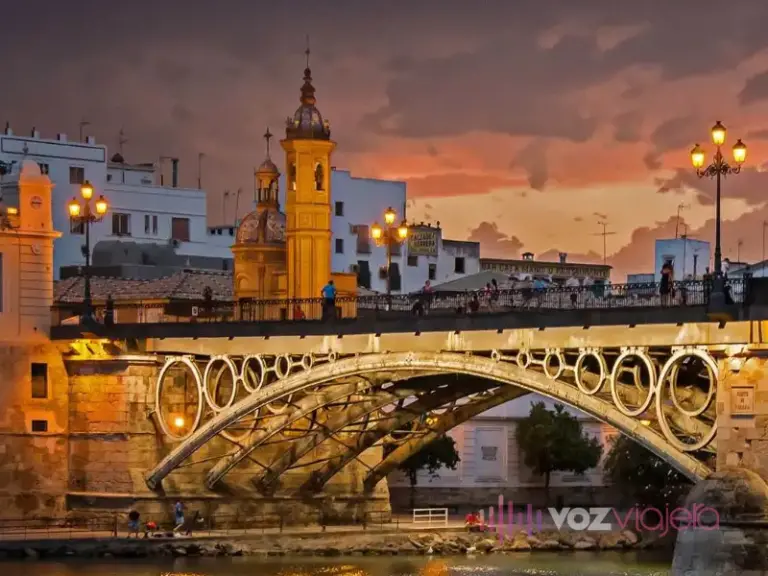 5:36SevilleTriana BridgeSeville, a city where every corner tells a story, invites you to cross the Triana Bridge or Isabel…
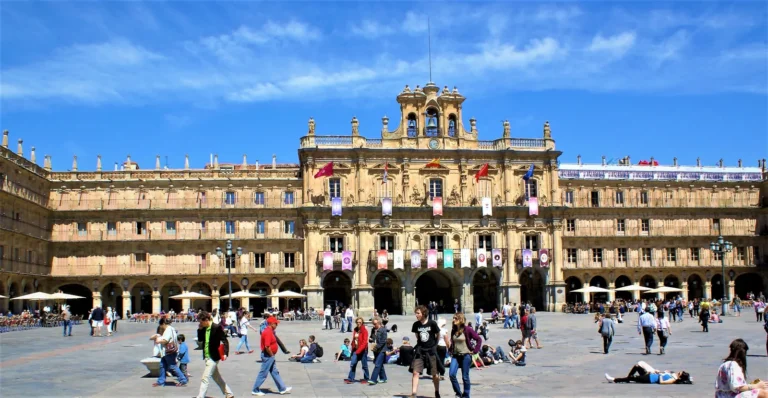 4:17SalamancaPlaza Mayor, Salamanca: free audio guide, medallions and tipsSalamanca’s Plaza Mayor is the city’s Baroque main square, built between 1729 and 1755 and ringed by 88…
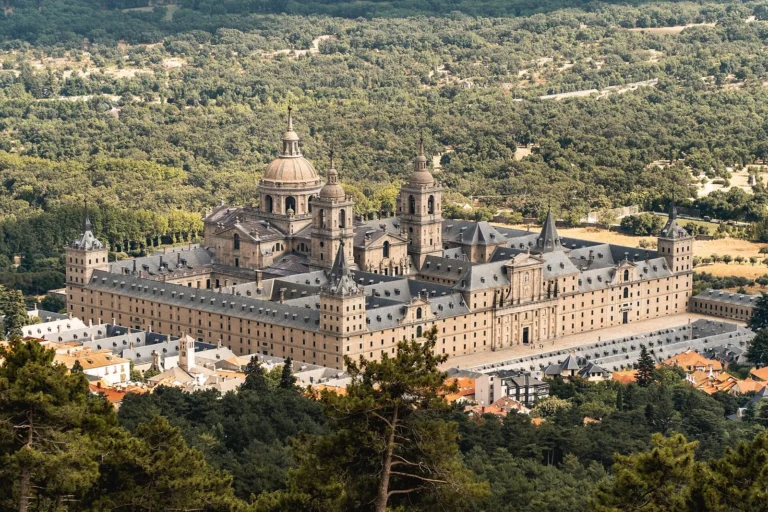 3:02MadridEl Escorial Monastery: free audio guide, tickets and opening timesThe Royal Monastery of San Lorenzo de El Escorial is Philip II’s statement in granite: a monastery, a…