
Roman Theatre of Málaga: free audio guide and opening hours
Free audio guide in English · no app, no sign-up
Free audio guide to the Roman Theatre of Málaga, in English: just under 7 minutes on how it was built, abandoned, buried and found in 1951, then a walk from the seating to the interpretation centre. It plays on this page.
 Audio guide
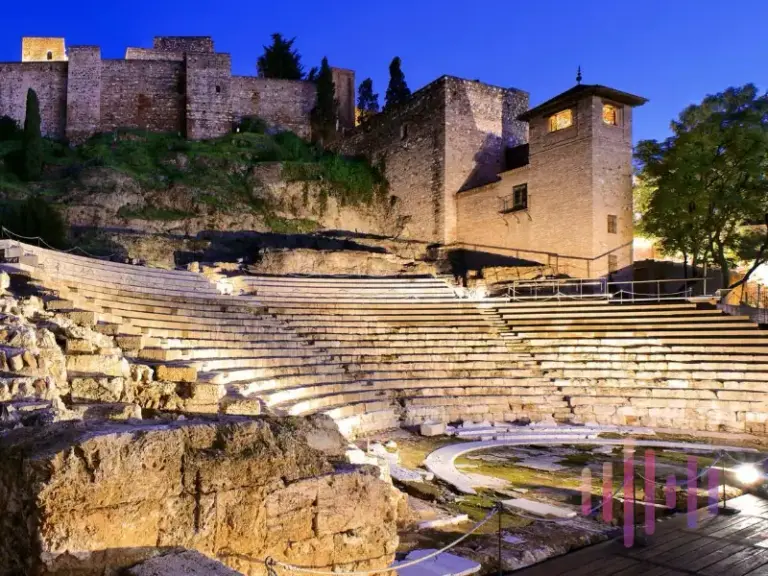
The Roman Theatre of Málaga is the main surviving building of Roman Malaca. It was built in the early 1st century AD at the foot of the Alcazaba hill, lay hidden under the city until 1951 and is now an open-air site with an interpretation centre, run by the Junta de Andalucía. Entry is free. This is its free audio guide, in English.
What the audio guide covers
It is free, plays on this page in your phone’s browser with no app and no sign-up, and lasts just under 7 minutes. The first part sets the scene: the Phoenician town of Malaka, a trading port of the western Mediterranean from the 7th and 6th centuries BC, and the Roman city that was given its great public buildings in the early Empire, the theatre among them. It tells how the theatre fell out of use, how the site became a fish-salting works and then a cemetery, and how it was found by chance in 1951.
The second part is a walk. It starts in front of the seating, turns to the orchestra and the stage, follows the wooden walkways through the site and ends in the interpretation centre. Listen as you walk; the stops below follow the order of the audio.
Points of interest the audio guide stops at:
| Point of Interest | Description |
|---|---|
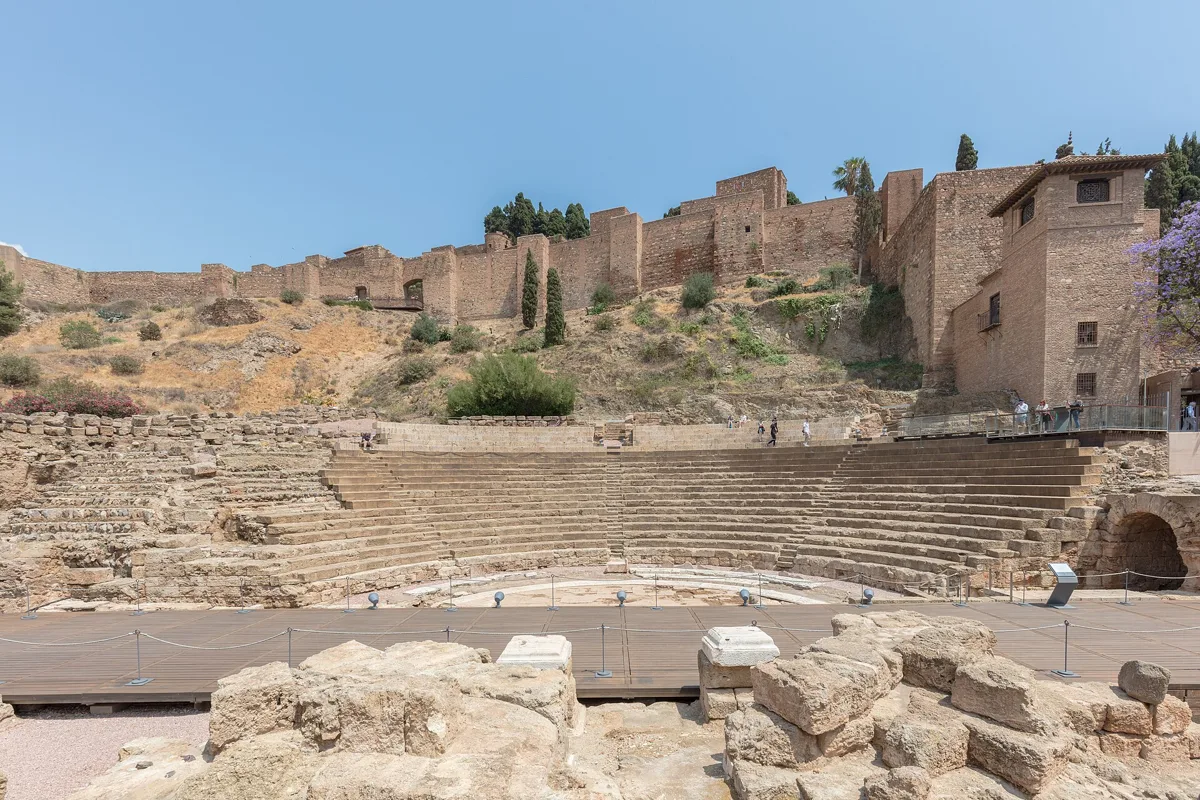
| Cavea (seating) | The tiers where the audience sat, partly set into the hillside in the Greek way and partly built up on artificial foundations. |
| Orchestra | The semicircle at the foot of the seating, kept for the leading citizens and paved with large marble slabs. |
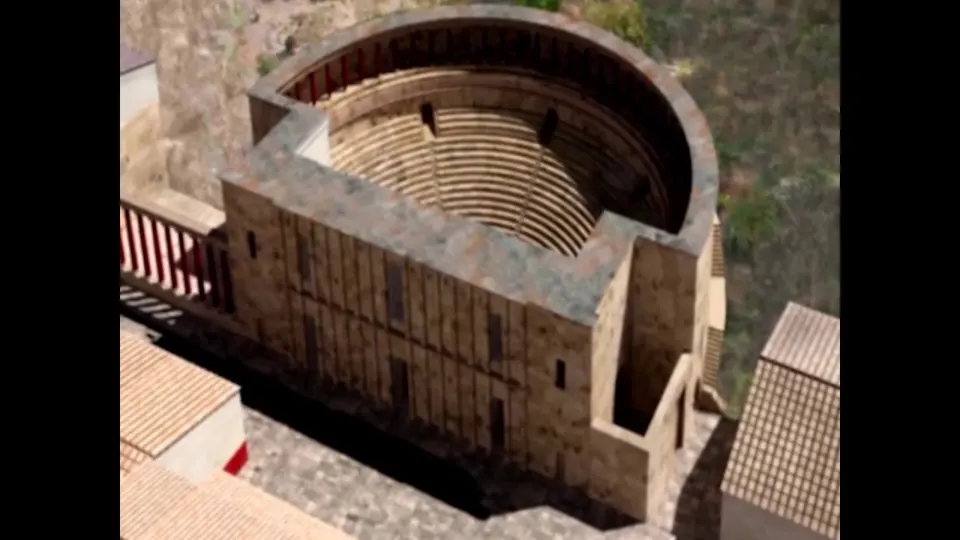
| Scaena (stage) | The raised stage, its front wall with exedras and the scaenae frons, the decorated facade that closed it at the back, with statues of emperors and gods. |
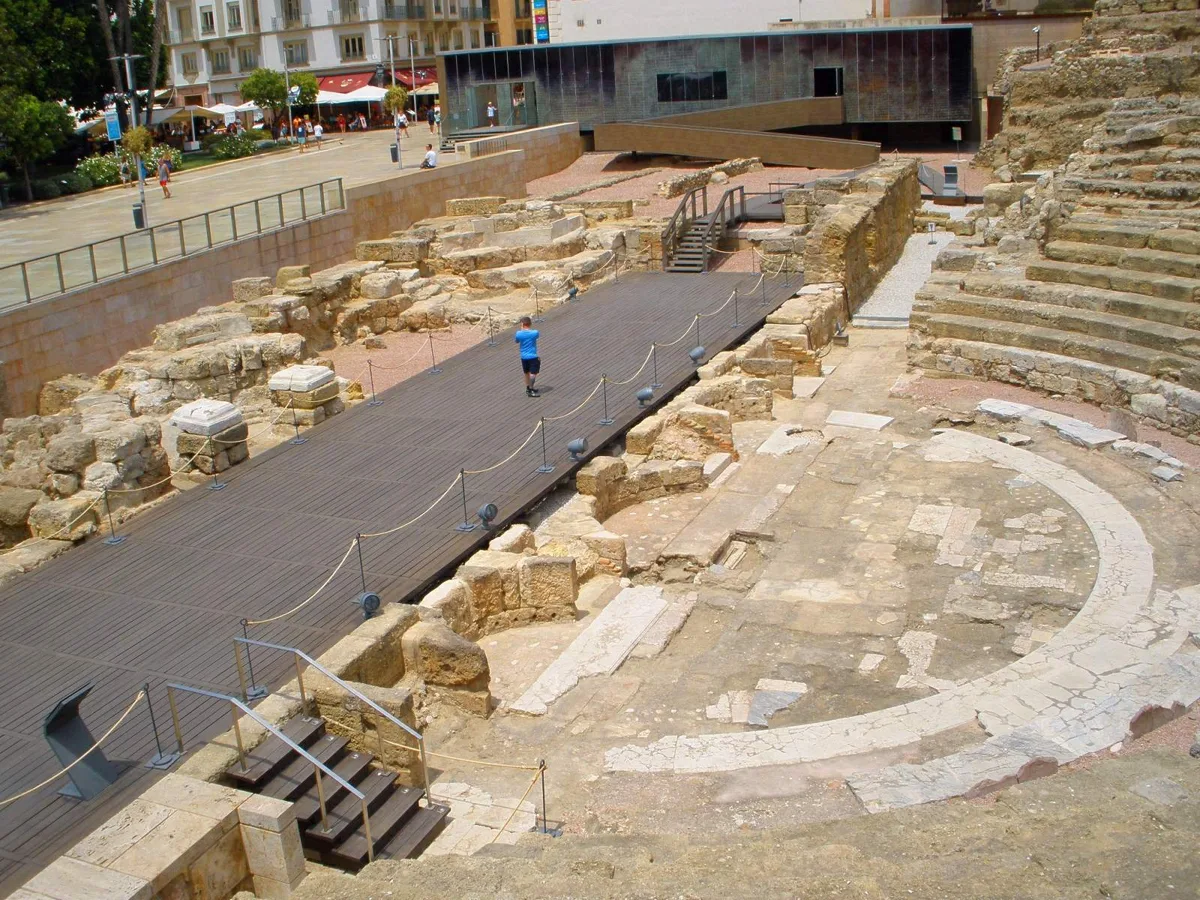
| Wooden walkways | The path across the site, and a reminder of everything it has been: a theatre, then a fish-salting works, then a cemetery. |
| Interpretation centre | The building beside the theatre that tells its history and how the site changed over the centuries. |
Two centuries of theatre, then salt fish and graves
Before the theatre, this plot held public baths of the Roman Republic, and a piece of their herringbone brick floor, opus spicatum, survives. In the early years of the 1st century AD, when Malaca was being given the public buildings of a Roman city, the baths were moved to a nearby plot and the theatre went up partly on top of them.
It is a theatre of medium size and a mixed build: a large part of the seating rests on the slope of the hill, as in Greek theatres, and the rest stands on built foundations where there was no rock. The theatre was in use for about 2 centuries. By the end of the 2nd century AD it was hardly used, and at some point in the 3rd century it was abandoned.
Then the site changed trade. After the theatre had been stripped and filled in, it was taken over by a fish-salting industry, and its basins, where garum, the fish sauce Rome prized, would also have been made, can still be seen under the glass pyramid on Calle Alcazabilla. From the 5th century the area became a cemetery: graves roofed with tiles were excavated here, and a few survive at a higher level than the theatre, west of the interpretation centre.
Found by accident in 1951
For centuries the theatre lay under the streets and houses on the slope of the Alcazaba. In 1940 the Casa de la Cultura was built on the spot, a building for the archives, libraries and museums of Málaga. In 1951, while gardens were being laid out in front of its main door, a vaulted structure came to light. At first it was taken for a gate in the city wall; then rows of steps appeared beyond the arch, and it turned out to be the vaulted entrance of a Roman theatre, its aditus maximus. The rest of the theatre was under the foundations of the Casa de la Cultura.
Decades of digging, consolidation and debate followed the find; in 1972 the theatre was declared a historic-artistic monument, and in the 1990s it was decided to pull down the Casa de la Cultura and excavate the whole plot. Calle Alcazabilla was later closed to traffic, which opened up the space in front of the monument.
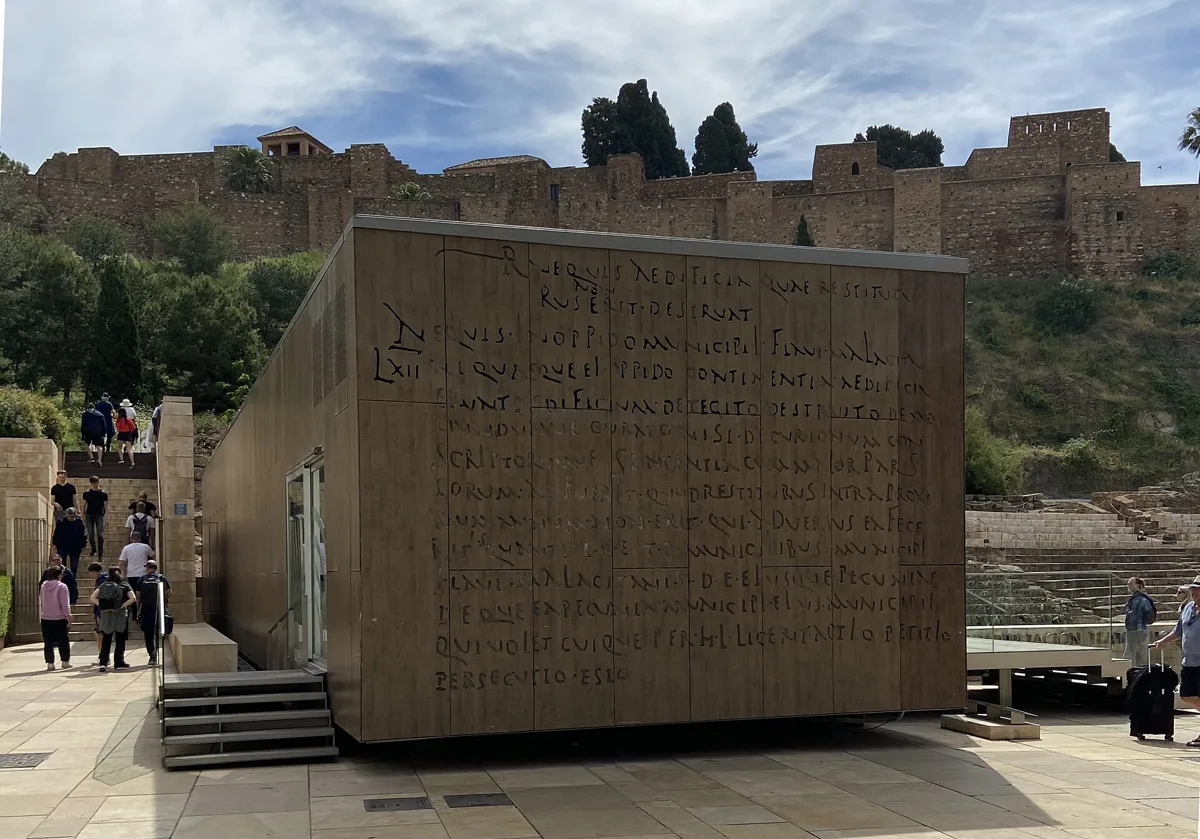
The interpretation centre opened in 2010. It is a box of steel, wood and glass by the architect Antonio Tejedor, and its outer walls carry passages of the Lex Flavia Malacitana. Inside, audiovisuals and original pieces found in the excavations introduce the Roman world and the theatre.
What to look for in the theatre
Start with the cavea. What survives is its lower and middle part. The top section, the summa cavea, has not been found, except for the stairs that led up to it; that is where the supports for the velum, the cloth awning that could shade the audience, would have stood. The seats were assigned by rank: the best for magistrates and priests, the lower tiers for the knights, and the rest of the town above them.
At the bottom is the orchestra, the semicircle where a small group of leading citizens sat on marble seats. It was paved with large marble slabs that carried on into the covered side passages. Between the orchestra and the stage runs a marble inscription from the Flavian period, carved on the marble of an earlier one: building a theatre cost a fortune, and the local elite who paid for it had their generosity recorded in stone.
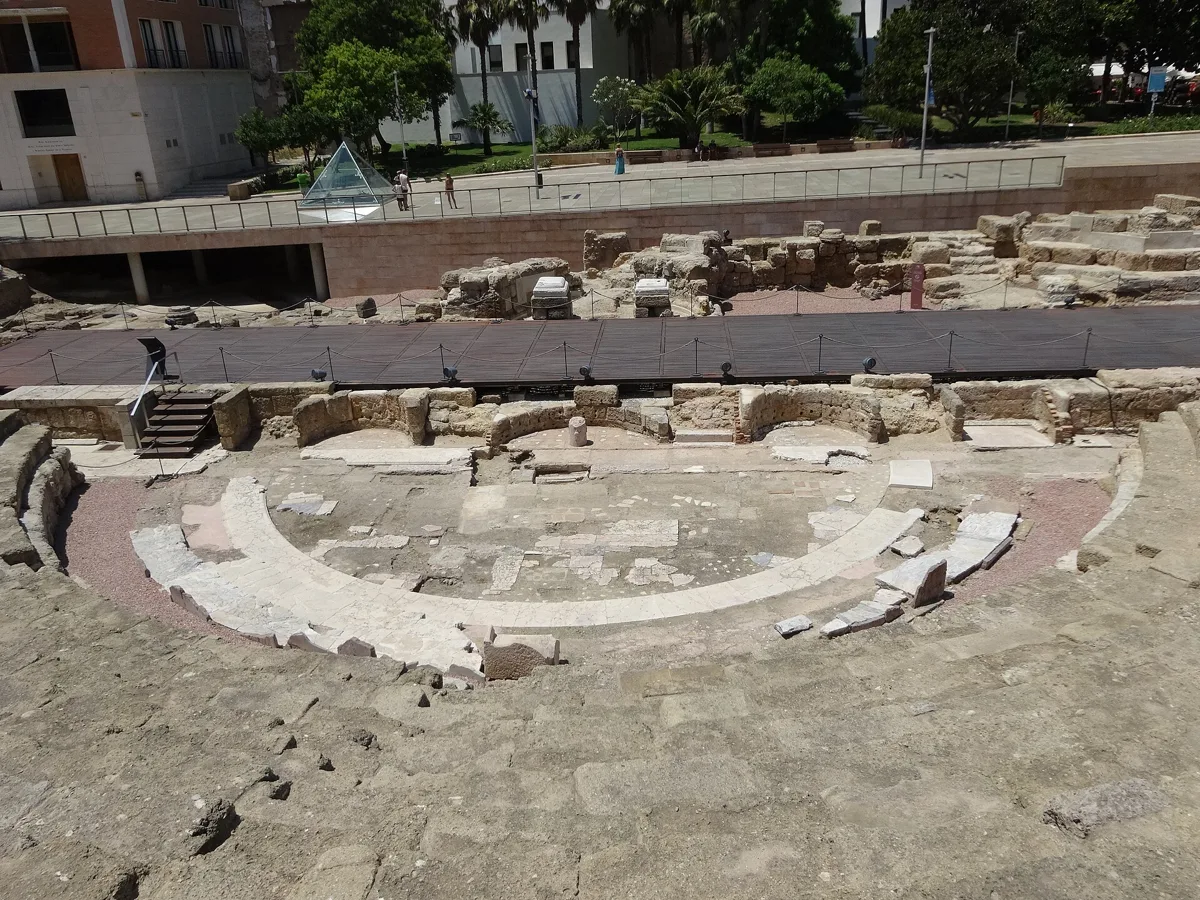
The scaena, the stage, is a wide rectangle raised above the orchestra and fronted by a low wall with exedras. Its floor has been rebuilt in wood, as it would have been when the theatre was in use. At the back stood the scaenae frons, a decorated facade with openings, columns and statues of the emperors, their family and the gods of the city; several of those sculptures have been recovered.
Opening hours, free entry and the visit
The theatre is open Tuesday to Saturday from 10:00 to 18:00 and on Sundays and holidays from 10:00 to 16:00. It is closed on Mondays. On other national, regional or local holidays the site asks you to check by email whether it opens.
The visit has 2 parts: the interpretation centre and the theatre itself, which you cross on the wooden walkways. Animals are not allowed, except assistance dogs. For step-free access, ask the site before you go: phone 951 50 11 15.
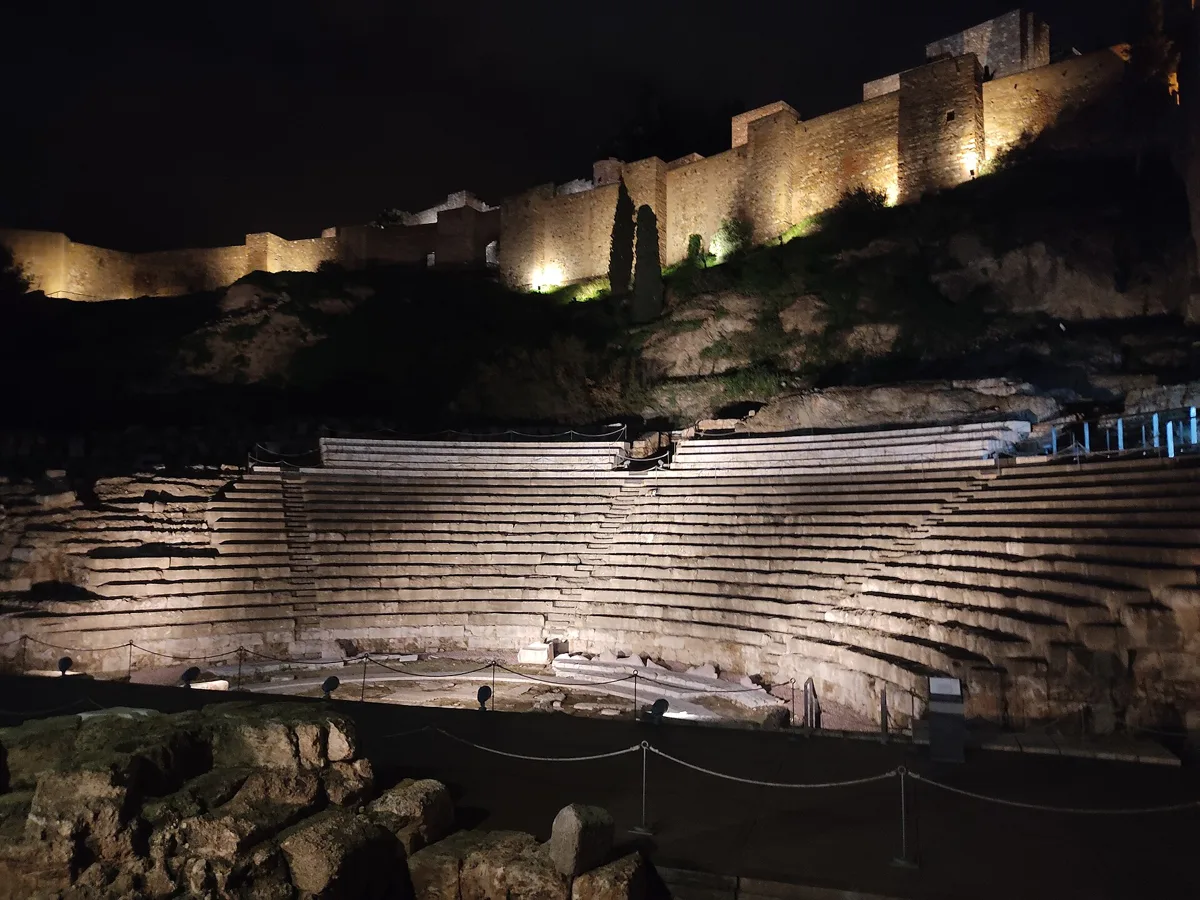
The theatre lies open beside Calle Alcazabilla, so you can also look into it from the street.
Getting there and what is next door
The theatre is on Calle Alcazabilla, in the old town, a pedestrian street at the foot of the hill. The nearest Metro stop is Atarazanas, on Line 1.
The main entrance of the Alcazaba is next door, at Calle Alcazabilla 2, and from there the fortress climbs the same hill. At the top is Gibralfaro Castle; a combined ticket for those 2 costs €10 (Málaga City Council, checked 20 October 2026). Each has its own free audio guide, and you can find all our audio guides to the city on the Málaga page.
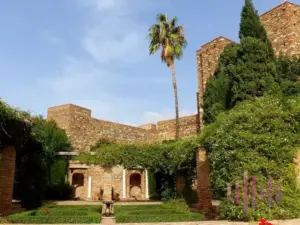 Free audio guideThe Alcazaba of Málaga
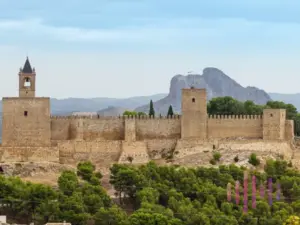 Free audio guideGibralfaro Castle
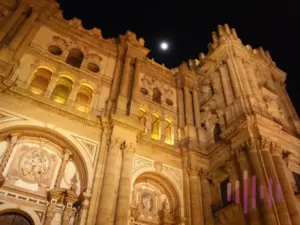 Free audio guideCathedral of the Incarnation
Where to find it
FAQs
How do the free audio guides work?
They play right here on audioguidetravel.com, with no app to download and no sign-up. Press play and listen as you walk round: a phone and a pair of headphones are all you need. The audio streams from this page, so you’ll need mobile data or Wi-Fi.
Can I take the tour at my own pace?
Of course! You set the pace: pause whenever you like, jump back or forward 15 seconds, or tap the bar to jump to any point, and listen as many times as you want so you don’t miss a thing.
If I'm in a group, can we use the same audio guide?
Yes. The same free audio guide opens on as many phones as you like, so you can go round together as a group or with your family, each person at their own pace and with their own headphones. The quickest way is to send the link via WhatsApp, Telegram or however you like: the buttons just below let you share it right now.
Visitor information
As of 24 Oct 2026- Opening hours
- Tue-Sat 10:00-18:00 · Sun and holidays 10:00-16:00 · closed Mondays
- Tickets
- Free, up to the capacity of the site; no booking needed
- Time needed
- About 30-45 min with the interpretation centre (our estimate)
- Getting there
- Old town, on pedestrian Calle Alcazabilla; nearest Metro: Atarazanas (Line 1).
- Accessibility
- You cross the site on wooden walkways; ask about step-free access on 951 50 11 15
- Tip
- Pair it with the Alcazaba: its main entrance is next door, on the same Calle Alcazabilla
- Official website
- www.juntadeandalucia.es
Nearby
More free audio guides in Malaga
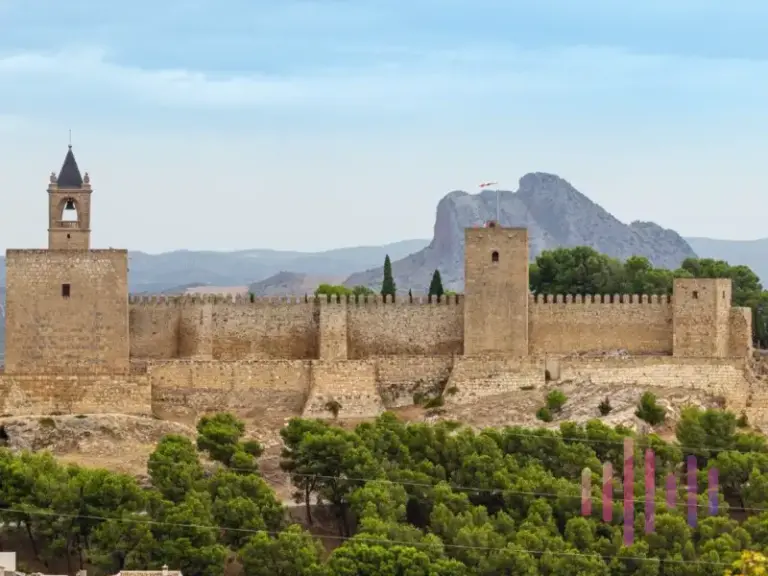 6:44MalagaGibralfaro Castle: free audio guide, hours and ticketsFree audio guide to Gibralfaro Castle in Málaga, in English: just under 7 minutes on the hill of…
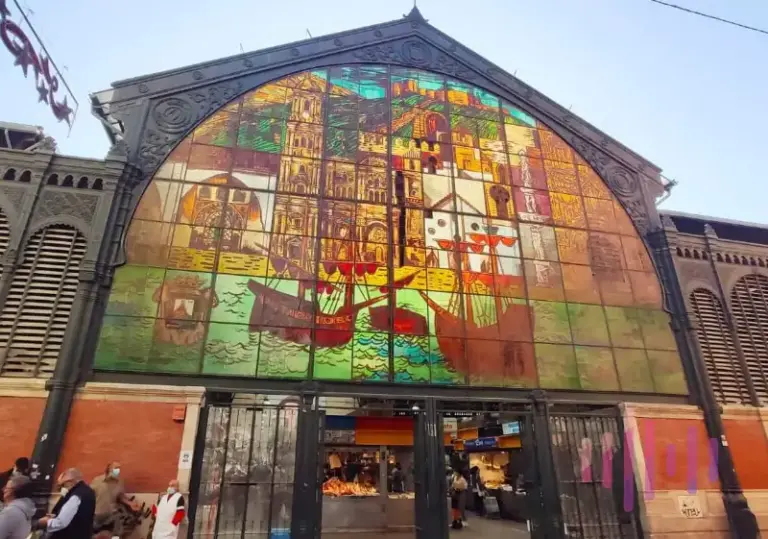 4:17MalagaCentral Market of AtarazanasIn the heart of Málaga stands the Atarazanas Market, an emblematic meeting point where history intertwines with the…
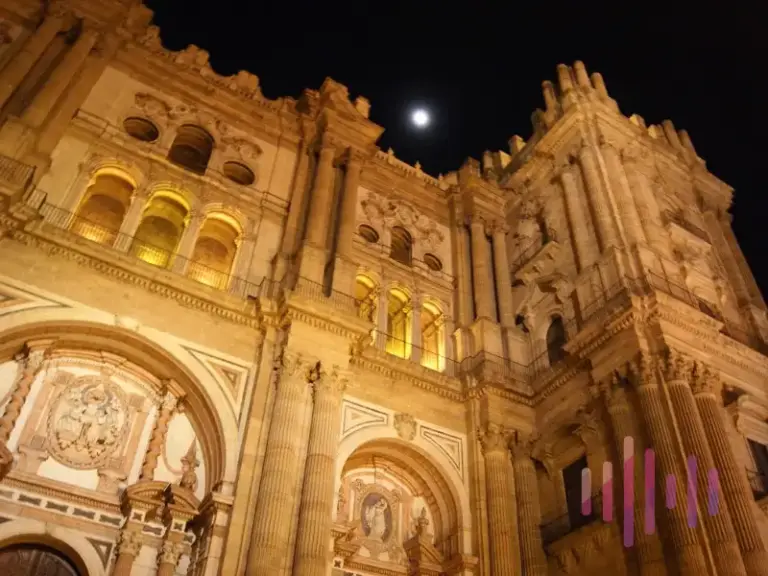 7:22MalagaCathedral of the IncarnationFree audio guide to Málaga Cathedral, the Cathedral of the Incarnation, in English: about 7 minutes on its…