
Eiffel Tower: free audio guide, opening hours and tickets
Free audio guide in English · no app, no sign-up
The Eiffel Tower is the iron tower built for the 1889 World’s Fair, 330 m tall today, with 3 levels at 57, 116 and 276 m. Lifts run 9.30am to 11pm; second floor by the stairs €14.80. This free audio guide lasts about 4 minutes and covers who designed it, the iron, the wind and why it was never taken down.
 Audio guide
Before you go in
The few things that change your visit.
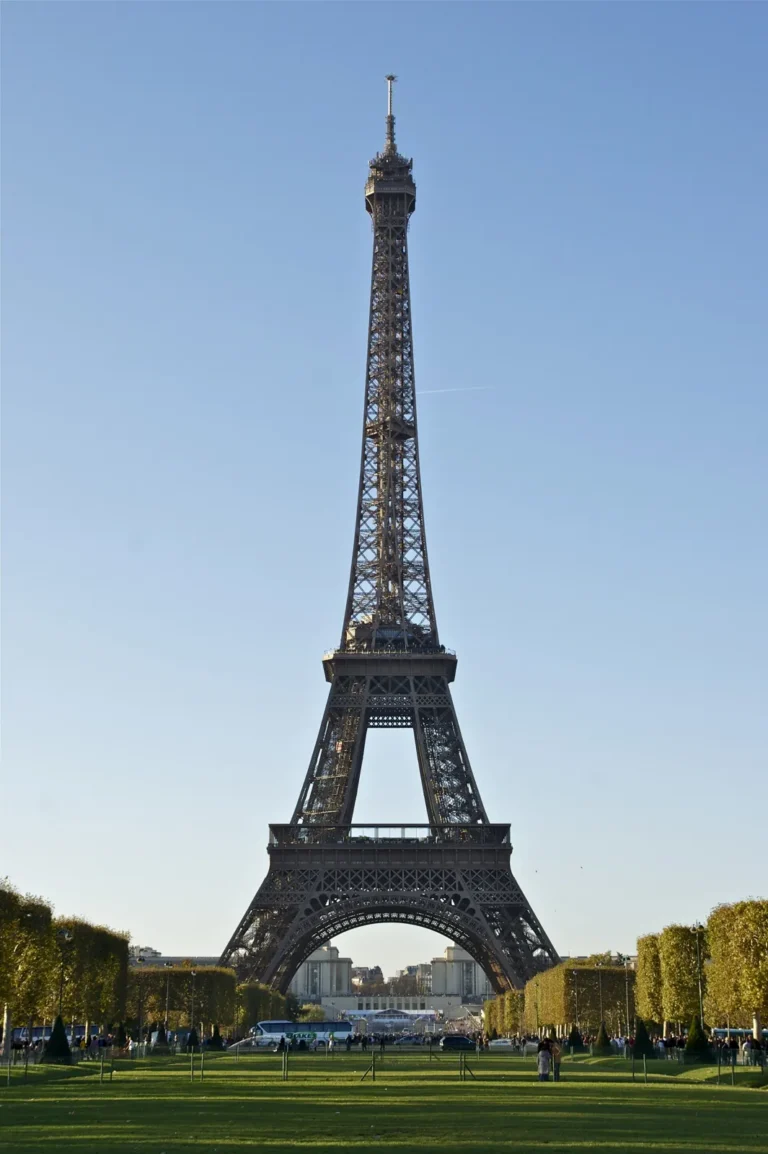
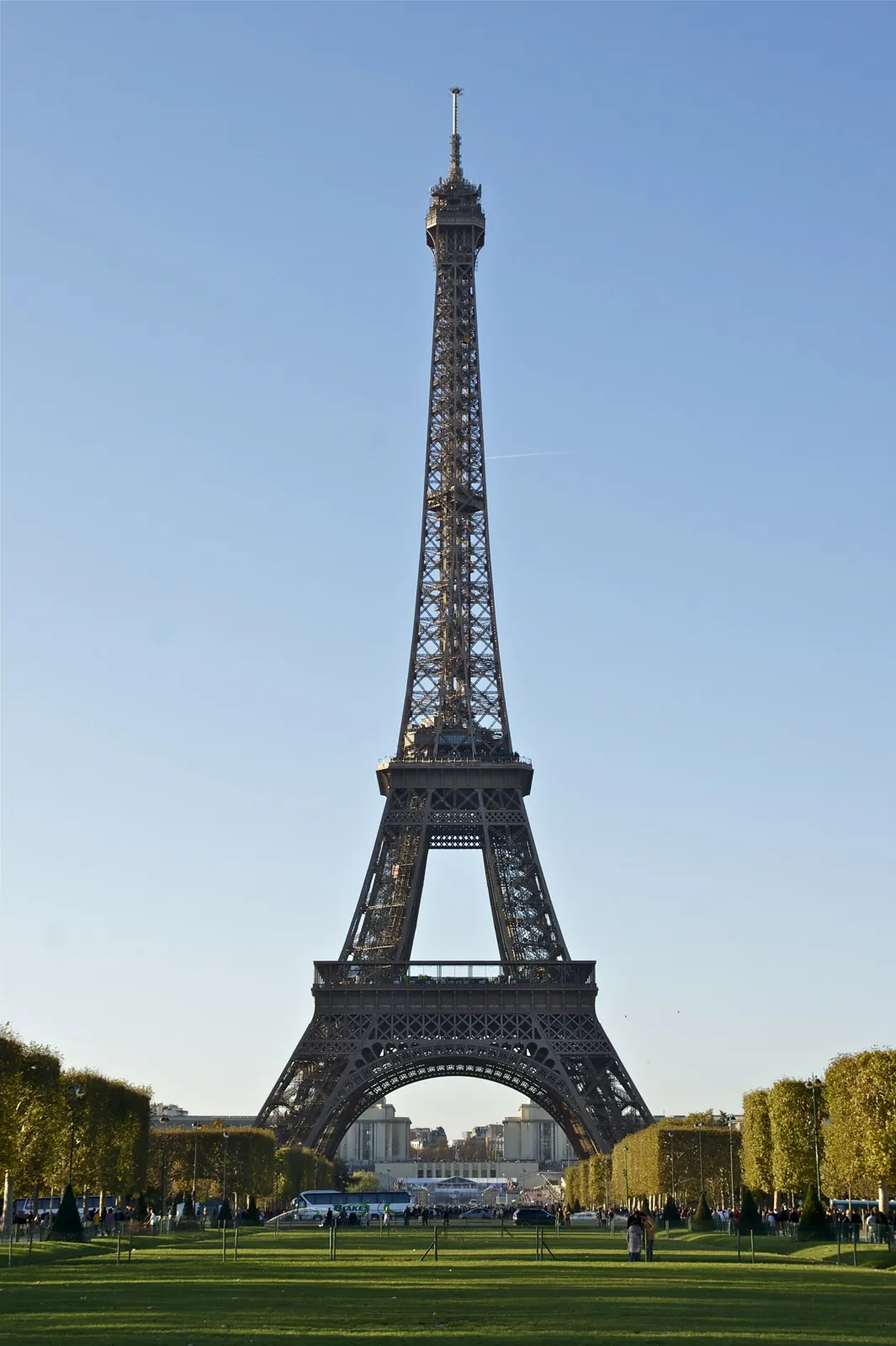
The Eiffel Tower is the iron tower that Gustave Eiffel’s company built on the banks of the Seine for the 1889 World’s Fair in Paris. It stood 312 m tall when it opened and reaches 330 m today with its antennas, and visitors can go up to 3 levels: 57, 116 and 276 m. This free audio guide lasts about 4 minutes and is made for the queue and the ride up.
What the audio guide covers
Press play while you wait at security or on the way up, and listen at your own pace. It has 6 stops:
| The 1889 commission | Why Paris wanted a 300 m tower for the World’s Fair marking 100 years since the Revolution. |
| Who really designed it | Maurice Koechlin, Émile Nouguier and Stephen Sauvestre, working for Gustave Eiffel. |
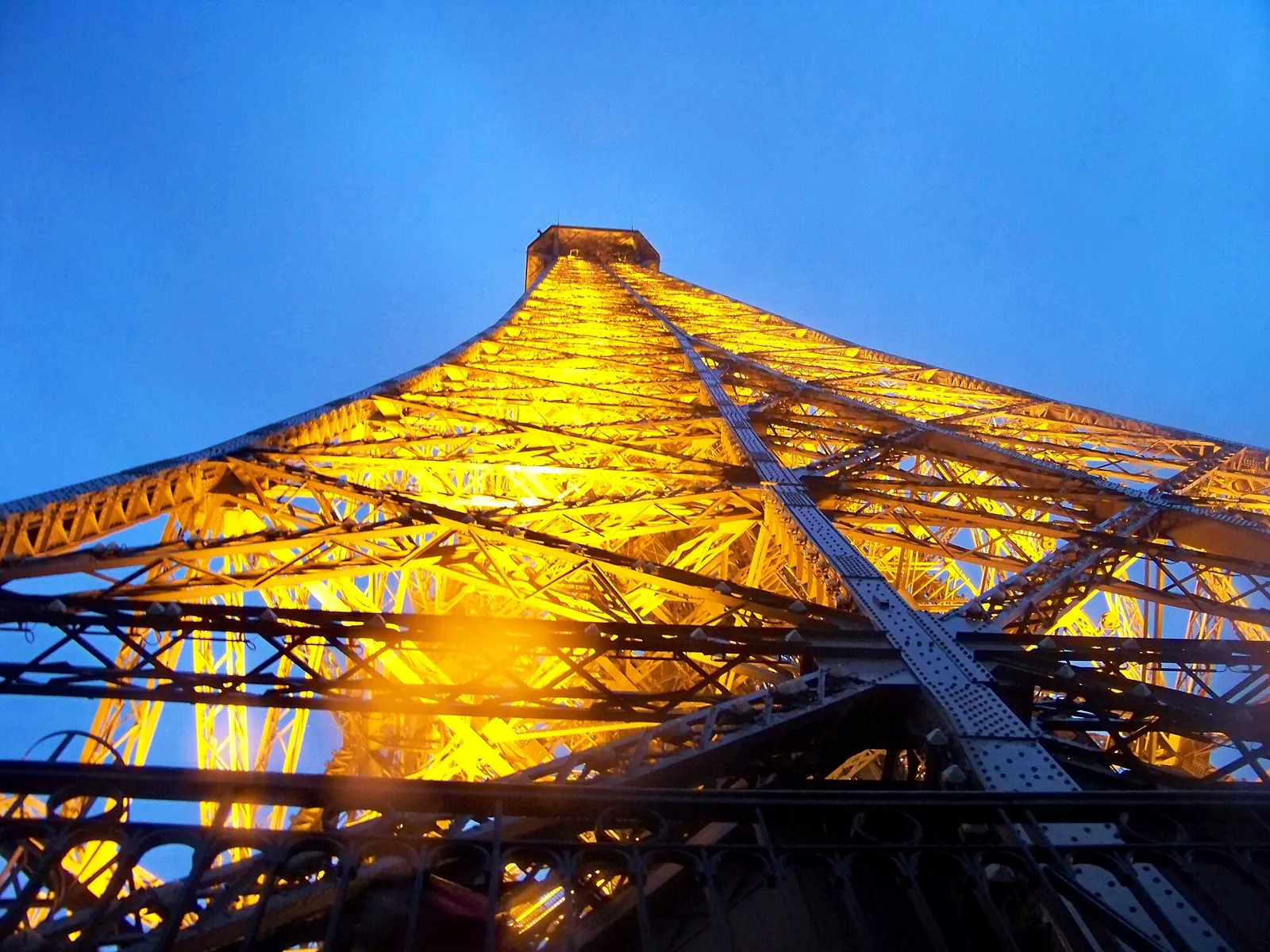
| Puddled iron and the wind | The light, strong material and the curve of the 4 legs, shaped so the wind passes through. |
| The “iron monster” | The artists who protested in 1887, and how Paris changed its mind. |
| The 3 levels | What is on each floor, and why the second is the one for picking out the city. |
| Saved by the radio | Why a tower meant to come down in 1909 is still standing. |
Put your headphones on before you join the queue: the audio covers the time between the security check and the lift, so you reach the first platform knowing what you are looking at.
Opening hours and tickets
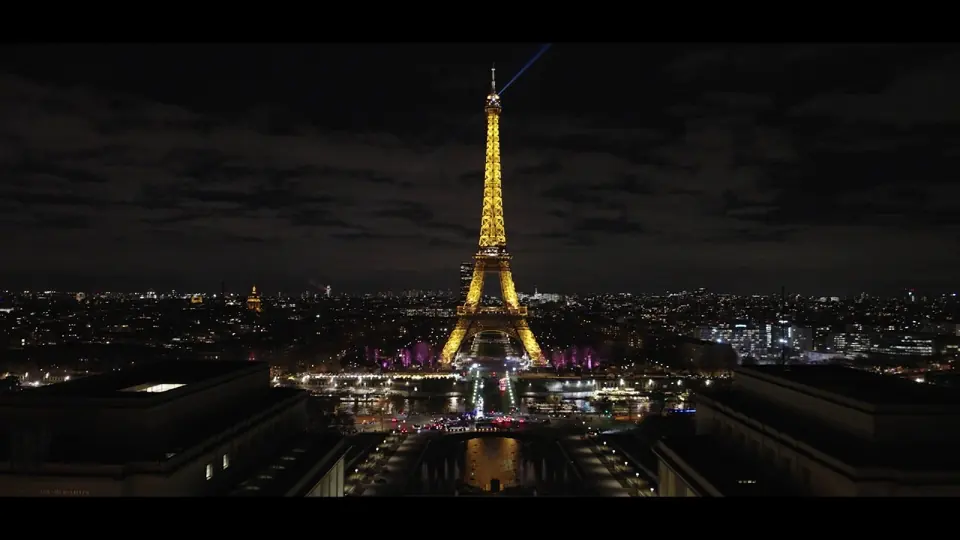
The tower is open every day of the year. In the official calendar for autumn and winter 2026, the site opens at 9.15am and the lifts run from 9.30am to 11pm, with the last access to the site at 10.45pm. The stairs close at 5.30pm from Sunday to Friday, but stay open until 10.45pm on Saturdays, on public holidays and during school holidays (until 1 November, on 10 and 11 November and from 5 to 7 December 2026). From 18 to 30 December the stairs stay open until 11.45pm and the lifts run until midnight, and on 31 December it closes at 7pm.
The price depends on how high you go and how you get there. Adult tickets:
- Second floor by the stairs: €14.80 (youth 12-24 €7.40, child 4-11 €3.80).
- Second floor by lift: €23.50 (youth €11.80, child €6).
- Top, stairs to the second floor and then the lift: €28 (youth €14, child €7).
- Top by lift: €36.70 (youth €18.40, child €9.20).
- Under 4s: free, but they still need a ticket. Disabled visitors and 1 companion pay the child rate.
Lift e-tickets go on sale up to 90 days ahead and stair e-tickets up to 60 days ahead; if nothing is left online, the ticket offices in the pillars sell tickets for an immediate visit. New prices apply to visits from 11 January 2027, so check the official rates if your trip falls after that date.
What to see, floor by floor
- The esplanade and gardens: free, no ticket needed. Standing between the 4 pillars is the best way to feel the size of the structure.
- First floor, 57 m: the largest platform, 4,415 m², with the glass floor, the exhibition space and the Madame Brasserie restaurant.
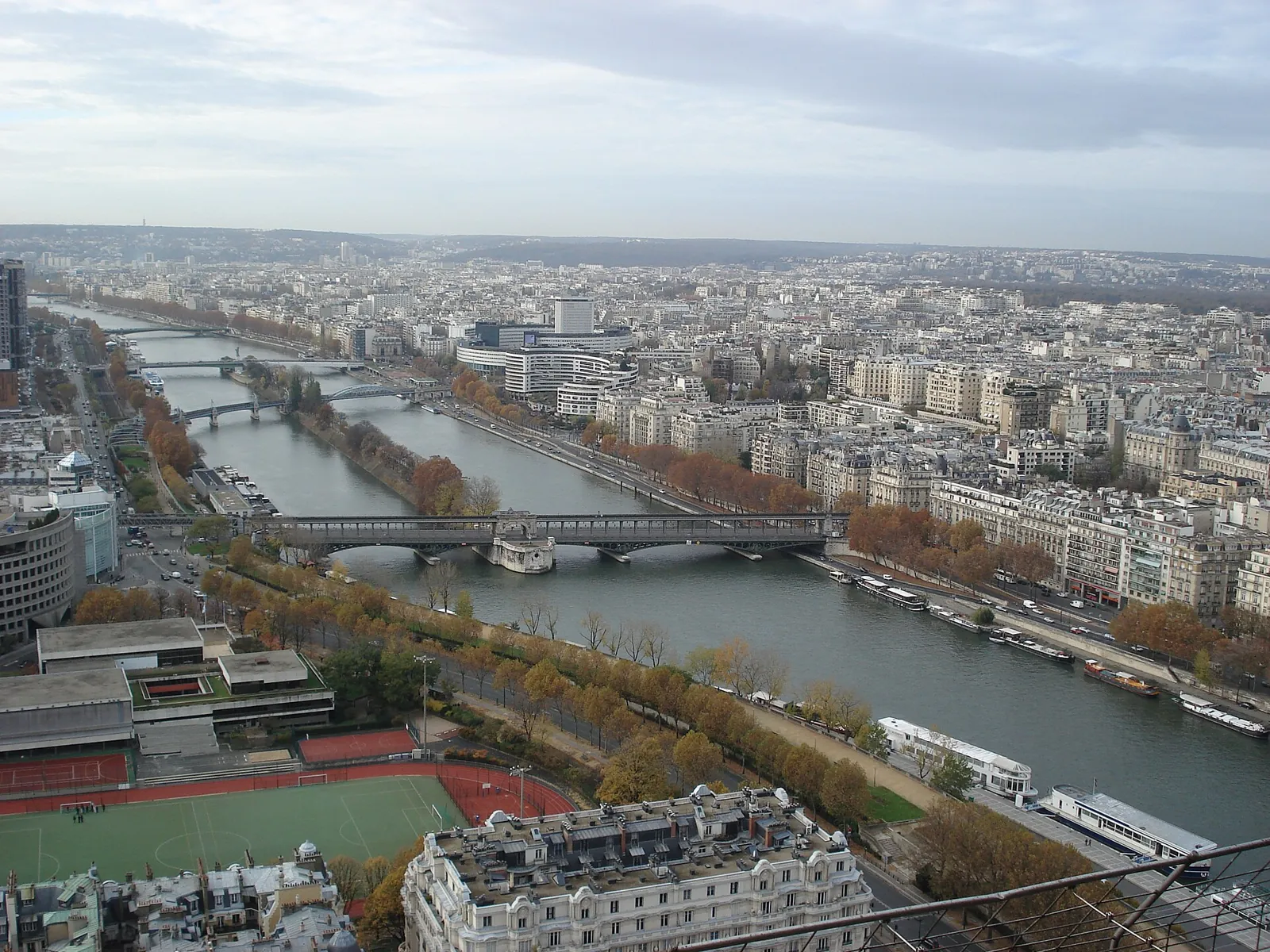
- Second floor, 116 m: 1,430 m² and the best level for picking out the monuments of Paris, because from higher up the city flattens out. Le Jules Verne restaurant is here.
- The top, 276 m: 250 m², the glassed-in platform, the champagne bar and the reconstruction of Gustave Eiffel’s office.
5 lifts carry visitors from the ground to the second floor, and 2 pairs of duo lifts go on from there to the top. The top can close at short notice because of bad weather or crowds, and on busy days you may wait on the second floor for the lift up.
The tower in 5 moments
1887-1889, a record build. Work began on 26 January 1887 and ended on 31 March 1889: 2 years, 2 months and 5 days. The idea came from 2 engineers in Eiffel’s firm, Maurice Koechlin and Émile Nouguier, and the architect Stephen Sauvestre gave it its shape. It was assembled from 18,038 iron parts and 2,500,000 rivets, and for 4 decades it was the tallest structure in the world.
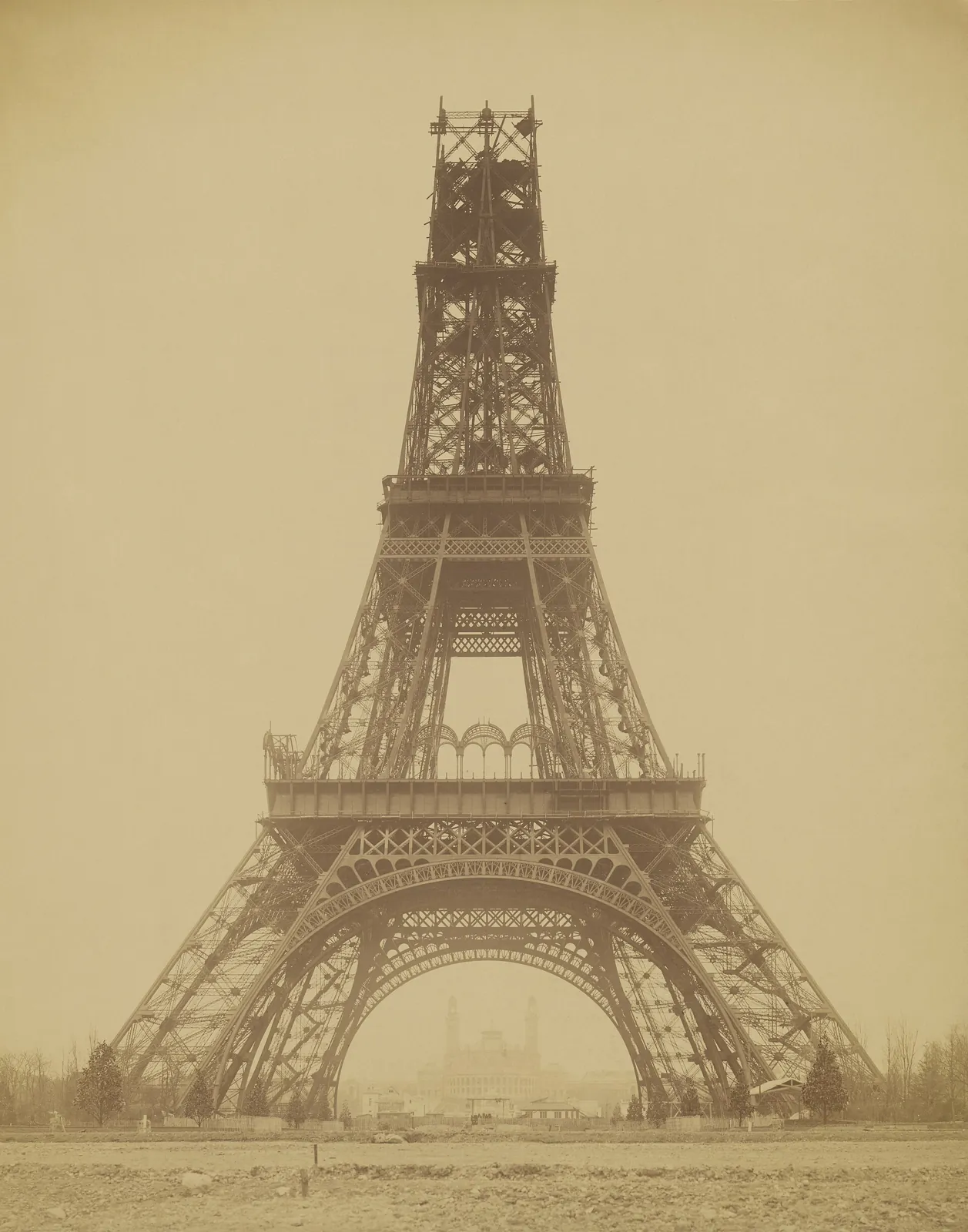
The numbers. The metal structure weighs 7,300 tonnes, 10,100 tonnes in all, on a base 125 m wide on each side. It is repainted every 7 years with 60 tonnes of paint. There are 1,665 steps from the ground to the top, but the public can only climb as far as the second floor; the spiral staircase that once ran on up to the top, 1,062 steps, was never open to visitors and was taken down in 1983.
1909, saved by the radio. The tower was built with an end date: the concession ran out in 1909 and it was due to come down. Its use as an antenna for radio saved it, and it still broadcasts.
2022, 330 m. A new radio antenna added in March 2022 took it to its current height of 330 m.
Today. More than 6.3 million people a year go up, which makes it one of the most visited ticketed monuments in the world.
Getting there, security and access
The address is Champ de Mars, 5 avenue Anatole France, 75007 Paris. The quickest ways in are Metro line 6 to Bir-Hakeim, under 10 minutes on foot from entrance 1, and the RER C to Champ de Mars – Tour Eiffel, about 5 minutes away; Metro lines 8 and 9 and buses 42 and 82 also stop nearby.
You go in through entrance 1 (south) or entrance 2 (east), where the first security check takes 10 to 20 minutes. If you have a ticket, be in the “Visitors with tickets” queue under the tower at the time printed on it, so arrive at the entrance 15 to 20 minutes earlier. The lifts have a second security check.
The esplanade, the second floor’s lower platform and the first floor are accessible for wheelchair users, with step-free access to the lifts in the West and North pillars and a lift for people with reduced mobility in the East pillar. The top and the stairs are not open to people with reduced mobility, for evacuation reasons.
Best time to go
According to the tower’s own figures, October, November, January and February are the quietest months, and the peak runs from late June to early September. Saturdays and Sundays are the busiest days; outside holidays, Tuesdays, Wednesdays and Thursdays are the calmest. Through the day, after 5pm and above all after 8pm is when the queues drop. French school holidays and long weekends bring more people: 7 to 11 November, Thanksgiving weekend (26 to 29 November) and 6 to 8 December 2026.
If you are seeing more of Paris, these audio guides are also free:
 Free audio guideNotre-Dame de Paris
 Free audio guideLouvre Museum
 Free audio guidePalais Garnier (Paris Opera House)
Where to find it
FAQs
How do the free audio guides work?
They play right here on audioguidetravel.com, with no app to download and no sign-up. Press play and listen as you walk round: a phone and a pair of headphones are all you need. The audio streams from this page, so you’ll need mobile data or Wi-Fi.
Can I take the tour at my own pace?
Of course! You set the pace: pause whenever you like, jump back or forward 15 seconds, or tap the bar to jump to any point, and listen as many times as you want so you don’t miss a thing.
If I'm in a group, can we use the same audio guide?
Yes. The same free audio guide opens on as many phones as you like, so you can go round together as a group or with your family, each person at their own pace and with their own headphones. The quickest way is to send the link via WhatsApp, Telegram or however you like: the buttons just below let you share it right now.
Visitor information
As of 12 Nov 2026- Opening hours
- Every day; lifts 9.30am–11pm, last access 10.45pm (autumn–winter 2026)
- Tickets
- 2nd floor stairs €14.80; lift €23.50; top €28 (stairs+lift) or €36.70; under 4s free
- Time needed
- Audio guide about 4 min; allow 15 to 20 min for the security check at the entrance
- Getting there
- Metro 6 Bir-Hakeim (under 10 min on foot) or RER C Champ de Mars – Tour Eiffel (5 min)
- Accessibility
- Esplanade, 1st floor and lower 2nd floor step-free by lift; top and stairs not for reduced mobility
- Tip
- Quietest Tue–Thu after 5pm; arrive 15–20 min early for security and bring ID for everyone
- Official website
- www.toureiffel.paris
Nearby
More free audio guides in Paris
 4:07ParisSainte-Chapelle: free audio guide, tickets and opening hoursThe Sainte-Chapelle is Louis IX’s Gothic chapel on the Île de la Cité, consecrated in 1248 to hold…
 5:02ParisPalace of Versailles: free audio guide, hours and ticketsThe Palace of Versailles was home to the French court from 1682 to 1789: the Royal Chapel, the…
 4:58ParisPalais Garnier (Paris Opera House): free audio guide, hours and ticketsThe Palais Garnier is the Paris opera house Charles Garnier built between 1861 and 1875. You tour it…