Chiesa Santissima Annunziata dei Catalani: free audio guide
Free audio guide in English · no app, no sign-up
Free audio guide to the Santissima Annunziata dei Catalani in Messina, in English: 4 minutes on the Arab-Norman church that survived the 1908 earthquake, its apse, its dome and the Catalan merchants who gave it its name. It plays on this page.
 Audio guide
The Santissima Annunziata dei Catalani is a small Arab-Norman church in the centre of Messina, built between 1150 and 1200 and one of the few buildings in the city that came through the earthquake of 1908. This free audio guide plays on this page, from your phone’s browser, with no app and no sign-up, and lasts 4 minutes.
What the audio guide covers
The audio starts with the legends about what stood here before the church, runs through the people who used it over the centuries and then points you to the stonework of the apse and the dome. Start it on the pavement by the railings and walk round to the apse when it gets to the architecture. The stops in the table follow the order of the audio.
| Stop | What it tells you |
|---|---|
| Welcome | Where the church is, between Via Cesare Battisti and Via Garibaldi, and its popular name, the Church of the Catalans. |
| Before the church | The tradition of an ancient temple on this spot and of a mosque in the time of the Emirate of Sicily. |
| Normans and Dominicans | The remodelling under William II in Norman style and the arrival of the Dominican friars in the 13th century. |
| Royal chapel and Catalan merchants | The royal chapel of the Aragonese kings, the brotherhood of the merchants and the Theatine fathers in the 16th century. |
| The architecture | Byzantine, Romanesque, Arab and Gothic in one building: the apse, the small dome, the blind arches and the narrow windows. |
| The paintings | Polidoro da Caravaggio’s Way to Calvary and the Annunciation with Saint Eulalia, patron saint of Barcelona. |
| Tips and a last curiosity | Dress for a place of worship, the weddings held here and the street raised 3 metres by the rubble of 1908. |
A Norman church that came through 1908
On 28 December 1908 an earthquake flattened most of Messina. The Church of the Catalans stayed standing, damaged but with its medieval shape intact, and that is why it now looks so out of place: an Arab-Norman church in a city that was rebuilt in the 20th century. The rubble was levelled out around it, so the street rose by about 3 metres and the church was left lower than the pavement, wedged between buildings that went up on top of the debris.
The city’s tourism office dates it to between 1150 and 1200 and says it was raised on the remains of a classical temple dedicated to Neptune. In the 13th century another earthquake shortened it, and the front was rebuilt further back.
The outside: the apse, the dome and the inlays
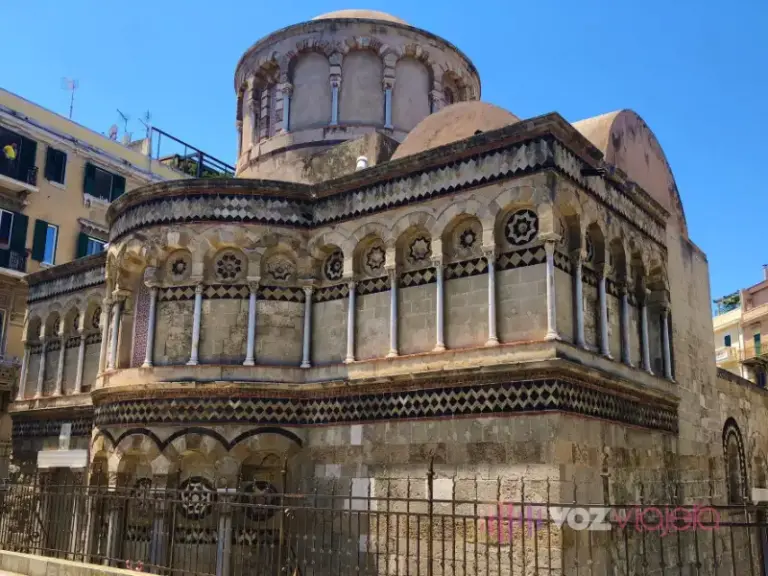
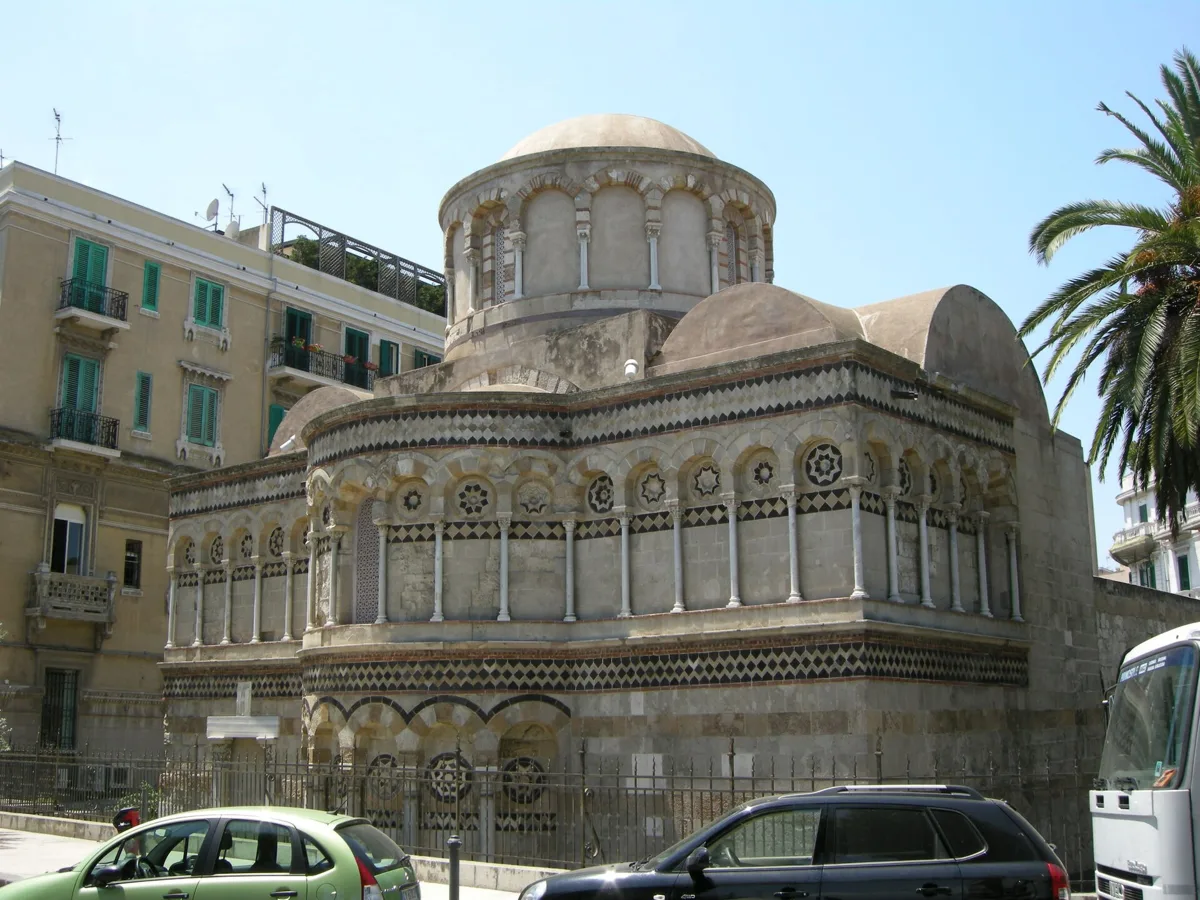
Stand at the back and look up. Over the crossing of the nave and the transept rises a dome on a drum, a Byzantine touch, ringed with small blind arches resting on slender columns. Below it the apse is wrapped in bands of the same arches, and between them run inlays of dark and pale stone that form rosettes and zigzag bands.
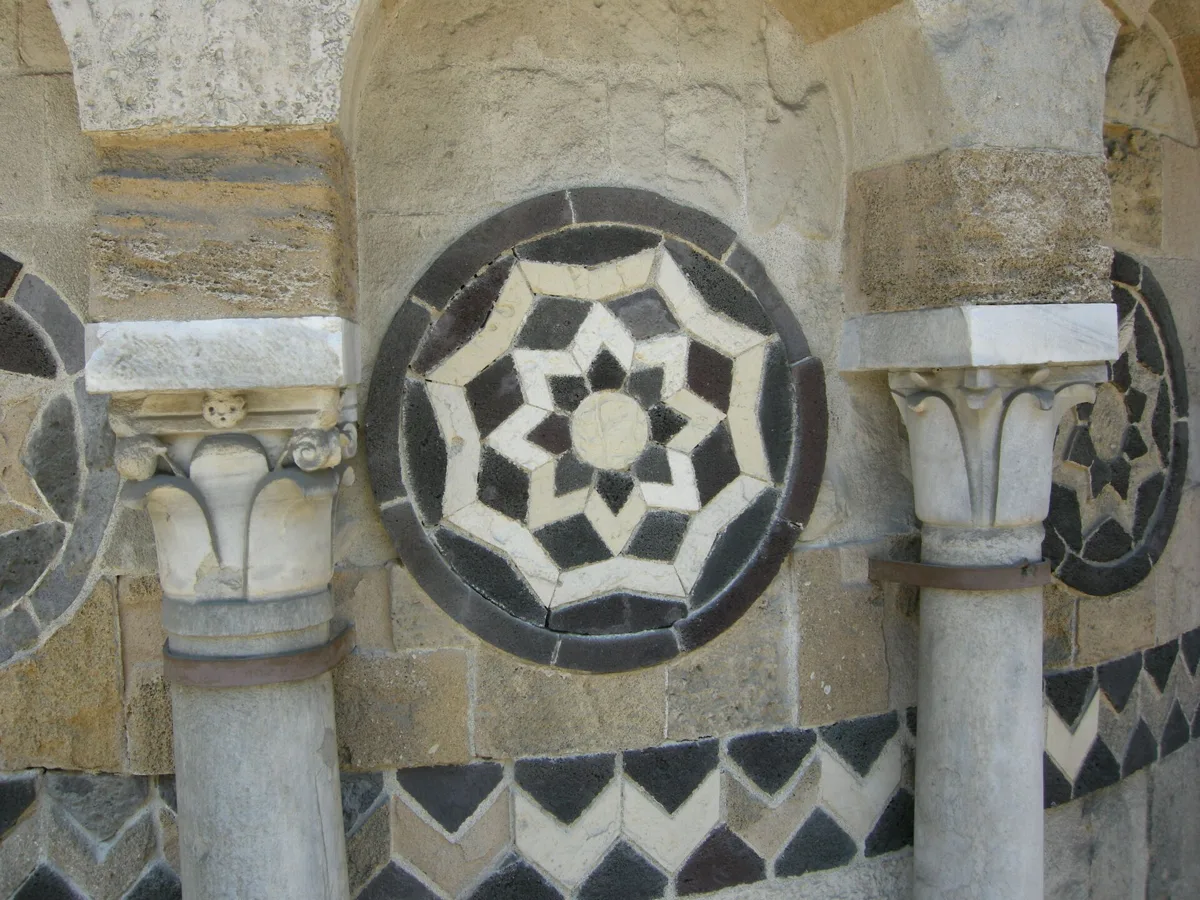
The doorways at the front are decorated in the same Arab-Norman style. The city’s tourism office sums up the building as a mix of Latin, Byzantine and Arab cultures, and the stonework of the apse is the best place to look for that mix.
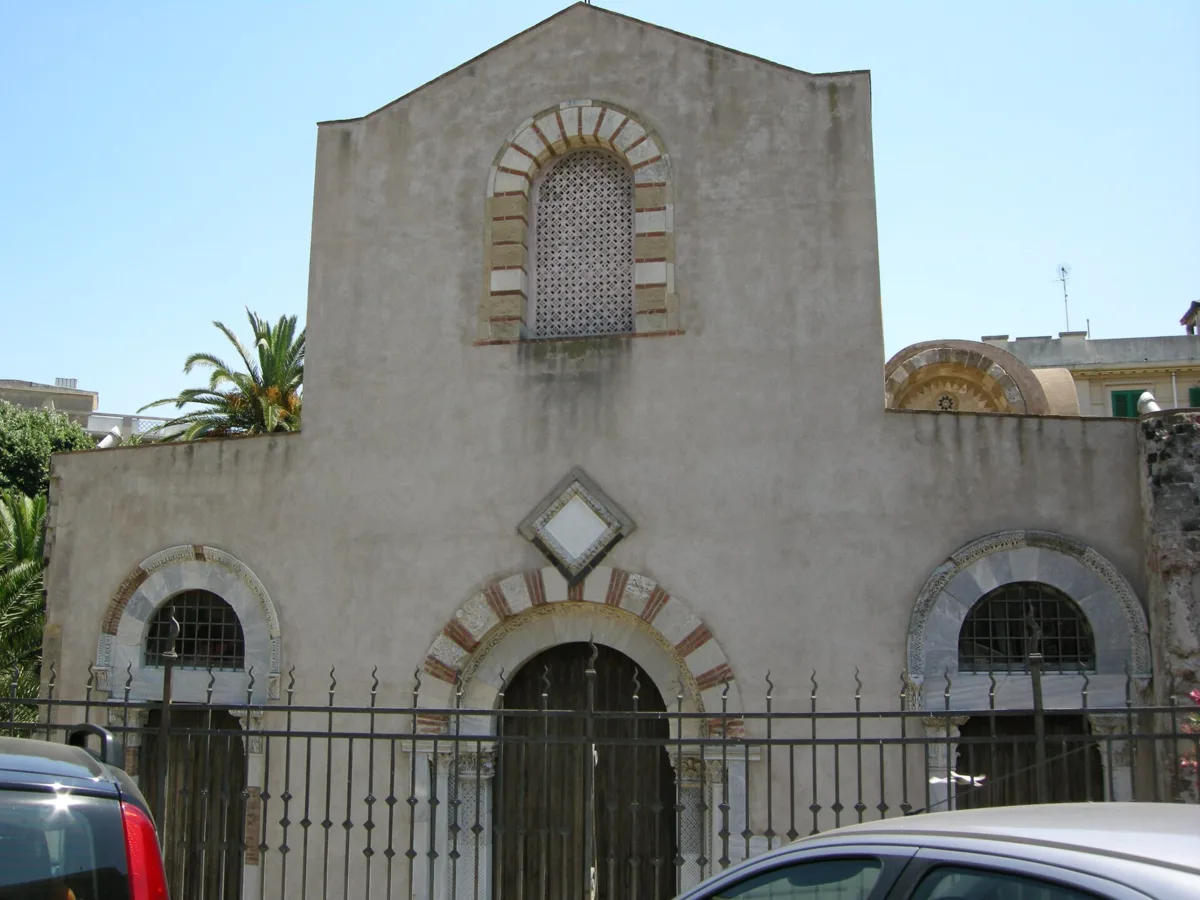
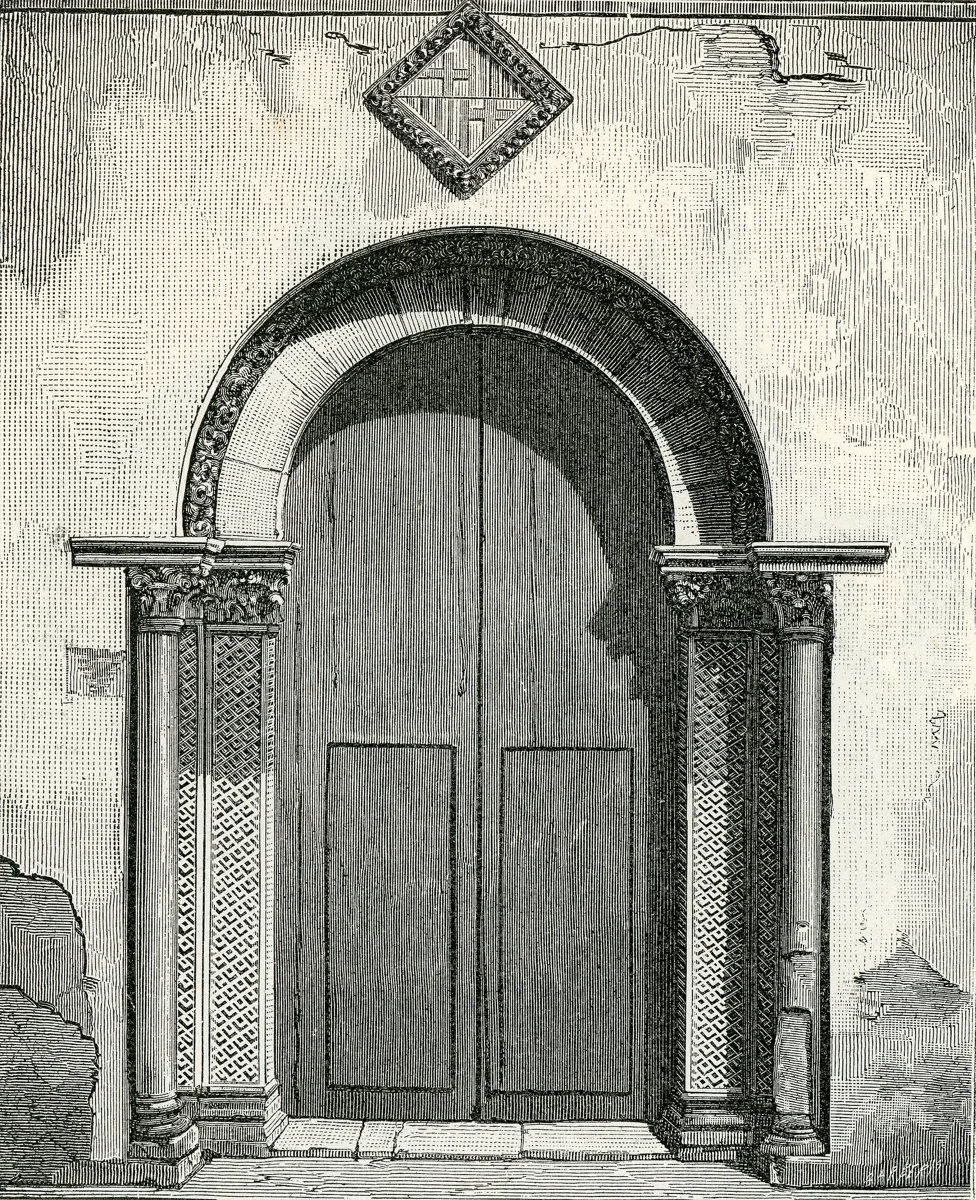
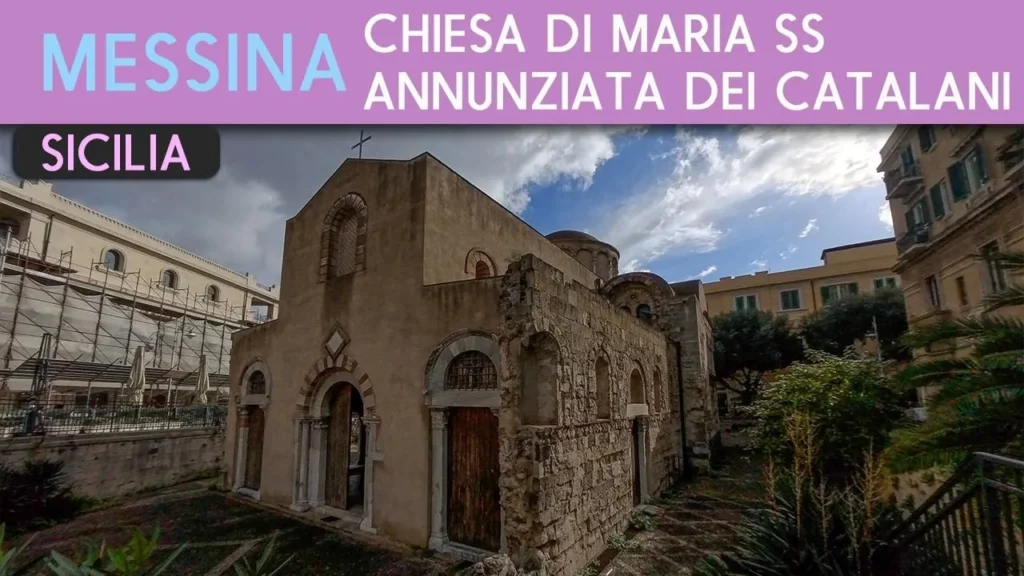
Then come back to the front. It is plain compared with the apse: 3 arched doorways with bands of stone round them and, above the middle one, a small diamond-shaped window. The railings keep you a few metres away, but from the pavement you are looking down on the doorways, and that drop is the clearest sign of how much the ground rose after 1908. The woodcut below shows one of its doorways as it was drawn in 1892, before the rubble came.
Inside: striped arches and lava-stone columns
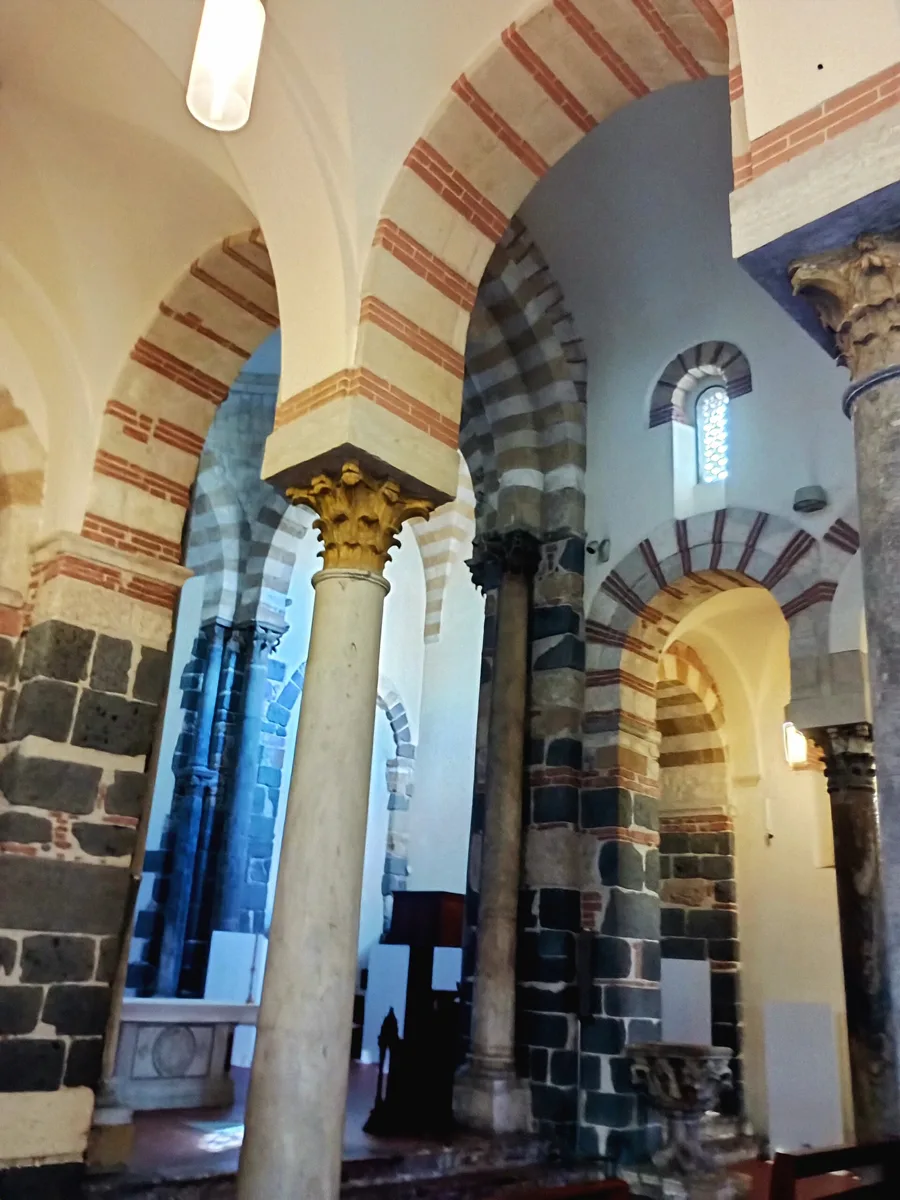
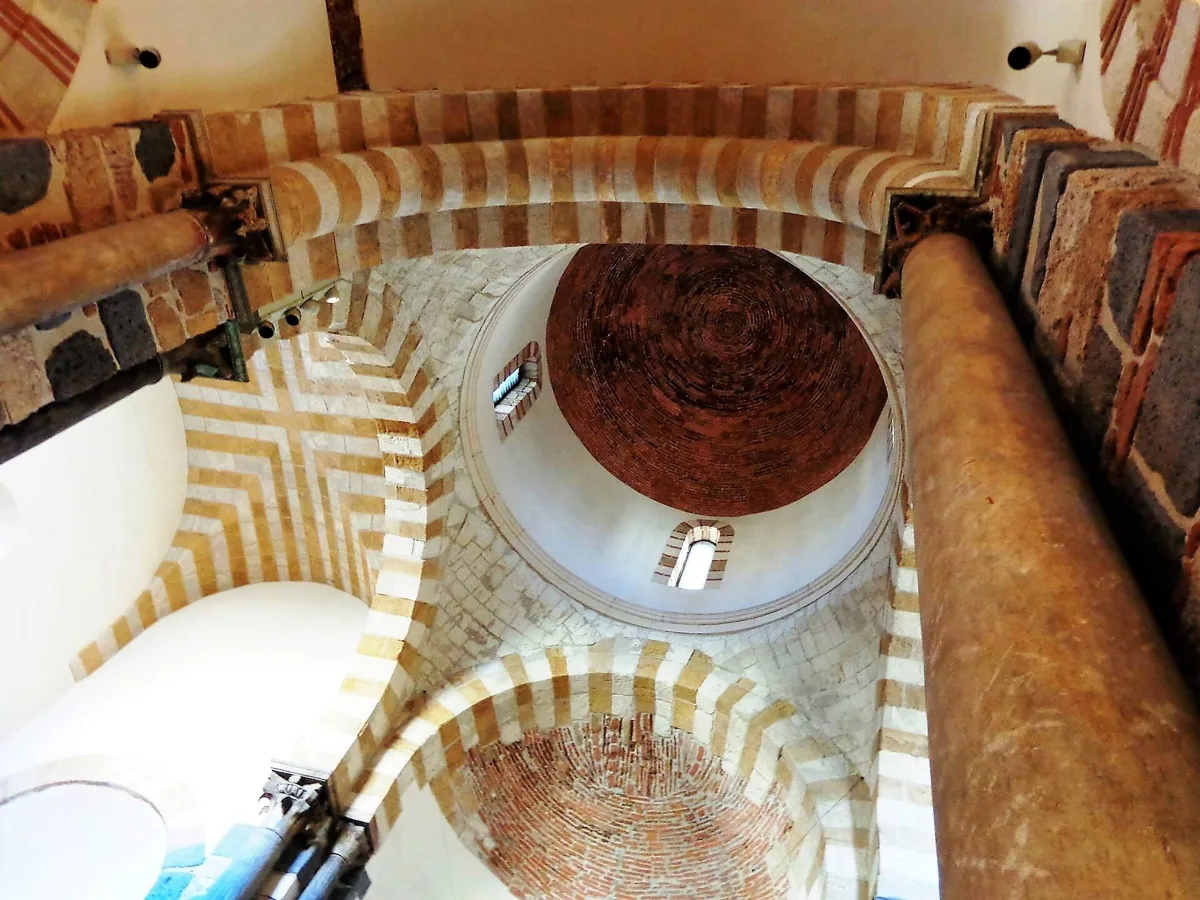
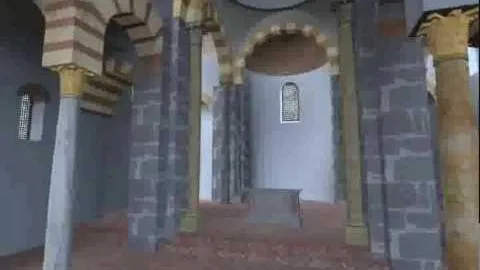
The church is a Latin cross. Inside, the same game of colours goes on: arches striped in two tones of stone resting on columns with carved capitals, some with Romanesque motifs, in a mix of lava stone, limestone and marble. Under the crossing, look straight up to see the dome from inside.
Under the floor, a crypt runs the length of the transept: it was built for the burials of the brothers of the Catalan confraternity. Two of the paintings that once hung here have left: Polidoro da Caravaggio’s Way to Calvary is in the Capodimonte museum in Naples and the panel of the Annunciation with Saint Eulalia is in the Museo Regionale of Messina. The church still keeps the canvas of the Immaculate Conception painted by Tommaso Montella in 1606.
From royal chapel to the Catalan merchants
The church was built as a royal chapel, and over the centuries it was the first home in Sicily of 2 religious orders, the Dominicans and the Theatines. Under the Aragonese kings it passed to the community of Catalan merchants, who added their name to that of the Santissima Annunziata, the Annunciation.
That tie has never been broken. The church is still the seat of the Noble Archconfraternity of the Santissima Annunziata dei Catalani, which holds its services here and celebrates the feast of the Annunciation. It is also often used for weddings, so you may find a ceremony under way.
Visiting: where it is and how to get in
The church stands at Via Giuseppe Garibaldi 111, between Via Garibaldi and Via Cesare Battisti, about 200 metres from the Cathedral and its square, home to the astronomical clock. The church of Santa Maria degli Alemanni, another medieval church that came through 1908, is about 10 minutes away on foot.
No official site publishes visiting hours or an entry ticket for the church. The outside, which is the best of it, can be seen at any time from the street through the railings; the inside is used for the services of the archconfraternity and for weddings, so you may or may not find it open. Allow about 10 minutes for the outside and half an hour if you get in (our estimate). The church sits below today’s street level, so step-free access is not something to count on.
There is another free audio guide in Messina: the Neptune Fountain. And if your trip carries on through southern Italy, the National Archaeological Museum in Naples has its own free audio guide too.
 Free audio guideFontana di Nettuno
 Free audio guideNaples Archaeological Museum
Where to find it
FAQs
How do the free audio guides work?
They play right here on audioguidetravel.com, with no app to download and no sign-up. Press play and listen as you walk round: a phone and a pair of headphones are all you need. The audio streams from this page, so you’ll need mobile data or Wi-Fi.
Can I take the tour at my own pace?
Of course! You set the pace: pause whenever you like, jump back or forward 15 seconds, or tap the bar to jump to any point, and listen as many times as you want so you don’t miss a thing.
If I'm in a group, can we use the same audio guide?
Yes. The same free audio guide opens on as many phones as you like, so you can go round together as a group or with your family, each person at their own pace and with their own headphones. The quickest way is to send the link via WhatsApp, Telegram or however you like: the buttons just below let you share it right now.
Visitor information
As of 30 Oct 2026- Opening hours
- No published visiting hours; the outside can be seen at any time
- Tickets
- No ticket listed by the official sites; outside free from the street
- Time needed
- 10 min outside, about 30 min inside (our estimate)
- Getting there
- In the centre of Messina, about 200 m from the Cathedral, between Via Garibaldi and Via Cesare Battisti.
- Accessibility
- The church sits below street level: do not count on step-free access
- Tip
- If the doors are shut, walk round to the apse: the best stonework is outside
- Official website
- visitme.comune.messina.it