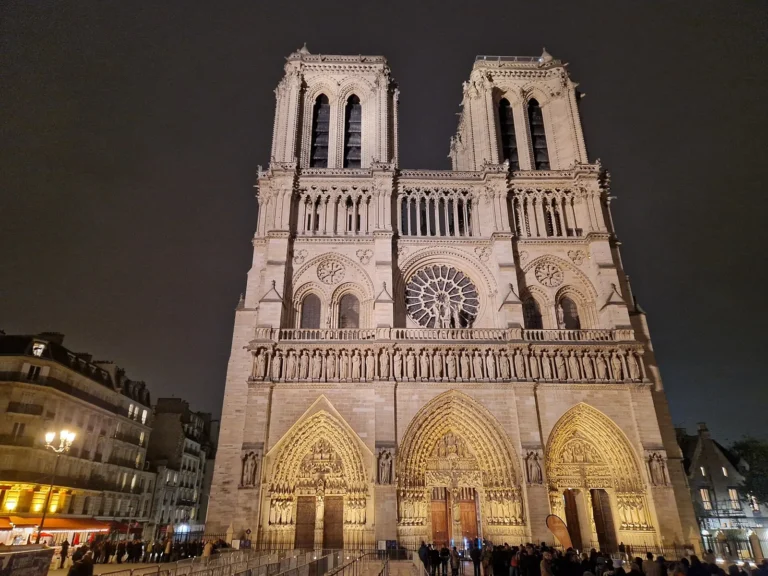
Palace of Versailles: free audio guide, hours and tickets
Free audio guide in English · no app, no sign-up
The Palace of Versailles was home to the French court from 1682 to 1789: the Royal Chapel, the State Apartments, the Hall of Mirrors and Le Nôtre’s gardens. This free audio guide lasts about 5 minutes and takes you from the courtyard to the gardens.
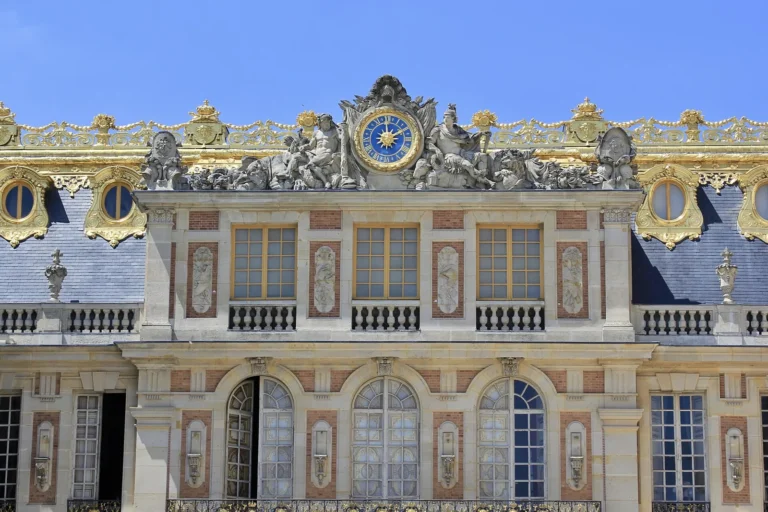 Audio guide
Before you go in
The few things that change your visit.
- Closed Mondays; opens at 9:00 and closes at 18:30 in high season and 17:30 in low season
- The €35 Passport is the only ticket that guarantees entry to the palace
- Under-18s and EU residents under 26 get in free, but must book a timed ticket
- RER C to Versailles Château Rive Gauche, a 10-minute walk
- The Hall of Mirrors is 73 metres long; the Treaty of Versailles was signed there in 1919
On this page
- What the Palace of Versailles audio guide covers
- Palace of Versailles opening hours and tickets
- How to get to Versailles from Paris
- From hunting lodge to capital of France
- The Hall of Mirrors and the State Apartments
- The gardens of Versailles and the Grand Canal
- What to see in Paris after Versailles
- Where to find it
The Palace of Versailles was home to the French court from 1682 to 1789: the Hall of Mirrors, the King’s State Apartments, the Royal Chapel and 800 hectares of gardens and park, in the town of Versailles. It opens Tuesday to Sunday from 9:00. This free audio guide lasts about 5 minutes and walks you through it room by room.
What the Palace of Versailles audio guide covers
Start listening outside, on the Place d’Armes, facing the palace, and keep it on as you go in: each part ends by telling you where to head next. It takes the main rooms in turn and finishes in the gardens. There are 6 parts:
| A hunting lodge that became a capital | From Louis XIII’s lodge of 1623 to Louis XIV’s court in 1682. |
| The Royal Chapel | The Sun King’s last great project, finished in 1710, and a royal wedding in 1770. |
| The King’s State Apartments | The Hercules Room and the rooms that led to the king. |
| The Hall of Mirrors | 73 metres long, an empire proclaimed in 1871 and a treaty signed in 1919. |
| The King’s Bedchamber | The centre of the palace from 1701, where Louis XIV died in 1715. |
| Le Nôtre’s gardens | The Grand Canal of 1667 and how to read the gardens from the terrace. |
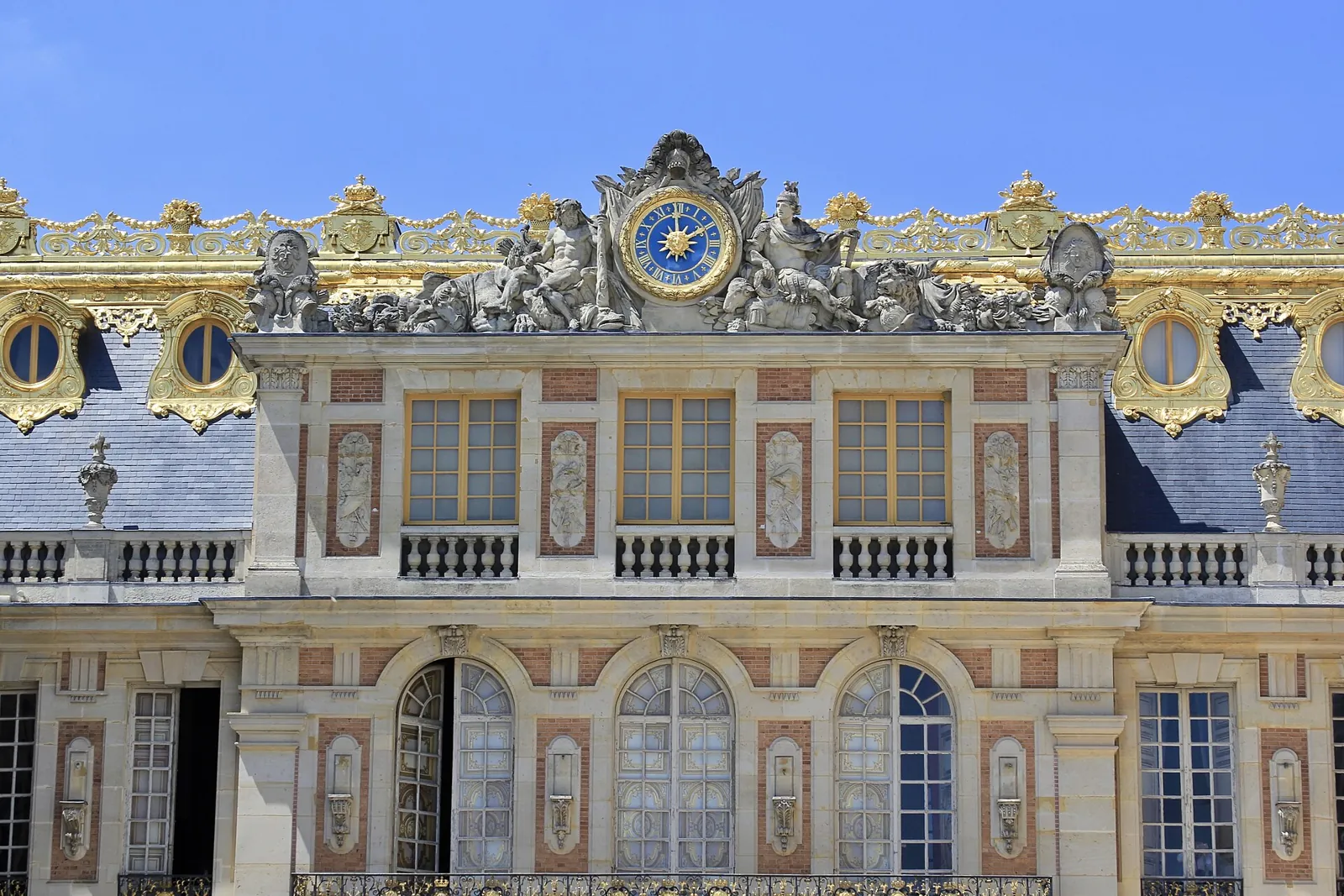
Palace of Versailles opening hours and tickets
The palace is closed every Monday, and also on 25 December, 1 January and 1 May. In the high season, from 23 March to 1 November, it opens from 9:00 to 18:30, with last admission at 17:45 and ticket desks open until 17:30. On the weekend of 1 November it stays open later, until 19:00, with last entry at 18:30.
In the low season, from 2 November to 22 March, the palace opens from 9:00 to 17:30, with last admission at 16:45. The Trianon Estate, with the Grand Trianon, the Petit Trianon and the Queen’s Hamlet, always opens at 12:00.
The ticket that covers everything is the Passport, at €35 (€32 reduced): it includes the palace, the Trianon Estate, temporary exhibitions and the gardens, even on fountain show days. It is the only ticket that guarantees entry to the palace, and palace entry is timed: if you buy online, entry is guaranteed within half an hour of your slot. A Trianon Estate ticket on its own costs €15 (€12 reduced).
The gardens and park are free from November to March. From April to October, the gardens charge on fountain show and musical garden days. The palace’s own audio guide, in 12 languages, can be rented when you buy your ticket or at the audio guide desks in the palace.
How to get to Versailles from Paris
The palace is on the Place d’Armes, in Versailles. The most direct route is the RER C to Versailles Château Rive Gauche station, a 10-minute walk away. From Montparnasse station, N and U line trains run to Versailles Chantiers, an 18-minute walk; and from Saint-Lazare, the L line goes to Versailles Rive Droite, a 17-minute walk.
Buy a return ticket before you set off, or use a travel pass that reaches Versailles. If you drive, there is parking on the Place d’Armes itself.
From hunting lodge to capital of France
It all began with a hunting lodge that Louis XIII had built here in 1623. His son, Louis XIV, did not pull it down: work began in 1661 under Louis Le Vau, who later wrapped his father’s palace in a new one on the garden side, and Louis XIII’s brick-and-stone palace stayed standing on the town side.
Le Vau died on 11 October 1670, and François d’Orbay carried on the work. From then on there were two palaces in one: the Old Palace of Louis XIII, facing the town, and the New Palace of Louis XIV, facing the gardens. Between 1685 and 1689 came a real building frenzy: the Orangery, the stables and the Grand Commun.
In May 1682, Louis XIV moved the court and the government to Versailles, and the palace became the capital of France in all but name. Jules Hardouin-Mansart added the north and south wings to house the courtiers, until the garden front stretched to 670 metres. The estate covers 800 hectares, and the palace has 2,153 windows and 67 staircases.
On 6 October 1789 a crowd took the palace, and the royal family had to leave for Paris. The furniture was auctioned off in 1793 and 1794, and in 1837 King Louis-Philippe turned the palace into a museum of French history. The palace and park have been a World Heritage Site since 1979.
The Hall of Mirrors and the State Apartments
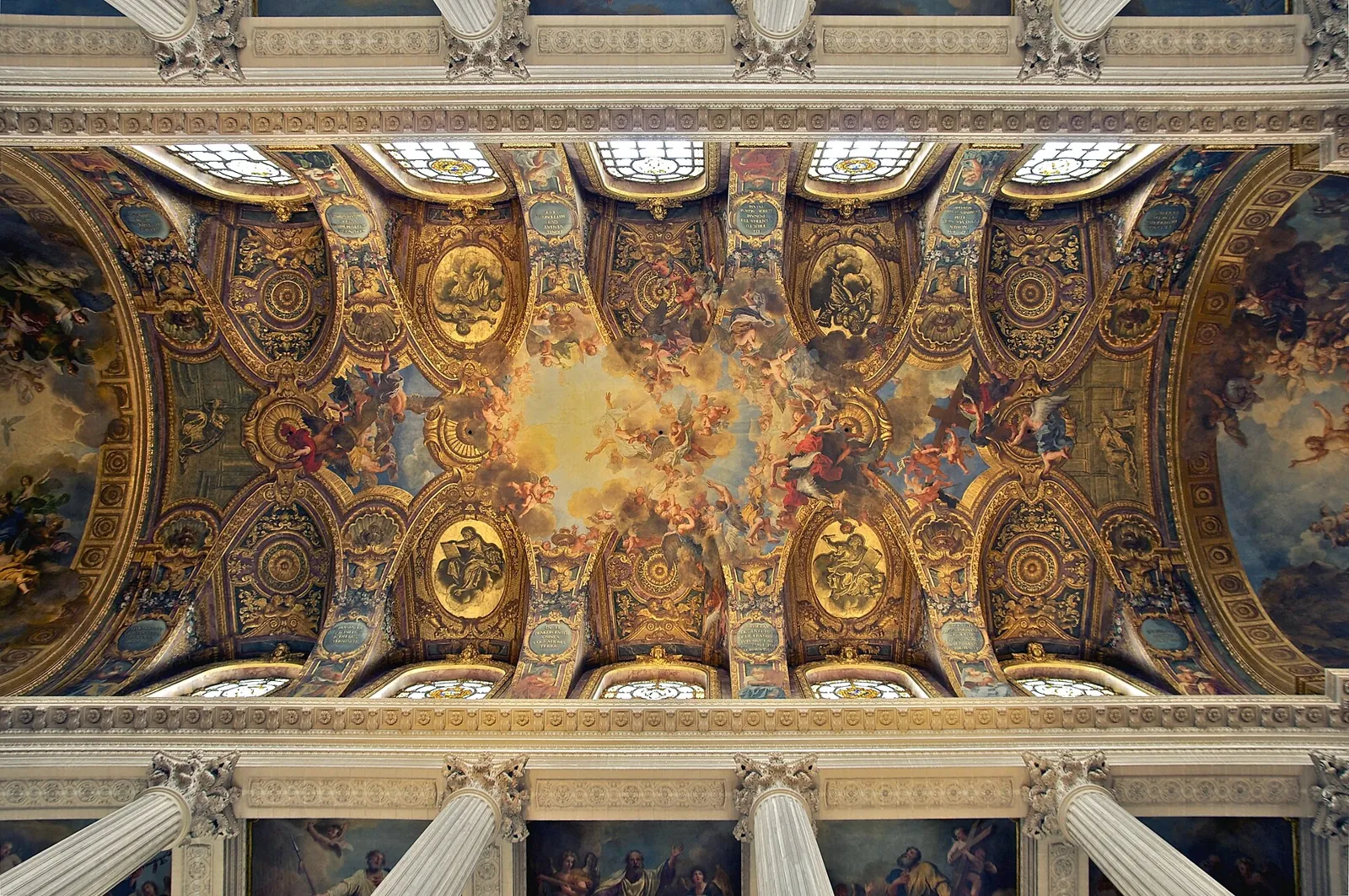
Next to the Hercules Room is the Royal Chapel, finished in 1710 by Robert de Cotte: the last great project of Louis XIV’s reign. The future Louis XVI married Marie Antoinette here in 1770, and the palace’s Royal Opera opened that same day.
The Hercules Room leads into the King’s State Apartments: it is lined with marble and holds François Lemoine’s large painting, The Apotheosis of Hercules. The king’s apartments lie to the north and the queen’s to the south, and between them is the most famous room in the palace.
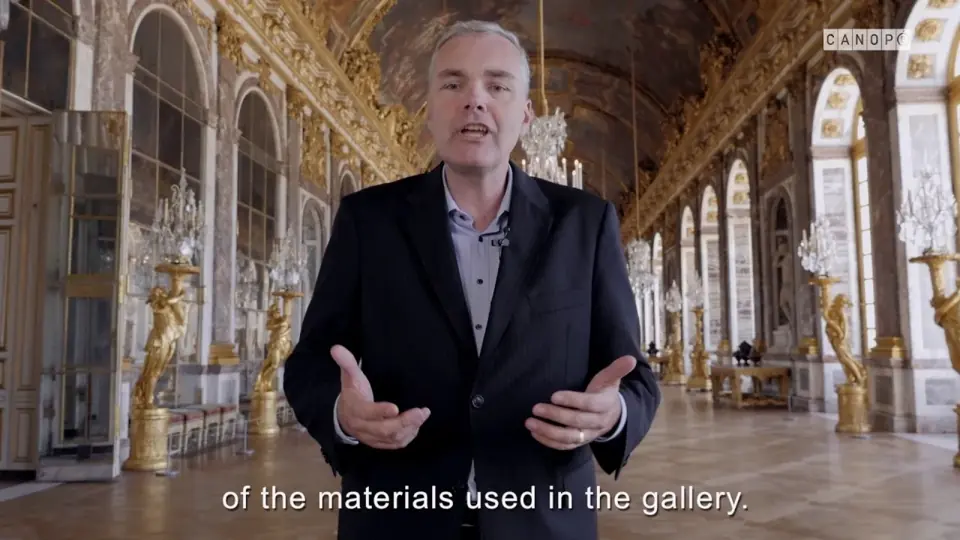
Mansart built the Hall of Mirrors between 1678 and 1684, over an old terrace, and Charles Le Brun’s team decorated it. It is 73 metres long, runs from the War Room to the Peace Room, and looks west over the gardens. The German Empire was proclaimed here on 18 January 1871, and the Treaty of Versailles, which ended the First World War, was signed here on 28 June 1919.
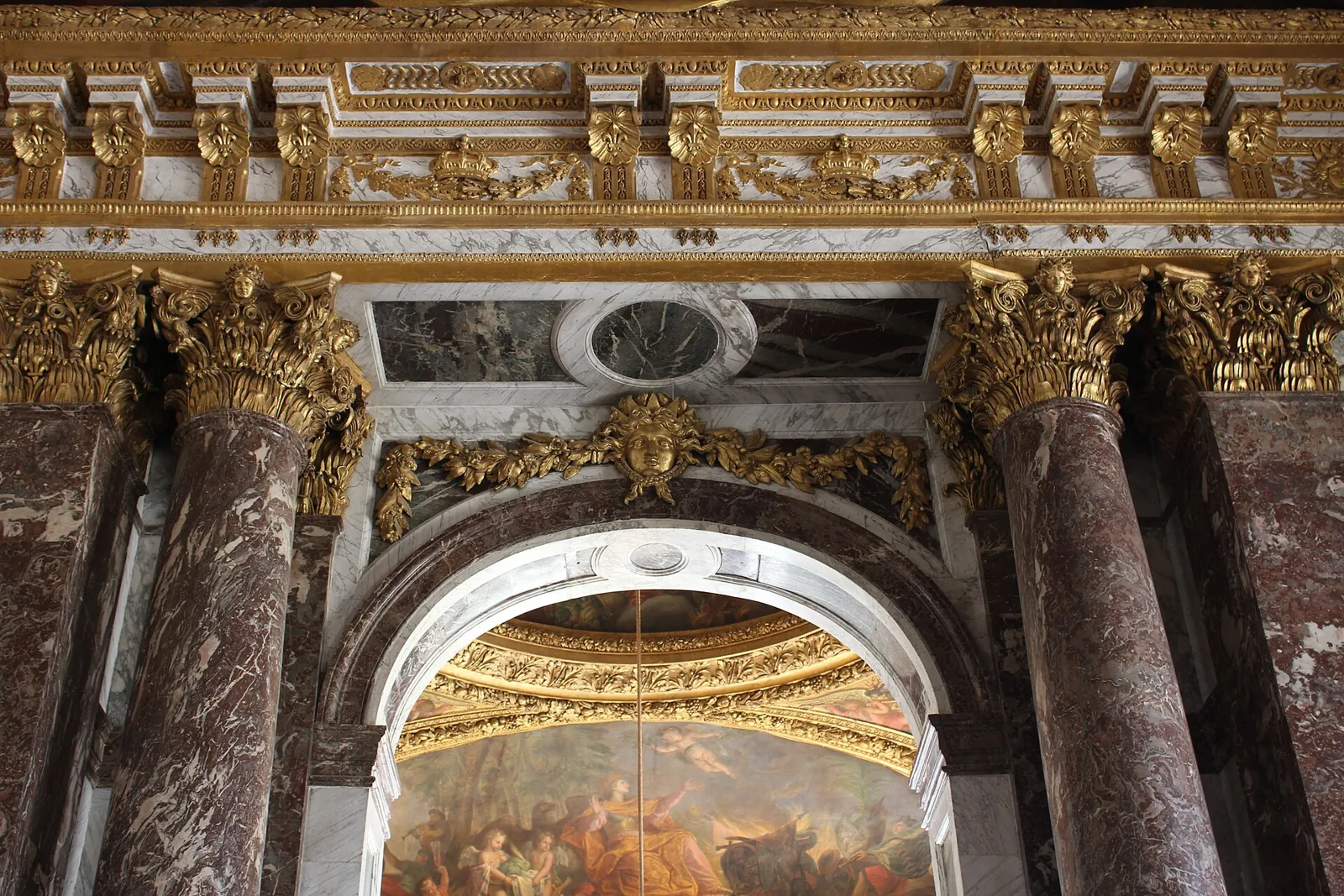
Since 1701, the King’s Bedchamber has stood at the centre of the palace. Louis XIV died there on 1 September 1715, and his body lay in state in the same room.
The gardens of Versailles and the Grand Canal
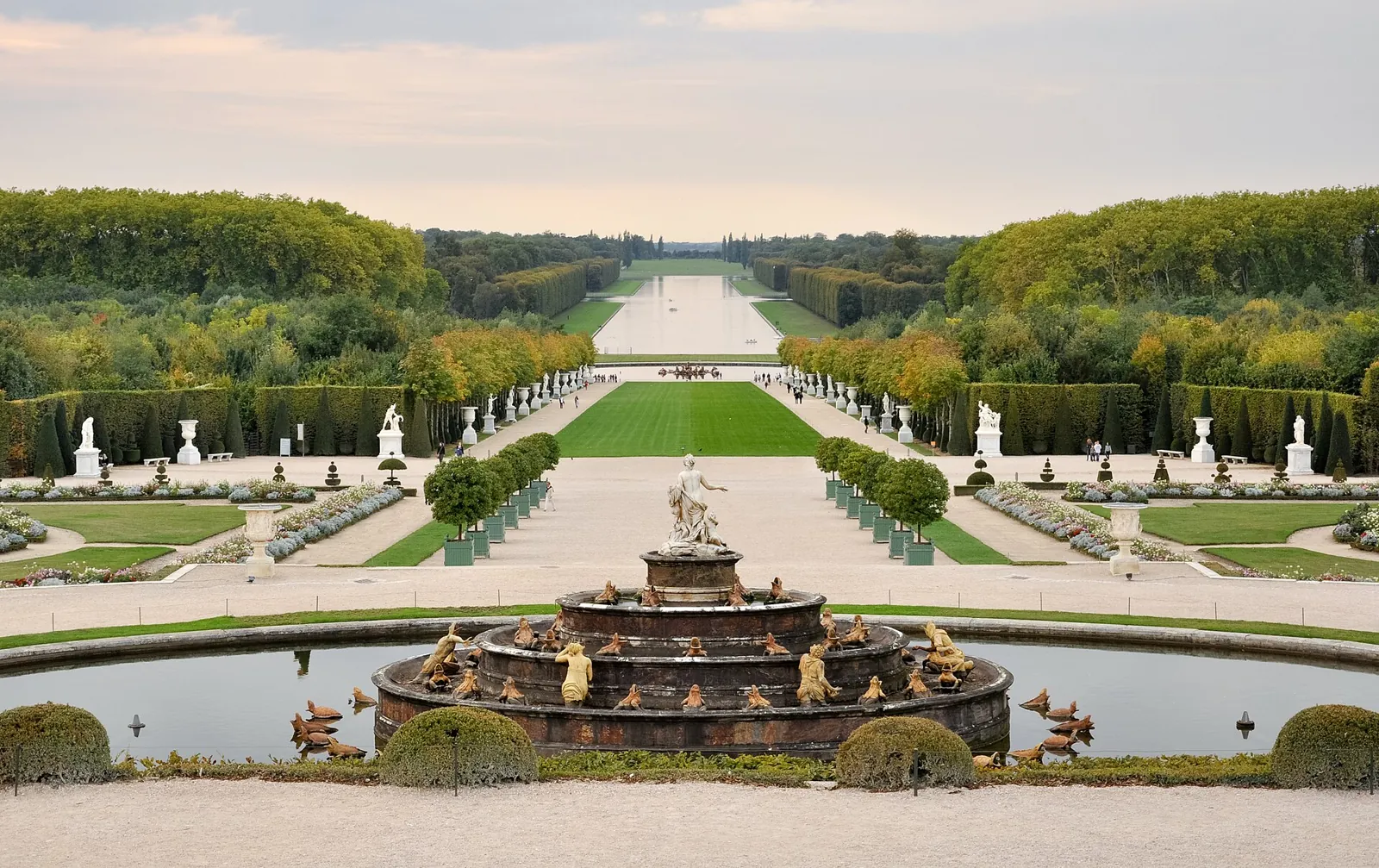
Step out onto the terrace and look west: the gardens are the work of André Le Nôtre, who revolutionised garden design with parks on a grand scale. The first statues went in in 1665, and in 1667 the Grand Canal was dug along the central axis, still drawing your eye from the palace to the horizon. Le Nôtre brought architecture, hydraulics, geology, optics and botany to the job, and worked with the engineer Francine on the water systems.
The gardens open every day. Out in the park are the Grand Trianon, the small marble palace Mansart built in 1687, and the Petit Trianon, with Marie Antoinette’s Queen’s Hamlet.
What to see in Paris after Versailles
Back in Paris, carry on to Notre-Dame de Paris, which also has its own free audio guide, like all our Paris audio guides.
Where to find it
FAQs
How do the free audio guides work?
They play right here on audioguidetravel.com, with no app to download and no sign-up. Press play and listen as you walk round: a phone and a pair of headphones are all you need. The audio streams from this page, so you’ll need mobile data or Wi-Fi.
Can I take the tour at my own pace?
Of course! You set the pace: pause whenever you like, jump back or forward 15 seconds, or tap the bar to jump to any point, and listen as many times as you want so you don’t miss a thing.
If I'm in a group, can we use the same audio guide?
Yes. The same free audio guide opens on as many phones as you like, so you can go round together as a group or with your family, each person at their own pace and with their own headphones. The quickest way is to send the link via WhatsApp, Telegram or however you like: the buttons just below let you share it right now.
Visitor information
As of 17 Oct 2026- Opening hours
- Tuesday to Sunday: 9:00-18:30 from 23 March to 1 November (last admission 17:45); 9:00-17:30 from 2 November to 22 March (last admission 16:45). Closed Mondays.
- Tickets
- Passport €35 (reduced €32); Trianon €15 (€12). Free for under-18s and EU residents under 26, booking required.
- Time needed
- Audio guide about 5 min; palace, Trianon and gardens, a full day.
- Getting there
- Place d'Armes, Versailles. RER C to Versailles Château Rive Gauche, a 10-minute walk.
- Accessibility
- Accessibility measures for disabled visitors; the Passport is marked accessible for reduced mobility.
- Tip
- Free tickets still need a timed booking. If your slot is in the afternoon, start with Trianon, which opens at 12:00.
- Official website
- en.chateauversailles.fr