
Royal Palace of Madrid: free audio guide, hours and tickets
Free audio guide in English · no app, no sign-up
The free Royal Palace of Madrid audio guide lasts about 4 minutes and is made for listening on the Almudena esplanade before you go in. It tells how the old Alcázar burned on Christmas Eve 1734, why the new palace was built with no timber in its structure, how the main staircase changed sides and what to look for in the Throne Room and the Royal Armoury.
 Audio guide
Before you go in
The few things that change your visit.
- The old Alcázar burned on Christmas Eve 1734; the palace was begun in 1738
- The Throne Room, with its vault painted by Tiepolo, was finished in 1772
- Tickets €18; from October to March, free Mon–Thu 16:00–18:00 for EU and Ibero-American citizens and EU residents
- The Royal Armoury holds the armour of Charles V
The Royal Palace of Madrid is the official residence of the King of Spain and one of the few official residences of a head of state that is open to the public. Built from 1738 on the site of the old Alcázar, it covers more than 135,000 m² and welcomes about 1.5 million visitors a year. This free audio guide lasts about 4 minutes and is made for listening on the Almudena esplanade, before you join the queue.
What the audio guide covers
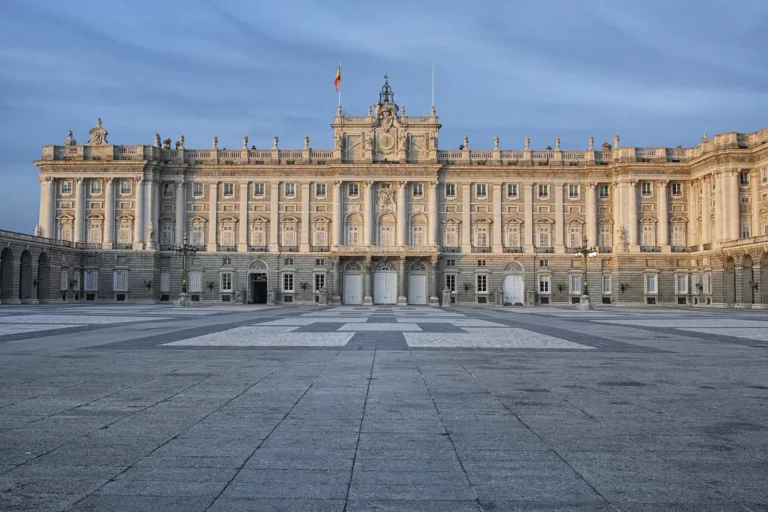
Stand on the Almudena esplanade before you join the queue, press play and look towards the south facade, beyond the Plaza de la Armería. It has 6 stops:
| A fire on Christmas Eve | The old Alcázar of the Habsburgs, the fire of 1734 and the legend that someone started it on purpose. |
| A palace built against fire | Filippo Juvarra’s plan, Giambattista Sacchetti’s building and the vaults with no timber in them. |
| Charles III moves in | The first king to live here, in 1764, and the painters he brought: Tiepolo and Mengs. |
| A staircase that changed sides | Sabatini’s main staircase of 1760 and why Charles IV had it moved in 1789. |
| The Throne Room | Tiepolo’s ceiling, the lions from the old Alcázar, the bronzes Velázquez bought in Italy and the thrones that are 20th-century copies. |
| The armour of an emperor | The Royal Armoury that Philip II kept together for his heirs, with the armour of Charles V. |
Listen before you queue at the entrance on the corner of Calle Bailén: inside, the rooms follow each other quickly and you will want your eyes on the ceilings.
From the Alcázar fire to the Royal Palace
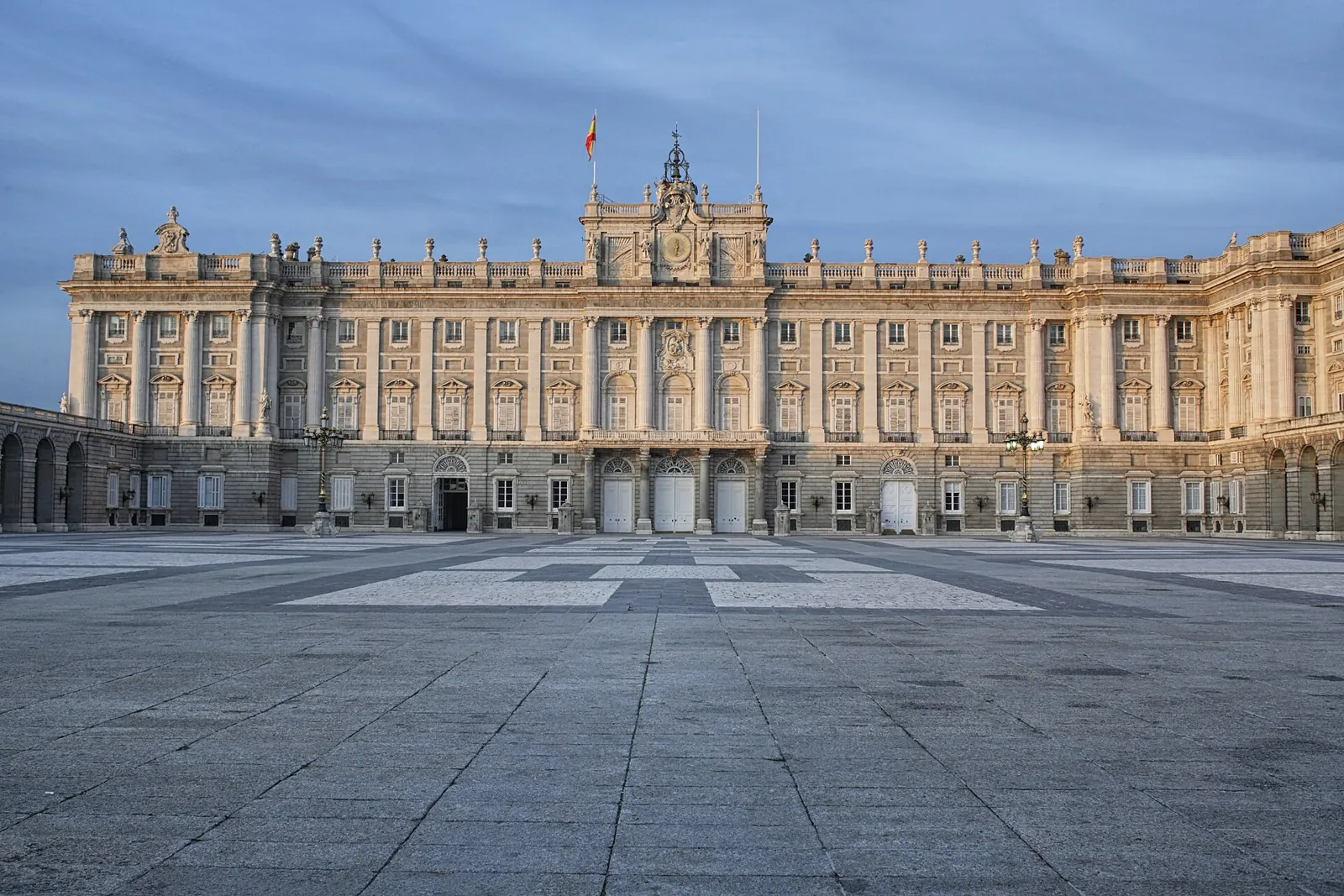
The palace stands on the site of the Alcázar of Madrid, a medieval fortress that Philip II made the official residence of the kings of Spain from 1561. It was decorated with great works of art from the Spanish Golden Age, and on Christmas Eve 1734 it burned down. A story still goes round Madrid that French courtiers of Philip V set it alight to make room for a palace in the style of Versailles; Patrimonio Nacional, which runs the palace today, calls it exactly that, a legend.
Philip V sent for Filippo Juvarra, the finest European architect of his day, who died before his project could be built. His pupil Giambattista Sacchetti adapted it and oversaw the work from start to finish. The whole building is made of masonry vaults with no timber in the structure, so that most of it would survive a fire. The first stone was laid in 1738 and the building was finished in 1751, with sculpture and outer works going on until 1759.
Charles III was the first king to live in it, from 1764, and his architect Francesco Sabatini changed parts of Sacchetti’s design. Charles III brought the most famous painters of the day to decorate it, the Venetian Giambattista Tiepolo and Anton Raphael Mengs, his first court painter. The kings of Spain lived in the rooms along the east facade until 1931.
The rooms you walk through
The visit follows the main floor, and the order of the rooms tells the story of the kings who decorated them.
- The main staircase. Sacchetti planned 2 twin staircases, one for the king and one for the queen. Charles III wanted just 1, and Sabatini built it in 1760 on the left-hand side; in 1789 Charles IV had him move it to the right, re-using the same steps. Look up at the vault painted by Corrado Giaquinto and down at the lions by Felipe de Castro and Robert Michel.
- The Hall of Columns. It fills the space meant for the second staircase. Giaquinto painted its ceiling in 1761-1762, and the hall saw 2 modern landmarks: Spain signed its treaty to join the European Communities here in 1985, and King Juan Carlos I signed his abdication here in 2014.
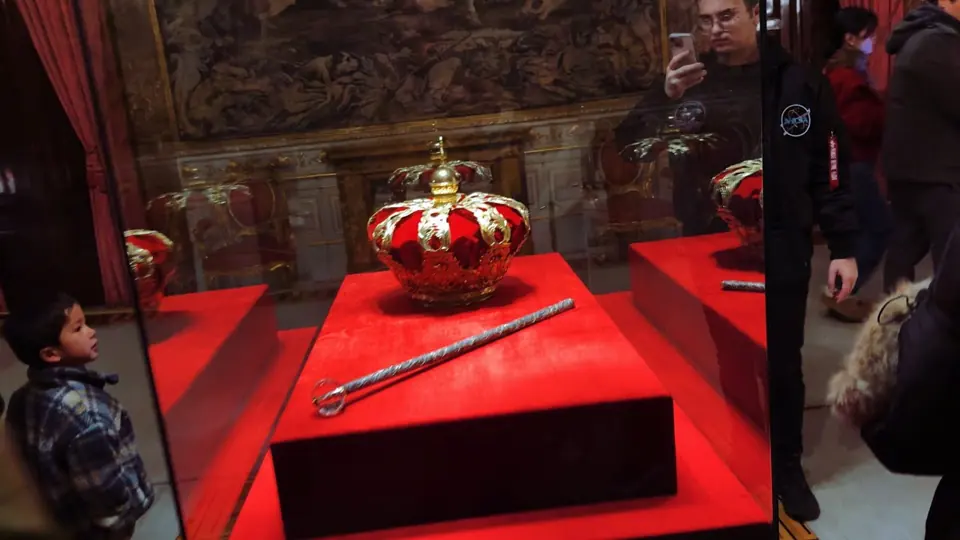
- The Throne Room. The most important room of Charles III’s apartments, finished in 1772. Tiepolo painted the vault with The Triumph of the Spanish Monarchy, the walls are hung with Genoese velvet, and the 12 consoles and 12 mirror frames were made in Naples, where Charles had been king until 1759. Charles III had sculptures from his predecessors’ collections placed here: Matteo Bonuccelli’s lions, from the Hall of Mirrors of the old Alcázar, and the bronzes that Velázquez bought in Italy for Philip IV. The 2 thrones you see are 20th-century copies of Charles III’s throne chair.
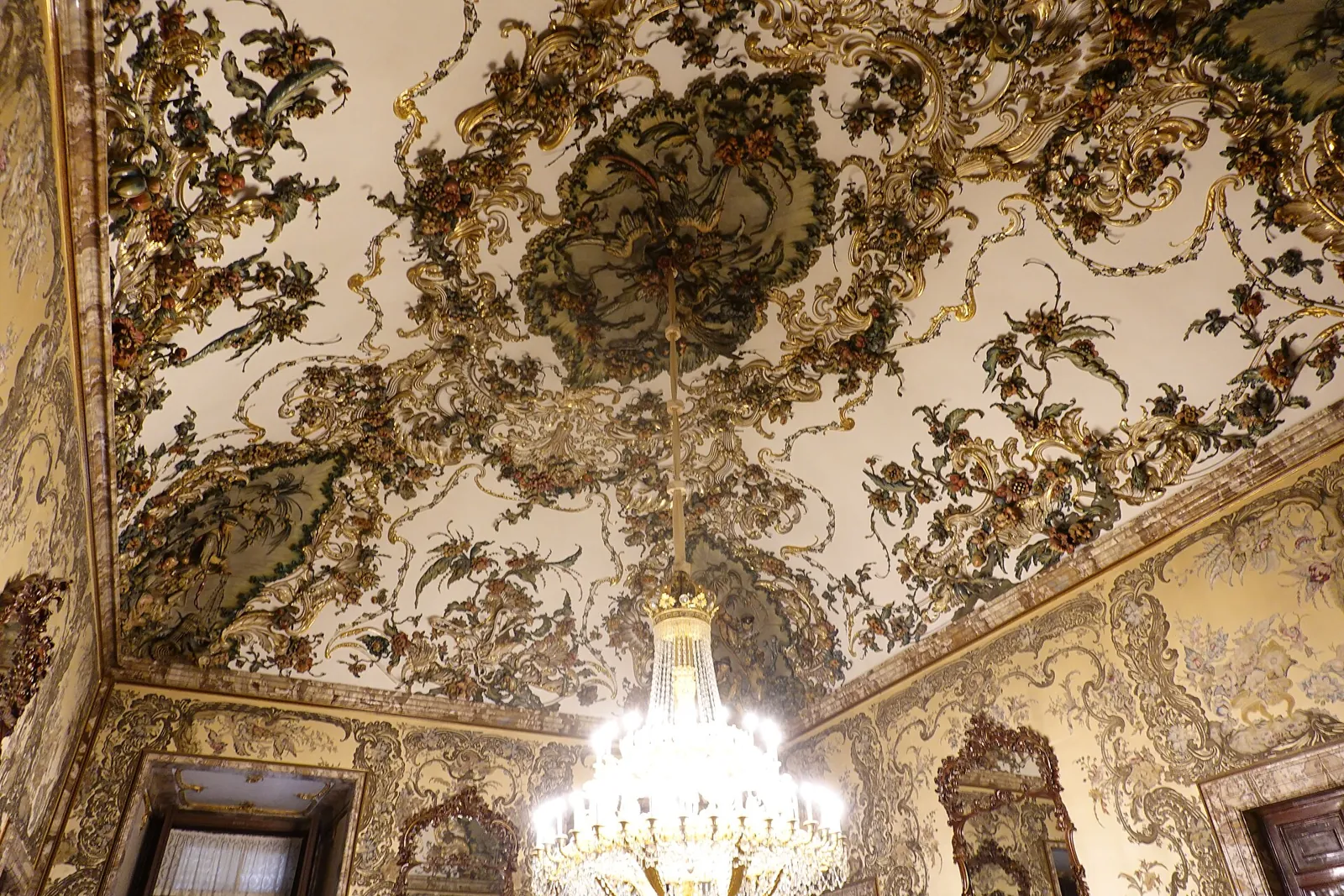
- The Gasparini Room. Charles III’s dressing room, decorated by Mattia Gasparini in a riot of rococo leaves, flowers and birds. The king never saw it finished: when he died in 1788 only the marble floor and the ceiling were done, and the rest went in over the 19th century.
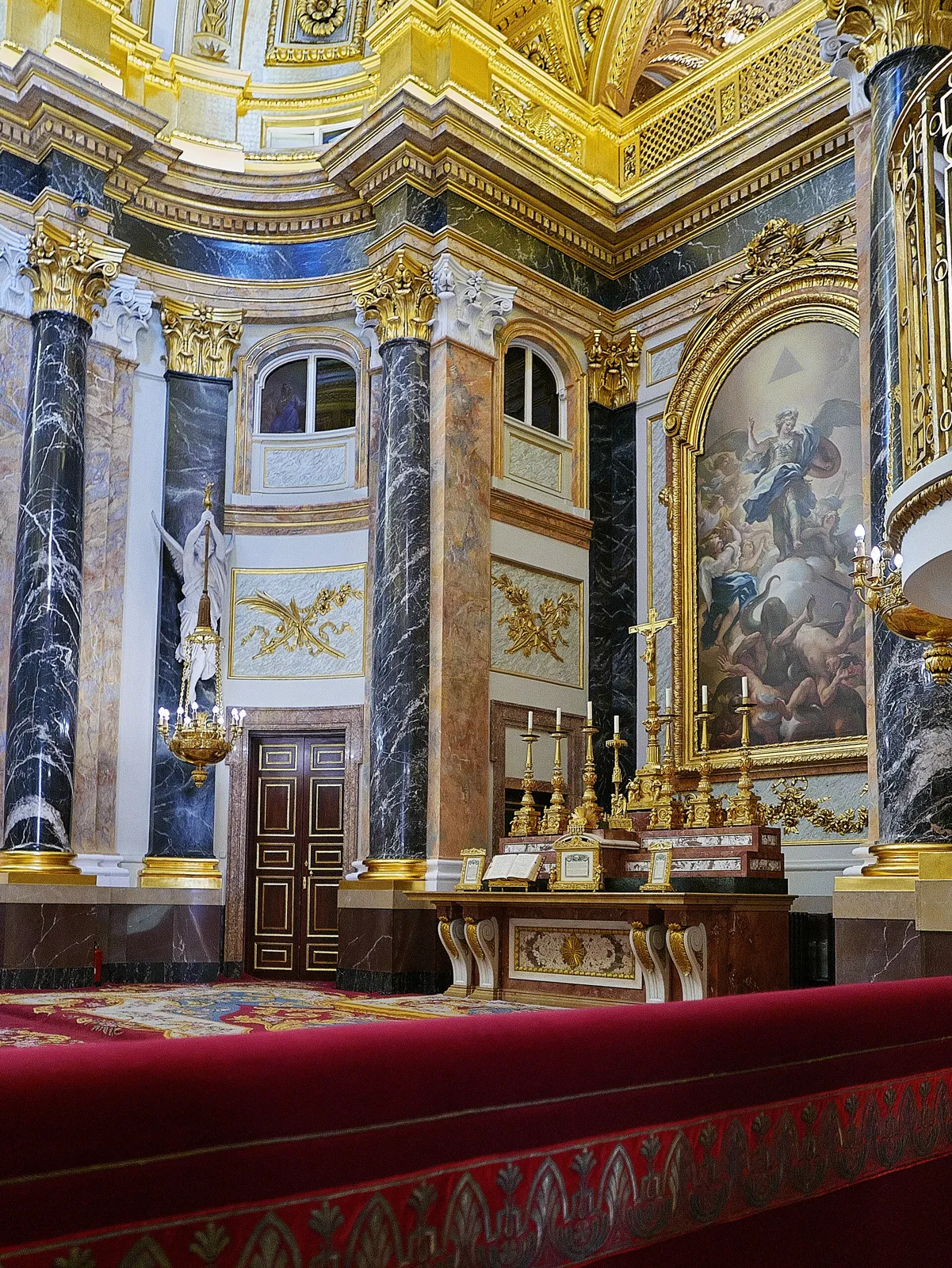
- The Royal Chapel. Sacchetti’s design of 1748, with frescoes by Giaquinto and 10 columns, each a single piece of black veined marble from Mañaria, in the Basque Country.
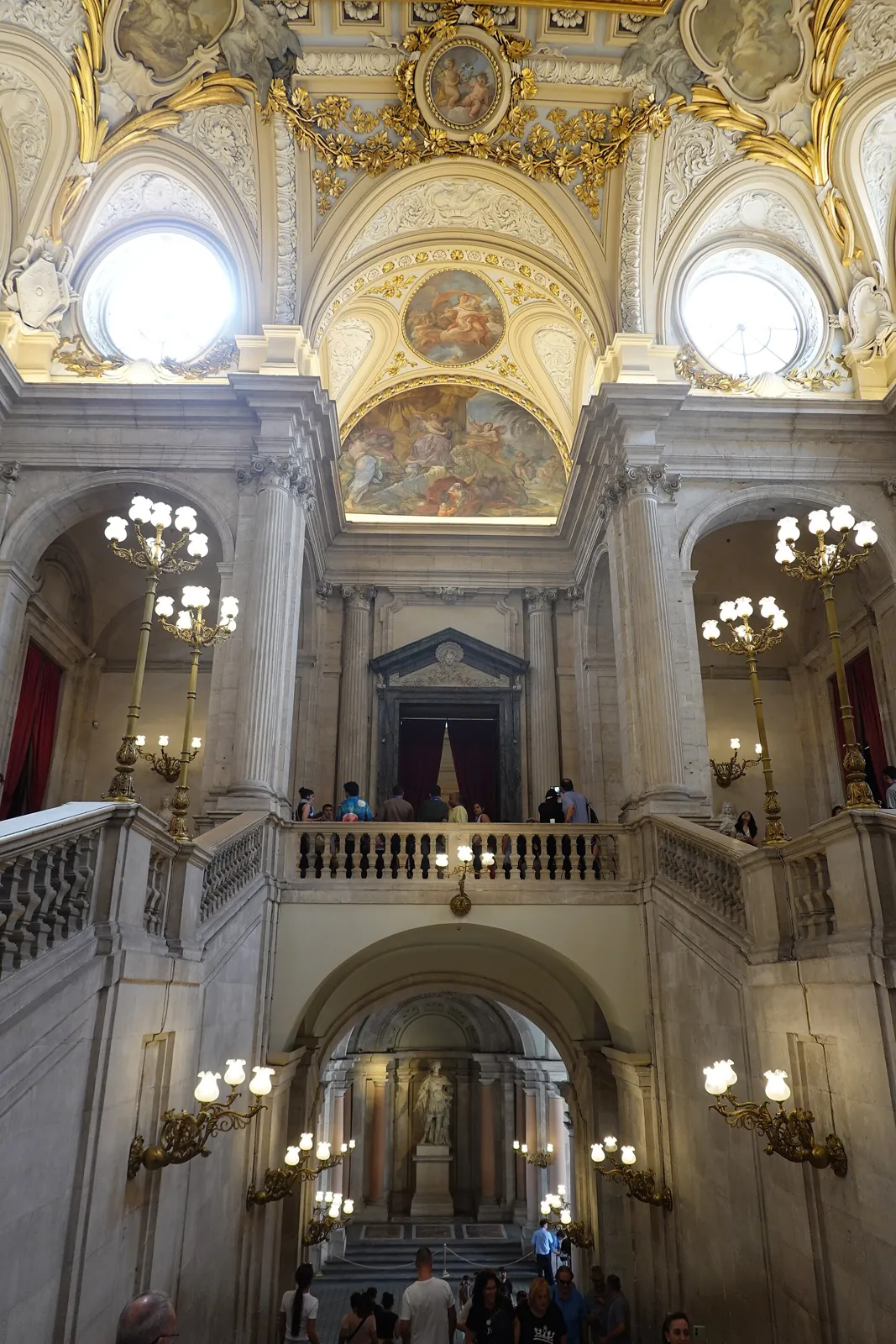
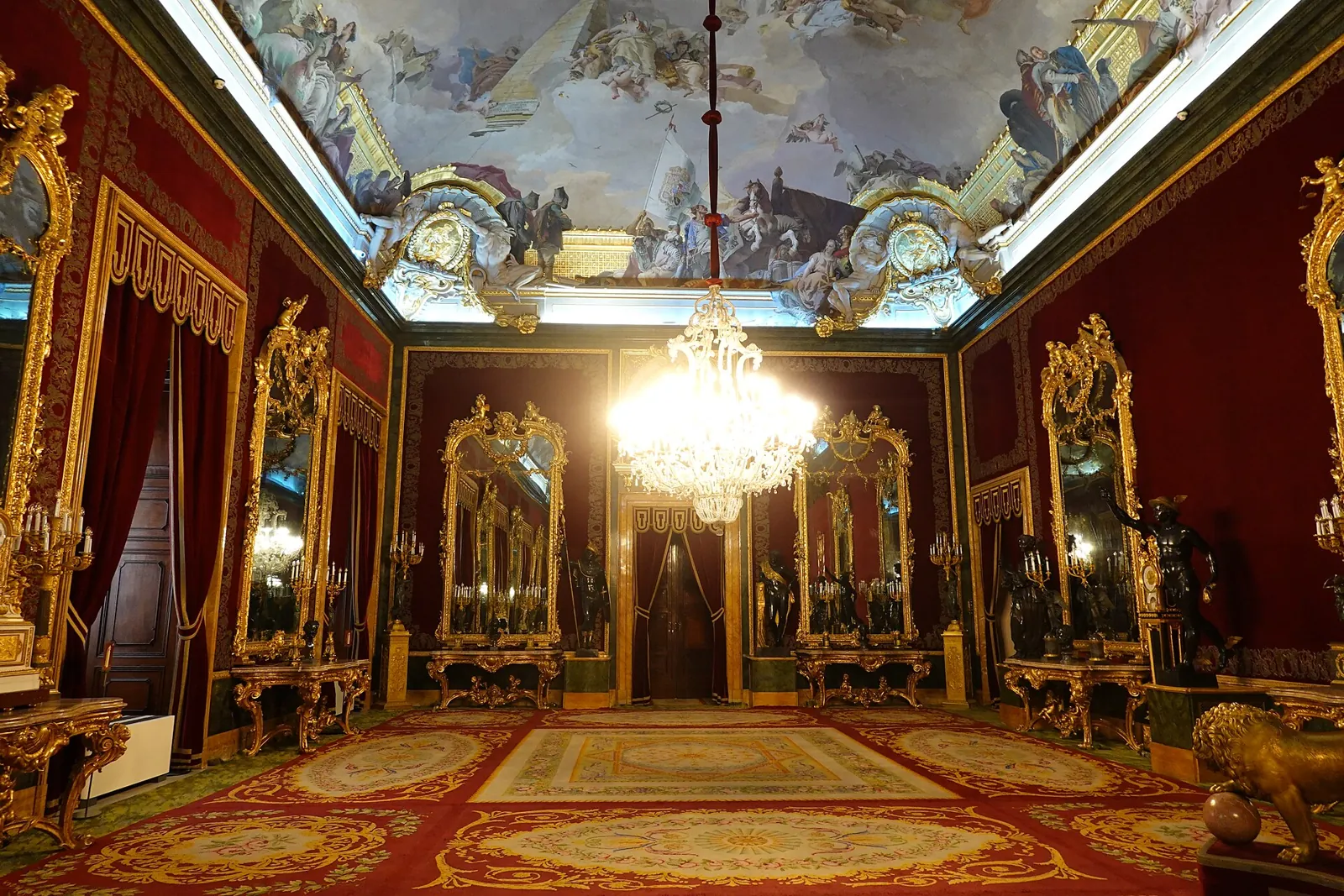
The great sets of French bronze and crystal chandeliers you pass under come from the reign of Ferdinand VII, and the last redecoration, which fixed the palace as you see it today, was done under Alfonso XII in 1879.
The Royal Armoury
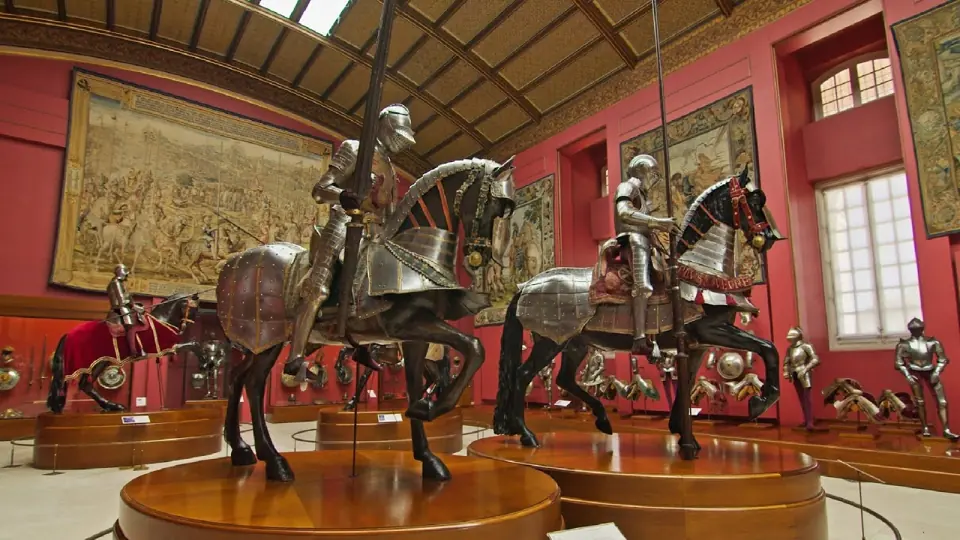
The Plaza de la Armería takes its name from the Royal Armoury, which Patrimonio Nacional ranks with the Imperial Armoury in Vienna as the most important in Europe. Philip II decided that it could not be sold when he died, so that it would pass whole to his heirs; at its core is the armour of his father, the emperor Charles V, with pieces inherited from Ferdinand the Catholic and Maximilian I. The collection is mainly ceremonial armour and spans the whole 16th century, with pieces ordered from the best workshops of southern Germany and northern Italy. The present building was put up after an 1884 fire destroyed the old one, and the collection moved into it in 1891.
Tickets, opening hours and free entry
From October to March the palace opens Monday to Saturday from 10:00 to 18:00, with ticket sales and last entry at 17:00. From April to September it opens Monday to Saturday from 10:00 to 19:00, last entry 18:00. On Sundays it opens from 10:00 to 16:00 all year, last entry 15:00. It closes on some days for official events or local holidays (in 2026, for example, on 17 and 18 November), so check the calendar on the official site the day before you go.
A standard ticket costs €18 and a reduced one €9 (ages 5 to 16, over-65s and students up to 25). The combined ticket with the Gallery of the Royal Collections costs €24 (€12 reduced). The palace’s own audio guide costs €5 and a guide €8. Entry is free for children under 5 and, all day, for members of large families, teachers, jobseekers and visitors with a disability of 33% or more (plus a companion, when the disability card says one is needed), with proof at the ticket office.
There is access for visitors with reduced mobility and manual wheelchairs are available. You can visit at your own pace or with a guide (€8); the Royal Kitchen has its own ticket.
Getting there and what is nearby
The visitors’ entrance is on the Almudena esplanade, at the corner of Calle Bailén. The nearest Metro station is Ópera (lines 2 and 5); Príncipe Pío station is also close, and BiciMAD dock number 36 is the nearest for bikes. In front of the east facade lies the Plaza de Oriente, and below the west side the Campo del Moro gardens, free to enter, open from 10:00 to 18:00 from October to March.
If you are spending more time in Madrid, these audio guides are also free:
 Free audio guidePlaza de Oriente
 Free audio guideEl Escorial Monastery
 Free audio guideRetiro Park, Madrid
 Free audio guidePuerta de Alcalá, Madrid
 Free audio guidePlaza de Cibeles, Madrid
Where to find it
FAQs
How do the free audio guides work?
They play right here on audioguidetravel.com, with no app to download and no sign-up. Press play and listen as you walk round: a phone and a pair of headphones are all you need. The audio streams from this page, so you’ll need mobile data or Wi-Fi.
Can I take the tour at my own pace?
Of course! You set the pace: pause whenever you like, jump back or forward 15 seconds, or tap the bar to jump to any point, and listen as many times as you want so you don’t miss a thing.
If I'm in a group, can we use the same audio guide?
Yes. The same free audio guide opens on as many phones as you like, so you can go round together as a group or with your family, each person at their own pace and with their own headphones. The quickest way is to send the link via WhatsApp, Telegram or however you like: the buttons just below let you share it right now.
Visitor information
As of 17 Nov 2026- Opening hours
- Oct–Mar: Mon–Sat 10:00–18:00, Sun 10:00–16:00; last entry 1 h before closing
- Tickets
- €18; reduced €9 (ages 5–16, over 65, students up to 25); with Royal Collections Gallery €24
- Time needed
- Audio guide about 4 min; visit the palace at your own pace or with a guide (€8)
- Getting there
- Metro Ópera (lines 2 and 5); entrance on the Almudena esplanade, corner of Calle Bailén
- Accessibility
- Accessible for visitors with reduced mobility; manual wheelchairs available
- Tip
- Buy online: box-office sales are limited. No tripods or selfie sticks; photos without flash OK
- Official website
- www.patrimonionacional.es
Nearby
More free audio guides in Madrid
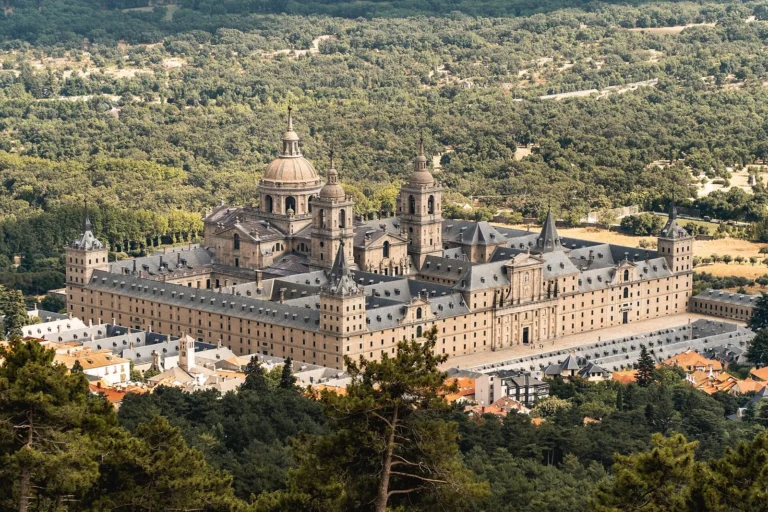 3:02MadridEl Escorial Monastery: free audio guide, tickets and opening timesThe Royal Monastery of San Lorenzo de El Escorial is Philip II’s statement in granite: a monastery, a…
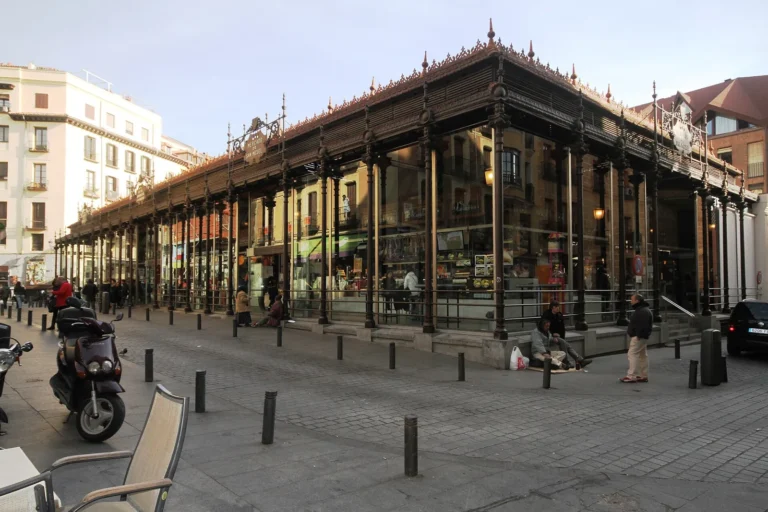 3:40MadridMercado de San Miguel, Madrid: free audio guide, hours, historyThe Mercado de San Miguel, or San Miguel Market, is the iron-and-glass market hall next to Plaza Mayor…
 5:41MadridPrado Museum, Madrid: free audio guide, hours and ticketsThe Prado Museum (Museo del Prado) is Madrid’s great picture gallery on the Paseo del Prado: Velázquez, Goya,…