
Prado Museum, Madrid: free audio guide, hours and tickets
Free audio guide in English · no app, no sign-up
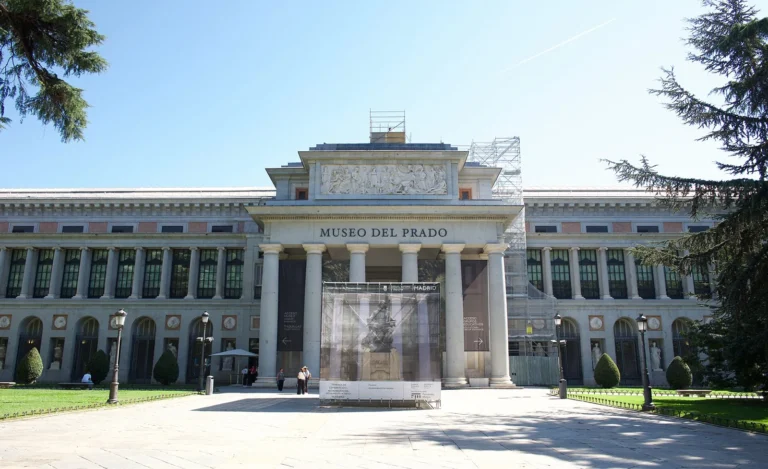
The Prado Museum (Museo del Prado) is Madrid’s great picture gallery on the Paseo del Prado: Velázquez, Goya, Bosch, Rubens and Van der Weyden in Juan de Villanueva’s building, opened in 1819. This free audio guide runs for about 6 minutes and takes you to 5 must-see paintings, room by room.
 Audio guide
Before you go in
The few things that change your visit.
- Open seven days a week: Mon-Sat 10:00 to 20:00; Sundays and public holidays until 19:00
- Tickets €15; the last 2 hours are free, with last entry 30 min before closing
- No photos in the galleries; bags of 40 cm or more go to the cloakroom
- The building was designed for the Natural History Cabinet and opened as a museum in 1819
- Las Meninas hangs in room 12 and The Garden of Earthly Delights in 56A
On this page
- What the Prado Museum audio guide covers
- Prado Museum opening hours, tickets and free entry
- Getting there and what to know before you go in
- The Villanueva building, a museum meant for science
- Floor 0: Van der Weyden, Bosch and Goya
- Floor 1: Las Meninas and The Three Graces
- What to see near the Prado Museum
- Where to find it
The Prado Museum (Museo del Prado) is Madrid’s great picture gallery: more than 100 rooms and around 1,800 works on display by Velázquez, Goya, Bosch, Rubens and Titian, in the building Juan de Villanueva designed on the Paseo del Prado. It opens seven days a week, a ticket costs €15 and the last 2 hours are free. This free audio guide runs for about 6 minutes and takes you to 5 must-see paintings.
What the Prado Museum audio guide covers
Start it outside, facing the Villanueva building, and keep it playing as you walk: each part ends by telling you which room to head for. The route runs from floor 0 up to floor 1 and takes about an hour at an easy pace. There are 6 parts:
| A museum built for science | What the building was meant for, and what the war of 1808 did to it. |
| The Descent from the Cross (room 58) | Van der Weyden and the crossbows hidden in the corners. |
| The Garden of Earthly Delights (room 56A) | How to read Bosch’s triptych, from left to right. |
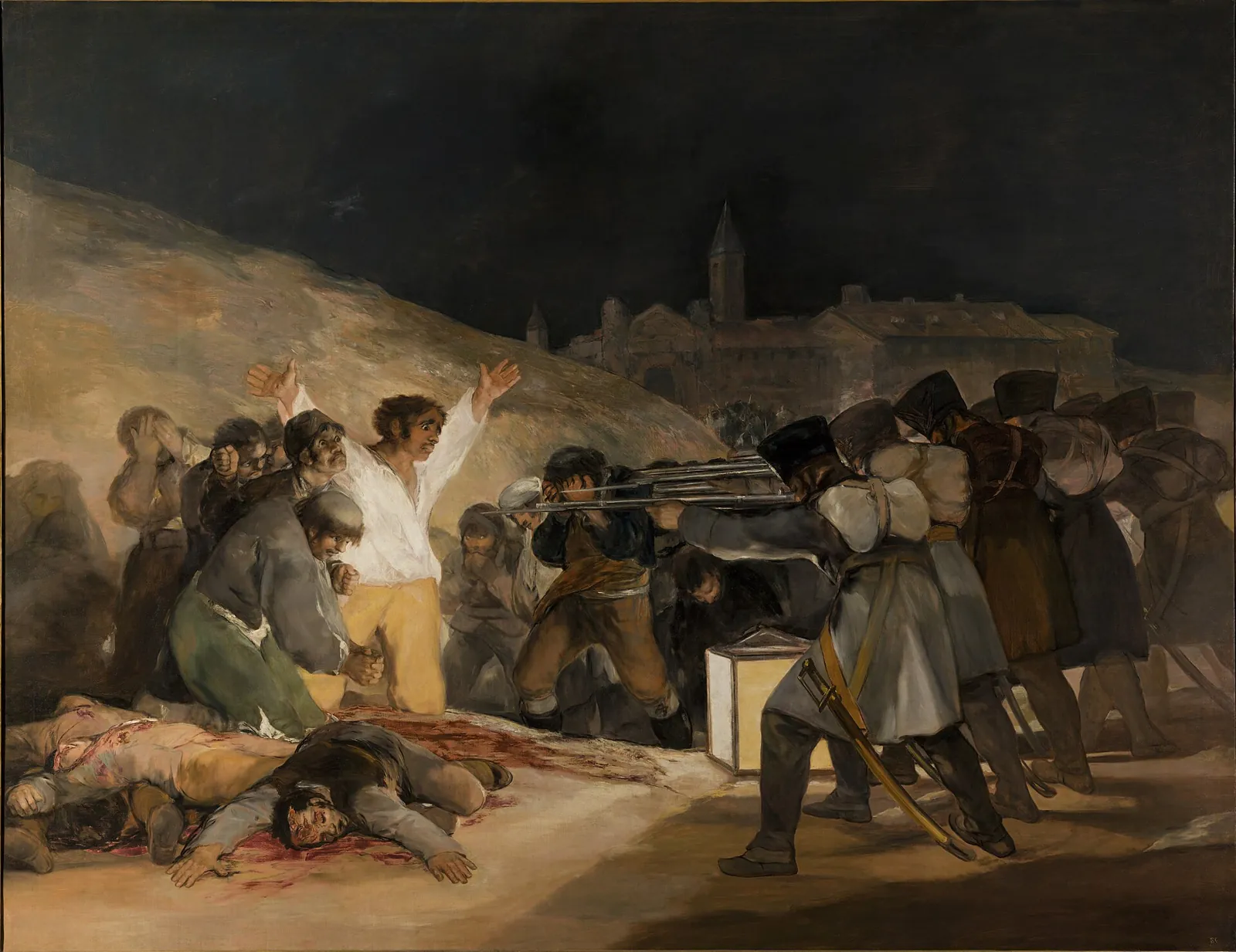
| The Third of May (room 64) | The man in the white shirt with his arms flung wide. |
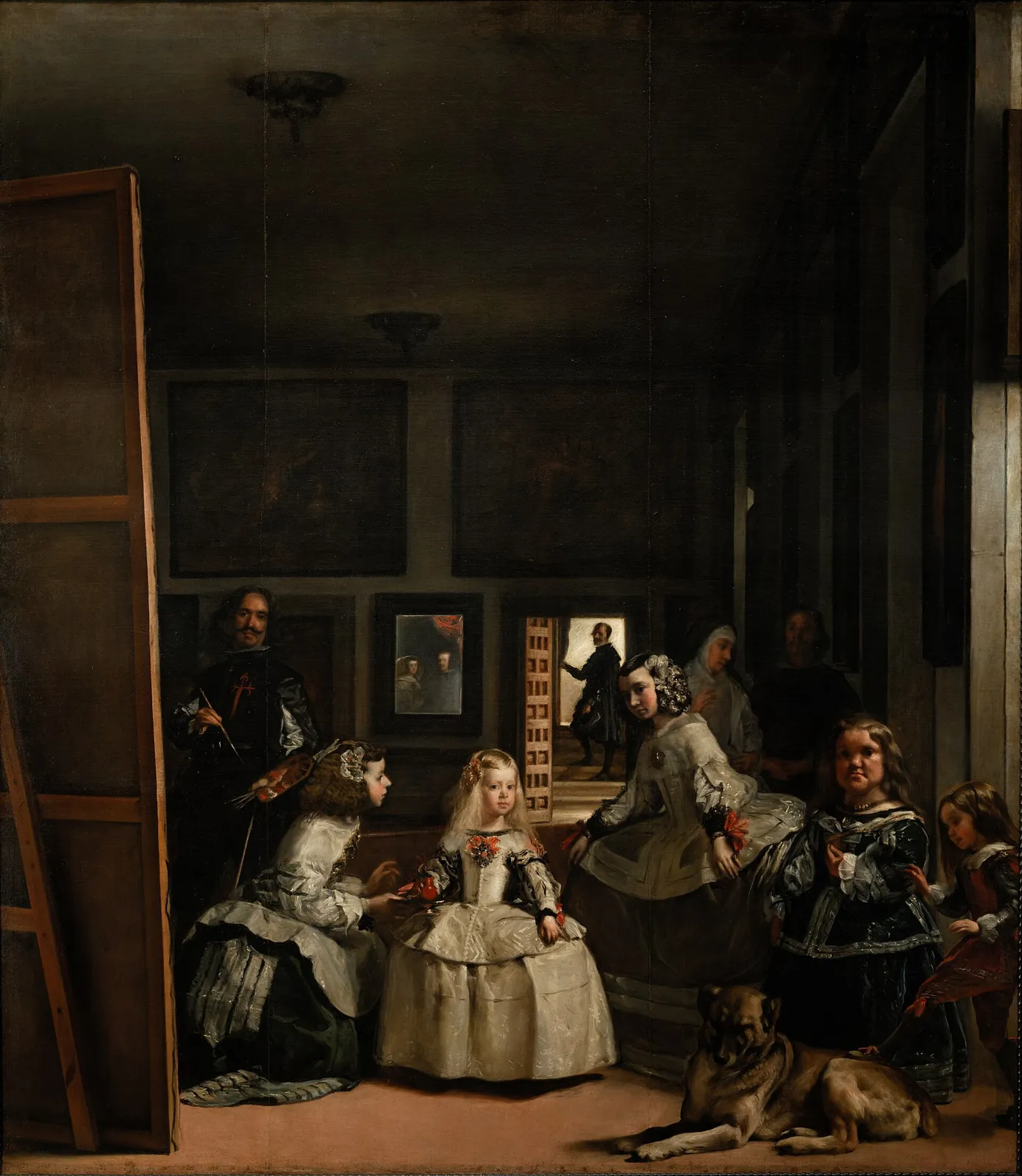
| Las Meninas (room 12) | Who is looking at whom in Velázquez’s most famous painting. |
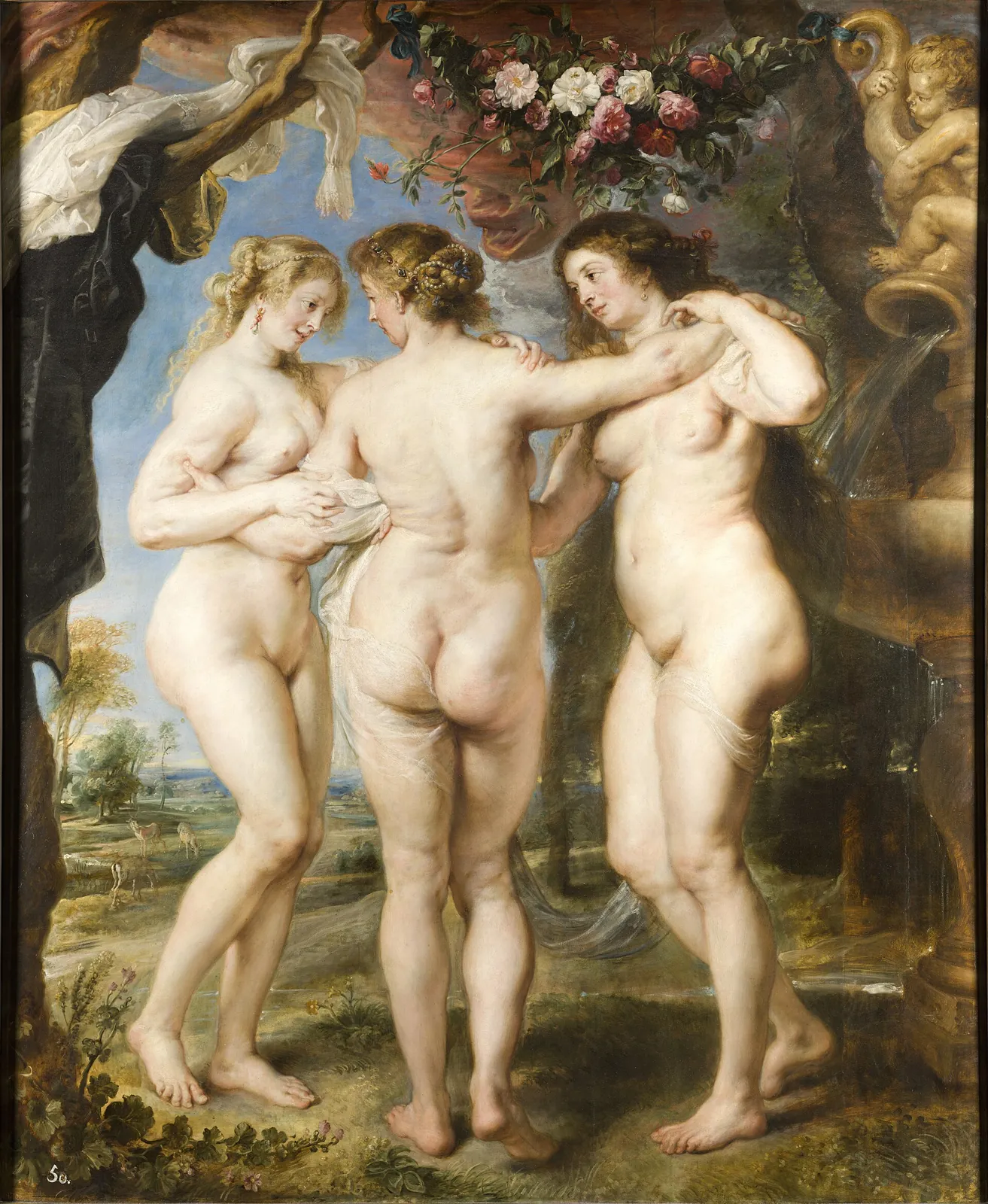
| The Three Graces (room 29) | Rubens, mythology and a face from his own family. |
Prado Museum opening hours, tickets and free entry
The museum is open Monday to Saturday from 10:00 to 20:00 and on Sundays and public holidays from 10:00 to 19:00. Last entry is 30 minutes before closing, and staff start clearing the rooms 10 minutes before. It is closed on 1 January, 1 May and 25 December, and on 6 January, 24 December and 31 December it opens only from 10:00 to 14:00.
A standard ticket costs €15 and a reduced one €7.50 (over-65s, Carné Joven youth card holders and large families). The museum’s own audio guide is extra: €5 on top of the ticket. Visitors with disabilities get in free by showing proof at the ticket desk. The ticket desks at the Goya entrance open at 9:45, but buying your ticket on the official website saves you the queue.
The last 2 hours are free for everyone: Monday to Saturday from 18:00 to 20:00, and Sundays and public holidays from 17:00 to 19:00. That covers the permanent collection; temporary exhibitions are half price in the same slot.
On the first Saturday of each month the museum also opens some of its spaces free of charge from 20:30 to 23:30, under its El Prado de Noche programme.
Getting there and what to know before you go in
The address is Paseo del Prado, s/n. By metro, the nearest stations are Estación del Arte and Atocha on line 1, and Banco de España on line 2. The commuter rail (Cercanías) station is Madrid-Atocha, and plenty of bus lines stop nearby, among them the 10, 14, 27, 34, 37 and 45.
There are several entrances, including the Goya, Murillo and Jerónimos doors. The Jerónimos door gives priority access to visitors with reduced mobility, over-65s and pregnant women. Your ticket is single entry: you cannot leave and come back in.
Backpacks and bags of 40 cm or more are not allowed in the galleries: they go to the cloakroom, which is free but has limited space. The same goes for umbrellas that do not fold and motorbike or bike helmets. And photos and filming are not allowed in the galleries: only in the Jerónimos Hall, the Hall of the Muses (Sala de las Musas) and the Cloister.
Lifts and ramps give access to all public areas. The cloakrooms lend wheelchairs, pushchairs and walking sticks free of charge, and there are sign-language guides, audio-described guides and hearing loops.
The Villanueva building, a museum meant for science
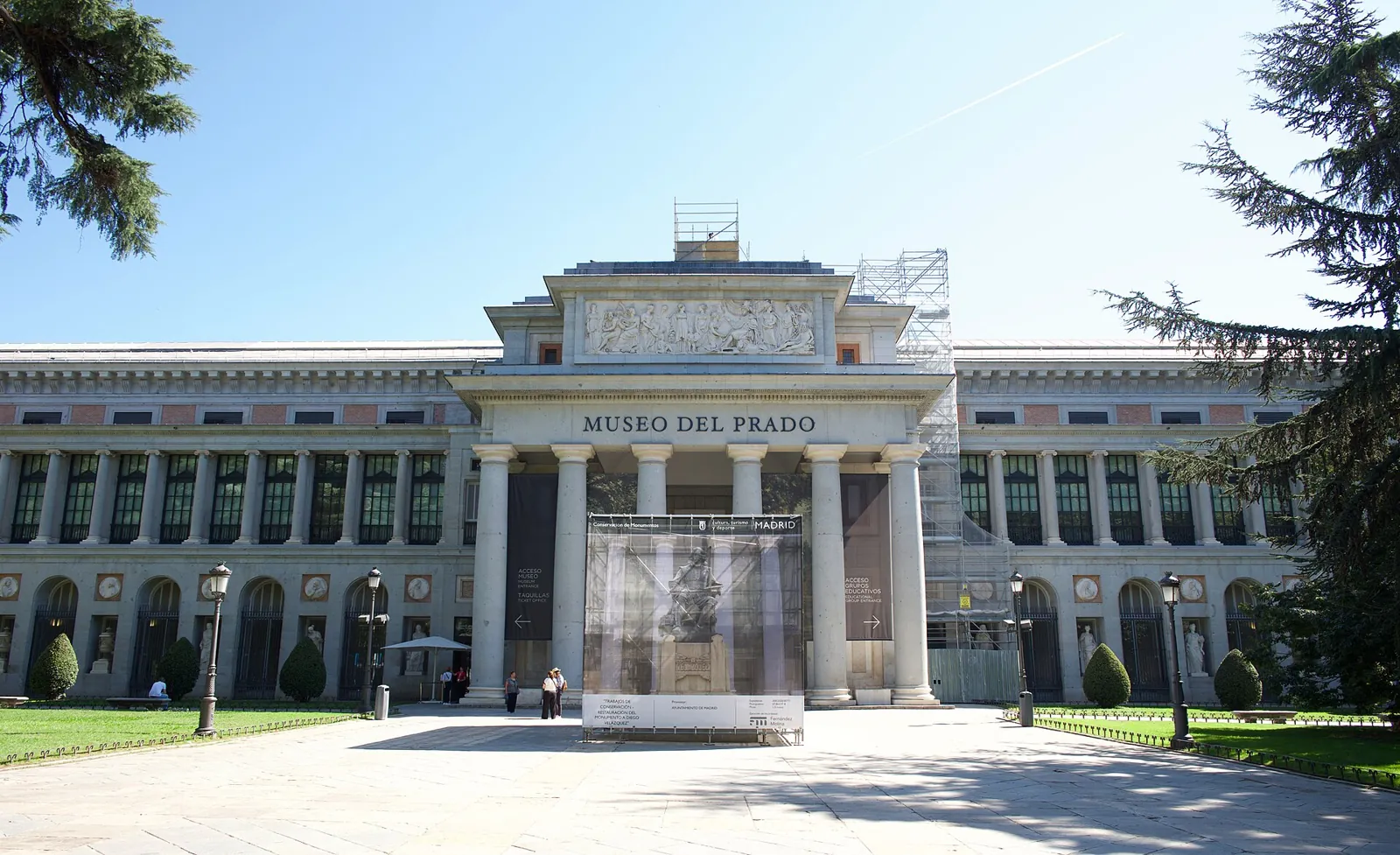
The main building was never designed for paintings. Juan de Villanueva designed it at the end of the 18th century, with work starting in 1785, to house the Natural History Cabinet and the Academy of Sciences, next to the Botanical Garden. That is why it has 3 entrances on 3 sides: the north one, now the Goya door; the south one, the Murillo door; and the central one, the Velázquez door, facing the boulevard.
The war of 1808 caught it half-built and left it wrecked: troops used it as barracks, and the lead from the roofs was melted down for bullets. Once the war was over it was restored for a new purpose, and on 19 November 1819 it opened as the Royal Museum of Paintings, with much of the royal collection. Today the museum carries on behind it, around the Jerónimos Cloister, in Rafael Moneo’s extension.
Floor 0: Van der Weyden, Bosch and Goya
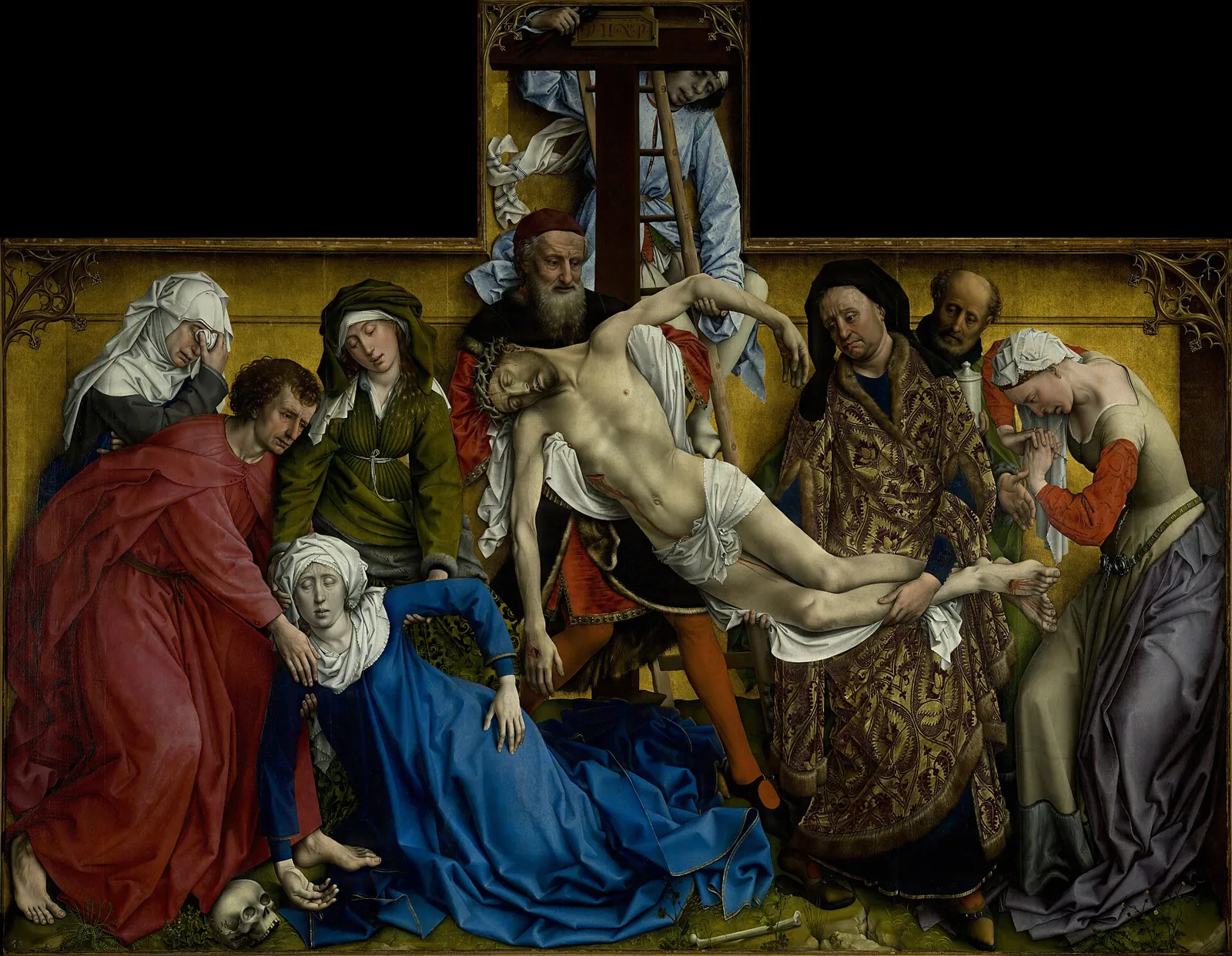
Begin with The Descent from the Cross by Rogier van der Weyden, in room 58. He painted it around 1435 for the crossbowmen’s guild of Leuven and squeezed every figure into a shallow space against a plain gold background, so they look like painted sculptures in an altarpiece. A century later, Mary of Hungary got hold of it in exchange for an organ and a copy.
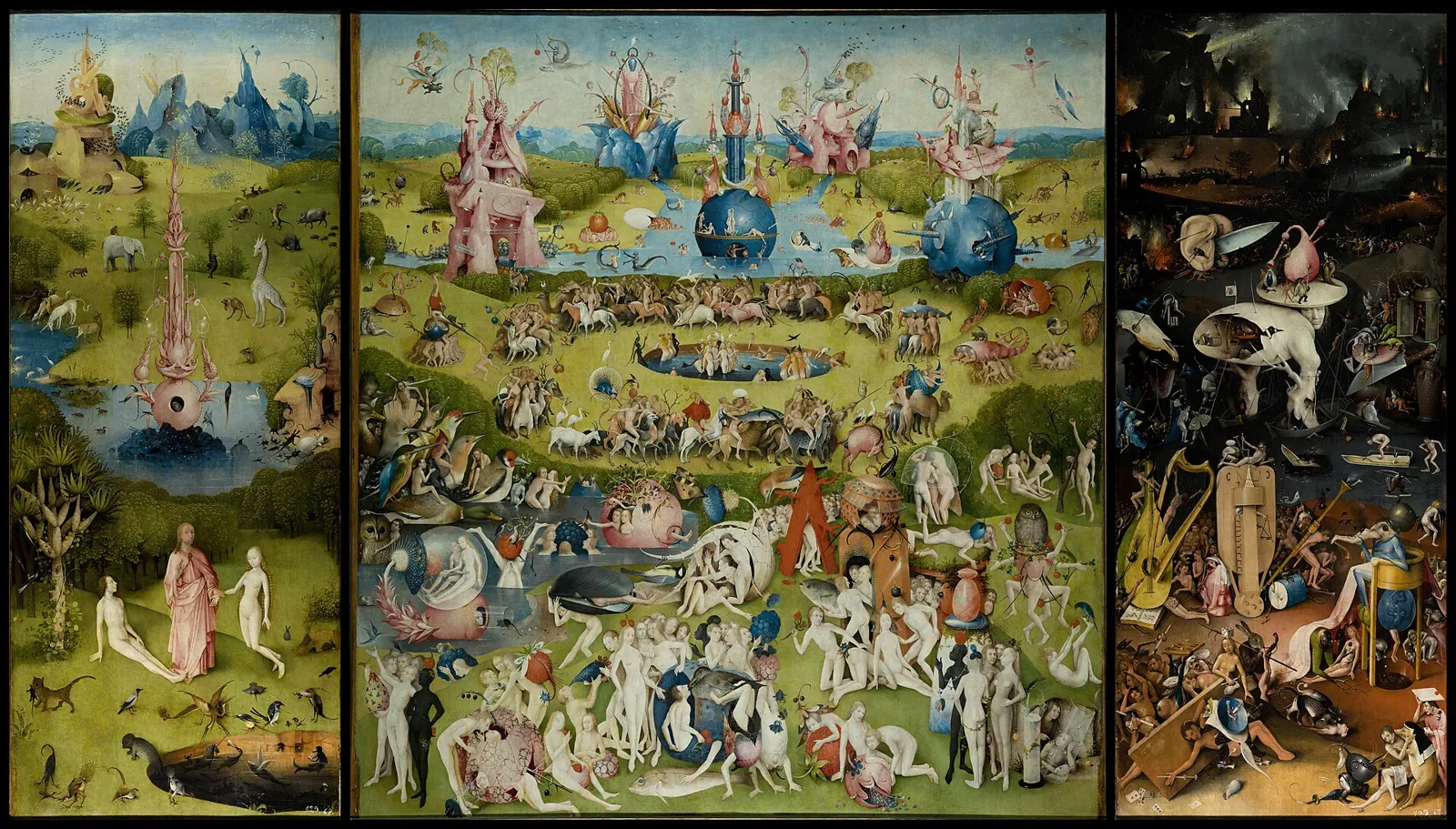
Close by, in room 56A, hangs The Garden of Earthly Delights, the triptych Bosch painted between 1490 and 1500. Open, it measures 220 × 389 cm, and it reads from left to right: paradise with Adam and Eve, a vast garden crowded with naked figures and giant fruit, and a dark, cruel hell. Philip II, a great admirer of the painter, kept it at El Escorial; it came to the Prado in 1939.
Finish the floor in room 64 with The Third of May 1808, the firing-squad painting Goya completed in 1814. It recalls the night after the Madrid uprising of 2 May 1808: a row of French soldiers whose faces you never see, facing a man in a white shirt with his arms flung wide, lit by a lamp on the ground.
Floor 1: Las Meninas and The Three Graces
Go up to floor 1 and find room 12: this is where Las Meninas hangs, painted by Velázquez in 1656. In the middle stands the Infanta Margarita with her maids of honour, the meninas; on the left, Velázquez himself, brush in hand, in front of a huge canvas; and at the back, a mirror reflecting King Philip IV and Queen Mariana of Austria. The figures in front are life-size, and it is the only Velázquez painting in which you can see the ceiling of the room.
End in room 29 with Rubens’s The Three Graces, painted between 1630 and 1635: the 3 daughters of Zeus, nude, against a bright landscape, on a canvas of 221 × 181 cm. One of them is often thought to be Helena Fourment, the painter’s second wife. If you have time left, the same floor holds Goya’s The Family of Charles IV in room 32 and The Nude Maja in room 38.
What to see near the Prado Museum
Retiro Park is a short walk from the museum, with the Palacio de Cristal inside it. Round off the day at Plaza de Cibeles and the Puerta de Alcalá. Each has its own free audio guide, like the rest of our Madrid audio guides.
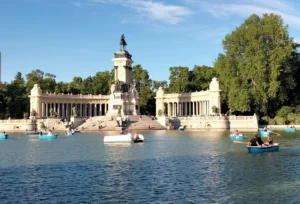 Free audio guideRetiro Park, Madrid
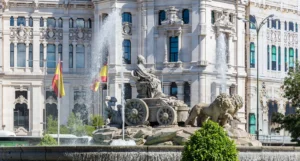 Free audio guidePlaza de Cibeles, Madrid
Where to find it
FAQs
How do the free audio guides work?
They play right here on audioguidetravel.com, with no app to download and no sign-up. Press play and listen as you walk round: a phone and a pair of headphones are all you need. The audio streams from this page, so you’ll need mobile data or Wi-Fi.
Can I take the tour at my own pace?
Of course! You set the pace: pause whenever you like, jump back or forward 15 seconds, or tap the bar to jump to any point, and listen as many times as you want so you don’t miss a thing.
If I'm in a group, can we use the same audio guide?
Yes. The same free audio guide opens on as many phones as you like, so you can go round together as a group or with your family, each person at their own pace and with their own headphones. The quickest way is to send the link via WhatsApp, Telegram or however you like: the buttons just below let you share it right now.
Visitor information
As of 17 Oct 2026- Opening hours
- Mon-Sat 10:00-20:00; Sundays and public holidays 10:00-19:00. Last entry 30 min before closing.
- Tickets
- Standard €15; reduced €7.50. Free: Mon-Sat 18:00-20:00, Sun and holidays 17:00-19:00.
- Time needed
- Audio guide about 6 min; this 5-painting route takes 1 hour at an easy pace.
- Getting there
- Paseo del Prado, s/n. Metro Estación del Arte or Atocha (L1) and Banco de España (L2).
- Accessibility
- Lifts and ramps across the public areas; free wheelchairs at the cloakroom.
- Tip
- Bags of 40 cm or more go to the free cloakroom. No photos in the galleries. Spot the crossbows in room 58.
- Official website
- www.museodelprado.es
Nearby
More free audio guides in Madrid
 3:40MadridMercado de San Miguel, Madrid: free audio guide, hours, historyThe Mercado de San Miguel, or San Miguel Market, is the iron-and-glass market hall next to Plaza Mayor…
 6:11MadridRetiro Park, Madrid: free audio guide, boats and opening hoursRetiro Park (Parque del Retiro, or El Retiro) is Madrid’s great historic garden: 125 hectares and more than…
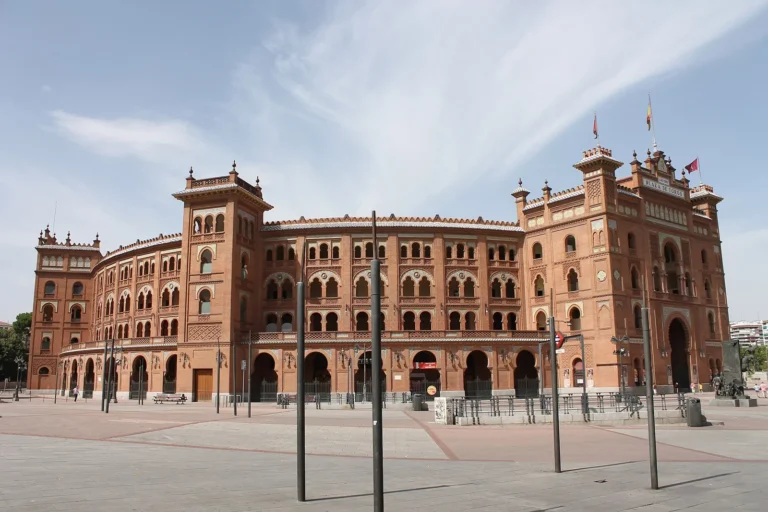 3:53MadridLas Ventas Bullring, Madrid: free audio guide, tour, ticketsLas Ventas is Madrid’s bullring: a red-brick Neo-Mudéjar landmark on Calle de Alcalá, opened in 1931 and the…