
Palais Garnier (Paris Opera House): free audio guide, hours and tickets
Free audio guide in English · no app, no sign-up
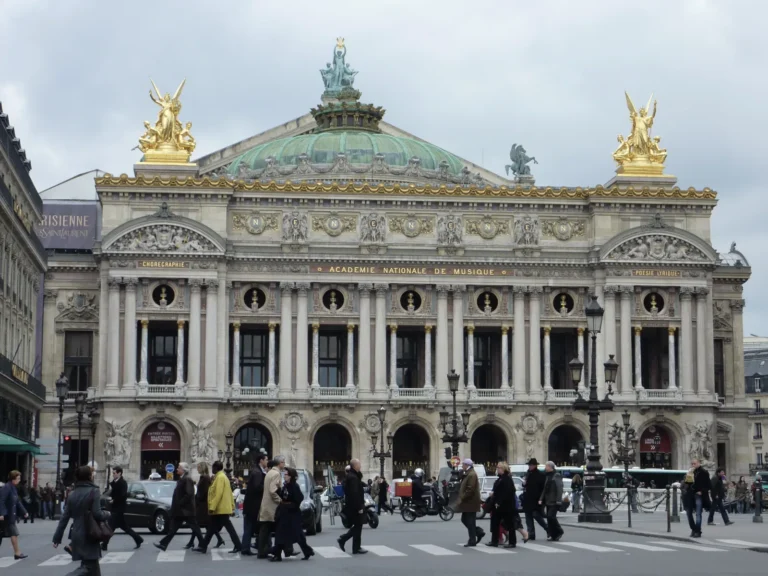
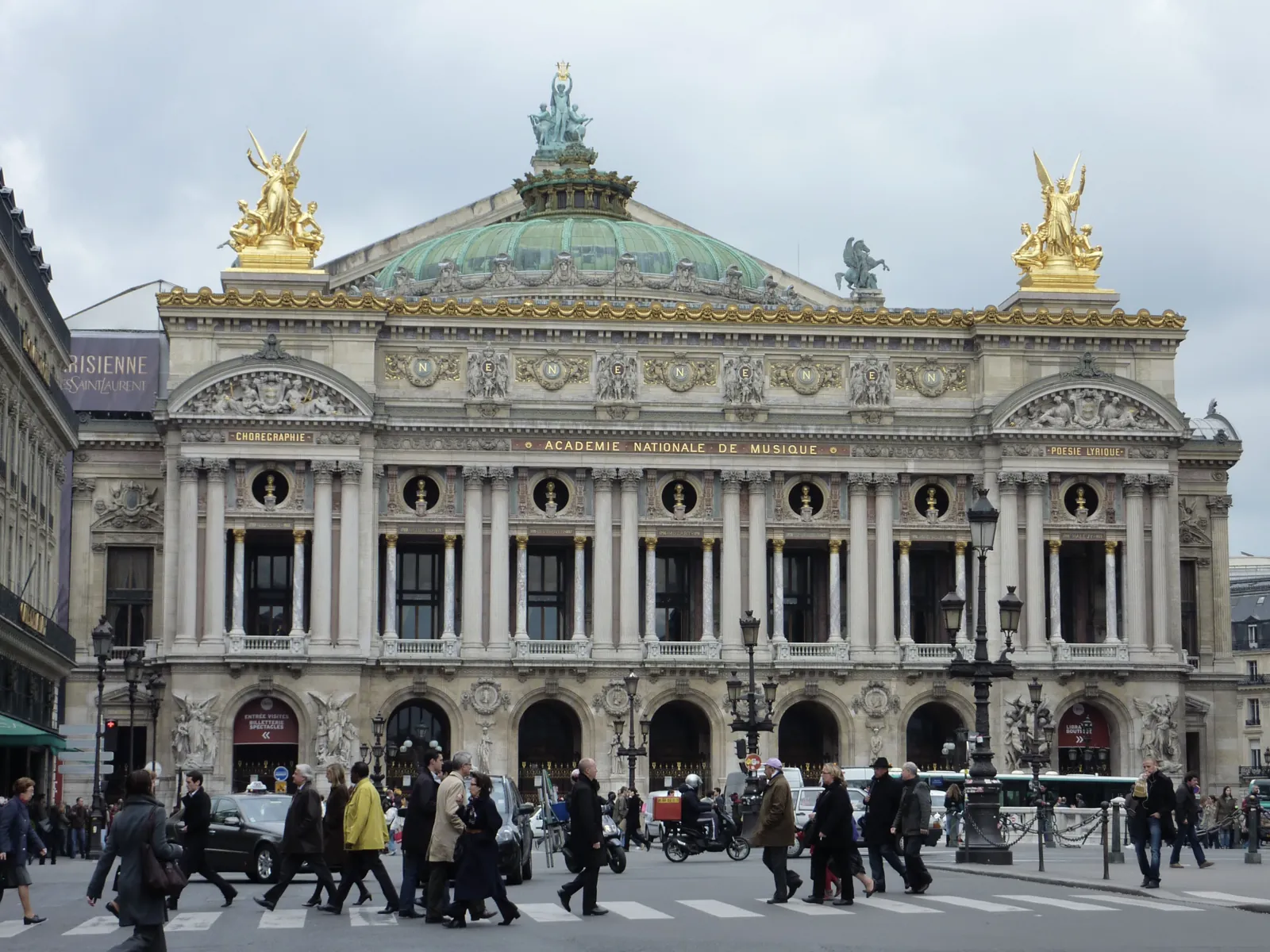
The Palais Garnier is the Paris opera house Charles Garnier built between 1861 and 1875. You tour it on your own with an online booking: €25 for visitors from outside the EEA. This free audio guide lasts about 5 minutes and takes you from the façade to the Grand Staircase, the auditorium with Chagall’s ceiling and the Grand Foyer.
 Audio guide
Before you go in
The few things that change your visit.
- Tickets online only: €25 from outside the EEA, €15 for EEA adults with ID
- The marble and onyx Grand Staircase, and Garnier's signature in the Subscribers' Rotunda
- Chagall's 1964 ceiling covers the original, and the chandelier weighs over 6 tonnes
- The Grand Foyer, with Baudry's ceiling and the mosaics of the Avant-Foyer
The Palais Garnier, or Opéra Garnier, is the Paris opera house that Charles Garnier built for Napoleon III between 1861 and 1875, and it is still the home of the Paris Opera Ballet. You can tour the inside on your own, with an online booking. This free audio guide runs for about 5 minutes, from the façade to the Grand Foyer, via the Grand Staircase and the auditorium with its chandelier.
What the Palais Garnier audio guide covers
Start it on the Place de l’Opéra, in front of the main façade, and keep it on inside, from the Subscribers’ Rotunda to the Grand Foyer. It has 6 parts:
| The façade | Why an assassination attempt gave Paris a new opera house, and the young 35-year-old architect who won the competition. |
| The Subscribers’ Rotunda | Where season-ticket holders came in, and the signature Garnier hid in the ceiling. |
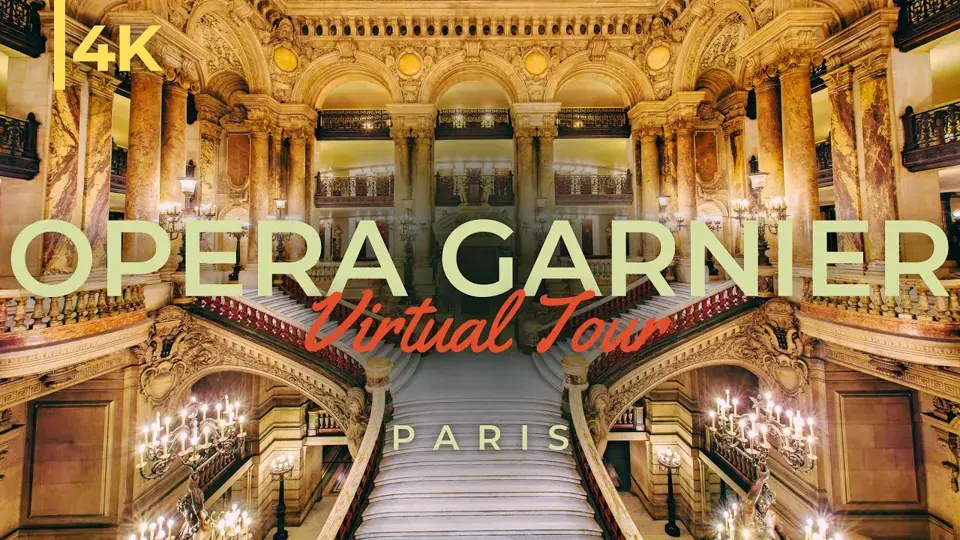
| The Grand Staircase | Marble, onyx handrails and balconies on all 4 sides. |
| The auditorium | Chagall’s 1964 ceiling, the older one still hidden underneath, and a chandelier of more than 6 tonnes. |
| Box 5 and the “lake” | The facts behind The Phantom of the Opera: the water tank under the building and what really fell in 1896. |
| The Grand Foyer | The interval hall, and the queen who broke the men-only rule of theatre foyers. |
Palais Garnier tickets and opening hours
The self-guided visit takes 1 hour 30 minutes and covers the public areas: the staircase, the foyers, the rotundas and, when there is no rehearsal, the auditorium. Tour tickets are sold online only, on the Paris Opera website or through its partner agencies: there are no tour tickets on sale at the door. Bookings open 30 days ahead. Hours and 2026 prices:
- Hours: 10am to 5pm; last entry at 4pm.
- Closed days: there are scattered days with no tours, shown in the booking calendar. Between 10 November and 9 December 2026 there are 6 days with no tours, and on 12 November it opens only from 1pm to 5pm.
- Adults from outside the European Economic Area (including the US, the UK, Canada and Australia): €25.
- Adults from France and the EEA: €15, with an ID card or passport (EEA residents who are not citizens: a long-term residence document).
- Ages 13 to 25: €20 (outside the EEA) or €10 (EEA), with proof of age.
- Free: children up to 12, and disabled visitors with one companion. Free tickets are also booked online and picked up at the ticket office at your time slot.
You can arrive up to 30 minutes after your booked time; tickets cannot be exchanged or refunded. They include the temporary exhibitions of the Opera Library-Museum: one on how stage costumes are decorated, until 28 February 2027, and one on Wagner’s Ring cycle from 27 October 2026 to 20 February 2027.
The Grand Staircase and the Subscribers’ Rotunda
It all starts with a bomb. On 14 January 1858, Italian republicans led by Felice Orsini threw explosives at Napoleon III’s procession outside the old opera house on Rue Le Peletier. The emperor walked away unhurt, but he wanted a new theatre, with an entrance of his own. A competition was announced in 1860, 171 architects entered, and on 30 May 1861 the jury chose, unanimously, a 35-year-old architect who had yet to build anything on this scale: Charles Garnier.
Building took from 1861 to 1875. The façade was unveiled first, on 15 August 1867, for the World’s Fair; the opera house opened on 5 January 1875, by then under the Republic, and Garnier had to pay for his own seat.
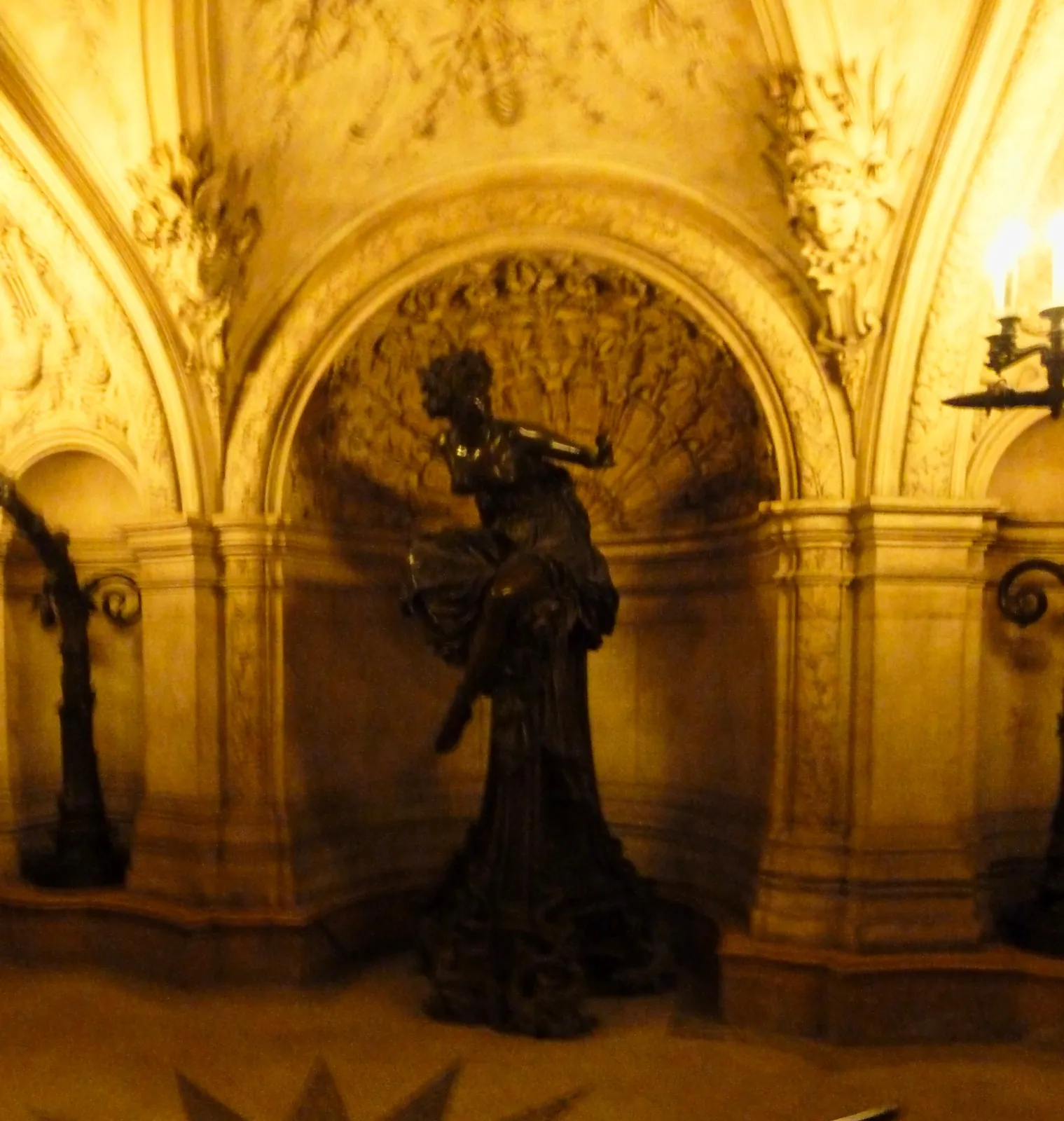
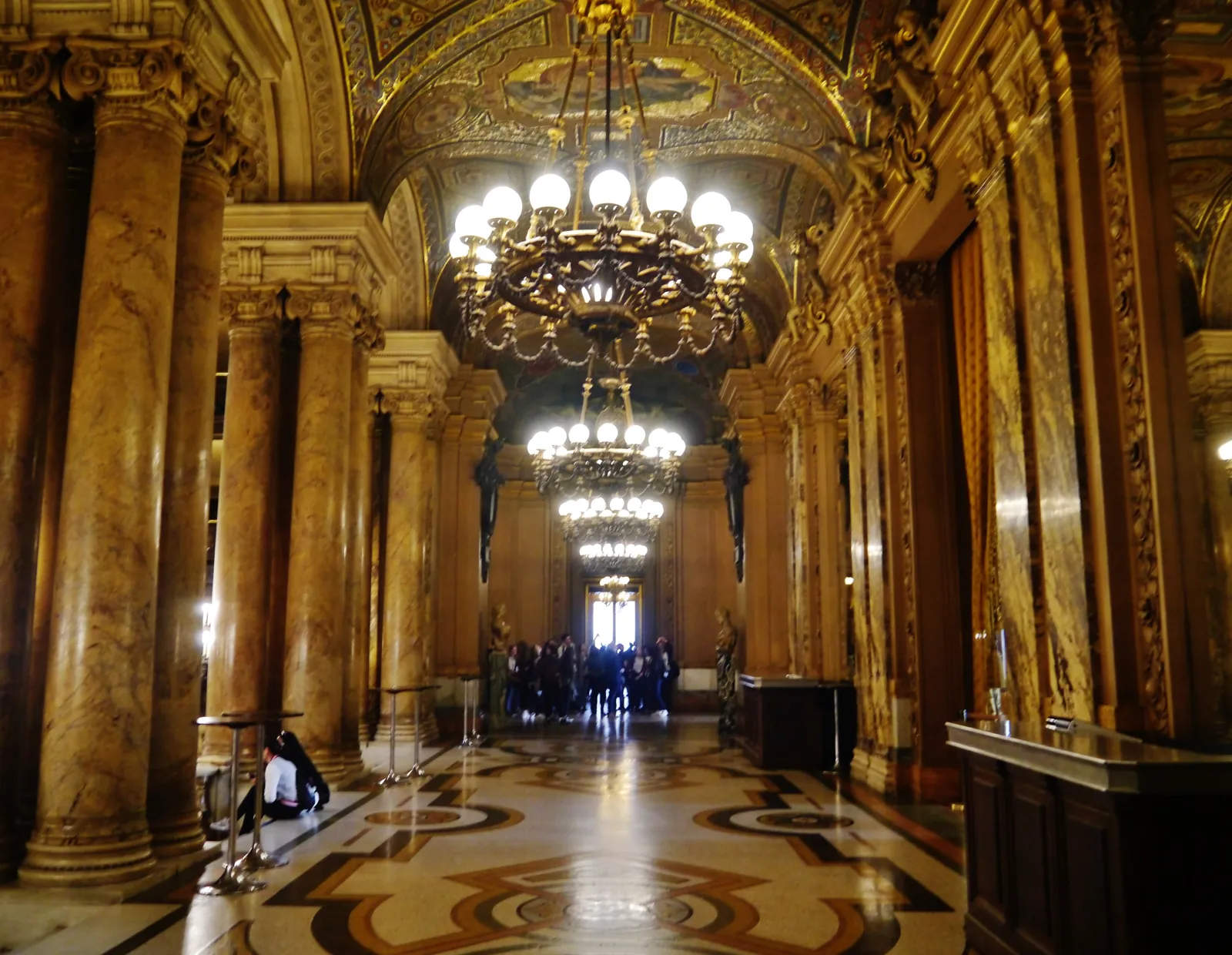
The Subscribers’ Rotunda. This round hall under the auditorium is where season-ticket holders arrived. Look at the medallion in the middle of the ceiling: among the scrolls you can read “JEAN LOUIS CHARLES GARNIER ARCHITECTE 1861-1875”. That is his signature. On the same level, at the foot of the staircase, is the Pythia fountain, with a statue of Apollo’s oracle priestess.
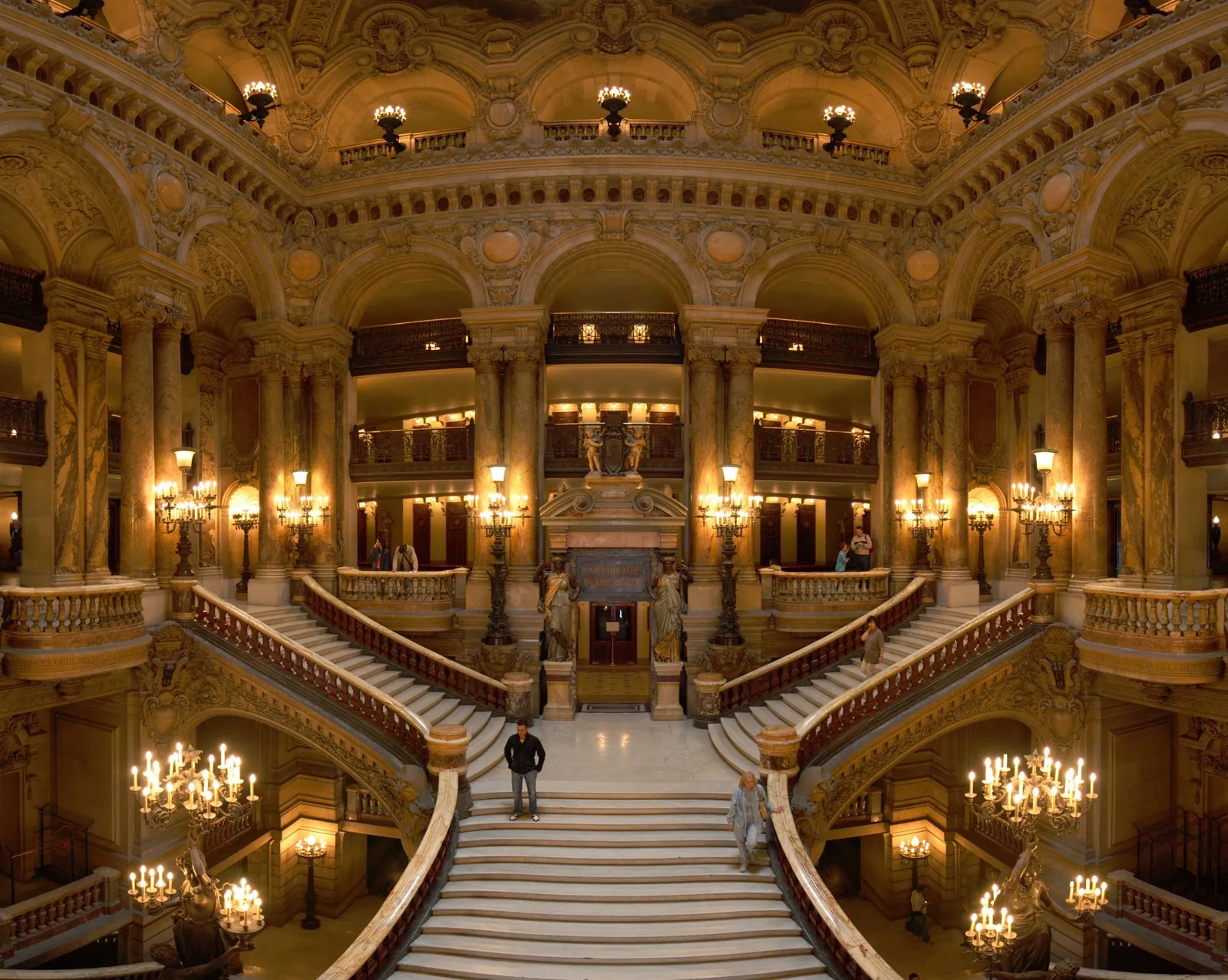
The Grand Staircase. This is the heart of the building. It is white marble, with onyx handrails and small balconies on all 4 sides, and it is one of the most celebrated spots in the building. Overhead, Isidore Pils’ ceiling, with the Triumph of Apollo among its 4 scenes.
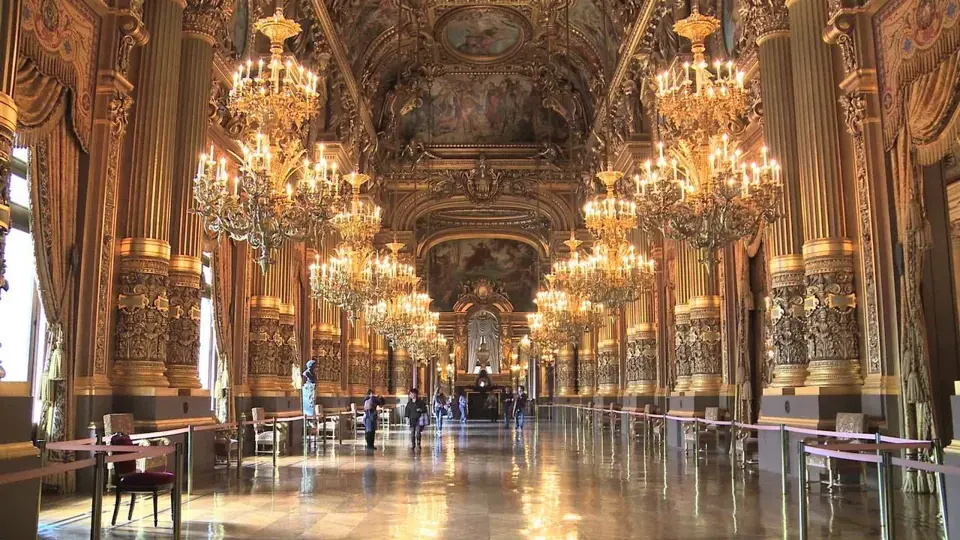
The auditorium: Chagall’s ceiling and the chandelier
The auditorium is a horseshoe in the Italian style, with 5 levels of red and gold boxes and 1,979 seats. It is about 31 m wide, 32 m deep and 20 m high. Be aware that rehearsals close it often and at short notice, and no ticket guarantees you will see it. If it is closed, the tour carries on through the other spaces.
The ceiling. What you see above was painted by Marc Chagall, commissioned by culture minister André Malraux, and unveiled on 24 September 1964: 5 sections of bright colour with scenes from 14 composers, from Mozart to Bizet. Jules-Eugène Lenepveu’s original ceiling is still there underneath: Chagall’s sits on a removable frame.
The chandelier. It hangs in the centre and weighs more than 6 tonnes. Garnier drew it in gilded bronze and crystal, it was first lit by gas, and from 1881 it started to take electric bulbs.
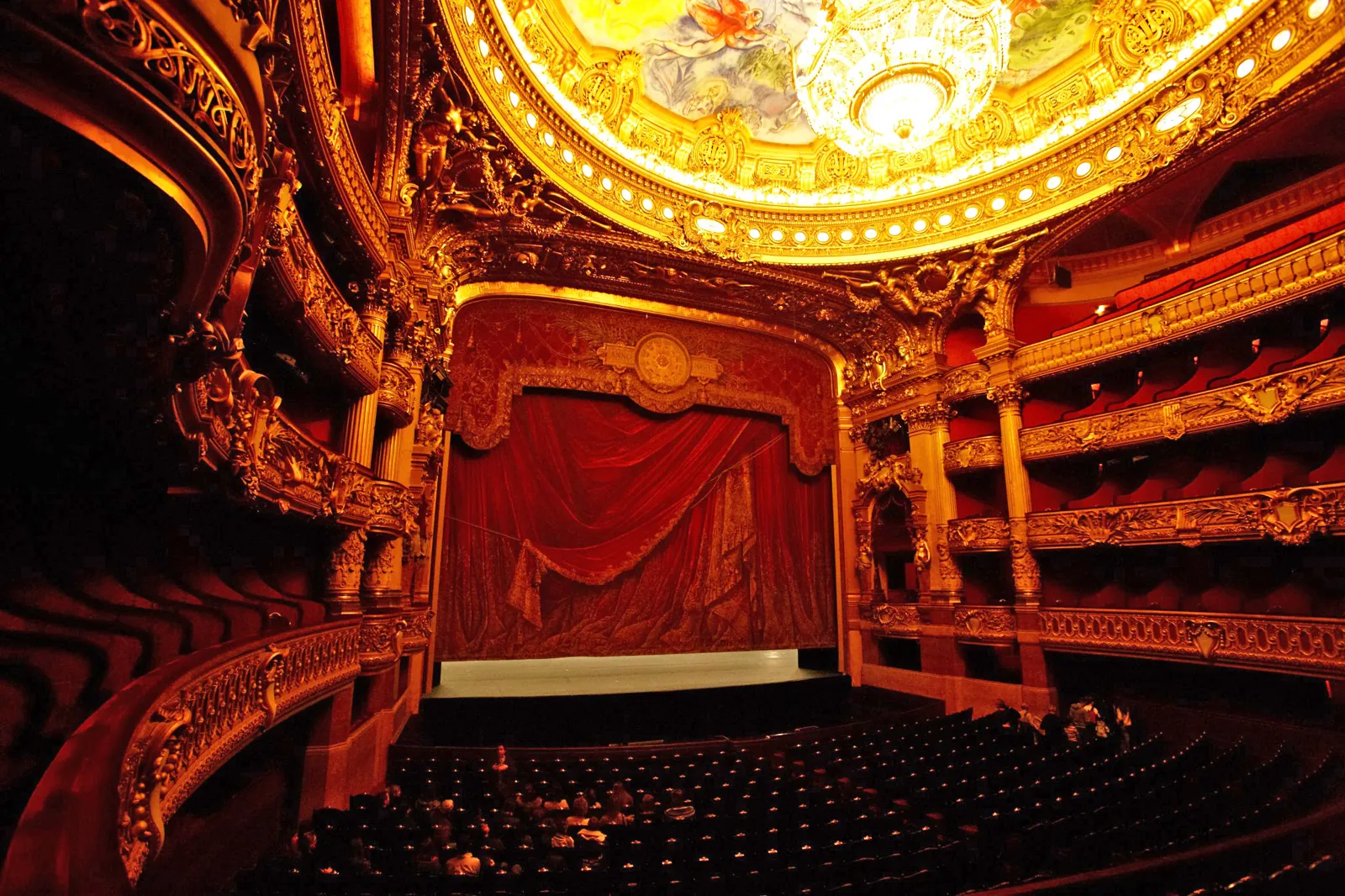
The Grand Foyer and the mosaic Avant-Foyer
Before the Grand Foyer you walk through the Avant-Foyer, a gallery whose vault is covered in mosaics on a gold background. From here you look down on the staircase again.
The Grand Foyer is the interval hall: mirrors, tall windows onto the Avenue de l’Opéra and a ceiling by Paul Baudry on the history of music. Until then, theatre foyers were for men only; on opening night the Queen of Spain asked to see it and walked in, and the other women followed her.
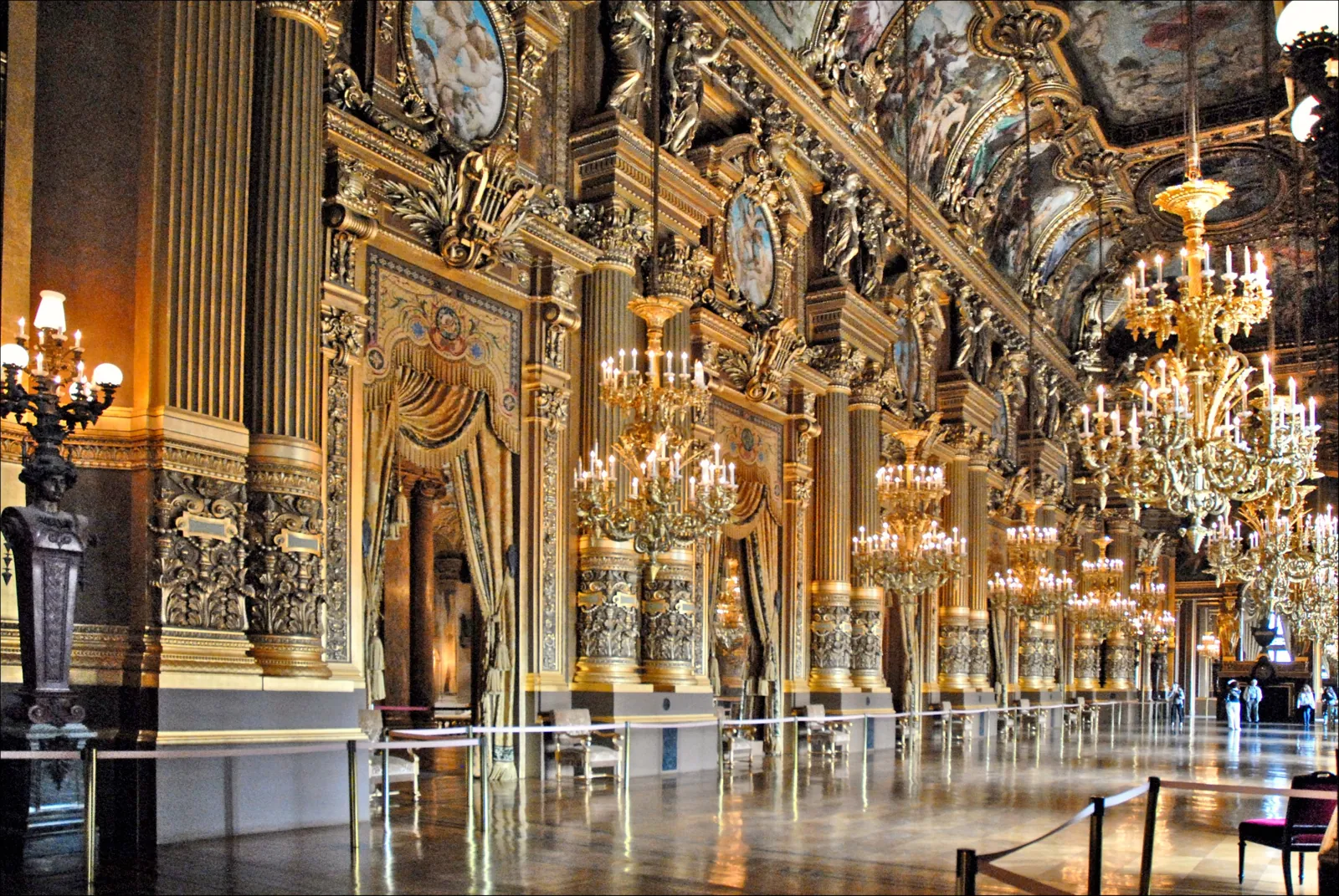
At each end of the Avant-Foyer are the Moon and Sun salons, and at the end of a long gallery, the bright Rotonde du Glacier, with a ceiling by Georges Clairin. Look out too for the 1:100 cutaway model of the whole theatre: it was installed for the building’s 150th anniversary and shows what the tour does not, such as how the auditorium meets the stage, and the backstage areas.
Getting to the Palais Garnier and accessibility
The visitor entrance is at the corner of Rue Scribe and Rue Auber, on the west side of the building, not at the main façade:
- Metro: Opéra (lines 3, 7 and 8) or Chaussée d’Antin-La Fayette (7 and 9).
- RER: Auber (line A).
- Bus: 20, 21, 27, 29, 32, 45, 52, 66, 68 and 95.
- Bring ID unless you pay €25. Only the full adult rate needs no proof; every other rate, free tickets included, needs proof of eligibility and ID.
- Start outside. The audio guide begins on the Place de l’Opéra, in front of the façade; the visitor entrance is round the corner, at Scribe and Auber.
- The official multimedia guide costs extra. The tablet is €8 (€7 online); this audio guide is free.
Afterwards, Notre-Dame de Paris is about 2.5 km south-east as the crow flies, a pleasant walk down to the Seine. The Louvre is closer, about 1.3 km south.
 Free audio guideNotre-Dame de Paris
 Free audio guideLouvre Museum
 Free audio guideMontmartre audio guide: free walking tour with Sacré-Cœur
Where to find it
FAQs
How do the free audio guides work?
They play right here on audioguidetravel.com, with no app to download and no sign-up. Press play and listen as you walk round: a phone and a pair of headphones are all you need. The audio streams from this page, so you’ll need mobile data or Wi-Fi.
Can I take the tour at my own pace?
Of course! You set the pace: pause whenever you like, jump back or forward 15 seconds, or tap the bar to jump to any point, and listen as many times as you want so you don’t miss a thing.
If I'm in a group, can we use the same audio guide?
Yes. The same free audio guide opens on as many phones as you like, so you can go round together as a group or with your family, each person at their own pace and with their own headphones. The quickest way is to send the link via WhatsApp, Telegram or however you like: the buttons just below let you share it right now.
Visitor information
As of 10 Nov 2026- Opening hours
- 10am-5pm, last entry 4pm. Closed on some days: check the booking calendar.
- Tickets
- €25 adults from outside the EEA; €15 EEA adults with ID; under-13s free. Online only.
- Time needed
- Audio guide about 5 min; the self-guided tour inside takes 1 hour 30 minutes.
- Getting there
- Visitor entrance at the corner of Rue Scribe and Rue Auber. Metro Opéra (3, 7, 8); RER A Auber.
- Accessibility
- Wheelchair accessible: a lift serves the tour route. Suitcases are not allowed.
- Tip
- Book a week ahead: there are no tour tickets at the door and some days sell out.
- Official website
- www.operadeparis.fr
Nearby
More free audio guides in Paris
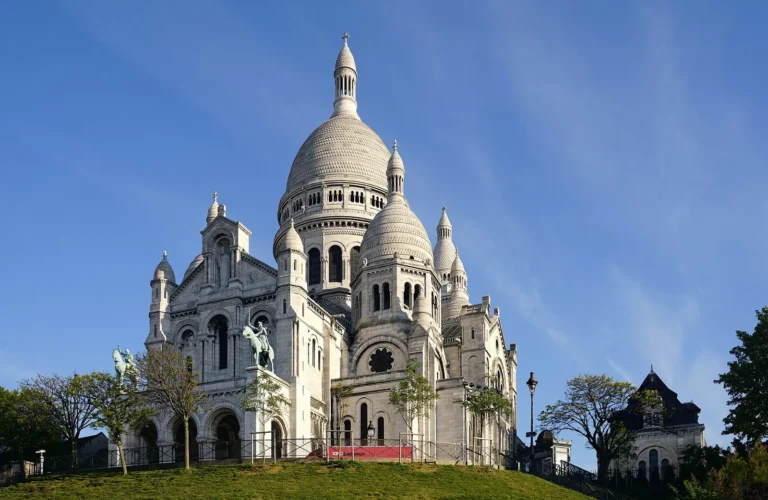 4:47ParisMontmartre audio guide: free walking tour with Sacré-CœurMontmartre is the painters’ hill in the north of Paris, crowned by the Sacré-Cœur Basilica. This free audio…
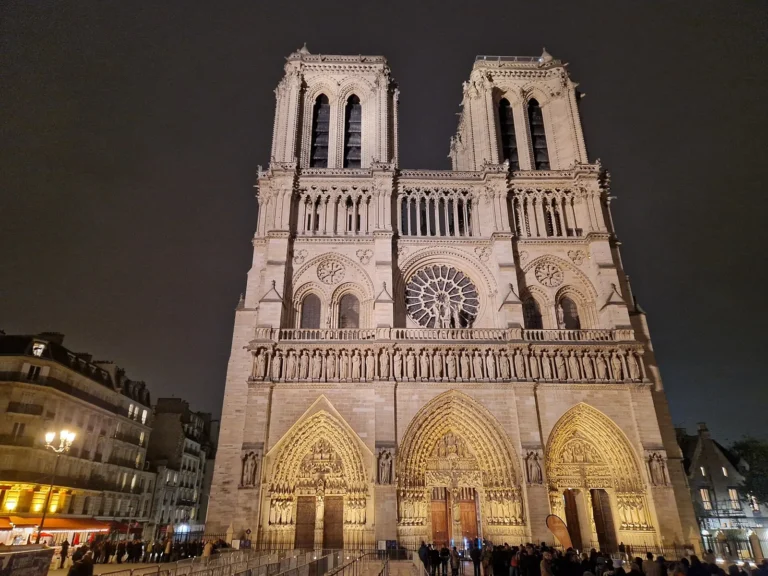 3:40ParisNotre-Dame de Paris: free audio guide, opening hours and towersNotre-Dame de Paris is the city’s great Gothic cathedral, on the Île de la Cité, begun in 1163…
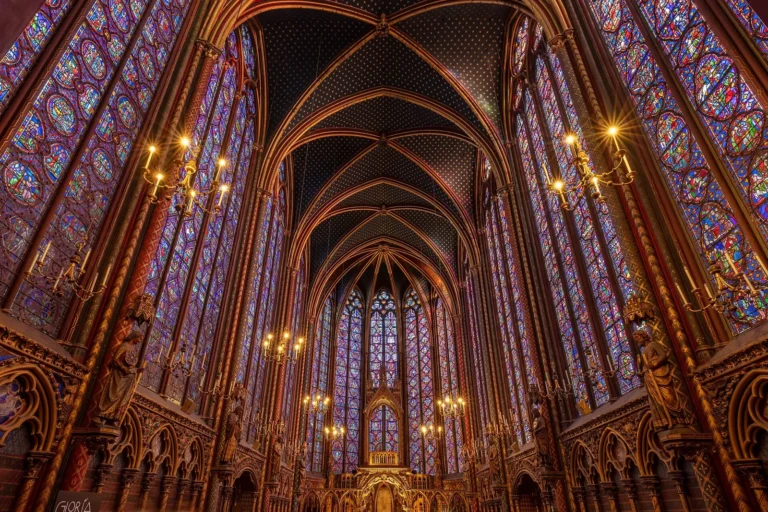 4:07ParisSainte-Chapelle: free audio guide, tickets and opening hoursThe Sainte-Chapelle is Louis IX’s Gothic chapel on the Île de la Cité, consecrated in 1248 to hold…