
Montmartre audio guide: free walking tour with Sacré-Cœur
Free audio guide in English · no app, no sign-up
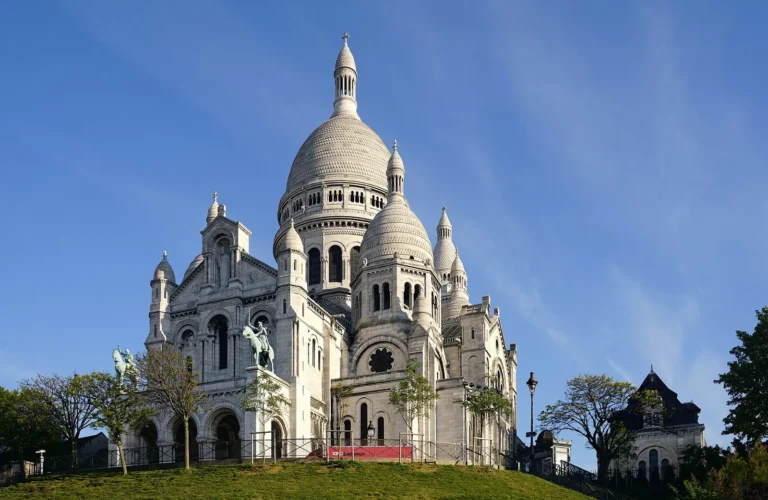
Montmartre is the painters’ hill in the north of Paris, crowned by the Sacré-Cœur Basilica. This free audio guide lasts about 5 minutes and walks you downhill from the basilica to Place du Tertre, the windmills and Le Bateau-Lavoir.
 Audio guide
Before you go in
The few things that change your visit.
- Sacré-Cœur is open every day from 6:30 a.m. to 10:30 p.m., and entry is free
- The dome costs €8 from age 16 and €5 up to 15, no booking; 280 steps, no elevator
- A downhill walk: Sacré-Cœur, Place du Tertre, the vineyard, Moulin de la Galette, Le Bateau-Lavoir and the Wall of Love
- Metro line 2 to Anvers to go up; line 12 from Abbesses to get back
Montmartre is the hill in the north of Paris, 130 metres high, crowned by the white Sacré-Cœur Basilica. It was a village of windmills and vineyards before it became the painters’ quarter of Renoir and Picasso. The basilica is open daily from 6:30 a.m. to 10:30 p.m., and entry is free. This free audio guide lasts about 5 minutes and walks you downhill from the basilica to Place des Abbesses.
What the Montmartre audio guide covers
Press play on the terrace in front of the basilica, facing Paris, and keep it on as you head downhill: each part tells you where to look. There are 6 parts:
| The hill of the martyrs | Where the name Montmartre comes from, and the legend of Saint Denis. |
| Sacré-Cœur | Why it was built, why it stays so white, and the giant bell in its tower. |
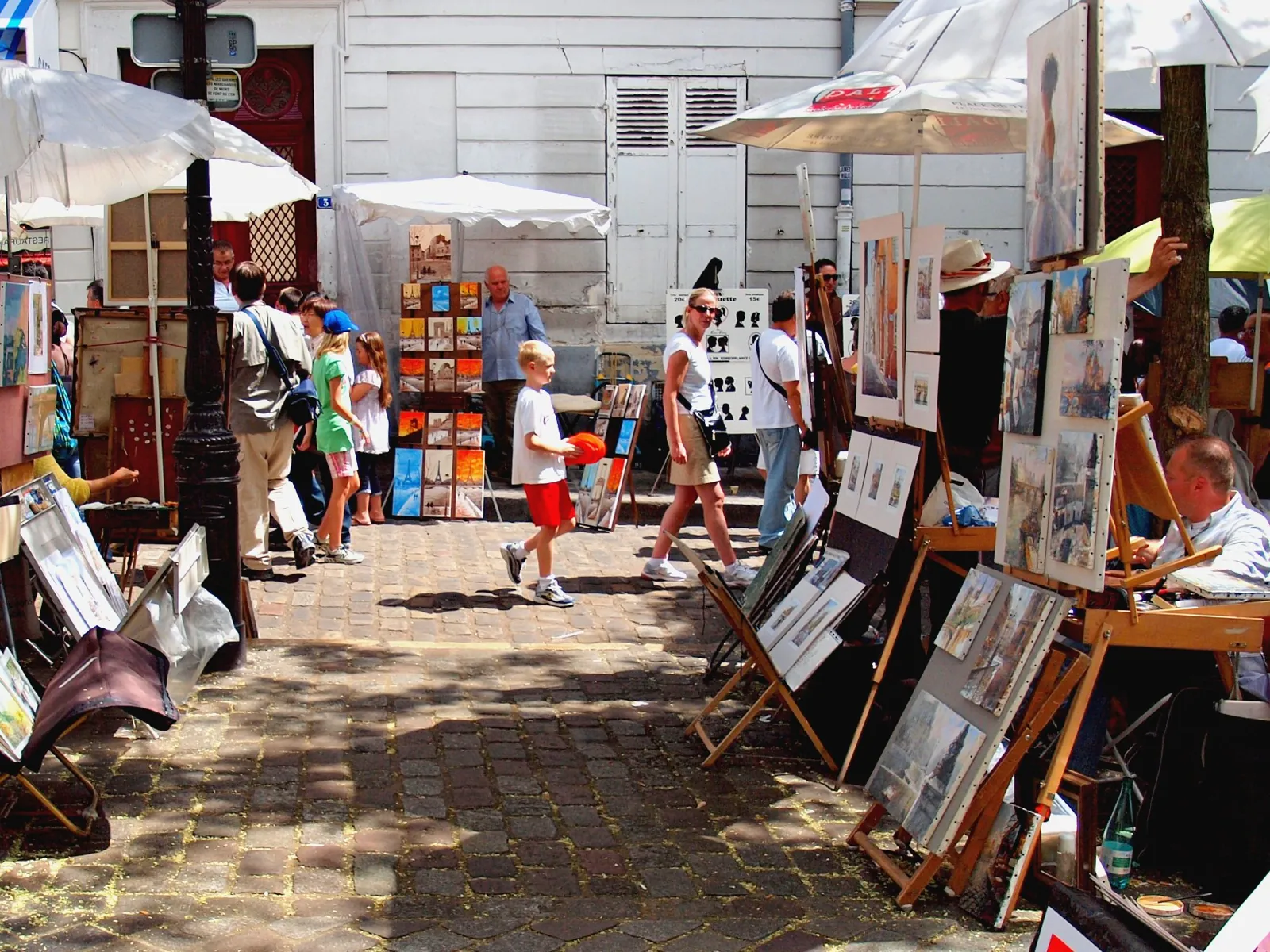
| Place du Tertre | The old village square, now full of easels. |
| Windmills and vines | The 13 windmills the hill once had, and the vineyard that still makes wine. |
| Le Bateau-Lavoir | The studio building where Picasso painted Les Demoiselles d’Avignon. |
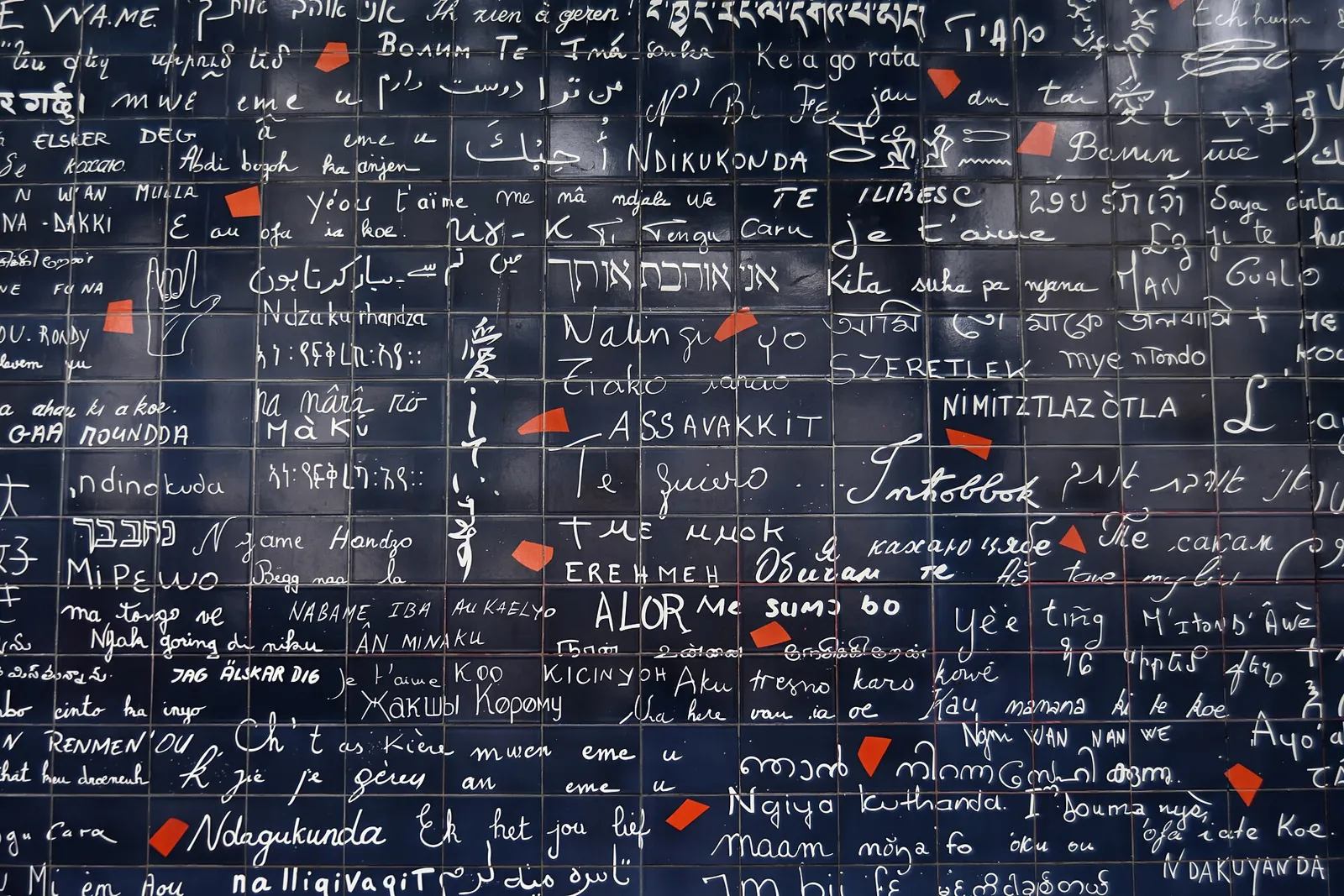
| The Wall of Love | “I love you” in 250 languages, to finish the walk. |
Sacré-Cœur: opening hours, entry and the dome
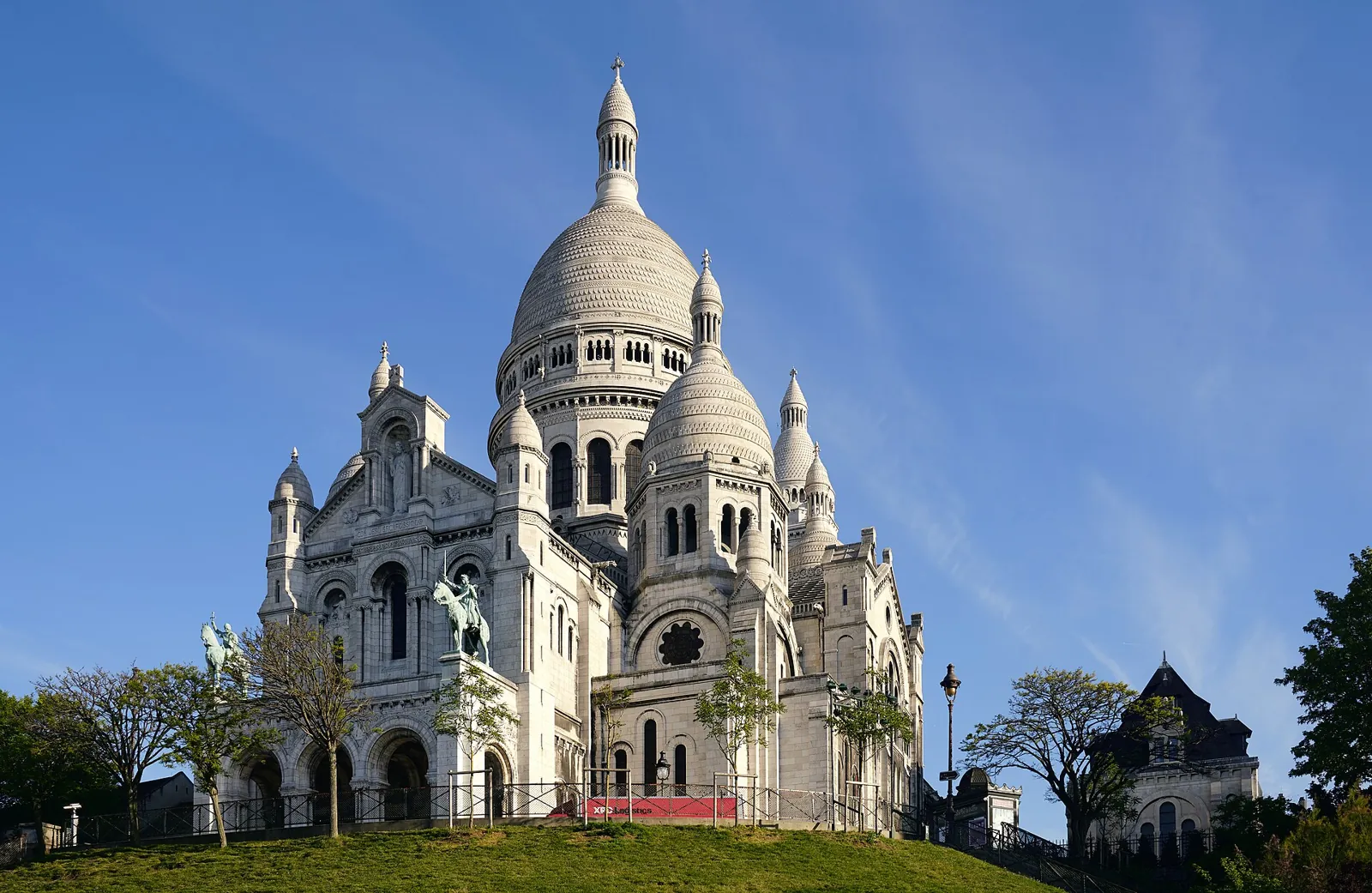
The Sacré-Cœur Basilica is open every day of the year, from 6:30 a.m. to 10:30 p.m., and admission is free for everyone. It stays open later on major holy days, for some prayer vigils and on the first Thursday of each month, for the Holy Hour, when it closes at midnight. Between 10:30 a.m. and 5 p.m. the crowds are big enough that you may wait 10 to 15 minutes to get in.
This is a working church, with at least 4 Masses every day and 5 on Fridays, so keep your voice down inside. Look up above the choir at the huge mosaic of Christ offering his heart: it covers 475 square metres and is one of the largest in the world.
The dome is a separate visit, and it gives you the best view in Montmartre: a full 360-degree panorama over Paris. In autumn it is open daily from 10:15 a.m. to 5:30 p.m., with last admission at 5 p.m., and it closes for a short break at midday; the hours change with the seasons. Tickets cost €8 from age 16 and €5 for children up to 15, and you don’t need to book: you buy them on site. The dome entrance is outside the basilica. After the security check, go down into the moat on your left; at the bottom of the stairs, the ticket office is about 20 metres to your right.
If you have limited mobility, there is an elevator into the basilica at the back, at 35 rue du Chevalier-de-la-Barre, open from 8:30 a.m. to 6:30 p.m.
Montmartre walking route, stop by stop
This route goes downhill: you climb once, to the basilica, and then wander down to Abbesses metro station. Without going inside anywhere, it takes a relaxed couple of hours.
- Sacré-Cœur. From the terrace, all of Paris is laid out below you. The basilica was built between 1875 and 1914 from a stone that turns whiter in the rain, and its bell tower holds La Savoyarde, a 19-tonne bell.
- Place du Tertre, about 5 minutes away. In 1790 this square was home to the town hall of the commune of Montmartre, which only became part of Paris in 1860. Today it’s packed with painters and portrait artists at their easels.
- Saint-Pierre de Montmartre, next to the square. One of the oldest churches in Paris, from the 12th century, it belonged to the abbey that King Louis VI founded in 1134.
- Rue Cortot and the Musée de Montmartre. Renoir rented a studio at number 12 in 1876, and Suzanne Valadon and her son Maurice Utrillo later lived and painted there.
- The Clos Montmartre vineyard, where rue des Saules meets rue Saint-Vincent. It makes about 500 litres of wine a year. Across the street is the Lapin Agile, the cabaret where the artists used to gather.
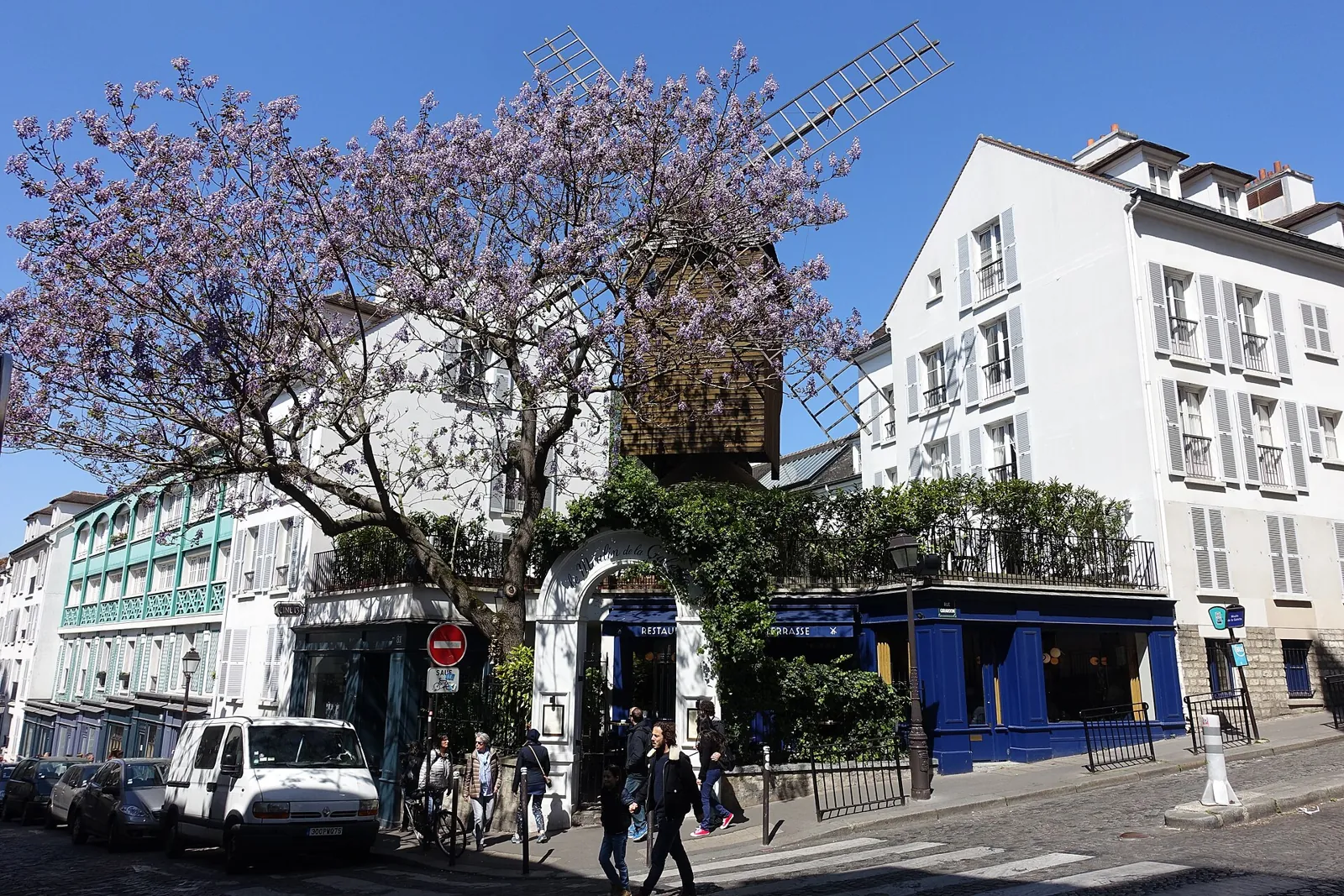
- Moulin de la Galette, on the corner of rue Lepic and rue Girardon. The hill once had 13 windmills; by the late 19th century only 2 were left. Renoir painted its Sunday dances in 1876.
- Rue Lepic, which curves down the hill. Follow it all the way and you reach the Café des Deux Moulins, the one from the film Amélie.
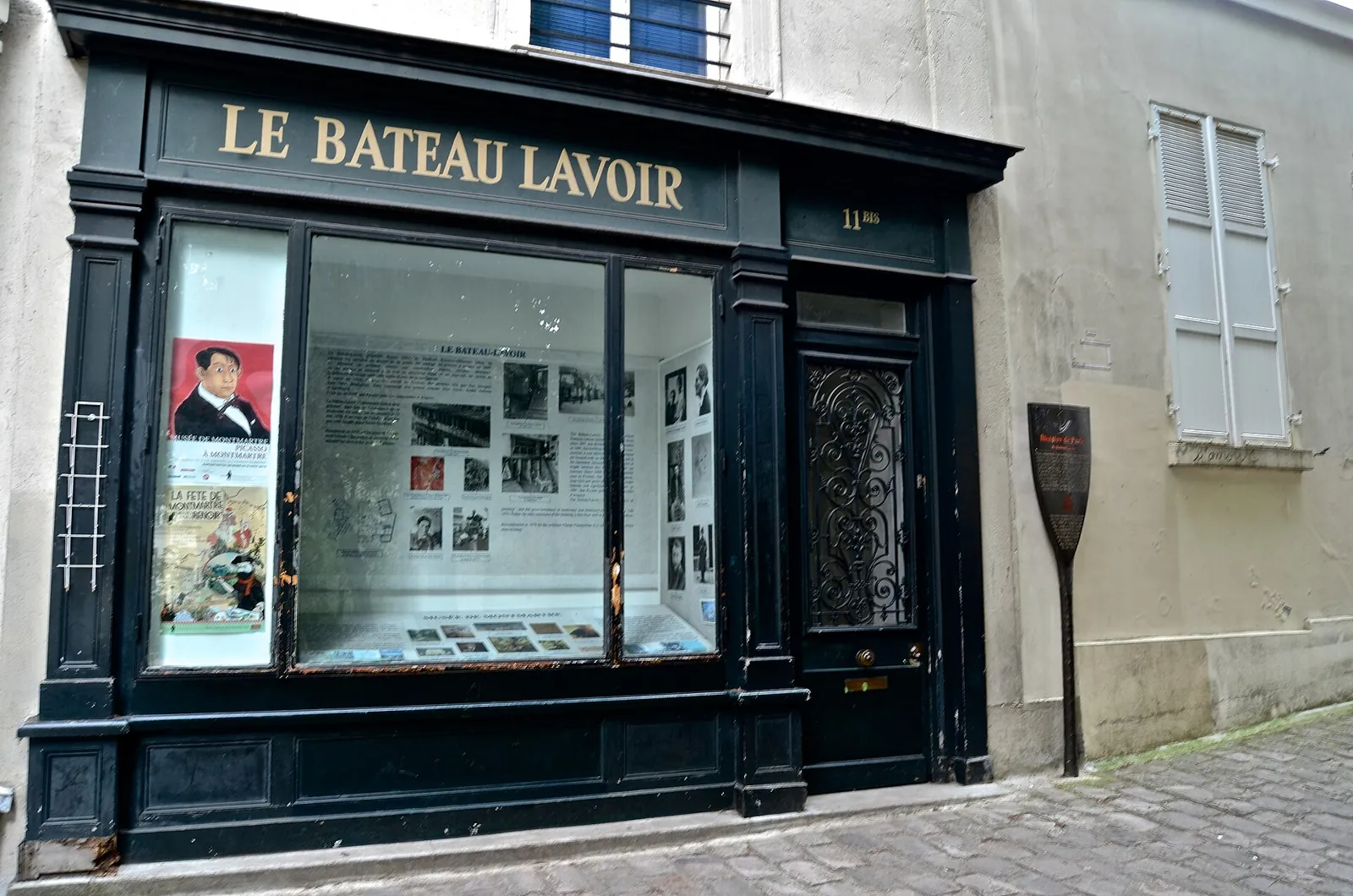
- Le Bateau-Lavoir, on Place Émile-Goudeau. Picasso and Modigliani lived and worked in this studio building between 1904 and 1909, and Picasso painted Les Demoiselles d’Avignon here. The original building burned down and was rebuilt.
- The Wall of Love, in the Jehan-Rictus garden on Place des Abbesses. Abbesses metro station, right by the square, is the end of the walk.
How to get to Montmartre
To start at the basilica, take metro line 2 to Anvers and walk up rue de Steinkerque to Place Saint-Pierre, where the funicular and the staircase begin. The walk ends at Abbesses, on line 12, which takes you back to central Paris. Pigalle and Blanche on line 2, and Lamarck-Caulaincourt on line 12, are also nearby.
If you’d rather skip the hills, bus 40 is the only line that runs across the top of the butte. For the elevator into the basilica, the address is 35 rue du Chevalier-de-la-Barre.
Montmartre history: from windmill village to artists’ quarter
One explanation of the name is “mount of the martyrs”: tradition says that Saint Denis, a bishop who preached to the people of Lutetia, was beheaded on this hill around the year 250. In 1134 King Louis VI founded a Benedictine abbey for nuns at the top, and on 15 August 1534 Ignatius of Loyola and his companions took the vows in Montmartre that led to the founding of the Jesuits.
For centuries this was countryside. The slopes were covered in vineyards, vegetable gardens and orchards, and from 1529 windmills went up to grind grain. Gypsum was mined under the hill until 1860, the year Montmartre was annexed to Paris and became part of the 18th arrondissement.
In 1871 the Paris Commune began here, when locals stopped the army from taking away the cannons stored at the top of the hill. A few years later, in 1875, the first stone of Sacré-Cœur was laid, paid for by donations. It was designed by Paul Abadie; the dome was finished in 1899 and the basilica in 1914, but it was only consecrated in 1919, after World War I. Its whiteness comes from Château-Landon stone, which releases calcite when it rains. Since 8 December 2022 it has been a listed historic monument.
From the late 19th century until World War I, cheap rents drew artists up the hill: Renoir, Toulouse-Lautrec, Van Gogh, Modigliani, Picasso. When the war came, most of them moved to Montparnasse, but Montmartre kept the legend.

Tips for visiting Montmartre
- Go early or late. Before 10:30 a.m. and after 5 p.m. you can usually walk straight into the basilica, and Place du Tertre is calmer.
- Climb the dome before 5 p.m., its last admission, and remember it closes for a while at midday.
- Wear comfortable shoes. The streets are steep, cobbled and full of steps; with a stroller, some stretches are hard work.
- The basilica is a place of prayer. Speak quietly inside and respect the Masses.
- Sunset from the terrace is one of the best in Paris, and the basilica stays open until 10:30 p.m.
If you’re staying in the centre, Notre-Dame de Paris on the Île de la Cité is another of the city’s great churches.

 Free audio guideNotre-Dame de Paris
 Free audio guideSainte-Chapelle
 Free audio guideLouvre Museum
 Free audio guidePalace of Versailles
Where to find it
FAQs
How do the free audio guides work?
They play right here on audioguidetravel.com, with no app to download and no sign-up. Press play and listen as you walk round: a phone and a pair of headphones are all you need. The audio streams from this page, so you’ll need mobile data or Wi-Fi.
Can I take the tour at my own pace?
Of course! You set the pace: pause whenever you like, jump back or forward 15 seconds, or tap the bar to jump to any point, and listen as many times as you want so you don’t miss a thing.
If I'm in a group, can we use the same audio guide?
Yes. The same free audio guide opens on as many phones as you like, so you can go round together as a group or with your family, each person at their own pace and with their own headphones. The quickest way is to send the link via WhatsApp, Telegram or however you like: the buttons just below let you share it right now.
Visitor information
As of 19 Oct 2026- Opening hours
- Basilica: daily, 6:30 a.m.-10:30 p.m. Dome in autumn: 10:15 a.m.-5:30 p.m., last entry 5 p.m.
- Tickets
- Basilica free. Dome: €8 from age 16, €5 up to 15. No booking needed.
- Time needed
- Audio guide of about 5 min; the walk takes a relaxed couple of hours.
- Getting there
- Metro 2 to Anvers, then the funicular or 222 steps. Walk ends at Abbesses, metro 12.
- Accessibility
- Elevator into the basilica at 35 rue du Chevalier-de-la-Barre, 8:30 a.m.-6:30 p.m.
- Tip
- Ride the funicular up and wander down on foot; reach the dome before 5 p.m.
- Official website
- www.sacre-coeur-montmartre.com
Nearby
More free audio guides in Paris
 4:07ParisSainte-Chapelle: free audio guide, tickets and opening hoursThe Sainte-Chapelle is Louis IX’s Gothic chapel on the Île de la Cité, consecrated in 1248 to hold…
 3:47ParisLouvre Museum: free audio guide, tickets and opening hoursThe Louvre Museum is the former palace of the kings of France, a museum since 1793: about 35,000…
 5:02ParisPalace of Versailles: free audio guide, hours and ticketsThe Palace of Versailles was home to the French court from 1682 to 1789: the Royal Chapel, the…