
National Garden of Athens: free audio guide and hours
Free audio guide in English · no app, no sign-up
The National Garden of Athens is Queen Amalia’s old Royal Garden: 156,000 m² behind the Parliament, with the paths and ponds that Bareaud laid out in 1847. Entry is free and it opens every day from sunrise to sunset.
 Audio guide
Before you go in
The few things that change your visit.
- It is free and open every day from sunrise to sunset
- In a wheelchair, every gate works except Vasilissis Sofias and Zan Moreá
- If it closes for safety, the notice goes up at the gates
- The paths are Bareaud's, from 1847, and the water still arrives by a 6th-century BC aqueduct
- Leave by the Zappeion: Olympian Zeus is about 10 min away
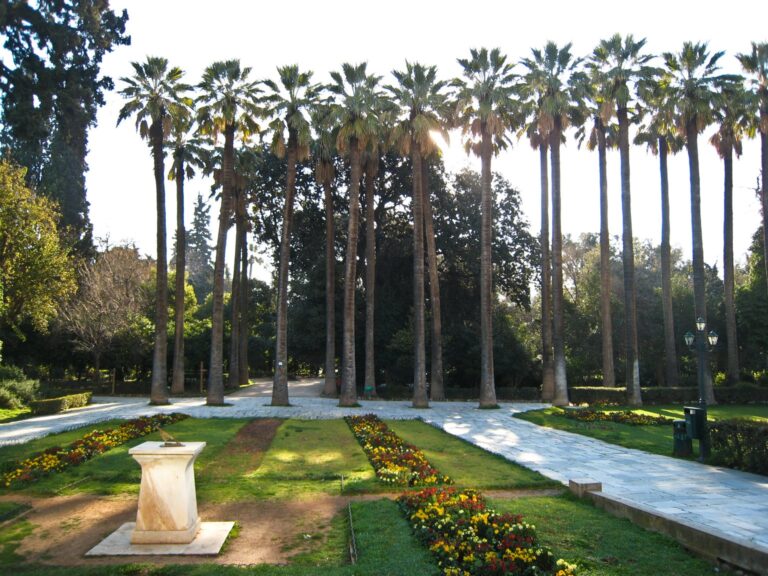
The National Garden of Athens is Queen Amalia’s old Royal Garden: 156,000 m² of paths, ponds and pergolas right behind the Parliament, in the middle of the city. It is free, with no ticket and no booking, and it opens every day from sunrise to sunset. This free audio guide plays on your phone as you walk it, from the palms of Amalias Avenue to the Zappeion gate.
What the audio guide covers
The audio guide follows one walk from end to end. You go in through the main gate on Amalias Avenue, next to the Parliament, and you come out through the grounds of the Zappeion, which borders the garden to the south. At an easy pace that is about 1 hour. These are the stops, in the order you reach them:
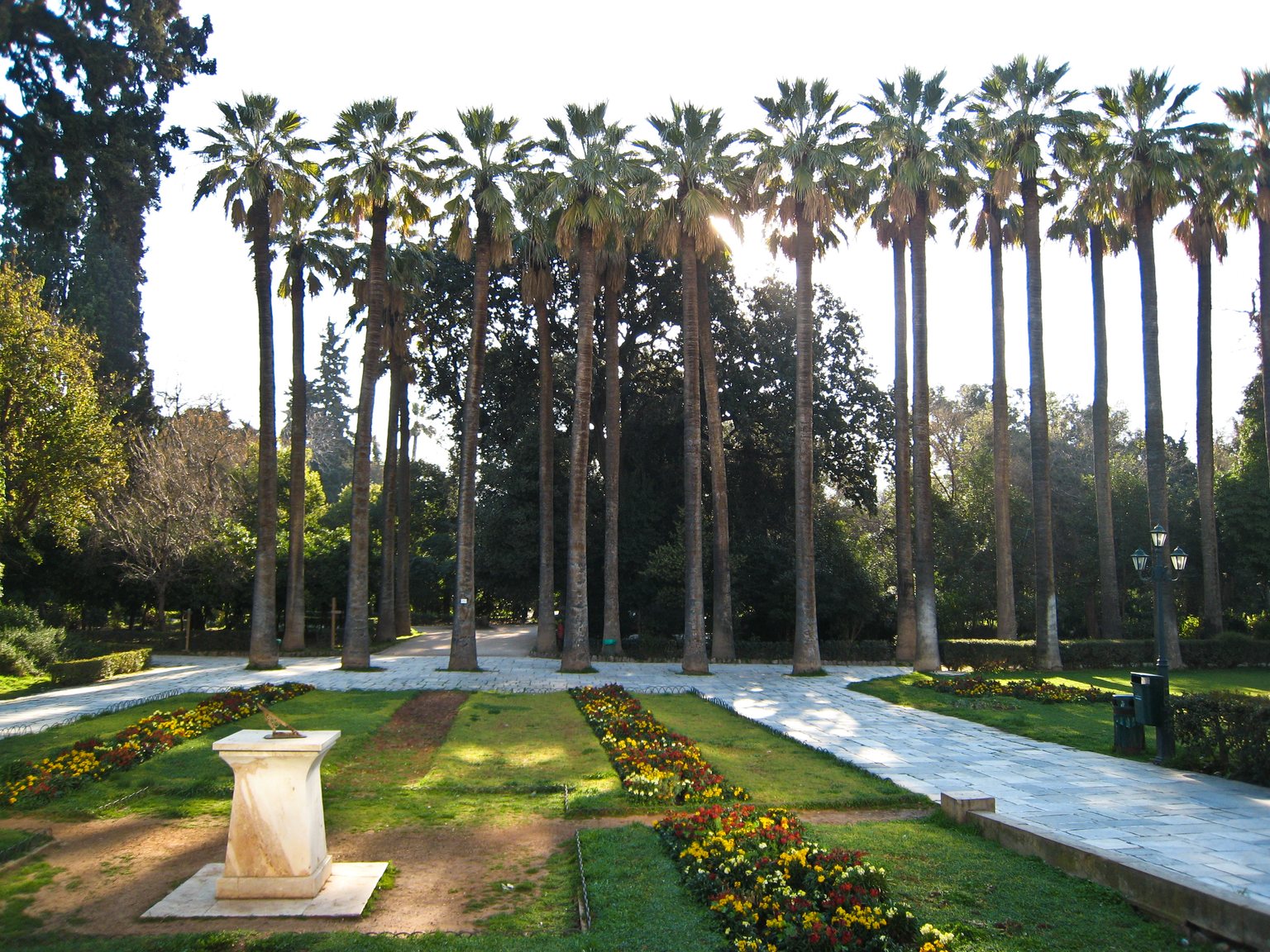
| The palm avenue | The tall Washingtonia palms at the Amalias gate, among the historic plantings of the garden’s first 2 decades, and the species the queen brought in from other continents. |
| The sundial | Among the flower beds of the main entrance, under the palms. This is where the walk starts. |
| Water from the 6th century BC | The underground aqueduct of Peisistratos, 6.5 km long and 10 to 12 m below ground, is still the garden’s main source of water. |
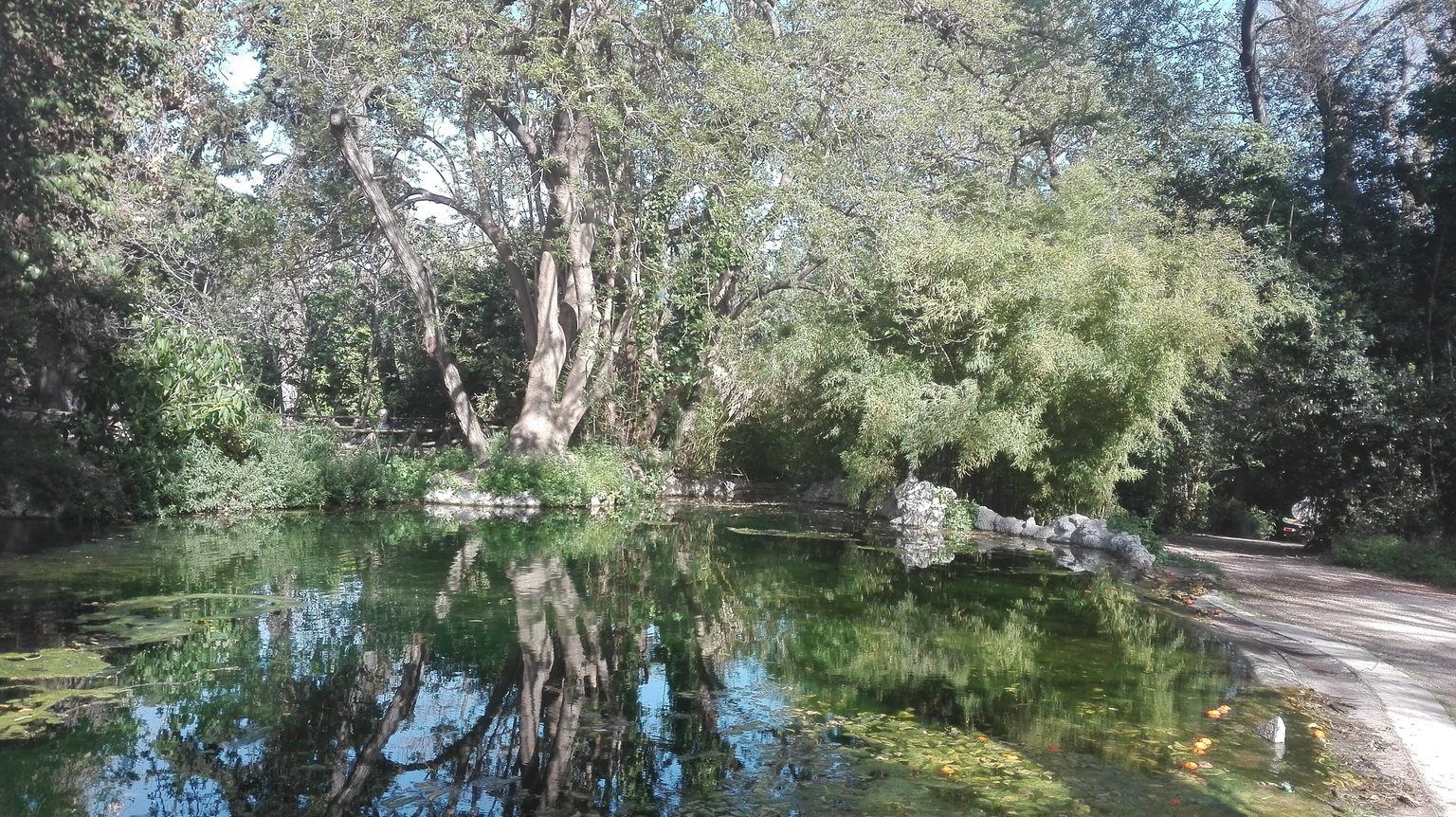
| The central pond | Ducks, geese and turtles in the shade, and the small collection of animals and birds kept in the centre of the garden. |
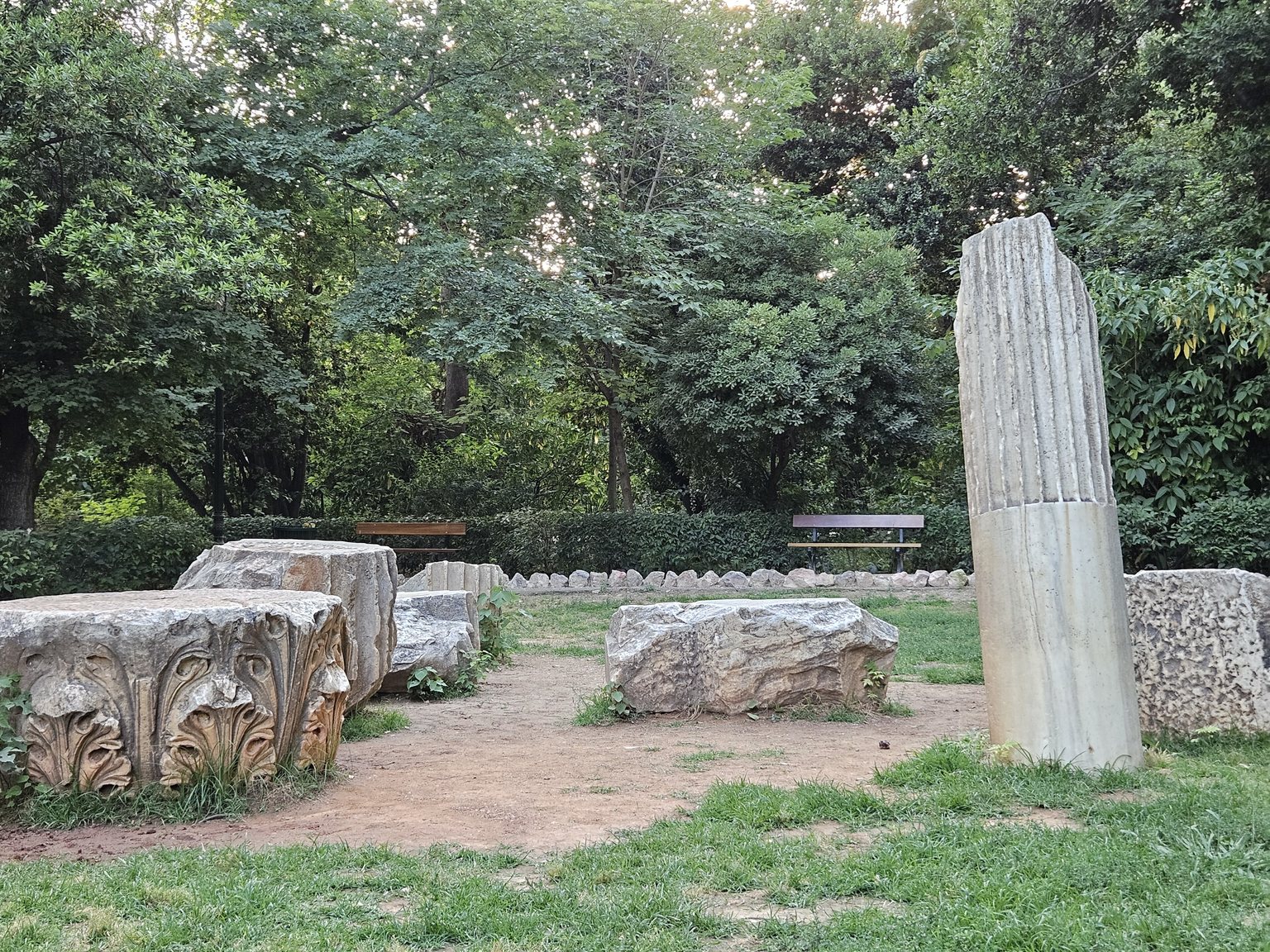
| The ancient stones | An architrave from Hadrian’s reservoir and the mosaics of a late Roman villa at the northern end. |
| The pergolas | The rhynchospermum pergola, the Banks’ rose pergola and the one called «Vlachopoula», the Country Girl. |
| The busts | Kapodistrias and Eynard, the first 2, set up in 1866, and the ones that joined them later. |
| The Zappeion exit | The 2 gates into its grounds and the short walk south to the Temple of Olympian Zeus. |
Each stop is a short track. Press play at the sundial and let the garden set the pace: the pergolas have benches on both sides.
Opening hours, gates and wheelchair access
The garden is open every day of the year, from sunrise to sunset. There are no clock times and no summer or winter timetable: the hours are the daylight, so the day simply gets shorter in autumn and winter and longer in spring and summer. Plan to be out before dusk.
It can close at short notice. The company that runs the garden, Green Athens, states that in an emergency, for safety or for any other reason the hours can change, and that the change is posted at the entrances or on its social media. A real case: on 16 November 2025 it stayed shut all day, and on 17 November 2025 from 12:00, by police order. 17 November is the anniversary of the Athens Polytechnic uprising, with a march every year, so on that date it is worth checking the gate notice before you plan your walk around the garden.
There are 7 gates in all. The main one is on Amalias Avenue; there is 1 more on Vasilissis Sofias, 2 from the Zappeion and 3 on Herodou Attikou. In September 2026, 2 of the 3 on Herodou Attikou were temporarily closed, which left 5 in use.
In a wheelchair you can go in through every gate except Vasilissis Sofias and Zan Moreá, so use Amalias, Herodou Attikou or the Zappeion; once inside, the paths are easy to get around. Bikes and scooters cannot be ridden in the garden. There are public toilets, marked on the garden map.
Entry is free: there is nothing to buy and nothing to book. The garden’s phone number is +30 210 7215019.
Getting there: Syntagma metro and the Amalias gate
Take the metro to Syntagma, on lines 2 and 3. The garden lies right behind the Parliament building, and the main gate is on Amalias Avenue, beside it. That is the gate the audio guide starts from, and the one with the palm avenue.
For the stops of the audio guide allow 1 hour. With children, count on about 1 hour 30 minutes: the animals, the playground and the children’s library all pull them off the path.
From Royal Garden to National Garden
Work began in 1839, when this was the Royal Garden, the private garden of the royal palace that is now the Hellenic Parliament. It is remembered as Queen Amalia’s most accomplished project. A committee chaired by the botany professor Karl Nikolaus Fraas ran the works and the supply of plants.
The first person to look after it was a Bavarian agronomist called Smarat, with a Prussian gardener, Friedrich Schmidt, as his assistant. Schmidt took over from him and was the soul of the garden until he died in 1889.
In 1847 the garden was enlarged and the design was given to a French gardener, François Louis Bareaud. He drew the network of paths, ponds and pavilions you walk today. His lithographed plan, the «Plan du jardin Royal à Athènes» at a scale of 1:1000, is kept in a museum in Ottobrunn, near Munich. The works were finished in 1852, in the English landscape style: winding paths, bridges, pergolas and grottoes, laid out to feel natural rather than formal.
In 1923 it was declared the National Garden, and in 1927 a public body was set up that ran it until 2004. Since March 2020 it has been in the hands of Green Athens, a company of the City of Athens. In 2011 the Ministry of Culture declared it a Historic Site. It is the only historic garden in Greece and the first designed green space of modern Greece.
Palms, turtles and ancient stones: what you see on the walk
The trees came from far away. Amalia planted species that were exotic in Greece at the time and later spread through Greek gardening: the Washingtonia palms of the Amalias gate, eucalyptus and casuarinas from Australia, phytolaccas from South America, pepper trees from Central America and Chinese tree of heaven. The historic plantings from the first 2 decades also include big pines, cypresses, yuccas, elms, plane trees and wisteria. The garden’s own inventory counts 6,600 trees, 5,700 shrubs and 9,400 plants.
The water comes through an ancient tunnel. The garden’s main water supply is still the aqueduct of Peisistratos, a tunnel dug in the 6th century BC. It runs for 6.5 km, 10 to 12 m underground, picking up water at the foot of Mount Hymettus, following the Ilissos and crossing the garden on its way to the ancient Agora. About 1,000 to 1,200 m³ a day still flow into the pond on the Vasilissis Sofias side.
Yes, there are turtles. The central pond, near the Herodou Attikou and Zappeion gates, is home to ducks, geese, land and water turtles, fish and toads, and around the garden you will also see peacocks, parrots and hoopoes. In the centre there is a small collection of animals and birds. The garden’s inventory lists 18 bird species, 4 reptile species and 3 amphibian species.
Ancient Athens is under the lawn. On the official list of the garden’s landmarks there are 2 pieces of the ancient city: an architrave from Hadrian’s reservoir and the mosaics of a late Roman villa, at the northern end, near the Vasilissis Sofias gate.
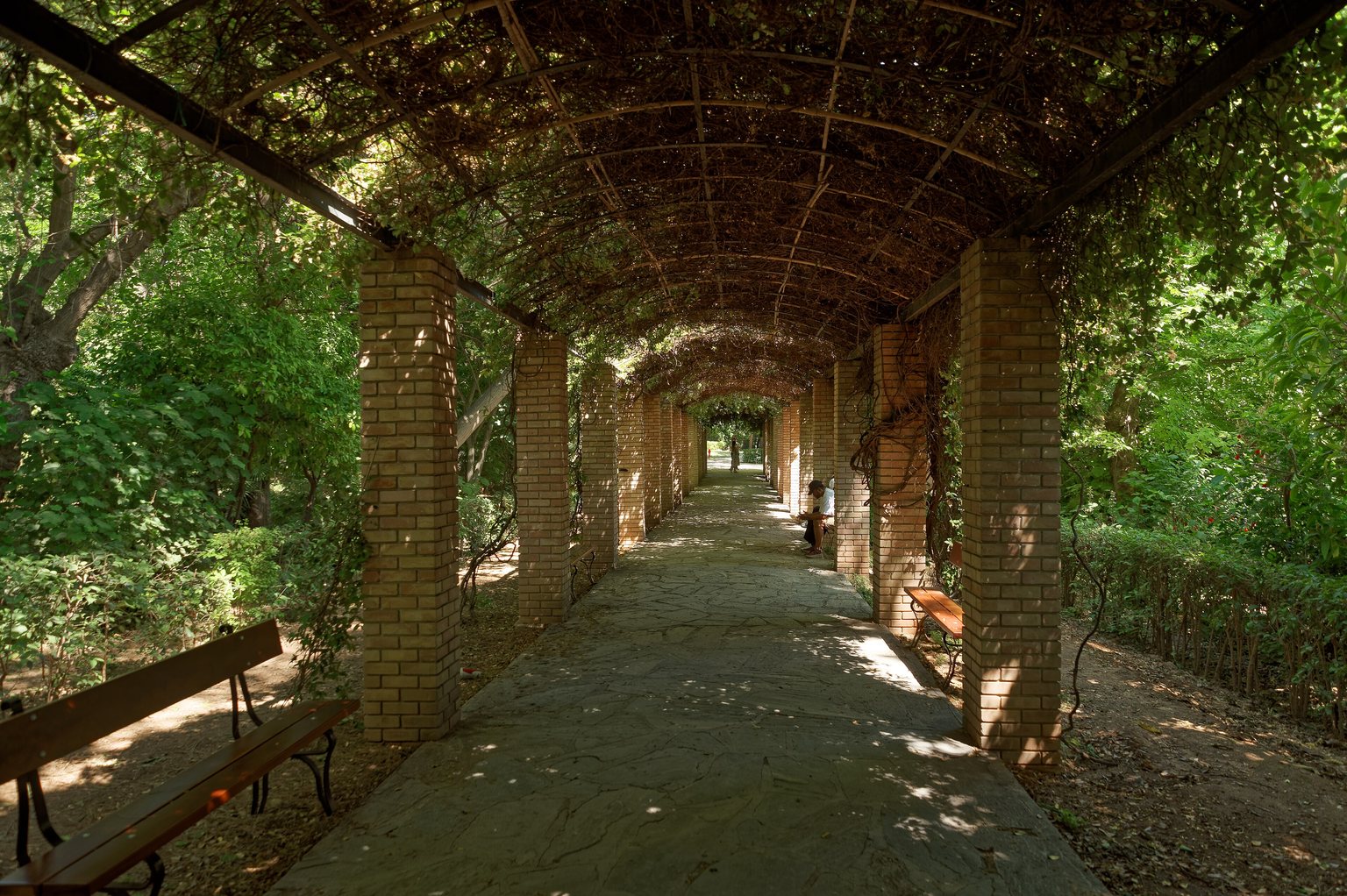
Shade and faces. The pergolas are the shadiest corners of the garden: one of rhynchospermum, one of Banks’ roses and the «Vlachopoula». The first busts, from 1866, are of Ioannis Kapodistrias, the first governor of Greece, and the Swiss philhellene Jean-Gabriel Eynard, both by the sculptor Ioannis Kossos. Later came Solomos (1925), Valaoritis (1926) and Samaras, the composer of the Olympic Hymn. There is also a botanical museum, a children’s library, a playground, and a café near the Herodou Attikou exit.
Nearby, with their own free audio guides
The Zappeion exit leaves you about 500 m on foot, some 10 minutes, from the Temple of Olympian Zeus, the natural next stop. The south entrance of the Acropolis is roughly 850 m in a straight line from the Zappeion side. If you want the other green hill of Athens, Lycabettus Hill is the other walk: its funicular station on Aristippou is roughly 920 m in a straight line from the Amalias gate. The rest of the city is on the free audio guides of Athens page.
Reading this in Spanish? The same guide, written for a Spanish-speaking visitor and narrated in Spanish, is at Jardín Nacional de Atenas en vozviajera.com.
Where to find it
FAQs
How do the free audio guides work?
Our audio guides work through the website audioguidetravel.com; you don’t need to download any app. Just follow the instructions on the website to guide you through National Garden of Athens: free audio guide and hours while listening to our experts’ explanations.
Can I take the tour at my own pace?
Of course! Our free audio guides are designed so that you set the pace. You can pause, rewind, or listen as many times as you want without missing a detail. By visiting National Garden of Athens: free audio guide and hours your way, you’ll enjoy it even more.
If I'm in a group, can we use the same audio guide?
Yes, our website allows sharing the same free audio guide among multiple devices. This way, you can visit National Garden of Athens: free audio guide and hours as a group or family, listening to the explanations simultaneously. The quickest way to do this is to share the link via WhatsApp, email, or any method you like. I’ve included some buttons below for you to do that now.
Visitor information
As of 25 Sep 2026- Opening hours
- Every day, from sunrise to sunset. If it closes for safety, a notice goes up at the gates.
- Tickets
- Free: no ticket and no booking.
- Time needed
- 1 hour for the main stops; 1 hour 30 minutes with children, for the animals and the playground.
- Getting there
- Metro Syntagma (lines 2 and 3). Main gate on Amalias Avenue, next to the Parliament.
- Accessibility
- Wheelchair: use the Amalias, Herodou Attikou or Zappeion gates; not Vasilissis Sofias or Zan Moreá.
- Tip
- Go in at Amalias, under the palms, and leave by the Zappeion: Olympian Zeus is about 10 min south.
- Official website
- green-athens.gr
Nearby
More free audio guides in Athens
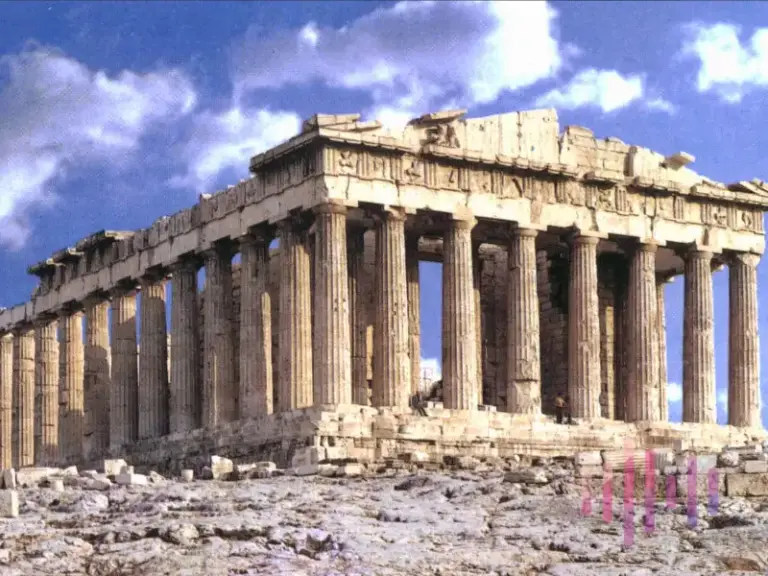 8:00AthensParthenonWelcome to the heart of Athens, where every stone tells a story! Imagine a place where ancient Greece…
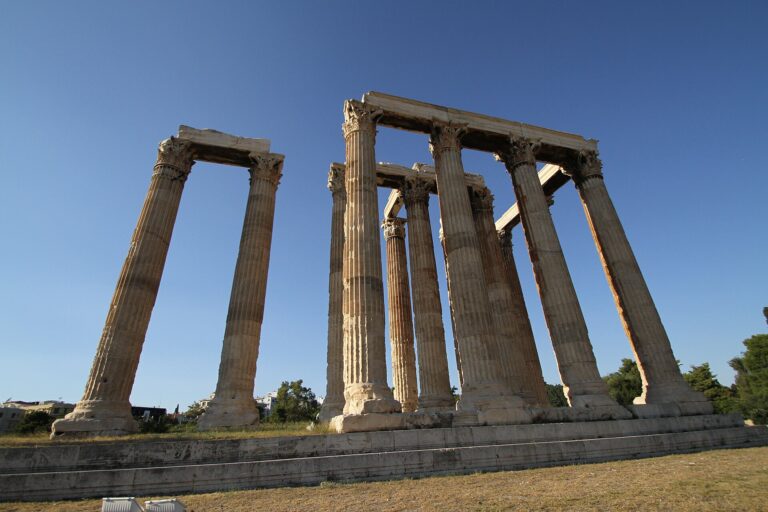 5:26AthensTemple of Olympian Zeus: free audio guide, hours and ticketsThis free audio guide to the Temple of Olympian Zeus plays straight from your phone — no app,…
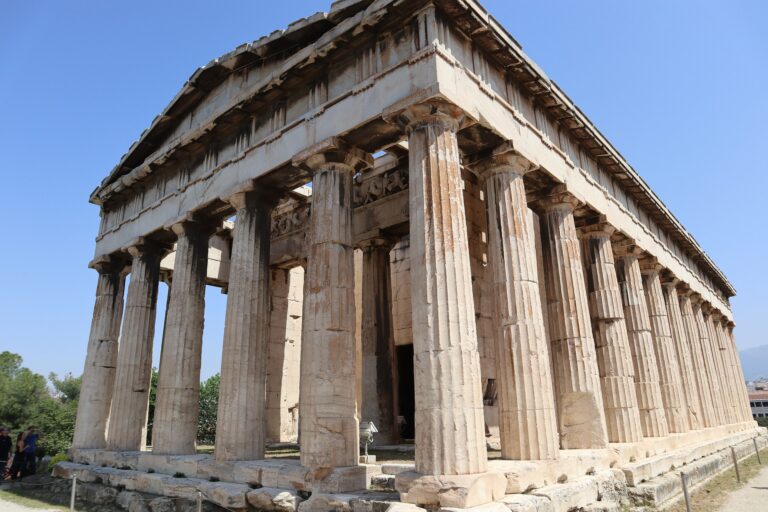 6:51AthensTemple of Hephaestus: free audio guide, hours and ticketsThis free audio guide to the Temple of Hephaestus plays straight from your phone — no app, no…