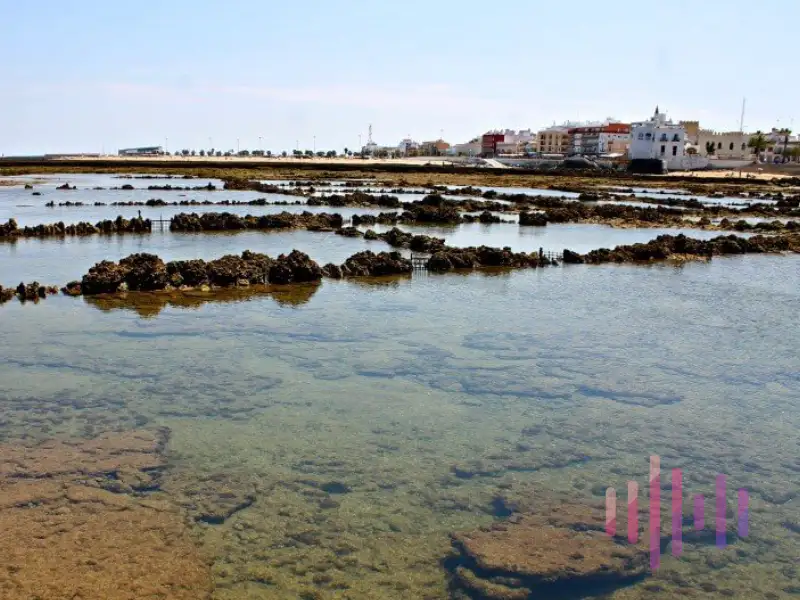
The fishing corrales are a unique expression of the cultural landscape of Chipiona. These structures, built with interspersed stones, represent an ingenious fishing technique that has endured over the years. But have you ever wondered how they work? It’s simple and at the same time fascinating.
When the tide rises, fish and other marine organisms enter the corral. As the tide recedes, these animals become trapped inside, making them easy to catch.
It’s a technique that takes advantage of the natural movements of the sea, without the need for nets or hooks.
History and Culture
Fishing corrales are not exclusive to Chipiona or even Spain. They can be found in various parts of the world, from the French Atlantic coast to the South Pacific in Chile and Japan. However, in Chipiona, these corrales have deep cultural roots. They have been an integral part of the lives of local fishermen, known as “corraleros,” for generations. These corraleros have a special connection with the sea and the corrales they have built and maintained over the years. It is a relationship of respect and harmony with nature.
Sustainability and Conservation
Beyond being a fishing technique, the corrales also act as refuges for various marine species, especially during their breeding stages. This makes them areas of vital ecological importance. However, it is essential that the exploitation of these corrales be carried out sustainably. Otherwise, they could become death traps for the species seeking refuge inside. Therefore, it is crucial to promote responsible fishing and protect this cultural and natural heritage.
The fishing corrales of Chipiona are more than simple stone structures in the sea. They are a testament to a tradition, a special relationship between man and the sea, and the importance of sustainability in fishing. Are you up for visiting them and learning more about this living tradition? You will not only discover a unique fishing technique but also connect with an essential part of the culture and history of Chipiona.