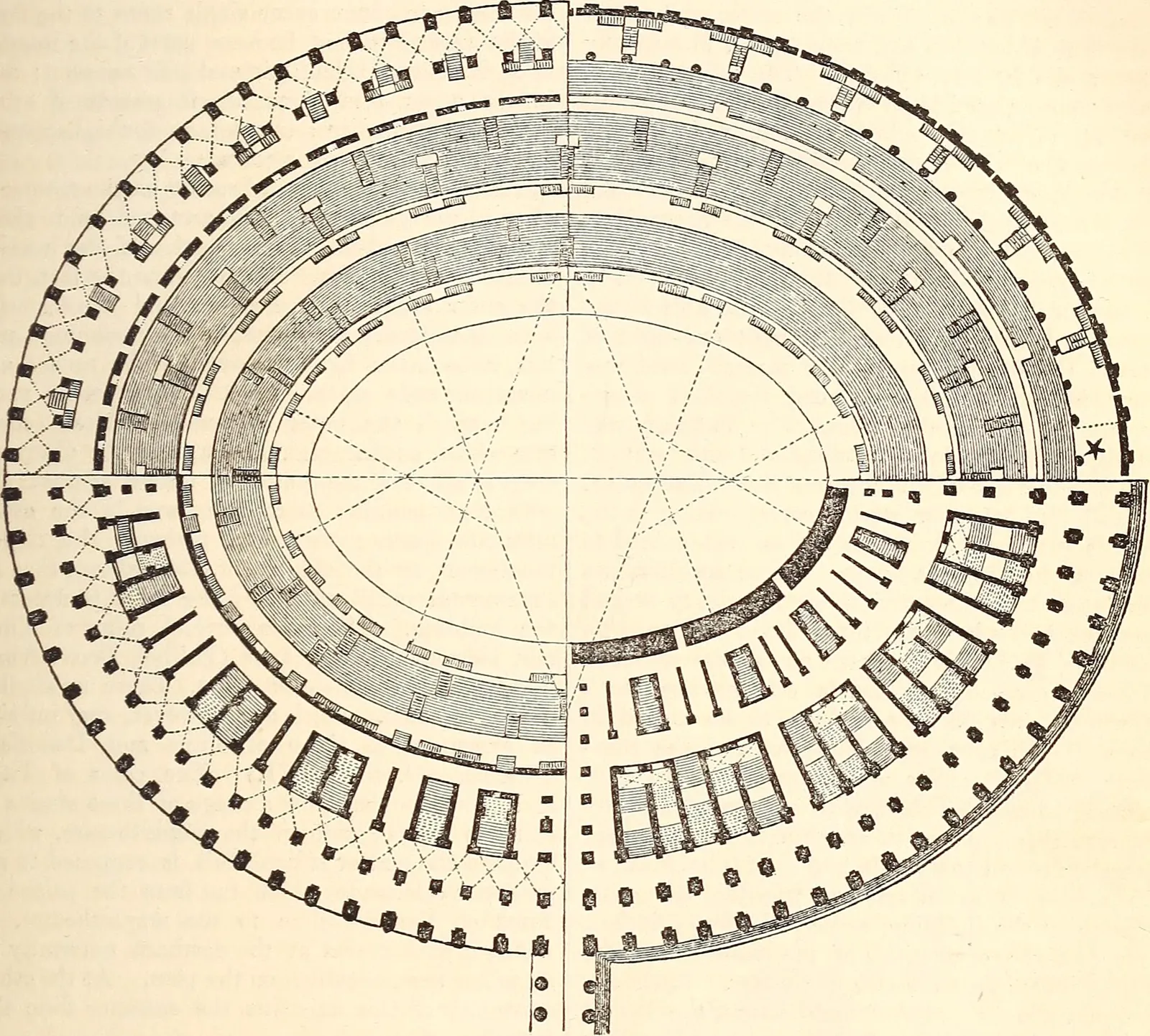
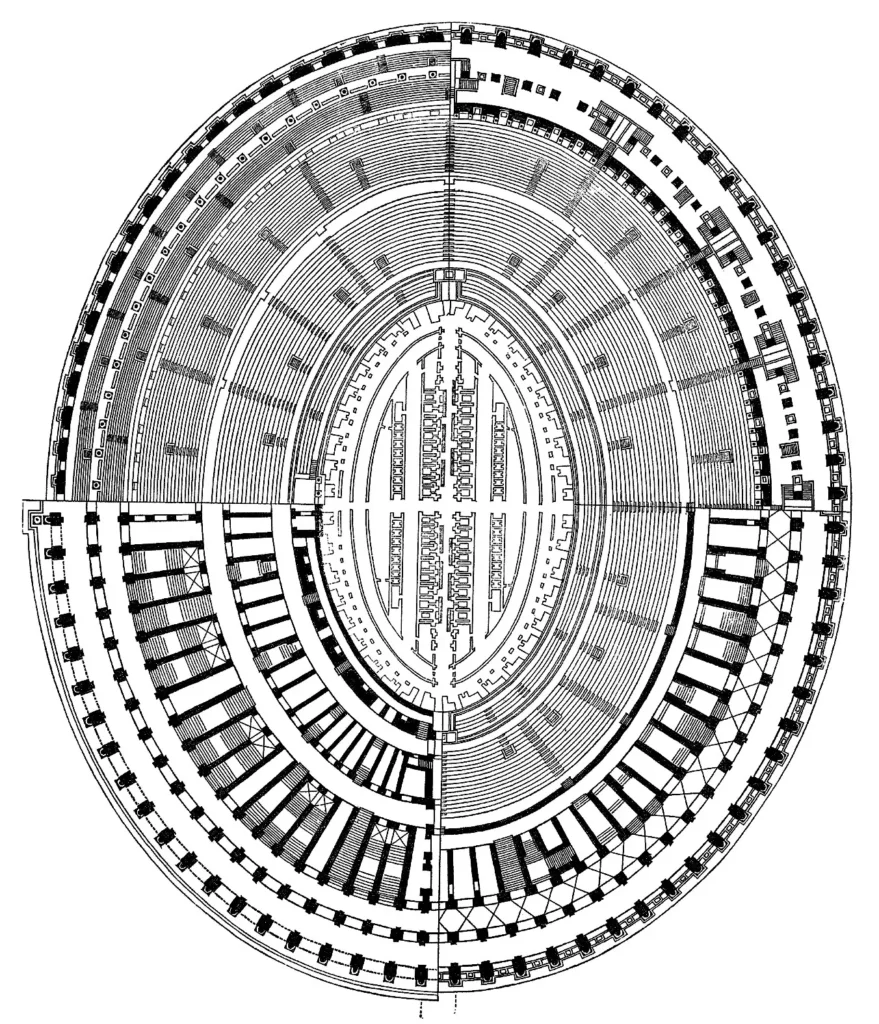
The Colosseum is an oval about 188 by 157 metres, and you visit it in 5 zones: the first level, where you come in at ground level, the second level, the arena floor, the underground and, at the top, the third level with the attic. Here is a plan you can open full size or print as a free PDF, a walk through each zone as it is visited today, and which ticket opens which part.
Open the plan above full size (1600 × 1442 px) to zoom in, or download the free printable PDF (2 A4 pages, 0.8 MB): this plan of the 4 levels and the 1877 plan with the underground, each with its credit. Read the plan above as 4 slices of the same building. The lower right quarter is the true ground floor: the outer ring of arches, the radial walls and the stairs. The lower left quarter is the level of the second row of outer columns, with the seats that sloped down from there. The upper left quarter is the third level, and the upper right quarter shows the interior as if you were looking straight down on it. The dotted lines on the arena are the construction lines used to draw the oval.
Taking the plan with you? Take the voice too: our free Colosseum audio guide covers the same building, from the façade and the tiers to the arena and the underground, and you can play it on your phone as you walk.
 Free audio guideColosseum
The Colosseum in numbers
Those 4 storeys are what you see from outside: 3 rows of arches and a closed top storey, the attic. Inside, the seating rose in bands from the arena wall to the top, and the seat you got depended on who you were. The best view was the imperial box, at the southern entrance on the short axis of the oval; the senators sat in the rows closest to the arena, and the plebs ended up at the top, on wooden seats.
Which zones each ticket opens (2026)
Every Colosseum ticket sold by the Parco archeologico del Colosseo also includes the Roman Forum and the Palatine. What changes is how much of the Colosseum you see and for how long.
| Ticket | Zones of the Colosseum | Time inside |
|---|---|---|
| Colosseum, Roman Forum and Palatine (valid 24 h) | First level, second level with its panoramic terraces, Colosseum Museum. No arena floor, no underground | 75 min |
| Only Arena (valid 24 h) | The arena floor only, at the time booked | 20 min |
| Full Experience Arena (2 days) | First level, second level, arena floor, Colosseum Museum | 90 min |
| Full Experience Underground and Arena (2 days) | Arena floor, underground (subject to availability), Colosseum Museum | 90 min |
| Full Experience Attic (2 days) | First level, intermediate gallery, third level, attic, plus the regular tour | 90 min |
| Full Experience Passage of Commodus | The underground passage that led from the imperial box to the outside; guided tours on Mondays and Wednesdays | 90 min |
The Underground and Arena ticket and the Attic ticket cost €24 each at full price. Ticket types, zones and times were checked on the park’s official website, colosseo.it, on 7 October 2026, and tickets are sold at ticketing.colosseo.it.
First level: where you come in
The visitors’ entrance is a short walk from the Arch of Constantine. In Roman times the whole ground floor was a door: 80 arches, 76 of them numbered for the crowd, with the numbers carved and marked in red, and the spectators followed routes marked on the inner arches up to their seats. You can still see the numbers on 29 arches along the northern side, the best preserved side of the building.
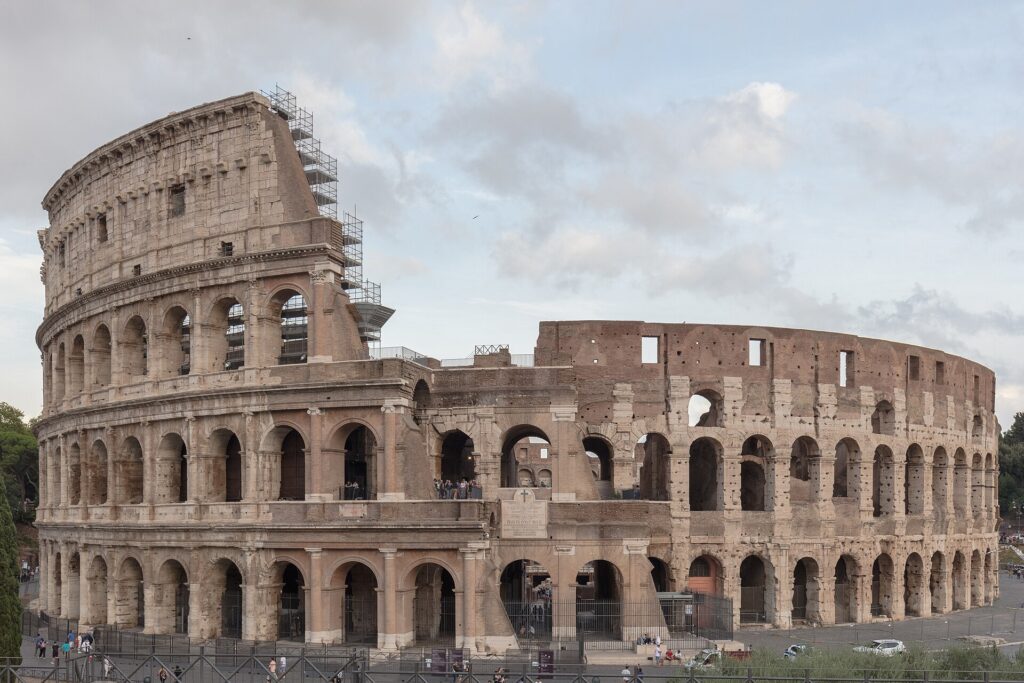
On the plan, the ground floor is the lower right quarter: the ring of outer arches, the corridors that run all the way round and the radial walls with the stairways that led up to the seating.
Up to the second level
This is the Colosseum the standard ticket shows. You come in at the first level, walk its curved corridors with views down into the arena, and climb to the second. The second level adds the panoramic terraces. A lift reserved for visitors with reduced mobility reaches the whole of the second level.
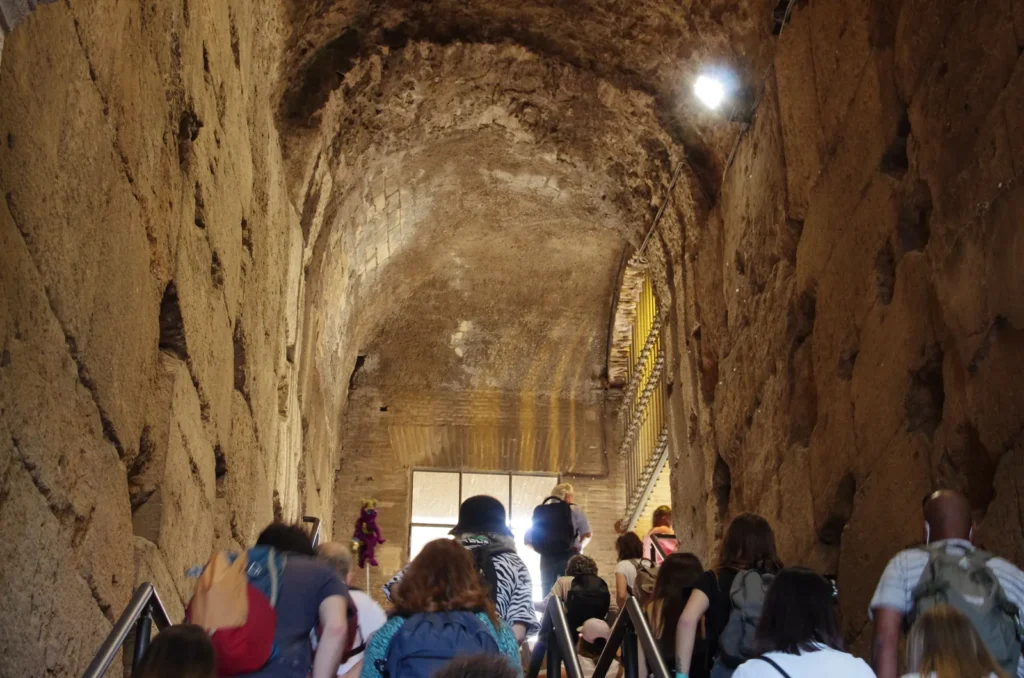
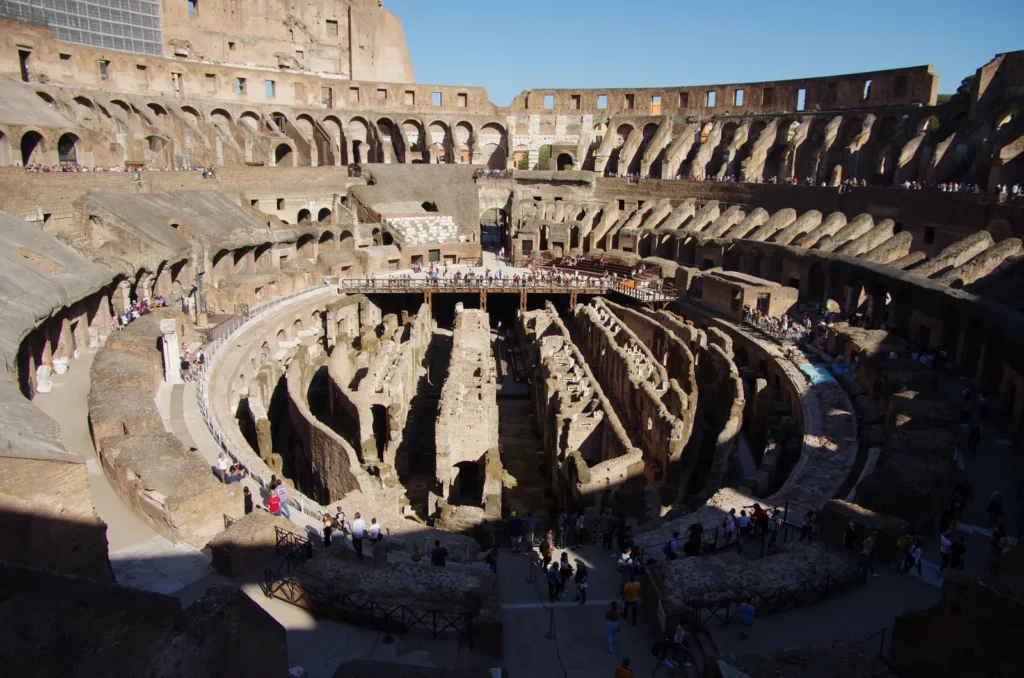
From up here, the brick vaults all round the oval are what is left of the structure that once carried the seating.
The arena floor
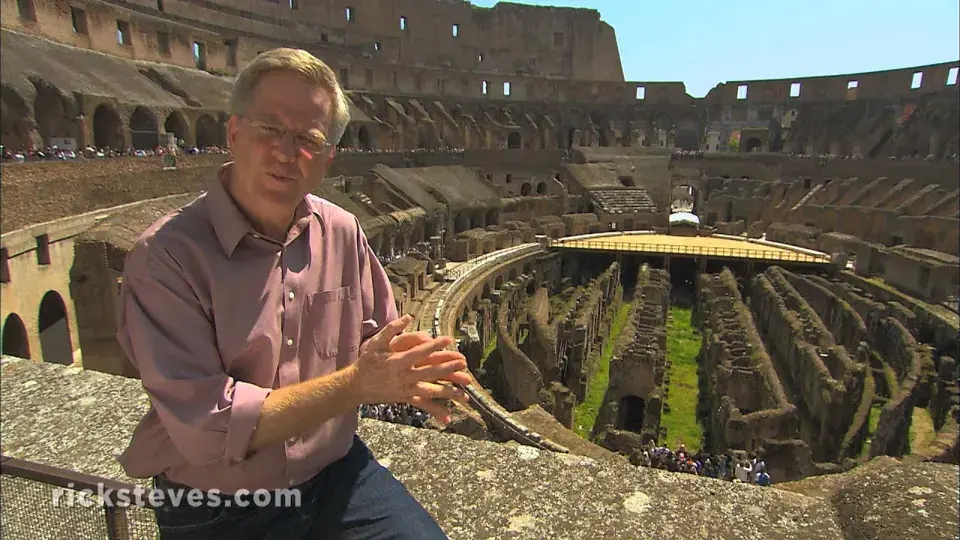
The arena measures 86 × 54 m. Visitors stand on a platform laid over part of it; elsewhere the underground stays open below. Standing on it, you see the tiers from the spot the crowd was watching. You reach it with the Only Arena ticket (20 minutes) or with the Full Experience Arena and Underground and Arena tickets.
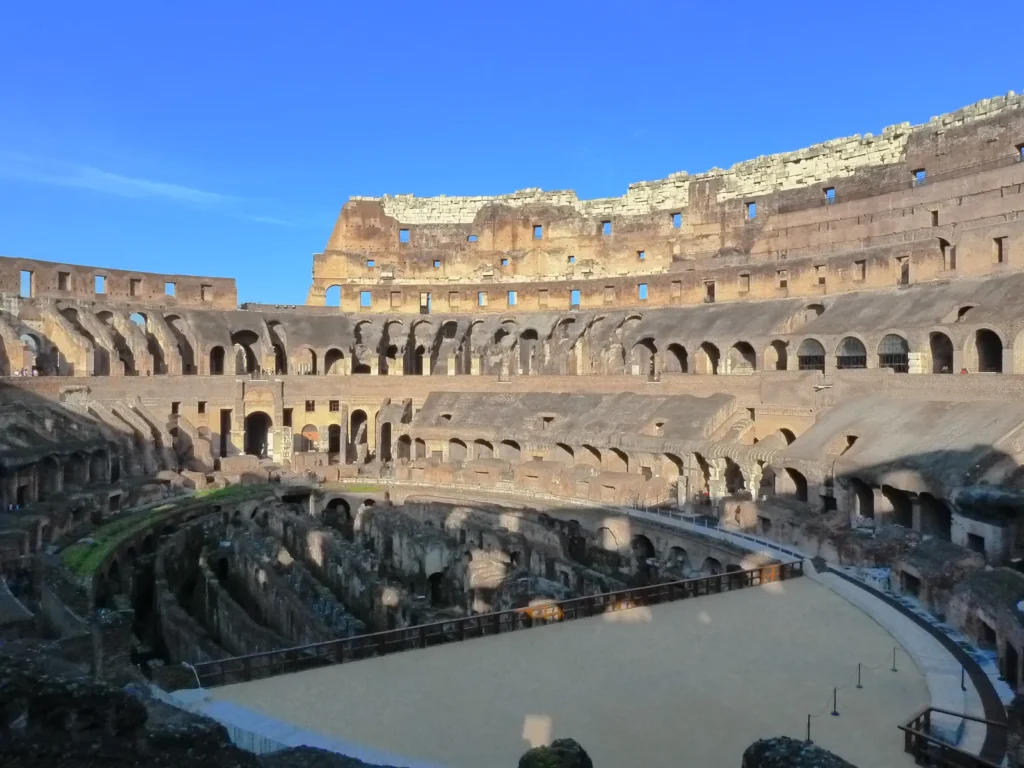
The underground (hypogeum)
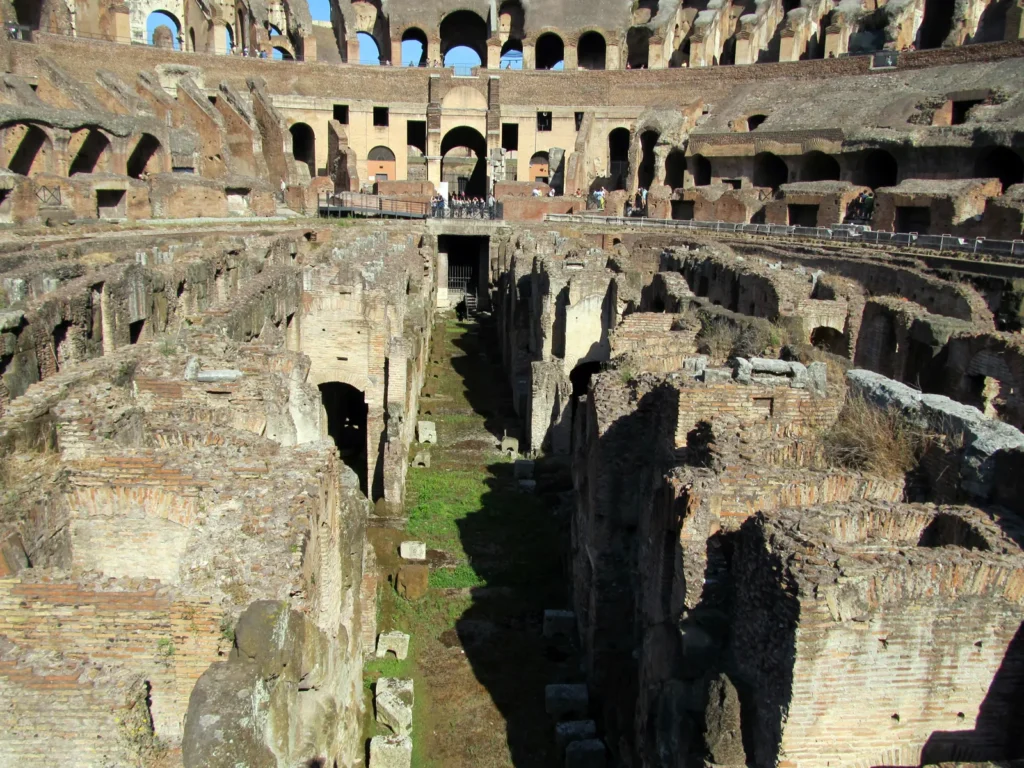
The arena floor was full of trapdoors: men and animals appeared through them, hoisted up from below by lifts worked with winches and pulleys. The first underground levels were built in wood for the opening of the Colosseum; Domitian rebuilt them in masonry. A fire in 217 damaged the whole monument and kept it closed until 222.
Today the underground covers half a hectare. You see 14 corridors set symmetrically on either side of a wide central passage, and each end of that passage leads to a room that held the large lifts. The corridors are visited, subject to availability, with the Full Experience Underground and Arena ticket or on a guided tour. The Passage of Commodus, a vaulted tunnel that led from the imperial box (the pulvinar, reserved for the empire’s highest officials) at the southern end of the short axis to the outside, has its own ticket and guided tours on Mondays and Wednesdays.
Third level and the attic
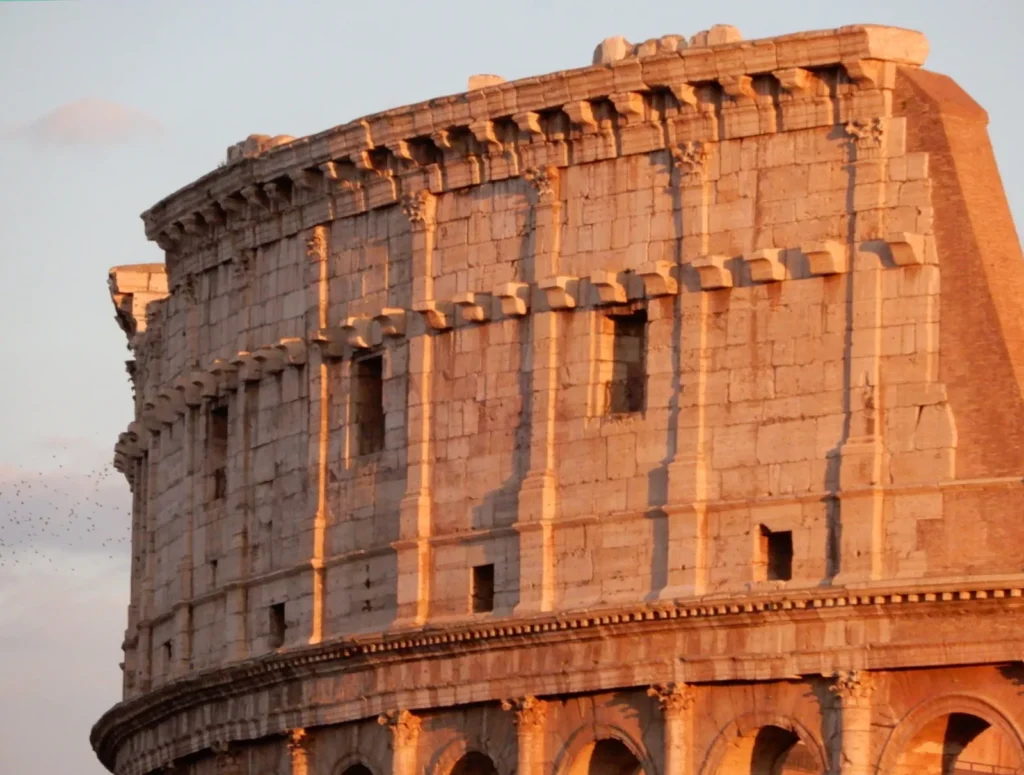
The highest part of the Colosseum opens only with the Full Experience Attic ticket. You walk the intermediate gallery along its whole length, go up to the third level and finish in the attic, the top storey, by steep steps. Along the route, a 5-stage path with panels in Italian and English explains the highest tiers, with drawings and prints by Luigi Canina. The third level is also where the Belvedere terrace is, with a view over the whole interior.
After the Colosseum
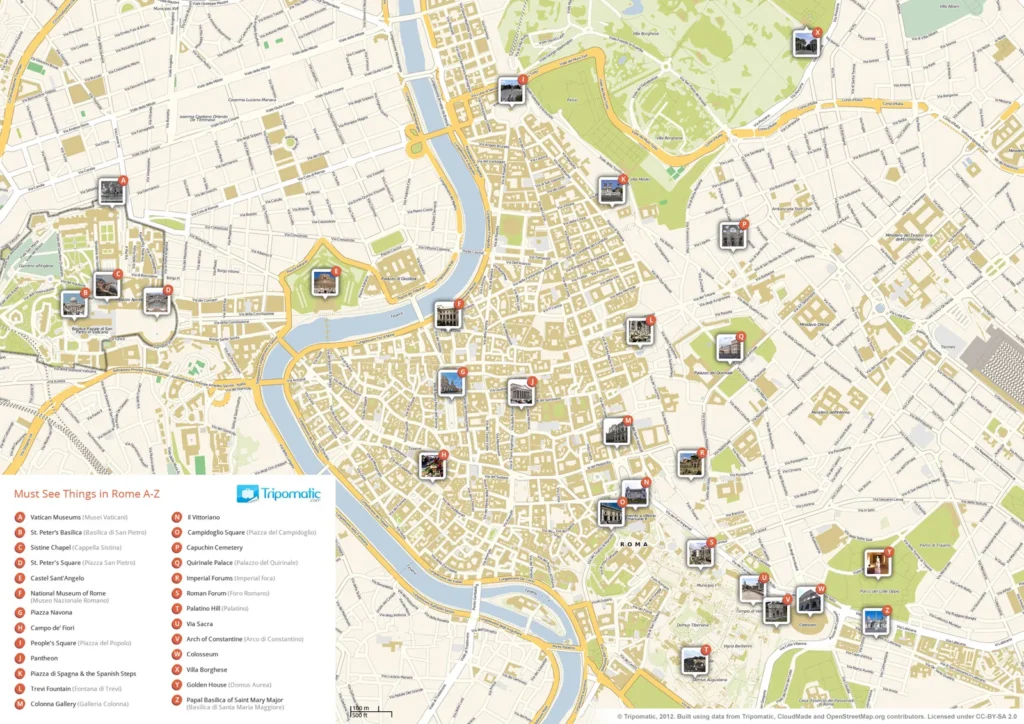
Every ticket on this page also opens the Roman Forum and the Palatine, so the visit carries on across the road. The Roman Forum audio guide picks up where this plan ends, along the Via Sacra, and the Circus Maximus lies on the far side of the Palatine.
 Free audio guideRoman Forum