
Real Alcázar Gardens, Seville: free audio guide and tips
Free audio guide in English · no app, no sign-up
Free audio guide to the gardens of the Real Alcázar of Seville, in English: 6 minutes from the Chinese Garden and the Pond of Mercury to the Pavilion of Charles V and the Vega-Inclán Garden, playing on this page.
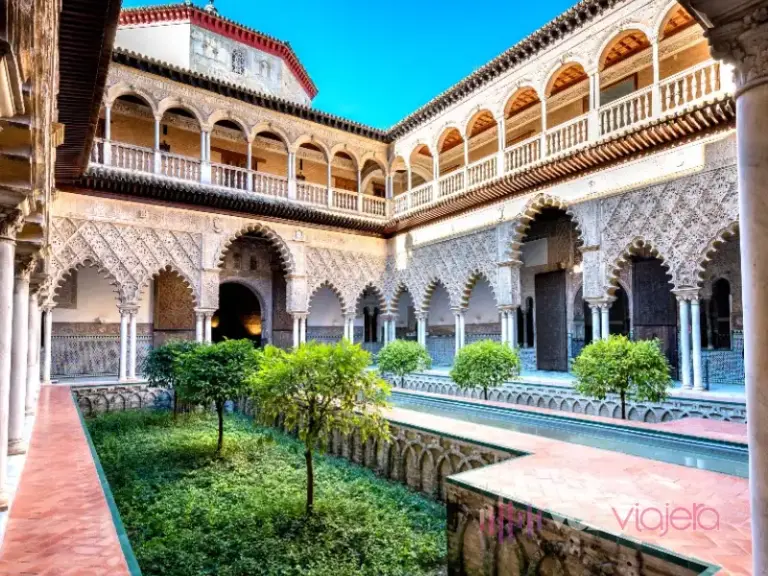 Audio guide
On this page
- What the audio guide tells you
- Tickets, hours and the rules of the gardens
- The Pond of Mercury and the Grotesque Gallery
- Down the steps: the Garden of the Dance and the Baths of María de Padilla
- The courtyard gardens, from Troy to the Ladies' Garden
- The Pavilion of Charles V and the 20th-century gardens
- Nearby, with their own free audio guides
- Where to find it
The gardens of the Real Alcázar of Seville are the walled royal gardens behind the palace: a chain of small courtyard gardens from the 16th and 17th centuries, the Pond of Mercury, the Grotesque Gallery, the tiled Pavilion of Charles V and larger 20th-century gardens beyond. They are on the same €15.50 ticket as the palaces, with no separate ticket. This is their free audio guide, in English.
What the audio guide tells you
It is free, it plays on this page in your phone’s browser, with no app and no sign-up, and it lasts about 6 minutes. It walks you through the gardens one by one: the Chinese Garden first, then the Pond of Mercury and its bronze Mercury, and the long Grotesque Gallery behind it. From there it takes you down the steps to the Garden of the Dance and the vaulted Baths of María de Padilla, and on through the Troy, Galley, Flower, Prince’s and Ladies’ gardens. It ends with the Pavilion of Charles V, the Lion’s Arbour, the English Garden and the Marqués de la Vega-Inclán Garden, entered through the Marchena Gate. A short note on Seville’s April Fair closes it.
Some points of interest described in the audio guide to the gardens of the Real Alcázar of Seville:
| Point of Interest | Brief Description |
|---|---|
| Chinese Garden | Myrtle hedges and flower beds; separated from the Pond of Mercury area in the 16th century, under Philip II. |
| Pond of Mercury | Water store for the palace, with a bronze statue of Mercury from 1576. |
| Grotesque Gallery | A 160-metre wall that divides the old gardens from the former orchards. |
| Garden of the Dance | Laid out in the 1570s, with a fountain and the way into the Baths of María de Padilla. |
| Troy Garden | Mannerist courtyard with a gallery of round arches and a central marble fountain. |
| Galley Garden | 4 flower beds and a marble column with an inscription in honour of al-Mu’tamid. |
| Flower Garden | Small rectangular pond and the remains of a late-16th-century grotto. |
| Prince’s Garden | Named after the room where Prince Juan was born; central fountain from 1760-1770. |
| Ladies’ Garden | Made in 1526 for the wedding of Charles I and Isabella of Portugal; Fountain of Fame and a bronze Neptune. |
| Pavilion of Charles V | Built between 1543 and 1546, with 16th-century tiles inside and out. |
| Lion’s Arbour | Square room with a tiled dome, built in 1644-1645, with a lion fountain. |
| English Garden | Garden in the English style, renovated in 1927. |
| Marqués de la Vega-Inclán Garden | Early 20th-century garden of straight paths, fountains and many plant species. |
Tickets, hours and the rules of the gardens
There is no garden-only ticket: the general ticket, €15.50, or €8 reduced, covers both the palaces and the gardens, and you go in through the Puerta del León, on the Plaza del Triunfo. Each ticket has a 30-minute time slot, and you can arrive from 15 minutes before it to 30 minutes after. Tickets carry your name, so bring your passport or ID, and they cannot be changed or refunded.
Since 1 October the Alcázar is on its winter timetable: 09:30 to 17:00 every day until 31 March, and the gardens close with the rest of the site. It is closed on 1 and 6 January, Good Friday and 25 December, and closes early on 24 and 31 December.
The Alcázar can close some of its spaces or gardens at short notice for maintenance, urgent needs or weather alerts, and when that happens there is no discount or refund. You may not bring food or drinks other than water, so the gardens are a place to walk and sit, not to picnic.
The Pond of Mercury and the Grotesque Gallery
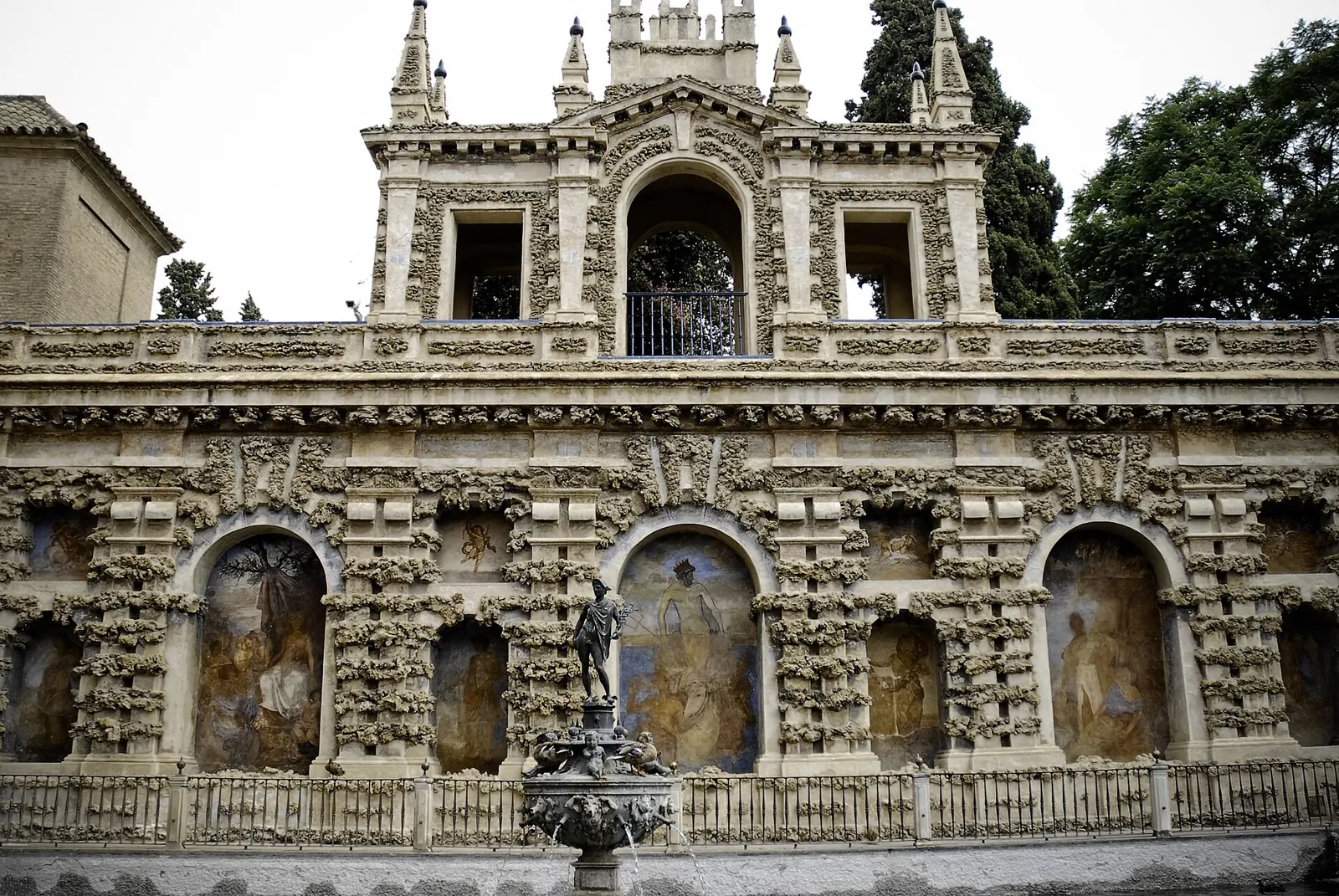
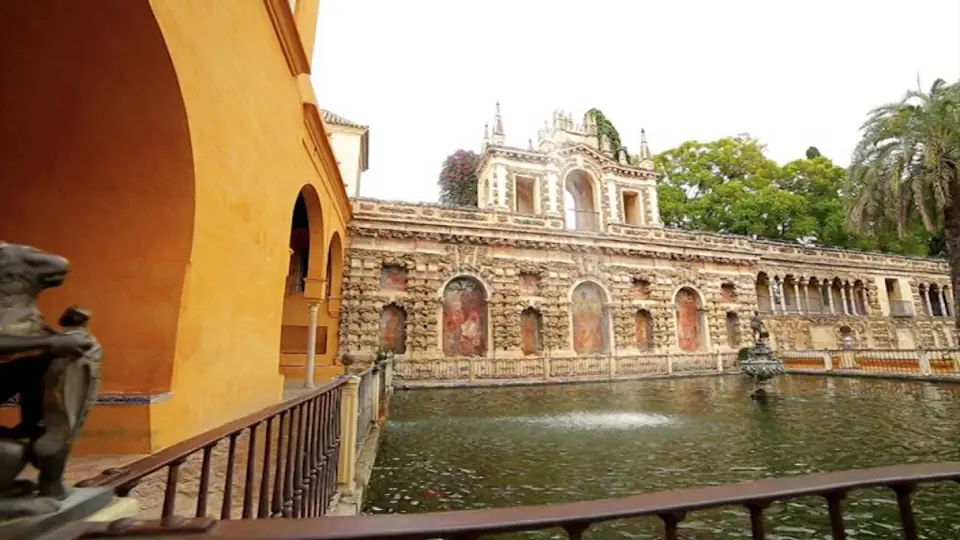
When you come out of the palaces, the first garden is the Chinese Garden, which was separated from the area of the Pond of Mercury in the 16th century, in the reign of Philip II. The pond itself was probably built in the Islamic period to store and regulate the water for the whole palace. The bronze Mercury in the middle dates from 1576: it was designed by Diego de Pesquera and cast by Bartolomé Morel, who also made the railing round the pond and the lions holding shields at its corners. The pond and its group of sculptures have recently been restored.
Behind the pond runs the Grotesque Gallery, a wall 160 metres long. It began as an Almohad wall from the 12th century; in 1612 the architect Vermondo Resta turned one face of it into a gallery of rough rustic stonework, and it was reworked until the 19th century. It splits the gardens in 2: on one side the old palace gardens, on the other the former orchards, which became gardens at the end of the 19th century and are full of orange and lemon trees.
 Free audio guideReal Alcázar of Seville (general)
Down the steps: the Garden of the Dance and the Baths of María de Padilla
Steps beside the Pond of Mercury take you down to the Garden of the Dance, laid out in the 1570s. Its name comes from 2 statues of a satyr and a nymph dancing at its entrance; they are long gone, and the fountain in the middle is what remains.
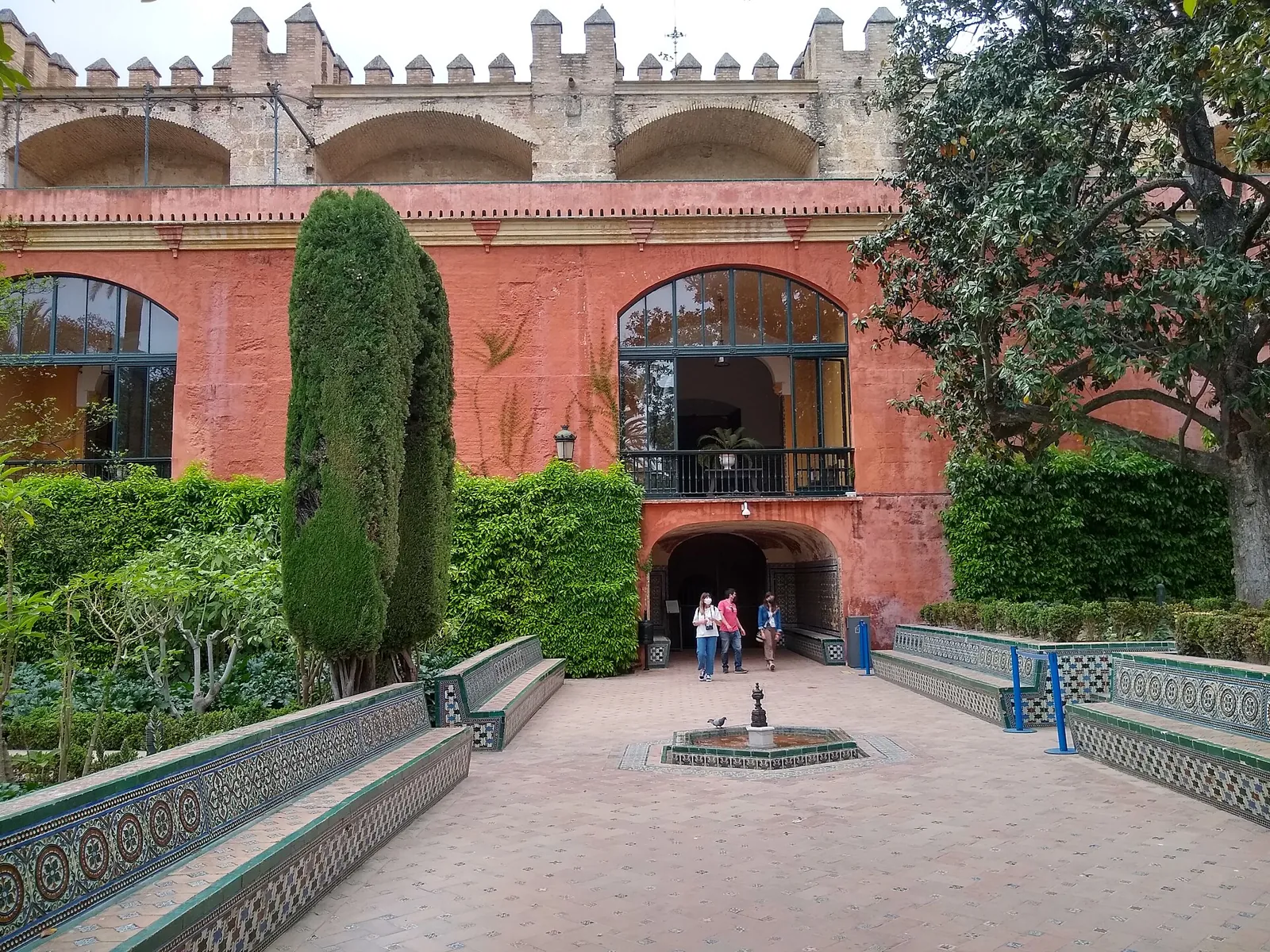
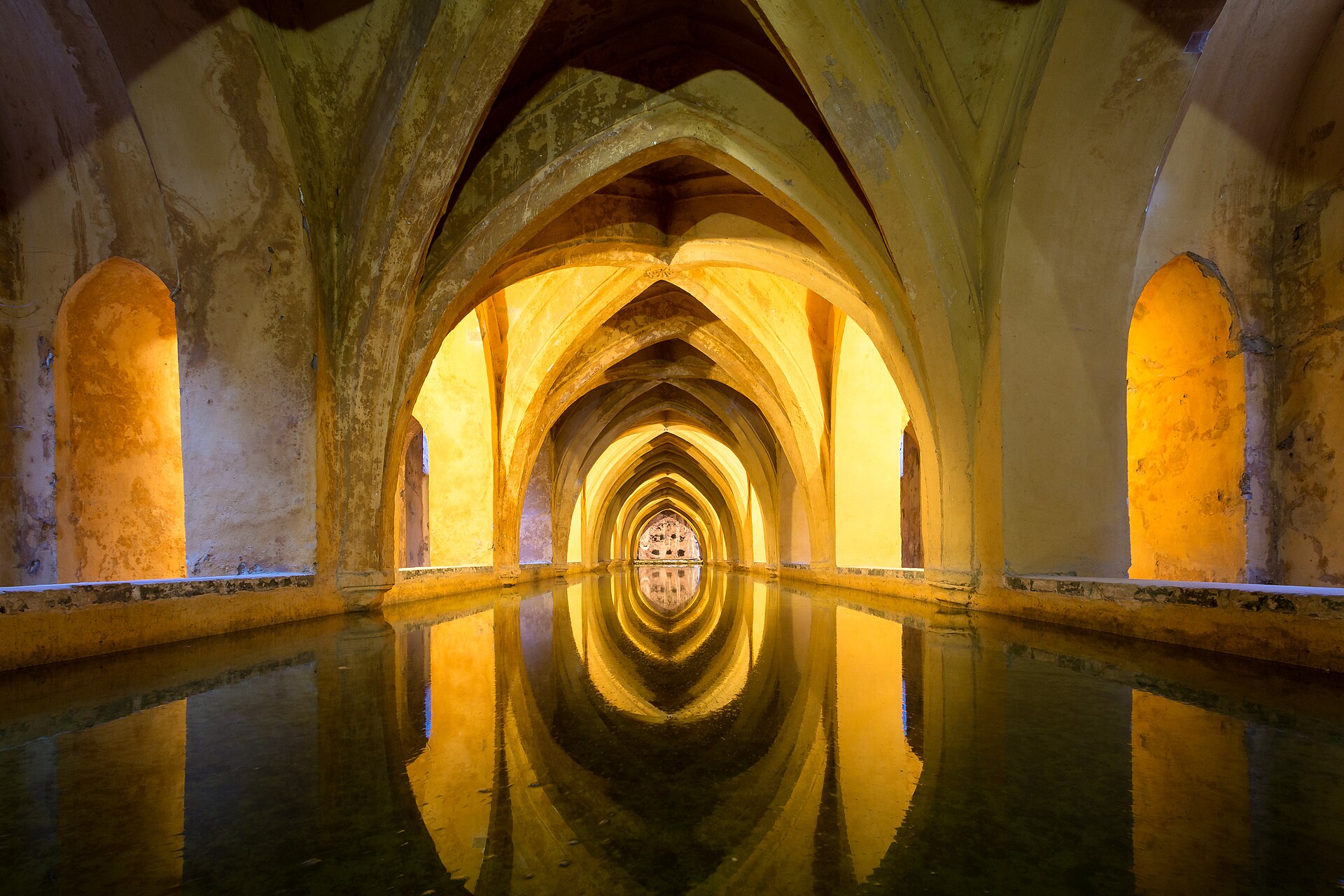
From this garden you walk into the Baths of María de Padilla, vaulted passages from the 12th century under the Patio del Crucero. They are all that survives of the lower level of an old sunken garden; after the Lisbon earthquake the rest of that lower garden was filled with earth to make today’s courtyard. The entrance from the garden is a long barrel vault, and inside is a long vaulted gallery over a pool.
The courtyard gardens, from Troy to the Ladies’ Garden
The older gardens are a string of separate, self-contained walled spaces, with low fountains, tiles and orange trees, an idea inherited from the Islamic gardens and reworked in the 16th and early 17th centuries. The Troy Garden is a Mannerist courtyard with a gallery of round arches on its south side, built by Vermondo Resta in 1606. There was a maze here until it was paved over in 1599. An arch joins it to the Galley Garden, with its marble column in honour of al-Mu’tamid, the 11th-century poet-king of Seville.
The Flower Garden has a small rectangular pond and the remains of a little grotto from the end of the 16th century, which now holds a bust of Charles I. Next to it, the Prince’s Garden takes its name from the Prince’s Room, where Prince Juan, son of the Catholic Monarchs, was born in the 15th century; it is divided into 4 by hedges around a fountain made between 1760 and 1770. The old passage from the Patio de las Muñecas to this garden has been restored and opened to visitors again after decades out of use.
The Ladies’ Garden is a great rectangle divided into 8 beds with myrtle hedges, low fountains along the side paths and, in the middle, a tall fountain topped by a bronze Neptune. On its east side, built into the Grotesque Gallery, is the Fountain of Fame, with a water organ whose hydraulic mechanism has been restored; the audio tells you it plays notes as the water runs through its pipes.
The Pavilion of Charles V and the 20th-century gardens
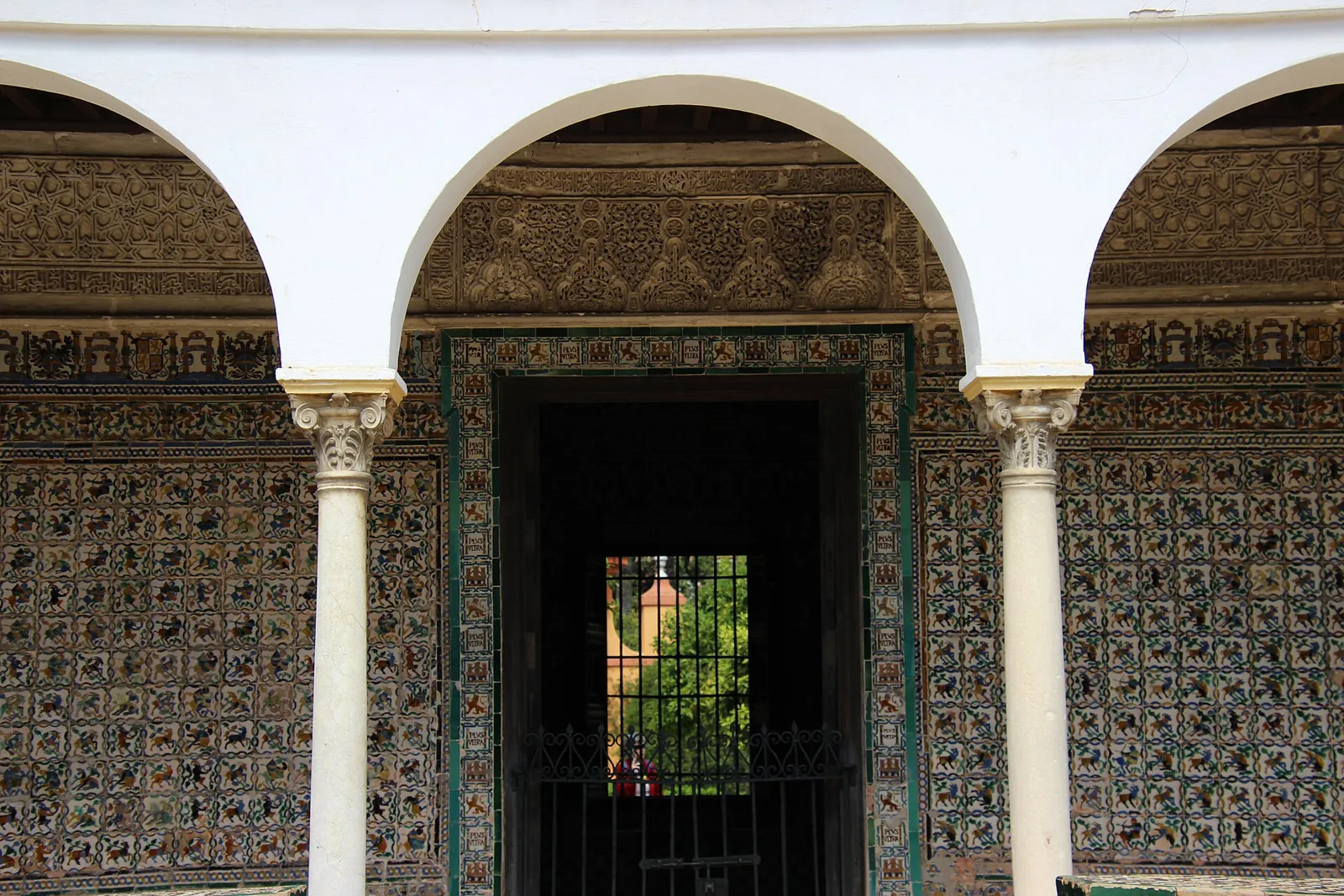
Among the later gardens stands the Pavilion of Charles V, built between 1543 and 1546 by Juan Fernández. Every wall, inside and out, and its benches are covered in 16th-century tiles by Juan Polido and his father Diego Polido. South of it is a hedge maze, laid out in 1914 by the Marqués de la Vega-Inclán, then the royal commissioner for tourism, from the maze drawn on the pavilion’s floor.
The Lion’s Arbour was built in 1644-1645 by Diego Martín de Orejuela: a square room with a tiled dome, with a lion fountain in front of it. He built a second, eight-sided arbour in the 17th century, which no longer exists. The English Garden takes its present form from a renovation of 1927, made at the request of Queen Victoria Eugenia.
The last garden on the audio is the Marqués de la Vega-Inclán Garden, created at the start of the 20th century, with straight paths crossing at right angles, fountains and many kinds of plants. You reach it through the Marchena Gate, a 15th-century Gothic doorway from a palace of the Dukes of Arcos in the town of Marchena, which King Alfonso XIII bought at auction and which was moved here in 1913.
Nearby, with their own free audio guides
- Real Alcázar of Seville (general) — the history of the whole palace, from the 10th century to today.
- Real Alcázar of Seville (rooms) — the palaces and courtyards you walk through before the gardens.
- Seville Cathedral — on the UNESCO World Heritage List together with the Alcázar since 1987.
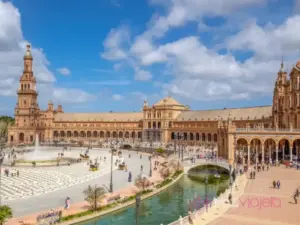
- Plaza de España — the next of Seville’s free audio guides in English.
 Free audio guideSeville Cathedral
All of them are on the free audio guides of Seville page.
Where to find it
FAQs
How do the free audio guides work?
They play right here on audioguidetravel.com, with no app to download and no sign-up. Press play and listen as you walk round: a phone and a pair of headphones are all you need. The audio streams from this page, so you’ll need mobile data or Wi-Fi.
Can I take the tour at my own pace?
Of course! You set the pace: pause whenever you like, jump back or forward 15 seconds, or tap the bar to jump to any point, and listen as many times as you want so you don’t miss a thing.
If I'm in a group, can we use the same audio guide?
Yes. The same free audio guide opens on as many phones as you like, so you can go round together as a group or with your family, each person at their own pace and with their own headphones. The quickest way is to send the link via WhatsApp, Telegram or however you like: the buttons just below let you share it right now.
Visitor information
As of 3 Oct 2026- Opening hours
- Daily 09:30–17:00 from 1 October to 31 March · 09:30–19:00 from 1 April to 30 September.
- Tickets
- €15.50 · reduced €8
- Getting there
- The gardens are reached through the Alcázar, entering at the Puerta del León. Tram: Archivo de Indias stop. Metro Line 1: Puerta de Jerez.
- Accessibility
- Free entry for visitors with a disability of 33% or more and 1 companion, with official documentation, collected at the ticket office, subject to availability. The Garden of the Dance and the Baths of María de Padilla are reached down steps.
- Tip
- Book a morning slot: from October to March the gardens start being cleared at 17:45, and they come at the end of the visit
- Official website
- alcazarsevilla.org
Nearby
More free audio guides in Seville
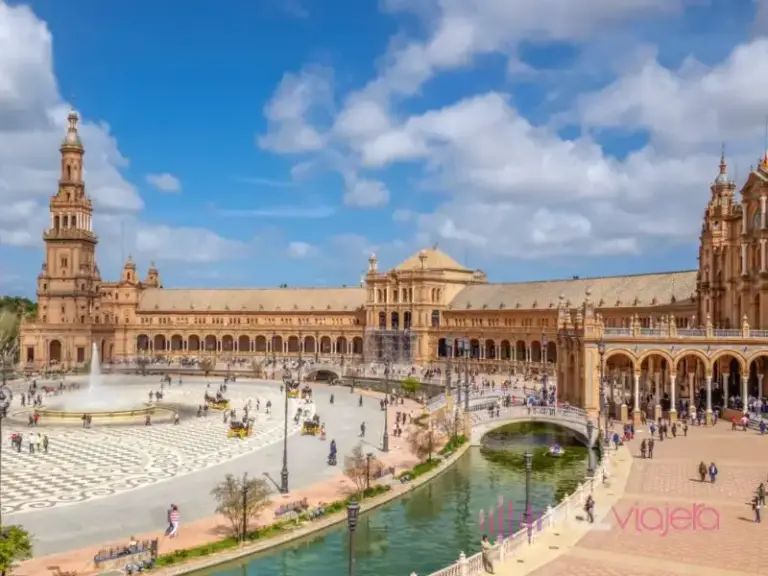 7:21SevillePlaza de EspañaFree audio guide to Plaza de España in Seville, in English: about 7 minutes on Aníbal González’s square…
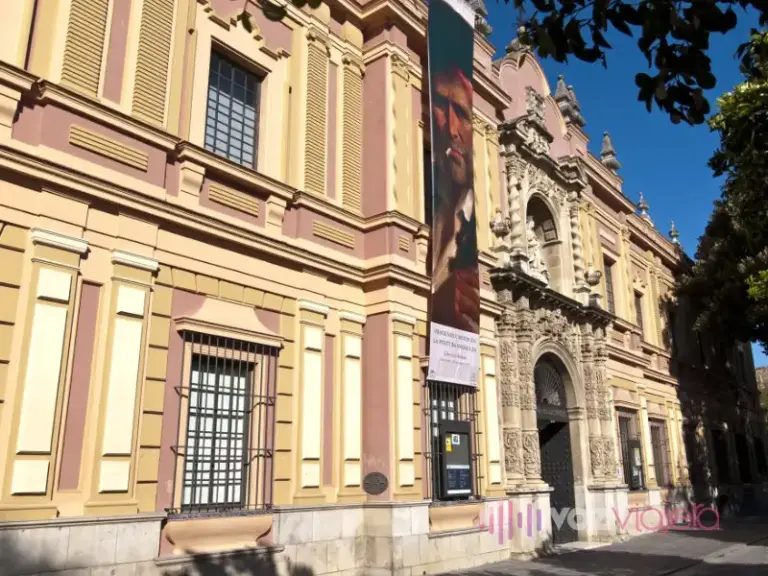 3:40SevilleMuseum of Fine ArtsWelcome to the Museum of Fine Arts of Seville, a temple dedicated to art and history, located in…
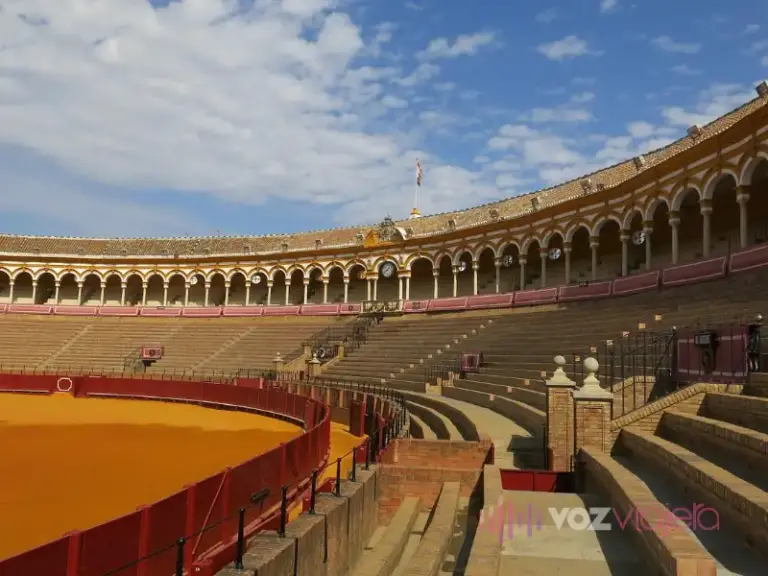 3:55SevilleReal Maestranza de Caballería BullringWelcome to the Real Maestranza de Caballería Bullring in Seville, a place where passion and tradition are intertwined in…