
The Giralda: free audio guide, hours and tickets
Free audio guide in English · no app, no sign-up
Free audio guide to the Giralda in Seville, in English: just over 5 minutes on the Almohad minaret, its Renaissance belfry and each body of the tower, from the bells to the Giraldillo. It plays on this page.
 Audio guide
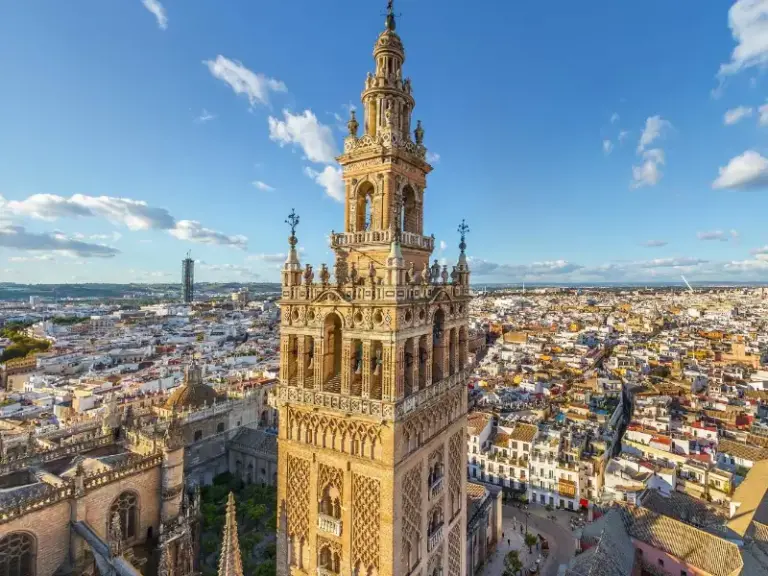
The Giralda is the bell tower of Seville Cathedral. Its lower part is the minaret of the Almohad great mosque, begun in 1184, and its top is the Renaissance belfry that Hernán Ruiz the Younger added between 1558 and 1568. With the Giraldillo weather vane it stands 94.69 m tall, and you climb it with the Cathedral ticket. This is its free audio guide, in English.
What the audio guide covers
It is free, plays on this page in your phone’s browser with no app and no sign-up, and lasts just over 5 minutes. It opens with what the tower is: the bell tower of the Cathedral of Santa María de la Sede, 94.69 m high, Almohad work of the late 12th century with Renaissance additions of the 16th, crowned by the bronze Giraldillo. It recalls that the Giralda became a national monument in 1928 and a UNESCO World Heritage Site in 1987, together with the cathedral and other historic buildings.
Then comes the history: Seville as the capital of al-Andalus under the Almohads, the first great mosque of 829, the new one begun in 1172 and its minaret, with foundations about 9 m deep, stones taken from the wall of the palace of Ibn Abbad for the lowest part and brick from 2 m up. It names its 2 sisters, the minaret of the Kutubiyya Mosque in Marrakesh and the Hassan Tower in Rabat, both of the 12th century. The second half goes up the tower body by body, from bottom to top, and it ends with a few tips: comfortable shoes, your camera, tickets bought ahead in high season and a quiet voice inside the cathedral.
Points of interest the audio guide stops at:
| Point of Interest | Description |
|---|---|
| The base | The square plan of the minaret, beside the Courtyard of the Orange Trees. |
| The ramps | 35 ramps and 17 final steps take you up to the bell level, where the climb ends. |
| Body of the bells | The belfry on the same square plan as the minaret: 16 lion heads at its base, a cherub head over each of the 16 oculi and the 4 major prophets, Isaiah, Jeremiah, Ezekiel and Daniel, on the pediments. |
| Body of the clock | The clock set up in the tower in 1400, the first tower clock in Spain. The body you see today was designed in 1765. |
| Body of the stars | The biblical inscription that runs round the tower, “the strongest tower is the name of the Lord”, and the bell that strikes the hours. |
| Body of the carambolas | The round body, named after its spherical stone finials. |
| The penacho | The small dome that crowns the tower, under the Giraldillo. You see it from below: the visit stops at the bell level. |
From minaret to bell tower
In the 12th century the Almohads made Seville the capital of al-Andalus, and in 1172 they began a new great mosque, led by the chief architect Ahmad Ben Baso with builders from Marrakesh and Fez. The old one, from 829, stood where the Church of El Salvador is today. The minaret came later: work on it began in the autumn of 1184 under Ben Baso, stopped, and started again in 1188 and 1189 under Ali al-Gumari, who built it in brick.
On 10 March 1198 the minaret was crowned with the yamur, 4 gilded bronze spheres on an iron shaft. In 1248 Ferdinand III took Seville, the mosque was consecrated as a church and the minaret became its bell tower. The earthquake of 24 August 1356 brought the spheres down, and a wooden belfry paid for by the king took their place.
The belfry you see today is the work of Hernán Ruiz the Younger, between 1558 and 1568. On top of it turns a bronze female figure of about 4 m that stands for the victory of faith: the Giraldillo, cast by Bartolomé Morel and set in place on 13 August 1568. It is the weather vane, the thing that turns, that gave its name to the whole tower.
The climb: 35 ramps and 17 steps
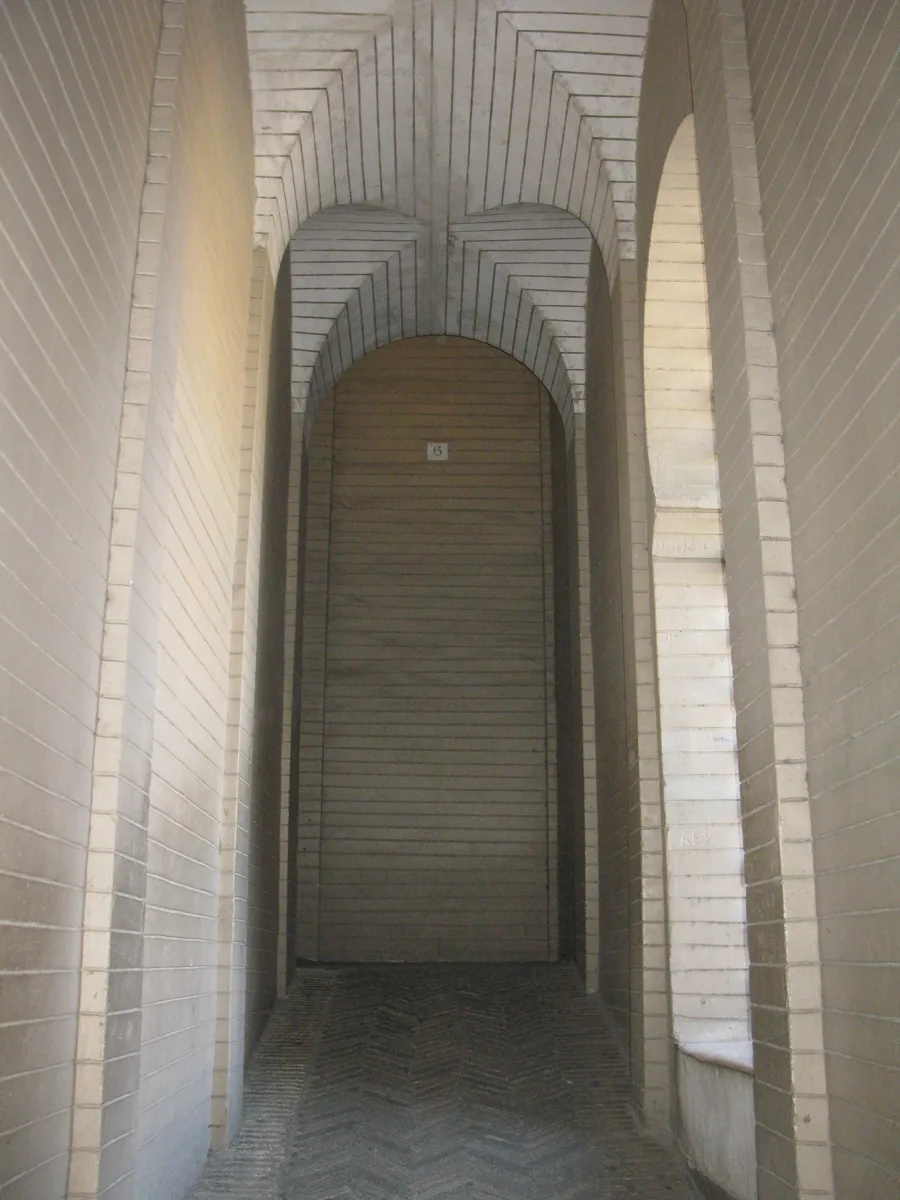
Inside, the Giralda follows the plan of the Almohad minarets: a square central core wrapped by 4 outer walls, with the ramps running between them. They are so wide that a rider could go up on horseback. You climb 35 ramps of brick and only at the end come 17 steps to the bell level, which is the part of the tower open to visitors.
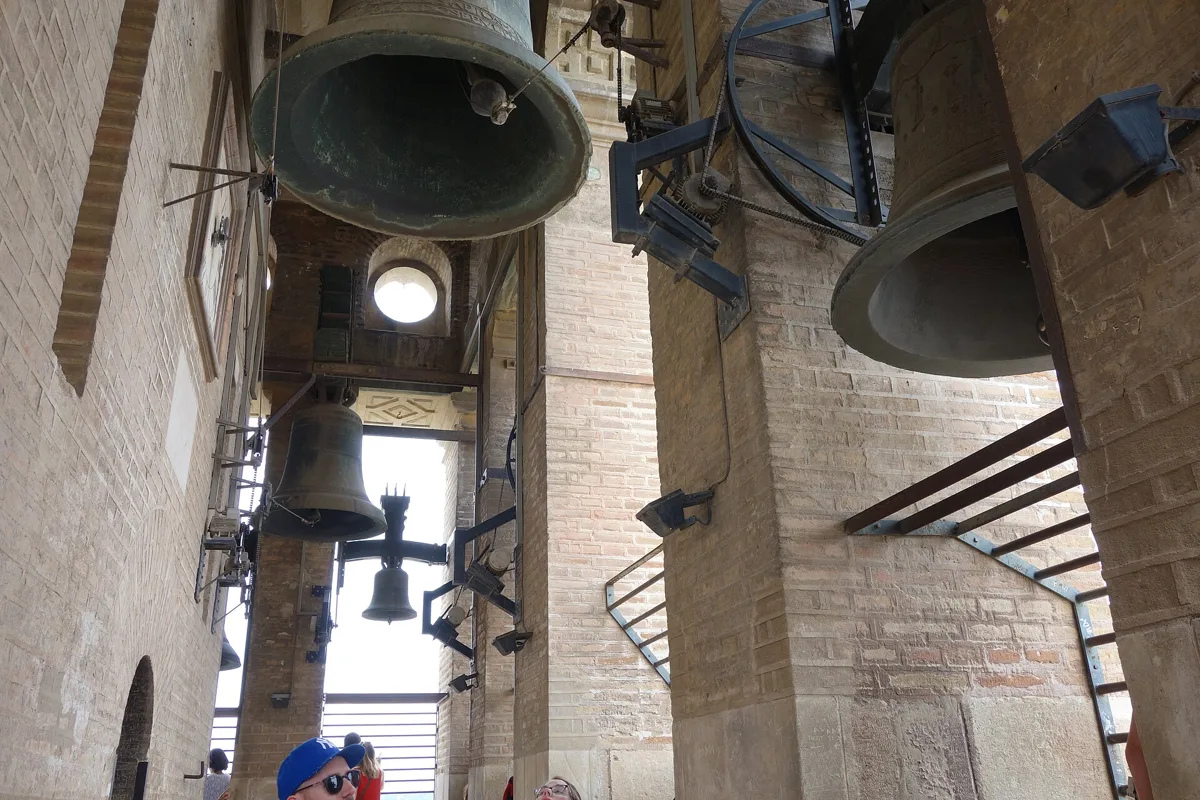
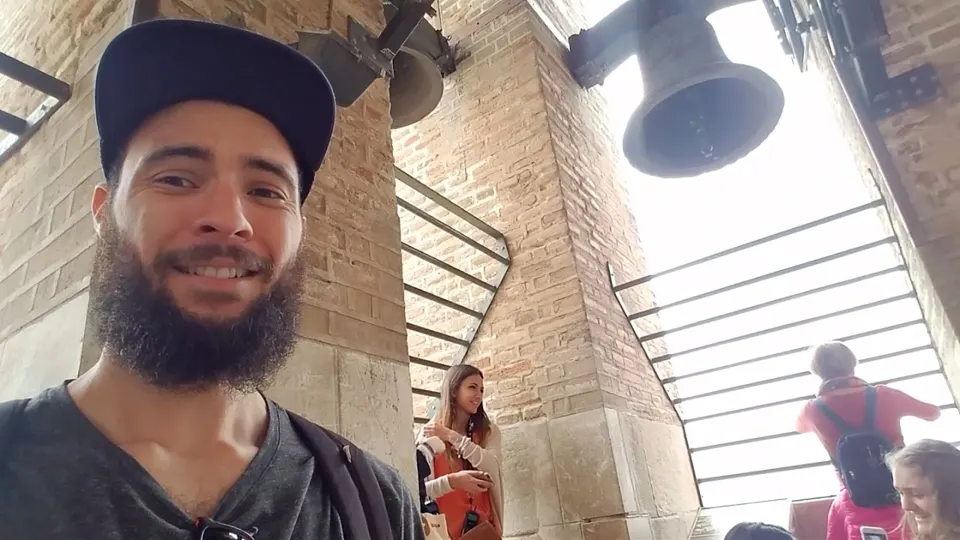
At the top you walk among the bells. The Giralda has 24 bells, plus the bell of the clock on the floor above: 25 in all, more than any other cathedral in Spain. The oldest is the one that strikes the hours, cast in 1400. From the openings of the belfry you look down on the roofs of the cathedral and out towards the Real Alcázar.
What to look for on the tower
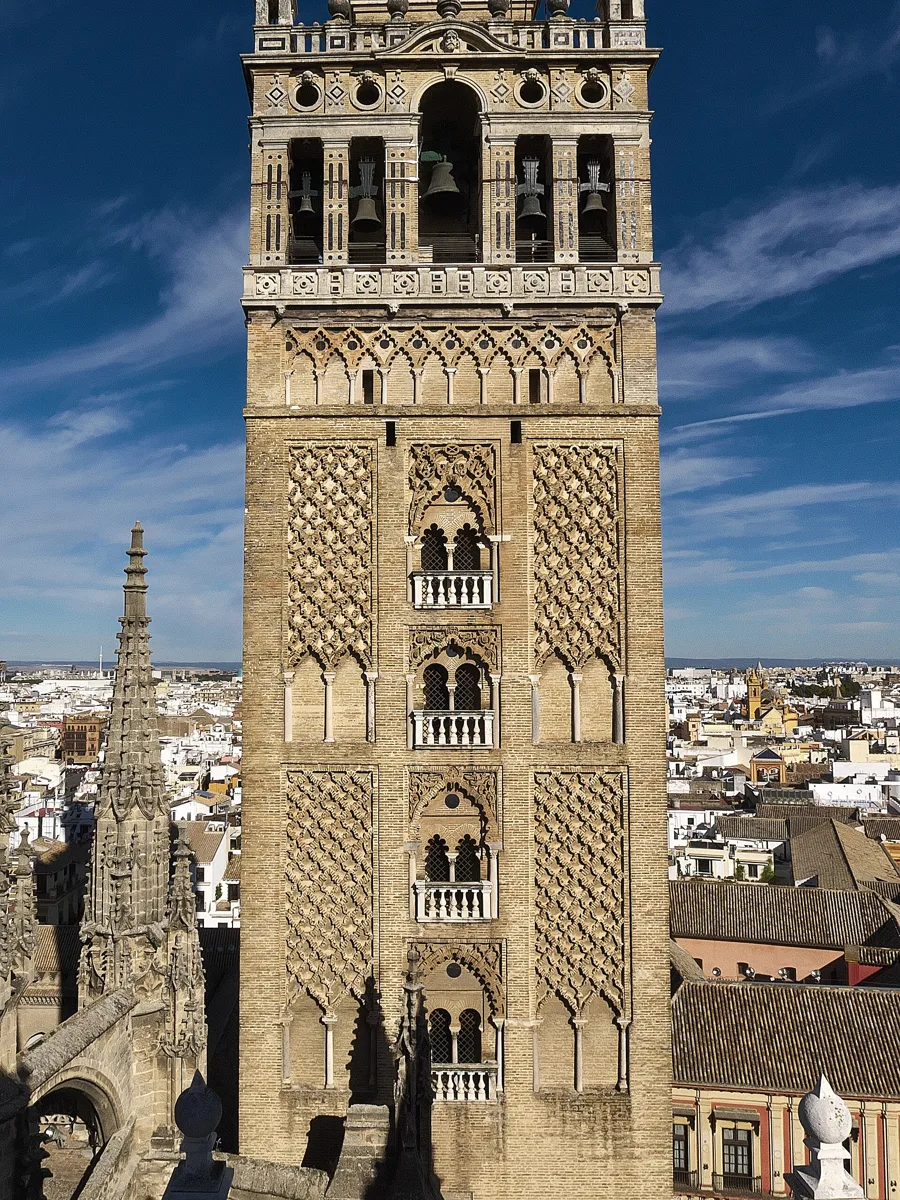
Before you go in, step back and look at the outside. The Almohad shaft is decorated in vertical bands: paired windows with horseshoe or lobed arches in the centre, and on the sides a lattice of brick arches that, from a distance, looks like a net of diamonds. Higher up, the windows of the bell body keep arches and capitals of caliphal descent.
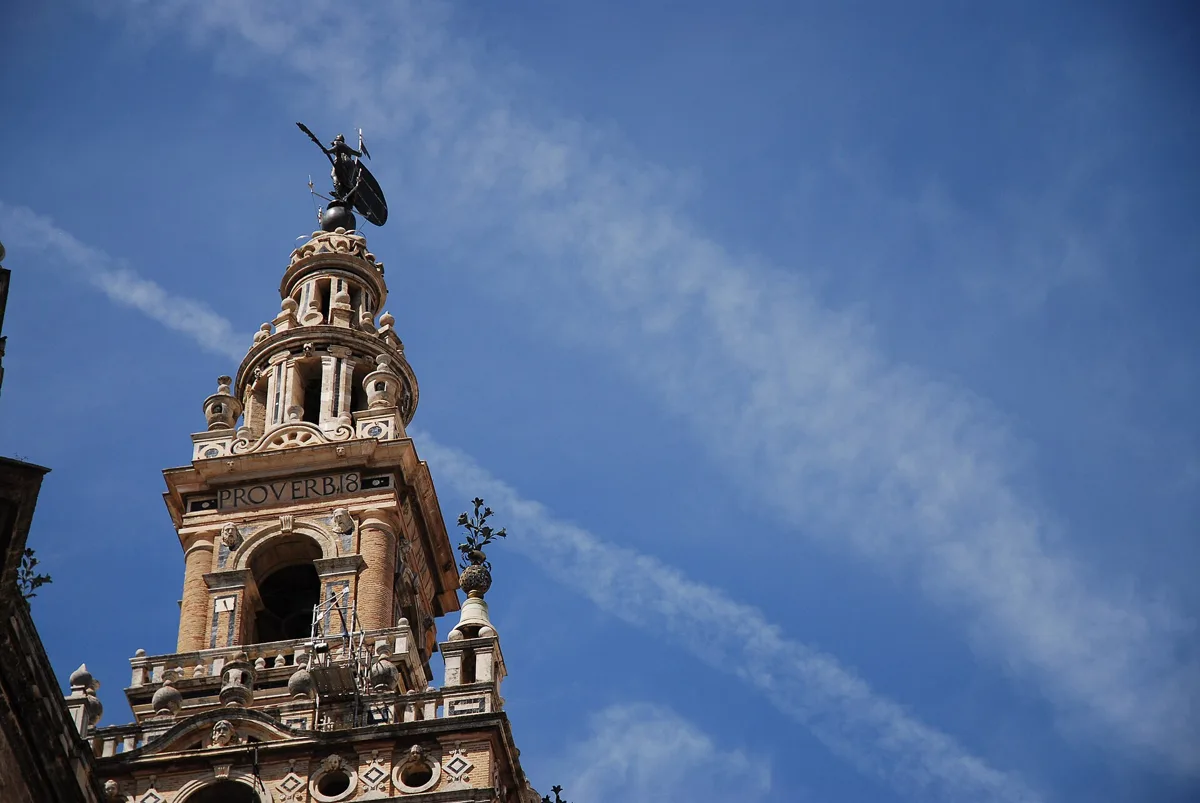
The Renaissance top rises in stages. Over the belfry runs the terrace of the lilies, with 4 iron and bronze vases that Bartolomé Morel made in 1568 and that were given their metal lilies in 1751. Then come the clock body, the body of the stars with the Latin inscription TVRRIS FORTISSIMA NOMEN DNI, from the Book of Proverbs, the round body of the carambolas and the small dome of the penacho. A later clock, put in place in 1766, is kept inside the tower.
The same ticket takes you through the cathedral itself, with a high altarpiece the cathedral describes as the largest in Christendom and the monument to Christopher Columbus, placed there in 1902.
 Free audio guideSeville Cathedral
Tickets, opening hours and the roof tour
There is no separate ticket for the tower: you climb it with the general ticket to the Cathedral and the Giralda, which also includes free entry to the Church of El Salvador. It costs €13 online or €14 at the ticket office. The reduced ticket, €7 online or €8 at the office, is for people over 65, students up to 25, people with a disability from 33 to 65% and adults of large families. Entry is free for people born or living in the Diocese of Seville, children up to 13 with an adult, people with a disability from 65% and unemployed Spanish nationals, with an official document.
The visit is open Monday to Saturday from 10:45 to 18:00, with the ticket offices closing at 17:00, and on Sundays from 14:30 to 19:00, with the ticket offices closing at 18:00. With an online ticket you go in through the Puerta del Lagarto; if you buy at the office, through the Puerta del Príncipe. The cathedral plans about 75 minutes for the cathedral and the Giralda together. Hours can change for worship, and during services there are no tourist visits inside.
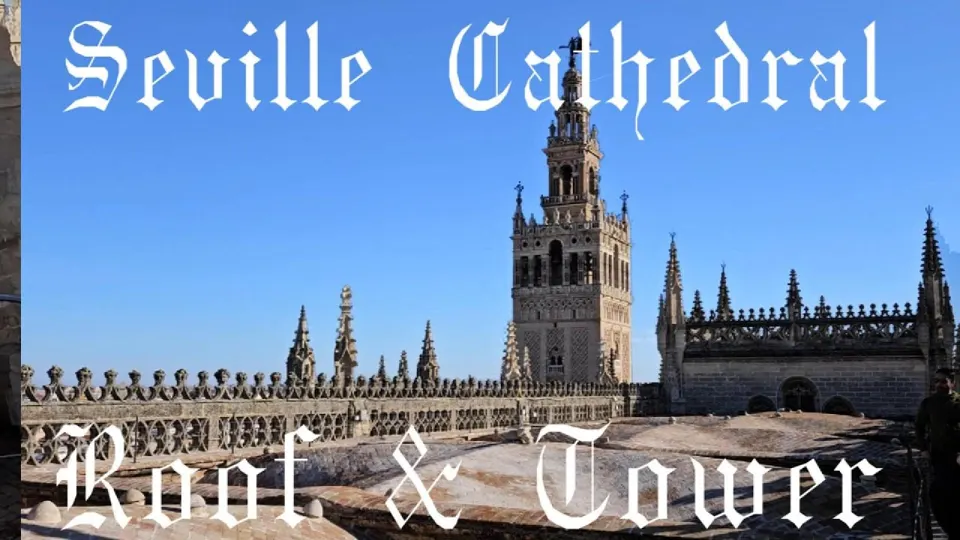
For a different view of the tower, the roof tour takes you along the terraces and passages of the cathedral, with views over the cathedral and the city around it. It is guided, in Spanish, English or French, lasts about 1 hour 30 minutes and costs €20 online or €21 at the office. From October to May it starts at 10:00 and 10:30 every day; from June to September at 9:00, 9:30, 20:30 and 21:00, with an extra tour at 21:30 on Fridays and Saturdays. It is for visitors over 9, with 1 adult for every 2 under-16s, and not for people with heart or breathing problems, vertigo or limited mobility.
Rules, accessibility and getting there
The cathedral is a place of worship. Dress modestly and take off your hat when you go in. Photos are allowed without flash or tripod, as long as you do not disturb people at prayer. Food and drinks are not allowed, except water, and neither are animals, except guide dogs.
The climb is on ramps, with 17 steps at the end. For the rest of the visit the cathedral lends wheelchairs free of charge and has adapted toilets in the permanent exhibition area and in the Courtyard of the Orange Trees, leaflets in Braille and sign-language guides for deaf visitors.
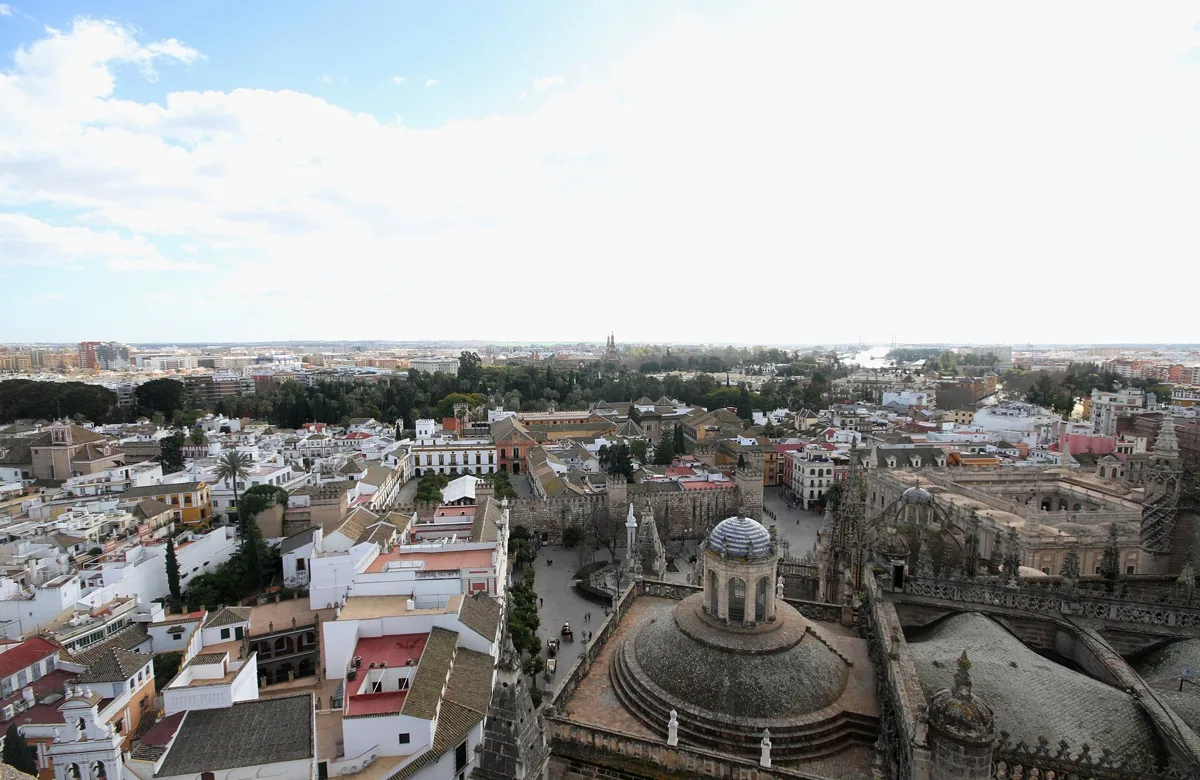
The cathedral stands on Avenida de la Constitución. The Metrocentro tram stops at Archivo de Indias; metro line 1 stops at Puerta de Jerez; and bus lines C1, C2, C3, C4, 5, 41 and 42 stop at Jardines del Cristina. The Cercanías trains stop at San Bernardo.
The Giralda is the heart of a walk through the old town: next to the cathedral is the Real Alcázar, and about 800 m to the north are the Setas de Sevilla. You can see all our free audio guides to the city on the Seville page.
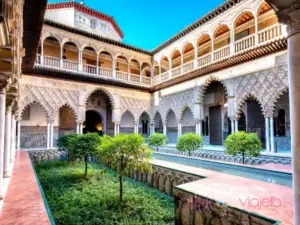 Free audio guideReal Alcázar of Seville (general)
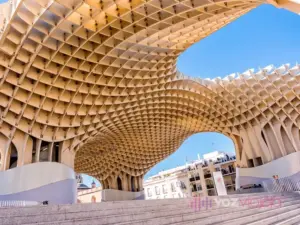 Free audio guideSetas de Sevilla
Where to find it
FAQs
How do the free audio guides work?
They play right here on audioguidetravel.com, with no app to download and no sign-up. Press play and listen as you walk round: a phone and a pair of headphones are all you need. The audio streams from this page, so you’ll need mobile data or Wi-Fi.
Can I take the tour at my own pace?
Of course! You set the pace: pause whenever you like, jump back or forward 15 seconds, or tap the bar to jump to any point, and listen as many times as you want so you don’t miss a thing.
If I'm in a group, can we use the same audio guide?
Yes. The same free audio guide opens on as many phones as you like, so you can go round together as a group or with your family, each person at their own pace and with their own headphones. The quickest way is to send the link via WhatsApp, Telegram or however you like: the buttons just below let you share it right now.
Visitor information
As of 31 Oct 2026- Opening hours
- Mon-Sat 10:45-18:00 (ticket offices close 17:00) · Sun 14:30-19:00 (ticket offices close 18:00)
- Tickets
- €13 online / €14 at the office, with the Cathedral and El Salvador
- Time needed
- About 75 min for the Cathedral and the Giralda
- Getting there
- Metrocentro tram to Archivo de Indias; metro line 1 to Puerta de Jerez.
- Accessibility
- The climb is 35 ramps and 17 steps; free wheelchairs and adapted toilets for the rest of the visit
- Tip
- Buy online and enter through the Puerta del Lagarto: the visit begins with the Giralda
- Official website
- www.catedraldesevilla.es
Nearby
More free audio guides in Seville
 4:36SevilleSetas de Sevilla: free audio guide, hours and ticketsFree audio guide to the Setas de Sevilla, the Metropol Parasol, in English: almost 5 minutes on the…
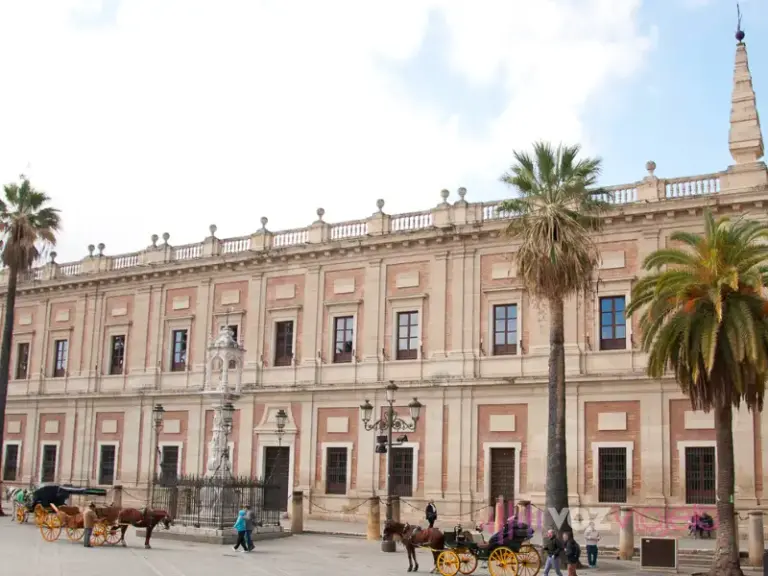 4:13SevilleArchivo de Indias, Seville: free audio guide and opening hoursFree audio guide to the Archivo de Indias in Seville, in English: just over 4 minutes on why…
 3:53SevilleIsla MagicaIsla Magica, the theme park located in Seville, invites you to embark on an epic adventure that will…