
Setas de Sevilla: free audio guide, hours and tickets
Free audio guide in English · no app, no sign-up
Free audio guide to the Setas de Sevilla, the Metropol Parasol, in English: almost 5 minutes on the great wooden canopy by Jürgen Mayer H., the story of Plaza de la Encarnación and its levels, from the viewpoint to the Antiquarium. It plays on this page.
 Audio guide
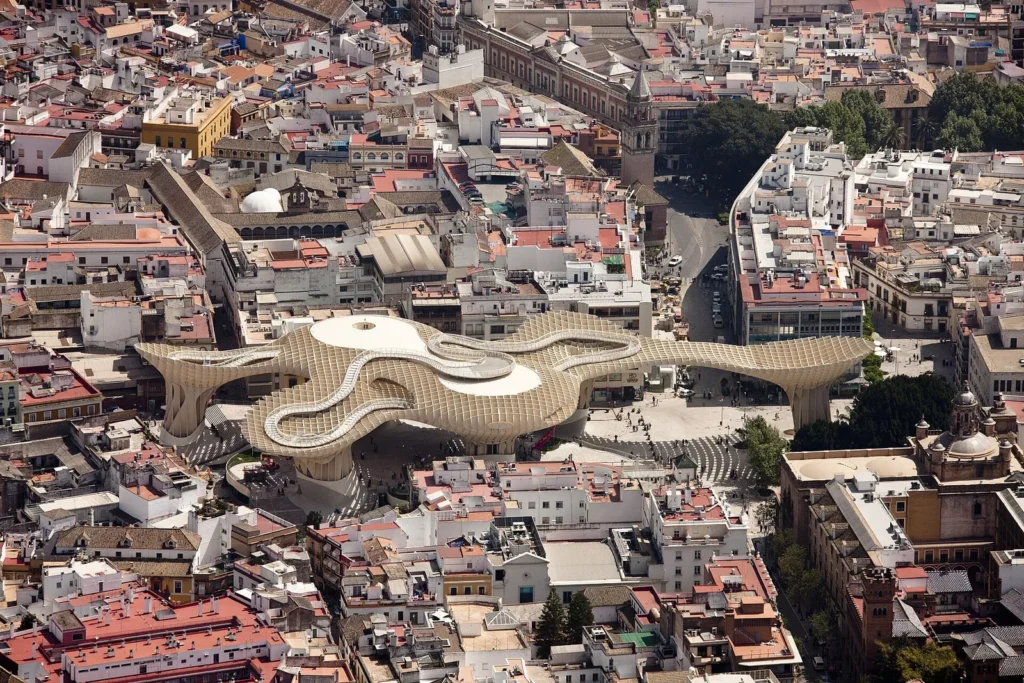
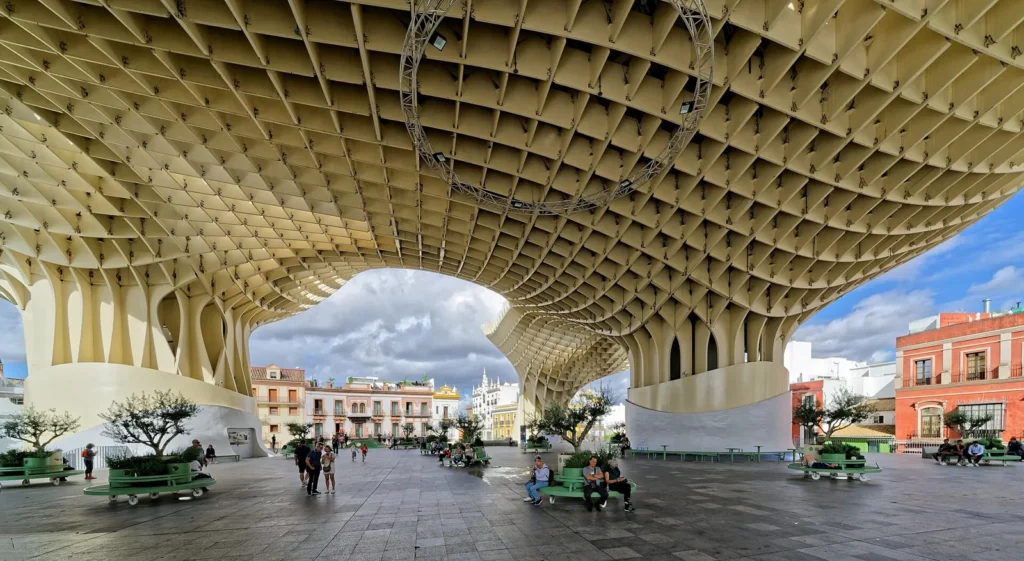
The Setas de Sevilla, also known as the Metropol Parasol, are a huge wooden canopy over Plaza de la Encarnación, in the old town of Seville: 150 m long and 70 m wide, designed by the Berlin architect Jürgen Mayer H. and opened in 2011. On top, walkways take you to a viewpoint over the rooftops; underneath are a market, a square and a museum of Roman remains. This is its free audio guide, in English.
What the audio guide covers
It is free, plays on this page in your phone’s browser with no app and no sign-up, and lasts almost 5 minutes. You don’t need a ticket to listen: play it in the square, in the shade of the parasols, before you decide whether to go up.
It starts with what is in front of you: a pergola of laminated wood and concrete held up by 6 pillars, where every rib has its own curve, which is where the wavy, mushroom-like look comes from. Then it tells the story of the square, from the 19th-century food market to the empty site left when it was pulled down, the Roman and Andalusi remains that turned up during the excavations, and the project by Jürgen Mayer H. that finally opened in 2011.
Next it explains where the shape came from, inspired by the vaults of Seville Cathedral and the fig trees of the nearby Plaza del Cristo de Burgos, and how the nickname the locals gave it, “the mushrooms”, became its official name. It ends with a walk through the levels, from the viewpoint down to the Antiquarium, and a few tips for your visit.
Points of interest described in the Setas de Sevilla audio guide
| Point of interest | What the audio tells you |
|---|---|
| The structure | A pergola of laminated wood and concrete on 6 pillars, with every rib curved in its own way. |
| Plaza de la Encarnación | From the 19th-century food market to the empty site left after it was pulled down. |
| The excavations | The Roman and Andalusi remains found under the square, which brought the works to a halt. |
| The name | Why the people of Seville called it “the mushrooms”, and how the nickname stuck. |
| Walkways and viewpoint | The walk across the top of the roof to the viewpoint, with panoramic views of the city. |
| Plaza Mayor and market | The big open space under the parasols, with the Mercado de la Encarnación. |
| Antiquarium | The museum in the basement, with the remains found during the excavations. |
Opening hours and tickets in 2026
Las Setas open every day from 09:30. In summer they close at 01:00 and in winter at 00:00, and the last admission is 30 minutes before closing. Aurora, the light show on the walkways and the viewpoint, starts at sunset: around 21:00 in summer and 18:00 in winter. The full visit, with the viewpoint, the walkways and Feeling Sevilla, takes 60 to 90 minutes, and there is no time limit within opening hours.
A standard ticket costs from €16 and a reduced one from €13; residents of Spain get 2 for 1. Entry is free for children aged 0 to 5, people born in or registered as residents of the city of Seville, people with a disability of over 65%, companions of people with a disability, and accredited tour guides. Family packs cost from €27 (1+1), €39 (2+1), €50 (2+2) and €60 (2+3), and groups of more than 20 get reduced rates. A combined ticket with the flamenco show at the Setas tablao, with a premium seat and a cocktail, costs from €48.
You can buy tickets on the official website or at the box office on floor -1, the underground level. Capacity is limited, so it is worth booking your time slot online.
From the Encarnación market to the mushrooms
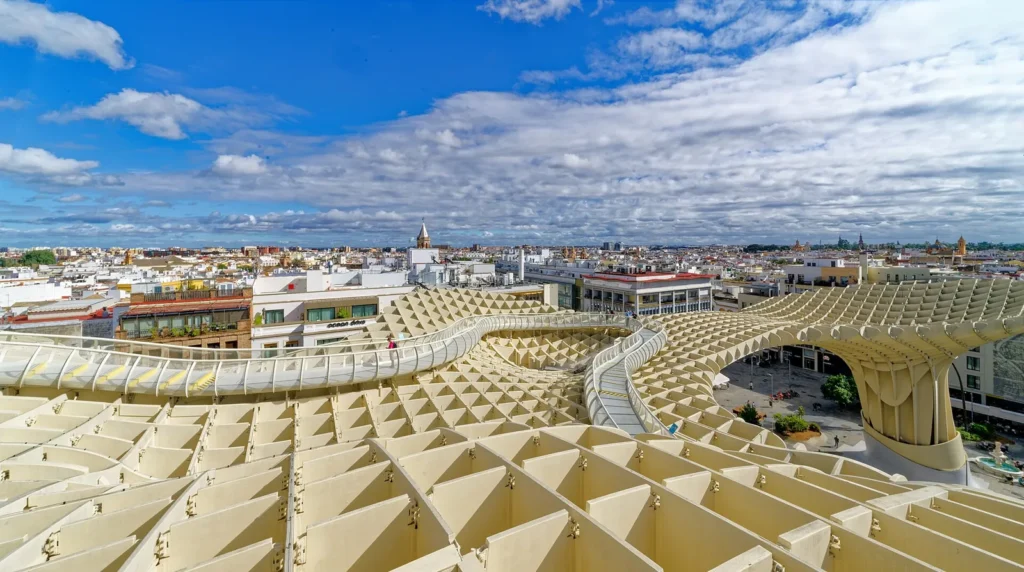
In 1832 the Mercado de la Encarnación opened on this square and became one of the main commercial and social hubs of central Seville. Part of it was pulled down in 1948 and the rest in 1973, which left a large empty space in the middle of the old town for decades. When the City Council set out to build an underground car park, the digging uncovered Roman and Andalusi remains, and the works were stopped.
In 2004 the City Council launched an international competition to transform the square, and the winner was the Metropol Parasol by Jürgen Mayer H., with a shape inspired by the vaults of the Cathedral and the fig trees of the nearby Plaza del Cristo de Burgos. Construction started in 2006, and the building opened in 2011. Because of its profile, the people of Seville soon started calling it “las Setas”, the mushrooms, and in 2013 the nickname became its official name.
What to see at Las Setas, level by level
The management divides the building into 5 levels: access to the viewpoint and the Antiquarium, the market and dining, the Plaza Mayor, the experiences, and the walkways with the viewing platform.
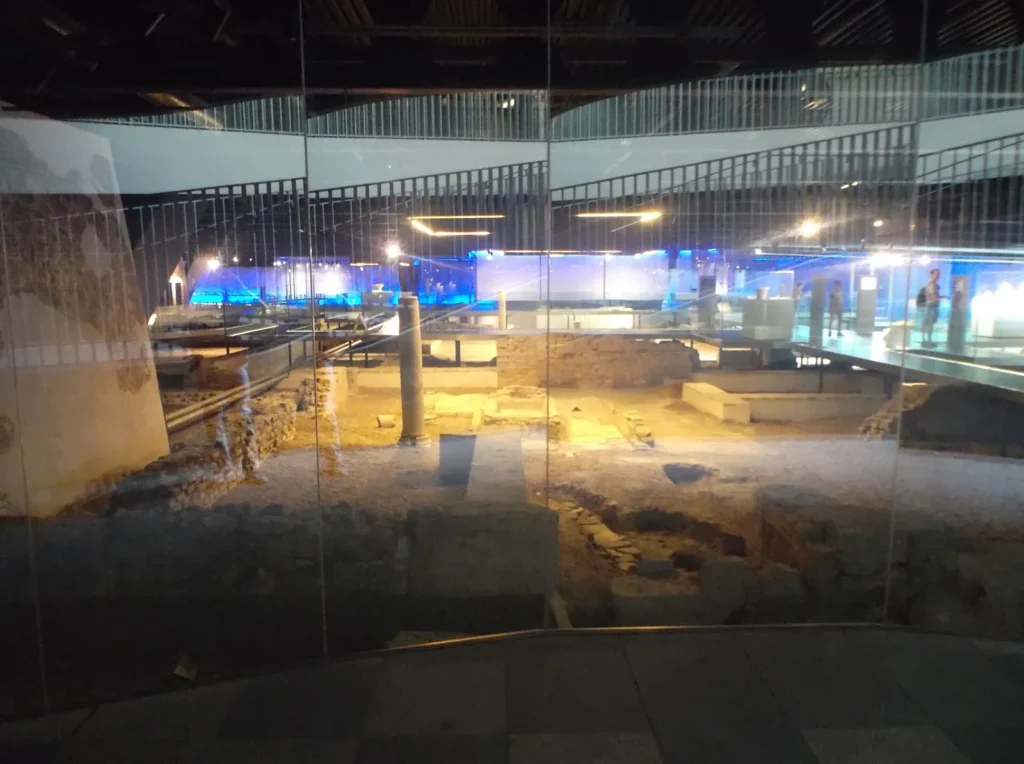
The underground level is the way in to the viewpoint and the Antiquarium. That is where you find the box office and, next to the entrance to the Antiquarium, the lift that takes you up to the roof. The Antiquarium keeps the remains found when the square was excavated: according to the management of Las Setas, one of the most important Roman archaeological sites in Andalusia.
Up on top, the walkways wind across the parasols to the 360º Viewpoint, the highest point of the monument, with the whole old town around you. The visit also includes Feeling Sevilla, a multisensory film shown in an immersive room, with sessions every 15 minutes, and a rest area with interactive screens where you can stop for a snack. On the way down, an exhibition shows how Plaza de la Encarnación has changed from its origins to the present day.
After dark, Aurora lights up the walkways and the viewpoint. If you go up during the day, the 48-hour return lets you come back to see it at night, subject to capacity and outside the sunset slot.
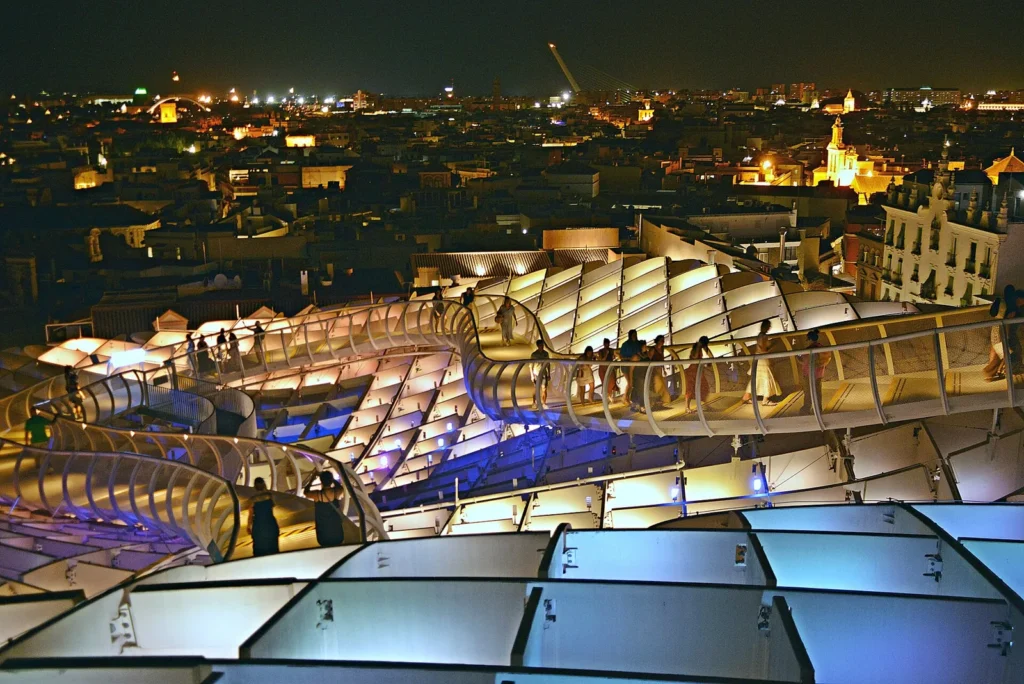
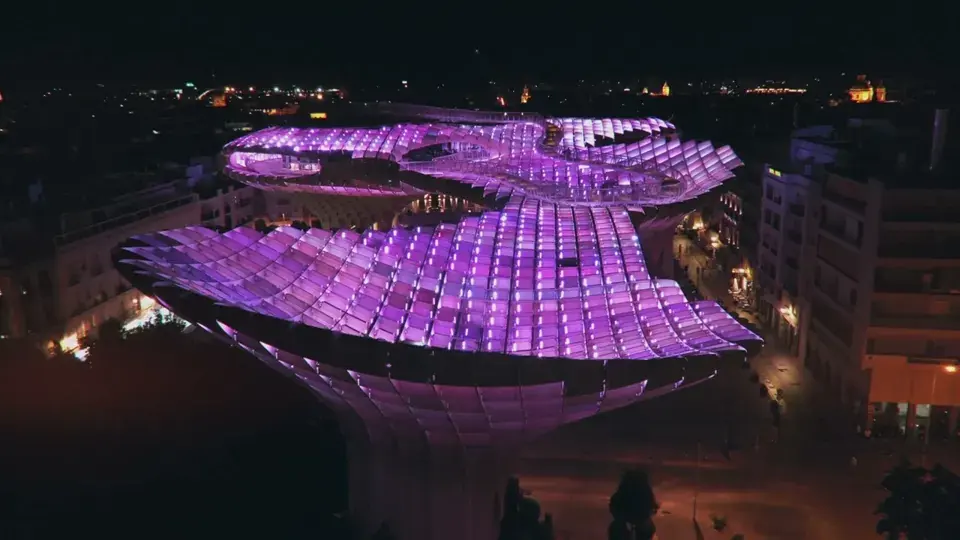
The Plaza Mayor, in the shade of the parasols, is where the visit ends. It is a large open space with events, restaurants and shops, and at street level is the food market, heir to the one that stood here from the 19th century.
Getting there and accessibility
Las Setas stand on Plaza de la Encarnación. The main entrance is on the south side, at the corner with Calle Imagen, the handiest one if you are coming from the historic centre; the north entrance, on the north-western side by Calle Regina and Calle José Gestoso, suits you better if you are coming from the Macarena or from the west. Both lead to the market, the Antiquarium and the way up to the viewpoint. Bus lines 27 and 32 stop very close by, and the Metrocentro tram stops at Plaza Nueva, about 10 minutes away on foot. Traffic is restricted in this part of town, so if you come by car, leave it in one of the car parks a few minutes away.
About 90% of the route is accessible, with ramps and 2 accessible lifts; the exception is the climb up the walkways to the viewpoint, which has steps. There are lockers for bags and luggage, free wifi and water points to refill your bottle. Pets can come with you to the Plaza Mayor and the shopping area, but on the walkways and the viewpoint only guide dogs and dogs under 5 kg are allowed, inside their carrier, bag or stroller.
Nearby, with their own free audio guides
About 300 m north-east as the crow flies is the Palace of Las Dueñas, and about 550 m to the south-east is Pilate’s House: both have their own free audio guide.
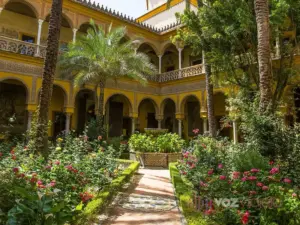 Free audio guidePalace of Las Dueñas
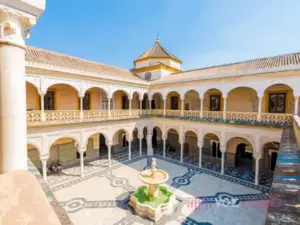 Free audio guideCasa de Pilatos (Pilate’s House), Seville
To the west, about 700 m away, is the Museum of Fine Arts, and heading south, about 800 m away, Seville Cathedral, whose vaults inspired the shape of Las Setas. The rest are on our Seville page. In Spanish, this audio guide is on vozviajera.com.
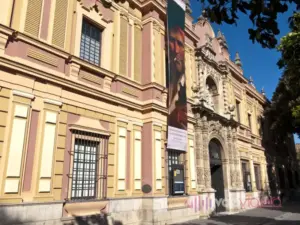 Free audio guideMuseum of Fine Arts
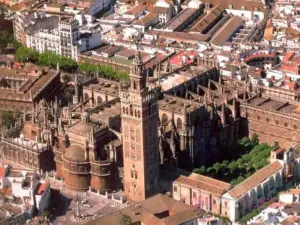 Free audio guideSeville Cathedral
Where to find it
FAQs
How do the free audio guides work?
They play right here on audioguidetravel.com, with no app to download and no sign-up. Press play and listen as you walk round: a phone and a pair of headphones are all you need. The audio streams from this page, so you’ll need mobile data or Wi-Fi.
Can I take the tour at my own pace?
Of course! You set the pace: pause whenever you like, jump back or forward 15 seconds, or tap the bar to jump to any point, and listen as many times as you want so you don’t miss a thing.
If I'm in a group, can we use the same audio guide?
Yes. The same free audio guide opens on as many phones as you like, so you can go round together as a group or with your family, each person at their own pace and with their own headphones. The quickest way is to send the link via WhatsApp, Telegram or however you like: the buttons just below let you share it right now.
Visitor information
As of 22 Oct 2026- Opening hours
- Daily from 09:30. Closes at 01:00 in summer and at 00:00 in winter.
- Tickets
- From €16 · reduced from €13
- Time needed
- 60–90 min
- Getting there
- Main entrance on the south side of Plaza de la Encarnación, at Calle Imagen. Bus lines 27 and 32 stop nearby.
- Accessibility
- 90% of the route is accessible, with ramps and 2 lifts; the climb to the viewpoint has steps
- Tip
- Book online: capacity is limited. Your ticket lets you come back once within 48 h, subject to capacity
- Official website
- setasdesevilla.com
Nearby
More free audio guides in Seville
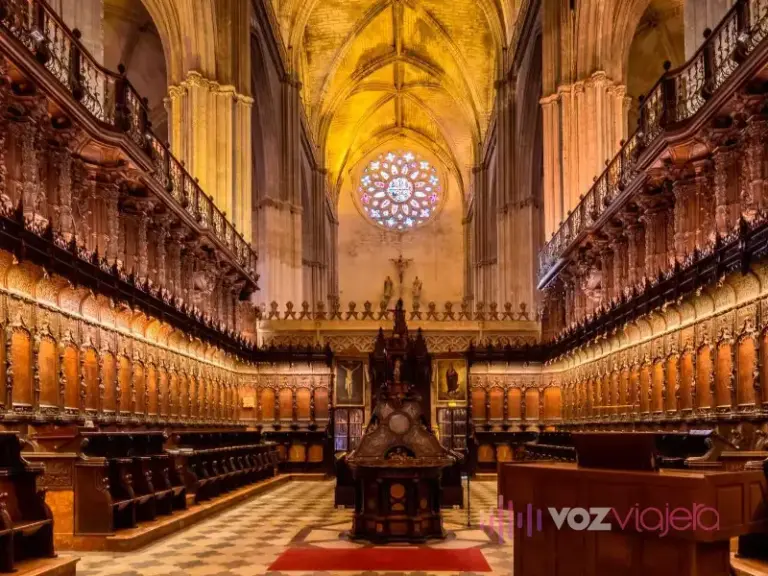 4:12SevilleSeville Cathedral (Interior)The Seville Cathedral is the largest Gothic cathedral in the world and an important architectural landmark. Immerse yourself…
 5:56SevilleSeville Cathedral: free audio guide, hours and ticketsFree audio guide to Seville Cathedral, in English: 6 minutes from the Giralda, the old minaret where the…
 5:22SevilleThe Giralda: free audio guide, hours and ticketsFree audio guide to the Giralda in Seville, in English: just over 5 minutes on the Almohad minaret,…