
St Paul’s Cathedral, London: free audio guide, hours and tickets
Free audio guide in English · no app, no sign-up
St Paul’s Cathedral is the London cathedral Christopher Wren built between 1675 and 1711, with a 111 m dome. It is open for sightseeing Monday to Saturday: £27 for adults, multimedia guide included. This free audio guide lasts about 5 minutes and takes you from the west front to the dome, the Quire and Nelson’s tomb in the crypt.
 Audio guide
St Paul’s Cathedral is the Church of England cathedral of London, built by Christopher Wren between 1675 and 1711 after the Great Fire of 1666 destroyed the medieval one. Its dome rises 111 m and you climb it on foot. Sightseeing is Monday to Saturday with a ticket. This free audio guide lasts about 5 minutes and takes you from the west front to the dome, the Quire and the crypt of Nelson and Wellington.
What the audio guide covers
Start it on the steps of the west front and keep it playing inside, from the nave down to the crypt. It has 6 parts:
| The west front | The fire of 1666, the cathedral London lost, and the polymath who came late to architecture and got the job. |
| The nave | The scale of the building and the Wellington monument, which was not finished until 60 years after his death. |
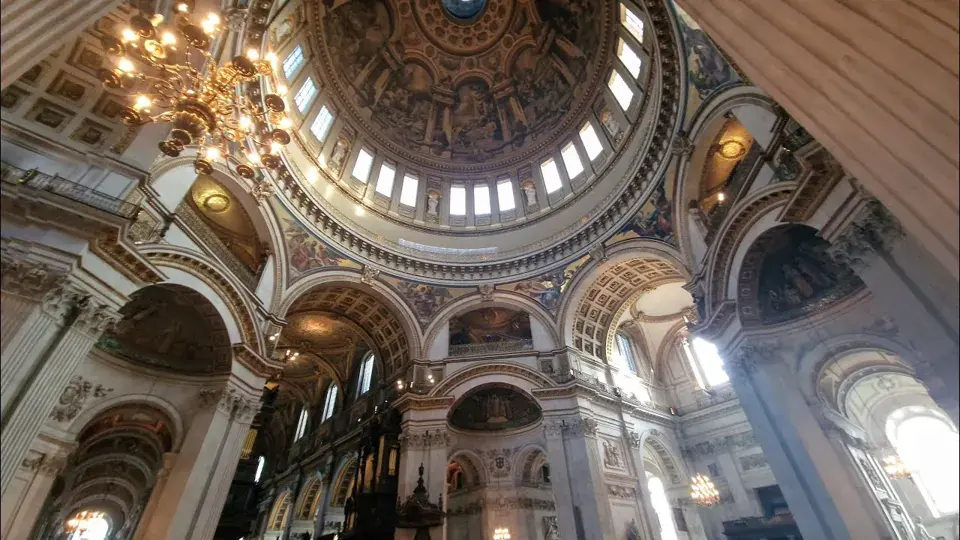
| Under the dome | What holds up the lantern: a hidden brick cone and iron chains. |
| The 3 galleries | The trick of the Whispering Gallery and the views from the Stone and Golden Galleries. |
| The Quire | Grinling Gibbons’ carved stalls, the 1904 mosaics and the organ of 1695. |
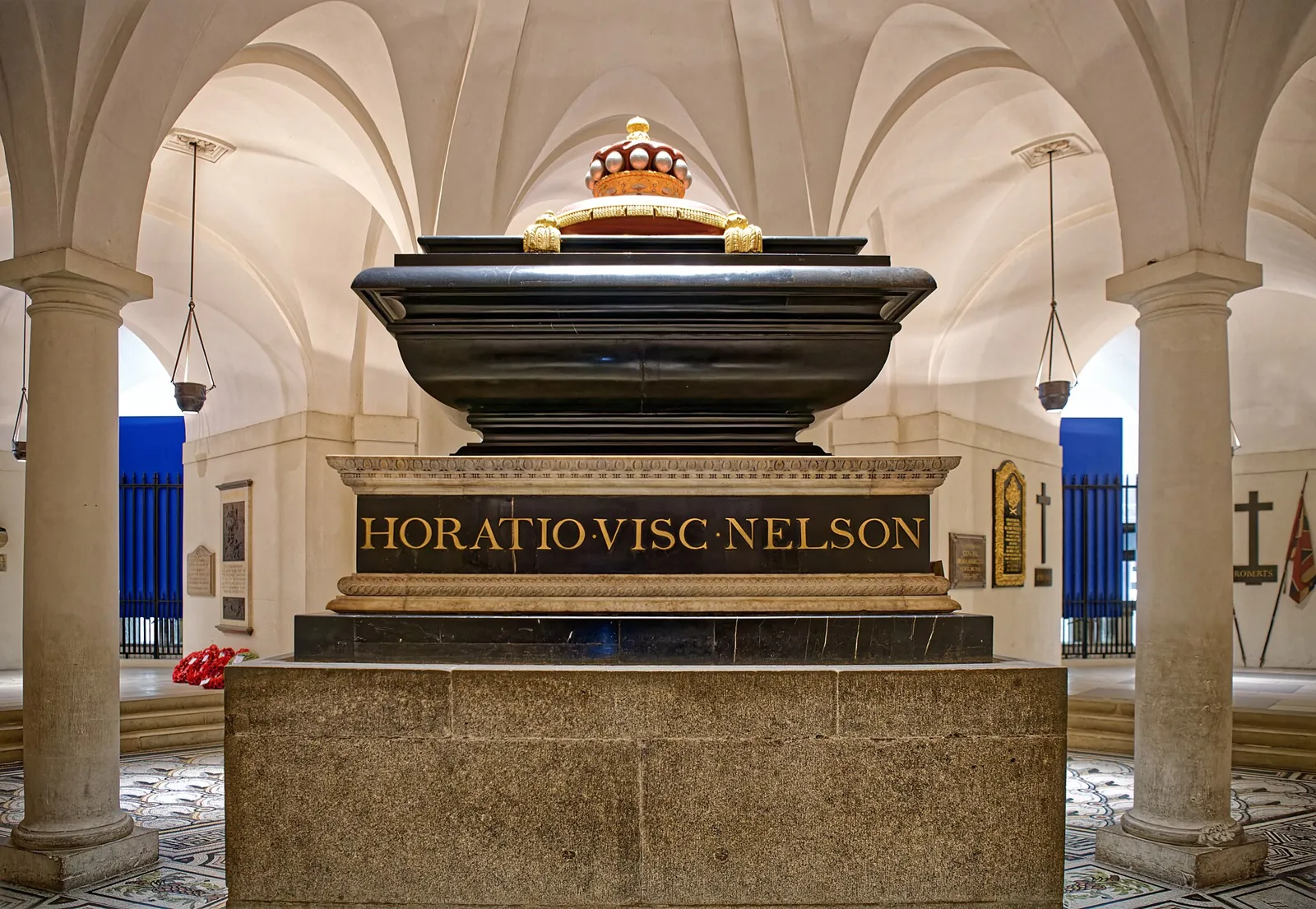
| The crypt | Nelson in a sarcophagus made for a cardinal, Wellington, and a very plain tomb: Wren’s. |
Opening hours and tickets
St Paul’s is open for sightseeing Monday to Saturday. On most days the doors open at 8.30am and last entry is at 4pm, with sightseeing ending at 4.30pm. Times change on some days, so check the official calendar for the day you plan to go. Current prices:
- Adults (18+): £27, or £29.70 with the optional 10% donation.
- Seniors 65+ and students: £24 (students need a photo ID from their place of study).
- Children 6-17: £10.50. Under 6s go free.
- Family tickets: £64.50 for 2 adults and 2 or 3 children, £37.50 for 1 adult and 2 or 3 children.
- Free: disabled visitors and a carer or companion, booked online or requested at the door.
The ticket covers the Cathedral Floor, the Crypt, all 3 Dome Galleries and the official multimedia guide, available in 9 languages. You can book up to 6 months ahead or buy on the day; booking online is the fastest way in. Attending a service is always free, but to explore the building you need a sightseeing ticket.
Your ticket also includes 2 free guided tours, booked on the day at the Guiding Desk, subject to availability: a 20 to 30-minute highlights tour, and a tour of about 90 minutes of the Cathedral Floor and Crypt that goes into the Geometric Staircase and the Quire, 2 areas that are usually closed to visitors. They normally run Monday to Saturday between 11am and 3pm.
The west front and the nave: from the Great Fire to Wren’s cathedral
There has been a cathedral on this hill since 604. The medieval one, Old St Paul’s, burned in the Great Fire of September 1666. Christopher Wren, a polymath who only took up architecture in his early thirties, was already advising on its repair. On 13 November 1673 Charles II appointed him architect of the new cathedral, and he was knighted the next day.
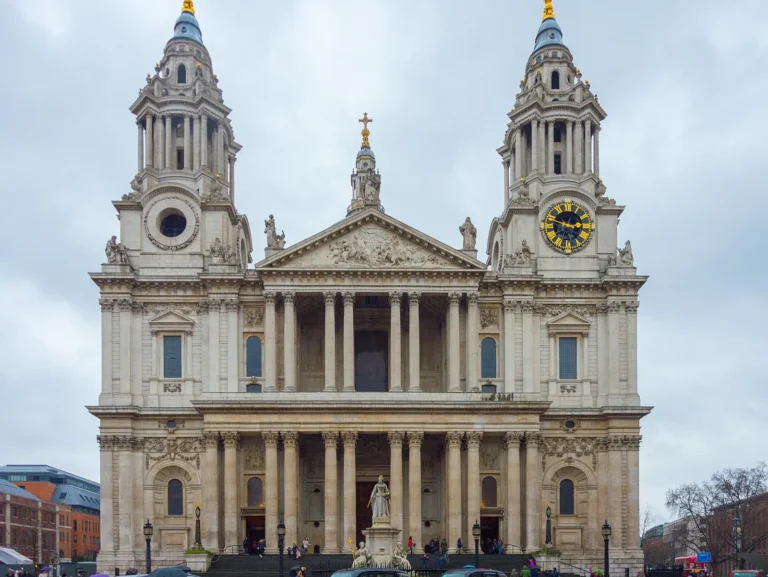
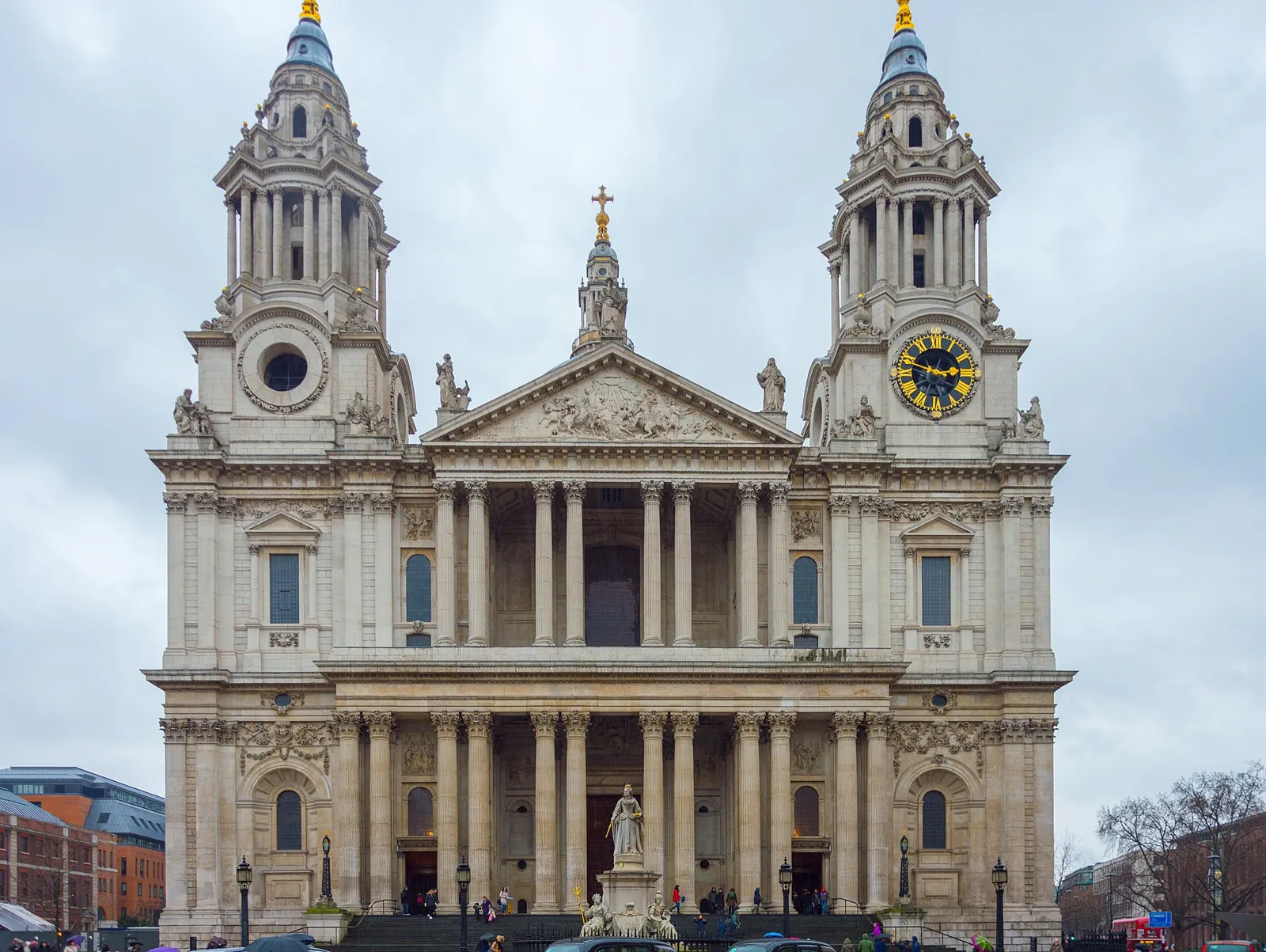
The work took 35 years under a single architect, which is unusual for a cathedral. The first service was held in the Quire in 1697, and Parliament declared the cathedral complete on 25 December 1711. The west front, with its steps, has 2 storeys of columns and 2 towers; the clock is in the south-west one.
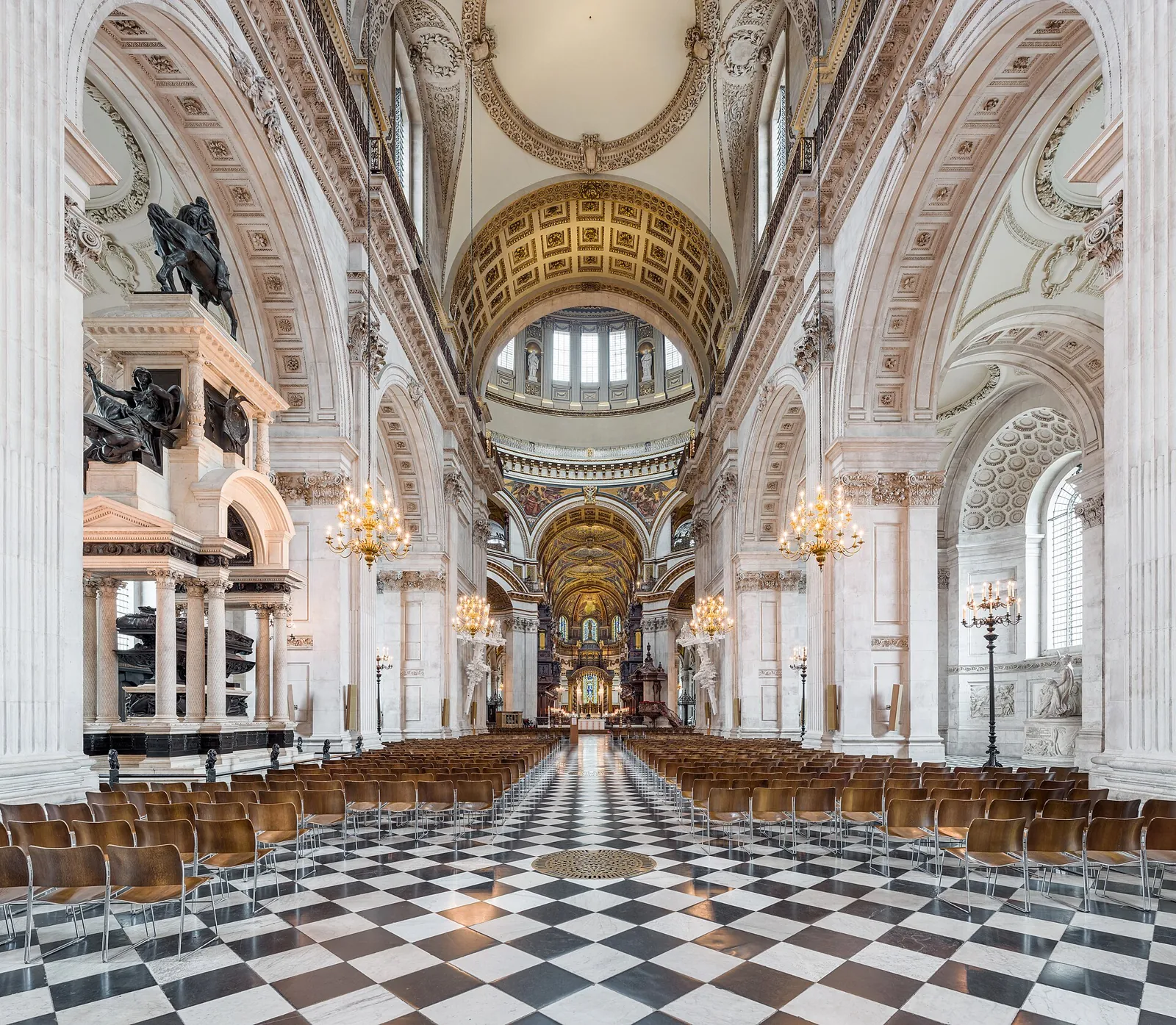
Inside, the nave leads straight to the dome. In an arch between the nave and the north aisle stands the Duke of Wellington’s monument: he died in 1852, but the equestrian figure on top was not unveiled until 1912.
The dome and its 3 galleries
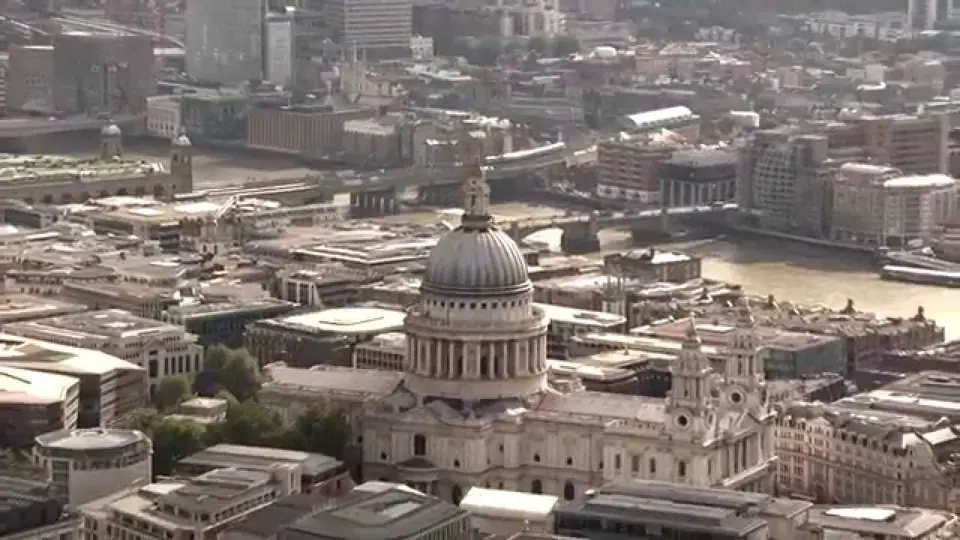
The dome is 111 m (365 ft) high in total and it is the only dome on an English cathedral. Wren built it between 1697 and 1708. The dome you see from inside and the one you see from the street are not the same: between them stands a brick cone, reinforced with iron chains at its base, which carries the lantern. The last stone of the lantern was laid in October 1708 by Wren’s son and the master mason Edward Strong. The ball and cross on top date from 1821 and weigh about 7 tonnes.
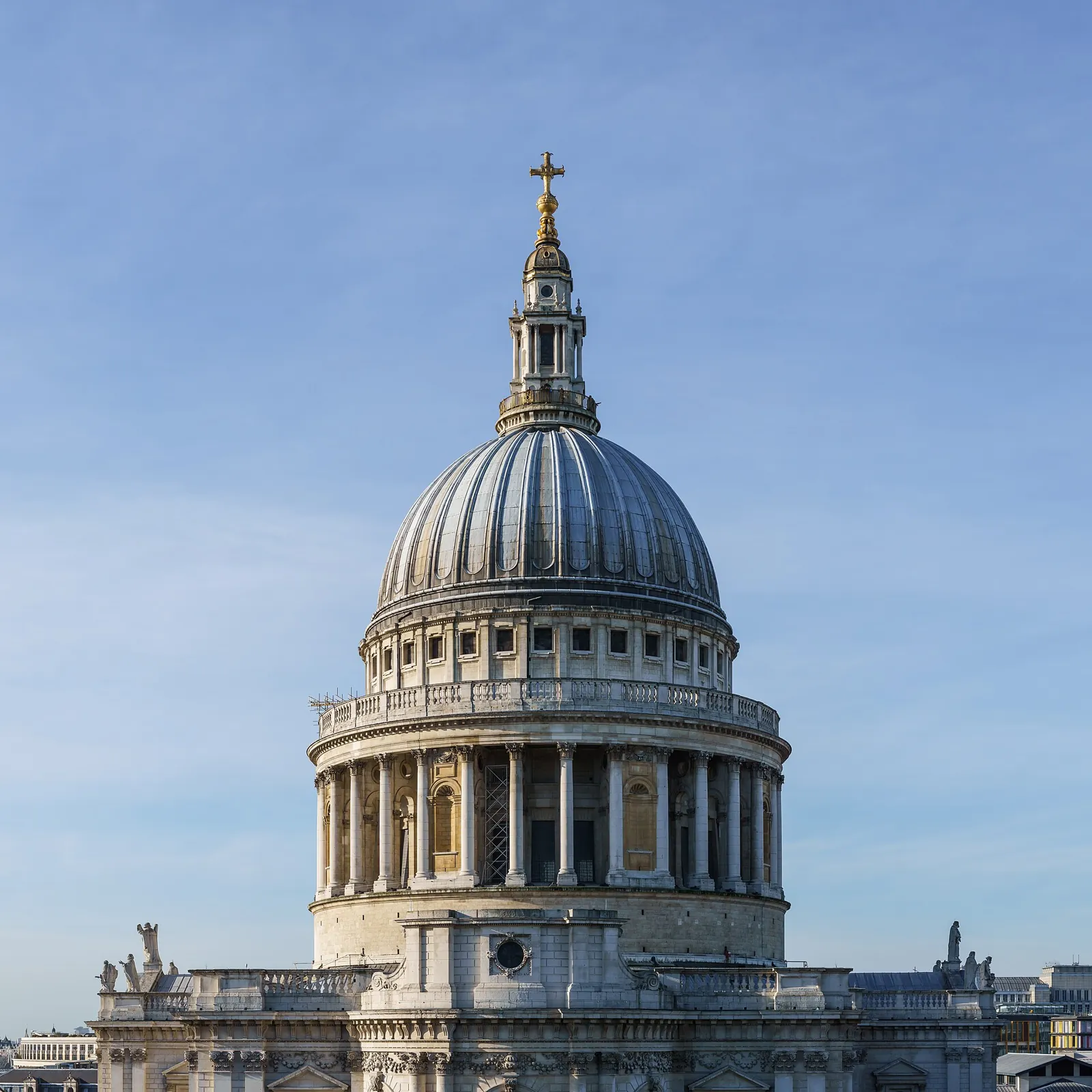
The galleries are reached by stairs only, with no lift:
- Whispering Gallery, inside the dome: 257 steps. A whisper against its wall can be heard on the opposite side.
- Stone Gallery, outside: 376 steps, 52 m above the ground.
- Golden Gallery, the smallest, around the top of the outer dome: 528 steps, at 85 m.
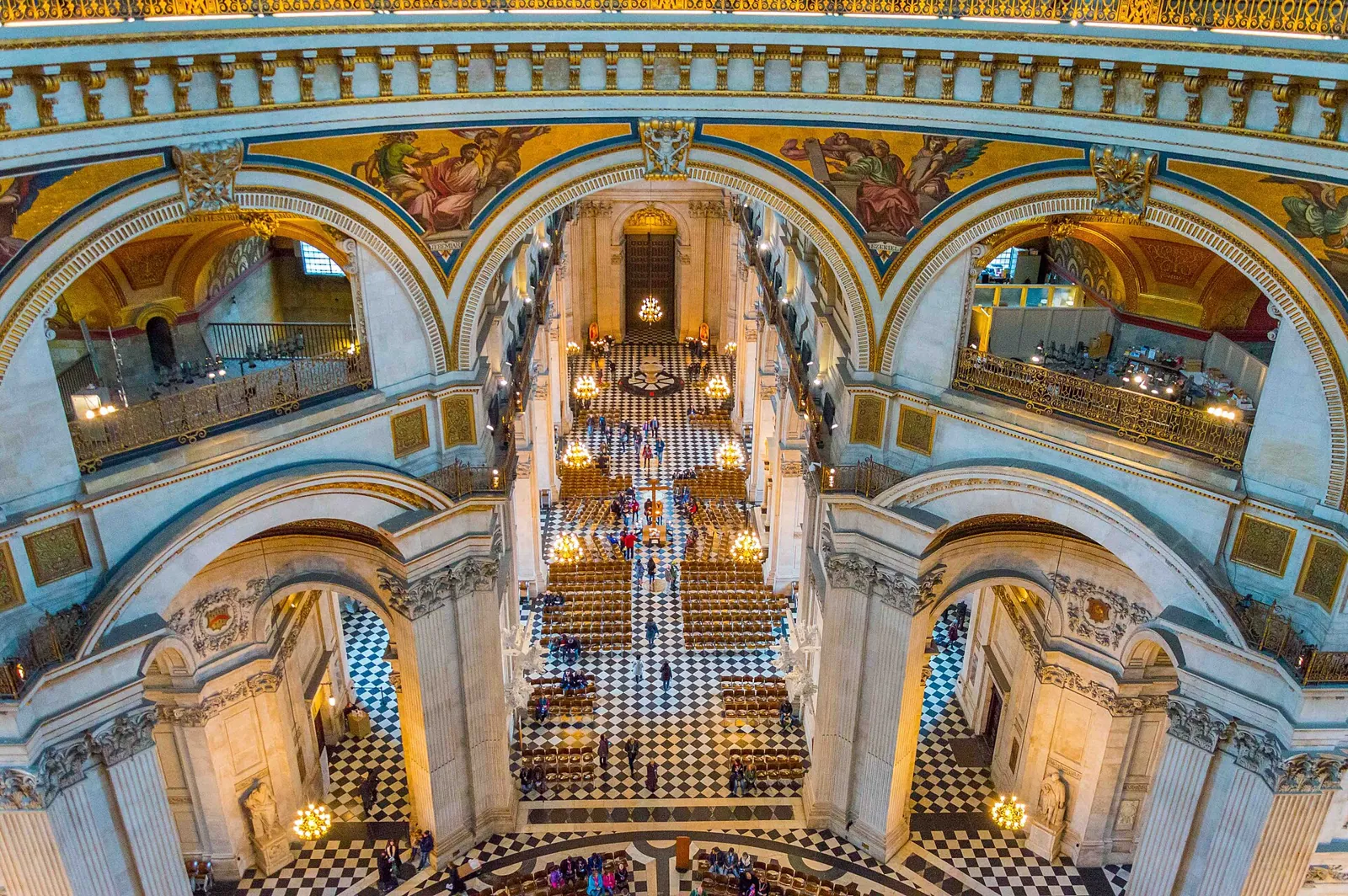
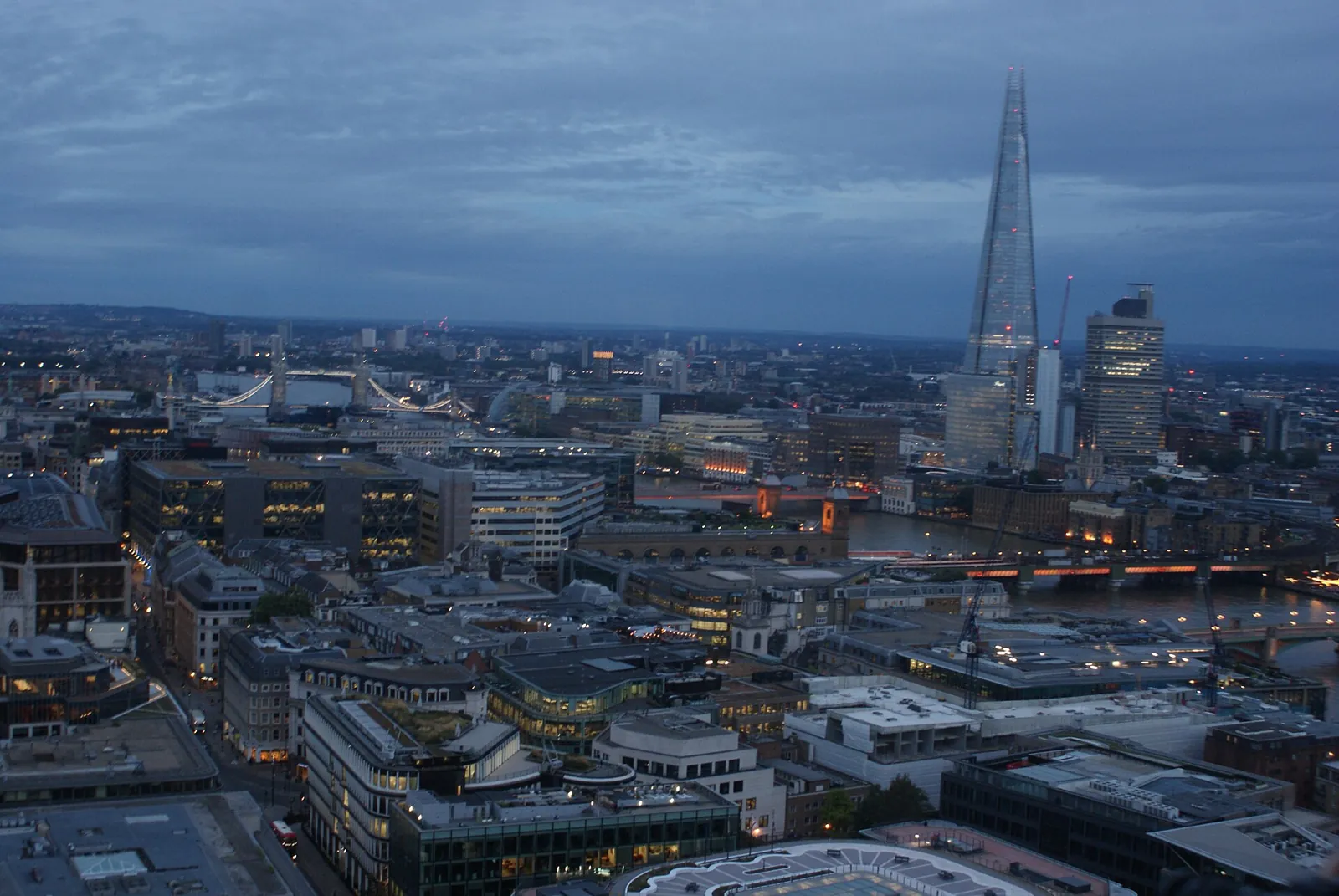
The Quire and the crypt of Nelson, Wellington and Wren
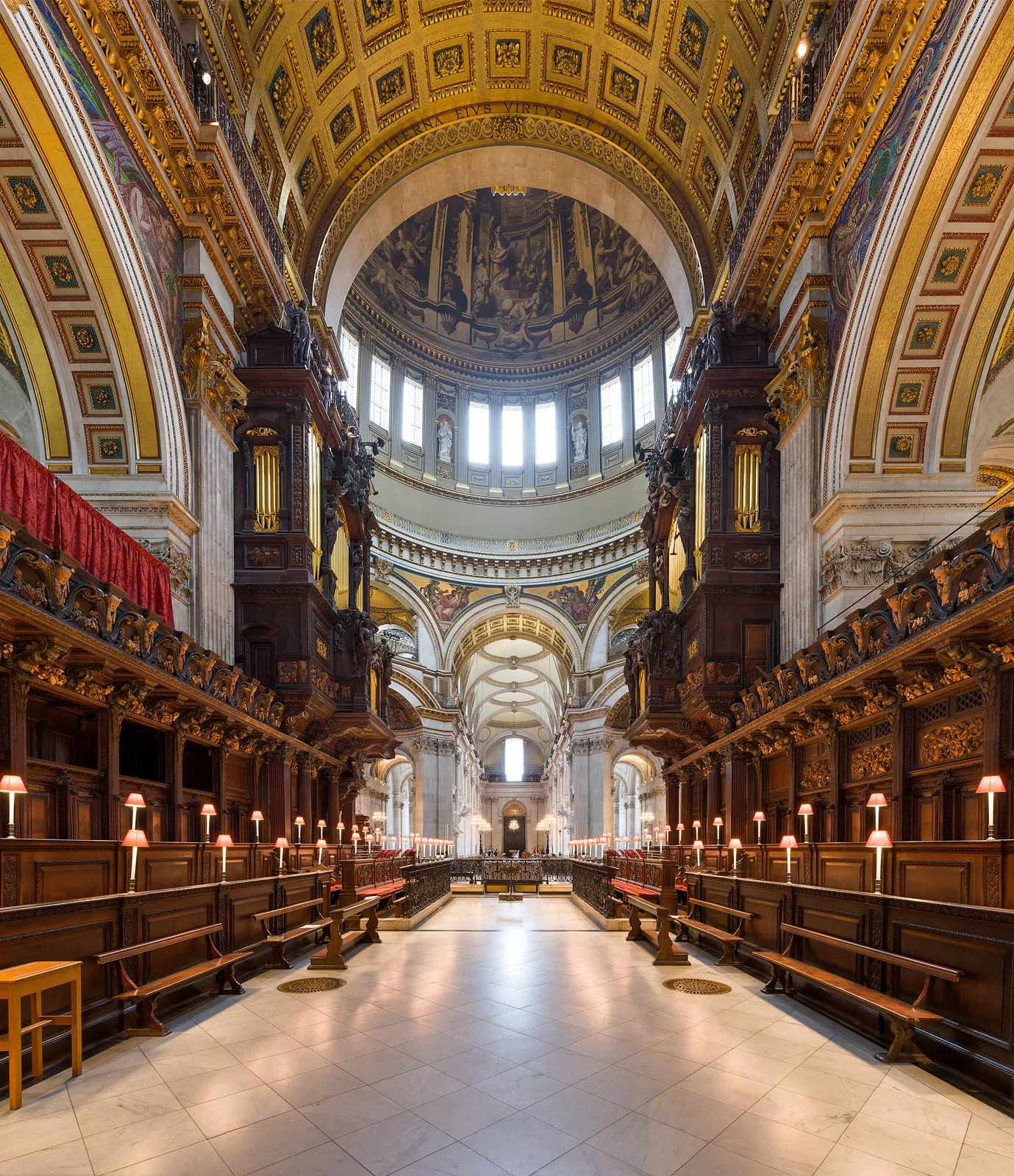
The Quire, east of the dome, was the first part of the building to be finished. Its stalls were carved by Grinling Gibbons, who also made the case of the Grand Organ of 1695, with 7,189 pipes. The golden mosaics on the vaults are by William Blake Richmond and were completed in 1904.
The crypt runs under the whole footprint of the cathedral, and there is a lift down to it. Nelson, killed at the Battle of Trafalgar in 1805, lies here. His coffin was made from the timber of a French ship he had defeated, and the black marble sarcophagus over it had been made for Cardinal Wolsey, who fell from favour before he could use it. Next to him is Wellington, in a casket of Cornish granite, and between the 2 is the Falklands memorial.
Wren‘s tomb is a plain slab. He died in 1723, aged 91. On the wall above it, a Latin epitaph placed by his son reads: «Lector, si monumentum requiris, circumspice», which means «Reader, if you seek his monument, look around you».
Getting there and accessibility
The cathedral stands in St Paul’s Churchyard, EC4M 8AD, in the City of London:
- Underground: St Paul’s, 270 m away, about 3 minutes on foot.
- Train: City Thameslink, 300 m, or Blackfriars (also Underground), 500 m.
- River: Blackfriars Pier, 650 m.
- Go on a weekday, early. There is no sightseeing on Sundays, and last entry is at 4pm.
- Climb first. Do the dome while your legs are fresh and leave the crypt for the end.
- Wear comfortable shoes if you climb: it is 528 steps to the Golden Gallery.
Afterwards, the Tower of London is about 1.7 km to the east, with Tower Bridge right beside it at about 1.8 km, and Trafalgar Square about 2.2 km to the west.
 Free audio guideTower of London
 Free audio guideTower Bridge
 Free audio guideTrafalgar Square
 Free audio guideLondon Eye
Where to find it
FAQs
How do the free audio guides work?
They play right here on audioguidetravel.com, with no app to download and no sign-up. Press play and listen as you walk round: a phone and a pair of headphones are all you need. The audio streams from this page, so you’ll need mobile data or Wi-Fi.
Can I take the tour at my own pace?
Of course! You set the pace: pause whenever you like, jump back or forward 15 seconds, or tap the bar to jump to any point, and listen as many times as you want so you don’t miss a thing.
If I'm in a group, can we use the same audio guide?
Yes. The same free audio guide opens on as many phones as you like, so you can go round together as a group or with your family, each person at their own pace and with their own headphones. The quickest way is to send the link via WhatsApp, Telegram or however you like: the buttons just below let you share it right now.
Visitor information
As of 25 Oct 2026- Opening hours
- Mon–Sat from 8.30am; last entry usually 4pm. Sundays: worship only.
- Tickets
- £27 adults; £24 seniors 65+ and students; £10.50 ages 6–17; under 6s free.
- Time needed
- Audio guide about 5 min; free tour of about 90 minutes with your ticket, subject to availability.
- Getting there
- St Paul's Churchyard, City of London. St Paul's Underground, 270 m (3 min walk).
- Accessibility
- Step-free entrance at the North Transept; lift to the Crypt. Dome galleries by stairs only.
- Tip
- Climb the dome first: 528 steps to the Golden Gallery, with no lift.
- Official website
- www.stpauls.co.uk
Nearby
More free audio guides in London
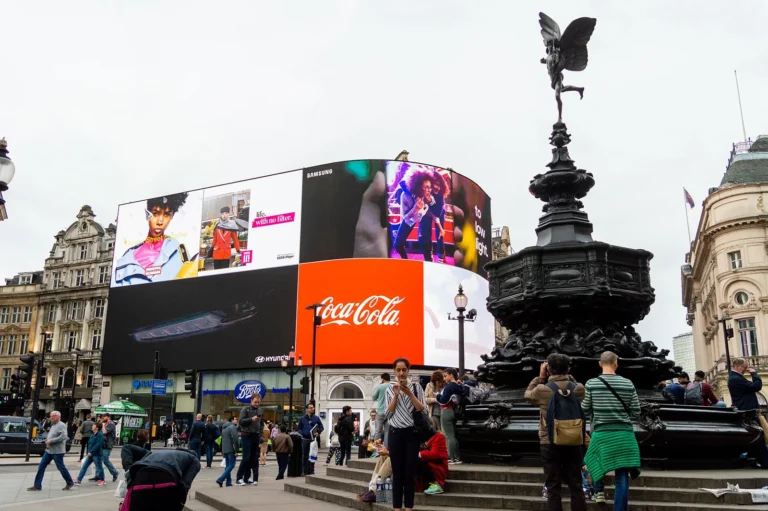 3:50LondonPiccadilly Circus: free audio guide, the Eros statue and the lightsPiccadilly Circus is the West End junction famous for its giant curved screen and for the fountain topped…
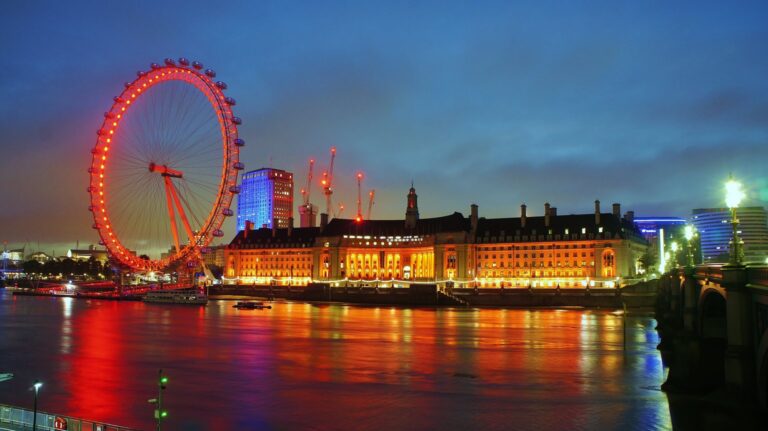 2:32LondonLondon Eye: free audio guide, tickets and opening hoursThe London Eye is the 135 m observation wheel that David Marks and Julia Barfield designed for the…
 3:39LondonTower of London: free audio guide, hours and ticketsThe Tower of London is the royal fortress on the Thames whose heart, the White Tower, William the…