
Plaza de Cibeles, Madrid: free audio guide to the fountain
Free audio guide in English · no app, no sign-up
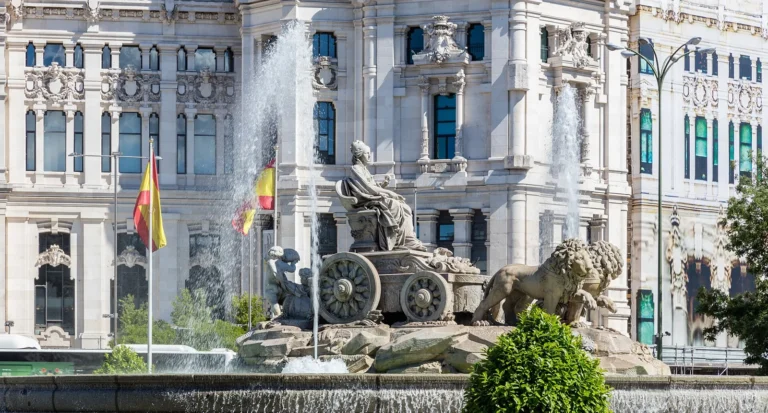
Plaza de Cibeles is the Madrid roundabout where Calle de Alcalá crosses the Paseo del Prado. In the middle stands the Cibeles Fountain, a goddess in a chariot pulled by 2 lions, and around it rise 4 great buildings: the Palacio de Cibeles (City Hall), the Bank of Spain, and the Buenavista and Linares palaces. The square is free to see at any time; in 2026 the fountain is under scaffolding. This free audio guide lasts about 3 minutes.
 Audio guide
Before you go in
The few things that change your visit.
- Open-air square: free and visible at any time
- Fountain under scaffolding since June 2026: about 5 months of restoration
- Designed in 1777 by Ventura Rodríguez; in the middle of the square since 1895
- The 2 lions are Atalanta and Hippomenes
- Mirador Madrid viewpoint: €4, Tuesday to Sunday
- Changing of the Guard at Buenavista: 27 November 2026, at 12:00
- Metro Banco de España (line 2)
On this page
- What the Plaza de Cibeles audio guide covers
- Plaza de Cibeles opening times, tickets and the 2026 works
- History of the Cibeles Fountain: from Recoletos to the middle of the square
- What to see at the Cibeles Fountain: the goddess, the lions and the children
- The Palacio de Cibeles and the Mirador Madrid viewpoint
- The Bank of Spain, Buenavista and Linares: the other 3 buildings
- How to get to Plaza de Cibeles, and what is nearby
- Where to find it
Plaza de Cibeles is the Madrid roundabout where Calle de Alcalá crosses the Paseo del Prado. In the middle stands the Cibeles Fountain, a goddess in a chariot pulled by 2 lions, and around it rise 4 great buildings: the Palacio de Cibeles (City Hall), the Bank of Spain, and the Buenavista and Linares palaces. The square is free to see at any time; in 2026 the fountain is under scaffolding. This free audio guide lasts about 3 minutes.
What the Plaza de Cibeles audio guide covers
Press play on the pavement outside the Palacio de Cibeles, with the fountain in front of you, and turn slowly as you listen: the guide starts with the goddess and ends with the buildings around her. These are its stops:
| Facing the fountain | Who designed it in 1777, and why the goddess stands for the Earth. |
| The lions | The myth of Atalanta and Hippomenes, turned into beasts. |
| Water for Madrid | The water carriers, and the horses that drank from the basin. |
| The fountain that moved | From Recoletos to the middle of the square in 1895, and where she has looked ever since. |
| The goddess’s hand | The times she lost it, from 1931 to 2002. |
| The 4 buildings | The old post office, the Bank of Spain, Buenavista and Linares. |
| Last stop | The 2026 restoration. |
Plaza de Cibeles opening times, tickets and the 2026 works
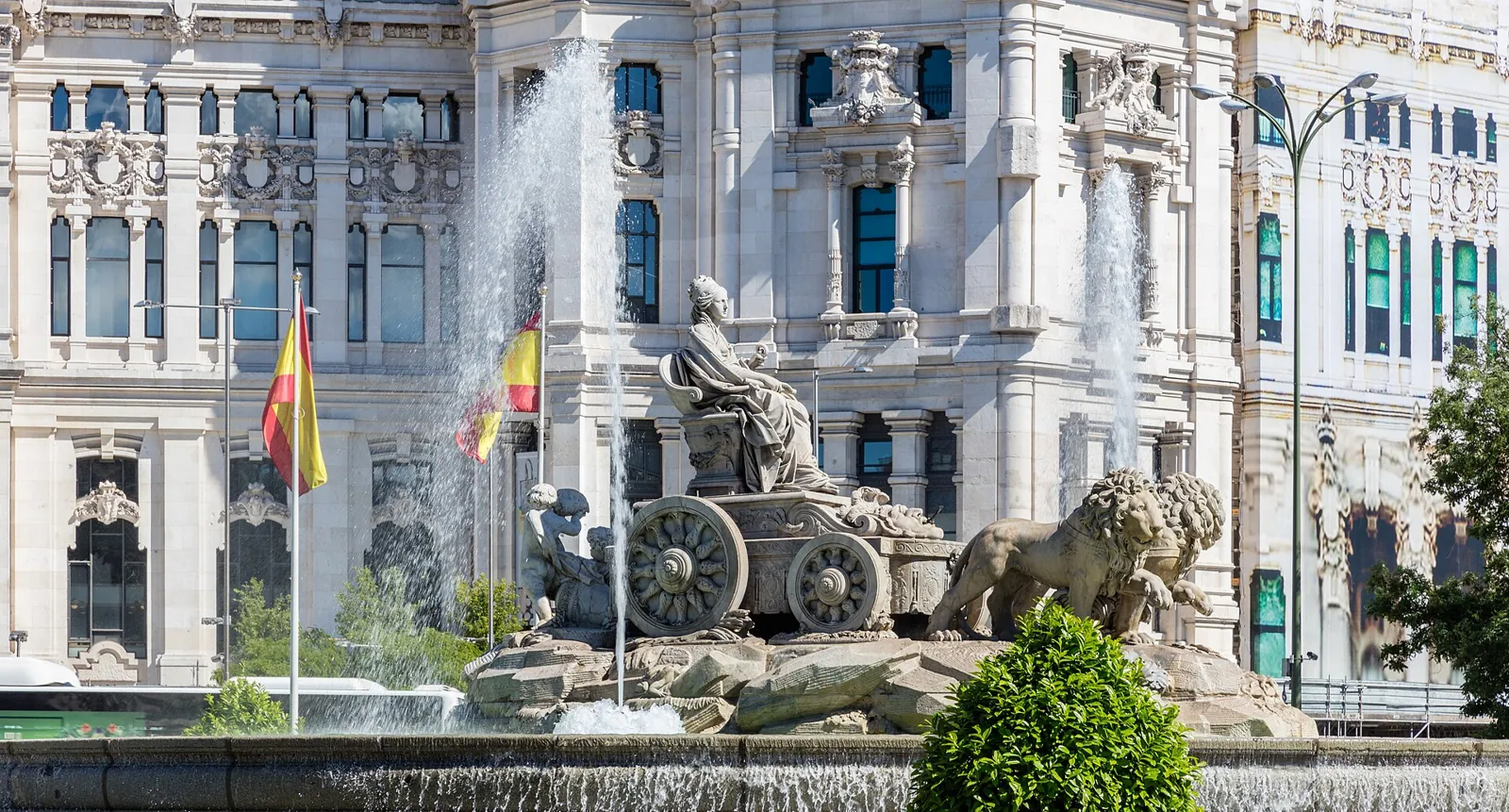
The square and the fountain belong to the city and are in the open air, so there are no opening hours and no ticket: the square is free to see at any time. The fountain sits on the island in the middle of a very busy roundabout, so you look at it from the pavements around it. When it is not under restoration, it is lit at night from under the water by 271 lamps.
| Opening times | Outdoor square, any time (fountain under scaffolding in 2026). |
| Price | Free. The Mirador Madrid viewpoint costs €4. |
| Address | Plaza de Cibeles, s/n, 28014 Madrid. |
| Time needed | The 3-minute audio guide, plus the viewpoint if you go up. |
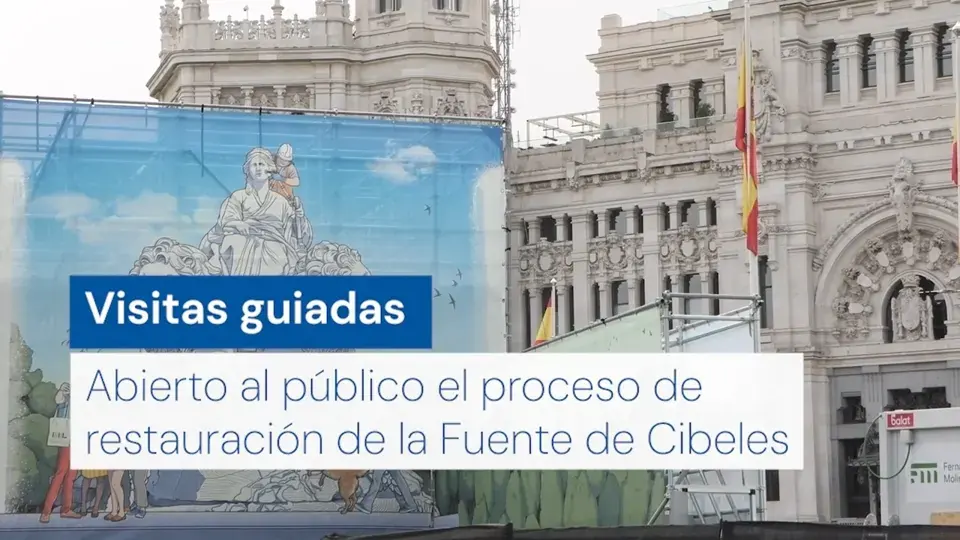
Here is how the City Council presented it in July, with the goddess seen close up from the scaffolding, in a 1-minute video in Spanish:
History of the Cibeles Fountain: from Recoletos to the middle of the square
The fountain was designed in 1777 by Ventura Rodríguez, the architect in charge of Madrid’s fountains, for the new Salón del Prado promenade. The plan gave the promenade 3 great fountains devoted to the 4 elements: Apollo in the middle, for air and fire; Neptune, for water; and Cybele, the mother goddess, for the earth.
It was carved from marble quarried at Montesclaros, a village in the province of Toledo, and the block for the goddess took 92 days to reach Madrid. The goddess and the chariot wheels are by Francisco Gutiérrez; the lions, by the French sculptor Roberto Michel; and the carved borders of the chariot, by Miguel Ximénez. Gutiérrez and Michel also carved part of the sculpture on the Puerta de Alcalá, further up the street. The fountain was set up at the start of the Paseo de Recoletos and was complete by 1782.
It was not just for show. From 1794 it had 2 bronze spouts, in the mouths of a dragon and a bear: the public drank from the first, and the official water carriers filled their barrels at the second to deliver water to people’s homes. Horses drank from the basin. The spouts worked until 1862; the bear and the dragon now stand in the courtyard of the Museo de los Orígenes, in the Casa de San Isidro.
In 1895 the fountain moved. In 1891 the city architect José López Sallaberry had proposed placing it in the middle of the new square being laid out where the Paseo del Prado meets Calle de Alcalá, first called Plaza de Madrid, then Plaza de Castelar and now Plaza de Cibeles. It was turned round on the way: the goddess, who used to face Neptune, has looked towards the Puerta del Sol ever since. Her back ended up facing the Puerta de Alcalá, so a group of 2 children in Carrara marble was added behind the chariot. It was unveiled in its new spot on 15 May 1895.
What to see at the Cibeles Fountain: the goddess, the lions and the children
The goddess sits on a throne wearing a crown shaped like a city wall, with battlements. In her right hand she holds a sceptre, and in her left, raised over the back of the throne, the keys of the city. The skirt of the chariot is carved with pine cones, for Attis, the shepherd Cybele turned into a pine tree, and at the front a mask sends a fan of water over the lions.
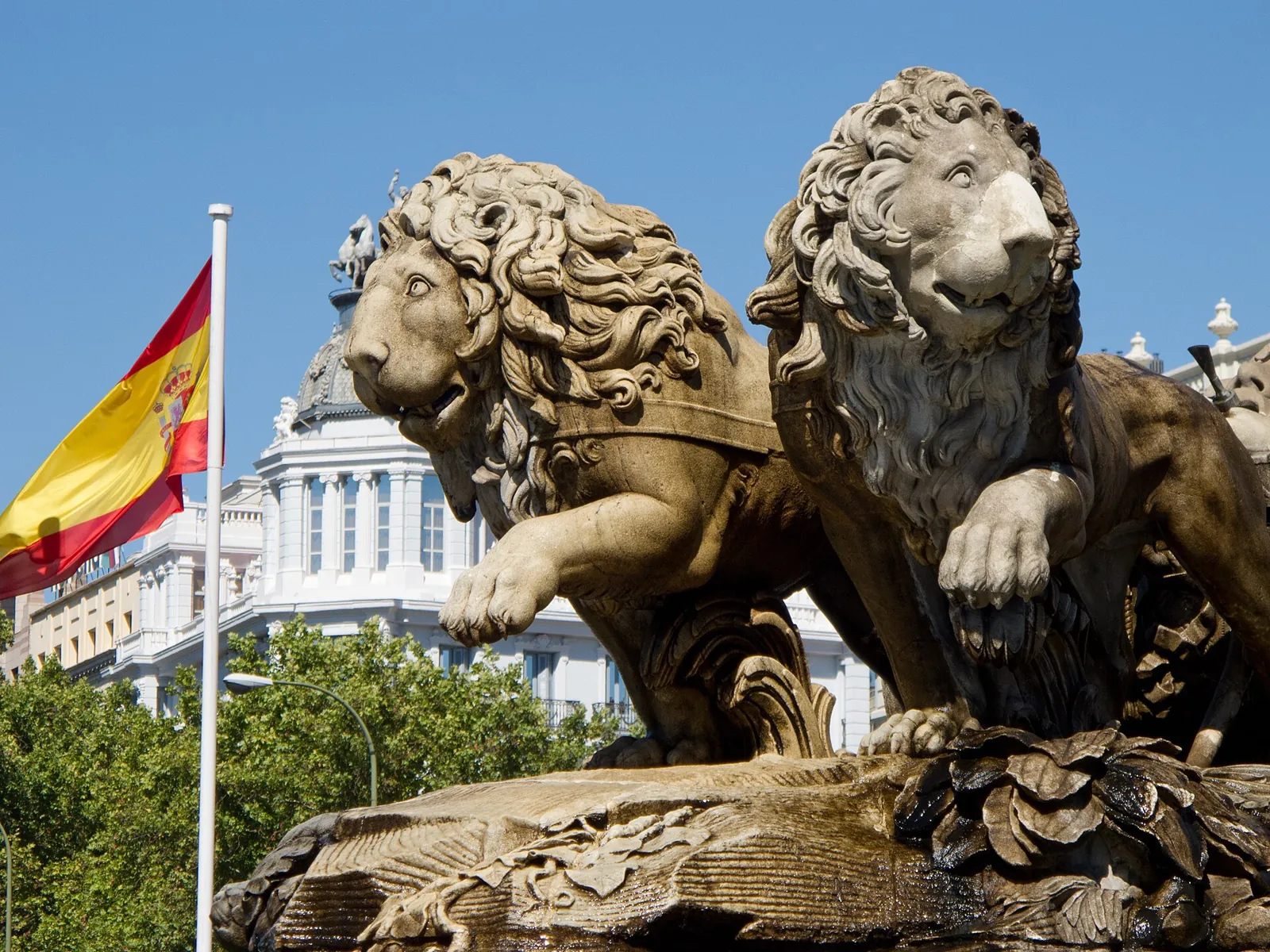
The 2 lions have names. In the myth they are Atalanta, a huntress who would only marry the man who could beat her in a race, and Hippomenes, who won with the help of Aphrodite and 3 golden apples. He forgot to thank her, so the goddess of love led the pair to give in to their love before Cybele’s altar, and Cybele, furious, turned them into the beasts that pull her chariot. Look closely: both raise their left front paw, but each one looks in a different direction.
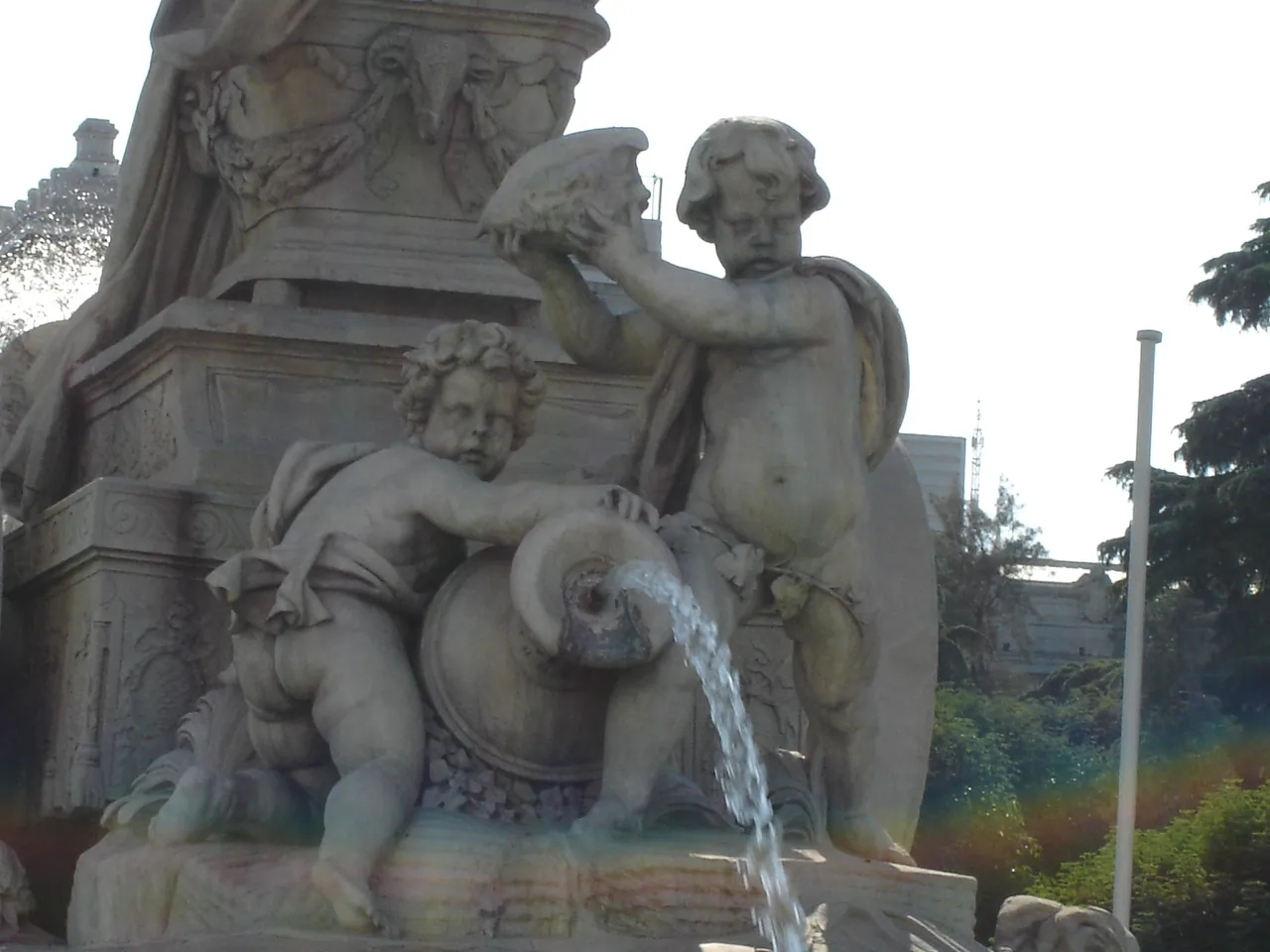
Behind the chariot are the children of 1895, by Miguel Ángel Trilles and Antonio Parera: one kneels holding a jar that pours out a jet of water, the other stands holding up a conch shell. On either side of the goddess, 2 jets shoot between 7 and 10 m into the air.
Since the mid-1980s this is where Real Madrid fans celebrate their club’s titles, and Spain’s national team has celebrated its wins here too. And the goddess has a twin: in 1980 a mould was taken for a bronze replica that has stood in Mexico City since 5 September that year.
The Palacio de Cibeles and the Mirador Madrid viewpoint
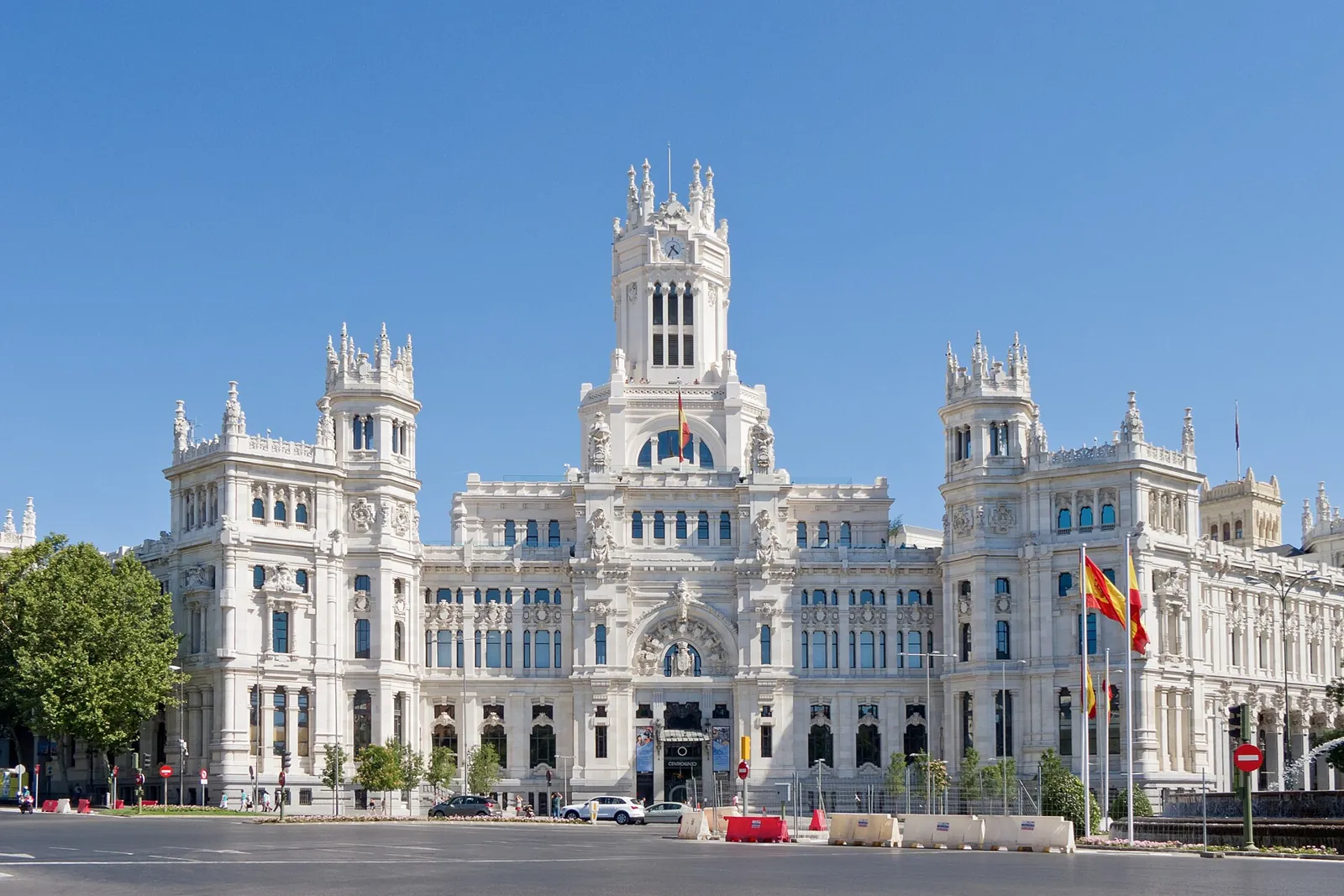
The white building with towers that closes off the square is the Palacio de Cibeles, once the Palacio de Comunicaciones. Antonio Palacios and Joaquín Otamendi designed it as the headquarters of the postal and telegraph service; it opened in 1909, has been a listed monument since 1993 and has housed Madrid City Hall since 2007. Going in is free: on floor 2, in the old post office hall, you will find tourist information, a café and, since December 2022, the visitor centre for the Paisaje de la Luz, the UNESCO World Heritage site listed in 2021.
The highlight is at the top. The Mirador Madrid, in the tower, gives you a 360° view of the city, with panels to help you pick out each building. You climb 88 steps from floor 6; stairs are recommended, and the lift is reserved first for those who need it. It opens Tuesday to Sunday, 10:30 to 14:00 and 16:00 to 19:30, with entry roughly every 30 minutes, and a standard ticket costs €4 (€2 reduced). There are also free guided visits from Tuesday to Friday, if you book.
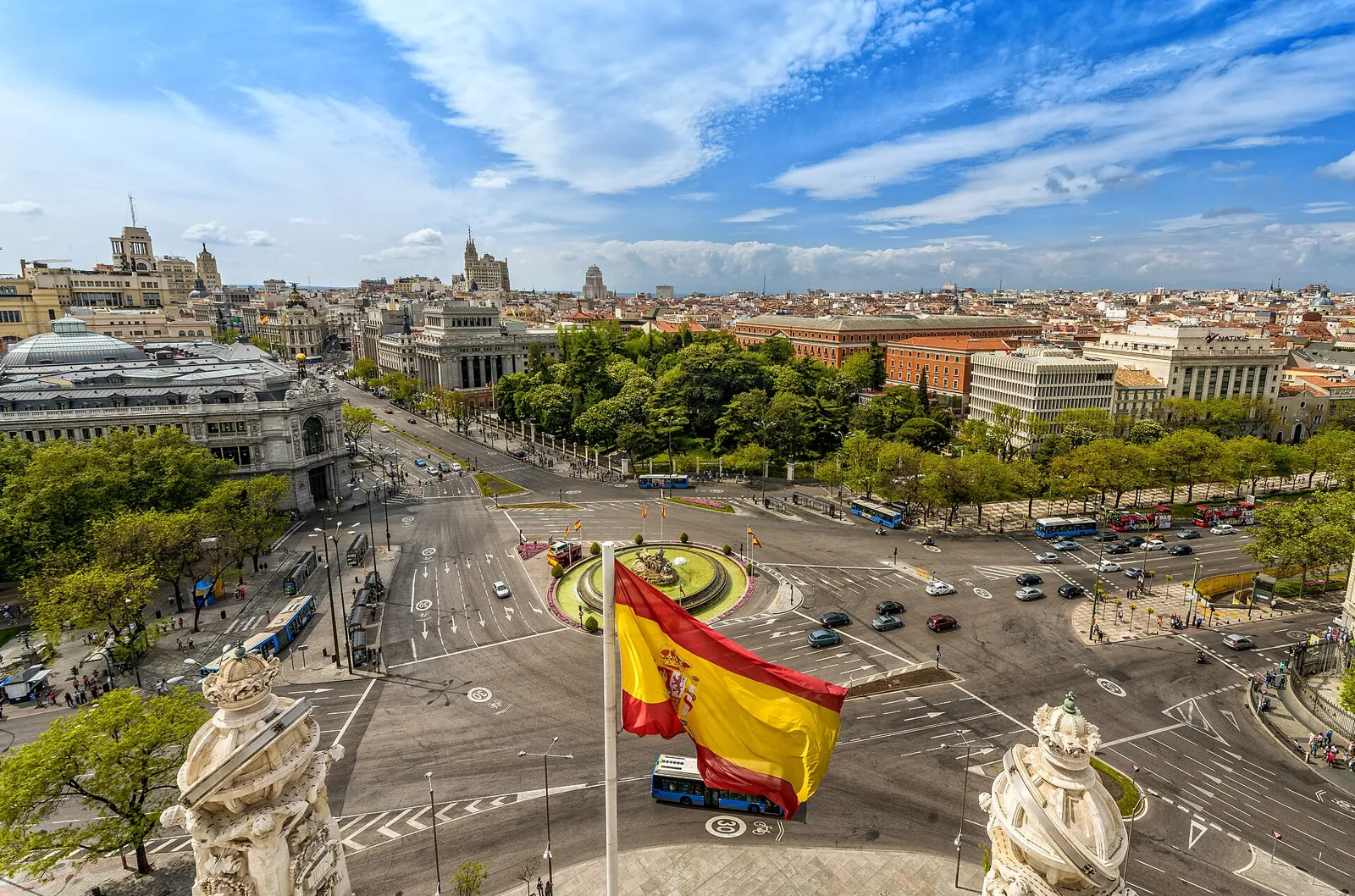
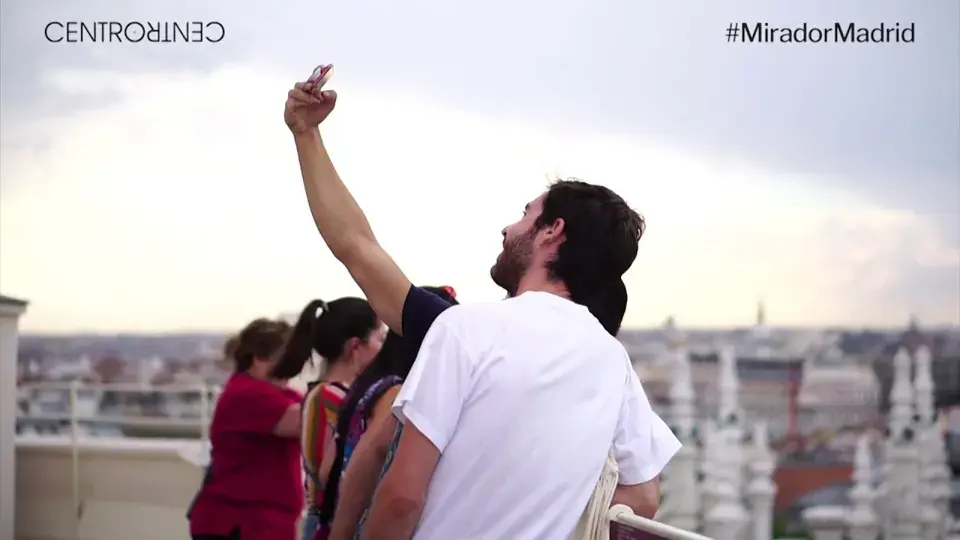
This 45-second CentroCentro video shows what you see from up there:
The Bank of Spain, Buenavista and Linares: the other 3 buildings
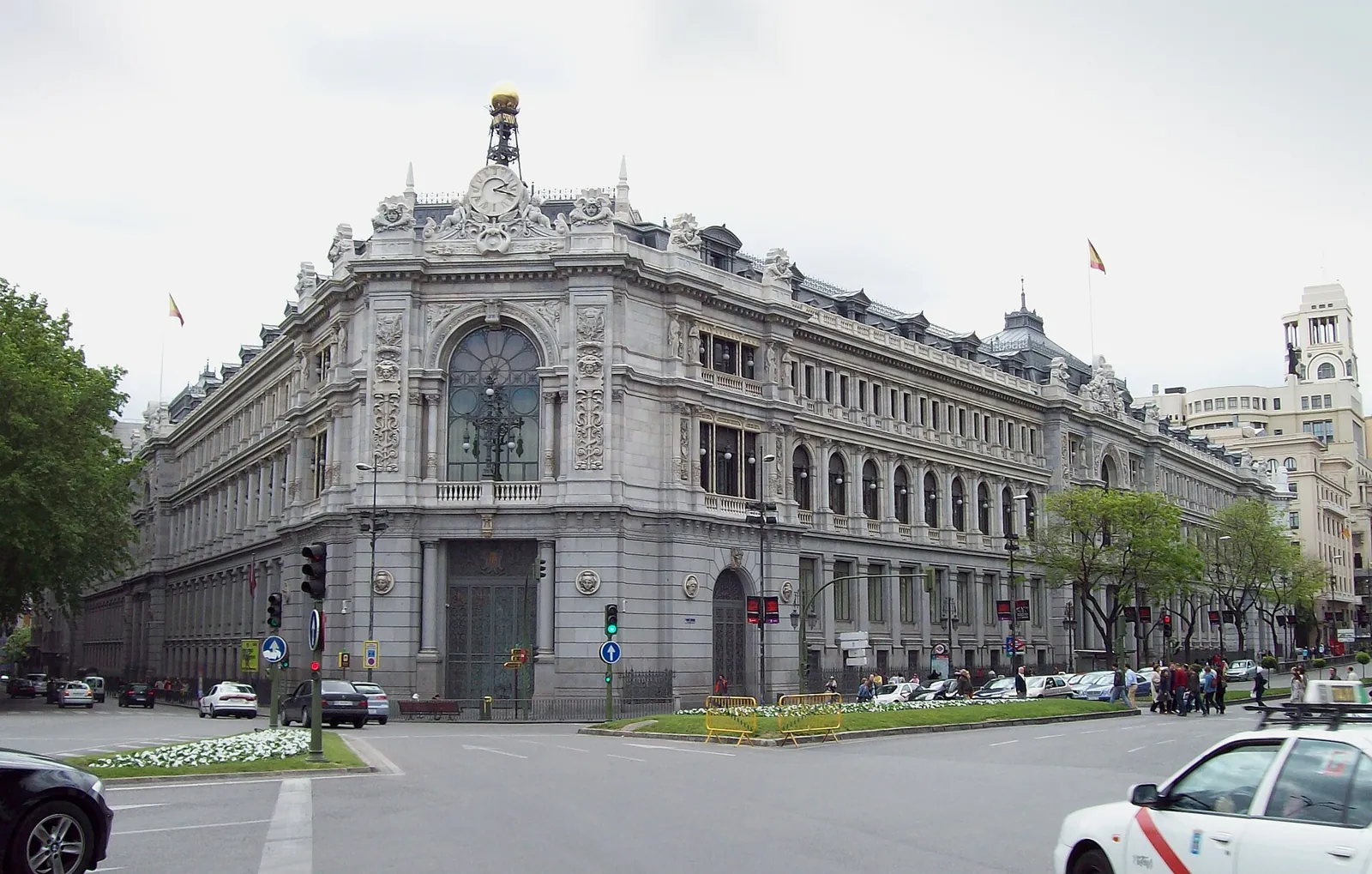
On the corner of the square and Calle de Alcalá stands the headquarters of the Bank of Spain, by Eduardo de Adaro and Severiano Sainz de la Lastra: an eclectic building whose design won a prize at the 1884 National Fine Arts Exhibition, and a listed monument since 1999. You can visit it for free if you book: the bank started guided tours of its headquarters in October 2025 and has offered new dates since 16 September 2026.
Across Calle de Alcalá, set among gardens, is the Palacio de Buenavista. The architect Pedro de Arnal built it in 1777 for the Duchess of Alba, and it once held Velázquez’s Rokeby Venus and Raphael’s Alba Madonna. It passed to the army, housed the War Ministry from 1847 and is now Army Headquarters, and on 24 June 2025 it was declared a listed monument.
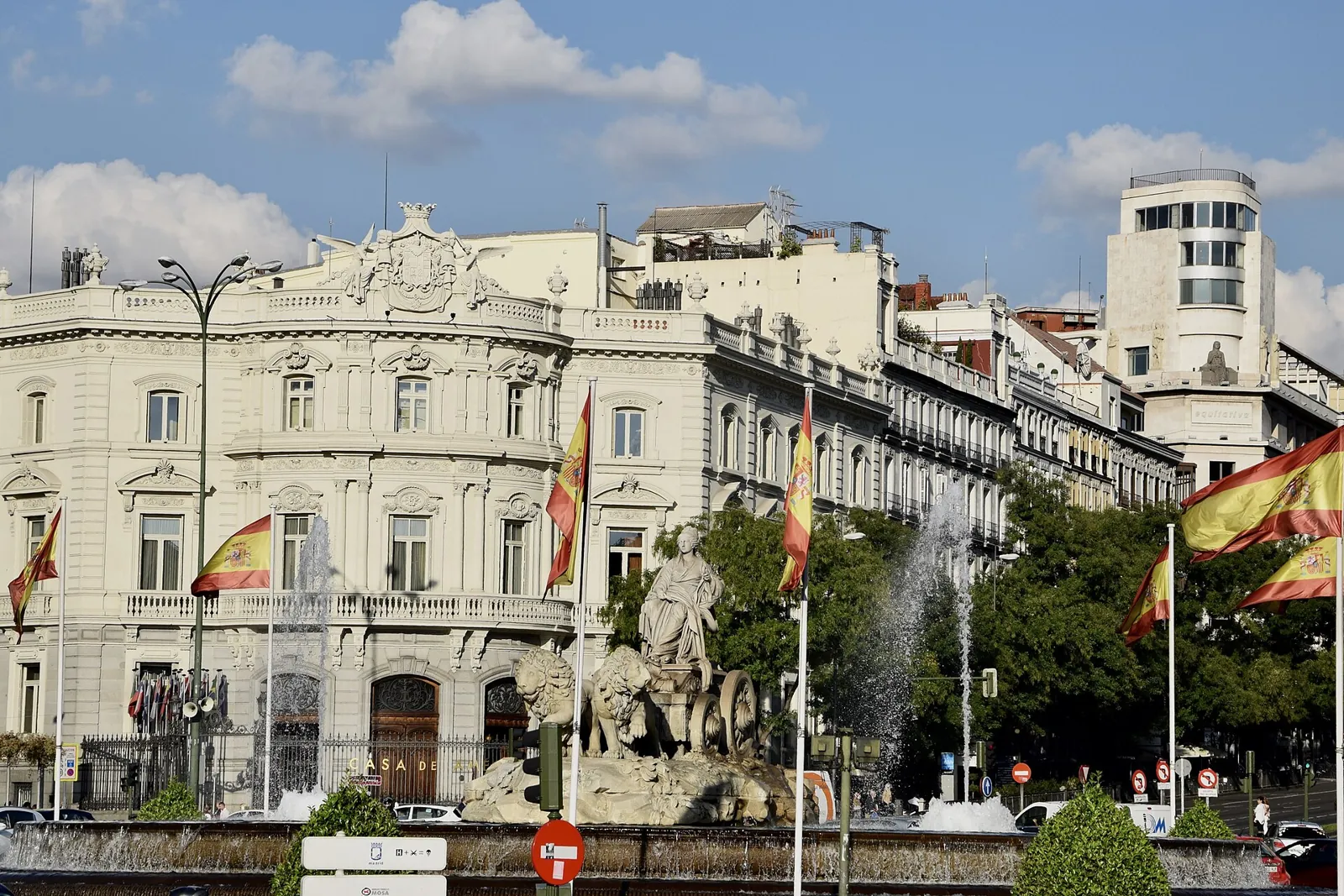
And on the fourth corner is the Palacio de Linares, begun in 1877 for the Marquis and Marchioness of Linares. They lived there from 1884, although the interior decoration was not finished until 1900. Today it is home to Casa de América, a cultural centre for Latin America, with free exhibitions and paid guided tours of the palace.
How to get to Plaza de Cibeles, and what is nearby
By metro, the nearest station is Banco de España, on line 2. City buses 1, 2, 5, 9, 14, 15, 20, 27, 51, 52, 74, 146 and 150, among others, stop here, and the nearest Cercanías commuter-train station is Recoletos. If you use BiciMAD bikes, there are docks on the square itself (Paseo del Prado, 1B) and at Calle de Alcalá, 48. Walk up Calle de Alcalá and you soon reach the Puerta de Alcalá and Retiro Park; walk down the Paseo del Prado and you come to the Neptune Fountain and the Prado Museum.
The Puerta de Alcalá, Charles III’s granite triumphal arch, is about 400 m up the street and free to see at any time. Carry on into Retiro Park and, 1.5 km on foot from Cibeles, you reach the Palacio de Cristal, the 1887 iron and glass pavilion: its interior is closed for restoration, but it is wrapped until 1 January 2027 in Andrea Canepa’s canvas Fardo, free to see during park hours (6:00 to 22:00 from October to March):
 Free audio guidePuerta de Alcalá, Madrid
 Free audio guidePalacio de Cristal, Madrid
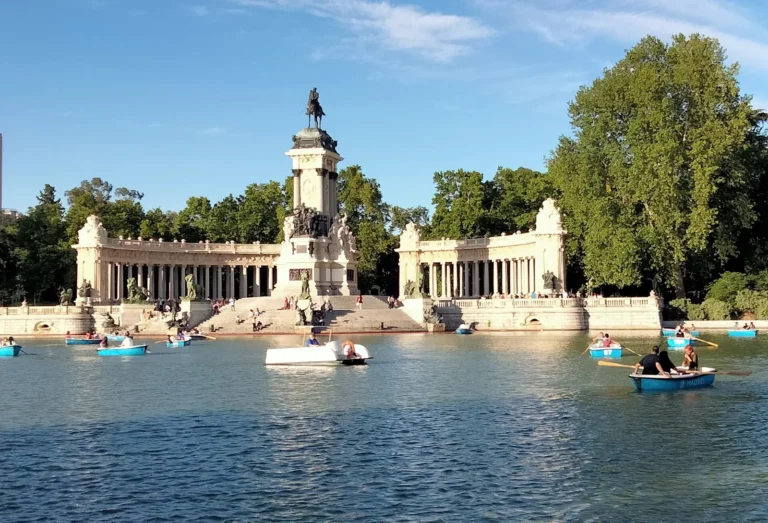
Walk up Calle de Alcalá past the Puerta de Alcalá and you can enter Retiro Park, which has its own free audio guide:
 Free audio guideRetiro Park, Madrid
Further up the same Calle de Alcalá, at number 237, stands Las Ventas bullring: metro line 2 takes you there from Banco de España with no change, to Ventas station, right opposite the Puerta Grande. It has its own free audio guide too:
 Free audio guideLas Ventas Bullring, Madrid
Head the other way, west along Calle de Alcalá to the Puerta del Sol and on past it, and in about 20 minutes on foot you reach the Mercado de San Miguel, the 1916 iron-and-glass market hall next to Plaza Mayor, free to enter and with its own audio guide:
 Free audio guideMercado de San Miguel, Madrid
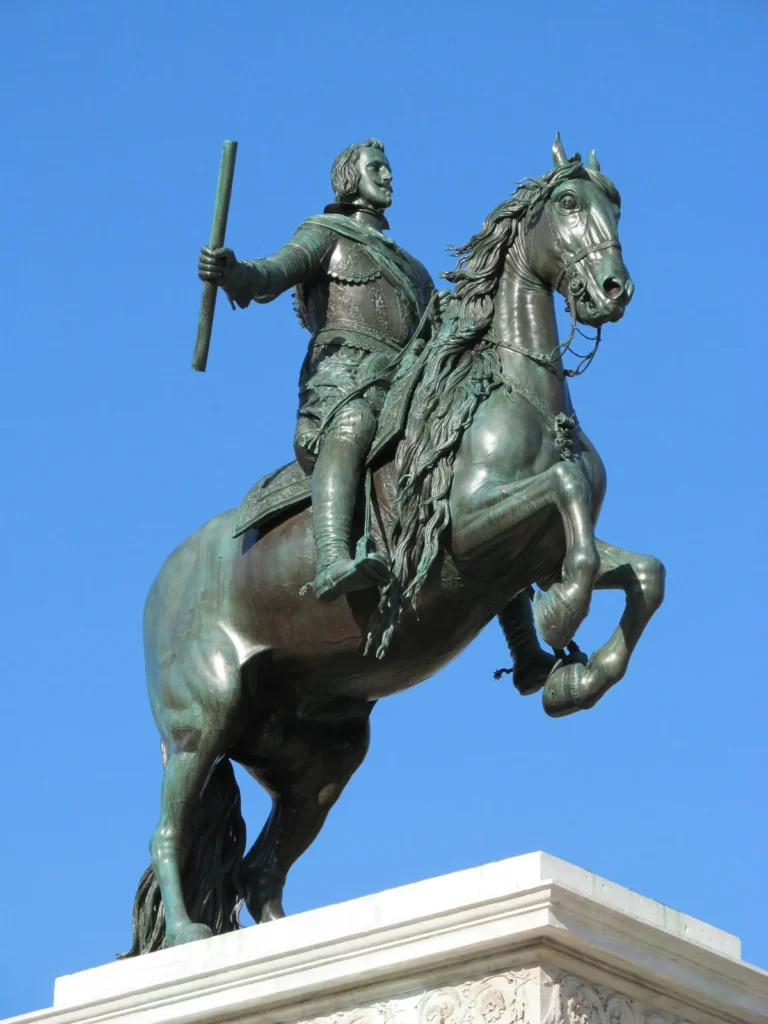
Metro line 2 also runs from Banco de España straight to Ópera, 3 stops west, which leaves you at Plaza de Oriente, the garden square between the Royal Palace and the Teatro Real, where Philip IV’s bronze horse rears on its hind legs. It has its own free audio guide:
 Free audio guidePlaza de Oriente
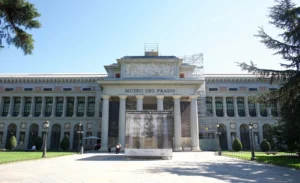
Walk south from Cibeles along the Paseo del Prado and in about 10 minutes you reach the Prado Museum, free for everyone in its last 2 hours each day and with its own free audio guide; Las Meninas is in room 12:
 Free audio guidePrado Museum, Madrid
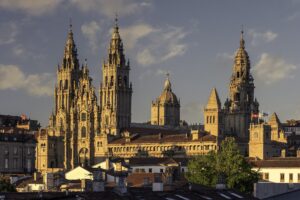
All our audio guides for the city, on 2 walks plus 2 trips further out, are in our Madrid audio guide. For another great Spanish monument with its own free audio guide, head north-west to Galicia:
 Free audio guideSantiago de Compostela Cathedral
Find all our audio guides for the country under Spain.
Where to find it
FAQs
How do the free audio guides work?
They play right here on audioguidetravel.com, with no app to download and no sign-up. Press play and listen as you walk round: a phone and a pair of headphones are all you need. The audio streams from this page, so you’ll need mobile data or Wi-Fi.
Can I take the tour at my own pace?
Of course! You set the pace: pause whenever you like, jump back or forward 15 seconds, or tap the bar to jump to any point, and listen as many times as you want so you don’t miss a thing.
If I'm in a group, can we use the same audio guide?
Yes. The same free audio guide opens on as many phones as you like, so you can go round together as a group or with your family, each person at their own pace and with their own headphones. The quickest way is to send the link via WhatsApp, Telegram or however you like: the buttons just below let you share it right now.
Visitor information
As of 2 Nov 2026- Opening hours
- Outdoor square, any time (fountain under scaffolding in 2026). Mirador: Tue-Sun 10:30-14:00, 16:00-19:30.
- Tickets
- Free: the square and fountain are in the open air. The Mirador Madrid costs €4 (€2 reduced).
- Time needed
- About a 3-minute audio guide facing the fountain, plus the Mirador Madrid if you go up.
- Getting there
- Metro Banco de España (line 2); Cercanías Recoletos; buses 1, 2, 5, 9, 14, 15, 20, 27, 51, 52 and 146.
- Accessibility
- Seen from the pavements. The Palacio de Cibeles has lifts and accessible toilets.
- Tip
- Go up the Mirador Madrid (€4): from the tower you see the whole square and its 4 great buildings.
- Official website
- www.esmadrid.com
Nearby
More free audio guides in Madrid
 3:35MadridPlaza de Oriente: free audio guide, hours and ticketsPlaza de Oriente is the grand square between the Royal Palace and the Teatro Real, in the old…
 6:11MadridRetiro Park, Madrid: free audio guide, boats and opening hoursRetiro Park (Parque del Retiro, or El Retiro) is Madrid’s great historic garden: 125 hectares and more than…
 4:22MadridAlmudena Cathedral, Madrid: free audio guide, hours and ticketsAlmudena Cathedral is Madrid’s cathedral, opposite the Royal Palace: classical outside, Gothic Revival inside. This free audio guide…