
Temple of Olympian Zeus: free audio guide, hours and tickets
Free audio guide in English · no app, no sign-up
This free audio guide to the Temple of Olympian Zeus plays straight from your phone — no app, no sign-up — while you walk the enclosure. It tells you why it took 645 years to finish, where the column that fell in 1852 is lying and what the two inscriptions that argue with each other on the Arch of Hadrian actually say. Press play before you reach the gate.
 Audio guide
Before you go in
The few things that change your visit.
- Admission is €20; the Acropolis is ticketed separately
- One gate only, the gatehouse on Vasilissis Olgas Avenue
- 16 columns survive: 15 standing and 1 on the ground since 26 October 1852
- The Arch of Hadrian is outside the fence: no ticket needed to see it
- The ticket covers 6 hectares: Roman baths, a basilica and the Themistoclean gates
On this page
- What the audio guide tells you
- 645 years to finish one temple
- 15 columns standing, and a sixteenth on the ground
- What else is inside the fence
- The Arch of Hadrian is outside the fence — you can see it for free
- Opening hours, tickets and getting there in 2026
- Nearby, with their own free audio guides
- Where to find it
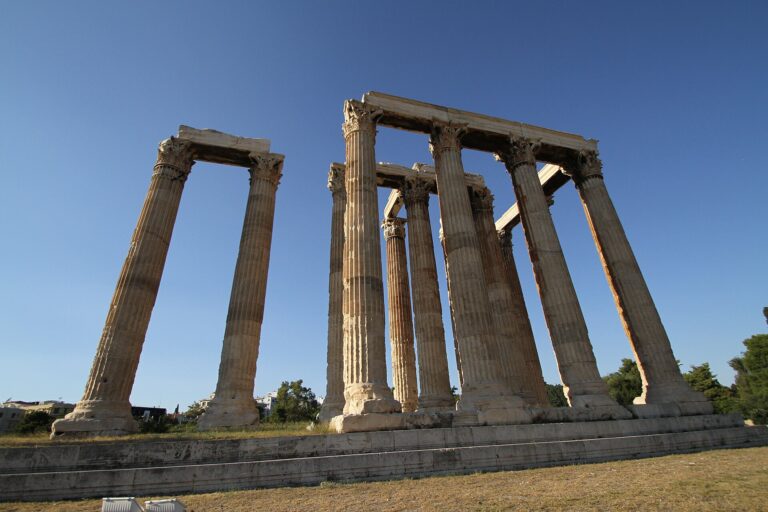
The Temple of Olympian Zeus — the Olympieion — is the largest temple ever begun in Greece, and for most of its life it was also the most famous building site in the ancient world. 15 Corinthian columns still stand on a flat open field between the Acropolis and the Ilisos, with a sixteenth lying on the ground exactly where it fell. This page is its free audio guide.

What the audio guide tells you
The guide is free, it plays in your browser, and there is no app to install and no sign-up. Press play at the gatehouse on Vasilissis Olgas Avenue and walk: the stops follow the route you actually take inside the fence.
- The gatehouse and the field — why a temple this size ended up on the flattest, least dramatic ground in Athens.
- The southeast cluster — 13 columns in one corner, and what the spacing tells you about the floor plan you are standing on.
- The fallen column — the night of 26 October 1852, and why its drums are still lying in a row.
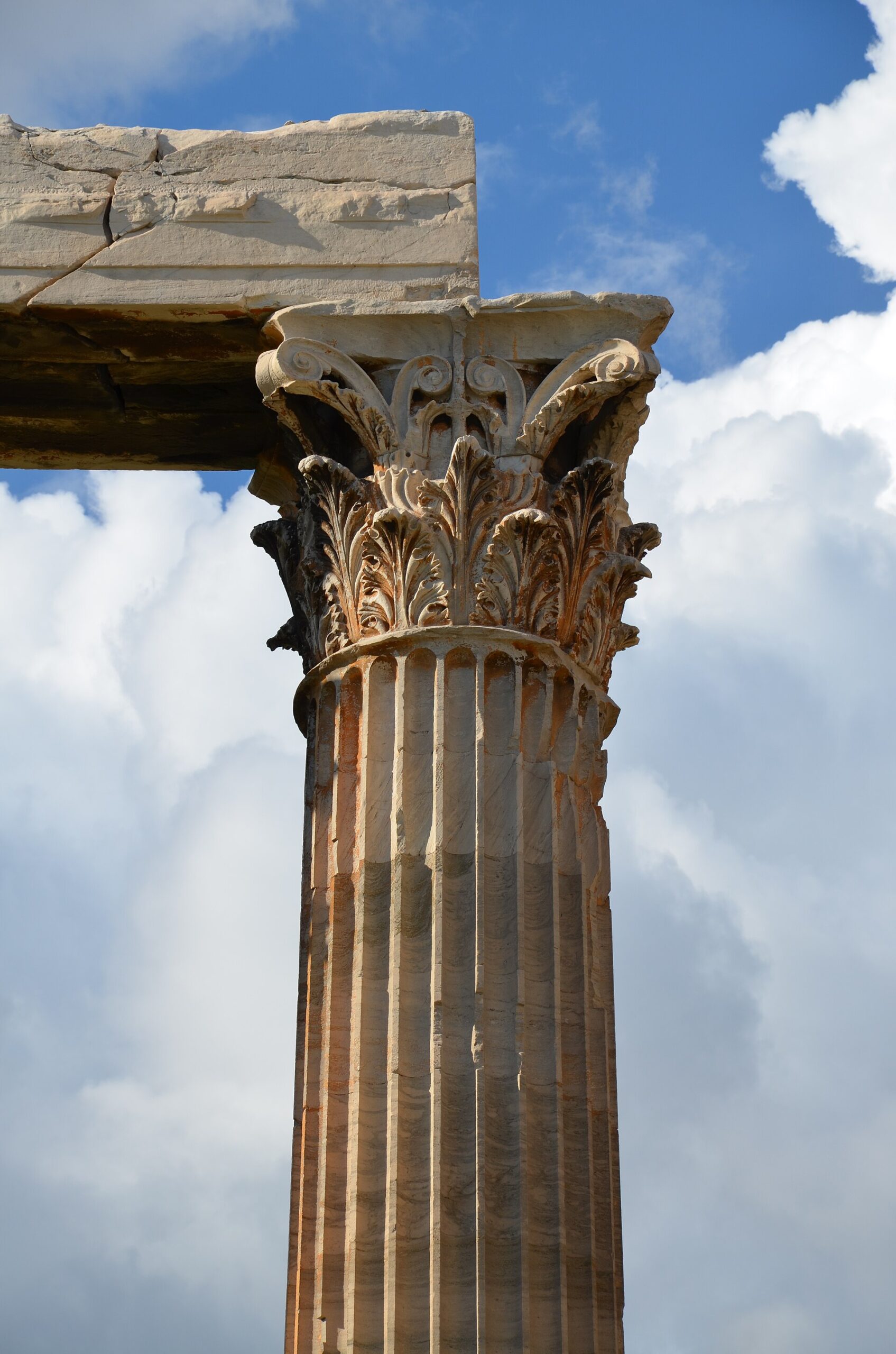
- The capitals — how a Roman architect working for a Syrian king turned a Doric temple into a Corinthian one.
- The Roman baths and the Themistoclean gates — the parts of the enclosure that almost every visitor walks straight past.
- The Arch of Hadrian — the two inscriptions that contradict each other, read out where you can see them.
645 years to finish one temple
Peisistratos the Younger, grandson of the tyrant, began the temple in 515 BC. It reached the stepped platform and then the tyranny fell, and the Athenians refused to continue it: a democracy was not going to finish a tyrant’s monument. The site sat half-built for roughly 400 years.
In 174 BC the Seleucid king Antiochus IV Epiphanes paid to restart it and hired a Roman architect, Cossutius, who threw out the original design: out went Doric columns in poros limestone, in came Corinthian columns in Pentelic marble. Antiochus died in 163 BC and the work stopped again.
Hadrian finished the job, and the temple was dedicated in AD 131: 645 years after the first stone. Inside stood a Zeus in gold and ivory and, beside him, a statue of Hadrian himself. Pausanias wrote that only the colossi of Rhodes and Rome were bigger.
15 columns standing, and a sixteenth on the ground
The finished temple had 104 columns: 2 rows of 20 down each long side and 3 rows of 8 across each end. Each one is 17.25 metres tall and 1.70 metres across at the base.
16 columns survive: 13 still joined at the southeast corner, and 3 more at the southwest — of which one is down. That makes 15 upright and 1 on the ground, and the fallen one is the single most photographed piece of stone on the site.
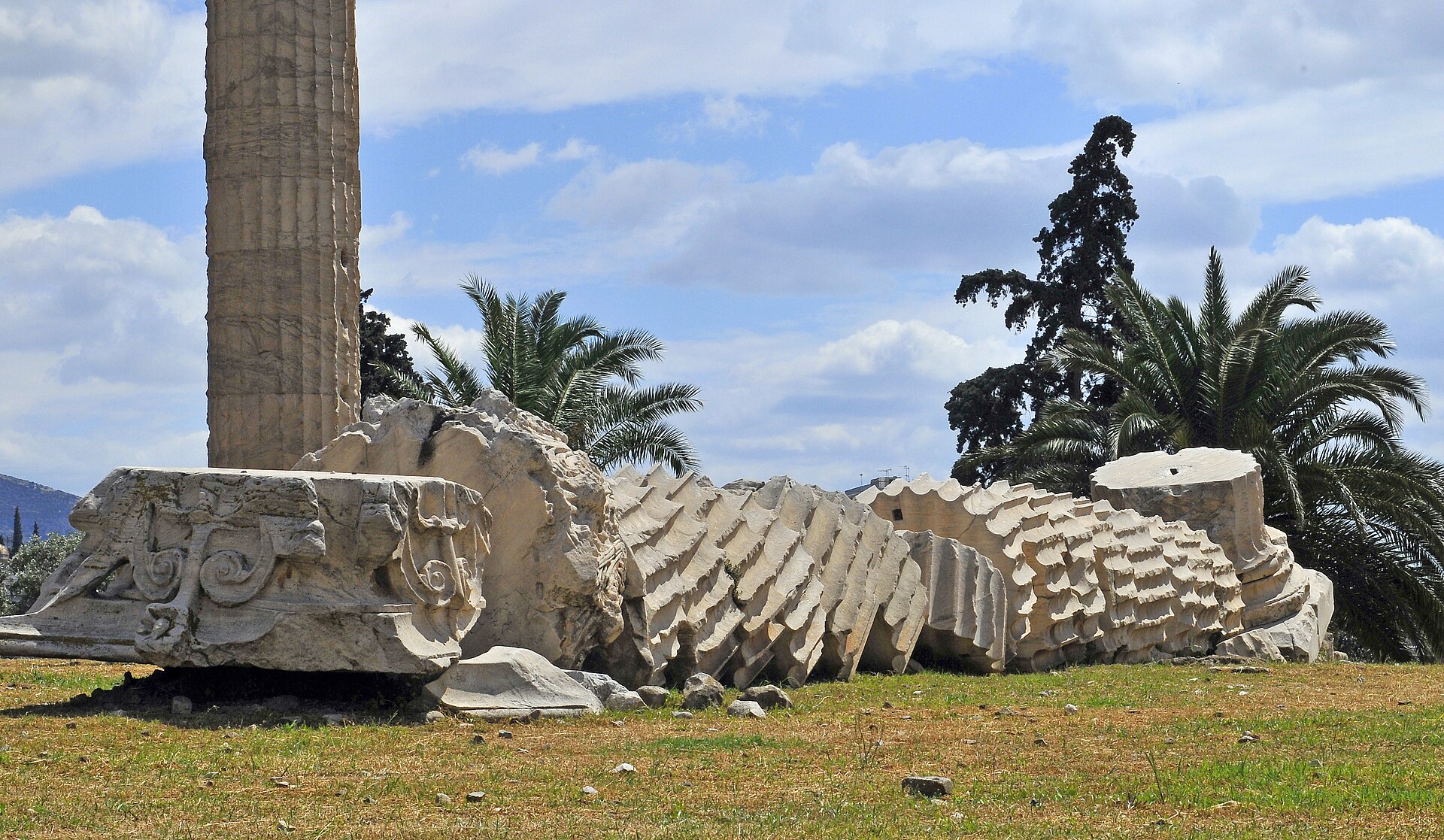

A gale brought it down on the night of 26 October 1852 (14–15 October in the Julian calendar then in use in Greece). The Finnish traveller Wilhelm Lagus wrote the following morning that until last night there were 16 standing; the middle one of the western three had gone, and so neatly that it looked as though someone had laid its drums out in a row. They are still lying that way.
The weather was not the only thing to take columns. Sulla shipped some of the columns to Rome in 86 BC, and between 1753 and 1765, when 17 were still standing, an Ottoman governor of Athens had one pulled down to burn for lime to build a mosque, and was fined heavily for it. The patches you can see on a few of the architraves are modern caps over the iron beams with which Ernst Ziller braced three cracked architraves in 1892.
What else is inside the fence
The ticket buys you a 6-hectare archaeological site, not just the columns. Walking the perimeter you pass Roman baths built at the same time as the temple was finished, houses in use from the fifth century BC to the second century AD, a basilica of AD 450, the Temple of Apollo Delphinios and 3 gates of the Themistoclean city wall (479–478 BC). The ground is flat and you can cover all of it without a single step.
The Ilisos (Parilissia) sanctuaries, to the south, are not visitable at present.


The Arch of Hadrian is outside the fence — you can see it for free
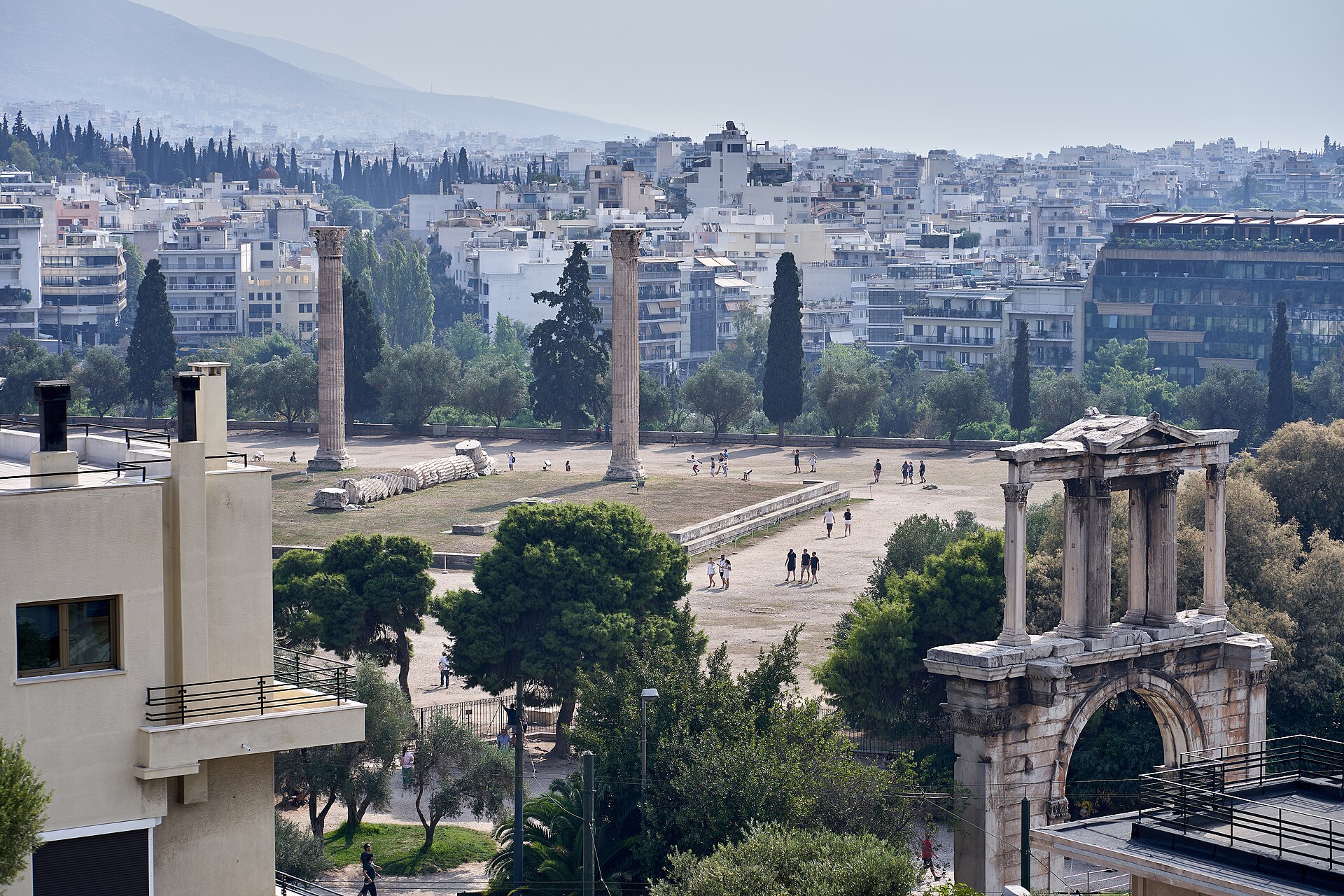
The Arch of Hadrian stands 18 metres high in Pentelic marble; the Athenians put it up around AD 131–132. It is outside the ticketed enclosure, so you do not need an entry ticket to see it. Its two inscriptions answer each other across the same gateway: on one face, “This is Athens, the ancient city of Theseus”; on the other, “This is the city of Hadrian and not of Theseus”.
⚠️ Before you plan a photo stop: since 1 April 2026 the area around the arch has been closed to the public for the redevelopment of Vasilissis Olgas Avenue.
About 400 m to the north, past the Zappeion, is the National Garden of Athens: free, open every day from sunrise to sunset, and the shadiest place nearby to rest after the ruins.

Opening hours, tickets and getting there in 2026
Admission is €20, €10 reduced, from the Greek state box office, tickets.hh.gr. Entry is free for EU citizens under 25 and non-EU visitors under 18 with ID, and for visitors with disabilities. Over-65s from Greece or the EU pay half, but only from 1 October to 31 May. The ticket covers this site only: the Acropolis is ticketed separately and costs €30 on its own.
It opens 08:00–20:00 in summer and 08:00–15:00 in winter, and in September and October closing time steps down fortnight by fortnight. Allow 30 to 45 minutes for the columns, and 75 to 90 for the whole enclosure.
There is one gate only, the gatehouse on Vasilissis Olgas Avenue, reached by metro, tram and bus. The site is wheelchair accessible for the most part from that gate, there are accessible toilets, and the ticket office has tactile plans and Braille leaflets in Greek and English.
The entry ticket already includes the Ministry’s digital guide app. The audio guide on this page is free too.
Nearby, with their own free audio guides
The Acropolis is a 10-minute walk northwest, with the Parthenon on top, and the Ancient Agora of Athens is some 20 minutes on foot: each has its own free audio guide on this site.
Reading this in Spanish? The same guide, written for a Spanish-speaking visitor and narrated in Spanish, is at Templo de Zeus Olímpico en vozviajera.com.


Where to find it
FAQs
How do the free audio guides work?
They play right here on audioguidetravel.com, with no app to download and no sign-up. Press play and listen as you walk round: a phone and a pair of headphones are all you need. The audio streams from this page, so you’ll need mobile data or Wi-Fi.
Can I take the tour at my own pace?
Of course! You set the pace: pause whenever you like, jump back or forward 15 seconds, or tap the bar to jump to any point, and listen as many times as you want so you don’t miss a thing.
If I'm in a group, can we use the same audio guide?
Yes. The same free audio guide opens on as many phones as you like, so you can go round together as a group or with your family, each person at their own pace and with their own headphones. The quickest way is to send the link via WhatsApp, Telegram or however you like: the buttons just below let you share it right now.
Visitor information
As of 16 Oct 2026- Opening hours
- 08:00–18:00 in the second half of October (last admission 17:40); 08:00–15:00 in winter
- Tickets
- €20 full · €10 reduced · free for EU citizens under 25
- Time needed
- 30–45 min · 75–90 min for the whole enclosure
- Getting there
- One gate only, on Vasilissis Olgas Avenue. Reachable by metro, tram and bus.
- Accessibility
- Mostly wheelchair accessible from the main gate; accessible toilets; tactile plans and Braille leaflets
- Tip
- Walk the whole enclosure: the Roman baths and Themistoclean gates are what most visitors walk straight past
- Official website
- odysseus.culture.gr
Nearby
More free audio guides in Athens
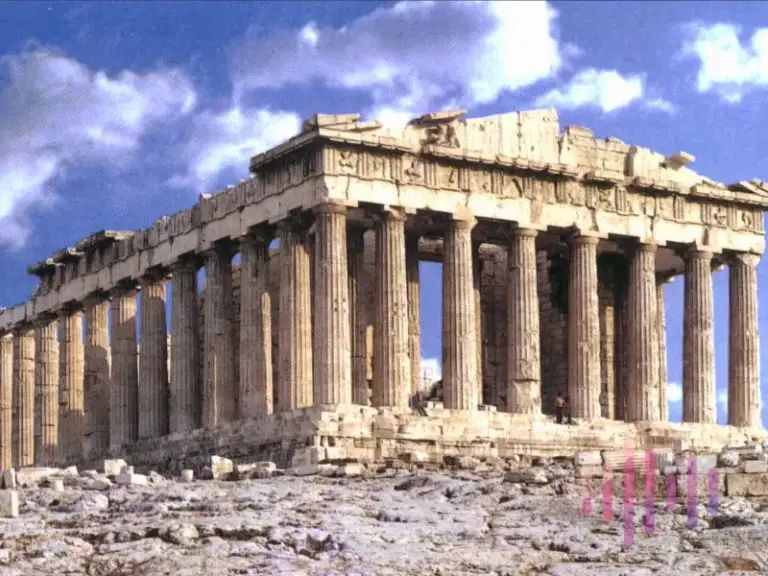 8:00AthensParthenon: free audio guide, hours and ticketsFree audio guide to the Parthenon, in English: about 8 minutes on the temple of Athena, who built…
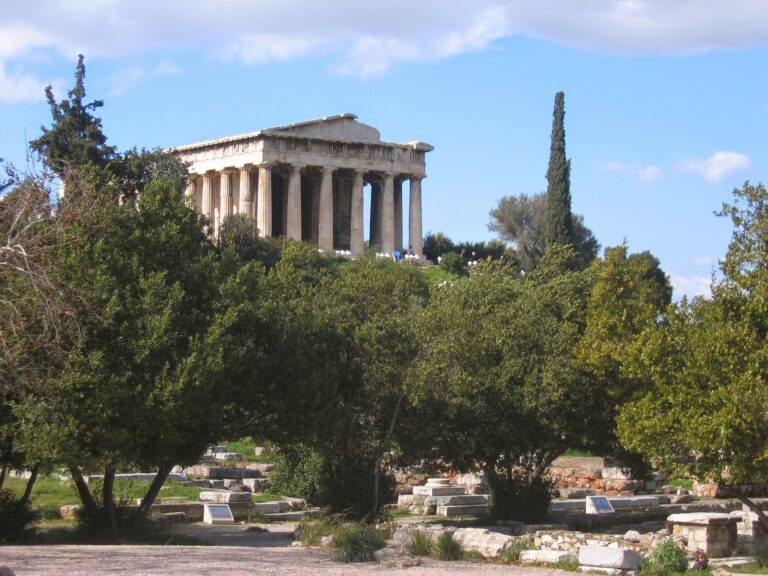 9:36AthensAncient Agora of Athens: free audio guide, hours and ticketsThis free audio guide to the Ancient Agora of Athens plays straight from your phone — no app,…
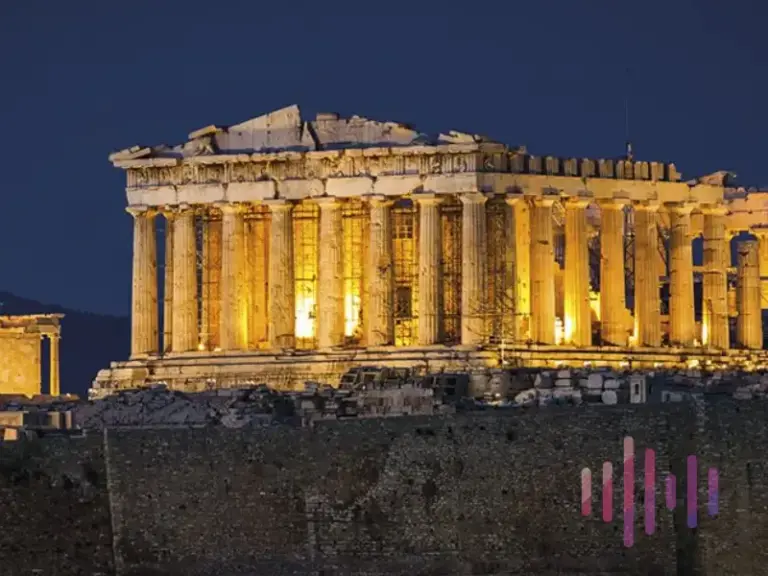 6:43AthensAcropolis of Athens: free audio guide, hours and ticketsFree audio guide to the Acropolis of Athens, in English: 7 minutes up the rock and down its…