
Castel Nuovo: free audio guide, hours and tickets
Free audio guide in English · no app, no sign-up
Free audio guide to Castel Nuovo, the Maschio Angioino, in English: just under 6 minutes on the castle of the Anjou and Aragon kings of Naples, its triumphal arch, the Palatine Chapel and the Hall of the Barons. It plays on this page.
 Audio guide
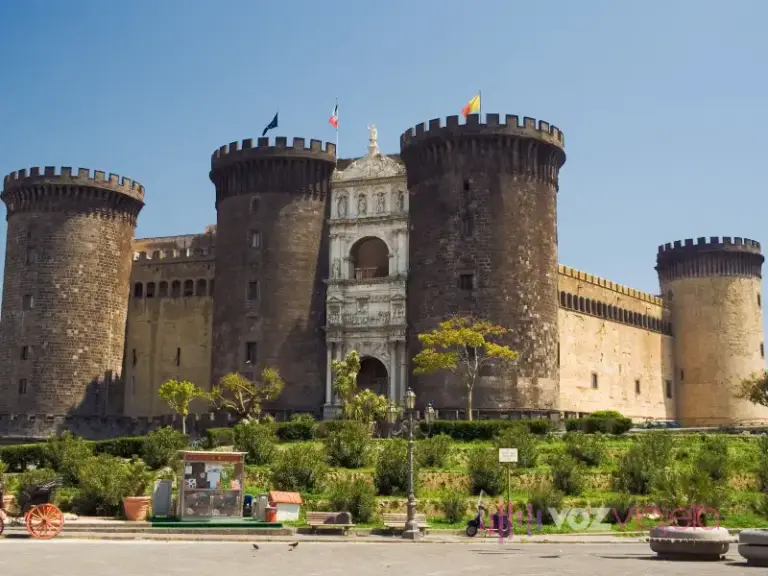
Castel Nuovo, also called the Maschio Angioino, is the royal castle of Naples on Piazza Municipio: begun in 1279 for Charles I of Anjou and rebuilt by Alfonso I of Aragon, who set a white marble triumphal arch at its gate. Today it houses the Civic Museum, open Monday to Saturday from 09:00 to 18:00 for €10. This is its free audio guide, in English.
What the audio guide covers
It is free, plays on this page in your phone’s browser with no app and no sign-up, and lasts just under 6 minutes, short enough to hear before you go in. The first part is the story: a castle begun in 1279 for Charles I of Anjou, the Angevin court that turned it into a centre of art and culture, and the triumphal arch built to celebrate Alfonso I of Aragon’s entry into Naples.
Then it walks you through the castle. It names the 5 towers, stops at the arch and its reliefs, crosses the courtyard and takes you into the Palatine Chapel, the Hall of the Barons and the old Armoury Hall. Along the way it tells the legend of the crocodile said to drag prisoners from the dungeons into the sea, and the role of the Chapel of the Souls in Purgatory, where people condemned to death received the sacraments. It ends with a tip for later: try a real Neapolitan pizza.
Points of interest the audio guide stops at, and what you will see there:
| Point of Interest | Brief Description |
|---|---|
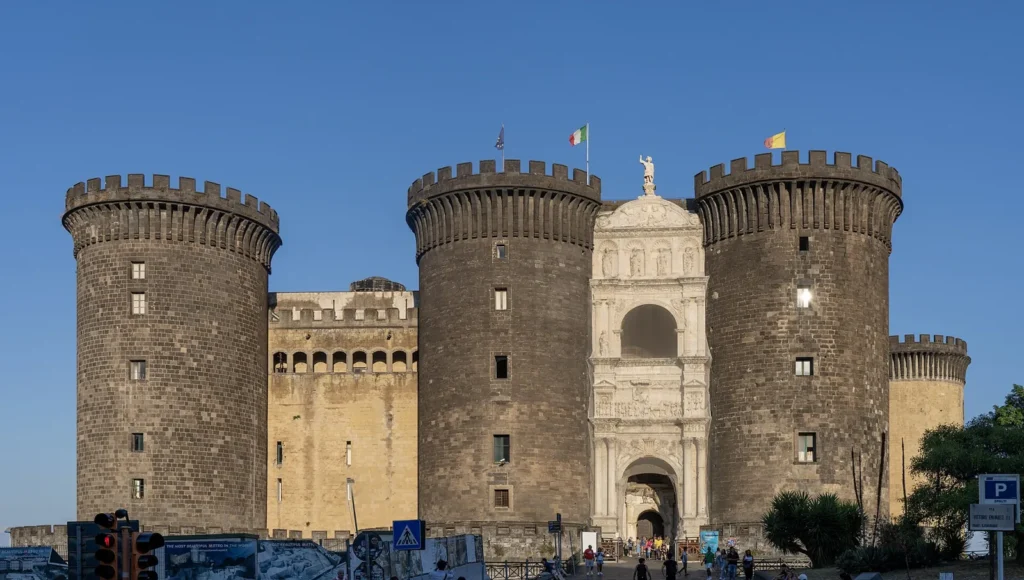
| The towers and the arch | 5 round towers, 4 faced with piperno and 1 of tuff; between 2 of them, the white marble arch of Alfonso I of Aragon. |
| The courtyard | A Catalan-style arcade and the outdoor stone staircase that climbs to the Hall of the Barons. |
| Palatine Chapel | The oldest part of the castle, the only piece left from the 14th-century Angevin building, with a Renaissance doorway. |
| Hall of the Barons | The great hall under a star-shaped vault, where the barons who plotted against King Ferrante were arrested. |
| Armoury Hall | Now the archaeological route: Roman remains you see through a glass floor. |
| Civic Museum | On the first floor, paintings and frescoes from the 15th to the 18th century, mostly religious subjects. |
Opening hours and tickets in October 2026
Castel Nuovo opens Monday to Saturday from 09:00 to 18:00, and the last entry is at 17:30. It is closed on Sundays and on public holidays, unless a special opening is announced.
A ticket costs €10, or €6 if you live in Naples or one of the municipalities of its metropolitan area. With the Artecard it costs €5, or nothing, depending on the Artecard terms. You can pay by card at the ticket office, or buy online on the council’s ticket site, biglietti.comune.napoli.it, where you pick the day and the time.
A few house rules: no food or drink inside, and no drones. Dogs are allowed only if small, on a lead and carried in your arms inside the buildings; guide dogs and assistance dogs are welcome. Groups can have up to 30 people. (Hours, prices and rules from the Comune di Napoli, checked on 17 October 2026.)
The triumphal arch and the 5 towers
Charles I of Anjou wanted a new royal residence close to the sea, and the works began in 1279. Under Robert of Anjou the castle became a centre of culture, where artists, doctors and men of letters stayed, among them Giotto, Petrarch and Boccaccio. Alfonso I of Aragon, who won the throne of Naples, made it his royal home and had it rebuilt: the castle you see today is essentially his.
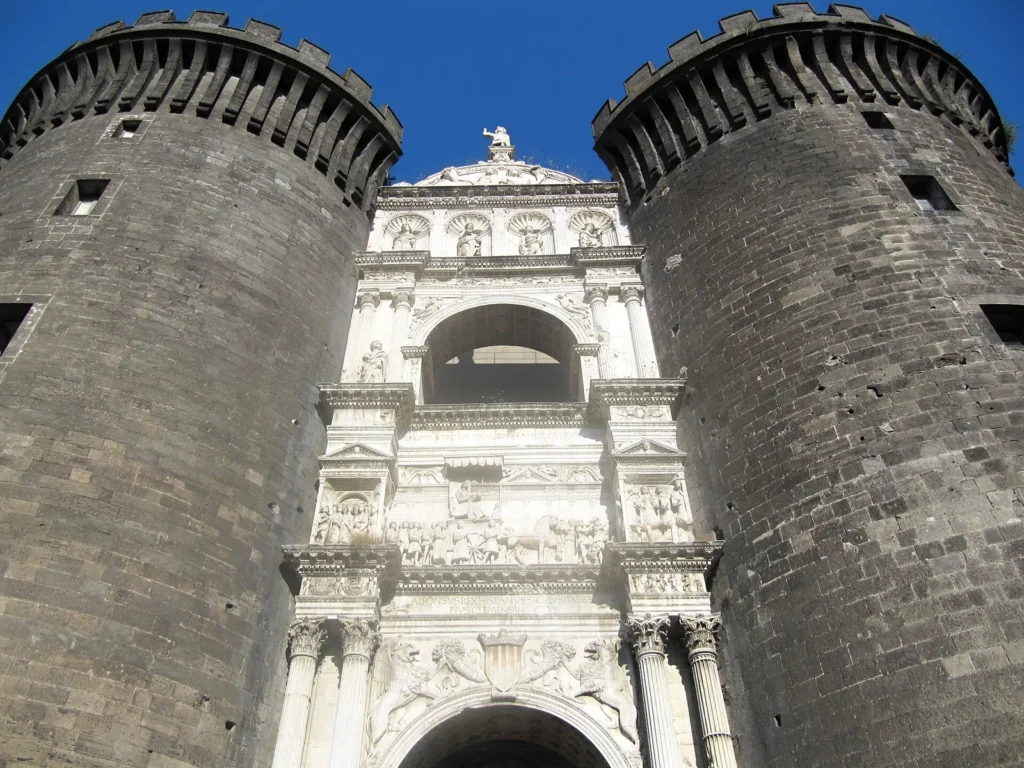
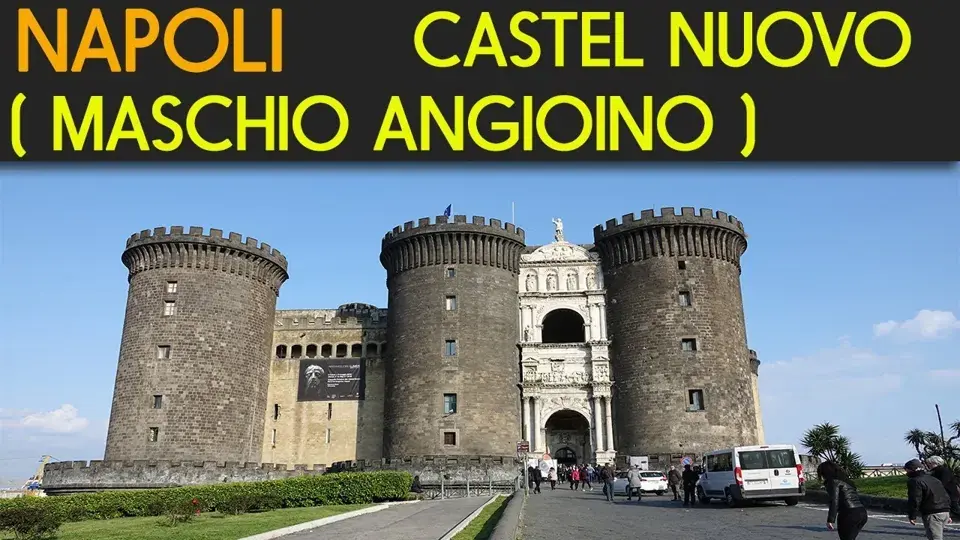
Alfonso also raised the triumphal arch between the Torre di Mezzo and the Torre di Guardia to celebrate his victorious entry into the city. It takes its idea from the triumphal arches of ancient Rome. On the sides of the passage, reliefs show Alfonso among his relatives and the great officers of the kingdom; higher up, a relief shows his triumph. Francesco Laurana and Domenico Gagini were among the sculptors.
The plan is a trapezoid: a curtain wall of tuff with 5 round towers, 4 faced with dark piperno stone and 1 of tuff, standing on a sloping base with wall walks. The 3 towers on the land side, where you go in, are San Giorgio, di Mezzo and di Guardia; the 2 facing the sea are the Torre dell’Oro and the Torre del Beverello.
Inside: the courtyard, the Hall of the Barons and the Palatine Chapel
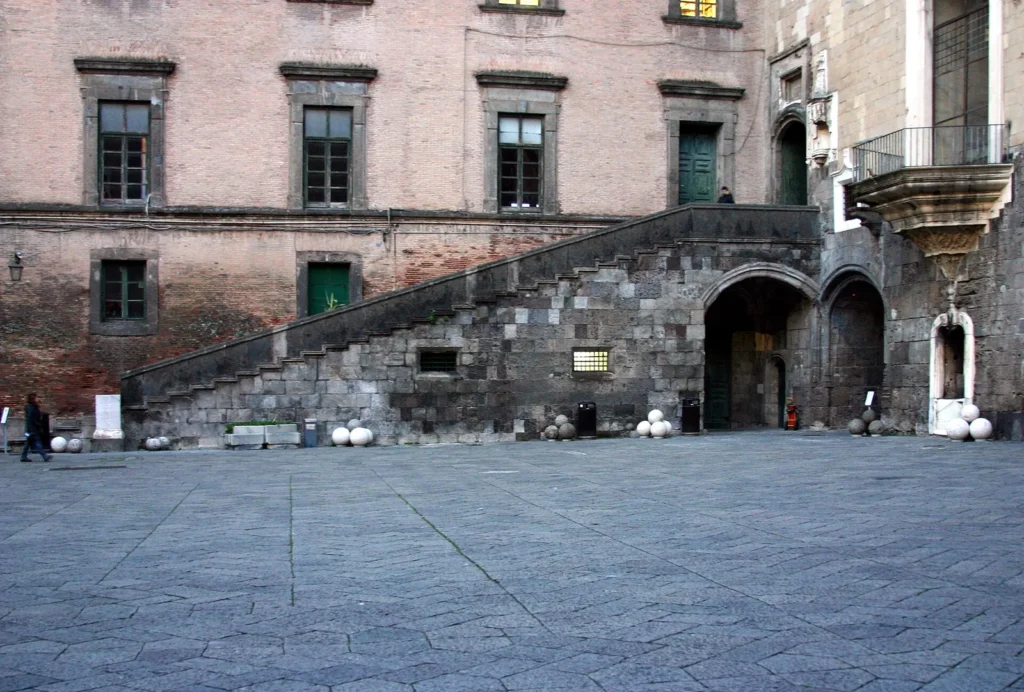
The courtyard follows the outline of the Angevin one, with Catalan touches: an arcade of low arches and an outdoor staircase of piperno by the Majorcan architect Guillem Sagrera. It climbs to the Hall of the Barons and gives this corner the look of a Spanish patio.
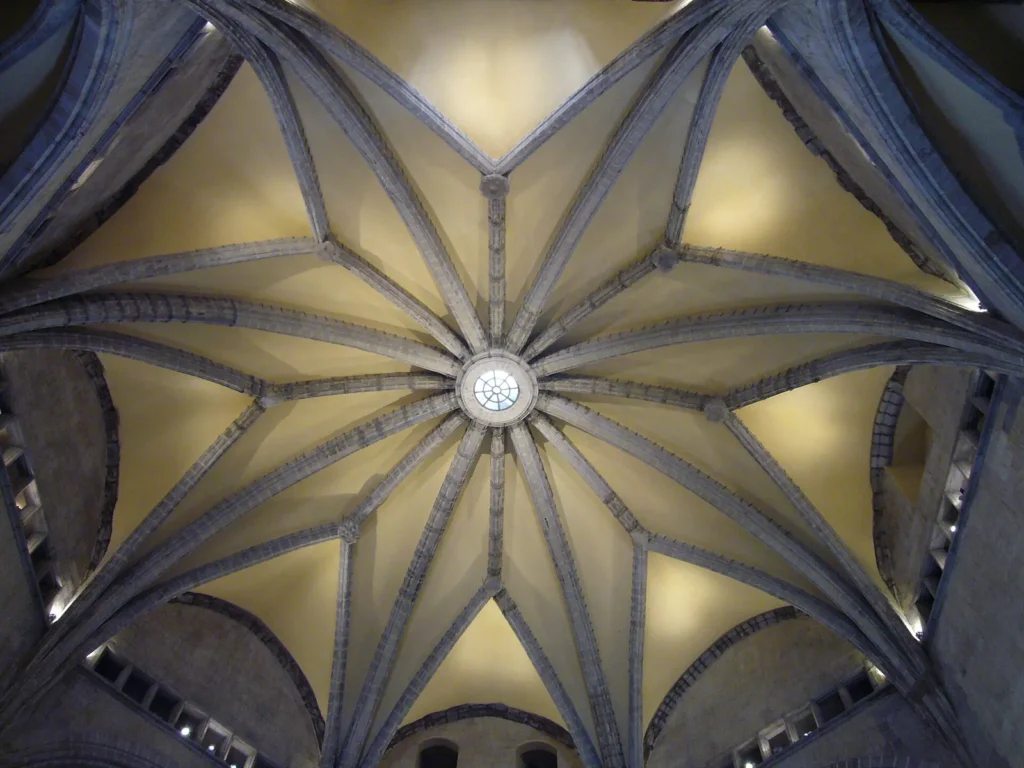
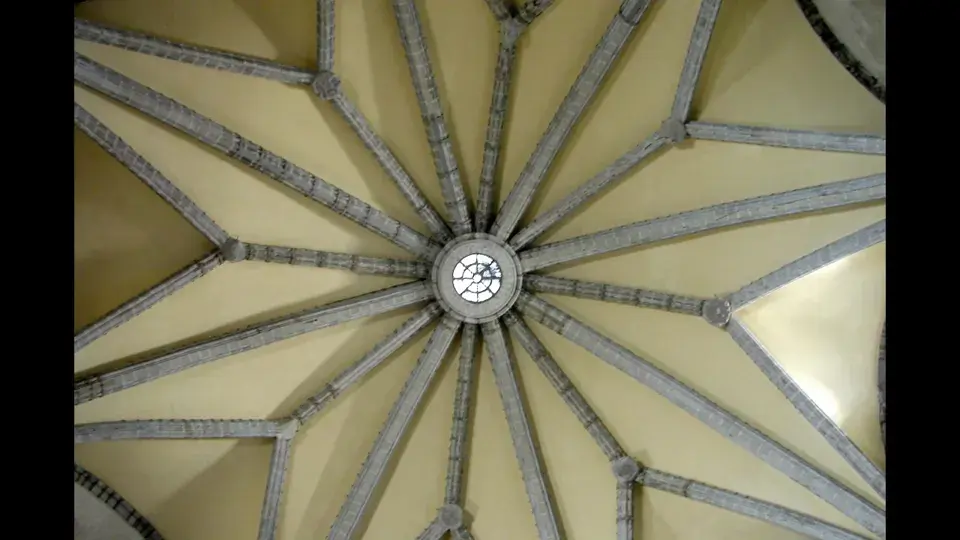
The Hall of the Barons began as the throne room. Sagrera rebuilt it for Alfonso and covered it with the star-shaped vault you see above you. It takes its name from the Conspiracy of the Barons: the nobles who had plotted against King Ferrante, Alfonso’s son, were invited here on the pretext of a wedding feast and arrested.
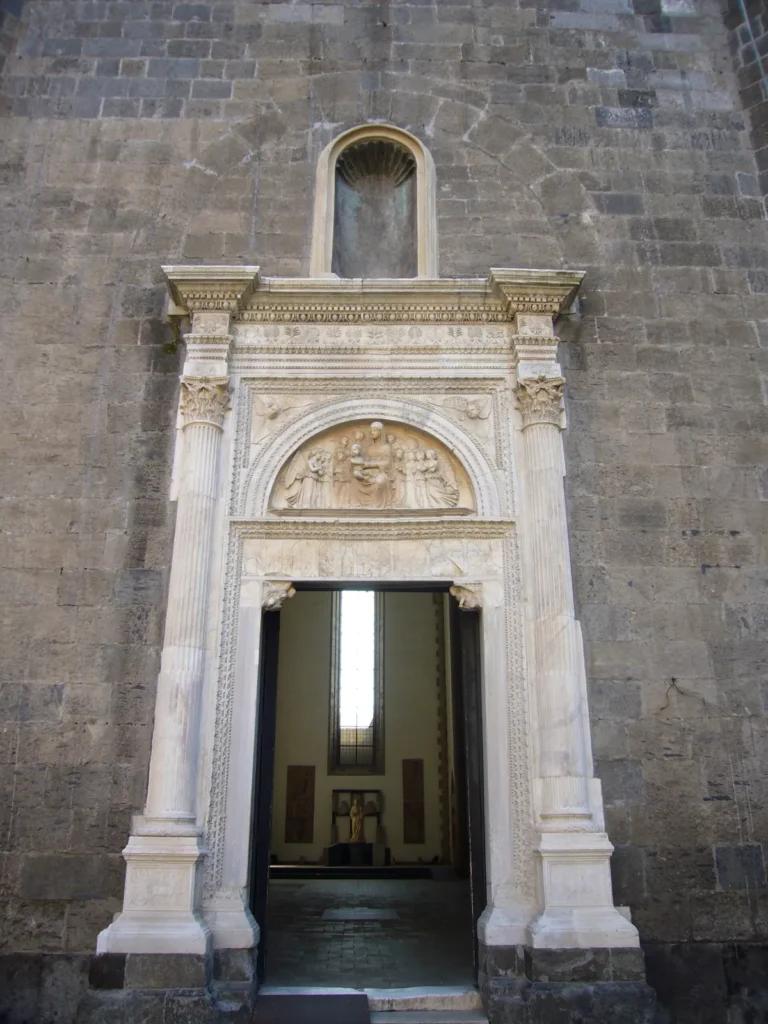
The Palatine Chapel, or Chapel of Santa Barbara, is the oldest part of the fortress and the only piece left of the 14th-century Angevin castle. Giotto painted here, and traces of his passage survive. The earthquake of 1456 damaged it and it was restored; on the courtyard side it has a Renaissance doorway with reliefs by Andrea dell’Aquila and Francesco Laurana.
Next to it, the former Armoury Hall is now the archaeological route: under a glass floor you see Roman remains from the 1st century BC and finds from the 5th century AD, uncovered during restoration work in the courtyard. The Chapel of the Souls in Purgatory, from the 16th century, is the one where the condemned received the sacraments before their execution.
On the first floor of the Civic Museum hang frescoes and paintings, mostly religious, from the 15th to the 18th century, with Caravaggesque painters such as Battistello Caracciolo and masters of the Neapolitan Baroque such as Luca Giordano, Francesco Solimena and Mattia Preti.
Getting there
The easiest way is the metro: Line 1 or Line 6 to Municipio, on Piazza Municipio, right in front of the castle. From the Central Station, bus R2 runs to Piazza Trieste e Trento, near the castle; trams 412 and 421 (Colombo – Porto Capolinea) also stop nearby; and the Funicolare Centrale links Piazzetta Fuga with Via Toledo. The address is Via Vittorio Emanuele III, 80133 Naples.
On its sea side the castle faces the Molo Beverello pier, in the port, so it fits easily into a day that starts or ends there.
More free audio guides in Naples
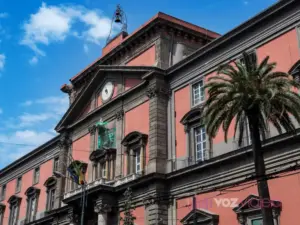
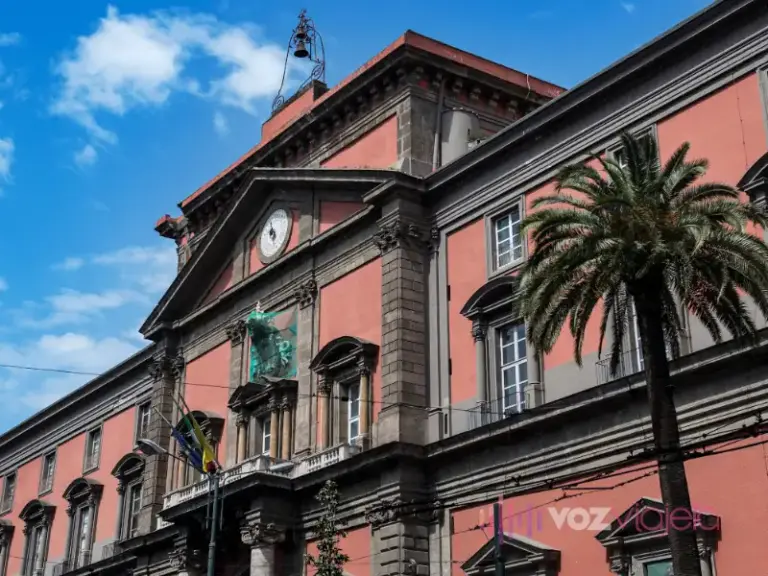
Naples has more to listen to. The Naples Archaeological Museum holds many of the finds from Pompeii and Herculaneum, and Mount Vesuvius is the volcano that buried them, with a walk up to its crater.
 Free audio guideNaples Archaeological Museum
 Free audio guideMount Vesuvius
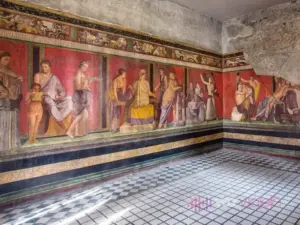
If you have a day for Pompeii, the Villa of the Mysteries is a good place to start. All of the city’s audio guides are on our Naples page.
Where to find it
FAQs
How do the free audio guides work?
They play right here on audioguidetravel.com, with no app to download and no sign-up. Press play and listen as you walk round: a phone and a pair of headphones are all you need. The audio streams from this page, so you’ll need mobile data or Wi-Fi.
Can I take the tour at my own pace?
Of course! You set the pace: pause whenever you like, jump back or forward 15 seconds, or tap the bar to jump to any point, and listen as many times as you want so you don’t miss a thing.
If I'm in a group, can we use the same audio guide?
Yes. The same free audio guide opens on as many phones as you like, so you can go round together as a group or with your family, each person at their own pace and with their own headphones. The quickest way is to send the link via WhatsApp, Telegram or however you like: the buttons just below let you share it right now.
Visitor information
As of 17 Oct 2026- Opening hours
- Monday to Saturday 09:00–18:00, last entry 17:30. Closed on Sundays and public holidays.
- Tickets
- €10 · under-18s free
- Getting there
- Metro Line 1 or Line 6 to Municipio, on Piazza Municipio.
- Accessibility
- Free for visitors with a disability and a family member or carer; the museum lift may be out of use: ask staff
- Tip
- Closed on Sundays and public holidays: go Monday to Saturday and be in by 17:30, the last entry
- Official website
- www.comune.napoli.it
Nearby
More free audio guides in Naples
 3:54NaplesMount Vesuvius: free audio guide, hours and ticketsFree audio guide to Mount Vesuvius, in English: about 4 minutes on the volcano that buried Pompeii and…
 5:40NaplesNaples Archaeological Museum: free audio guide and hoursFree audio guide to the National Archaeological Museum of Naples (MANN), in English: about 6 minutes on the…