
Mount Vesuvius: free audio guide, hours and tickets
Free audio guide in English · no app, no sign-up
Free audio guide to Mount Vesuvius, in English: about 4 minutes on the volcano that buried Pompeii and Herculaneum in 79 AD, its eruptions up to 1944 and the walk up the Great Cone to the crater. It plays on this page.
 Audio guide
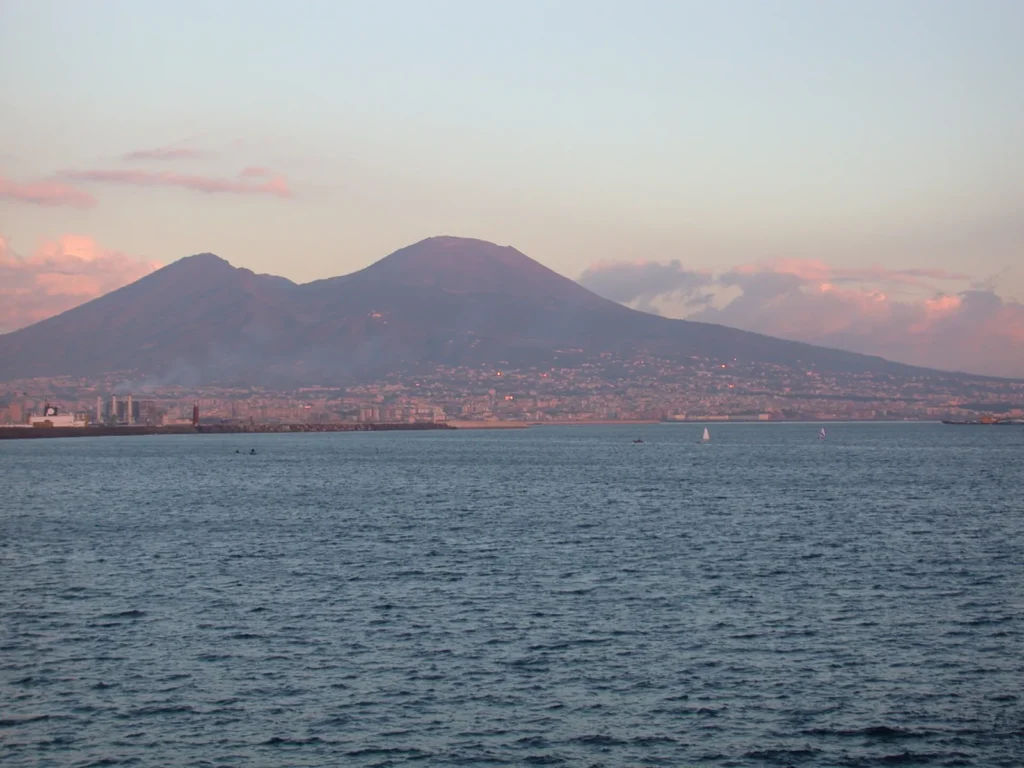
Mount Vesuvius is the volcano above the Bay of Naples that buried Pompeii and Herculaneum in 79 AD and last erupted in 1944. You can walk up its Great Cone on trail no. 5 of the Vesuvius National Park: a wide path of ash and gravel from the square at 1,000 m up to 1,170 m, with views into the crater. Tickets (€10) are sold online only. This is its free audio guide, in English.
What the audio guide covers
It is free, plays on this page in your phone’s browser with no app and no sign-up, and lasts about 4 minutes, short enough for the bus ride up. The first half is the story: the volcano rising over the Bay of Naples, the eruption of 79 AD that buried Pompeii and Herculaneum, the excavations that brought them back to light, the eruptions that followed until the last one in 1944, the artists and poets it inspired and the legend it tells of fire spirits and a dragon asleep inside the volcano.
The second half walks you up the cone. It points out the plants and animals of the national park on the slopes, the views of the bay that open up as you climb, the viewpoints worth stopping at and, near the top, the fumaroles inside the crater. Near the end it gives sensible advice: stay on the marked path, and bring water and sun cream.
Points of interest the audio guide stops at, and what you will see there:
| Point of Interest | Brief Description |
|---|---|
| The climb | Wide zigzags of volcanic ash and lapilli, with views over Monte Somma and, higher up, the whole bay. |
| Flora and fauna | Etna broom and red valerian on the slopes, and birds of high rocky ground such as the rock thrush and the black redstart. |
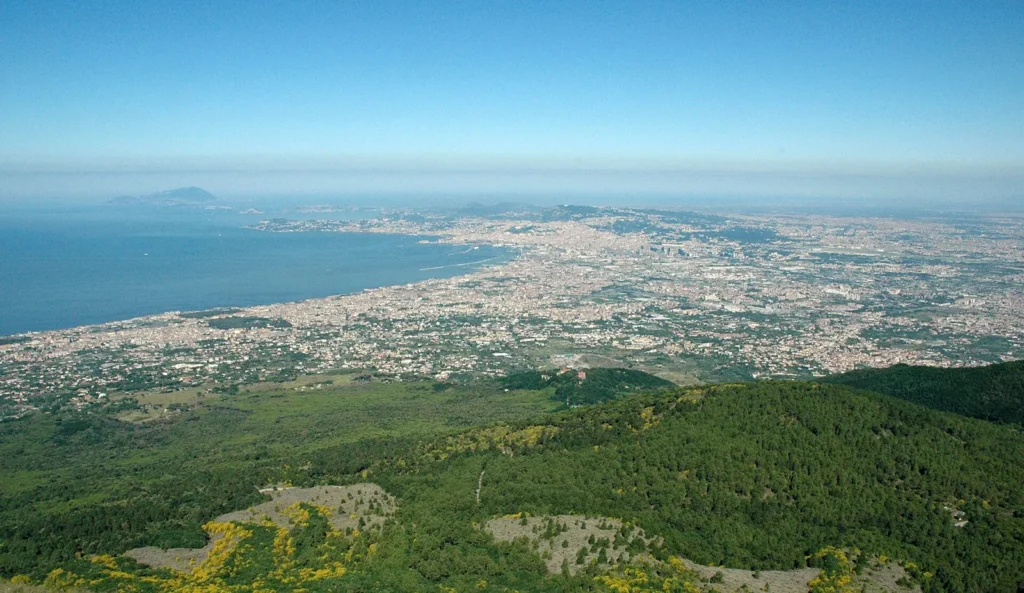
| Viewpoints | The whole Gulf of Naples and the city; further along, the coast down to Sorrento and the island of Capri. |
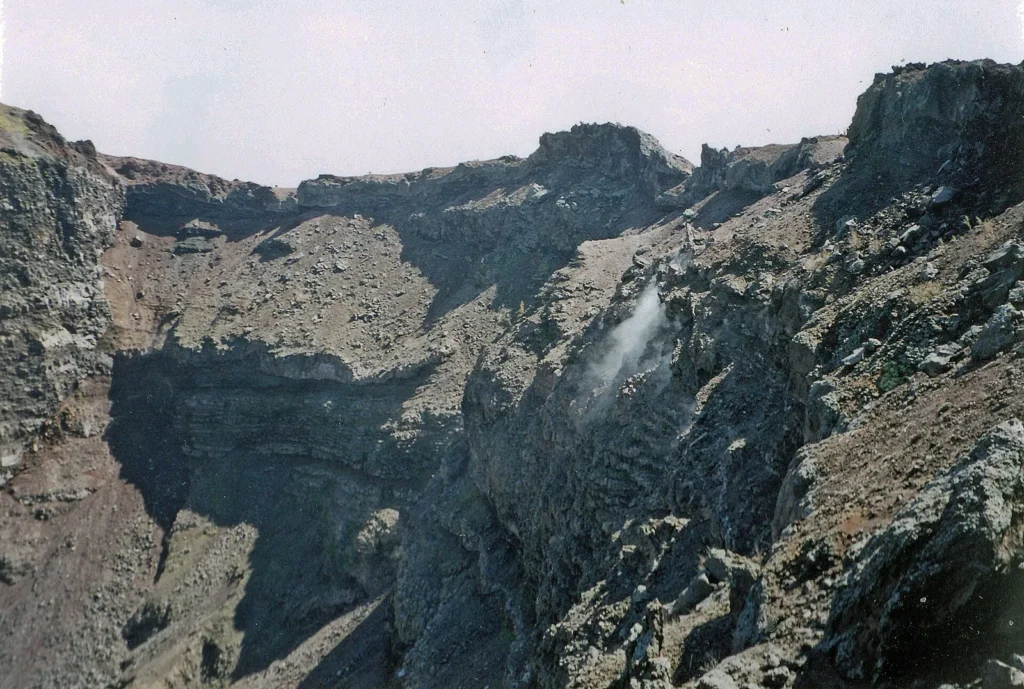
| The crater | About 300 metres deep, with fumaroles steaming on its inner walls: the volcano is quiet, not extinct. |
Tickets and opening hours in October 2026
In October you can enter the crater trail from 09:00 to 16:00; from November to February, from 09:00 to 15:00. March is the same as October, April, May, June and September run until 17:00, and July and August until 18:00. These are entry times: the walk has to be over within 1 hour of the last admission.
There is no ticket desk at the gate: tickets are sold only online, and the park’s only authorised seller is vesuviopark.vivaticket.it, where the €10 full ticket costs €11.68 and the €8 reduced one €9.55. The reduced rate is for visitors under 25 and residents of the 13 park towns, with ID. Children under 6 go free with an adult, but still need a free ticket booked online. Adults with a 100% certified disability, children with a certified disability and their companion also go free, by request to vesuvio@vivaticket.com.
Each 10-minute slot has 50 tickets, released 30 days ahead; you pay by card and register your name and details. The gate lets you in from 2 hours before to 2 hours after the time on your ticket, within opening hours. If your day is sold out, 10 last-minute tickets per slot go on sale 30 minutes before it starts, but only on the Wi-Fi by the entrance, up to 5 per email address, and since 11 April 2026 they carry your name. (Hours and prices from the Parco Nazionale del Vesuvio, checked on 12 October 2026.)
The walk: from 1,000 metres to the crater’s edge
Trail no. 5, Il Gran Cono, starts at the square at 1,000 m in Ercolano, at the end of the provincial road up from the coast. From there you already see the north side of Monte Somma, the older volcano whose surviving rim curves round the north of the Great Cone, with Punta Nasone, its highest point, at 1,132 m. You cannot park at the square, and for now it has no public toilets.
The path is a wide track of ash and lapilli that climbs in very panoramic zigzags. Below you lies the Valle del Gigante, the hollow between the 2 volcanoes, and the lava of 1944, grey-silver with lichen. Walkers go up in groups of 20, each with a guide of the Presidio Permanente Vulcano Vesuvio, 3 groups every 10 minutes, keeping to the right on the way up and the way down. The park rates it low difficulty: sloping, easy and short.
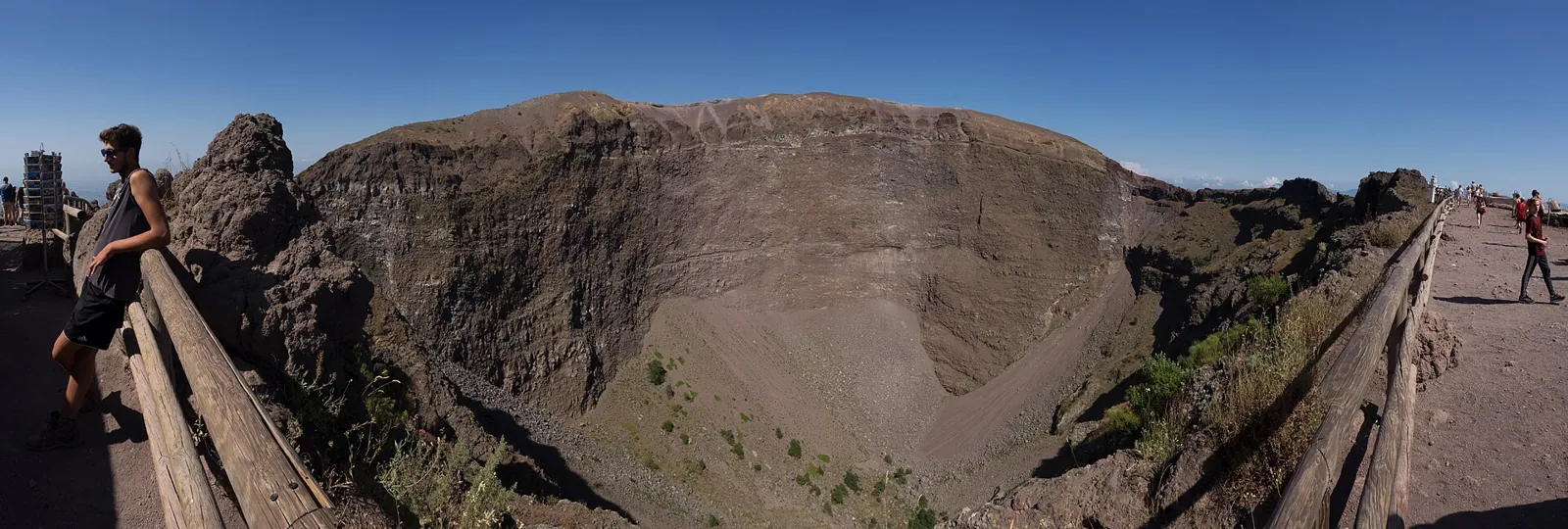
Several points along the path look straight into the crater, about 300 m deep, where fumaroles still steam on the inner walls. The Capannuccia, at 1,170 m, is where the walk turns back: the loop round the cone is closed while the park makes the path safer, and the high rim on the north and east sides is open only to people authorised by the park. Allow up to 2 hours there and back.
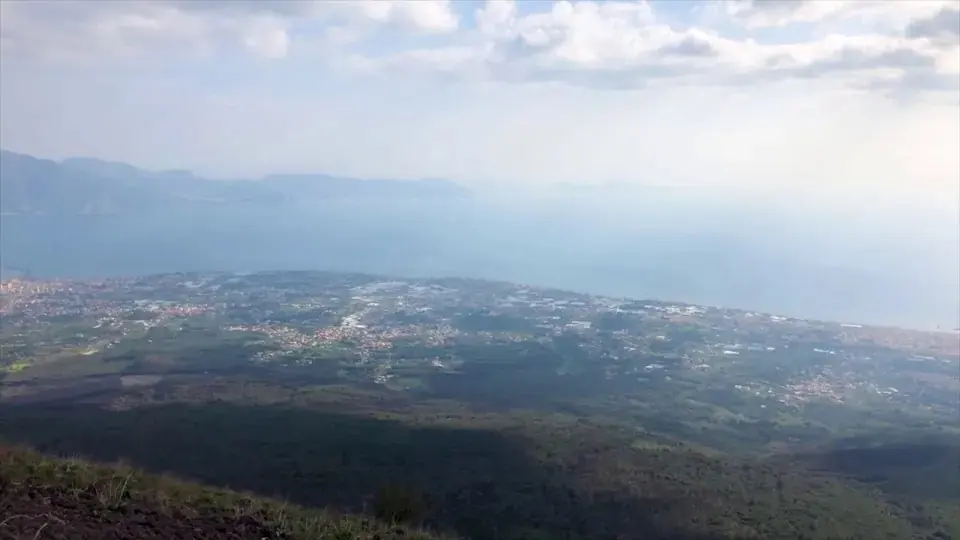
From the top you see the whole Gulf of Naples and the city, and on very clear days the Campanian plain and, further north, the plain of the Garigliano as far as the headland of Circeo. Further along, the view opens to the southern coast as far as Sorrento and Capri. The scent of Etna broom on the slopes announces the warm season, and the rocks of the crater are home to rock thrushes, black redstarts and wheatears.
Getting there from Naples, Pompeii and Herculaneum
Without a car, take the Circumvesuviana train from Napoli Garibaldi, at the Central Station in Piazza Garibaldi, towards Sorrento or Poggiomarino. Get off at Pompei Villa dei Misteri for the public bus, or at Ercolano Scavi, where taxis and private shuttles go up the mountain. From Capodichino airport, take the bus to the Central Station first; from Sorrento, the same train brings you to Pompei Villa dei Misteri.
The EAV bus 808 runs 9 times a day, every day, from the stop opposite the Villa dei Misteri station: at 08:35, 09:55, 10:50, 11:35, 12:05, 13:05, 13:35, 14:05 and 14:35. It takes 50 minutes to the 1,000 m square, stopping by the Observatory on the way. Buses back leave the square at 09:35, 11:00, 12:00, 12:40, 13:10, 14:00, 14:50, 15:30 and 16:50.
By car, leave the A3 motorway at Torre del Greco and follow the signs for Vesuvio up the SP144 to the car park at 800 m, the last 7.3 km, about 15 minutes, on the provincial road. The last stretch to the square is closed to private cars: walk up the road for about 30 minutes (1.8 km) or take the Ercolano council shuttle, €1 each way, about 4 minutes. Parking is sold by the town of Ercolano on parkingsuvio.it, and the park asks you to buy it only after you have your crater ticket.

A volcano at rest: 79 AD, 1631, 1944 and today
What you climb is a volcano inside a volcano. The older Monte Somma lost its top in violent eruptions, and the Great Cone grew inside its caldera, probably after the eruption of 79 AD. That eruption destroyed Pompeii, Herculaneum and Stabiae, raised the ground by up to 20 m around Herculaneum and Pompeii and moved the coastline. The Great Cone’s highest point now stands at 1,277 m.
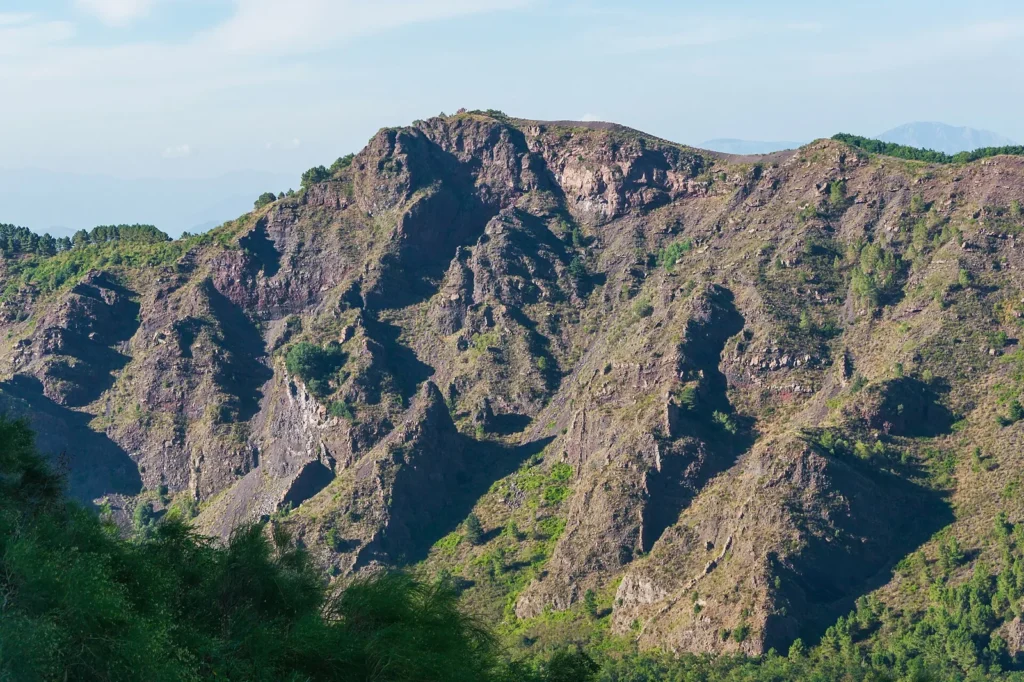
After 79 AD came 2 more great explosive eruptions, in 472 and in 1631. From 1631 to 1944 Vesuvius was almost always active, in 18 cycles of lava flows and explosions, and the cone took its present shape. The eruption of 1906 was its most powerful of the 20th century, and the one of March 1944 was its last.

Since 1944 the conduit has been blocked and the volcano is quiet, with low seismicity and the fumaroles you see in the crater. The Vesuvius Observatory of Italy’s National Institute of Geophysics and Volcanology monitors it, and the alert level is green. In September 2026 its instruments recorded 121 earthquakes, the strongest of magnitude 1.7, mostly under the crater and within the first kilometre below the surface.
Before you go: shoes, water and what is nearby
Wear proper walking shoes, check the weather before you set off and bring water and sun cream. The path is a track of volcanic ash and lapilli, sloping from start to finish. On days with an orange weather alert or higher, the trail closes.
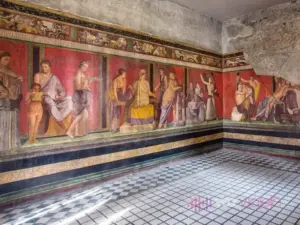
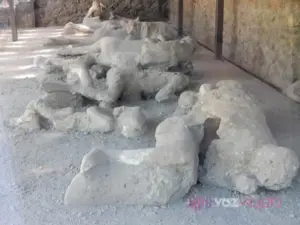
Vesuvius pairs well with the cities it buried. In Pompeii, where the bus 808 starts, you can visit the Villa of the Mysteries and follow the eruption of 79 AD to the Garden of the Fugitives. All of Pompeii’s audio guides are on our Pompeii page.
 Free audio guideVilla of the Mysteries
 Free audio guideGarden of the Fugitives
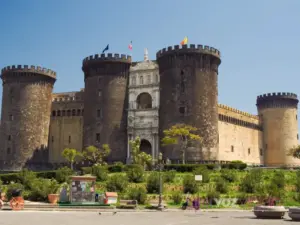
Back in Naples, the Naples Archaeological Museum holds many of the most famous finds from Pompeii and Herculaneum, and Castel Nuovo was a royal residence. The rest of the city is on our Naples page.
 Free audio guideNaples Archaeological Museum
 Free audio guideCastel Nuovo
Where to find it
FAQs
How do the free audio guides work?
They play right here on audioguidetravel.com, with no app to download and no sign-up. Press play and listen as you walk round: a phone and a pair of headphones are all you need. The audio streams from this page, so you’ll need mobile data or Wi-Fi.
Can I take the tour at my own pace?
Of course! You set the pace: pause whenever you like, jump back or forward 15 seconds, or tap the bar to jump to any point, and listen as many times as you want so you don’t miss a thing.
If I'm in a group, can we use the same audio guide?
Yes. The same free audio guide opens on as many phones as you like, so you can go round together as a group or with your family, each person at their own pace and with their own headphones. The quickest way is to send the link via WhatsApp, Telegram or however you like: the buttons just below let you share it right now.
Visitor information
As of 12 Oct 2026- Opening hours
- Entry 09:00–16:00 in October and March · 09:00–15:00 from November to February
- Tickets
- €10 full · €8 reduced (online only)
- Time needed
- Up to 2 hours there and back
- Getting there
- Circumvesuviana to Pompei Villa dei Misteri, then EAV bus 808 to the 1,000 m square
- Accessibility
- Sloping path of ash and lapilli; free for 100% disability, disabled minors and a companion, by email
- Tip
- Book your timed slot online and check the weather alert: from orange upwards the trail stays shut
- Official website
- www.parconazionaledelvesuvio.it
Nearby
More free audio guides in Naples
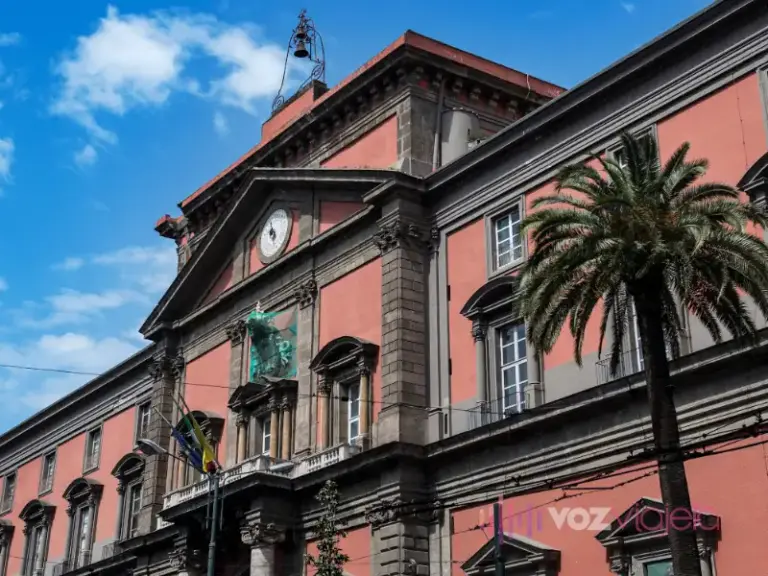 5:40NaplesNaples Archaeological Museum: free audio guide and hoursFree audio guide to the National Archaeological Museum of Naples (MANN), in English: about 6 minutes on the…
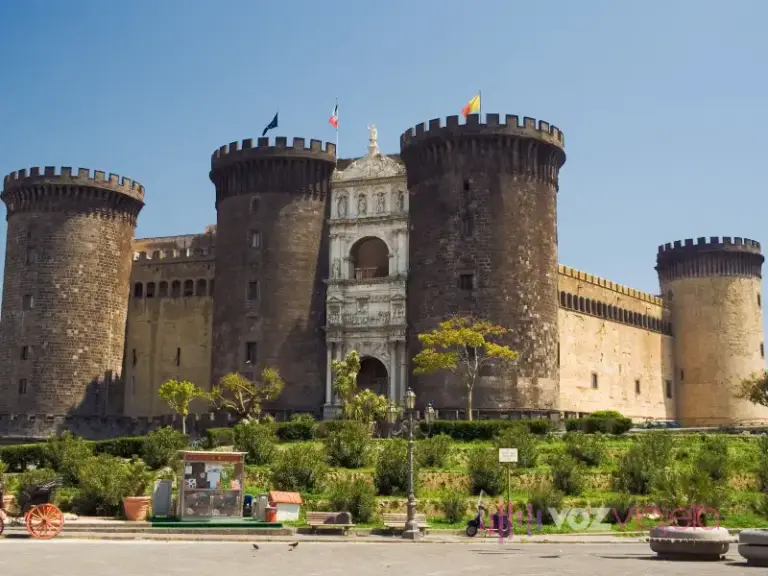 5:33NaplesCastel Nuovo: free audio guide, hours and ticketsFree audio guide to Castel Nuovo, the Maschio Angioino, in English: just under 6 minutes on the castle…