
Notting Hill: free audio guide, Portobello Road Market and Carnival
Free audio guide in English · no app, no sign-up
Notting Hill is a neighbourhood in west London, in the Royal Borough of Kensington and Chelsea, famous for its pastel-coloured houses, Portobello Road Market and its late-August Caribbean carnival. Walking around it is free at any hour; what changes from day to day is the market, which only runs in full on Fridays and Saturdays. This free audio guide lasts about 3½ minutes and is made for a walk up Portobello Road.
 Audio guide
Before you go in
The few things that change your visit.
- Walking the area and the market: free
- Full market: Friday and Saturday; Monday to Thursday, one stretch only
- Antiques arcades: Saturdays only, most from 7am to 4pm
- No street market on Sundays (except some in summer and December) or bank holidays (except Good Friday)
- Carnival 2027: 29 and 30 August (Panorama on Saturday 28)
- The blue door from the 1999 film is on Westbourne Park Road
- Ladbroke Grove 5 min away; no station has a lift
On this page
- What the Notting Hill audio guide covers
- Portobello Road Market: what's on each day, and when
- The coloured houses and the film locations
- Notting Hill history: a battle, a racecourse and a market
- Notting Hill Carnival: the 2027 dates
- How to get to Notting Hill, and accessibility
- Combine it with other London audio guides
- Where to find it
Notting Hill is a neighbourhood in west London, in the Royal Borough of Kensington and Chelsea, famous for its pastel-coloured houses, Portobello Road Market and its late-August Caribbean carnival. Walking around it is free at any hour; what changes from day to day is the market, which only runs in full on Fridays and Saturdays. This free audio guide lasts about 3½ minutes and is made for a walk up Portobello Road.
What the Notting Hill audio guide covers
Press play where Portobello Road begins, at Pembridge Road on the Notting Hill Gate side, and walk north up the street as you listen. These are the stops:
| The coloured houses | The painted terraces that made the area famous. |
| A Caribbean name | The battle of 1739 behind the name Portobello. |
| The racecourse | The horse races held here from 1837 to 1841. |
| The market | From a Saturday food market to a famous antiques street. |
| The film | The blue door and the bookshop from Notting Hill (1999). |
| The carnival | How the August carnival began, 60 years before its 2026 edition. |
| Under the Westway | Golborne Road and its Moroccan and Portuguese communities. |
| Before you go | Hyde Park, 2 stops away on the Tube. |
Portobello Road Market: what’s on each day, and when
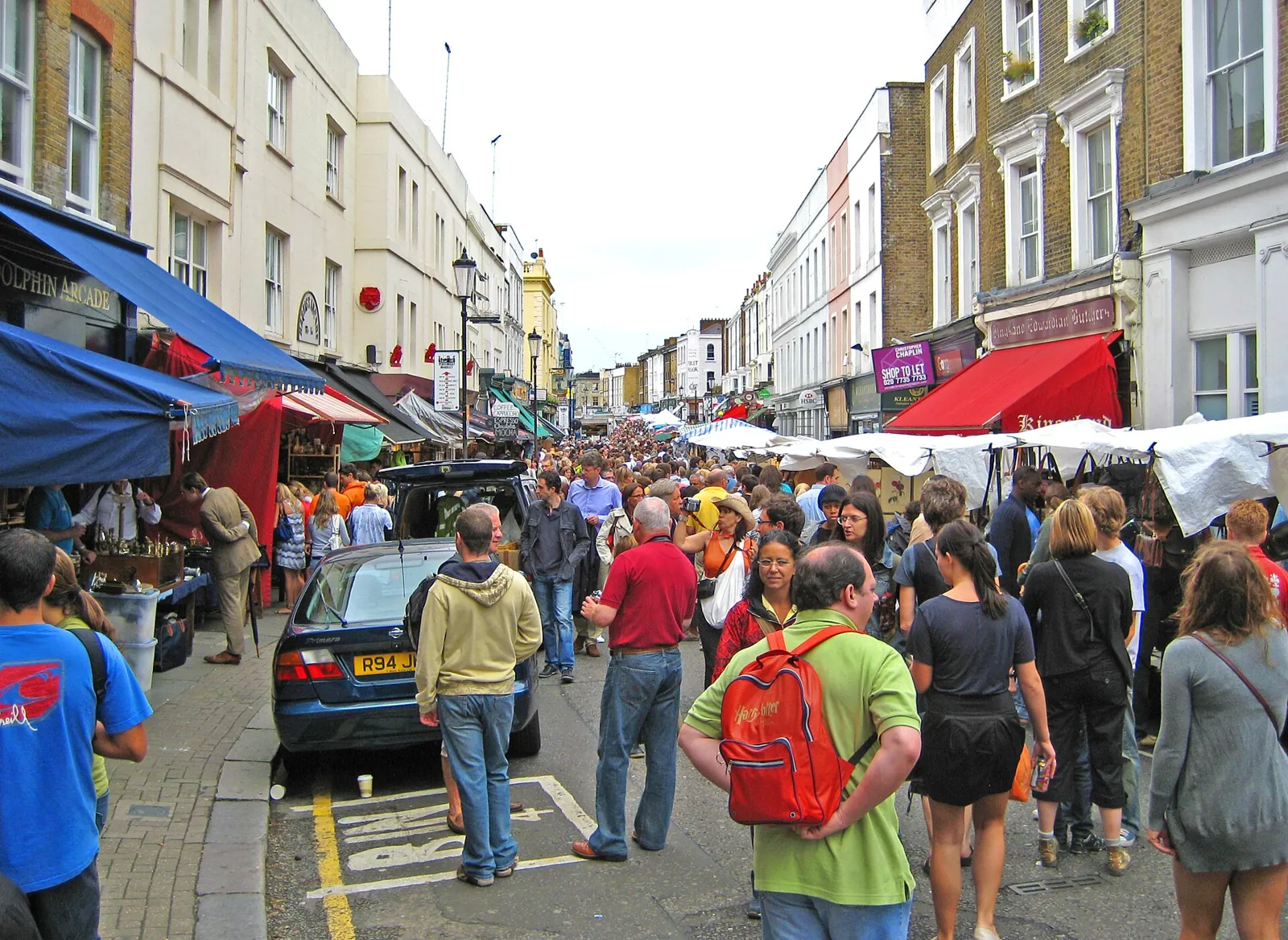
Portobello Road Market runs from Westbourne Grove up to Golborne Road, with more stalls under the Westway flyover, and it is run by Kensington and Chelsea Council together with the Portobello and Golborne Management Committee of local traders and residents. Its official hours are Monday to Sunday, 8am to 7pm, but traders usually work from 8.30am to 6pm and there is rarely a street market on Sundays; in winter most stalls set up between 9am and 10am and pack away between 4pm and 5pm. What really changes is what you will find:
| Monday to Thursday | Only the stretch between Elgin Crescent and the Westway: fruit and veg, household goods, a few clothes stalls. Golborne Road has fruit, veg and hot food. |
| Friday | The whole market: antiques at the south end, food and fashion in the middle, vintage at Portobello Green. Golborne Road’s busiest day. |
| Saturday | The full market and the biggest crowds: the antiques arcades open, and there are antiques stalls on Westbourne Grove too. |
| Sunday | No street market, except on some summer and December Sundays. The Portobello Green vintage stalls, the Acklam food market and many shops are open. |
| Bank holidays | No street market, except on Good Friday, until 5pm. |
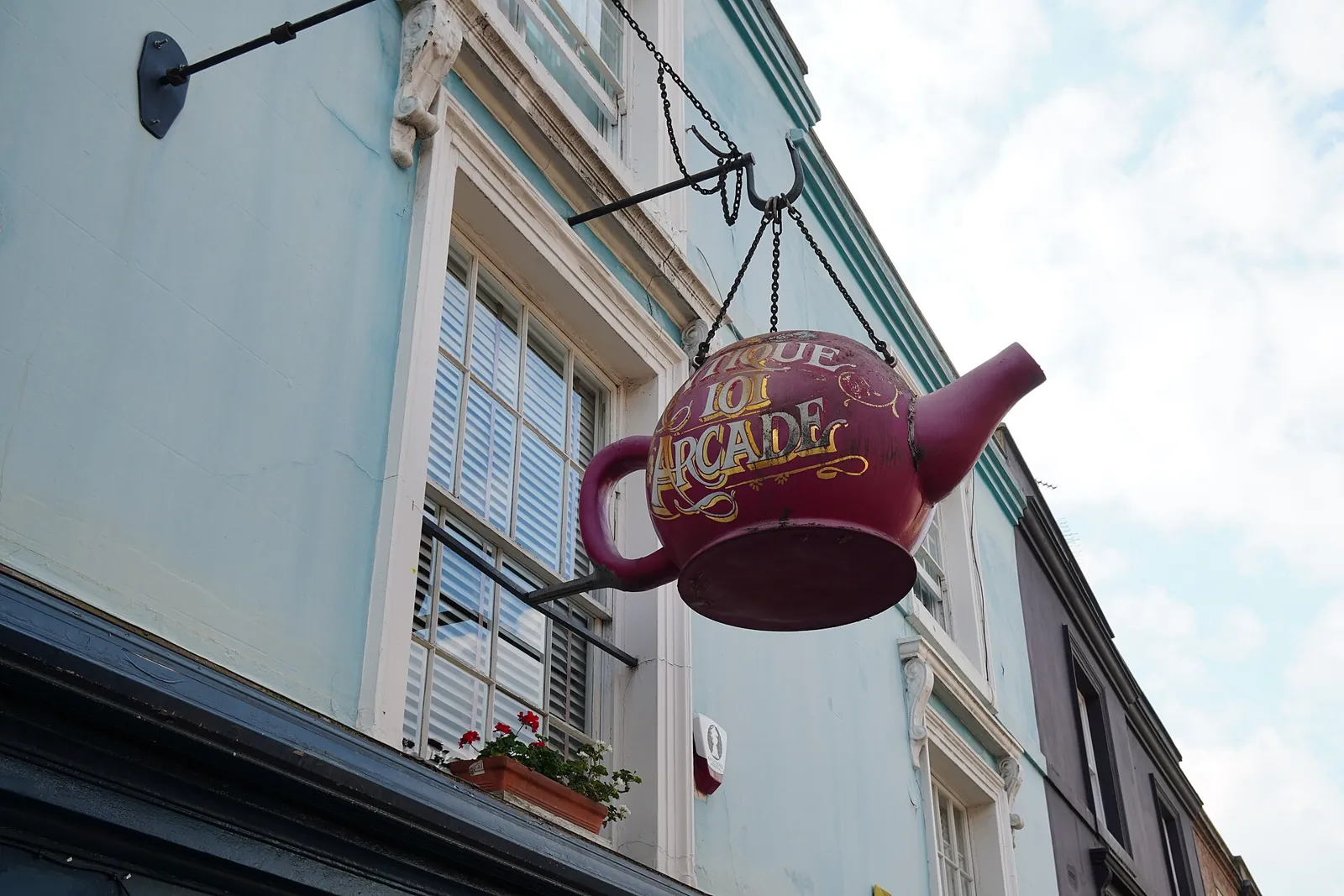
Antiques are what the market is known for. The antiques arcades between Chepstow Villas and Westbourne Grove open on Saturdays only, most of them from 7am until about 4pm, and inside you will find individual dealers selling silver, jewellery, ceramics, fine art, textiles and antiquarian books. On Fridays there are also open-air antiques stalls at the southern end of the road.
For lunch, Fridays and Saturdays bring hot food stalls from all over the world, from churros to paella and curry, and Golborne Road serves North African and Caribbean street food all week. Fruit and vegetables are on sale Monday to Saturday.
The coloured houses and the film locations
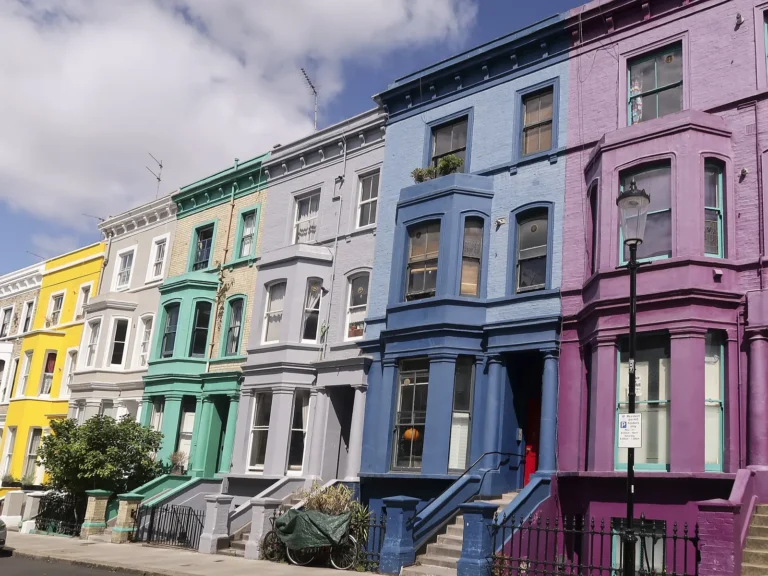
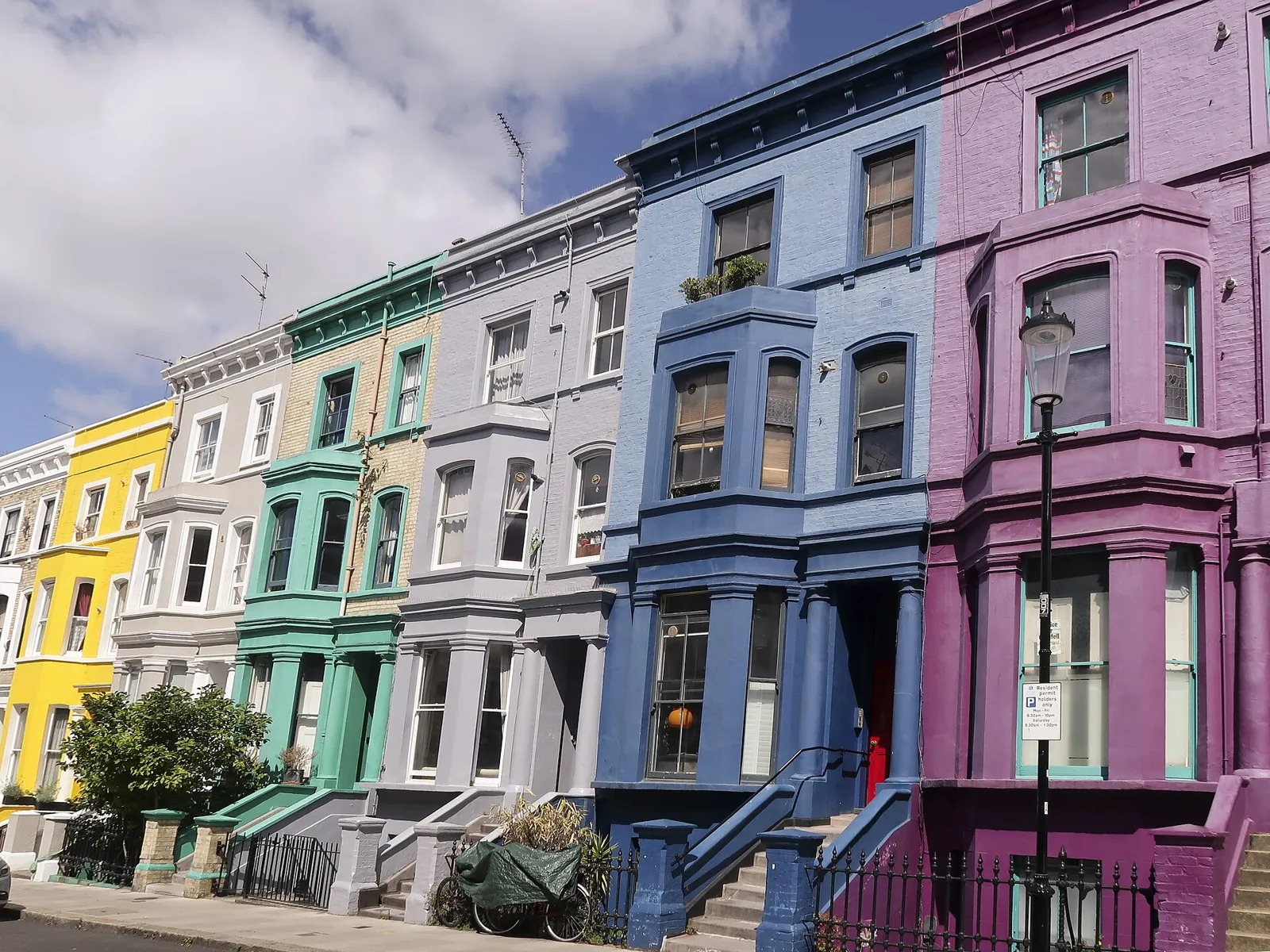
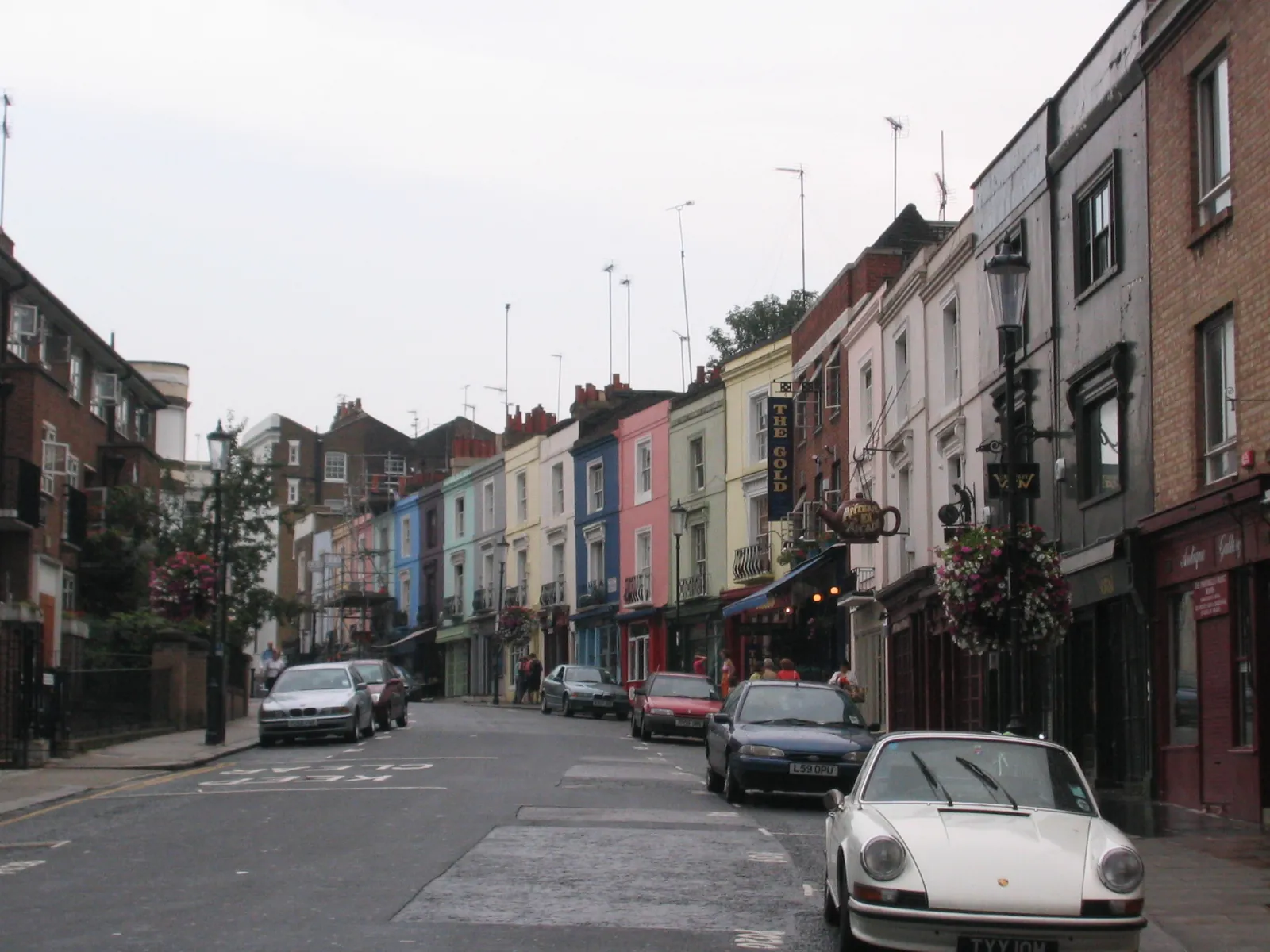
Rows of brightly painted houses are the picture everyone has of Notting Hill. Beyond Portobello Road itself, the best are on Lancaster Road, Colville Terrace and the streets north of Westbourne Grove. People live in them, so take your photo from the pavement, keep off the front steps and doorways, and move on. Parallel streets and the mews, lanes of former stables and coach houses, have the same colours with far fewer people.
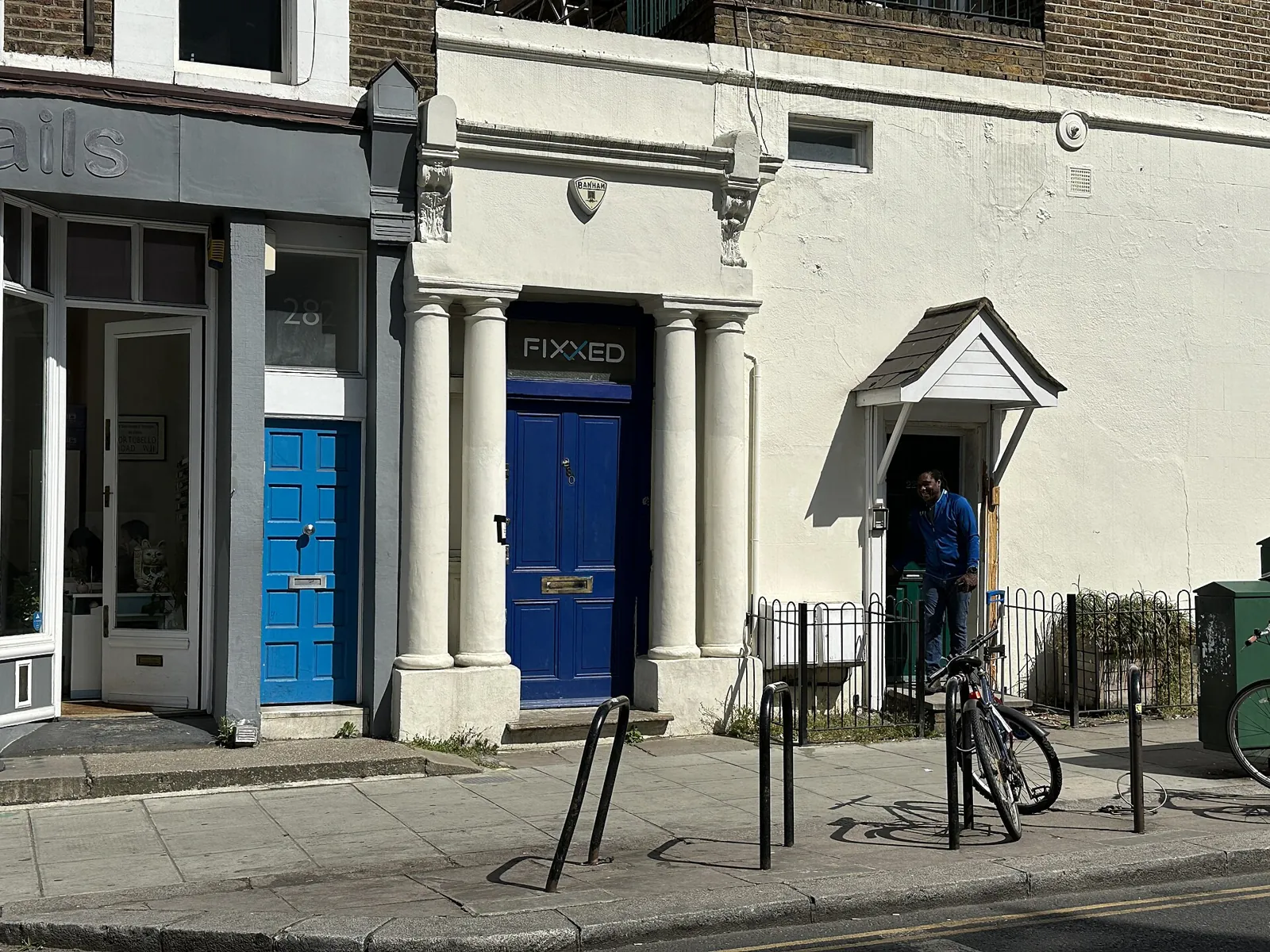
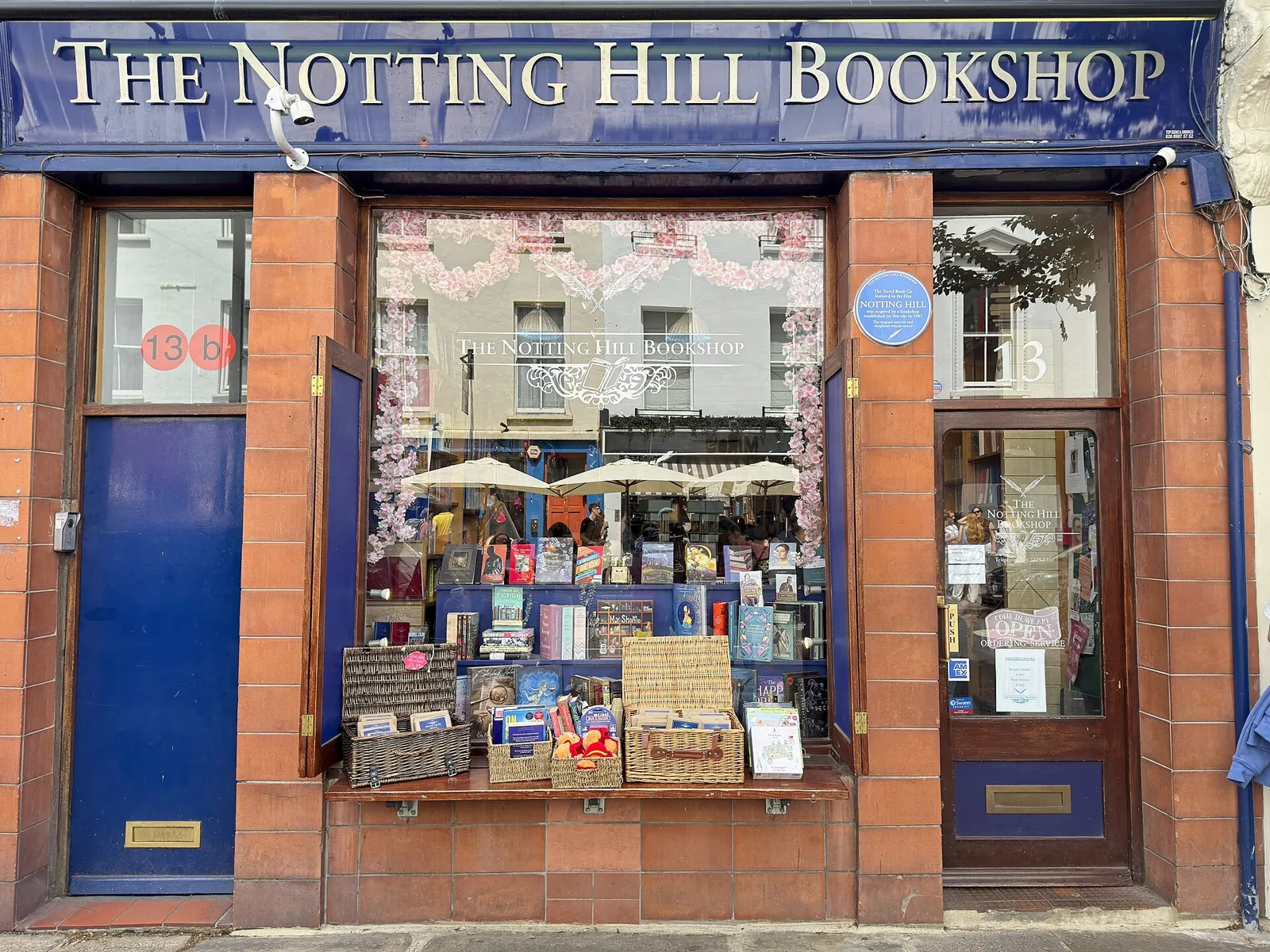
The 1999 film Notting Hill, with Hugh Grant and Julia Roberts, brought visitors from all over the world. The blue door of William Thacker’s flat, Hugh Grant’s character, is on Westbourne Park Road, and St Luke’s Mews appears in the film as well. The real shop that inspired the travel bookshop is The Notting Hill Bookshop on Blenheim Crescent, which keeps a “Travel Book Co.” sign inside. The shopfront you see on screen is somewhere else: a gift shop at 142 Portobello Road, which still has its bookshop sign up for the cameras.
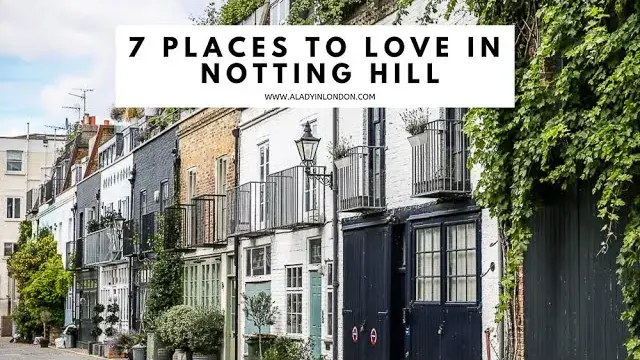
For a first look at the coloured streets, here is a 7-minute walk around them from A Lady in London:
Notting Hill history: a battle, a racecourse and a market
At the start of the 19th century this was farmland. One farm, Portobello Farm, was named in honour of Admiral Vernon’s capture of Puerto Bello, in present-day Panama, in 1739, and the lane that led to it, Portobello Lane, is today’s Portobello Road.
On the Ladbroke family’s land a racecourse was laid out, the Hippodrome, with its main entrance where Kensington Park Road meets Pembridge Road today. The first meeting was held on 3 June 1837. It did not last: the heavy clay soil was no good for racing, and the last race was run on 4 June 1841. The streets and houses of the neighbourhood came next.
The market began in the late 1860s or early 1870s, while part of the street was still being built. At first it traded on Saturdays only, mostly selling food; since the late 1920s there have been stalls every weekday, and over time it became famous for antiques.
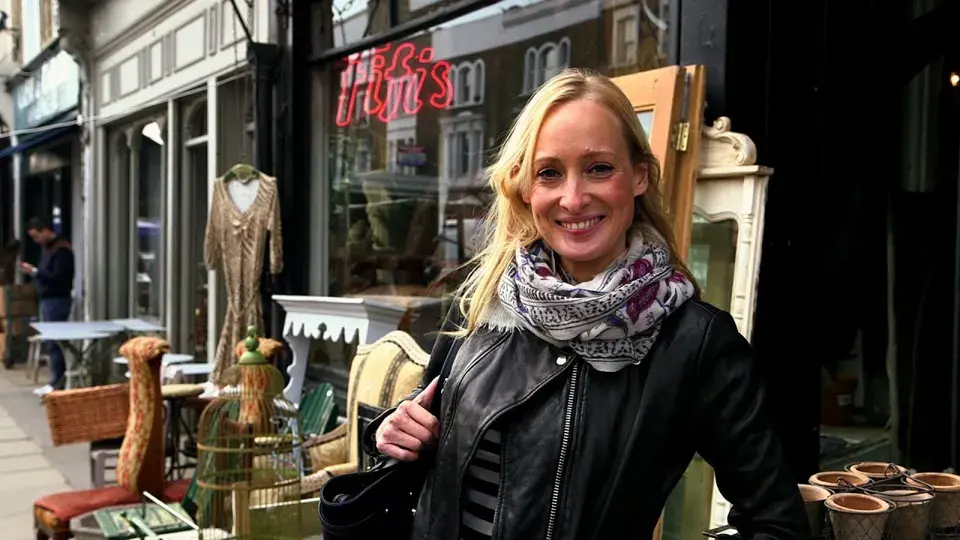
This is how Visit London, the city’s official tourism organisation, introduces the area in a 2-minute video:
Notting Hill Carnival: the 2027 dates
Notting Hill Carnival is one of the largest street festivals in Europe and London’s great celebration of Caribbean and Black British culture. It grew out of an indoor Caribbean carnival organised by Claudia Jones in 1959 and an outdoor festival in Notting Hill in 1966, led by Rhaune Laslett. It takes place every year over the August bank holiday weekend: Sunday is the families’ and children’s day, and Monday brings the main parade and the biggest crowds.
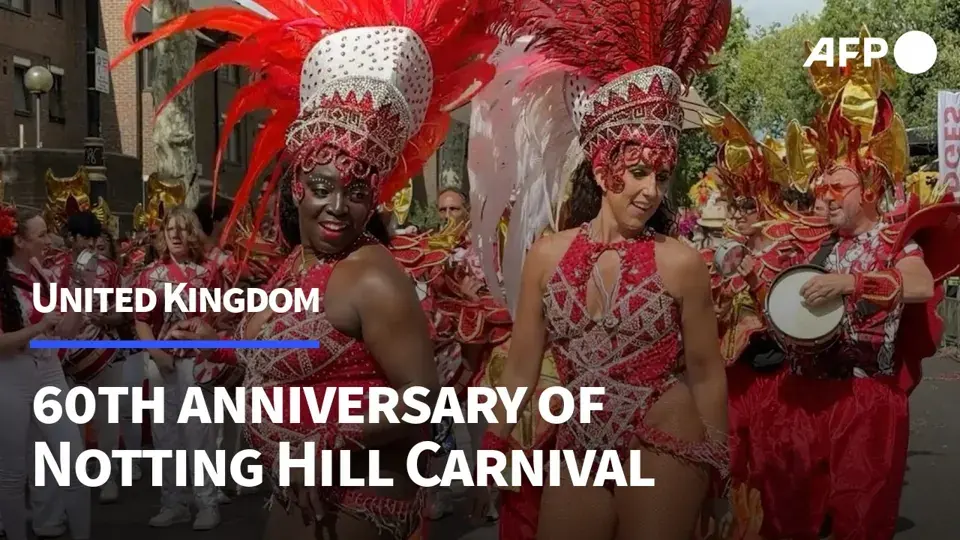
In 2026 it turned 60, with its diamond jubilee edition from 29 to 31 August. Expect mas bands in huge feathered costumes, steel bands, sound systems and Caribbean food stalls, and both parade days are free.
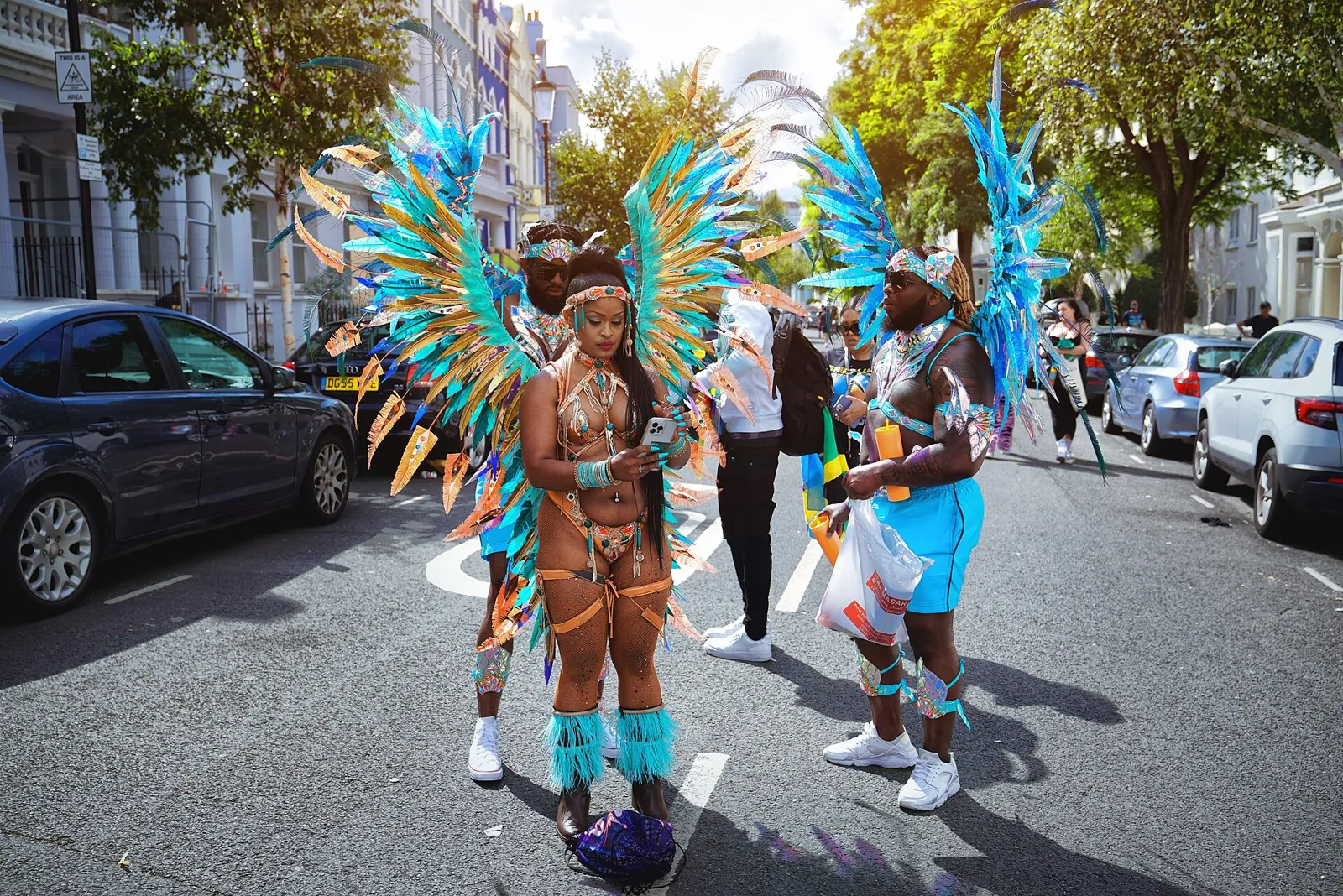
Phone signal and data can be very patchy over the Carnival weekend because of the crowds, so agree on a meeting point in case you get separated. Here’s the 60th anniversary edition in a 2-minute AFP report:
How to get to Notting Hill, and accessibility
The handiest station for the market is Ladbroke Grove (Hammersmith & City and Circle lines), a 5-minute walk away. Notting Hill Gate (Central, District and Circle lines) is a 10-minute walk, at the southern, antiques end; over the Carnival weekend Westbourne Park is useful too. By bus, the 7 runs from Oxford Street, the 52 from Westminster, and the 49, 52 and 452 from Chelsea.
The market walk has no steep slopes: from Pembridge Road to the top of Golborne Road it is 1.1 miles (1.8 km), and on Fridays and Saturdays most of it is pedestrianised. Allow 3½ minutes for the audio guide and, with stops at the stalls, 2 to 3 hours for the market. One thing to know: none of the 3 stations has a lift, so wheelchair users are better off on the bus, as every London bus route uses low-floor buses with a ramp and a wheelchair space.
Combine it with other London audio guides
From Notting Hill Gate, the Central line runs direct to Lancaster Gate, next to Hyde Park, in 2 stops:
Stay on the same line to Tottenham Court Road, 6 stops, and the British Museum is a 5-minute walk away:
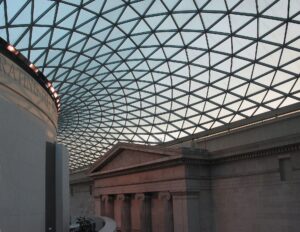 Free audio guideBritish Museum
All our free audio guides for the city, including Buckingham Palace and Westminster Abbey, are in London.
Where to find it
FAQs
How do the free audio guides work?
Our audio guides work through the website audioguidetravel.com; you don’t need to download any app. Just follow the instructions on the website to guide you through Notting Hill: free audio guide, Portobello Road Market and Carnival while listening to our experts’ explanations.
Can I take the tour at my own pace?
Of course! Our free audio guides are designed so that you set the pace. You can pause, rewind, or listen as many times as you want without missing a detail. By visiting Notting Hill: free audio guide, Portobello Road Market and Carnival your way, you’ll enjoy it even more.
If I'm in a group, can we use the same audio guide?
Yes, our website allows sharing the same free audio guide among multiple devices. This way, you can visit Notting Hill: free audio guide, Portobello Road Market and Carnival as a group or family, listening to the explanations simultaneously. The quickest way to do this is to share the link via WhatsApp, email, or any method you like. I’ve included some buttons below for you to do that now.
Visitor information
As of 5 Oct 2026- Opening hours
- Area open at all times. Full market on Fridays and Saturdays; antiques arcades on Saturdays only.
- Tickets
- Free: walking around the area and the market costs nothing.
- Time needed
- A 3½-minute audio guide, plus 1.1 miles of market: 2 to 3 hours with stops.
- Getting there
- Tube: Ladbroke Grove, 5 min from the market; Notting Hill Gate, 10 min. Buses 7, 49, 52, 452.
- Accessibility
- Market route with no steep slopes, mostly pedestrianised Fri-Sat. No lifts at the stations; buses have ramps.
- Tip
- Except some summer and December Sundays, no street market on Sundays or bank holidays: go Friday or Saturday.
- Official website
- visitportobello.com
Nearby
More free audio guides in London
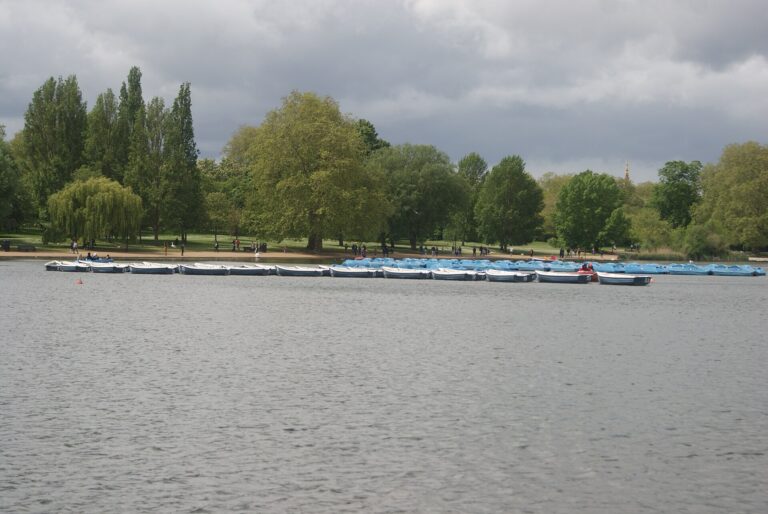 3:03LondonHyde Park: free audio guide, opening times and what to seeHyde Park is central London’s great public park: 142 hectares with the Serpentine lake in the middle. Charles…
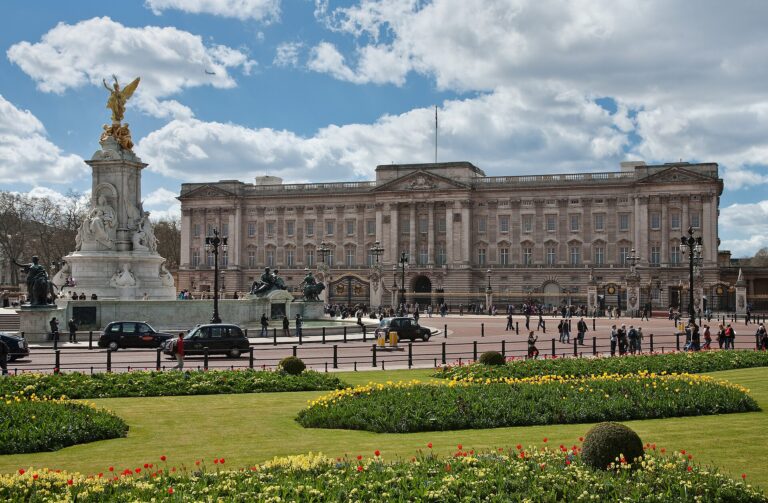 2:44LondonBuckingham Palace: free audio guide, tickets and opening timesBuckingham Palace began as a townhouse built in 1703 for the Duke of Buckingham and became a palace…
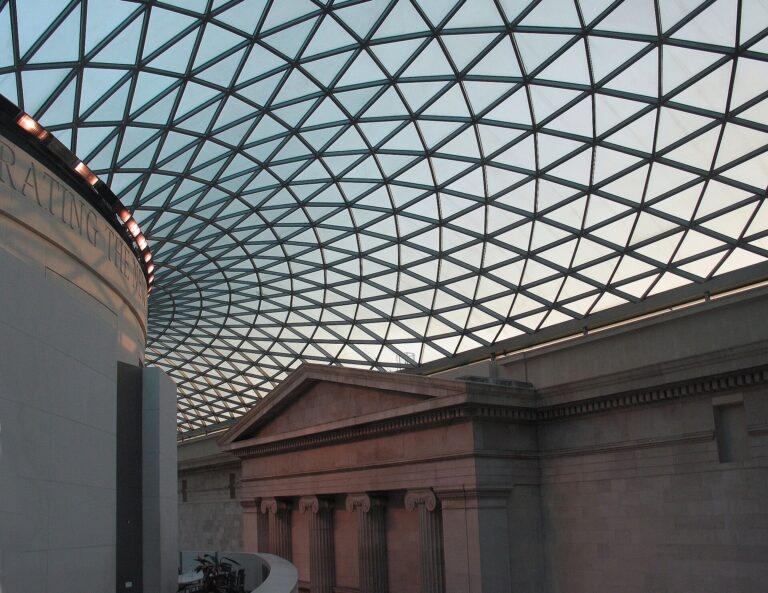 3:04LondonBritish Museum: free audio guide, opening times and ticketsThe British Museum is London’s great museum of human history. It was founded in 1753, opened in 1759…