
Big Ben: free audio guide, tour tickets and how to visit
Free audio guide in English · no app, no sign-up
The free Big Ben audio guide lasts about 4 minutes and is made for listening in the street, facing the tower. It explains why Big Ben is the bell and not the building, how the clock was built, what happened to the first bell and how the chimes became the voice of the radio. Press play and wait for the hour.
 Audio guide
Before you go in
The few things that change your visit.
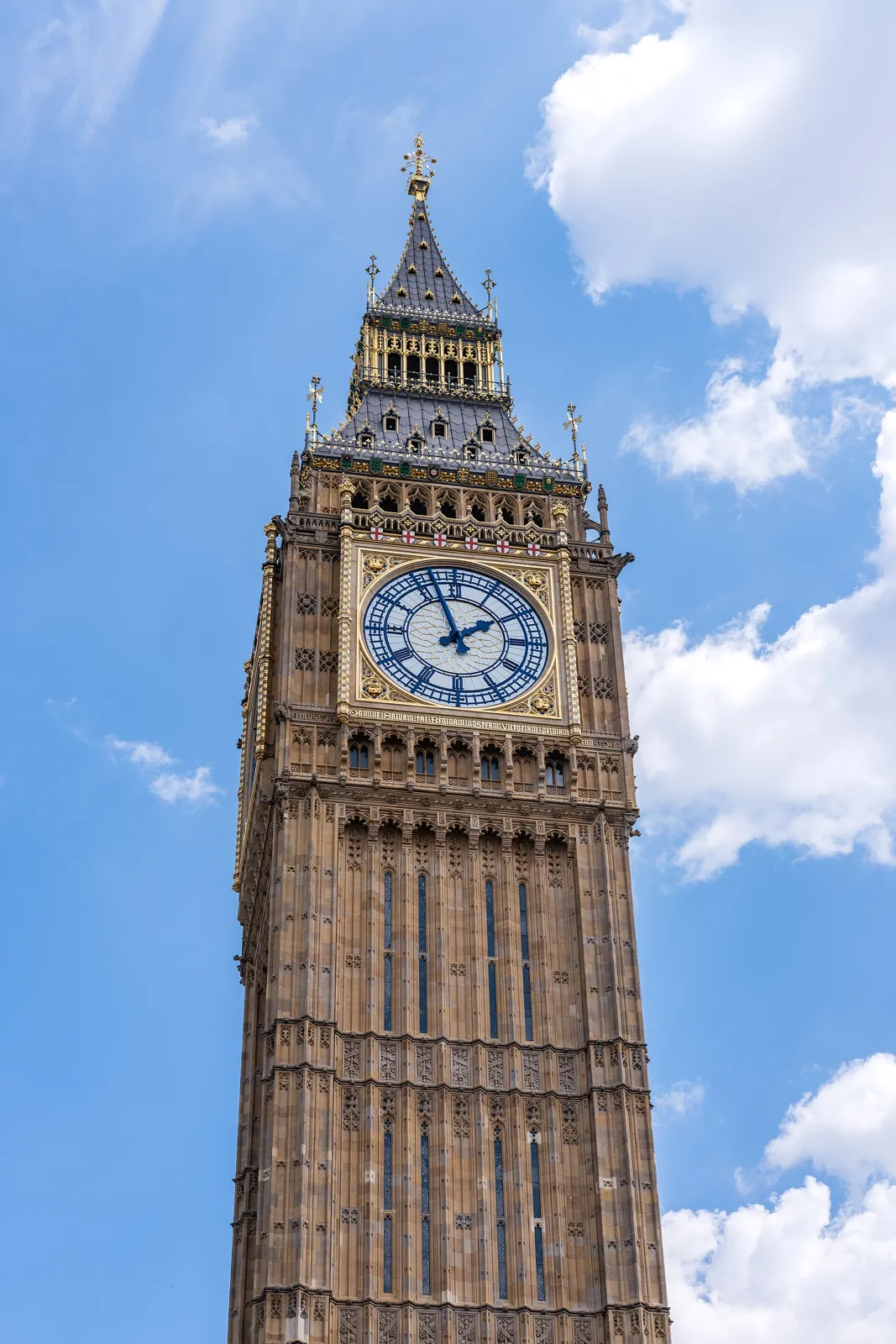
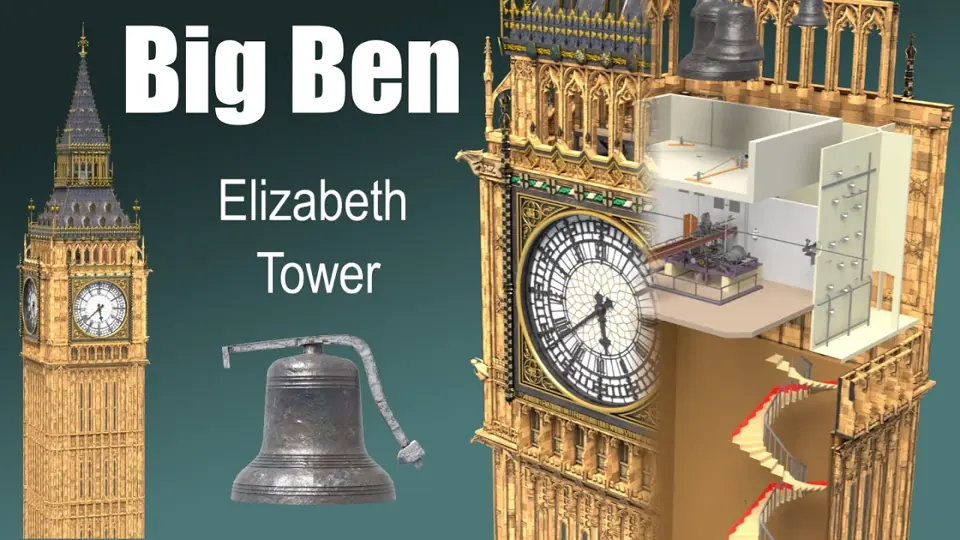
Big Ben is the 13.7-tonne bell that strikes the hours at the Palace of Westminster in London. The 96 m clock tower that holds it was finished in 1859 and has been called the Elizabeth Tower since 2012. After 5 years of conservation the bells went back to regular service in 2022, and you can now climb the 334 steps inside. This free audio guide lasts about 4 minutes and is made for listening in the street, facing the tower.
What the audio guide covers
Stand on Parliament Square or at the end of Westminster Bridge, press play and look up. It has 6 stops:
| A bell, not a tower | Why “Big Ben” is the name of the bell, where the nickname probably comes from and why the tower was renamed in 2012. |
| Born from a fire | The fire of 1834, Charles Barry’s new palace and Augustus Pugin’s Gothic Revival detail. |
| The most accurate clock | The Astronomer Royal as referee, Edmund Beckett Denison’s design and the Dent clockmakers. |
| 2 bells, 2 cracks | The first bell that cracked in testing, the second one pulled by 16 white horses, and the 1863 fix. |
| The voice of the radio | The BBC broadcasts from 1923, the dark dials of the war years and the silence of 1976. |
| Wait for the hour | How to listen to the quarters and the hour, and the bell at St Paul’s that stands in if Big Ben cannot strike. |
Time it so the audio ends just before the hour: you will hear the 4 quarter bells play their tune and then Big Ben strike.
Big Ben is the bell; the tower is the Elizabeth Tower
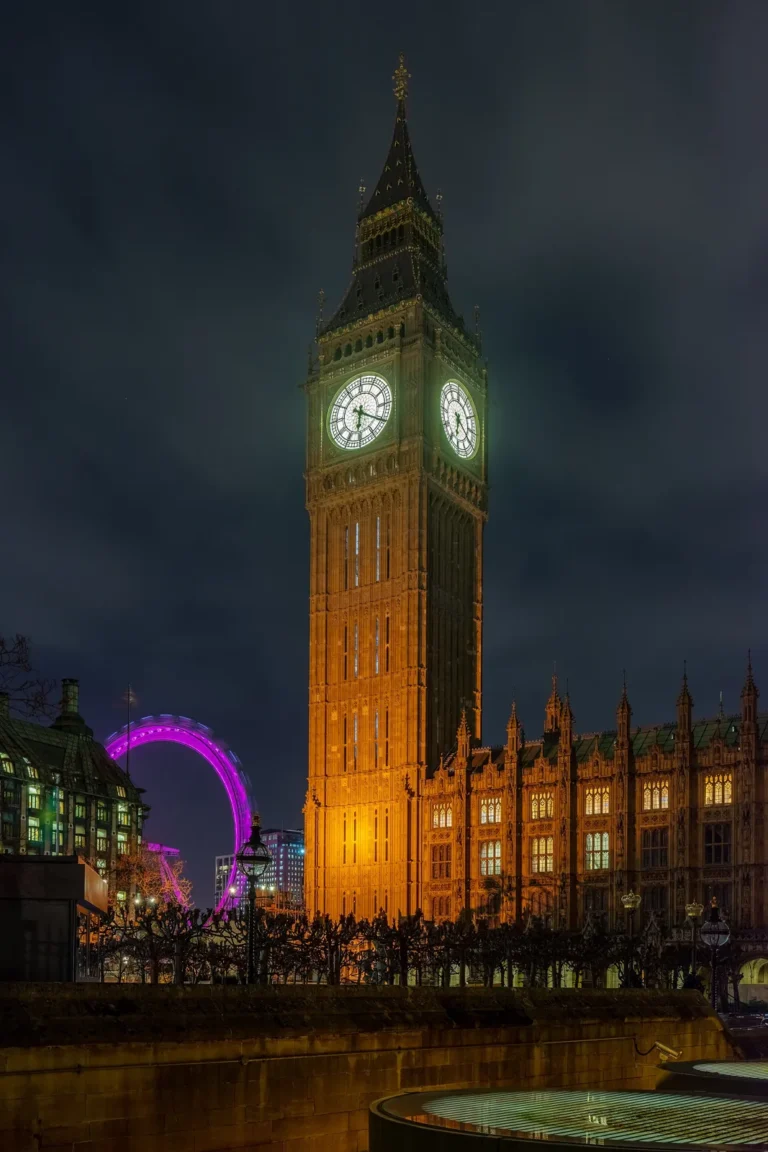
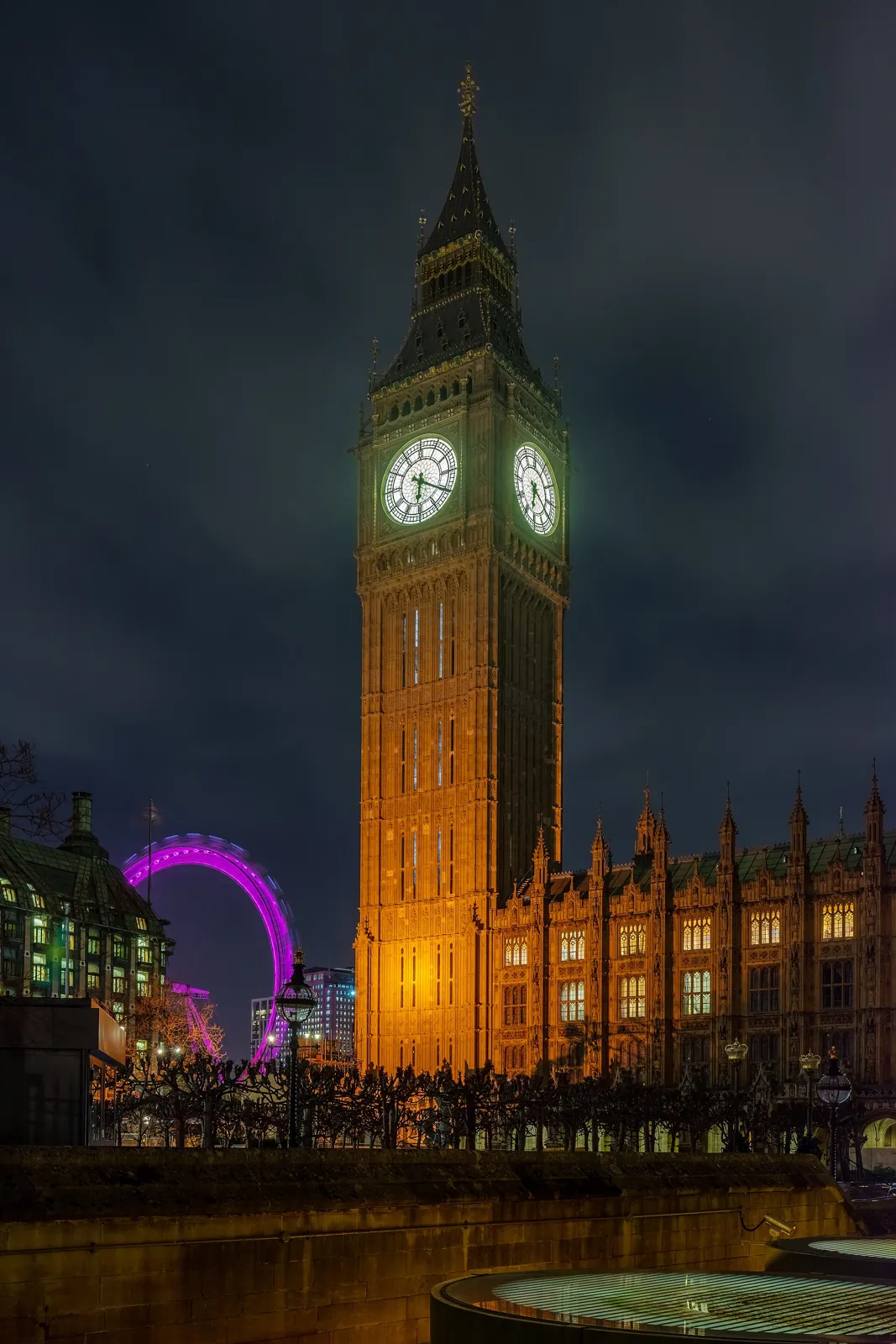
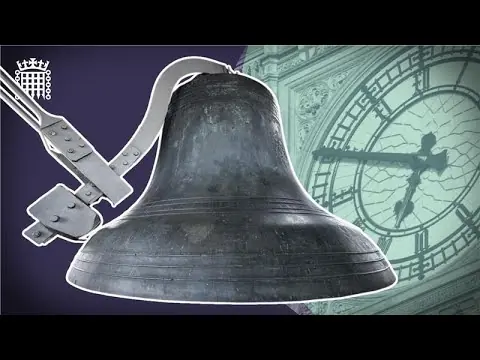
UK Parliament is clear about it: Big Ben is the Great Bell, the one that strikes the hours, and the building is the Elizabeth Tower. It was the Clock Tower from the day it was built until 2012, when it was renamed to mark Queen Elizabeth II’s Diamond Jubilee. The bell’s nickname most probably comes from Sir Benjamin Hall, the commissioner of works when it was hung; it was originally going to be called “Royal Victoria”.
The bell weighs 13.7 tonnes, stands 2.2 m high and 2.7 m across, and sounds an E. It never swings: all 5 bells are fixed and struck from outside, Big Ben by a 200 kg hammer. The 4 smaller quarter bells play the Westminster chimes every 15 minutes.
From the 1834 fire to the 2022 restoration
It all starts with a fire: in 1834 the old Palace of Westminster burned almost to the ground. Building of the new palace began in 1840 to designs by Charles Barry, who added a clock tower and hired Augustus Welby Pugin for the Gothic Revival detail. The foundation stone of the tower was laid in 1843.
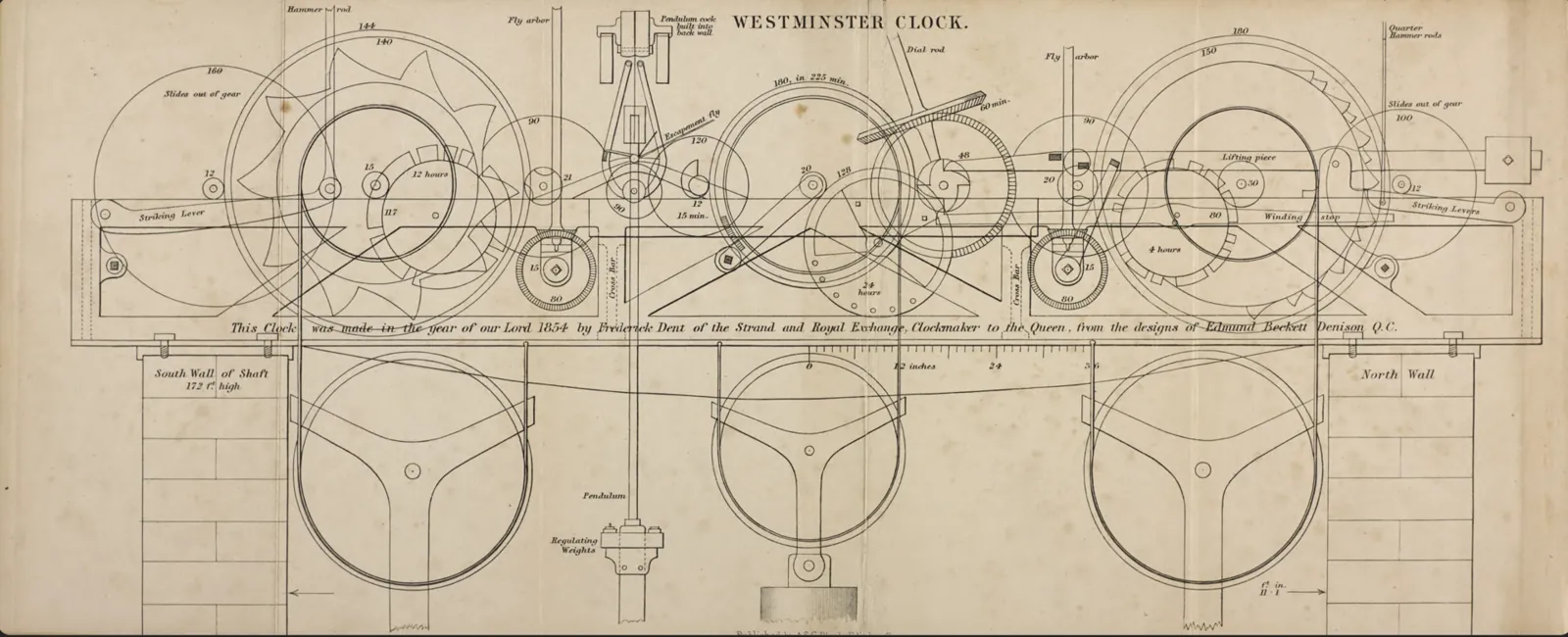
The clock took longer. In 1846 a competition was held to choose who would build it, with the Astronomer Royal, Sir George Airy, as referee, and the strict accuracy requirements meant the designs took 7 years to settle. In 1852 John Dent was appointed to build it to the design of Edmund Beckett Denison, and the mechanism was ready in 1854.
The bell gave more trouble. The first one, cast in 1856 near Stockton-on-Tees, developed a 1.2 m crack while it was being tested. The second was cast in April 1858 by the Whitechapel Bell Foundry in East London and taken to New Palace Yard on a carriage pulled by 16 white horses. The clock started on 31 May 1859 and Big Ben struck for the first time on 11 July, but within months it had cracked too. In 1863, on Airy’s advice, it was turned 90 degrees and given a lighter hammer, allowing it to strike the hours once more.
The BBC first broadcast the chimes on New Year’s Eve 1923, and from 1932 they went out to the world on the Empire Service. From 1939 to April 1945 the dials stayed dark under the wartime blackout. On 5 August 1976 a mechanical failure badly damaged the clock and Big Ben fell silent for nearly 9 months. Then came the largest conservation project in the tower’s history: from 2017 to 2022, under scaffolding, more than 500 people worked on it from the gilded cross at the top to the bottom of the staircase, and in 2022 Big Ben came back into regular service.
What to see on the tower
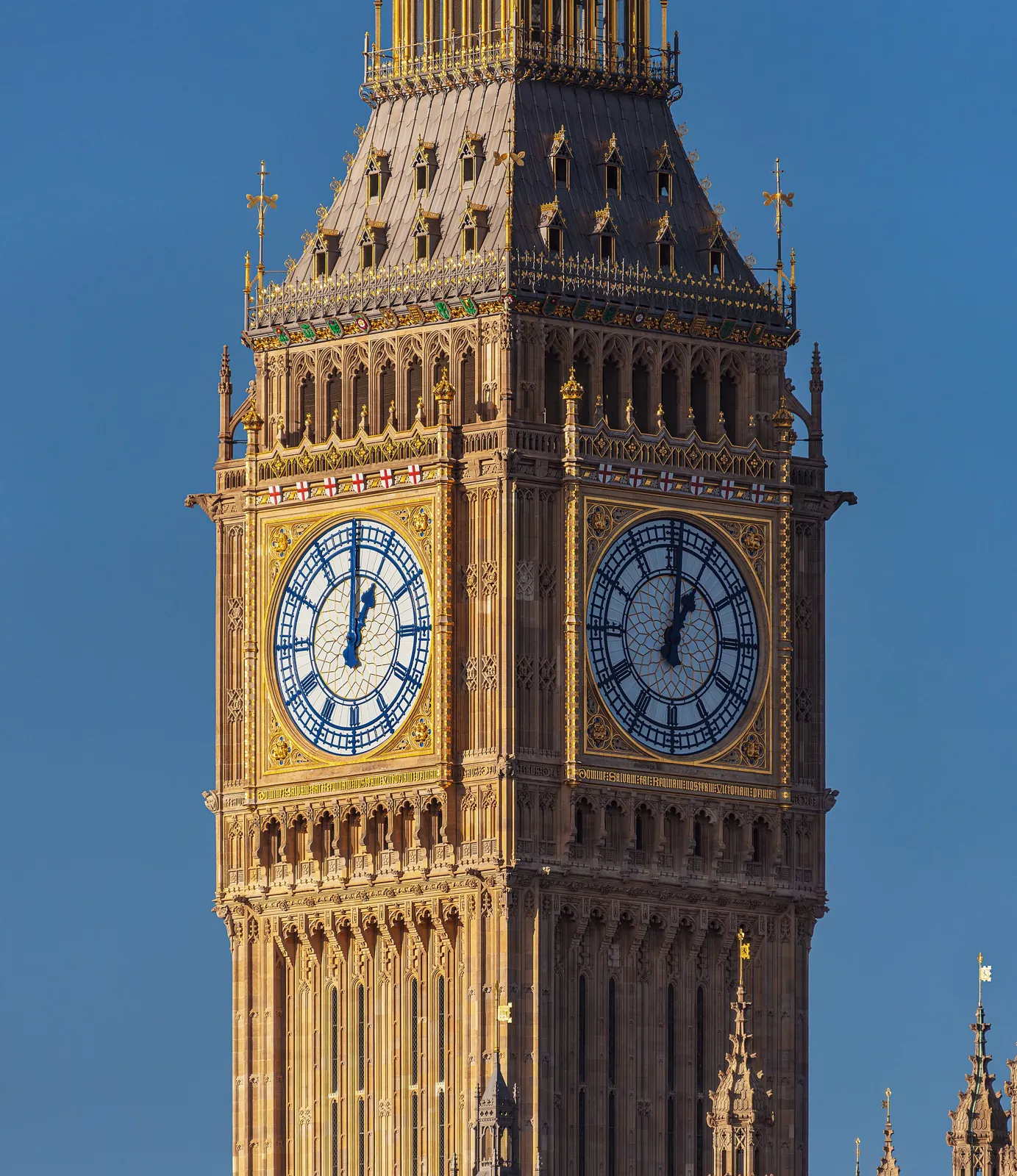
- The 4 dials, each 6.9 m across, made of panes of opal glass in a cast-iron frame. Look at the number 4: it is written IV, not IIII as on most clock faces.
- The colours: the restoration returned the dials to the Prussian blue and gold of the original design, after studying more than 160 years of paint layers.
- The hands: the minute hand is copper, 4.2 m long and about 100 kg; the hour hand is gunmetal, 2.7 m and about 300 kg.
- The belfry, the open stage above the dials where Big Ben and the 4 quarter bells hang, 334 steps up.
- The Ayrton Light, the lantern near the top, which is lit when the House of Commons is sitting after dark.
Big Ben tour: tickets, booking and what to expect
Anyone aged 11 or over can go up, from the UK or from abroad. The guided tour climbs a narrow stone spiral staircase of 334 steps to the belfry, 62 m up, with planned pauses on the way. You see the clock mechanism room, step behind the dials and stand next to Big Ben as it strikes the hour. The tour lasts up to 90 minutes, and the whole visit about 1 hour 45 minutes with the time to leave and collect your belongings.
Tickets for tours from 1 August 2026 cost £55 for adults and £35 for children aged 11 to 17, who must be with an adult. They are sold only online on Parliament’s ticketing site, with a maximum of 8 per person, and they are non-refundable. UK residents can also ask their MP for a free place, with limited availability.
On the day, be at the Cromwell Green entrance at least 30 minutes before your slot: latecomers cannot join and there are no refunds. Everyone goes through airport-style security, and bags, phones and cameras stay in a locker in Westminster Hall, because photos are not allowed inside the tower. You can take pictures in Westminster Hall before or after.
The standard tour is not step-free. Parliament offers accessible Big Ben tours on request for visitors who would find parts of the climb hard (they do not use the lift), and hearing loops are available from staff in Westminster Hall.
Getting there and what is nearby
The tower stands at the north end of the Palace of Westminster, beside Parliament Square. Westminster Underground station (Jubilee, District and Circle lines) is a short walk away. From the street you need no ticket and no timetable: Big Ben strikes every hour, and the quarter bells every 15 minutes.
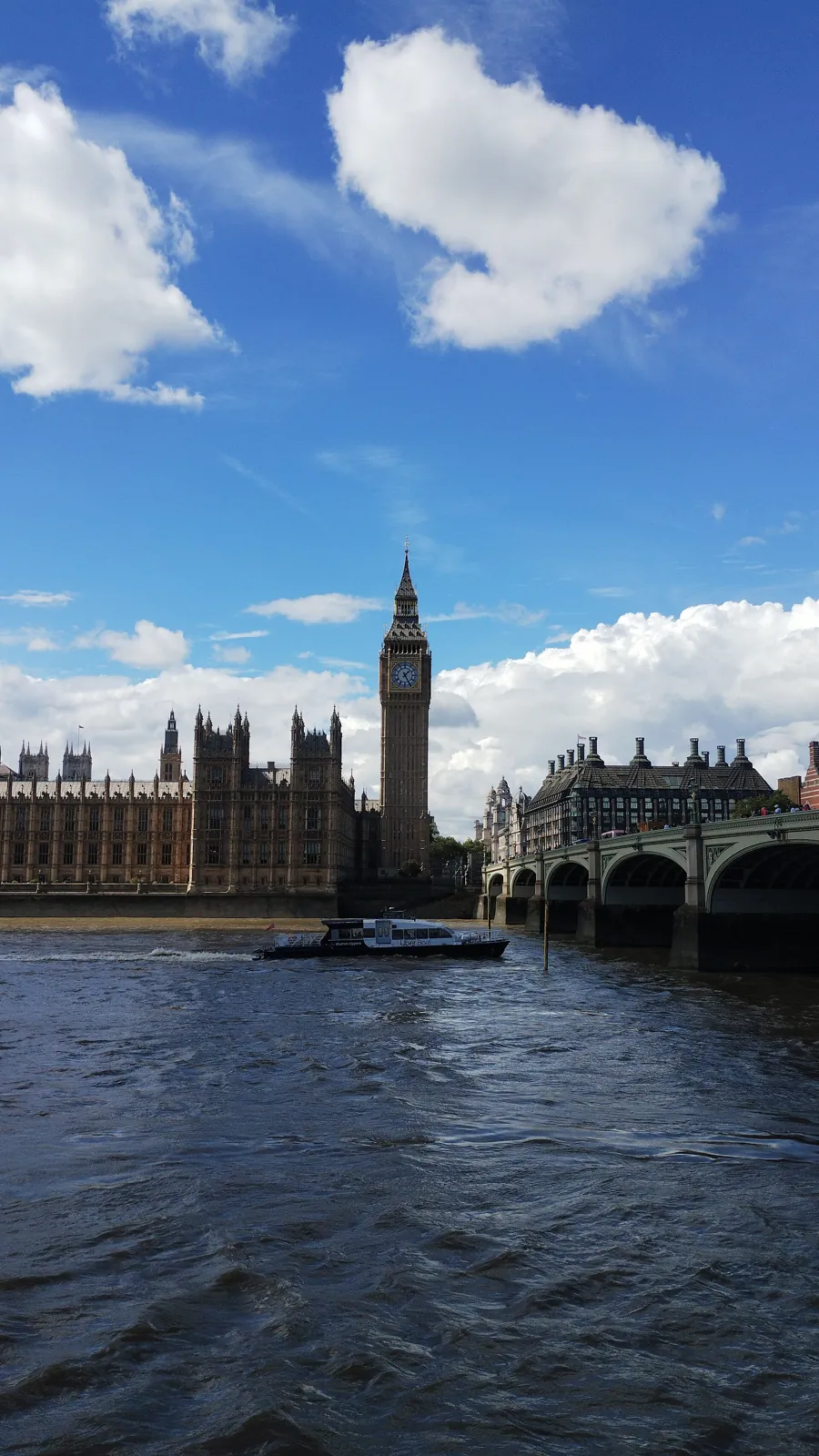
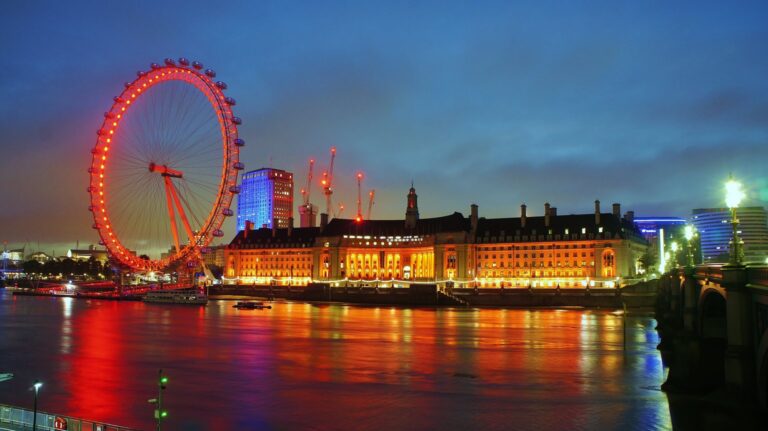
Across the river, about 450 m away over Westminster Bridge, the London Eye turns; from its capsules the Palace and Big Ben are the first things you pick out. About 240 m to the south-west, by Parliament Square, is Westminster Abbey, where 40 monarchs have been crowned since 1066. Whitehall runs north to Trafalgar Square, about 850 m away, and Buckingham Palace is about 1.2 km west across St James’s Park.
If you are seeing more of Westminster, these audio guides are also free:
 Free audio guideLondon Eye
 Free audio guideWestminster Abbey
 Free audio guideTrafalgar Square
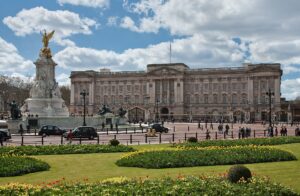 Free audio guideBuckingham Palace
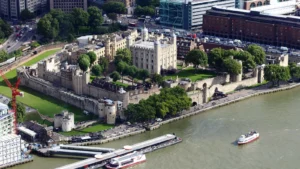 Free audio guideTower of London
Where to find it
FAQs
How do the free audio guides work?
They play right here on audioguidetravel.com, with no app to download and no sign-up. Press play and listen as you walk round: a phone and a pair of headphones are all you need. The audio streams from this page, so you’ll need mobile data or Wi-Fi.
Can I take the tour at my own pace?
Of course! You set the pace: pause whenever you like, jump back or forward 15 seconds, or tap the bar to jump to any point, and listen as many times as you want so you don’t miss a thing.
If I'm in a group, can we use the same audio guide?
Yes. The same free audio guide opens on as many phones as you like, so you can go round together as a group or with your family, each person at their own pace and with their own headphones. The quickest way is to send the link via WhatsApp, Telegram or however you like: the buttons just below let you share it right now.
Visitor information
As of 26 Oct 2026- Opening hours
- Strikes every hour, quarter bells every 15 min; guided tours inside by timed slot, booked online
- Tickets
- Tour £55 adults; £35 ages 11–17 with an adult; under 11s not admitted; outside free
- Time needed
- Audio guide about 4 min; the tour lasts up to 90 min, about 1 h 45 min in all
- Getting there
- Westminster Underground (Jubilee, District and Circle lines), a short walk away
- Accessibility
- Standard tour not step-free (334 steps); accessible tours on request; hearing loops
- Tip
- Be at Cromwell Green 30 min early in closed flat shoes; phones go in a locker, no photos inside
- Official website
- www.parliament.uk
Nearby
More free audio guides in London
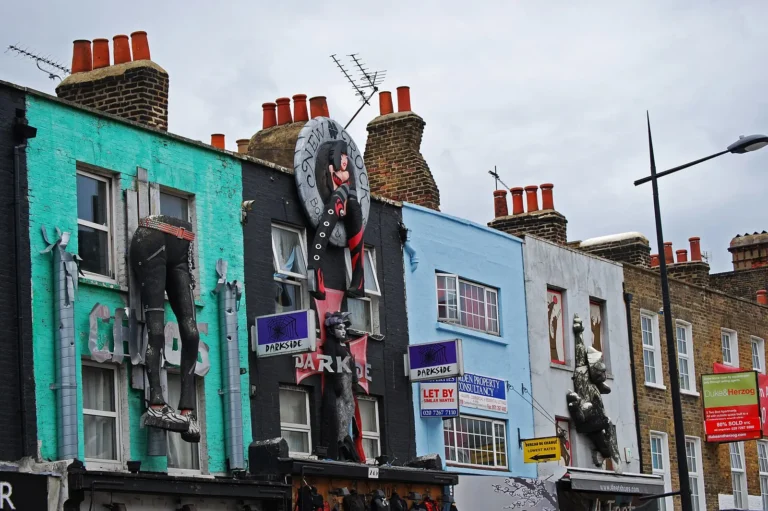 3:51LondonCamden Market, Camden Town: free audio guide, hours and getting thereCamden Market is the sprawling market of vintage clothes, vinyl, crafts and street food beside Regent’s Canal in…
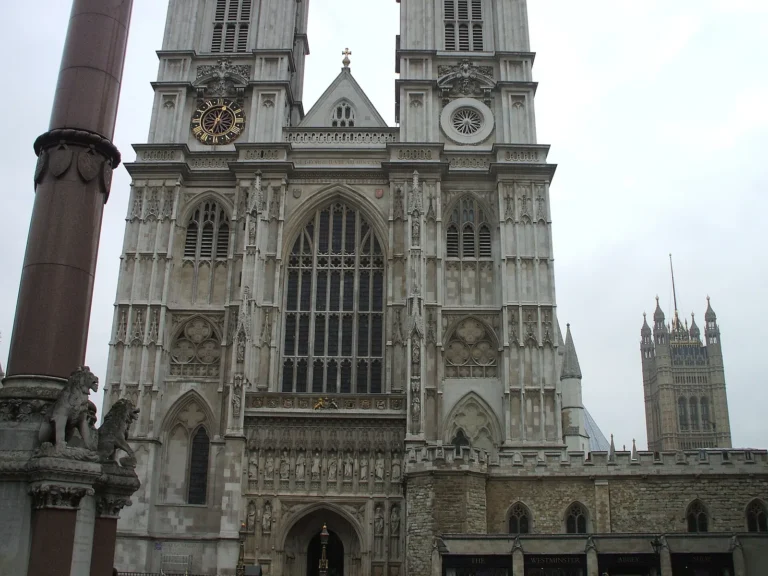 3:04LondonWestminster Abbey: free audio guide, tickets and opening timesWestminster Abbey is London’s coronation church: 40 monarchs have been crowned here since 1066, and 30 kings and…
 2:32LondonLondon Eye: free audio guide, tickets and opening hoursThe London Eye is the 135 m observation wheel that David Marks and Julia Barfield designed for the…